
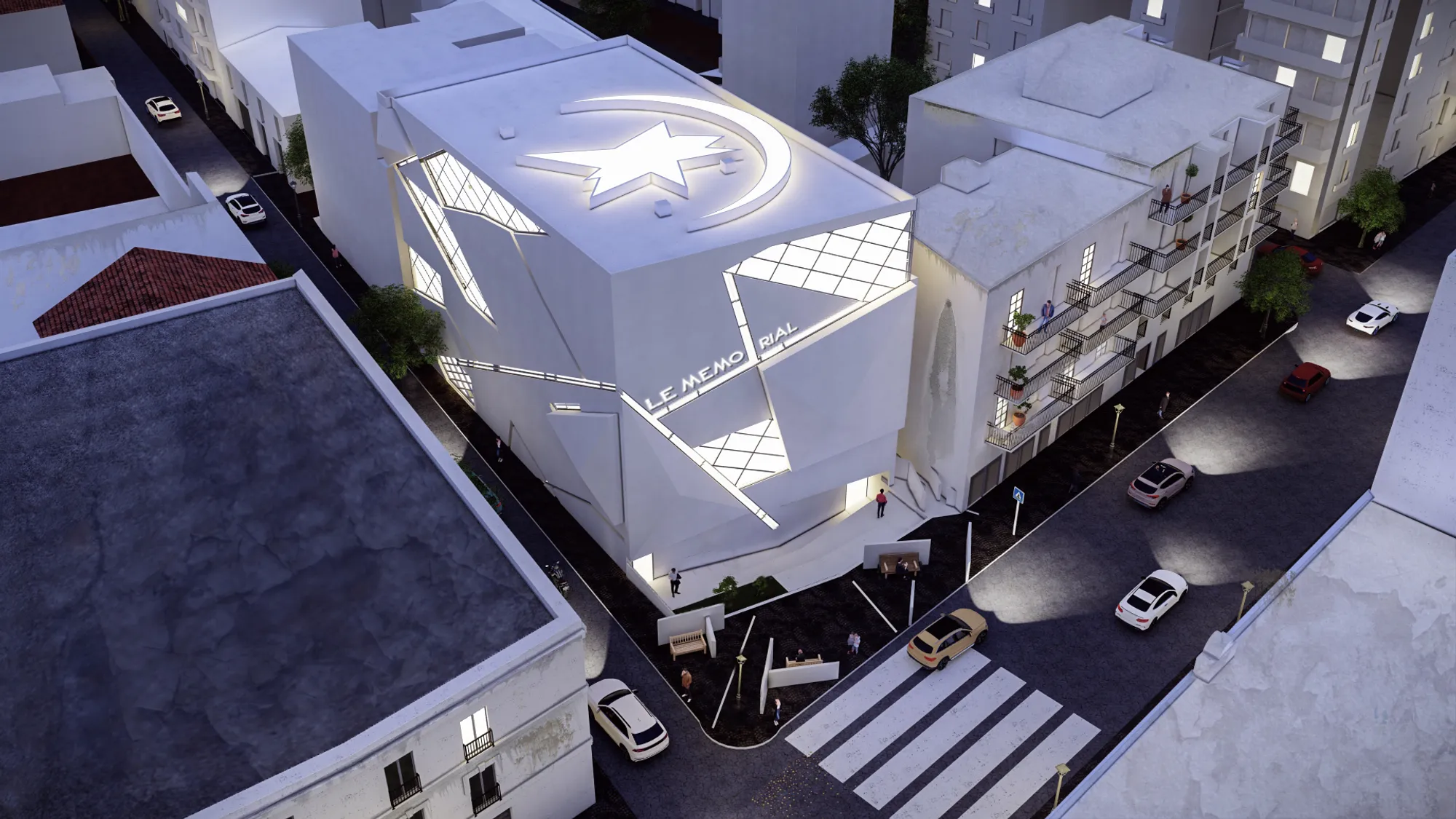
The December 11, 1960 Memorial
Perpetuate the memory by architecture

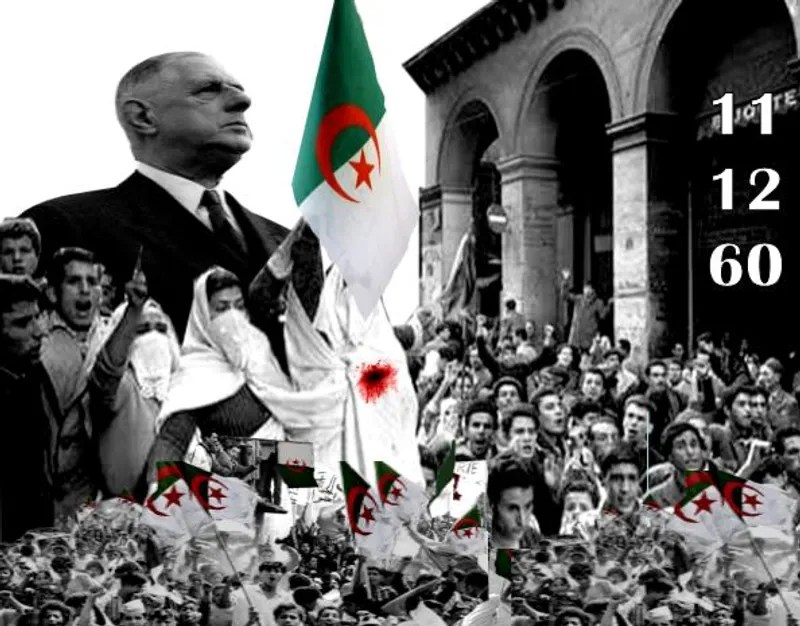
The December 11, 1960, the Uprising of Algerian people
The date of December 11, 1960 is a very important moment in the history of independence of Algeria. A date that marked the national memory and the fight of the Algerian people for their freedom and sovereignty.
The colonization of Algeria by France lasted more than 130 years. In 1954, the Algerian people declared their dissatisfaction and decided to start their fight for national liberation. After 6 years of fierce fighting, the French President “Charle De Gaulle '' decided on December 9, 1960 to propose a political solution to the issue by announcing; from Algeria, his project of the «third way» namely: the Algeria for algerian. A project that provoked a feeling of humiliation among French and European settlers. In retaliation, commandos of French youth attacked indigenous people.
It was therefore in the capital Algiers more precisely in Belcourt district that the first revolts broke out on December 10, and it was there that the first processions of Algerian insurgents were formed. Women’s processions lead the demonstrations and break down military roadblocks. Soldiers are shooting at many of them. Their courage is overwhelming. It was during these demonstrations that the first Algerian flag appeared. A flag composed of red star and crescent that symbolizes the blood shed from the martyrs, on a white and green background symbol of peace and freedom.
From the Belcourt district, the demonstrations spread like wildfire to the other cities of Algeria forcing the French president “De Gaulle” to withdraw his project of the «third way» and think definitively to provide Algeria its independence. Many historians of the liberation war have described the demonstrations of December 11, 1960 as a pivotal stage in the course of the Algerian revolution.
The room of pains
We first tried to materialize these events through an artistic installation, a kind of abstract representation of this historical narrative. It presents itself as a box that we call «the room of pains». It represents the confinement and isolation in which the Algerian people were pressed during 130 years of colonization.
The spikes that pierce the box evoke the image of the repression, pain and sorrow suffered by Algerians under colonialism. Inside the box, red yarns in the color of blood cling to the spikes to mark the image of the unity of the people in pain and also a reinterpretation of the complexity of the Algerian colonization question. The hollowed-out part shows the detachment of the box's roof as a result of the explosion engendered by the liberation war and the uprising of the people during the demonstrations of December 11, 1960.

The December 11, 1960 Memorial
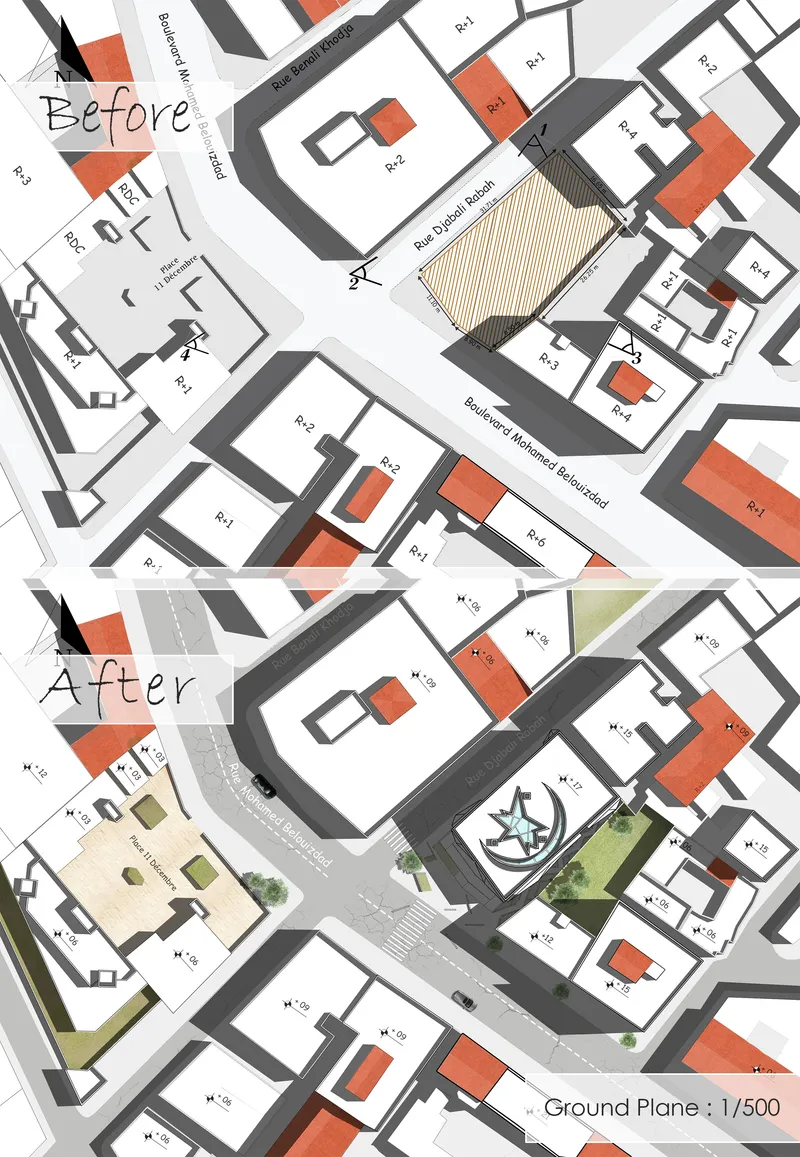
To materialize our mental image on the scale of the Belcourt district, we have chosen the project’s field facing to December 11’s Square. The aim is to strengthen the position and the centrality of this square at the scale of the district. The project’s field is oriented Northeast/ Southwest. It is a rectangle of 16*32 with a surface area of 512 square meter. The urban environment around the project is distinguished by its homogeneous skyline, and the buildings by a typical architecture of the pericentral districts surrounding downtown, without superfluous or frill.
Our project is part of the challenge III “Remember” category. It aims to perpetuate the memory of this important moment in the liberation history through a large-scale installation that will reproduce in an abstract way the different instants and elements that marked this date.
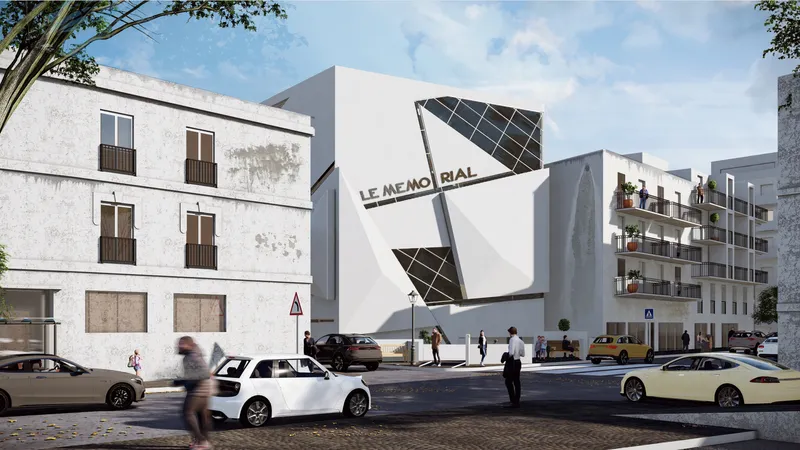
Philosophically, the project shows the relationship between the complexity of the phenomenon (here historical) and its induced and often unexpected effects. This is why this memorial is a box with severe appearances, signed and crossed scars and fractures apparent on the building facade..
This memorial tells of the colonial repression, the pain of Algerian people, the cohesion around the liberation project and the scars caused by the colonization and the events of December 11, 1960.
These five concepts were translated into four platforms and on the envelope. Each platform is an emotional experience that follows the other in the historical chronology, explained and commented on by artistic and educational installations.
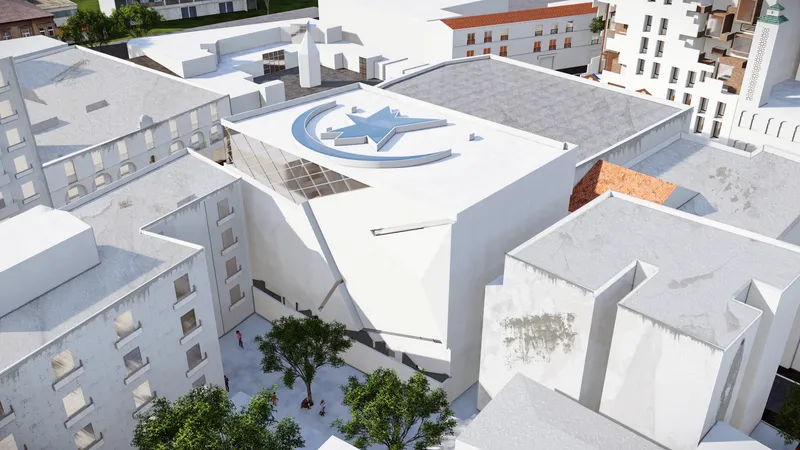
This partition is opened from the basement where the expression of the crushing and repressions of the colonial system gives a progression towards the light manifested on the roof by the flag star.
This experimentation of emotions continues along a disorderly broken online path. The geometric shape of the star then rises vertically like a cathedral to conquer the sky and the space of the extruded volume.
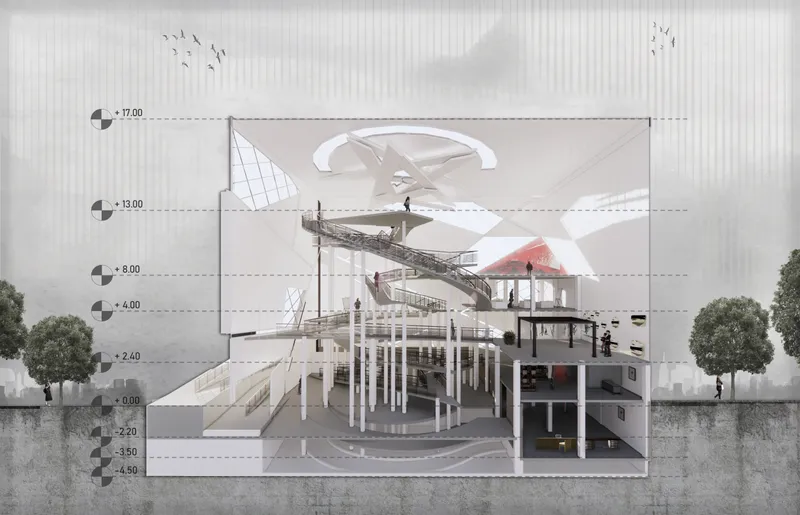
The organization of the sequential scan was based on development of the geometries resulting from the pentagon in these three dimensions while respecting the comfort of the ascending displacement. The descent is made naturally along a staircase in the shape of the crescent, the other part of the Algerian flag. This complexity was accompanied by a forest of vertical supporting elements assimilating to the language of the Louis Khan : supported / bearing ; serving/served, in the service of the atmospheres spaces sought by emotions.
The project's facades present themselves as a result of collapsing of the plans and the course that bring out the image of the scars and the deflagration while respecting the requirements of the urban environment with continuities of fractures with the horizontal lines of the adjoining façades.
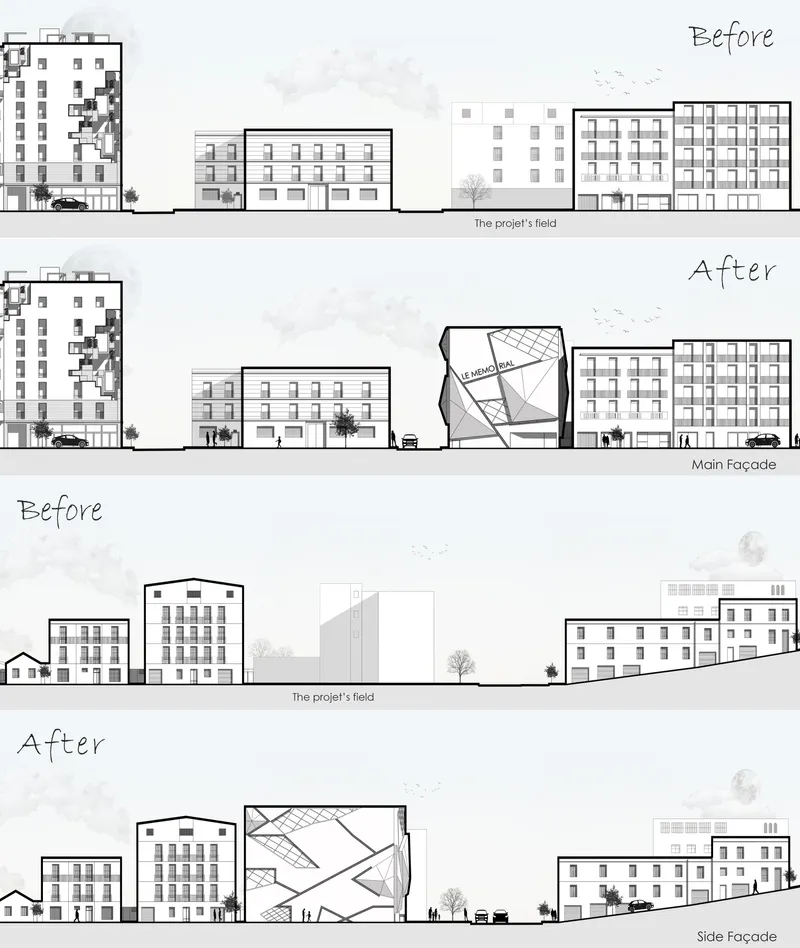
Around the project, at the level of the public space , projectiles resulting from the deflagration of the facade were scattered all around the project to contaminate the city and anchoring the memorial in its place.
The materiality had to be brutal and noble. We have thus,associated the metal and coating in milky white ceramic and matte to the facades. Over time, the aggression of the pollution will impregnate and color this whiteness and take the nuances of the historical truth.




Popular Articles
Popular articles from the community


The Musturak Paradise: Senior Living Architecture for a Connected Future in Temara, Morocco
The Musturak Paradise reimagines senior living architecture in Temara via private homes, social spaces, culture, community, and shared care.

Riyadh For All: Intergenerational Urban Design for Active Aging in Rabat
Riyadh For All reimagines urban design in Rabat with intergenerational co-living, adaptive courtyards, and Moroccan cultural exchange today.

The Ocean Hive: Sustainable Architecture for a Self-Sufficient Civilization at Sea
The Ocean Hive imagines sustainable architecture at sea, where modular habitats, algae, wave power and ocean waste sustain a growing colony.

Co-life: Sustainable Architecture for Age-Friendly Community Living
Co-life reimagines sustainable architecture for seniors through courtyards, rammed earth, shared gardens, and spaces designed for belonging.

Similar Reads
You might also enjoy these articles

The Rhythm of Seasons
A Farmers' Market Connecting Nature and the City

More Than a Building-Designing a Living System
More Than a Building-Designing a Living System
Base Beyond
DESERT COMPOUND ARID: TOURISM OF ABSENCE AND ABUNDANCE

Explore Memorial Design Competitions
Discover active competitions in this discipline



Challenge to design a portable theatre

Challenge to design a portable music platform

Challenge to design an open learning module for the elderly


Design challenge to reuse E-waste
Comments (0)
Please login or sign up to add comments
No comments yet. Be the first to comment!