

The Factory Lofts: Boston’s Industrial Heritage Reimagined
The Factory Lofts revitalizes Boston’s South End, blending historic industrial heritage, sustainable design, and modern live-work residential spaces.


Located at 46, 56, and 76 Wareham Street in Boston’s vibrant South End, The Factory Lofts by Hacin Architects transforms a historic 1870 warehouse into a dynamic mixed-use development. Originally home to the New England Organ Company, the site pays homage to Boston’s industrial past while offering modern residential, commercial, and retail spaces in the emerging SOWA (South of Washington) Art and Design District.
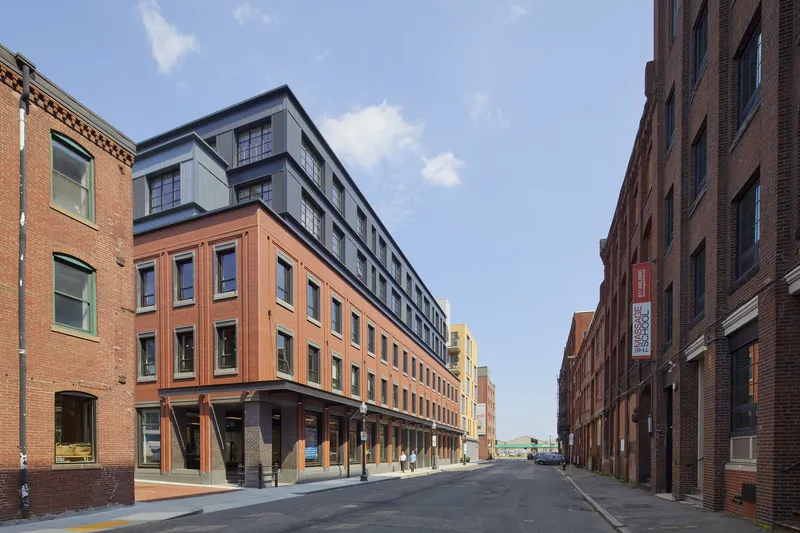
Heritage Meets Contemporary Design
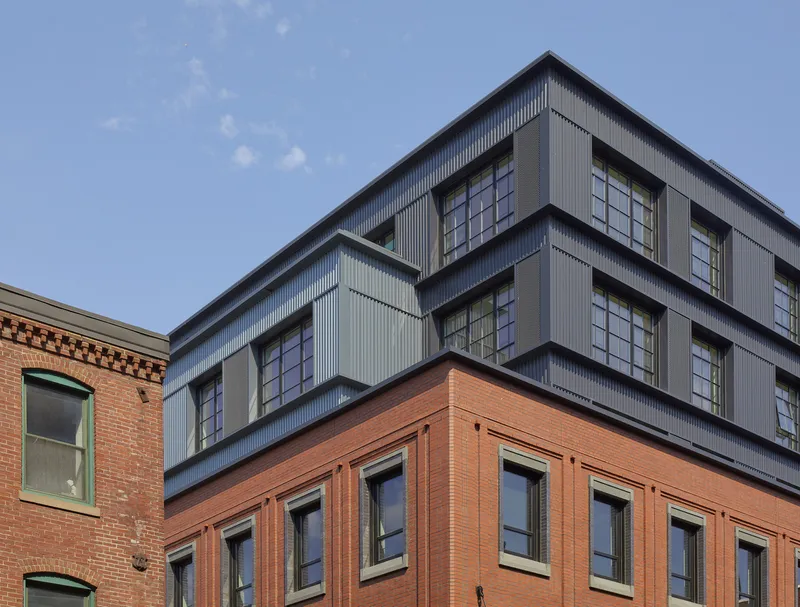
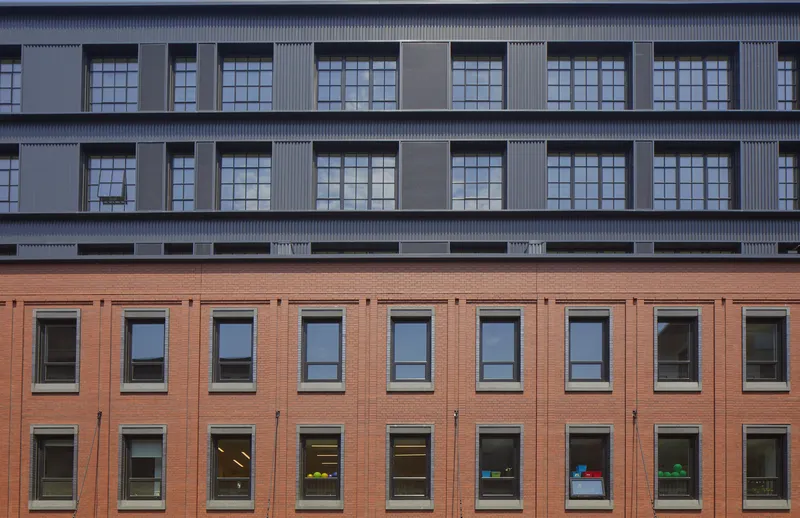
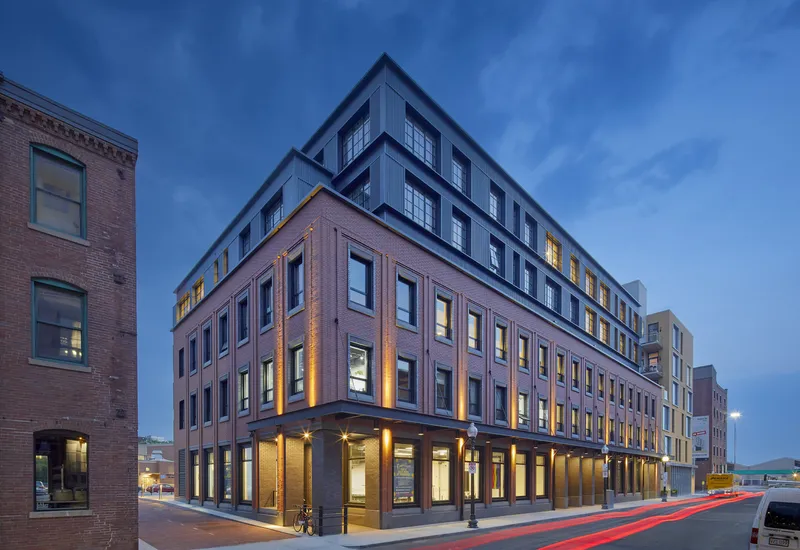
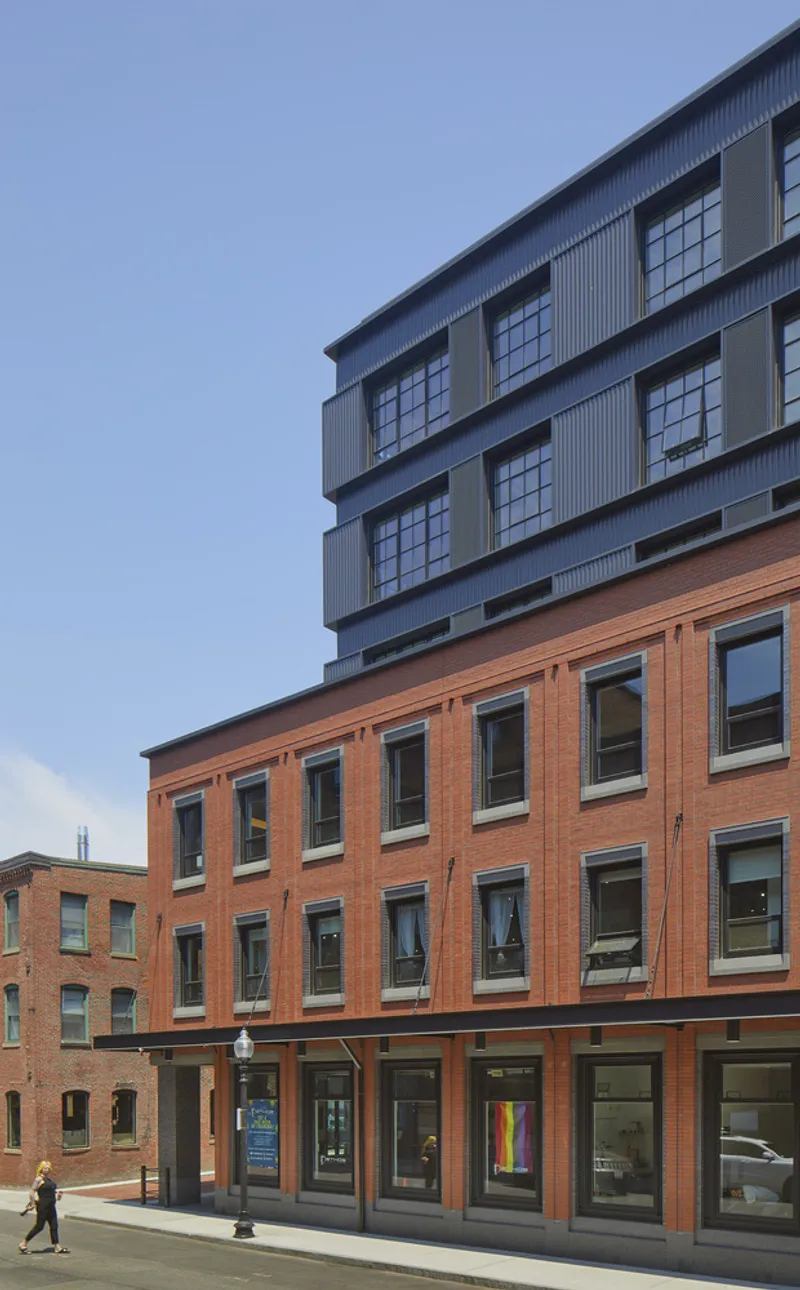
The project faced significant challenges, including reconstructing a structurally unsalvageable historic building, integrating new volumes in a context-sensitive way, and activating Wareham Street’s streetscape. The south and west facades, historically significant and visually critical to the neighborhood, were meticulously restored with a rhythm of windows, brick, and metal consistent with traditional mill architecture. Additional volumes rise above and behind the original footprint, crafted with industrial materials such as corrugated metal, set back from the street to maintain historic integrity.
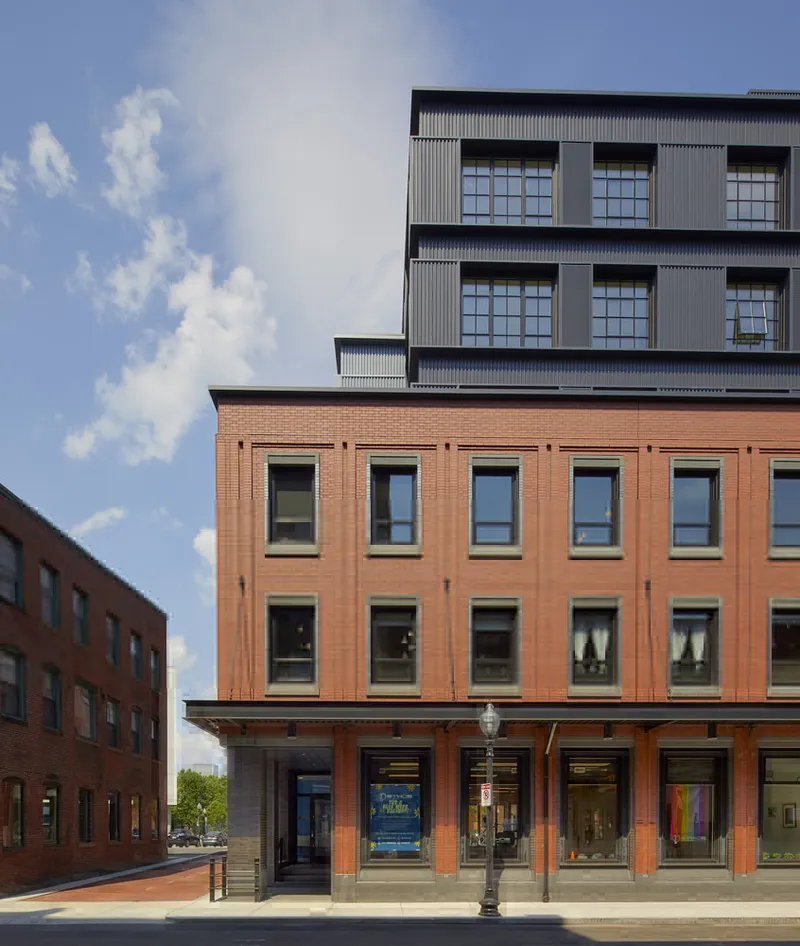
Innovative Reconstruction & Material Reuse
Early assessments deemed the original building unsalvageable, prompting a shift from preservation to inventive reconstruction. Guided by the Boston Landmarks Commission, Hacin avoided replication, instead developing a contemporary structure that honors the original’s essence. Key architectural features: such as columns, metal window headers, and sills, were salvaged and integrated into the new design, connecting the building’s industrial past with its modern present.
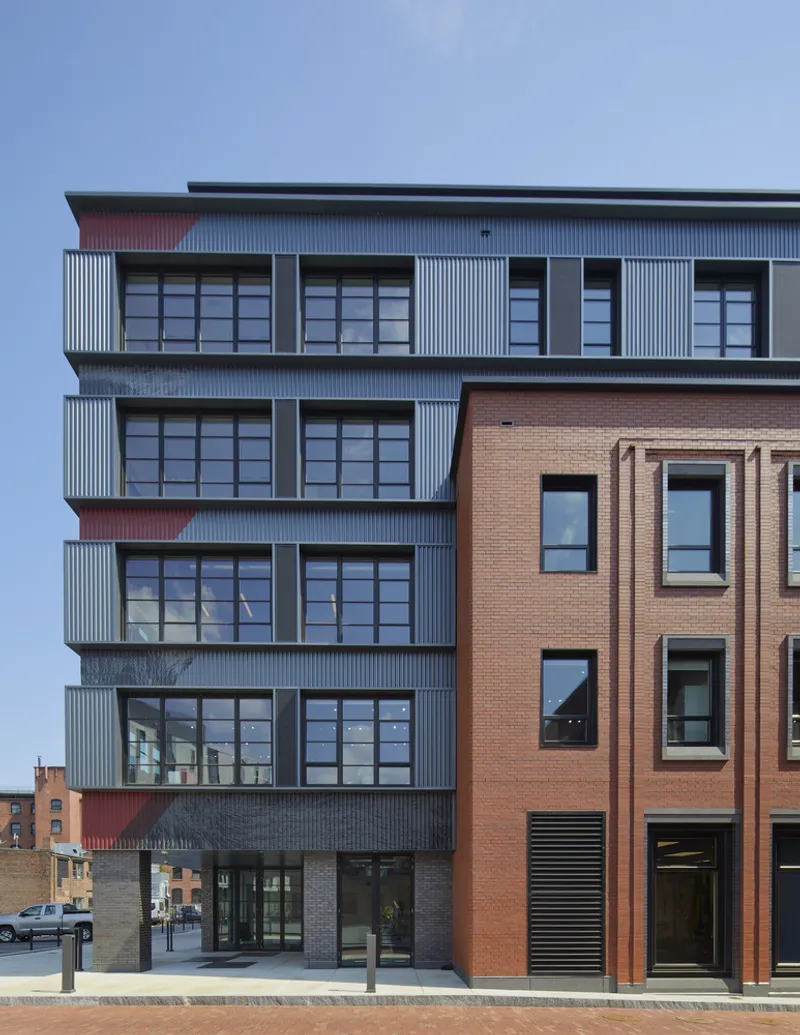
Industrial Aesthetic with Functional Elegance
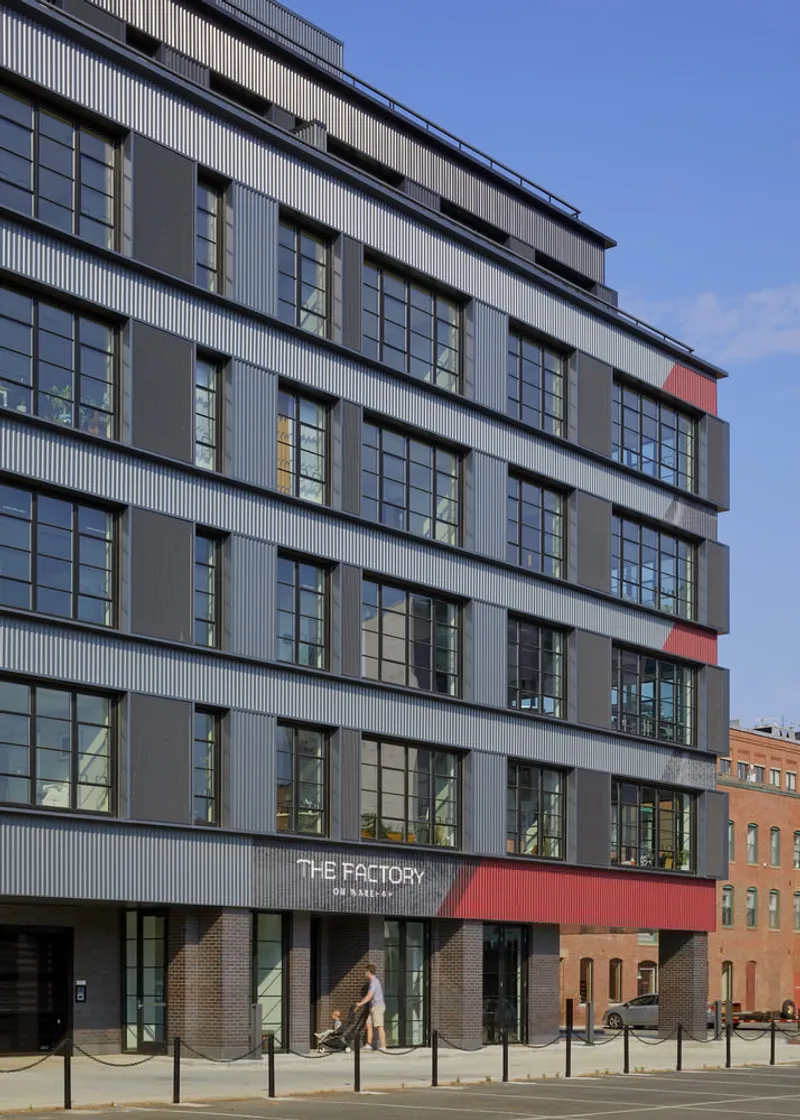
The Factory Lofts’ exterior blends red and gray brick, factory-scaled windows, and perforated metal screening that conceals mechanical systems, ensuring clean, streamlined façades. Malden Street’s façade reflects careful textural study of historic industrial buildings, featuring square proportions and repeated window patterns. The project emphasizes both visual and functional harmony, creating a dialogue between history and contemporary urban life.
Sustainable Urban Living
Sustainability plays a central role in The Factory Lofts. Advanced stormwater management reduces runoff by 60%, while efficient water fixtures cut water usage by 25%. Landscape design prioritizes low-maintenance, drought-tolerant plants, minimizing irrigation needs. Energy-efficient glazing, optimized wall assemblies, and high-performance mechanical systems collectively reduce energy consumption by 25%, demonstrating Hacin’s commitment to sustainable urban design.
Mixed-Use & Community Activation
The Factory Lofts exemplifies “live-work” urban living. The ground floor hosts retail spaces under a steel awning reminiscent of New York’s Chelsea Market, adding industrial character and pedestrian engagement. Second and third levels accommodate commercial offices, including a daycare and entrepreneurial studios. The upper three floors feature luxury residences with amenities such as a fitness center, rooftop garden, terrace, and Boston’s first automated underground vehicle storage system.
Revitalizing the South End
Hacin’s design carefully balances historical reverence with modern functionality, activating Wareham Street and contributing to the South End’s cultural and economic vitality. Retail and commercial spaces foster local employment, while the building’s residential and mixed-use program injects creativity and energy into the district. Winner of the Gold Award in Residential and Multi-family categories at the 2022 Brick in Architecture Awards, The Factory Lofts stands as a benchmark for thoughtful urban redevelopment.
All photographs are works of
Bruce T Martin


Popular Articles
Popular articles from the community


Cube Design Draws an Ecological Corridor Between Two Shenzhen Hills with the Nankai Building
Beside Shenzhen's container docks, the Nankai Building pairs stacked balconies with a climbing green screen to connect two hillsides across its height.

LT2A and OPEN Architectes Thread a Brick and Glass High School Through a Wooded Belgian Campus
In Braine-l'Alleud, a 3,000 m² wing for Collège Cardinal Mercier pairs pale brick with a glazed colonnade, deferring to a small chapel and a dense wood.

Jaramillo Van Sluys Arquitectura and Urbanismo Turn a Demolished Registry Lot in Quito into an Orchard Plaza
In Quito's Centro Histórico, a 2,800 m² plaza exposes the San Agustín convent wall and redraws its lost Augustinian orchard in volcanic stone.

Architekt Andreas Gruber Scatters 23 Dark Timber Chalets Across a South Tyrolean Forest Edge
In Molini di Tures, Amonti Chalets breaks a resort into a hamlet of gabled timber houses, with parking, storage and services pushed into the slope.

Similar Reads
You might also enjoy these articles

Gil Mello Arquitetura Tilts a Single Roof Toward the Waterfalls on a Plateau Above Aiuruoca, Brazil
In Aiuruoca, Minas Gerais, a 200 m² house of local labor and reclaimed poles pairs a low valley veranda with a tall mountain one.

U.GA Architects Wraps an Oval Rooftop Pool in Curved Board-Formed Concrete on Busan's Jeollidan-gil
In Busan's Jeonpo-dong, a 454 m² mixed-use block stacks a neighborhood facility, guest rooms and an oval rooftop pool inside spiraling concrete walls.

Felipe Hess Arquitetos Turns a Blind Stone Wall to the Street and Opens a Brazilian House onto a Courtyard and Canal
A canal-front house in Brazil hides behind painted stone and planting, then opens to an olive-tree courtyard, a reed-ceilinged porch and a curving pool.

David Macias Steps a Doorless Stone and Plaster House Down a Tropical Colombian Hillside
In the humid hills of Colombia, Threshold House replaces the front door with an open void and terraces its 850 m² down the slope instead of fighting it.

Explore Residential Building Competitions
Discover active competitions in this discipline

Challenge to design mud housing for contemporary communities

Challenge to reimagine the Iron Throne

Photograph architecture without architects

Illustrate the lost glory of Angkor Wat - Render Challenge
Comments (0)
Please login or sign up to add comments
No comments yet. Be the first to comment!