

The Home in the Badain Jaran Desert: Sustainable Desert Living by Nanjing University
The Home in the Badain Jaran Desert blends straw-brick vernacular techniques with a metal shell, creating sustainable, climate-responsive desert living.


Architects: School of Architecture and Urban Planning, Nanjing University
Reimagining Home in a World Heritage Desert
The Badain Jaran Desert, renowned for its iconic inter-dune lakes and towering sand formations, presents a unique challenge for contemporary housing. In 2024, this "Towers of Sand and Lakes" landscape was inscribed on UNESCO's World Heritage List, introducing ecological preservation measures and construction restrictions. Local Mongolian herding communities faced the pressing question: how can homes meet modern needs while respecting traditional lifestyles and fragile desert ecology?

The Home in the Badain Jaran Desert, designed by the School of Architecture and Urban Planning at Nanjing University, offers an innovative solution. Drawing from vernacular architecture and indigenous building techniques, the project explores sustainable living strategies for a World Heritage site.

Straw Bricks and Metal Shells: Fusing Tradition with Modernity
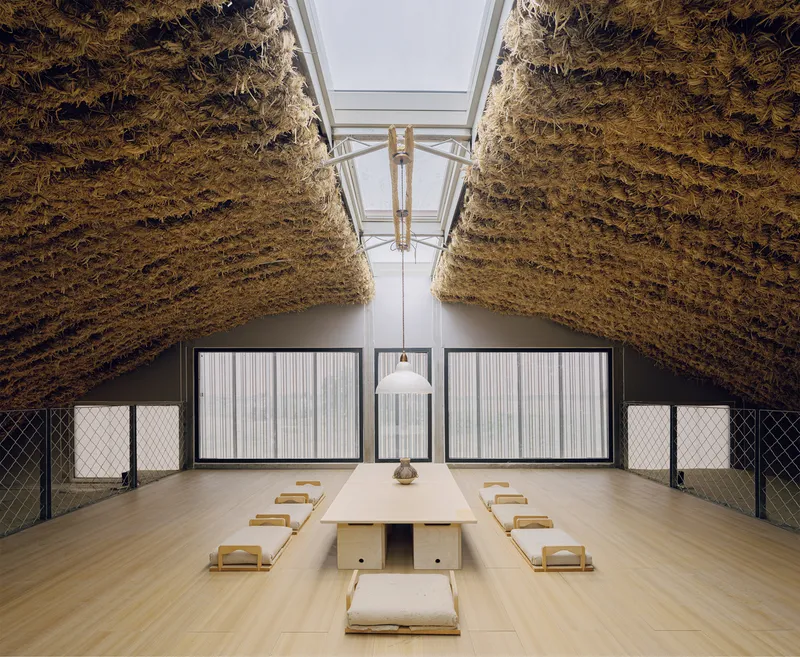
The home serves a herding family with potential tourism and hospitality functions. Its core structure is built with straw bricks, a locally sourced material that meets the family’s residential and guest accommodation needs. Surrounding the core, a breathable metal shell provides space for festive gatherings, storage, and community activities.
This contrast between the lightweight industrial shell and the heavy, traditional straw core creates a harmonious vision of a sustainable desert shelter. The home is accessed via two metal-shelled corridors, which double as functional spaces for cooking in summer and meat processing in winter. An arched roof on the mezzanine evokes a yurt-like interior, reflecting cultural traditions during family gatherings.


Climate-Responsive Design for Desert Living
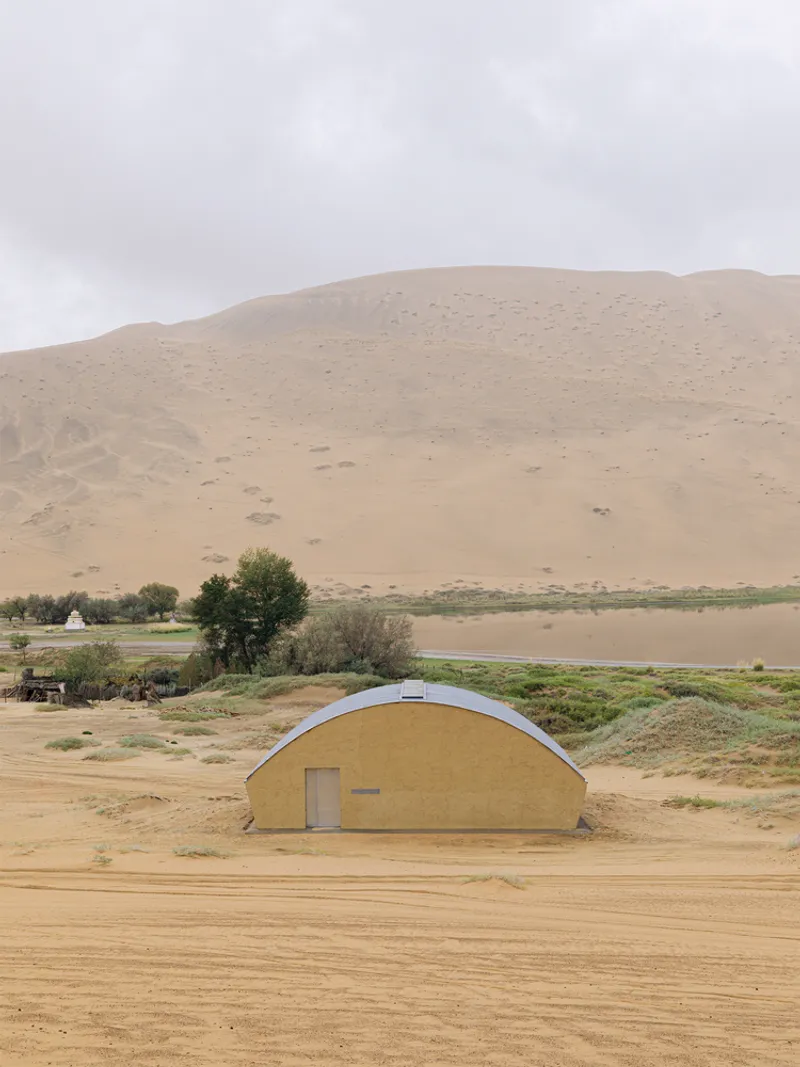
The home’s straw-brick walls offer excellent thermal performance, while the surrounding metal shell acts as a climatic buffer, minimizing energy use. In winter, heat concentrates in the straw core, while the buffer zone reduces heat loss. During summer, the breathable shell encourages natural air circulation, keeping interiors cool and comfortable. This combination ensures low-energy, climate-adapted living in the harsh desert environment.

Low-Tech, Locally Sourced Construction
The project emphasizes low-tech, sustainable construction methods. Locally sourced materials such as straw bricks and lake clay are combined with lightweight prefabricated materials, including light steel frames, perforated aluminum sheeting, and polycarbonate panels. This strategy significantly reduces transportation costs and environmental impact.
The construction process was a collaborative effort among designers, students, and local craftsmen, demonstrating a scalable model for sustainable rural housing in desert regions.


A Desert Home that Resonates with Memory
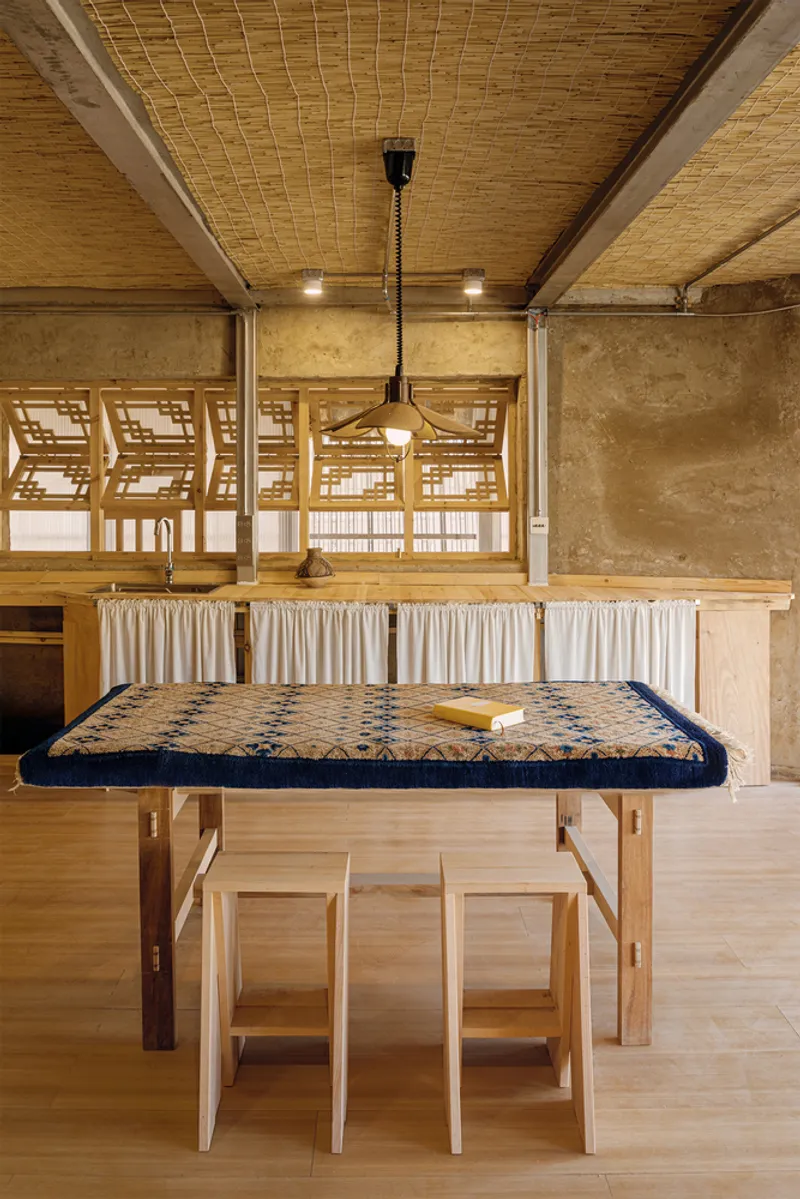
At night, the house glows softly, resembling a silver bowl against the dark desert landscape. Its textures and materials evoke nostalgia for the Mongolian herders: Hass Bayara, a local resident, reflected, “This is exactly the house we lived in when we were kids.” The project succeeds in merging cultural memory, ecological sensitivity, and contemporary living into a single sustainable desert home.


All photographs are works of
Xiaobin Lv


Popular Articles
Popular articles from the community


The Ocean Hive: Sustainable Architecture for a Self-Sufficient Civilization at Sea
The Ocean Hive imagines sustainable architecture at sea, where modular habitats, algae, wave power and ocean waste sustain a growing colony.

Conexión: Biophilic Design Reimagines High-Rise Living in Hong Kong
Conexión reimagines high-rise living in Hong Kong through biophilic design, green facades, shared spaces, daylight, water and nature within.

Riyadh For All: Intergenerational Urban Design for Active Aging in Rabat
Riyadh For All reimagines urban design in Rabat with intergenerational co-living, adaptive courtyards, and Moroccan cultural exchange today.

Play: Fragments of Their World
Familiar architecture becomes modular playground design, creating safe spaces where displaced children can learn, connect, imagine and play.

Similar Reads
You might also enjoy these articles


Hodi-Mandai Geram
Project Function: Preservation and revitalization of the Intangible heritage and socio-spatial identity of the Hodi by Housing, Cultural Memory Center, Sacred Grove, landscape, local tourism economy


Olio Towers: A Mid-Rise for Performers That Fuses Housing, Rehearsal, and Stage
Located blocks from Houston's Theater District, this modular tower stacks living units around a central performance atrium.

Oasis: Modular Green Housing Carved into Dhaka's Urban Fabric
A shortlisted Plugin Housing entry reclaims unauthorized settlements in Dhaka with stepped concrete volumes, green roofs, and ventilation-driven design.

Black Hole: A Floating Megastructure for the Post-Physical Era
Emiliano Mazzarotto envisions a spherical, self-scaling arena where e-sports, digital hotels, and holographic stadiums replace traditional public space.

Explore Desert Architecture Competitions
Discover active competitions in this discipline



Challenge to reimagine the Iron Throne


Photograph architecture without architects


Illustrate the lost glory of Angkor Wat - Render Challenge


Design challenge to reuse E-waste
Comments (0)
Please login or sign up to add comments
No comments yet. Be the first to comment!