

The In-Between: Twin Towers and a Vertical Void Between Delhi and Noida
A mixed-use skyscraper proposal carves a dramatic central atrium between complementary towers to reconnect a fractured urban edge in India.


What if the most powerful architectural gesture in a skyscraper wasn't the built mass but the void cut through it? The In-Between proposes a twin-tower structure split by a vertical atrium that frames the sky, channels light, and symbolically stitches together two rapidly diverging urban territories: historic Delhi and its sprawling satellite city, Noida. Rather than treating density as a problem to stack away, the project treats it as a social opportunity, layering bazaars, co-working zones, community gardens, housing, and public lookouts into a single vertical ecosystem connected by diagonal elevators.
Designed by Laura Isabella Campos Vanegas and recognized as an Editor's Choice entry in the CityScraper competition, the project is sited in a transitional zone between Delhi's historical core and Noida's expanding periphery. This liminal territory is defined by residential overcrowding, environmental degradation, and socio-spatial segregation. The proposal reframes this fractured edge as a site of connection, deploying architecture that mediates between old and new, dense and dispersed, natural and urban.
A Diagrid Skin That Breathes and Shifts
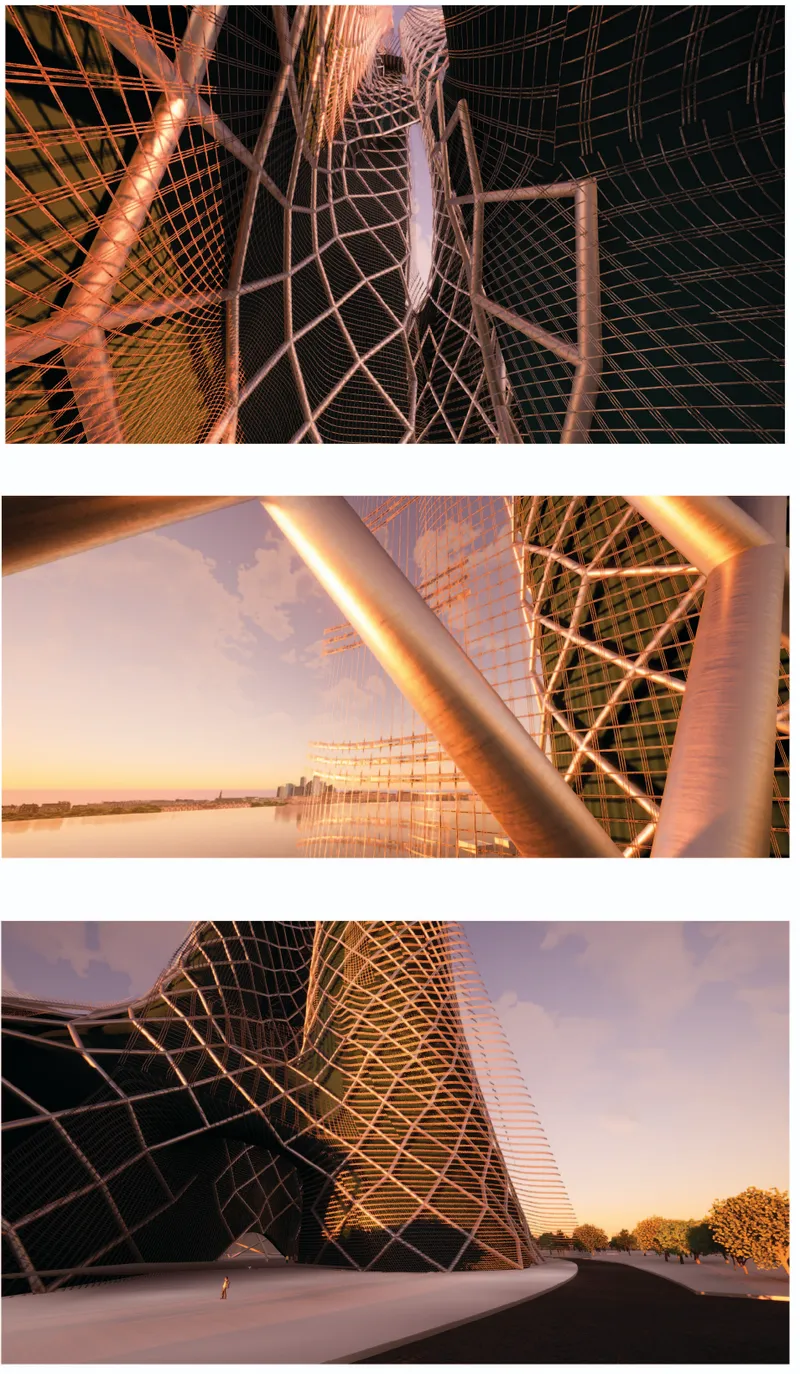
The close-up facade rendering reveals the project's double skin in compelling detail. A refined diagrid structural framework is wrapped in a tensile metallic mesh that shifts in transparency and texture throughout the day. Warm interior lighting bleeds through the triangulated panels, giving the towers a lantern-like quality at night. But the skin is more than ornamental: the double facade provides passive climate control by optimizing natural ventilation and reducing energy consumption. In a region where temperatures regularly spike, this kind of performative envelope is not a luxury; it is a necessity.
Stacking a Neighborhood: Programme from Bazaar to Sky Lookout
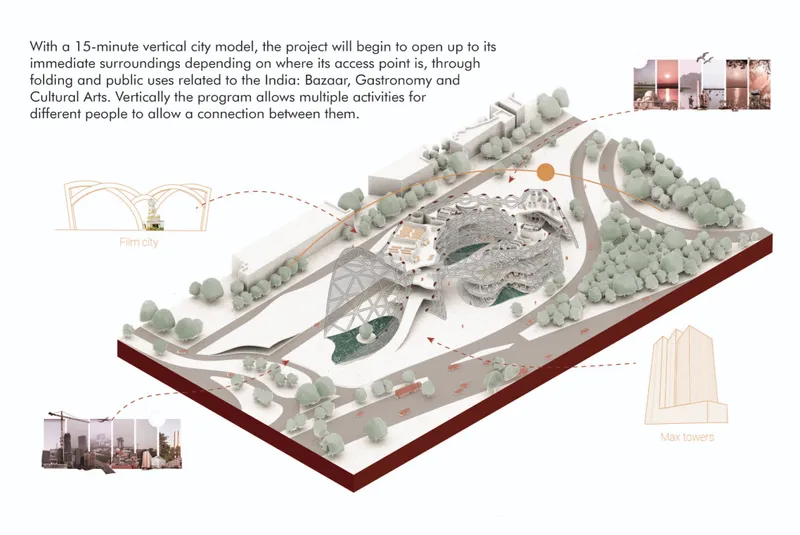
The axonometric diagram lays bare the project's ambition: a complete vertical urbanism that implements the principles of a 15-minute city in section rather than plan. At the base, bazaars and sports facilities anchor the towers to public life. Moving upward, co-working spaces, health and wellness centers, gastronomy hubs, and educational facilities occupy the mid-levels. Student and single housing transitions into multifamily residential units interspersed with communal terraces, and the sequence culminates in social and residential lookouts at the top. Circulation paths and surrounding landscape are legible in the drawing, showing how the ground plane opens generously through plazas, marketplaces, and green zones.
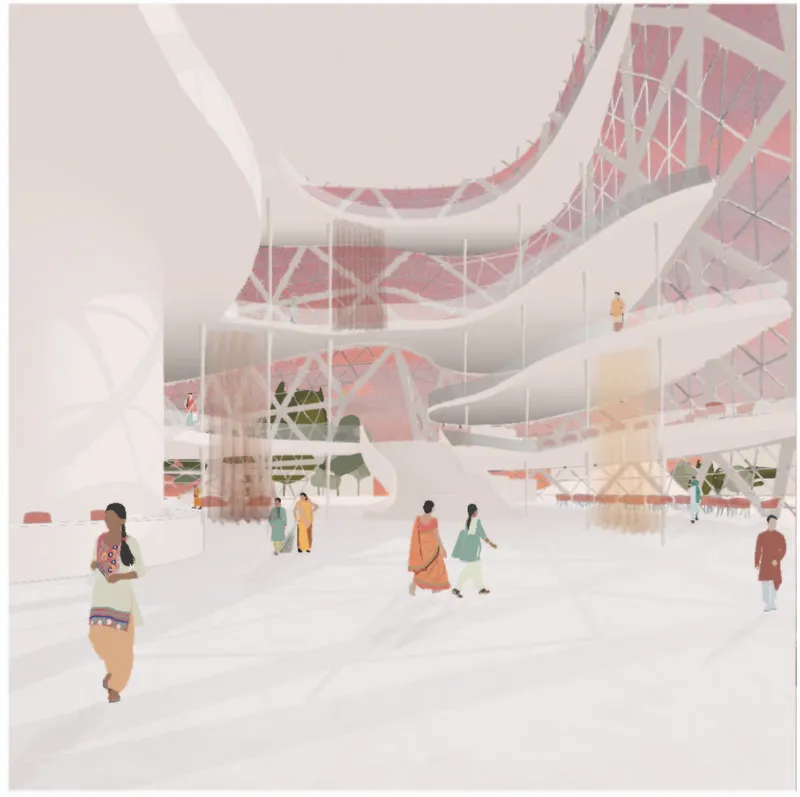
The interior rendering reinforces the social intensity of this stacking. Multilevel public spaces with suspended floor plates create generous volumes where visitors in traditional dress move through what feels less like a lobby and more like a covered urban square. The architecture borrows from the spatial generosity of Indian stepped wells and marketplace courtyards, translating their communal logic into a vertical frame. Interaction is not incidental here; it is structurally encouraged.
The Void as Protagonist: Framing Sky Between Two Towers

The most arresting image in the set looks through the central atrium opening as it frames the setting sun beyond the latticed facade. This dramatic vertical void carved between the two towers is the conceptual heart of the project. It reconnects earth and sky, functions as a massive light well for the interior programme, and offers framed views of the surrounding urban and natural context. The void is simultaneously symbolic and pragmatic: it reduces the visual mass of what could otherwise be an imposing twin-tower block, and it allows cross-ventilation to reach deep into the plan.
Diagonal Elevators and the Section as Social Conduit
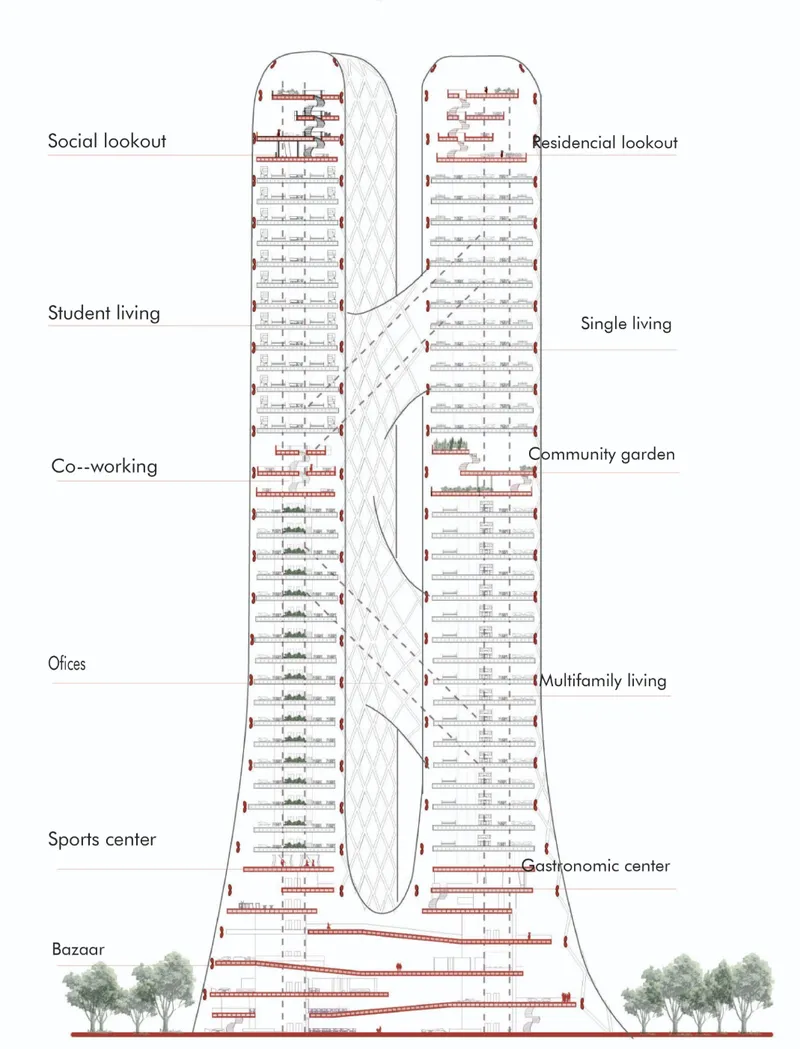
The section drawing is where the project's structural and programmatic logic clicks into place. The twin towers are not identical but complementary, mirroring each other visually while accommodating contrasting programmes. A central atrium void connects them, and diagonal elevators traverse this gap, linking disparate functions across vertical layers. These are rare in conventional towers for good reason: they complicate structure and egress. But here they act as social conduits, enabling continuous movement not just between floors but between ways of inhabiting the building. The section reads less like a standard high-rise and more like a vertically extruded city block, complete with streets, parks, and public squares rotated ninety degrees.
Structural clarity comes from the diagrid framework visible in the facade rendering, which distributes lateral loads efficiently and frees the interior from a conventional column grid. Combined with the folding strategies and dynamic surface treatments that generate the building's form, the result is a tower that reflects both the tradition of monumental Indian architecture and contemporary parametric design techniques aimed at fostering flexibility and resilience.
Why This Project Matters
Most competition skyscrapers default to spectacle: the tallest, the twistiest, the most aerodynamic. The In-Between distinguishes itself by centering its argument on what is absent rather than what is present. The void between the towers is not leftover space; it is the organizing principle that gives the project its name, its environmental strategy, and its social ambition. By locating the design on the contested edge between Delhi and Noida, Campos Vanegas forces a conversation about who tall buildings are for and how they might serve communities already strained by rapid urbanization.
The project also demonstrates a thoughtful engagement with context that goes beyond site analysis diagrams. The programmatic mix, from ground-level bazaars to rooftop lookouts, reads as a vertical translation of the mixed-use Indian streetscape. The diagrid and mesh facade borrows from jali screen traditions while performing as a high-tech environmental mediator. And the diagonal elevators, however speculative, propose that vertical circulation can be as socially rich as walking through a neighborhood. As a provocation for what skyscrapers could become in the Global South, The In-Between is exactly the kind of entry that competitions like CityScraper exist to surface.
View the Full Project
About the Designers
Designer: Laura Isabella Campos Vanegas
Enter a Design Competition on uni.xyz
uni.xyz runs architecture and design competitions year-round that reward proposals with spatial conviction and real site intelligence.
Project credits: In-Between by Laura Isabella Campos Vanegas CityScraper (uni.xyz).


Popular Articles
Popular articles from the community

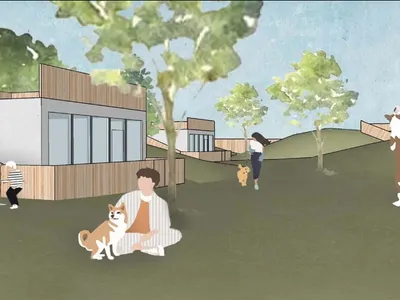
Temporary Home for Dogs: A Reversed Zoo Rethinks Animal Shelter Architecture
In Bucharest, a sinuous corridor and freed landscape flip the logic of containment, designing a shelter that works to make itself unnecessary.

Cloaked Colonization: A Mobile Underwater Habitat That Moves Like a Fish
Micah Abaya's shortlisted EHC Pacific entry reimagines ocean settlement as a dispersed network of self-sustaining architectural organisms.
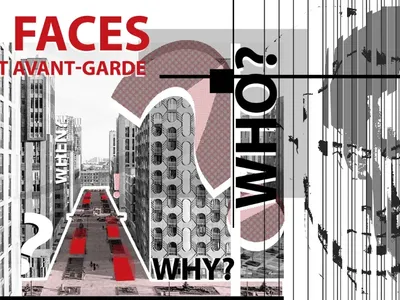
Faces of the Soviet Avant-Garde: Turning Moscow's Street Names into an Open-Air Museum
A network of sculptural installations across a Moscow residential district transforms forgotten architect names into spatial encounters with cultural memor

The Amber Palace Opera: A Geological Fiction Surfaces on Tallinn's Baltic Waterfront
Pierre Brillard reimagines a Baltic legend as a public landscape, opera house, and waterfront promenade rooted in Tallinn's coastal identity.

Similar Reads
You might also enjoy these articles

Shakur's House: Exposed Brick as an Interior Organiser in a 168 m² Mashhad Residence
Brick moves indoors in this Mashhad residence, where masonry walls, glass partitions and teal planes sequence a compact home without closing it off.

Day and Night Park: A Time-Based Urban Newsstand in Beijing
A temporary urban newsstand in Beijing blending travel, light, and reading through poetic colors, compact form, and community-focused design.

Modernist Patio Renovation in El Masnou, Barcelona by Oliver Segura Arquitectura + Cebrià Arquitectura
Modernist patio renovation blending tradition and innovation with a movable pool, leveled floors, and Catalan materials in El Masnou.
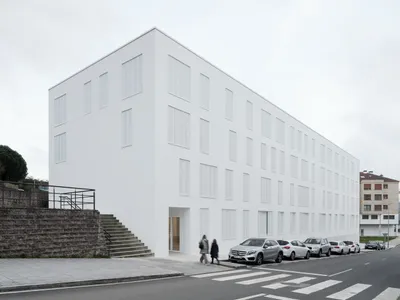
Alto Residencial Coop: Cooperative Housing Development in Santiago de Compostela by Carbajo Barrios Arquitectos
A linear cooperative housing complex blending white volumes and perforated metal façades, enhancing community living, natural light, privacy, and urban integration.

Explore Mixed-Use Competitions
Discover active competitions in this discipline

Challenge to design mud housing for contemporary communities

Bring back Drive In's
Comments (0)
Please login or sign up to add comments
No comments yet. Be the first to comment!