
The Nook by Isaac French: A Compact Forest Retreat Blending Architecture, Art, and Experiential Hospitality
A compact forest retreat in Texas combining office, art studio, and guest space, featuring charred cedar, oak interiors, limestone, and creekside deck.


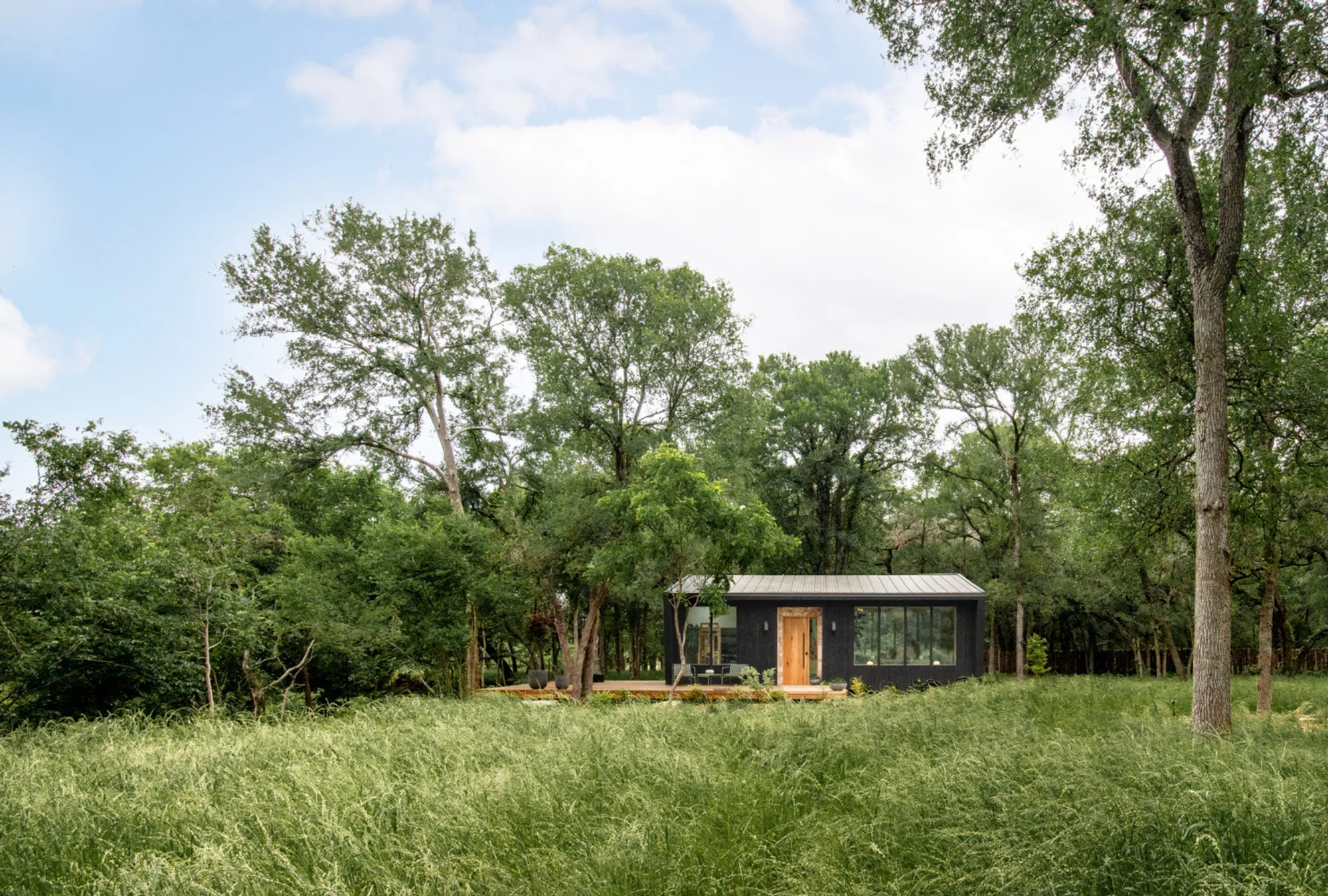
Located in the serene natural landscape of Waco, Texas, The Nook is a compact yet thoughtfully crafted architectural project designed by architect and experiential hospitality developer Isaac French. Completed in 2023, this small-scale mixed-use structure spans 568 square feet and reflects a contemporary approach to micro-architecture, flexible living spaces, and nature-integrated design.
The Nook serves multiple functions simultaneously: working as an office, art studio, and guest retreat, demonstrating how compact architecture can deliver exceptional spatial quality and versatility. Designed with careful attention to materiality, craftsmanship, and environmental integration, the project highlights the growing global trend of micro-resorts and unique hospitality experiences that prioritize immersive connections with nature.
Concept and Vision: Experiential Hospitality Meets Personal Creativity
Isaac French, known for developing experiential hospitality projects and unique accommodations, envisioned The Nook as a personal creative sanctuary. The building reflects his dual identity as both a designer and artist, resulting in a space that merges professional productivity with artistic expression.
Rather than designing a conventional workspace or guesthouse, French created a hybrid environment capable of supporting multiple uses. The structure functions as:
- A private architectural studio
- An artist workspace
- A guest accommodation
- A small-scale retreat
This multifunctional concept reflects the evolution of contemporary architecture toward adaptive and flexible spatial programs, where buildings can accommodate diverse lifestyles and changing needs.
Architecture in Dialogue with Nature
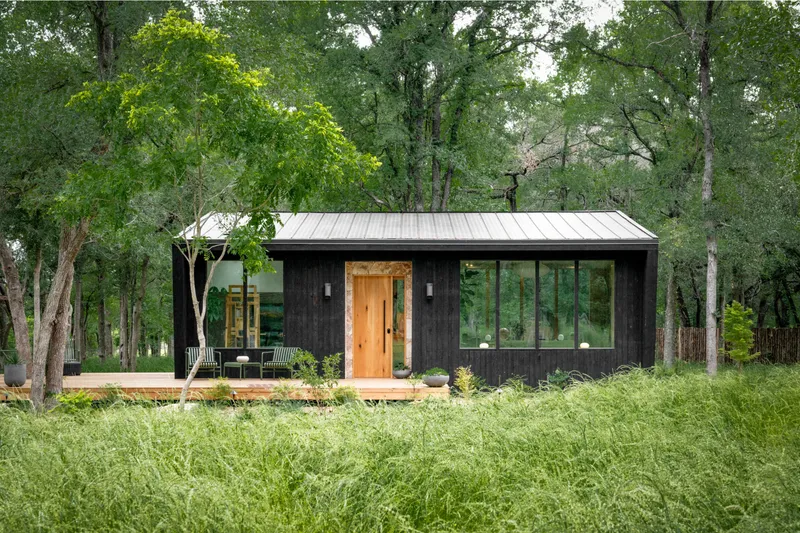
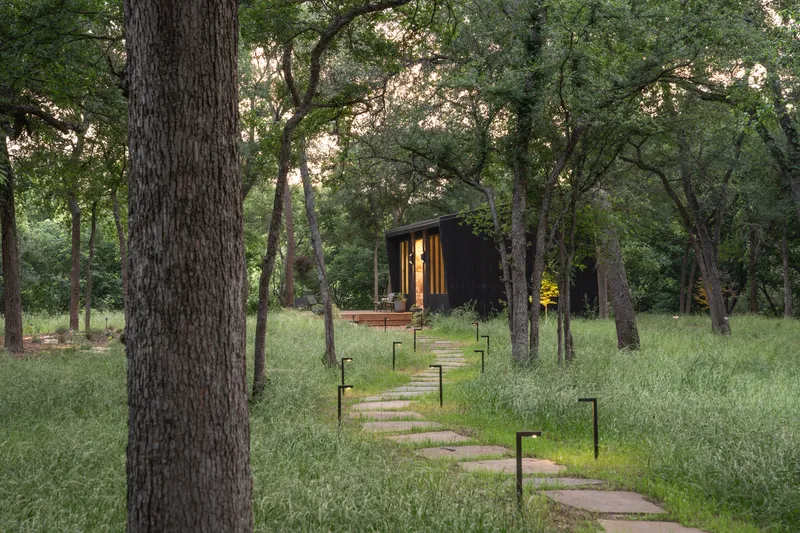
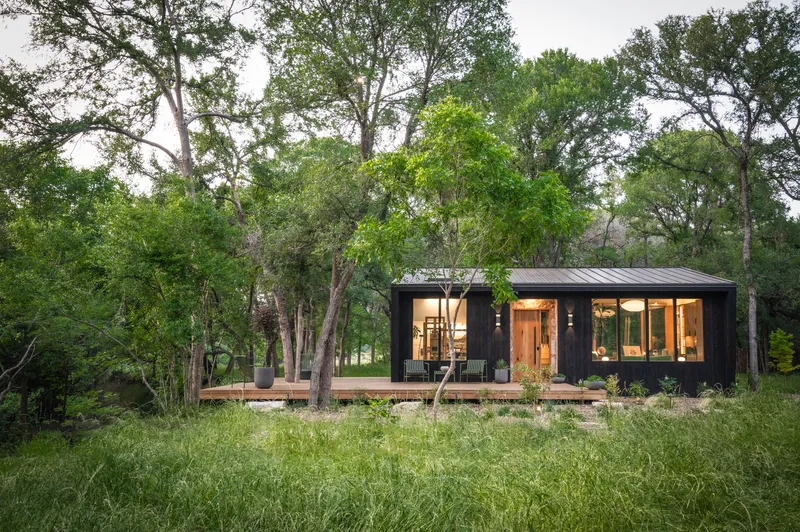
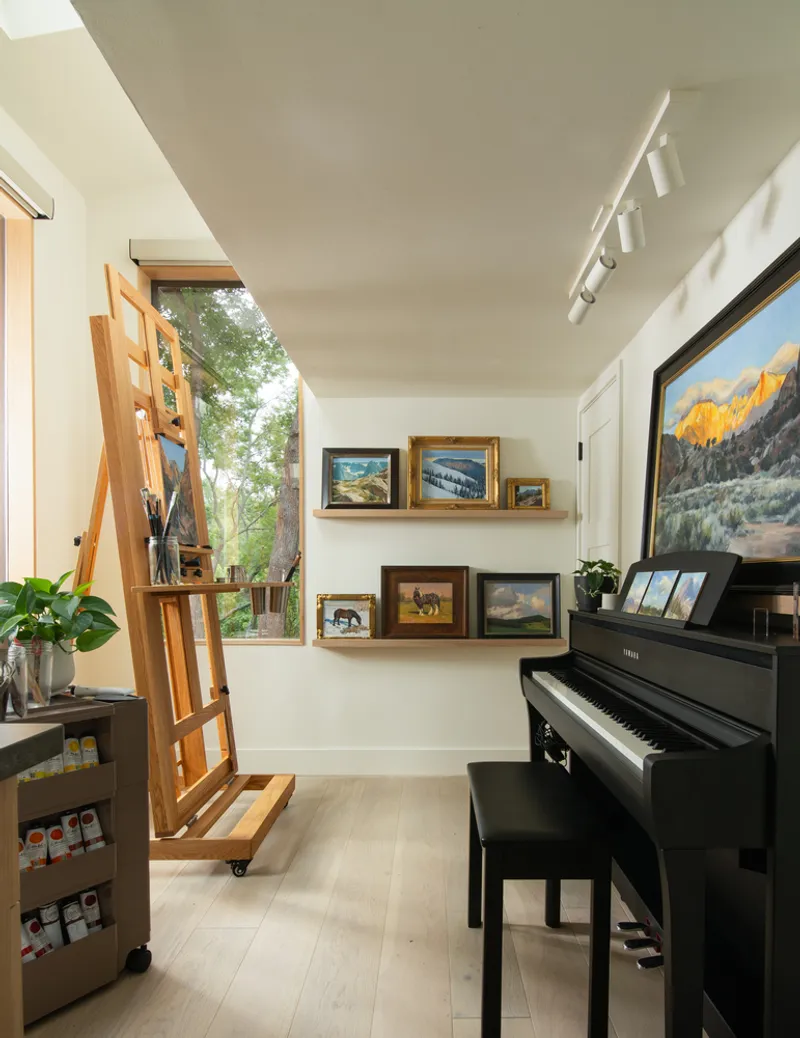
The Nook is nestled within a forested landscape behind the architect’s home in central Texas, positioned carefully to preserve the surrounding natural environment. Its placement beneath a canopy of mature trees enhances the sense of privacy and tranquility while fostering a strong relationship between architecture and landscape.
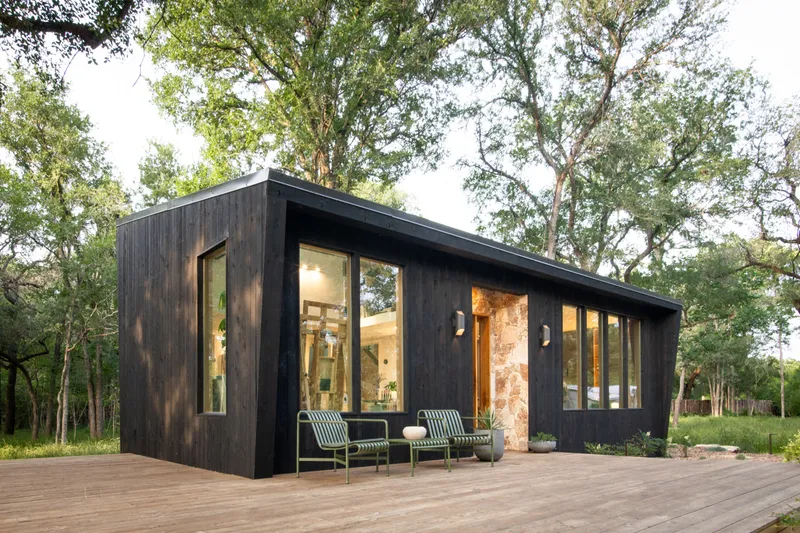
A defining feature of the project is its floating wooden deck, which cantilevers gently over the edge of a nearby creek. This architectural gesture creates a dramatic yet subtle interaction with the site, allowing occupants to experience the forest from an elevated vantage point.
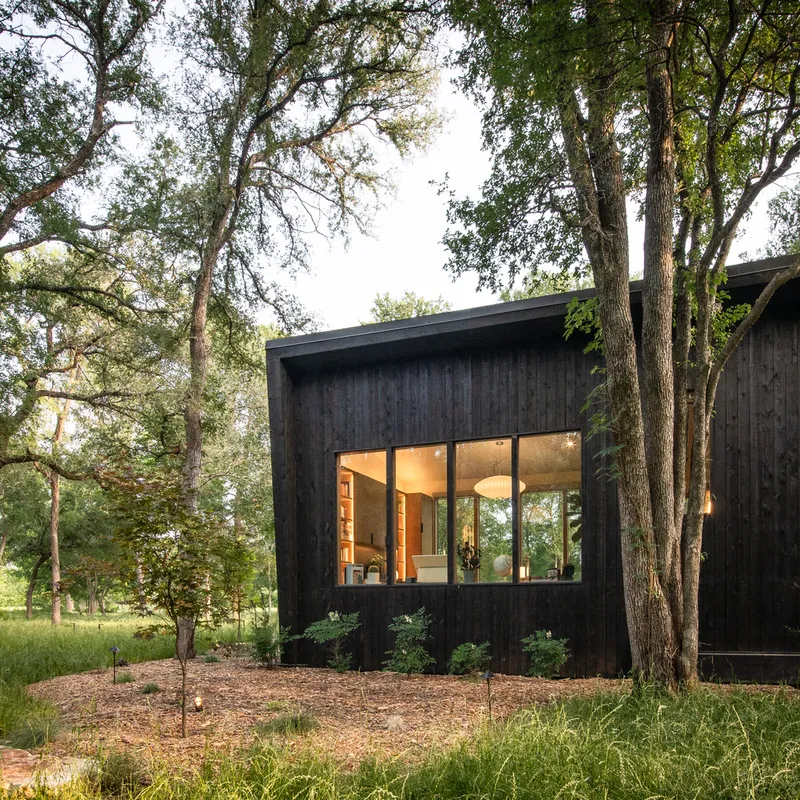
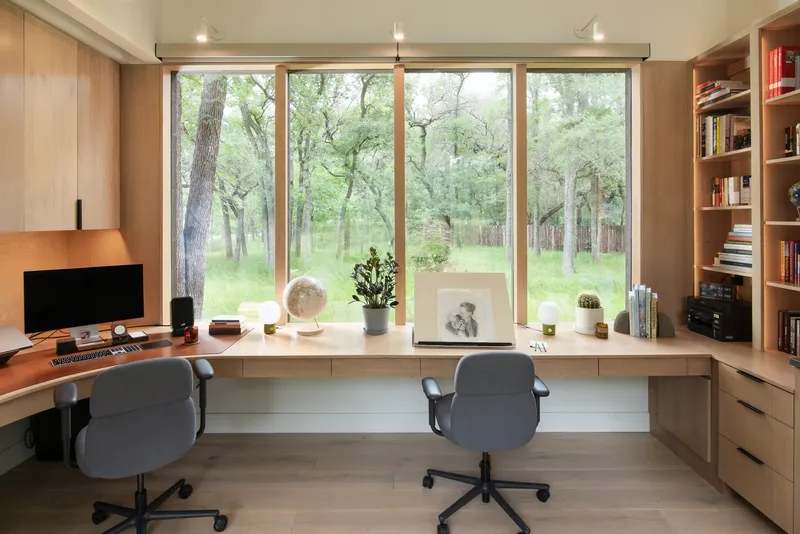
Large expanses of glazing are incorporated throughout the structure, reinforcing the architectural concept of indoor, outdoor continuity. Natural light penetrates deeply into the interior, while panoramic views of the surrounding woodland blur the boundary between built space and nature.
Material Strategy: A Balance of Texture and Warmth
Material selection plays a central role in defining the architectural character of The Nook. The project uses a carefully curated palette that combines natural materials, refined craftsmanship, and durable finishes.
Japanese Charred Cedar Exterior
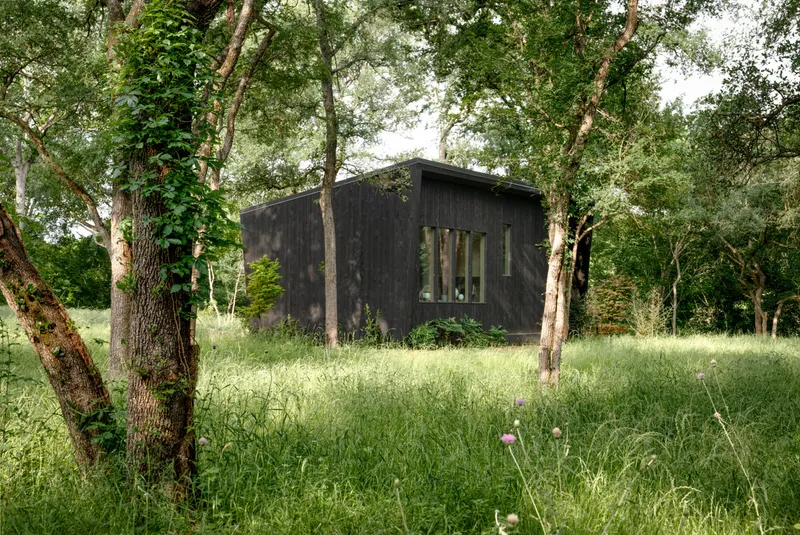
The building’s exterior is clad in Japanese charred cedar, a technique known as Shou Sugi Ban. This traditional wood preservation method involves charring the surface of cedar boards to enhance durability, weather resistance, and visual depth. The dark textured façade allows the structure to blend subtly into the forest environment while offering a contemporary aesthetic.
Warm White Oak Interiors
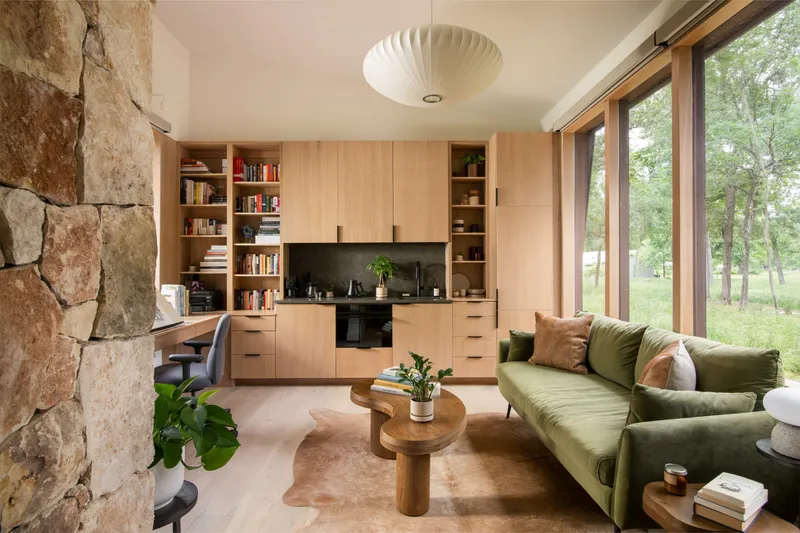
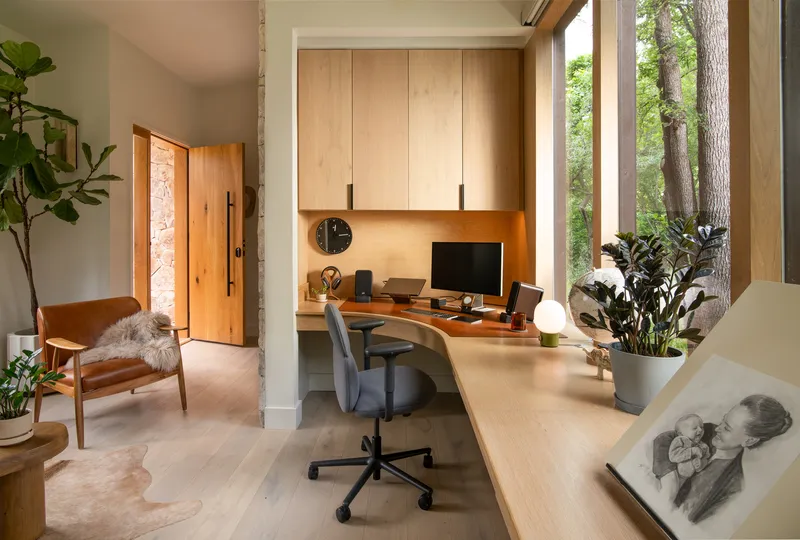
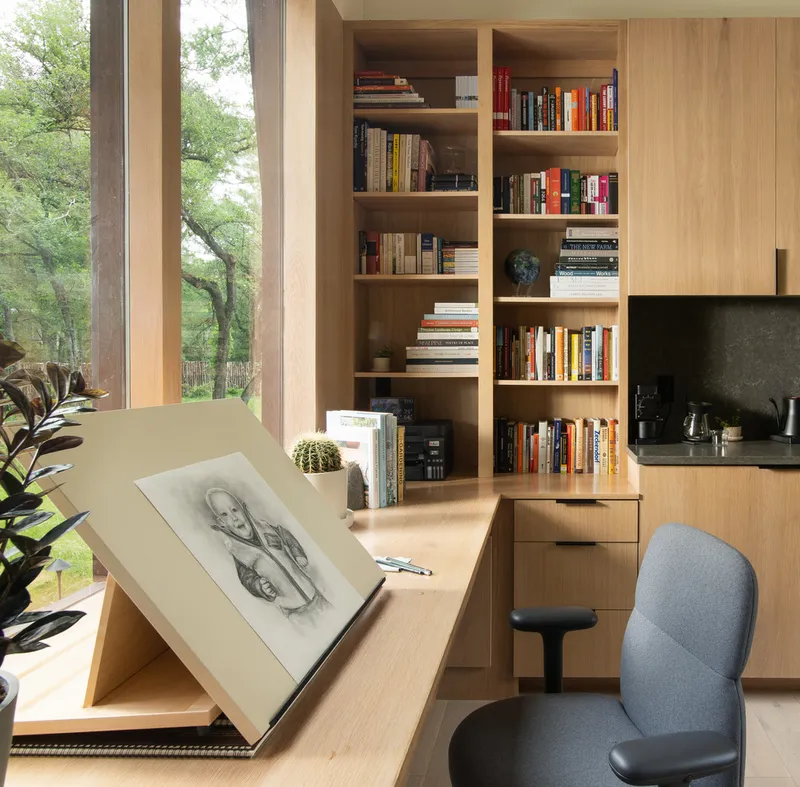
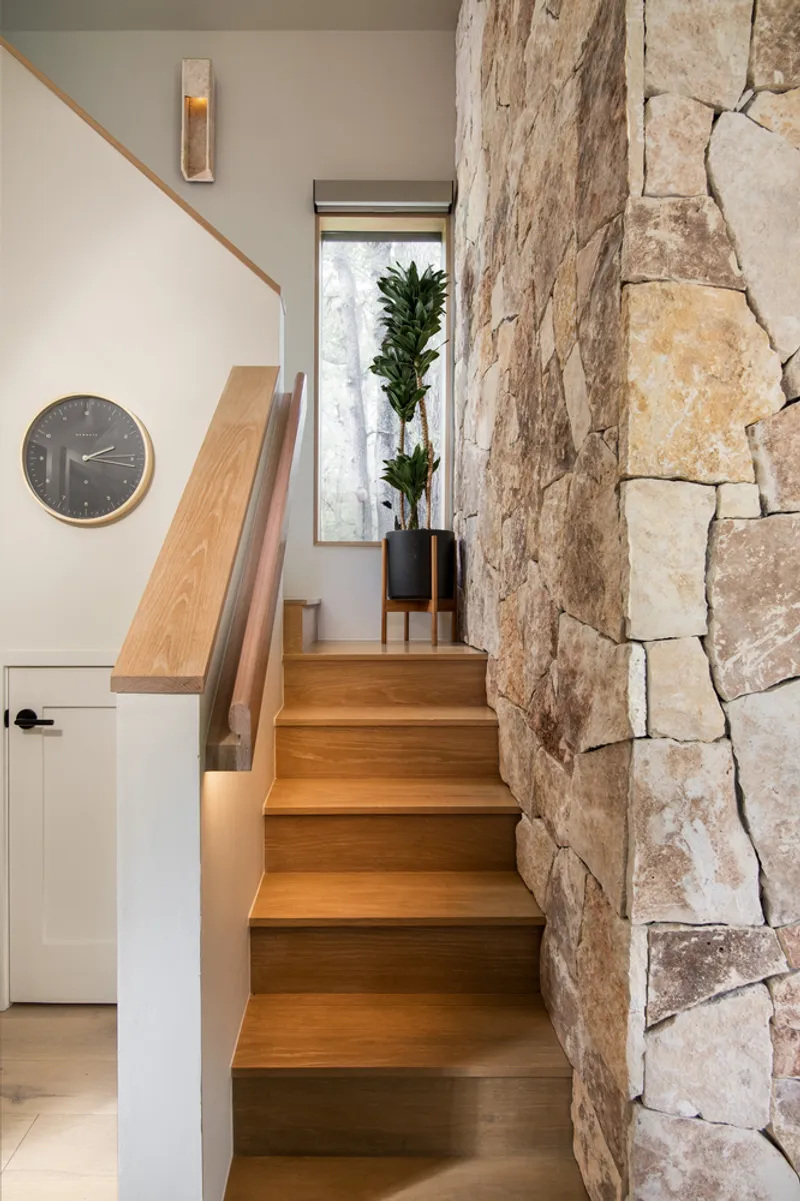
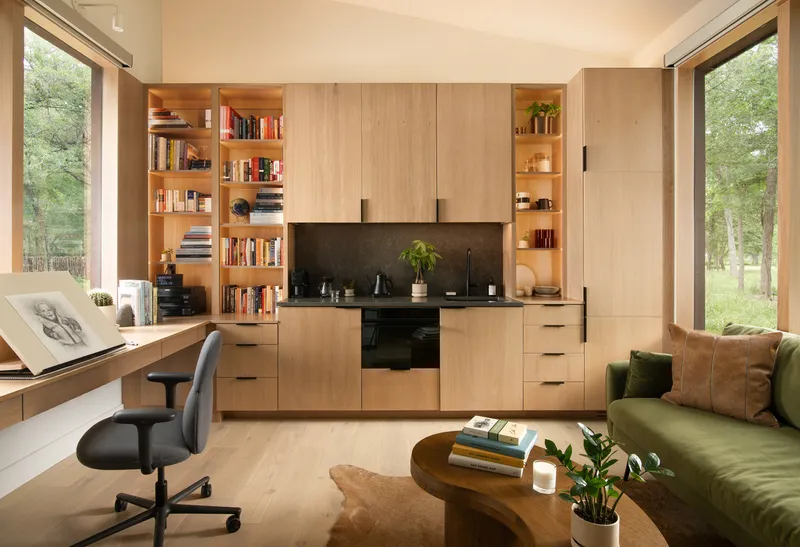
Inside, the atmosphere shifts to a warmer palette dominated by White Oak finishes. This material introduces softness and warmth, creating a calming and inviting interior environment ideal for both creative work and relaxation.
The use of White Oak contributes to:
- Visual continuity
- Natural acoustic warmth
- A minimalist yet sophisticated interior language
Local Texas Limestone
To anchor the project to its geographical context, local Texas limestone is incorporated into the design. This stone element adds a sense of permanence and regional identity, linking the architecture to the surrounding landscape and traditional building practices of the region.
Together, these materials establish a balanced architectural composition that combines modern minimalism with natural authenticity.
Interior Design: Functional Minimalism in a Compact Space
The interior design of The Nook was developed with guidance from interior design consultant Hans Lorei, ensuring that the compact floor plan remains both functional and aesthetically refined.
Despite its modest size, the interior layout feels open and adaptable. Every element has been meticulously designed to maximize usability without compromising spatial clarity.
Key interior features include:
- A flexible living and working area
- Custom shelving for art and storage
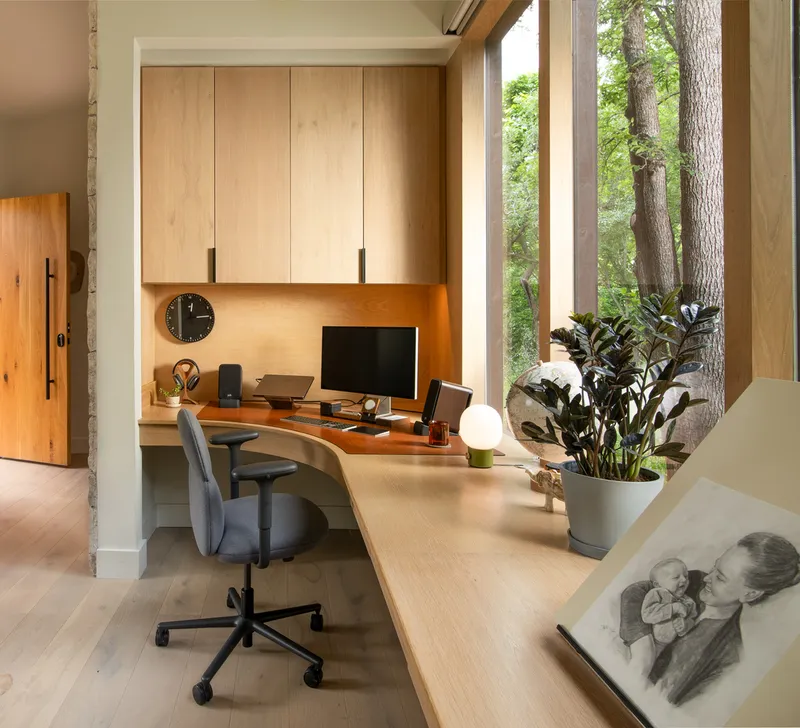
- A minimal dining and workspace
- Comfortable seating areas that encourage relaxation
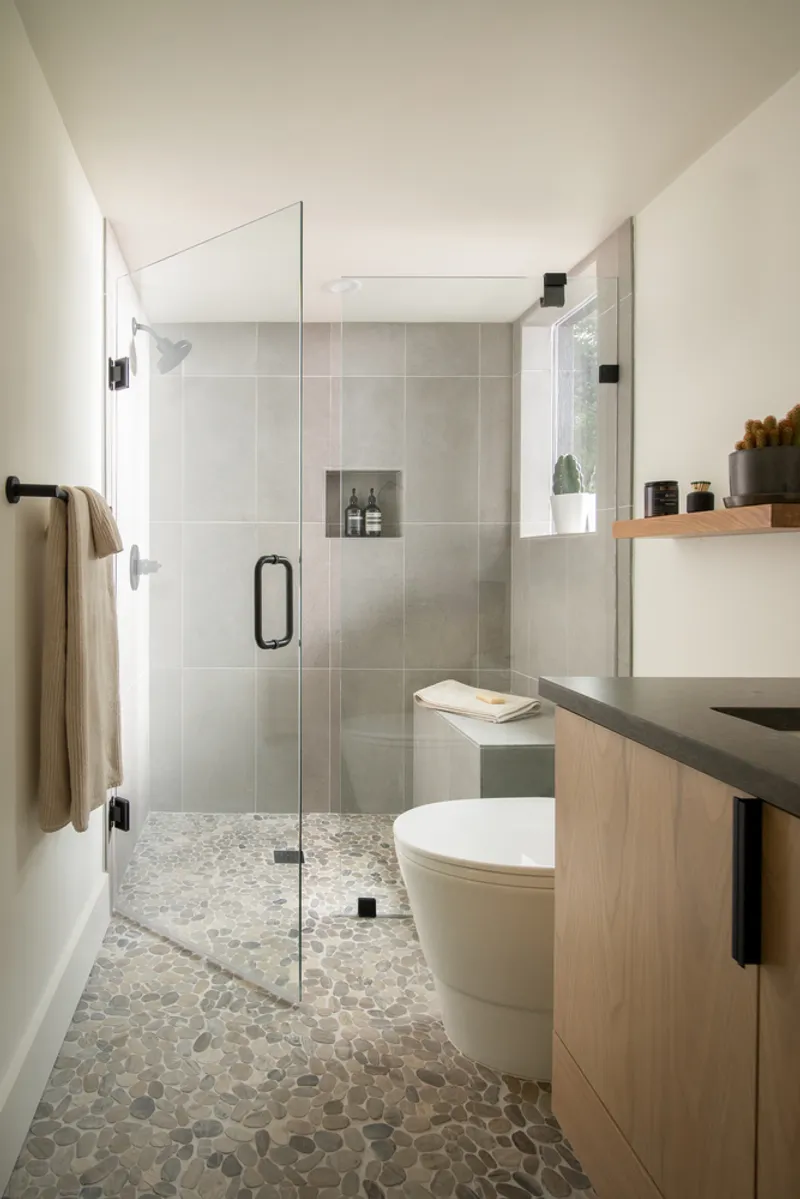
The interior architecture emphasizes clean lines, natural materials, and efficient space planning, demonstrating how thoughtful design can transform small spaces into comfortable and inspiring environments.
Precision Craftsmanship and Spatial Efficiency
One of the defining characteristics of The Nook is the meticulous attention to detail evident throughout the project. Each architectural component, from joinery to material transitions, has been carefully crafted to ensure precision and durability.
In compact architecture, efficiency is critical. The design optimizes:
- Circulation flow
- Storage solutions
- Natural lighting
- Spatial flexibility
This approach results in a structure that feels far more expansive than its 568-square-foot footprint suggests.
Flexible Use: From Personal Retreat to Unique Stay
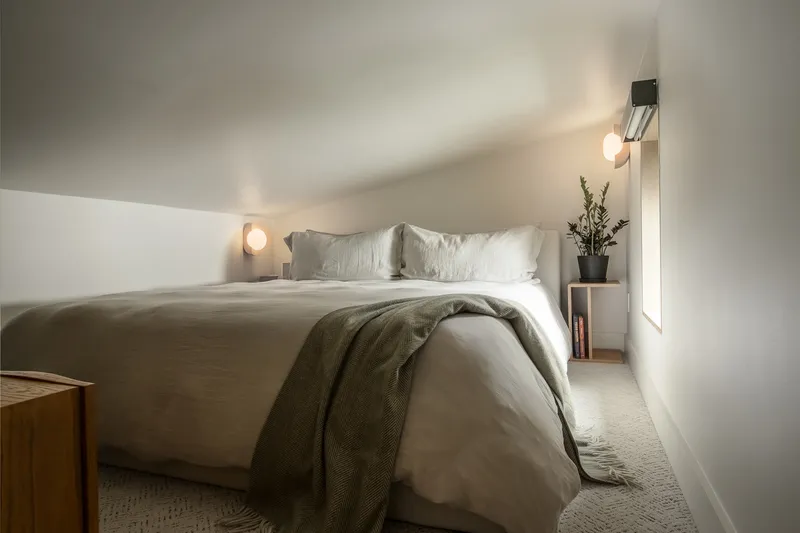
Although originally designed for personal use, The Nook demonstrates remarkable adaptability. The building can function effectively as:
- A unique vacation rental
- A creative studio
- A home office
- A guesthouse
- A compact residence
Recognizing its broader potential, Isaac French has had the project’s architectural plans professionally drafted, allowing others to replicate or adapt the design for their own sites. This move highlights the increasing demand for prefabricated or transportable small-scale architecture.
The ability to relocate or reconstruct the structure adds another layer of flexibility, making The Nook an appealing model for micro-resort developments and off-grid retreats.
The Rise of Micro-Architecture and Experiential Design
Projects like The Nook reflect broader trends within contemporary architecture, particularly the rise of micro-architecture, boutique hospitality, and experiential living spaces.
Travelers and homeowners alike are increasingly drawn to spaces that prioritize:
- Immersion in nature
- Minimal environmental impact
- High-quality design in compact footprints
- Unique architectural experiences
By combining artistic expression, environmental sensitivity, and practical flexibility, The Nook stands as a compelling example of how small architecture can deliver powerful spatial experiences.
A Small Building with Big Architectural Ideas
The Nook by Isaac French demonstrates that innovative architecture does not require monumental scale. Through thoughtful design, material sensitivity, and an intimate connection with nature, the project transforms a small footprint into a rich spatial experience.
Blending micro-resort design, artistic workspace, and residential retreat, The Nook reflects a new direction in architecture, one where compact structures can serve multiple functions while maintaining strong aesthetic and environmental values.
As interest in small-scale sustainable architecture and experiential hospitality continues to grow, projects like The Nook offer inspiration for architects, developers, and creatives seeking to design meaningful spaces that engage both people and place.
All photographs are works of
Jeff Jones




Popular Articles
Popular articles from the community


Co-Life: Senior Housing Design That Reconnects Older Adults With the City
Co-Life reimagines senior housing design through healing gardens, shared streets, workshops, and a sustainable community across generations.

Hill & Cross Opera: Sculptural Opera House Architecture Shaped by Tallinn’s Landscape and Identity
Hill & Cross Opera reimagines opera house architecture in Tallinn through its sculptural hill, civic plaza, glass wave and a luminous cross.

Conexión: Biophilic Design Reimagines High-Rise Living in Hong Kong
Conexión reimagines high-rise living in Hong Kong through biophilic design, green facades, shared spaces, daylight, water and nature within.

The Earth Pod: 3D Printed Homes for Resilient Refugee Communities
The Earth Pod reimagines refugee housing through 3D printed homes made from clay, combining resilience, self-sufficiency, and rapid shelter.


Similar Reads
You might also enjoy these articles

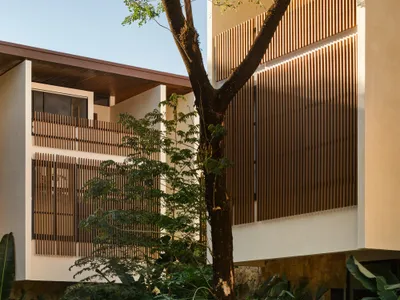
FAMM Arquitectura Organizes Ten Villas Around Courtyards and Jungle in Nosara, Costa Rica
El Molino pairs two elongated volumes with deep overhangs and timber louvers to build a compact coastal community five minutes from the beach.
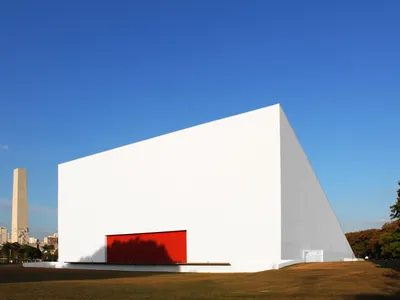
Oscar Niemeyer's Ibirapuera Park Pavilions Define São Paulo's Cultural Identity in Concrete and Curve
A constellation of modernist volumes set within São Paulo's most important urban park, conceived for the city's 400th anniversary in 1954.

How Henri Picq's 1889 Paris Pavilion Traveled 11,000 Kilometers to Become Santiago's Artequín Museum
A prefabricated iron and glass pavilion built for the Paris Universal Exposition found a second life as a children's art museum in Chile.
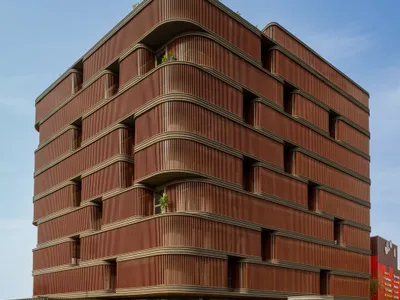
Sanjay Puri Architects Wraps a Jaipur Office Tower in Capsule-Shaped Green Buffers
A nine-level climate-responsive workplace near Jaipur Airport uses stacked planter terraces and aluminium screens to fight 40°C heat.


Explore Sustainable Design Competitions
Discover active competitions in this discipline



Challenge to reimagine the Iron Throne


Photograph architecture without architects


Illustrate the lost glory of Angkor Wat - Render Challenge


Design challenge to reuse E-waste
Comments (0)
Please login or sign up to add comments
No comments yet. Be the first to comment!