

The Offbeat Sari Exhibition by Studio MUTT: Reframing Tradition Through Contemporary Design
A vibrant exhibition reimagining the sari through contemporary design, identity, and sustainability, curated in immersive, decolonial spaces by Studio MUTT.


Location: Design Museum, London, UK Year: 2023 Architects: Studio MUTT Curator: Priya Khanchandani Lighting Design: Beam LD Collaborators: Sthuthi Ramesh, RASKL, Dufaylite, ECOBoard Photographers: Andy Stagg, Tian Khee Siong Exhibition Area: 325 m²
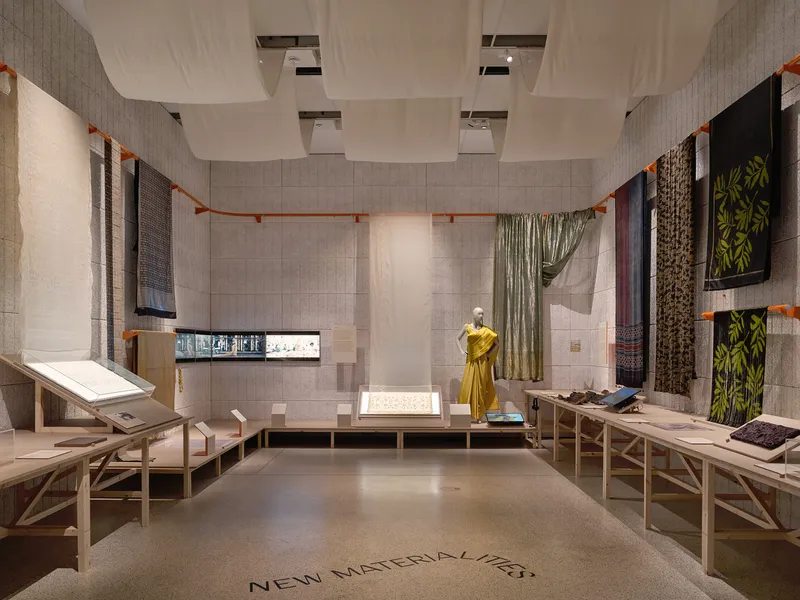
Reimagining the Sari in the 21st Century
Set against the backdrop of the iconic Design Museum in London, The Offbeat Sari exhibition by Studio MUTT offers a radical recontextualization of the sari—India’s most enduring and dynamic garment. Running from 19 May to 17 September 2023, this groundbreaking exhibition marks one of the most significant showcases of contemporary Indian fashion for UK audiences in recent history.
Curated by Priya Khanchandani, the exhibition presents the sari not just as traditional attire, but as a vibrant site of design innovation, cultural resistance, and personal identity. Featuring over 60 experimental saris from the last decade, the exhibition highlights the diverse ways designers and wearers have transformed this iconic textile into a global symbol of modern expression.
Designing for Cultural Complexity and Sustainability
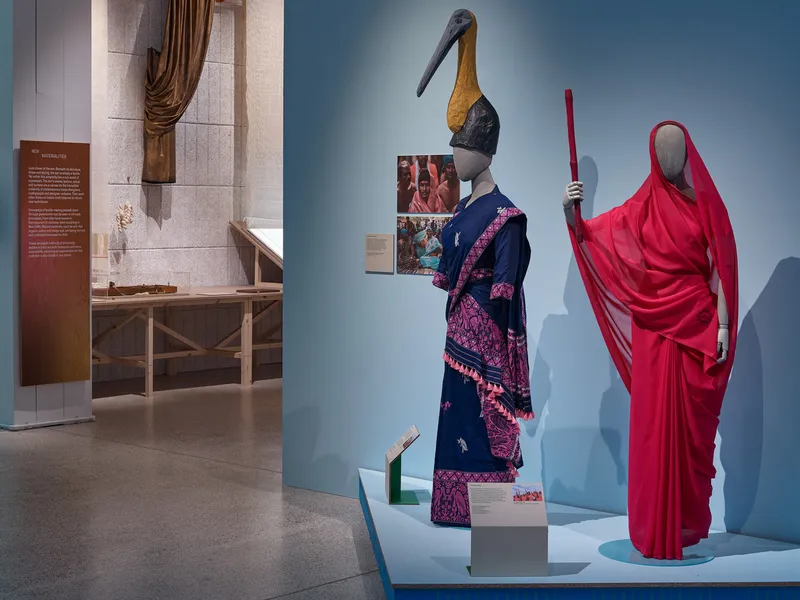
Studio MUTT, known for its architectural storytelling, was tasked with translating this cultural narrative into spatial form. Their approach diverged from stereotypical representations of Indian heritage, instead engaging with the contemporary socio-political context of Indian fashion.
The exhibition unfolds through three thematic zones—Transformations, Identity + Resistance, and New Materialities—each rendered with thoughtful material palettes, immersive lighting by Beam LD, and an architecture that adapts and evolves like the garments themselves.
Built using natural and regenerative materials like honeycomb cardboard, cotton fabric, and eco-board, the entire installation is designed to be fully dismantled and reassembled—echoing the sari’s versatility. As a prototype for the Design Museum’s sustainability toolkit, this project sets a precedent for future environmentally conscious exhibition design.

Section 1: Transformations
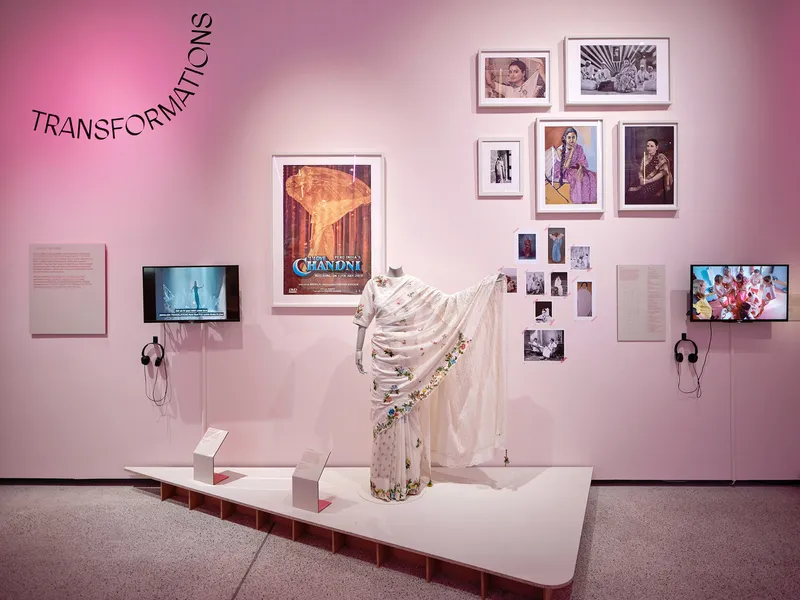
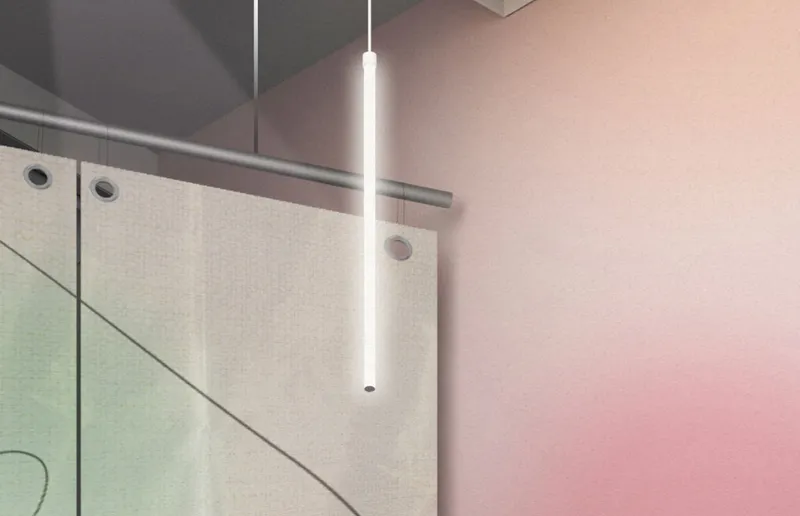
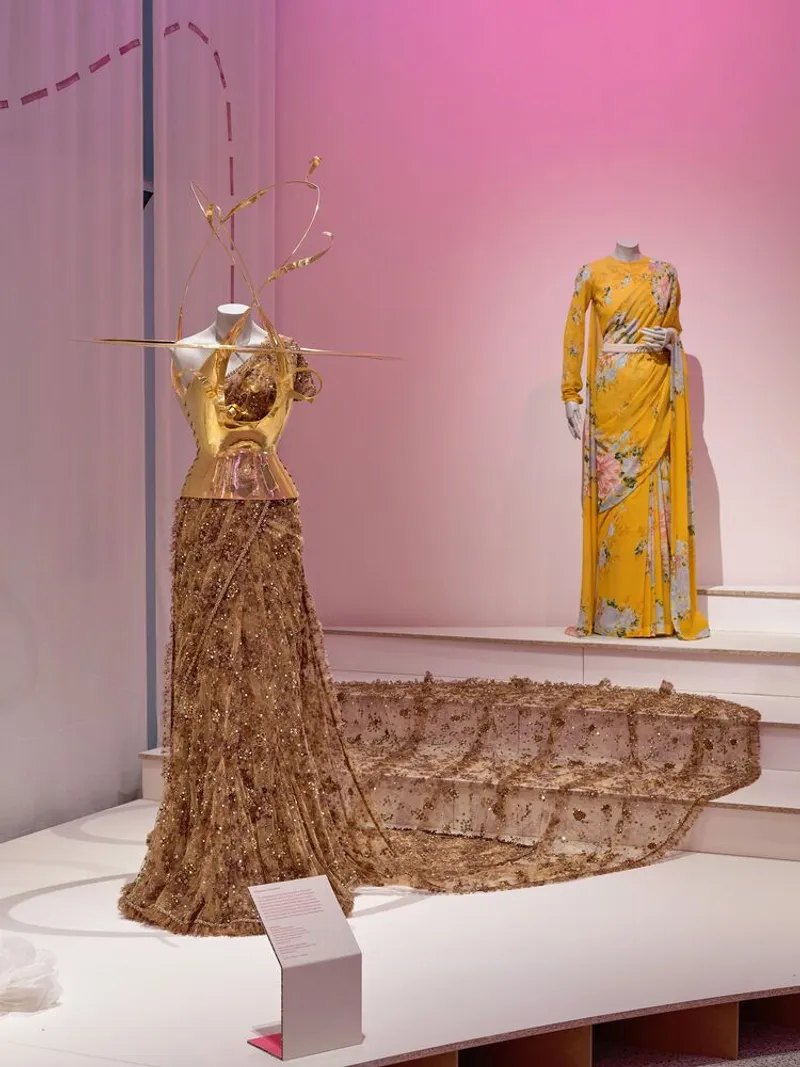
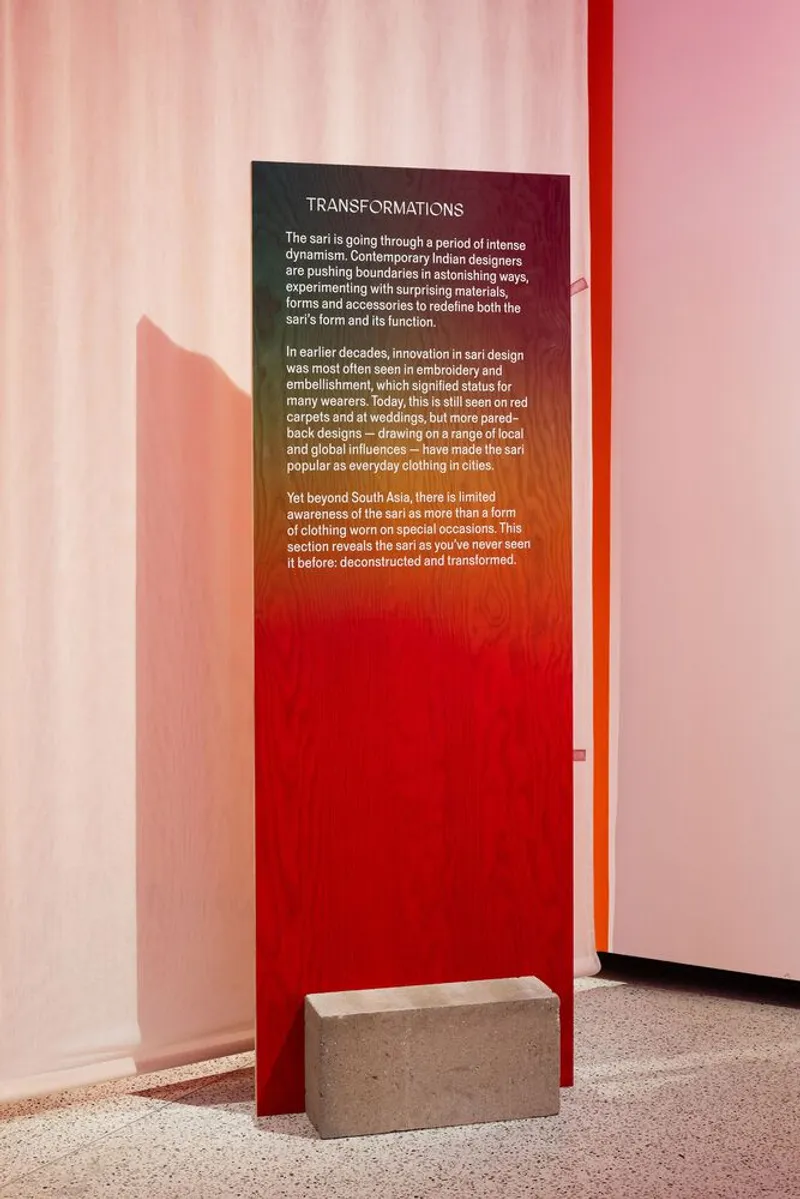
This opening space celebrates the experimental energy of contemporary Indian designers. Studio MUTT evokes the atmosphere of Indian festivals using tiered plinths, floral motifs, and gradient lighting effects. The tall ceiling is fully utilized to elevate mannequins in dynamic poses, emphasizing the sari’s evolution from conventional dress to a playful and expressive fashion statement.
Section 2: Identity + Resistance
In this section, the sari is presented as a medium of empowerment, resistance, and identity. Through narratives of gender, queerness, and protest, the garment is shown to carry deep personal and political meaning. The exhibition design mimics the chaotic intimacy of Indian street scenes, using honeycomb cardboard to construct facades and alleyways that immerse visitors in a reinterpretation of urban India’s makeshift beauty.
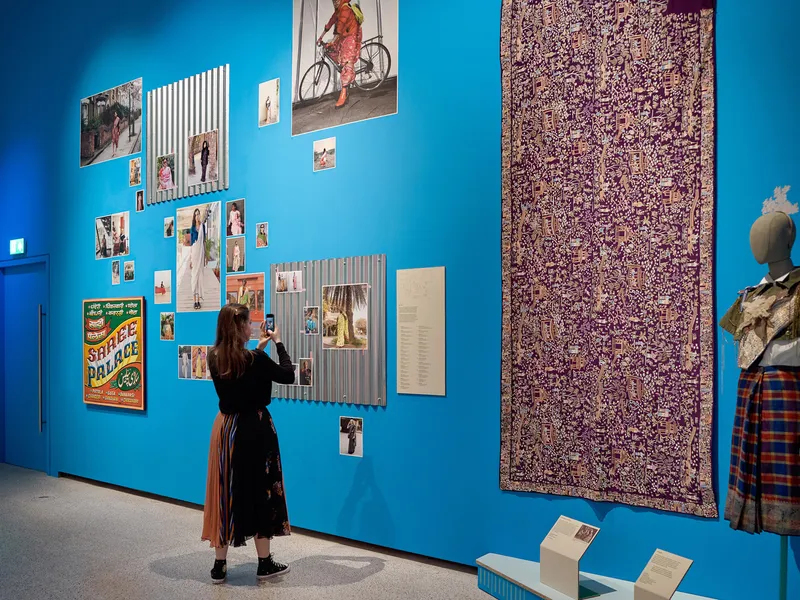
Section 3: New Materialities
The final gallery frames the sari as a tactile textile object, divorced from its association with the body. Displayed on a continuous rail in a minimalist workshop-inspired setting, each sari highlights innovations in weave, texture, color, and surface, honoring the craftsmanship of India’s artisans in a way that feels democratic, open, and reverent.
A Decolonial Gesture in a Post-Colonial Space
Staged in the former Commonwealth Institute—an architectural reminder of Britain's colonial past—The Offbeat Sari takes on a powerfully symbolic role. It actively participates in decolonizing museum narratives, challenging Eurocentric assumptions and spotlighting post-colonial Indian design through a contemporary lens.
Studio MUTT’s design carefully avoids visual clichés, instead collaborating with a network of South Asian designers, curators, and researchers to create an environment that is both recognizably Indian and refreshingly unconventional.
Offbeat, On Point
With The Offbeat Sari, Studio MUTT and their collaborators have created more than an exhibition—they have built a platform for global dialogue around fashion, identity, sustainability, and decolonization. The exhibition’s lasting impact lies in how it redefines the sari not just as a relic of tradition, but as a living, breathing canvas for 21st-century expression.


Popular Articles
Popular articles from the community

Extended Shell: Retrofitting Kolkata's Balconies as Living Urban Thresholds
A modular retrofit system recovers the social and environmental intelligence of Kolkata's historic verandas for contemporary Park Street residents.
Temporary Home for Dogs: A Reversed Zoo Rethinks Animal Shelter Architecture
In Bucharest, a sinuous corridor and freed landscape flip the logic of containment, designing a shelter that works to make itself unnecessary.

Cloaked Colonization: A Mobile Underwater Habitat That Moves Like a Fish
Micah Abaya's shortlisted EHC Pacific entry reimagines ocean settlement as a dispersed network of self-sustaining architectural organisms.

Opera on the Sea: Driftwood Logic Shapes a Timber Opera House on Estonia's Coast
Trevor Orgill's opera house translates the entangled drift of floating timber into a civic building where wood, water, and music converge.

Similar Reads
You might also enjoy these articles


Hodi-Mandai Geram
Project Function: Preservation and revitalization of the Intangible heritage and socio-spatial identity of the Hodi by Housing, Cultural Memory Center, Sacred Grove, landscape, local tourism economy


Olio Towers: A Mid-Rise for Performers That Fuses Housing, Rehearsal, and Stage
Located blocks from Houston's Theater District, this modular tower stacks living units around a central performance atrium.

Oasis: Modular Green Housing Carved into Dhaka's Urban Fabric
A shortlisted Plugin Housing entry reclaims unauthorized settlements in Dhaka with stepped concrete volumes, green roofs, and ventilation-driven design.

Black Hole: A Floating Megastructure for the Post-Physical Era
Emiliano Mazzarotto envisions a spherical, self-scaling arena where e-sports, digital hotels, and holographic stadiums replace traditional public space.

Explore Samira Rathod Design Atelier Competitions
Discover active competitions in this discipline

Challenge to reimagine the Iron Throne

Photograph architecture without architects

Illustrate the lost glory of Angkor Wat - Render Challenge

Bring back Drive In's
Comments (0)
Please login or sign up to add comments
No comments yet. Be the first to comment!