

The Offset ADU Residence by Byben: A Compact Backyard Housing Solution in Los Angeles
The Offset ADU Residence by Byben transforms a compact Los Angeles backyard with an offset design, layered outdoor spaces, and precise material detailing.


A Compact Backyard ADU Redefining Spatial Flexibility in Los Angeles
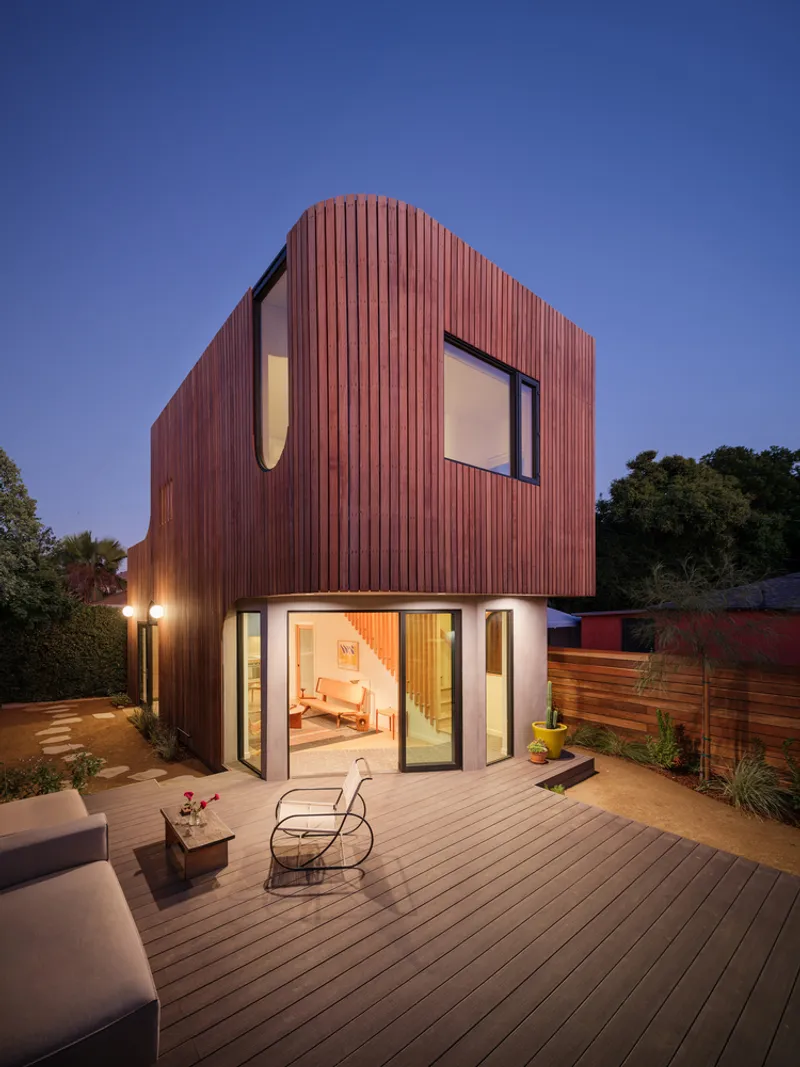
The Offset ADU Residence by Byben is a compact yet highly strategic accessory dwelling unit located in Los Angeles, California. Designed as a 933-square-foot back house, the project replaces an existing garage rather than expanding the main residence, demonstrating how small-scale residential architecture can unlock new spatial, social, and environmental value within dense urban neighborhoods.
Positioned at the rear of the property, the ADU was conceived to activate the backyard while responding carefully to strict planning constraints. Instead of treating these limitations as obstacles, the architects transformed them into defining architectural features, resulting in a distinctive offset form that enhances both interior experience and outdoor usability.
Site Strategy and Spatial Organization
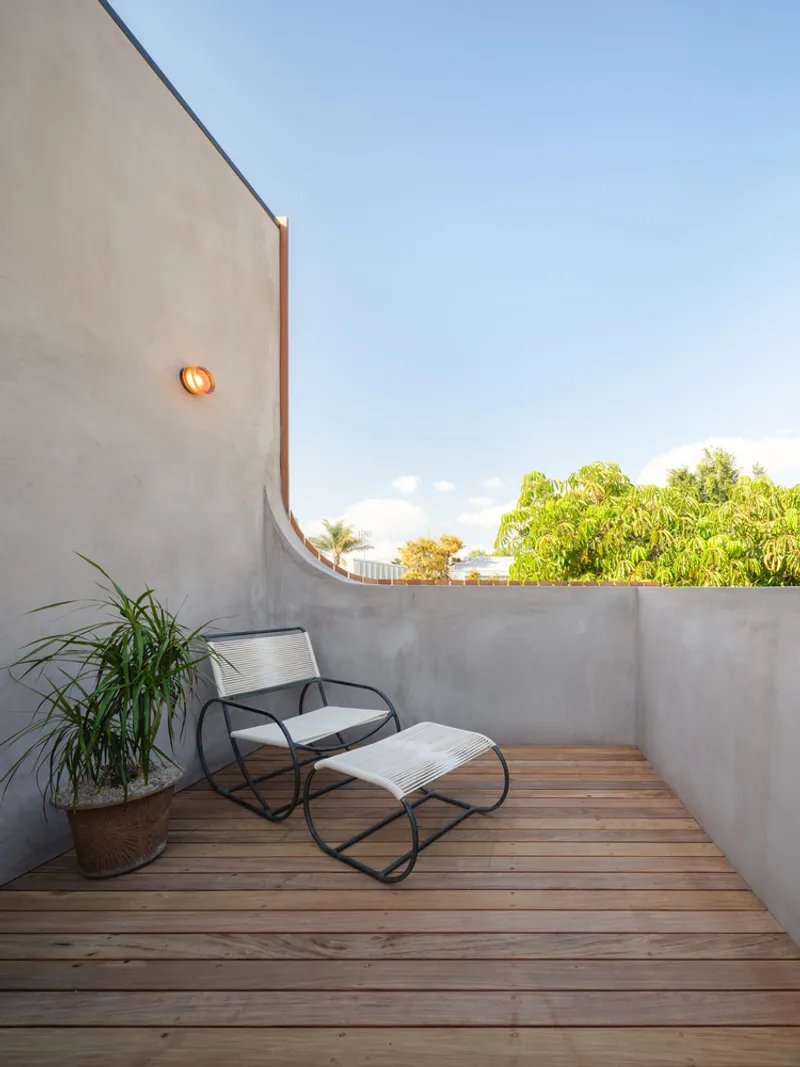
The ADU’s most recognizable design move is the offset second level, shaped by the presence of overhead power lines at the back of the site. Required setbacks created an opportunity to shift the upper volume forward, generating a generous second-floor deck and a covered entrance below. This move not only ensures regulatory compliance but also introduces layered outdoor spaces that enrich daily living.
The placement of the new structure reorganizes the backyard into three distinct exterior zones: a deck between the primary house and the ADU, a rear yard, and a side yard. Each area serves a different function, transforming what was once a single residual space into a sequence of usable outdoor rooms that support social interaction, relaxation, and movement.
Program and Client Brief
Originally envisioned as an addition to the existing home, the project evolved into a standalone ADU to better serve the family’s needs. The brief called for a media room and an extra bedroom or office, with an emphasis on flexibility and privacy. By shifting parking away from the rear yard, the ADU solution also allowed the outdoor space to expand, further improving the quality of life for the residents.
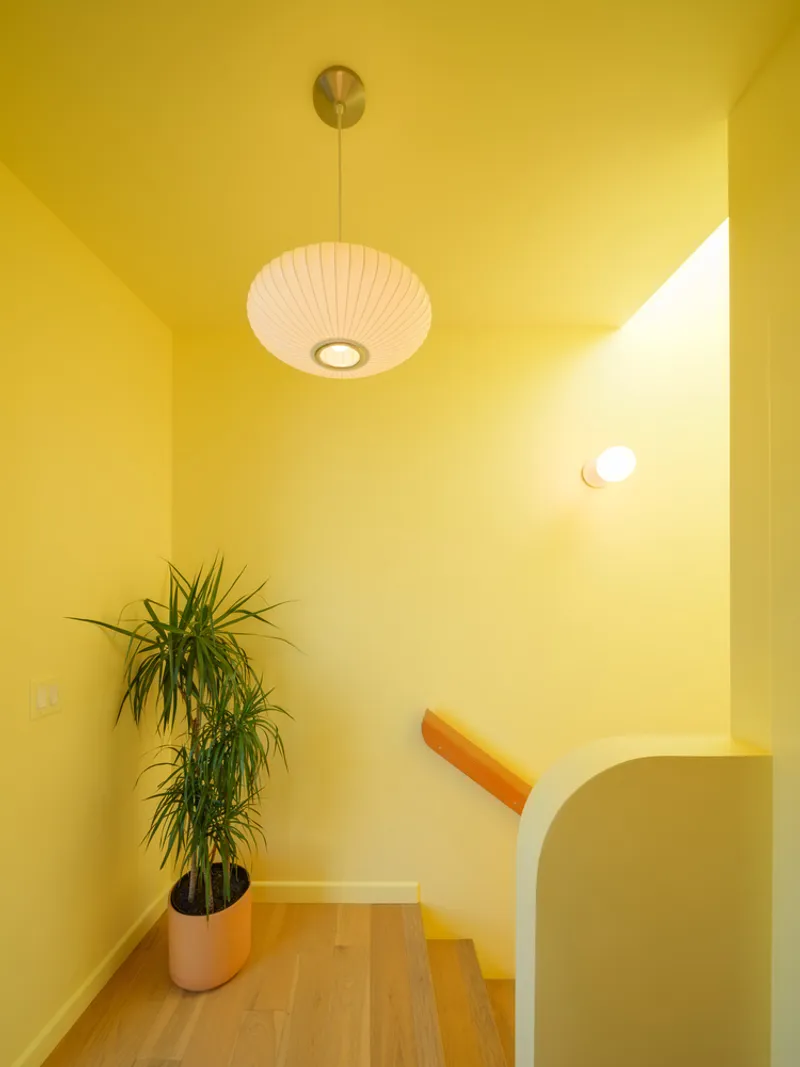
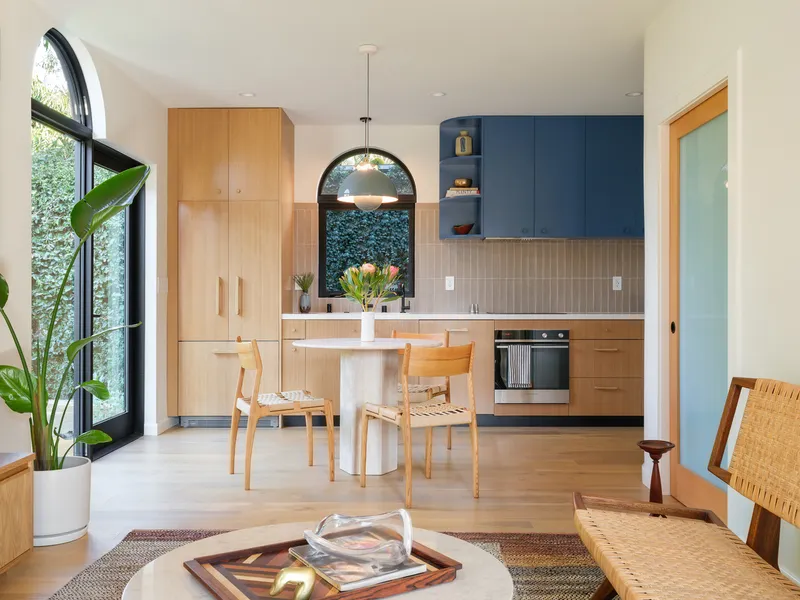
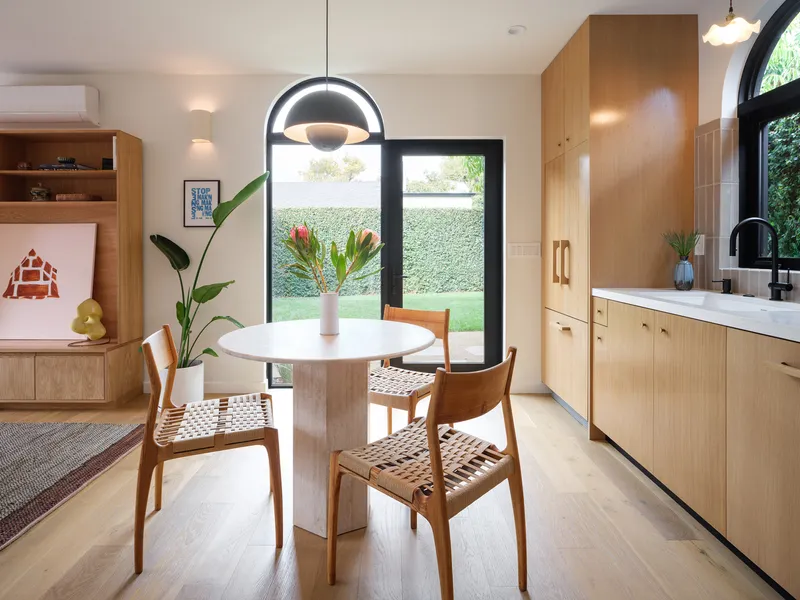
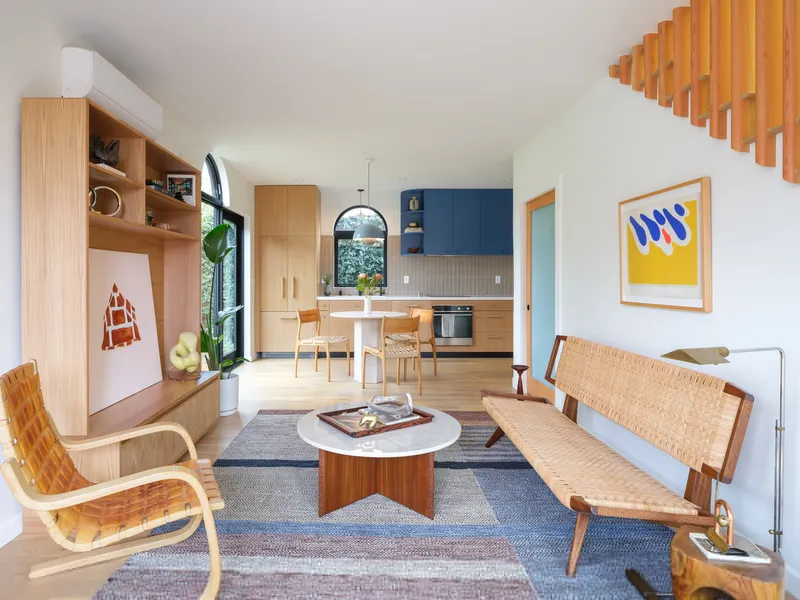
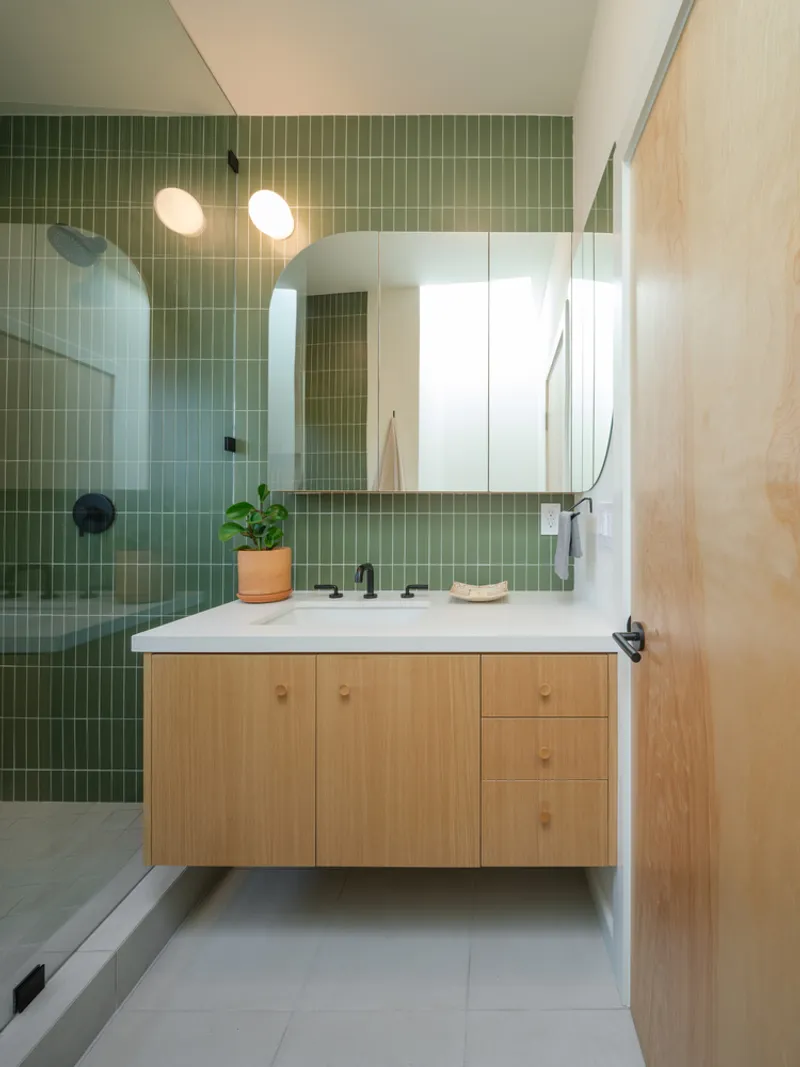
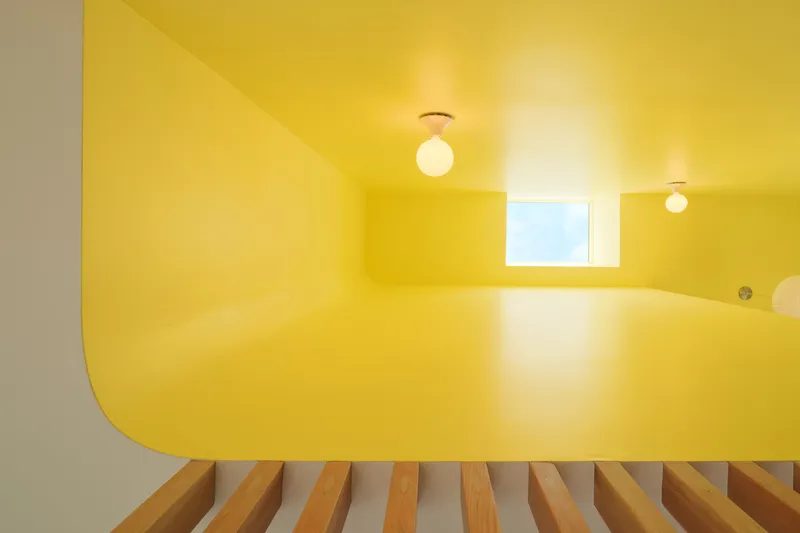
Inside, the layout prioritizes openness, natural light, and visual connection to the outdoors. Large openings and carefully framed views blur the boundary between interior and exterior, reinforcing the project’s emphasis on spatial efficiency and comfort.
Planning Constraints as Design Drivers
Local zoning regulations played a central role in shaping the project. An eight-foot no-build radius around the rear power lines and four-foot side yard setbacks were integrated into the design strategy. The power line setback becomes a second-floor deck accessed from the hallway, while the side yard setback accommodates bike storage and newly planted greenery, including a tree that contributes to the microclimate and visual softness of the site.
These constraints ultimately enhance the project’s livability, demonstrating how regulatory requirements can lead to more thoughtful and responsive residential design.
Materials and Construction Approach
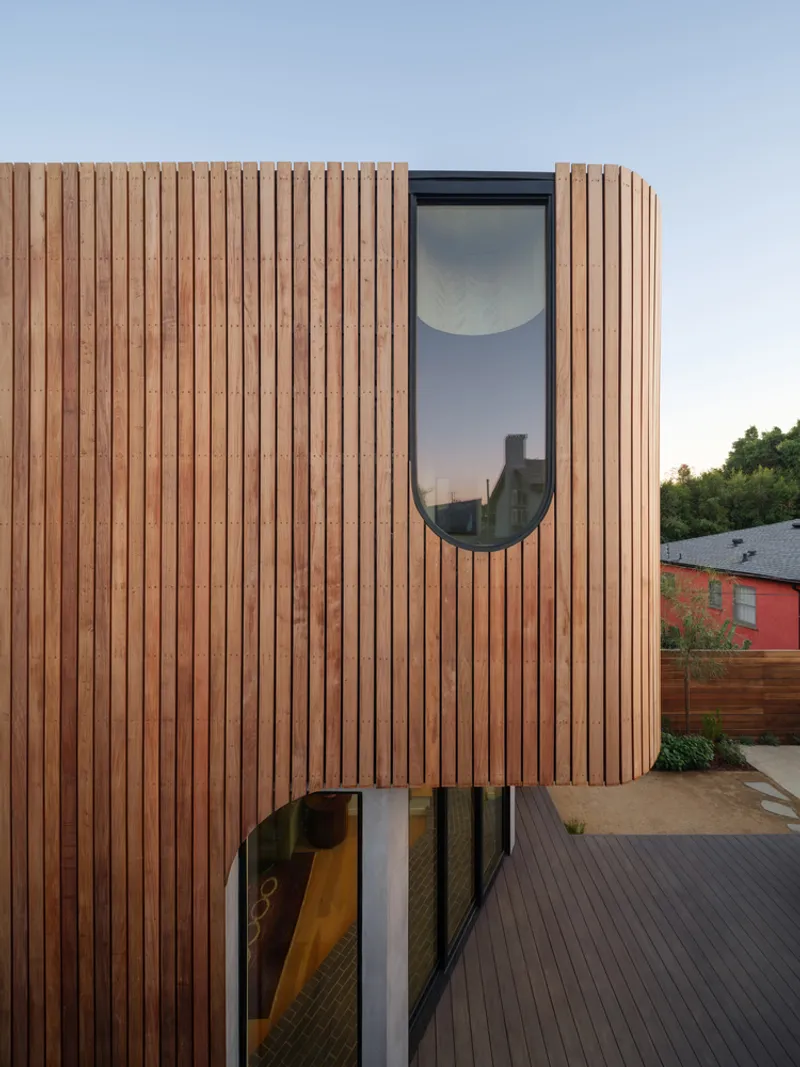
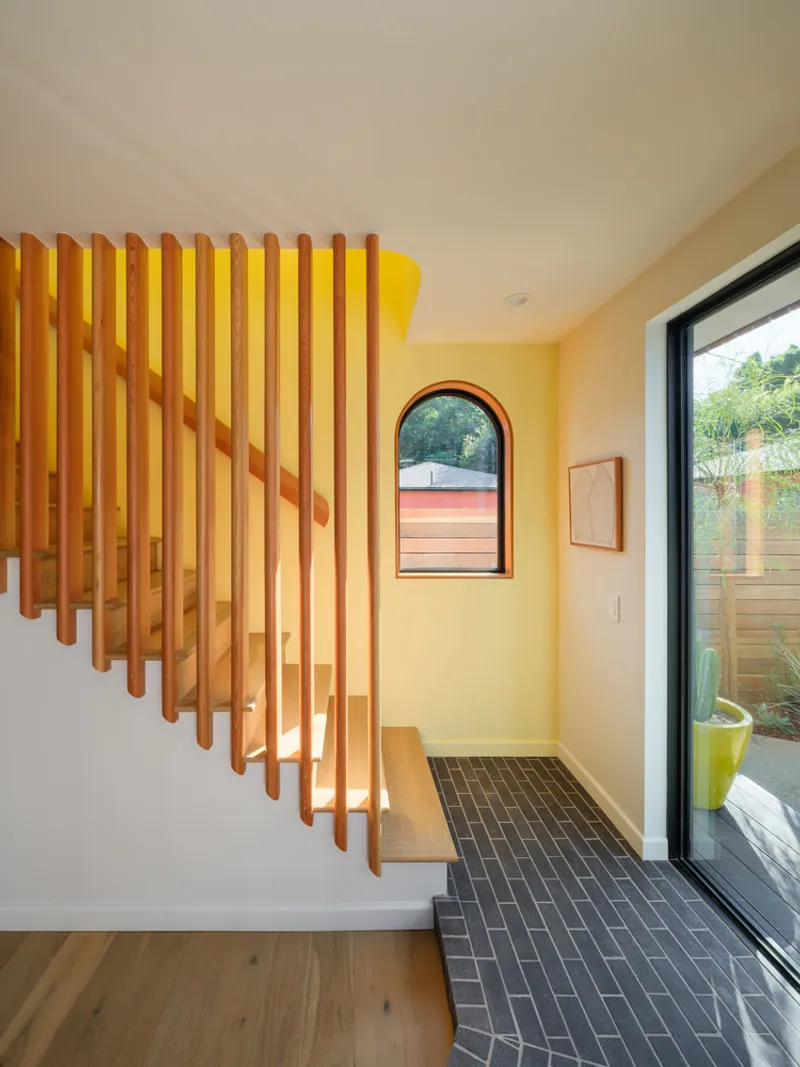
The Offset ADU employs conventional California stick-frame construction, supplemented by structural steel to support the front cantilever. Material choices balance durability, craftsmanship, and tactile warmth. An Ipe wood rainscreen clads the most visible elevations, paired with smooth stucco on secondary façades facing neighboring properties.
The Ipe installation required a high level of precision, particularly around window openings, where boards were individually calculated and cut to maintain clean detailing. Windows are framed with custom wood shadow boxes, reinforcing depth and material continuity across the façade.
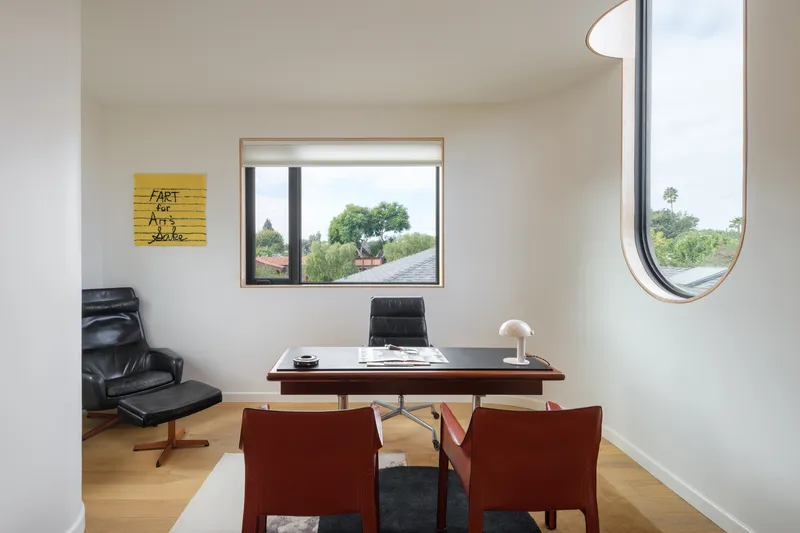
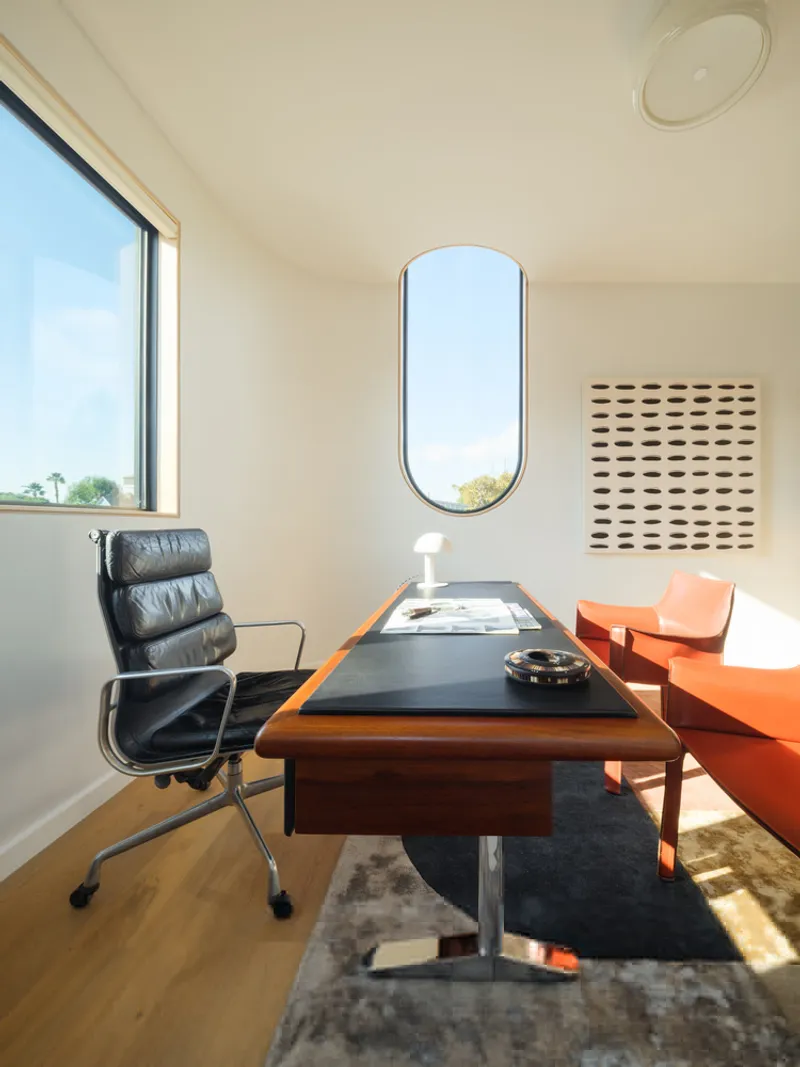
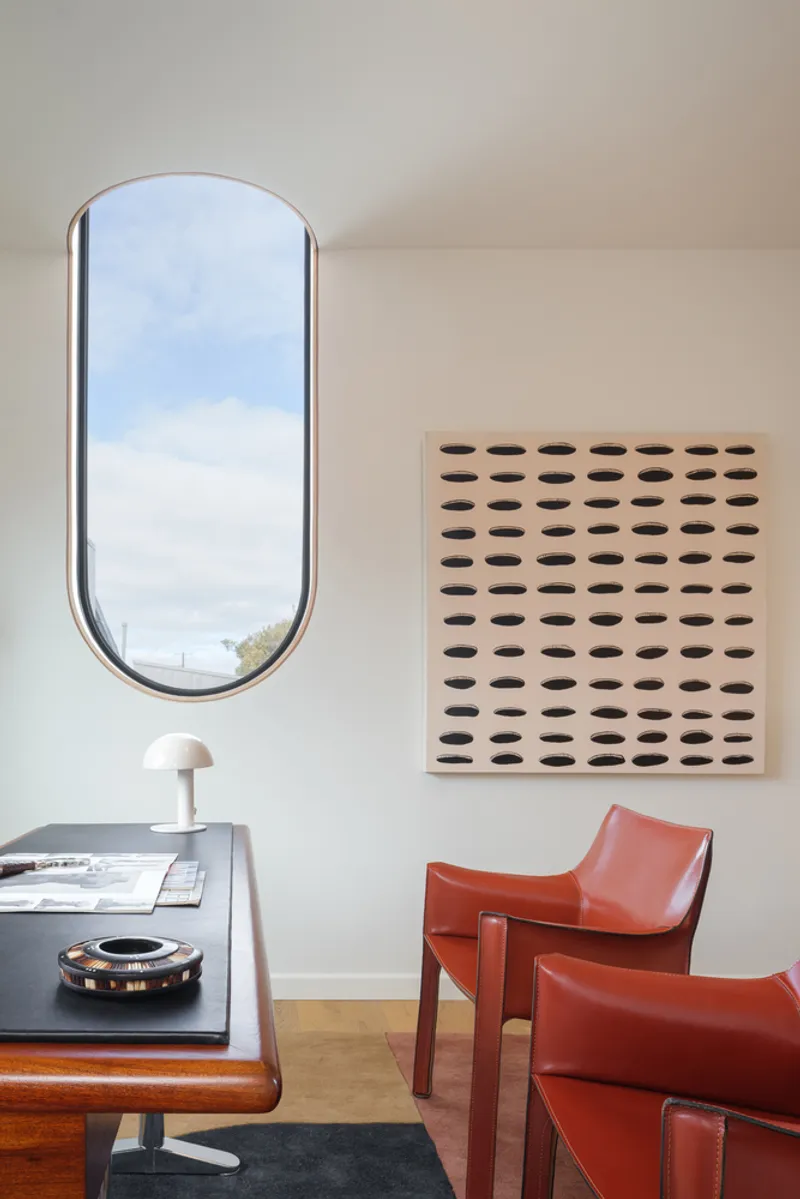
One of the project’s most striking interior features is the U-shaped window in the bedroom or office. Raised to parapet height, the window establishes an uninterrupted visual connection with the sky. Wood framing, a curved soffit, and a mirrored ceiling surface amplify the effect, creating a surreal sense of expanded space within a compact footprint.
A Model for Contemporary ADU Design
The Offset ADU Residence exemplifies how accessory dwelling units can do more than add square footage. Through careful site analysis, inventive massing, and refined material execution, Byben delivers a small-scale residential project that enhances outdoor living, respects neighborhood context, and offers a flexible solution for evolving family needs.
All photographs are works of Taiyo Watanabe


Popular Articles
Popular articles from the community


GROUP A Strips a 1969 Rotterdam Harbor Headquarters to Its Frame and Wraps It in Timber Louvers
In Rotterdam's M4H harbor district, Ferro Offices reuses a 1969 frame, adds one timber storey and reaches BREEAM-NL Outstanding.

longwave studio Reorganizes a 112 m² Tainan Apartment Around the Daily Routines of a Family and Two Cats
In Tainan, Taiwan, birch plywood, rust-red furniture and a freestanding plaster wall link arrival, storage, work and family life in one apartment.

Juan García Correa, John González and Claudia Rueda Sink a Circular Amphitheater into a Manizales Engineering Building
On the La Nubia campus in Manizales, Colombia, the S1 Building folds labs and offices into a hillside of ramped lawns that double as a campus route.

Cube Design Draws an Ecological Corridor Between Two Shenzhen Hills with the Nankai Building
Beside Shenzhen's container docks, the Nankai Building pairs stacked balconies with a climbing green screen to connect two hillsides across its height.

Similar Reads
You might also enjoy these articles


Hodi-Mandai Geram
Project Function: Preservation and revitalization of the Intangible heritage and socio-spatial identity of the Hodi by Housing, Cultural Memory Center, Sacred Grove, landscape, local tourism economy


Olio Towers: A Mid-Rise for Performers That Fuses Housing, Rehearsal, and Stage
Located blocks from Houston's Theater District, this modular tower stacks living units around a central performance atrium.

Oasis: Modular Green Housing Carved into Dhaka's Urban Fabric
A shortlisted Plugin Housing entry reclaims unauthorized settlements in Dhaka with stepped concrete volumes, green roofs, and ventilation-driven design.

Black Hole: A Floating Megastructure for the Post-Physical Era
Emiliano Mazzarotto envisions a spherical, self-scaling arena where e-sports, digital hotels, and holographic stadiums replace traditional public space.

Explore Temporary Dwelling Competitions
Discover active competitions in this discipline

Challenge to design mud housing for contemporary communities

Challenge to reimagine the Iron Throne

Photograph architecture without architects

Illustrate the lost glory of Angkor Wat - Render Challenge
Comments (0)
Please login or sign up to add comments
No comments yet. Be the first to comment!