
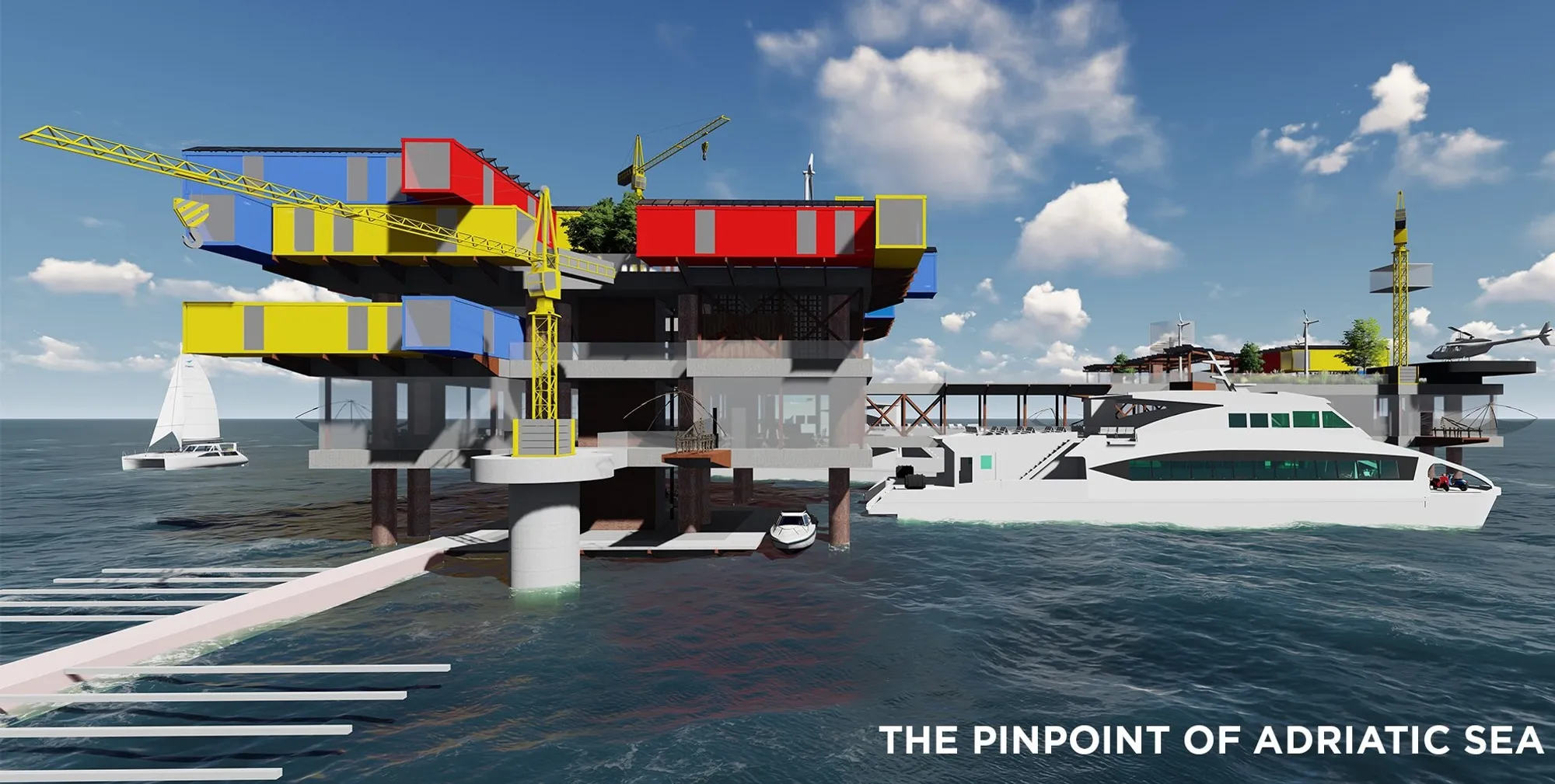
The Pinpoint of Adriatic Sea: Reimagining Offshore Infrastructure Through Sustainable Ecotourism Architecture
Transforming abandoned Adriatic oil rigs into a sustainable ecotourism architecture hub for marine research, culture, and ocean living.


The future of architecture increasingly depends on adaptive reuse, ecological sensitivity, and innovative strategies capable of transforming obsolete infrastructure into meaningful public environments. The Pinpoint of Adriatic Sea, a visionary project by Sahachai Kumalwisai, explores this future through the architectural repurposing of abandoned offshore oil platforms in the Adriatic Sea. Designed around the concept of Sustainable Ecotourism Architecture, the proposal converts the existing “Cervia A” and “Cervia B” oil rigs into a marine tourism destination that integrates ecological restoration, cultural programming, research facilities, and residential functions.
Shortlisted entry of Proximity Island 2019
Located strategically within the Adriatic ferry network near Ravenna, Italy, the project demonstrates how architecture can reconnect industrial remnants with environmental preservation and tourism development. Rather than demolishing the oil platforms, the proposal preserves and transforms them into a new typology of floating urban infrastructure that supports both marine ecosystems and human interaction.
Architecture Beyond Extraction
Historically, offshore oil rigs symbolized industrial extraction and environmental exploitation. However, The Pinpoint of Adriatic Sea reinterprets these structures as platforms for ecological awareness and sustainable tourism. The project positions architecture as a mediator between the built environment and marine ecology, shifting the identity of oil platforms from industrial machines into regenerative public spaces.
The proposal envisions a hybrid program that includes:
- Marine museums
- Exhibition spaces
- Research laboratories
- Residential units
- Ecotourism facilities
- Public gathering areas
- Renewable energy infrastructure
- Aquatic farming systems
This transformation creates a new relationship between architecture and the ocean, where abandoned infrastructure becomes an instrument for education, environmental recovery, and tourism.
Ravenna as the Urban Catalyst
The project draws heavily from the cultural and tourism potential of Ravenna, a historic Italian city recognized by UNESCO for its early Christian monuments and mosaics. Ravenna already attracts significant tourist activity due to its beaches, canals, and coastal heritage. The proposal extends this tourism network into the Adriatic Sea through a system of offshore destinations connected by ferry routes.
Research conducted within the project identifies the central position of the oil platforms along Adriatic ferry corridors. This strategic location allows the platforms to function as “hop-on hop-off” marine destinations connecting Venice, Croatia, Slovenia, and other coastal cities.
Through this approach, the architecture does not isolate itself in the sea. Instead, it becomes part of a larger urban and tourism ecosystem linked directly to the Adriatic coastline.
Sustainable Ecotourism Architecture as the Core Concept
The dominant architectural theme throughout the project is sustainable ecotourism. Rather than creating tourism infrastructure that damages ecosystems, the proposal uses architecture to restore marine biodiversity and promote environmental stewardship.
One of the most significant ideas presented in the project is the restoration of coral reef ecosystems around the submerged foundations of the oil rigs. Research referenced in the proposal highlights how abandoned offshore structures can unintentionally become marine habitats over time. Building upon this ecological phenomenon, the design introduces underwater experiences and marine laboratories that encourage visitors to engage directly with ocean conservation.
The architecture becomes both destination and environmental device.
The project also incorporates:
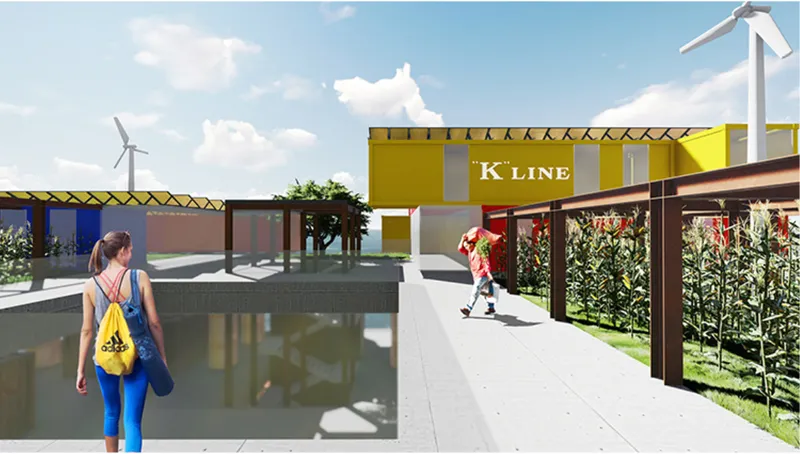
- Seaweed farming
- Corn farming platforms
- Renewable energy production
- Tidal energy systems
- Wind energy integration
- Solar energy harvesting
These systems reduce environmental impact while reinforcing the educational mission of the architecture.
Adaptive Reuse of Offshore Oil Platforms
Adaptive reuse has become one of the most critical discussions in contemporary architecture. Rather than consuming new land and resources, architects increasingly seek to transform existing structures into sustainable alternatives.
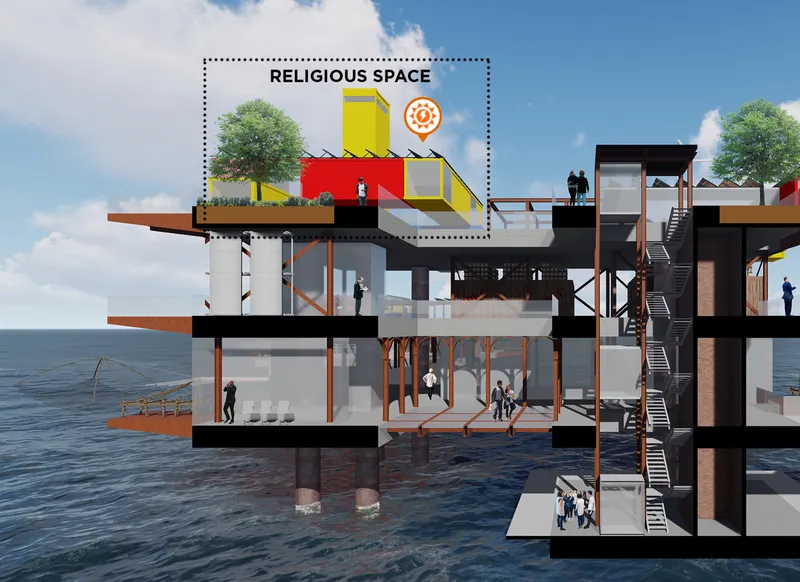
In The Pinpoint of Adriatic Sea, adaptive reuse occurs at an infrastructural scale. The existing steel platforms become structural frameworks for a layered architectural intervention that introduces public programs while preserving the industrial identity of the site.
The project carefully integrates new spaces without erasing the history of the oil rigs. Industrial cranes, structural grids, and exposed circulation systems remain visible throughout the proposal, creating a dialogue between old and new.
This architectural strategy reinforces the narrative of transformation rather than replacement.
Spatial Organization and Program Strategy
The project is divided into two primary zones:
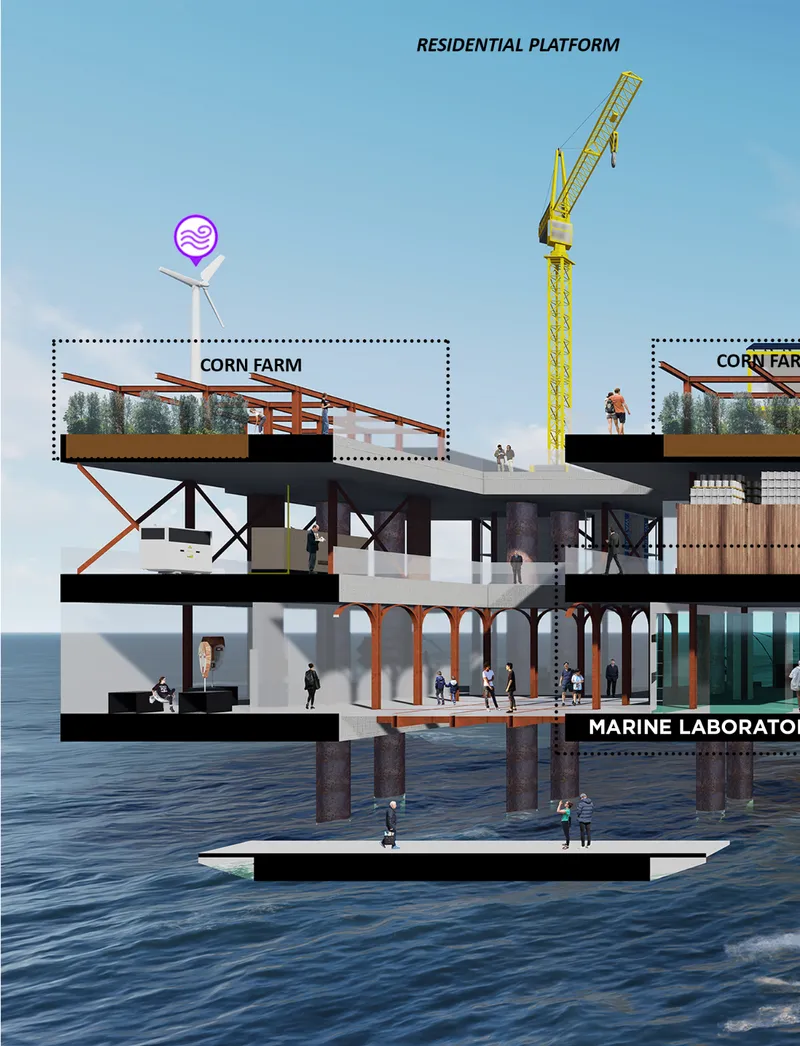
Residential Platform
The residential platform accommodates housing units and support functions for staff, researchers, and temporary residents. This area includes semi-private communal spaces connected to marine laboratories and agricultural platforms.
Elevated farming systems and renewable energy components transform the residential platform into a self-sustaining living environment above the sea.
Museum Platform
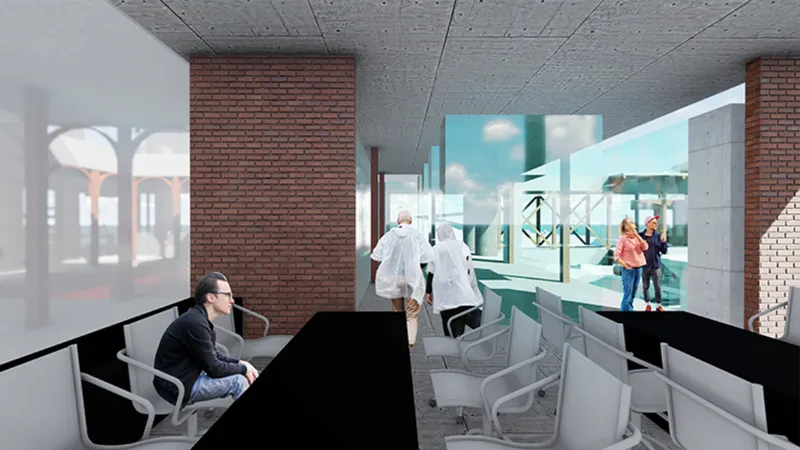
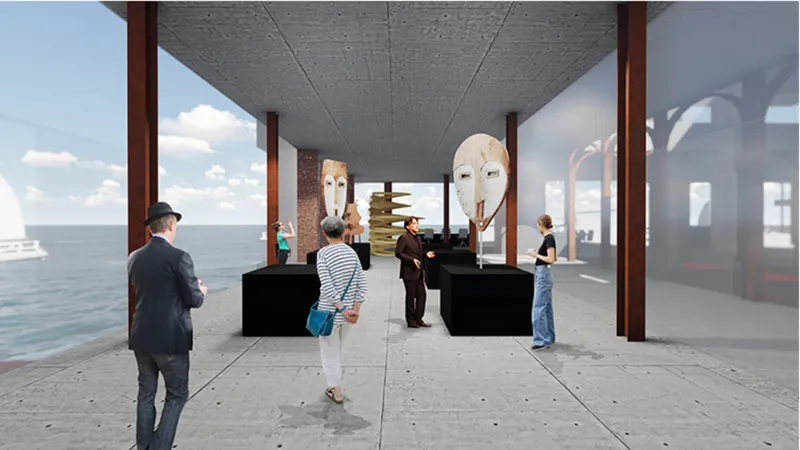
The museum platform functions as the public core of the project. Visitors arrive through ferry connections and move through a curated spatial sequence that includes:
- Exhibition galleries
- Underwater museums
- Marine ecology displays
- Observation decks
- Restaurants and eateries
- Public gathering areas
The circulation concept follows a narrative described as “From Imagination to Reality,” guiding visitors from public exhibition spaces toward immersive underwater experiences.
This sequential movement transforms architecture into an educational journey.
Architectural Language Inspired by Ravenna
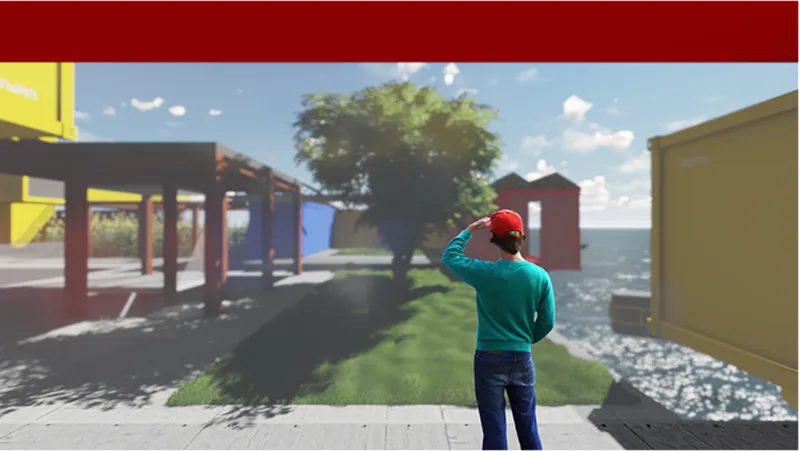
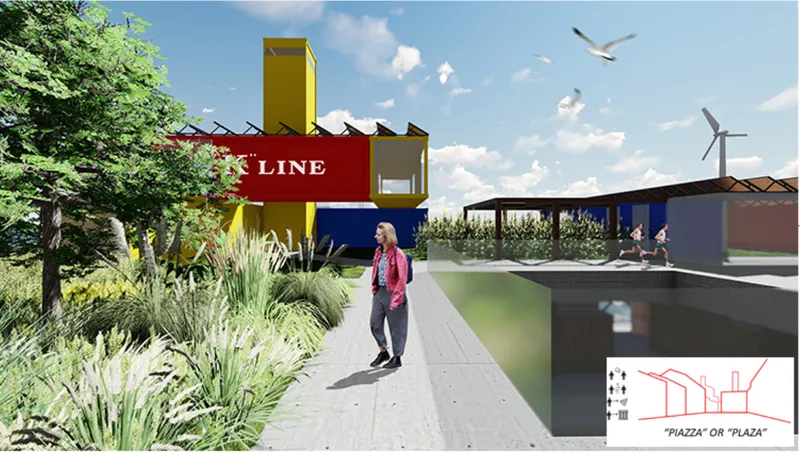
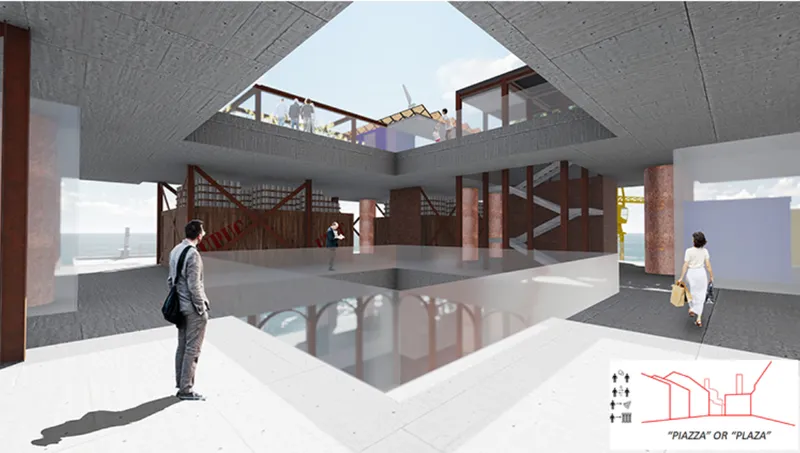
An important aspect of the proposal is the translation of Ravenna’s urban characteristics into offshore architecture. Instead of creating isolated floating buildings, the project adapts familiar urban elements from the city into the platform environment.
The design studies:
- Plazas
- Arcades
- Streets
- Landmarks
- Public circulation networks
These urban components are reinterpreted within the offshore grid of the oil rigs, creating recognizable spatial experiences despite the unconventional marine context.
Arcades and covered walkways provide shaded public circulation routes. Courtyard-like voids introduce openness and natural ventilation. Elevated bridges connect different programmatic zones while framing expansive views of the Adriatic Sea.
The result is an architecture that feels simultaneously industrial, urban, and ecological.
Circulation and Visitor Experience
Access to the platforms is designed around multimodal transportation systems. Visitors can arrive via:
- Ferry routes
- Helicopter access
- Submarine experiences
- Marine docking systems
The main public entrance aligns with ferry deck levels, allowing seamless arrival from the Adriatic tourism network. Vertical circulation is organized through elevators and stair towers that connect the multiple levels of the platforms.
One of the project’s most compelling spatial moments is the underwater museum experience. Visitors descend below sea level to observe marine ecology developing around the submerged structures.
This immersive strategy transforms the oil rig into an educational observatory where architecture frames environmental awareness.
Environmental Strategy and Renewable Systems
The project strongly emphasizes renewable energy integration as part of its environmental agenda. Rather than relying on external infrastructure, the platforms become self-supporting energy systems through:
- Wind turbines
- Solar panels
- Tidal energy harvesting
- Water collection systems
These renewable technologies are not hidden. Instead, they become visible architectural elements reinforcing the project’s ecological identity.
The environmental strategy also extends below water through marine preservation initiatives. Coral ecosystems and aquatic biodiversity are positioned as central design considerations rather than secondary environmental concerns.
This combination of architecture and environmental infrastructure reflects a broader shift toward regenerative design practices in contemporary architecture.
Offshore Architecture as a Global Prototype
Although rooted in the Adriatic Sea, the proposal suggests broader global implications. Thousands of offshore oil rigs around the world face decommissioning in the coming decades. Demolition is expensive, environmentally risky, and often wasteful.
The Pinpoint of Adriatic Sea proposes an alternative future.
By converting obsolete industrial infrastructure into ecological and cultural destinations, the project establishes a scalable architectural prototype that could be adapted globally. Offshore structures in different geographic regions could evolve into research centers, tourism hubs, marine conservation facilities, or renewable energy platforms.
The project demonstrates that future architecture may increasingly emerge from transformation rather than new construction.
A New Identity for Offshore Infrastructure
Ultimately, The Pinpoint of Adriatic Sea is not simply an architectural proposal about tourism or adaptive reuse. It is an exploration of how architecture can redefine humanity’s relationship with industrial ruins, environmental responsibility, and marine ecosystems.
Through sustainable ecotourism architecture, Sahachai Kumalwisai transforms abandoned oil rigs into spaces of learning, preservation, and public engagement. The project imagines a future where architecture no longer separates human activity from ecological systems, but instead integrates them into a shared and regenerative environment.
In an era shaped by climate change, rising sea levels, and post-industrial transformation, this project offers a compelling vision for the future of offshore architecture and adaptive ecological design.




Popular Articles
Popular articles from the community


Co-life: Sustainable Architecture for Age-Friendly Community Living
Co-life reimagines sustainable architecture for seniors through courtyards, rammed earth, shared gardens, and spaces designed for belonging.

The Ocean Hive: Sustainable Architecture for a Self-Sufficient Civilization at Sea
The Ocean Hive imagines sustainable architecture at sea, where modular habitats, algae, wave power and ocean waste sustain a growing colony.

Conexión: Biophilic Design Reimagines High-Rise Living in Hong Kong
Conexión reimagines high-rise living in Hong Kong through biophilic design, green facades, shared spaces, daylight, water and nature within.

The Musturak Paradise: Senior Living Architecture for a Connected Future in Temara, Morocco
The Musturak Paradise reimagines senior living architecture in Temara via private homes, social spaces, culture, community, and shared care.


Similar Reads
You might also enjoy these articles

Eco Chapel: A Green Architecture Pavilion Designed in Symbiosis with the Forest
Eco Chapel uses green architecture to weave prayer, learning and reuse into a forest pavilion shaped by modular hexagonal canopies for life.
Kaffeebühnen: Coffee Shop Architecture Designed as a Civic Stage Between Vienna’s City and Park
Kaffeebühnen turns coffee shop architecture into a civic stage, linking Vienna’s park edge, urban life, warm timber yards, and coffee craft.
Healing Façade: Sustainable Architecture for Reforestation, Community, and Sacred Ecology in Ethiopia
Healing Façade reimagines sustainable architecture as a living wall that restores soil, catches water and renews Ethiopia's forest churches.


Urban Forest: A Vertical Ecosystem for 5,000 Workers in Singapore's Changi Business Park
Radially stacked pods and layered green decks turn a 7-acre plot into 47 acres of ecological workspace projected for 2040.

Comments (0)
Please login or sign up to add comments
No comments yet. Be the first to comment!