

The Poet's House By Next Office: Alireza Taghaboni
Adaptive reuse of Ahmad Shamlou’s Tehran home into cultural center, featuring expressive steel “Aida Wall” promenade and preserved brick façade.


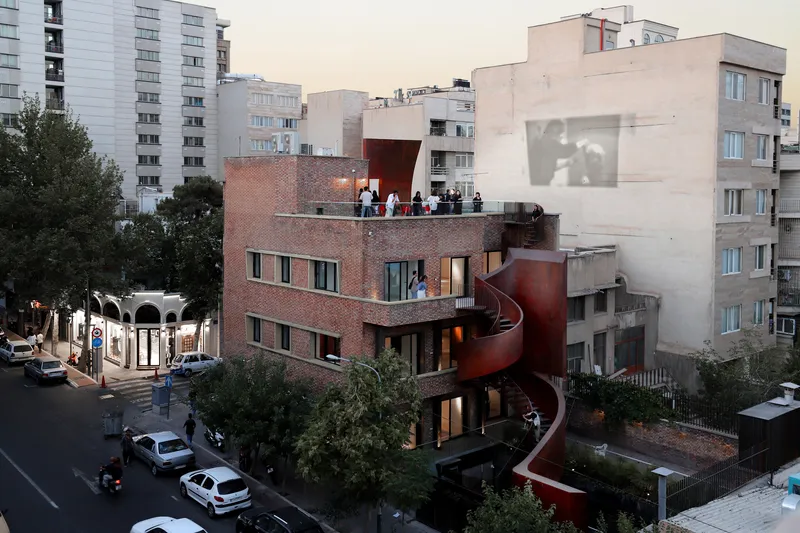
The Poet’s House by Next Office, Alireza Taghaboni is a powerful example of adaptive reuse architecture in Tehran, transforming the former residence of celebrated Iranian poet Ahmad Shamlou into a contemporary cultural center.
Completed in 2025, the 900 m² project preserves the architectural memory of the original 1970s brick house while inserting a bold structural intervention that redefines its relationship to the city. Through restoration, reinterpretation, and spatial storytelling, the building becomes a public platform honoring Shamlou’s literary and political legacy.


From Private Home to Public Cultural Center
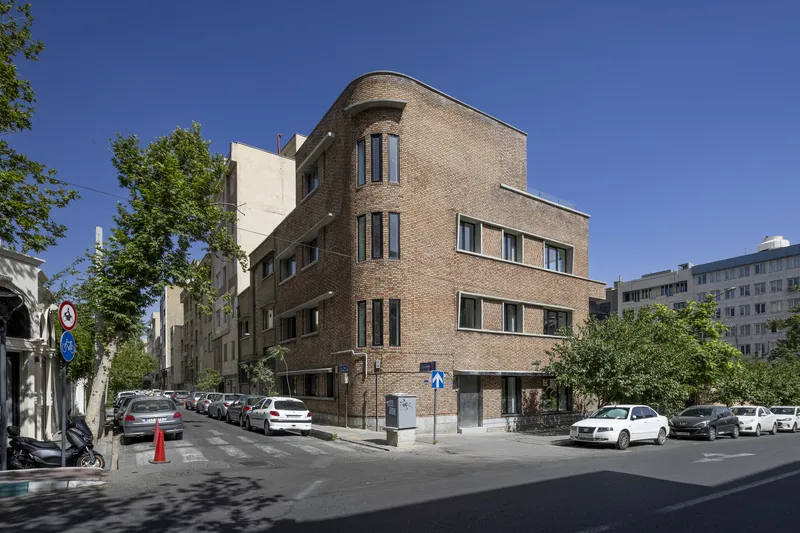
Located in downtown Tehran, the house was originally a modest brick structure characterized by rounded corners and expressive lintels typical of 1970s Iranian residential architecture. Over time, it fell into neglect.
A devoted admirer of Shamlou initiated the project with the aim of preserving the poet’s former home and transforming it into a literary and cultural hub. The renewed program includes:
- Exhibition spaces
- A library
- A bookstore
- A café
- A restaurant
- Informal routes narrating the poet’s life and ideas
The intervention shifts the building’s identity from private dwelling to open civic institution, inviting writers, readers, and citizens to engage with Shamlou’s work and legacy.
The “Aida Wall”: Architecture as Narrative
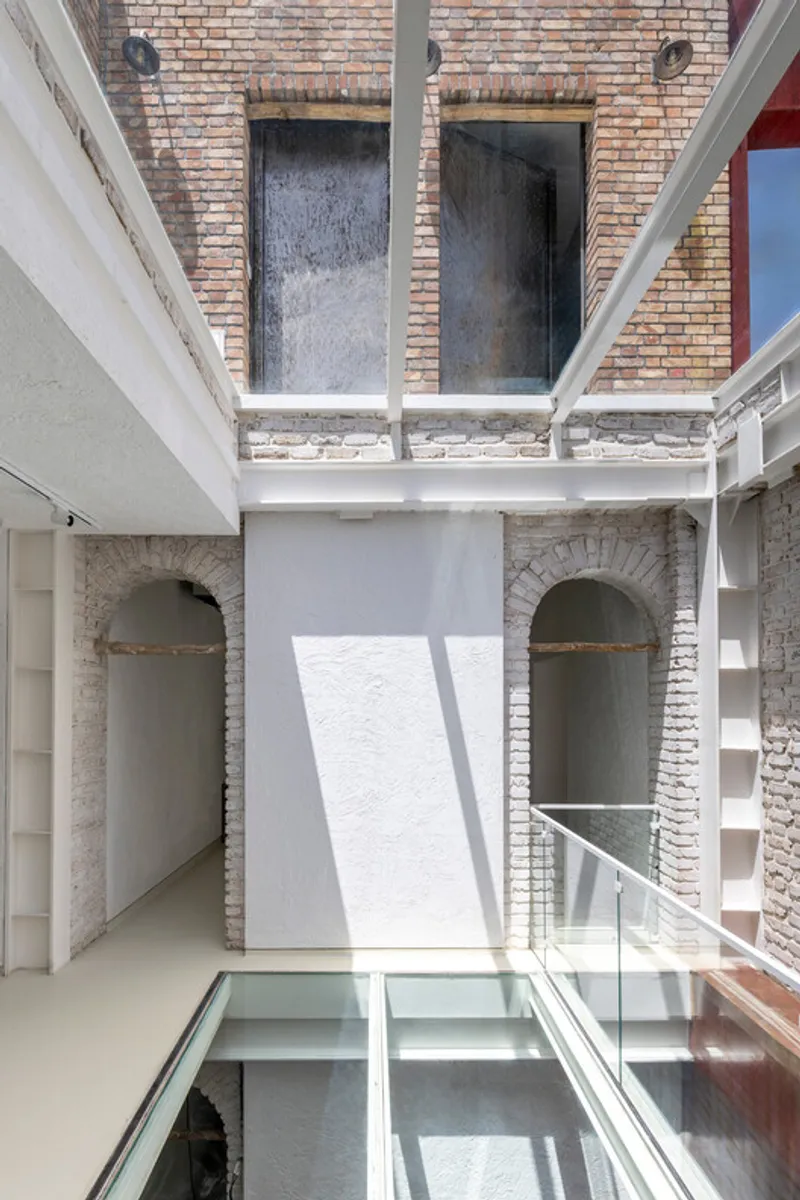
The most significant architectural gesture centers on a second-floor interior wall bearing a handwritten poem by Shamlou dedicated to his wife and muse, Aida. Rather than treating this inscription as a static artifact, the architects extended it into a conceptual and semi-structural element known as the “Aida Wall.”
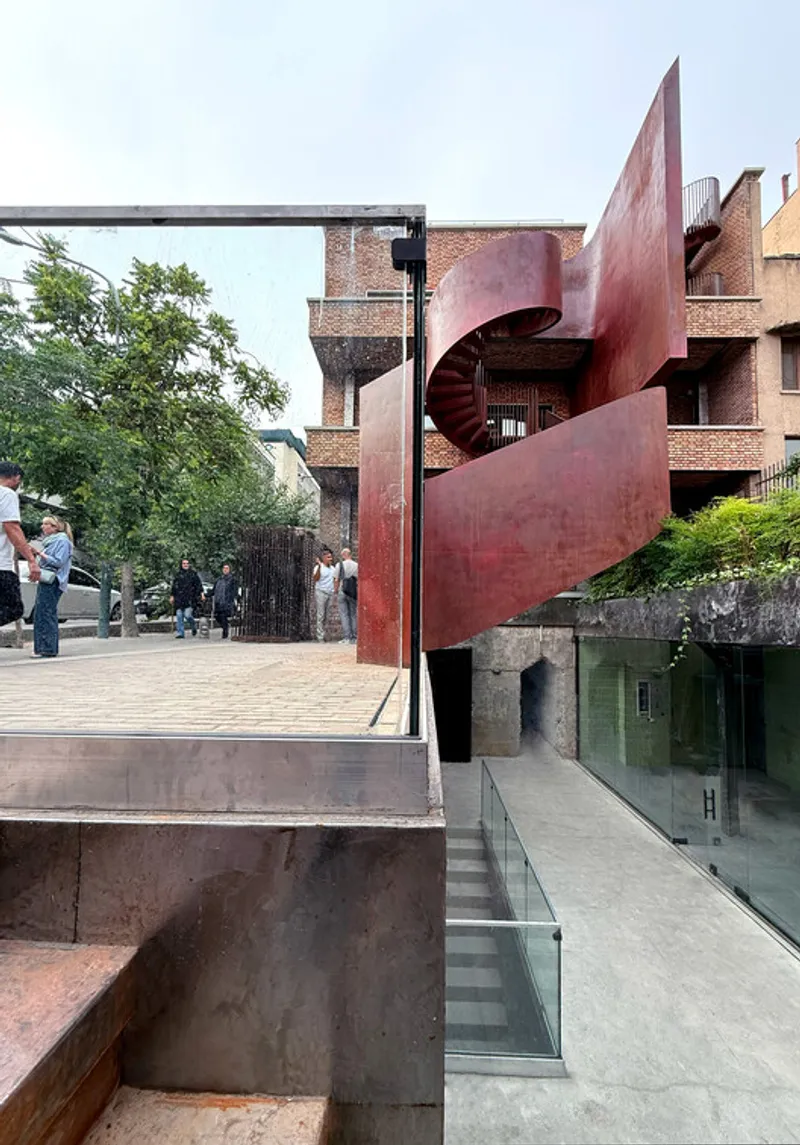
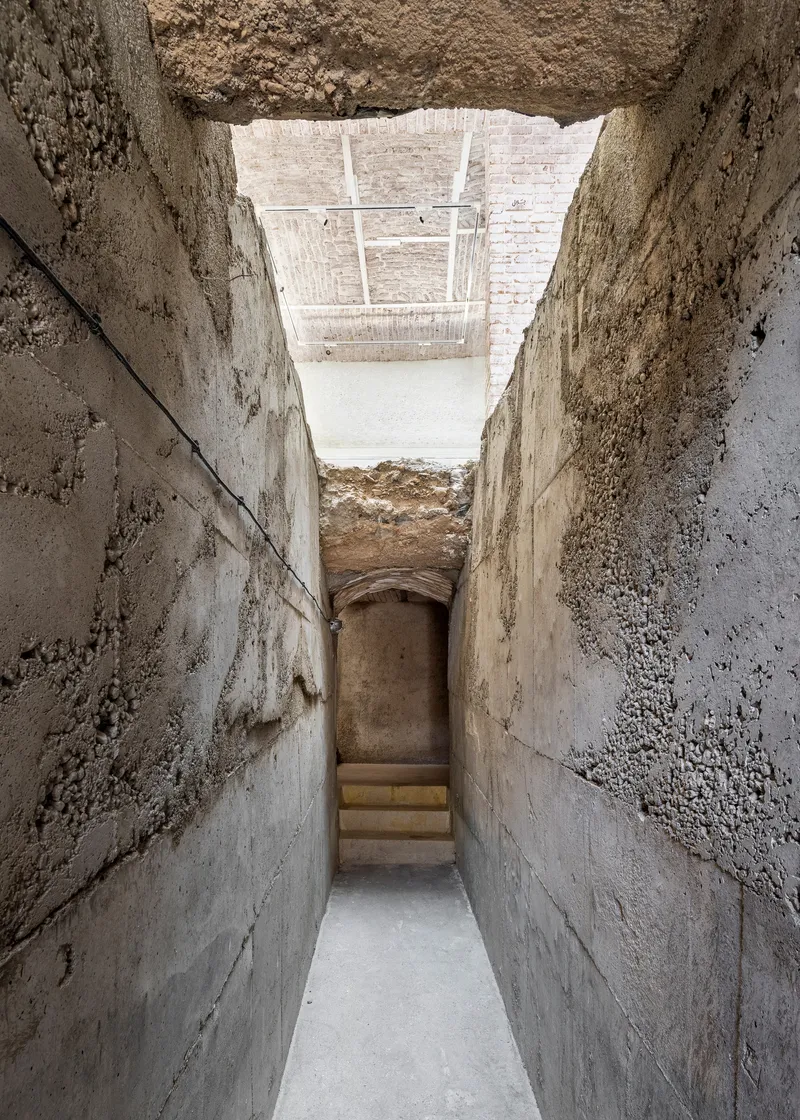
This new steel structure cuts vertically through the house, rising from the courtyard to the rooftop. It acts as a three-dimensional promenade and structural reinforcement, transforming a technical necessity into a poetic architectural statement.
By projecting outward and opening the façade toward the city, the intervention symbolically expands Shamlou’s once-private space into the public realm. The formerly enclosed courtyard becomes an accessible urban void, strengthening the dialogue between interior memory and exterior civic life.
Tension Between Old and New
The project carefully preserves the original brick façade and structural shell while superimposing a bold contemporary layer. The new steel wall contrasts sharply with the historic masonry, dramatizing a dialogue between permanence and intervention.
Steel was selected for its expressive qualities: it can be cut, bent, weathered, or left to rust, allowing the architecture to embody resilience and transformation. Importantly, the steel insertion is designed to be reversible. It could one day be removed, restoring the original structure intact.
This reversibility reflects a respectful approach to heritage conservation, where new layers challenge and reinterpret memory without erasing it.


Structural Reinforcement as Design Opportunity
The existing brick load-bearing structure required reinforcement. Instead of concealing this requirement, Next Office transformed it into the central architectural concept.
The Aida Wall serves multiple functions:
- Structural strengthening
- Vertical circulation
- Exhibition spine
- Symbolic narrative device
By merging engineering logic with poetic meaning, the project demonstrates how adaptive reuse architecture can elevate functional constraints into spatial and cultural assets.


Cultural and Political Resonance
Ahmad Shamlou remains one of Iran’s most influential and controversial literary figures. Known for his politically engaged poetry and periods of imprisonment due to dissenting views, his legacy carries deep cultural and political significance.
The transformation of his home into a public cultural center therefore carries symbolic weight. It reclaims a space of personal life and creative production, turning it into a site of collective reflection.
Architecture here operates as both preservation and commentary, echoing the rebellious and questioning spirit of the poet himself.

Architectural Significance
The Poet’s House stands as a landmark in contemporary Iranian architecture and cultural adaptive reuse. By preserving the historic brick shell while inserting a reversible steel backbone, the project achieves a delicate balance between conservation and innovation.
It demonstrates how architecture can:
- Protect cultural heritage
- Activate urban public space
- Translate literary narrative into spatial form
- Bridge memory and modernity
Through this intervention, Next Office, Alireza Taghaboni redefines what a literary museum or cultural center can be, not a static monument, but a living architectural dialogue between past and present.



Popular Articles
Popular articles from the community

EW PARK: Sustainable Architecture Reimagines the Future of Urban Parking
EW PARK reimagines city parking as a modular wooden tower combining automation, solar energy, electric mobility, and adaptable urban design.

The Earth Pod: 3D Printed Homes for Resilient Refugee Communities
The Earth Pod reimagines refugee housing through 3D printed homes made from clay, combining resilience, self-sufficiency, and rapid shelter.

The Ocean Hive: Sustainable Architecture for a Self-Sufficient Civilization at Sea
The Ocean Hive imagines sustainable architecture at sea, where modular habitats, algae, wave power and ocean waste sustain a growing colony.

The Musturak Paradise: Senior Living Architecture for a Connected Future in Temara, Morocco
The Musturak Paradise reimagines senior living architecture in Temara via private homes, social spaces, culture, community, and shared care.


Similar Reads
You might also enjoy these articles

FAMM Arquitectura Organizes Ten Villas Around Courtyards and Jungle in Nosara, Costa Rica
El Molino pairs two elongated volumes with deep overhangs and timber louvers to build a compact coastal community five minutes from the beach.
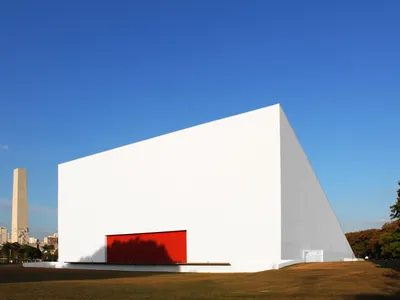
Oscar Niemeyer's Ibirapuera Park Pavilions Define São Paulo's Cultural Identity in Concrete and Curve
A constellation of modernist volumes set within São Paulo's most important urban park, conceived for the city's 400th anniversary in 1954.
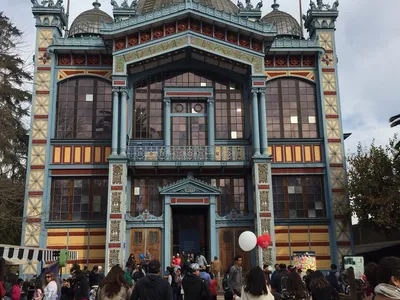
How Henri Picq's 1889 Paris Pavilion Traveled 11,000 Kilometers to Become Santiago's Artequín Museum
A prefabricated iron and glass pavilion built for the Paris Universal Exposition found a second life as a children's art museum in Chile.
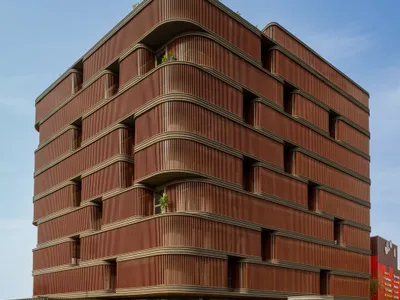
Sanjay Puri Architects Wraps a Jaipur Office Tower in Capsule-Shaped Green Buffers
A nine-level climate-responsive workplace near Jaipur Airport uses stacked planter terraces and aluminium screens to fight 40°C heat.


Explore Architecture Competitions
Discover active competitions in this discipline



Challenge to reimagine the Iron Throne


Photograph architecture without architects


Illustrate the lost glory of Angkor Wat - Render Challenge


Bring back Drive In's
Comments (0)
Please login or sign up to add comments
No comments yet. Be the first to comment!