

The Reversible Shop by Francesca Perani Enterprise + Bloomscape Architecture: A Flexible Retail Design for a Circular Fu
Flexible retail space in Milan uses modular steel grid, reusable materials, and reversible systems to enable sustainable, adaptable, and scalable store design.


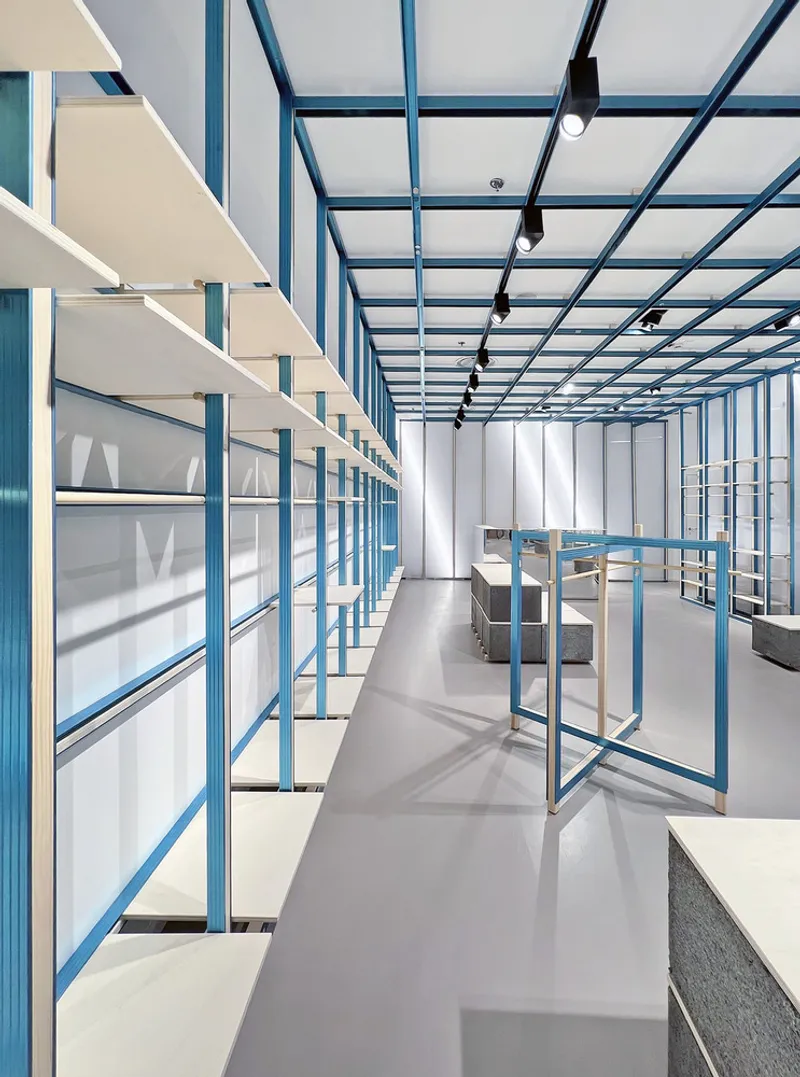
Located in Milan, The Reversible Shop redefines contemporary retail interior design through adaptability, sustainability, and material innovation. Designed by Francesca Perani Enterprise in collaboration with Bloomscape Architecture, this 100 m² space for the ON-OFF multi-brand retailer introduces a forward-thinking concept rooted in circular design principles and modular retail systems.


Concept: Reversible and Scalable Retail Architecture
The project explores the idea of reversibility, both spatially and materially. The design allows the store to evolve over time, enabling easy reconfiguration, relocation, or reuse of elements. This approach reduces construction waste while supporting a scalable retail model adaptable to diverse commercial environments.
Inspired by the construction industry, the architects developed a flexible display system using readily available materials. The result is a cost-efficient, rapidly deployable prototype that can be replicated without compromising design identity.

Material Strategy: Industrial Meets Natural
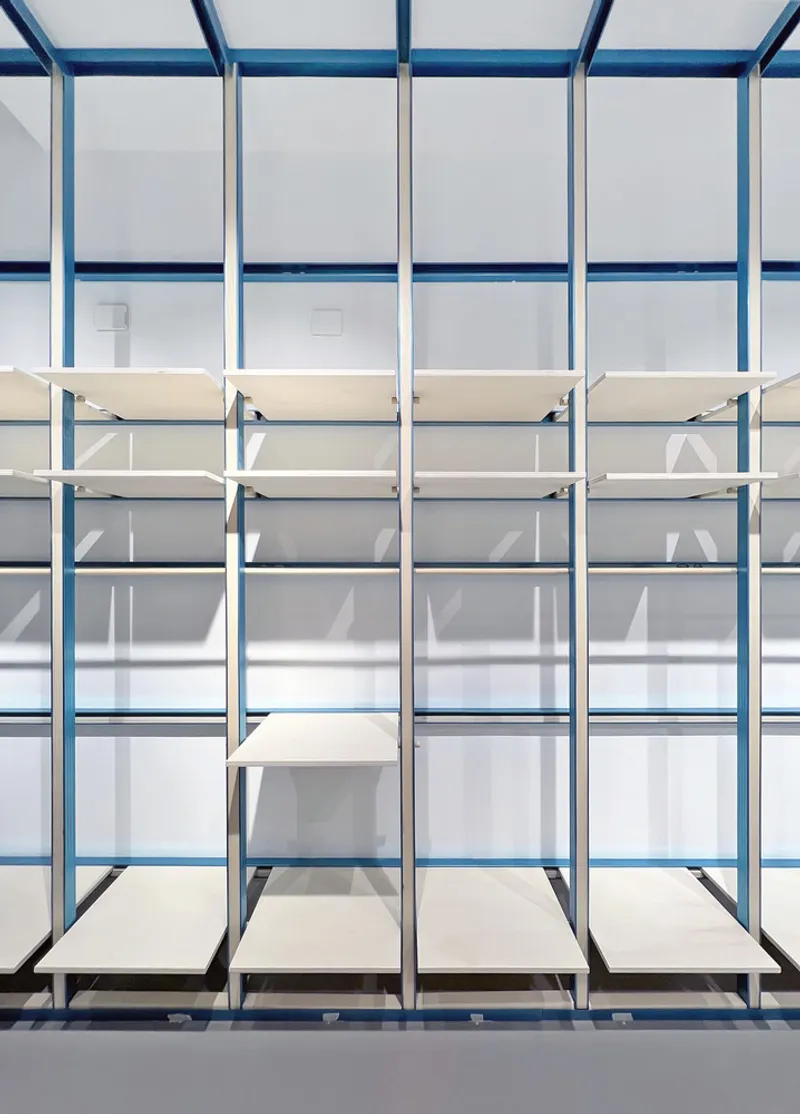
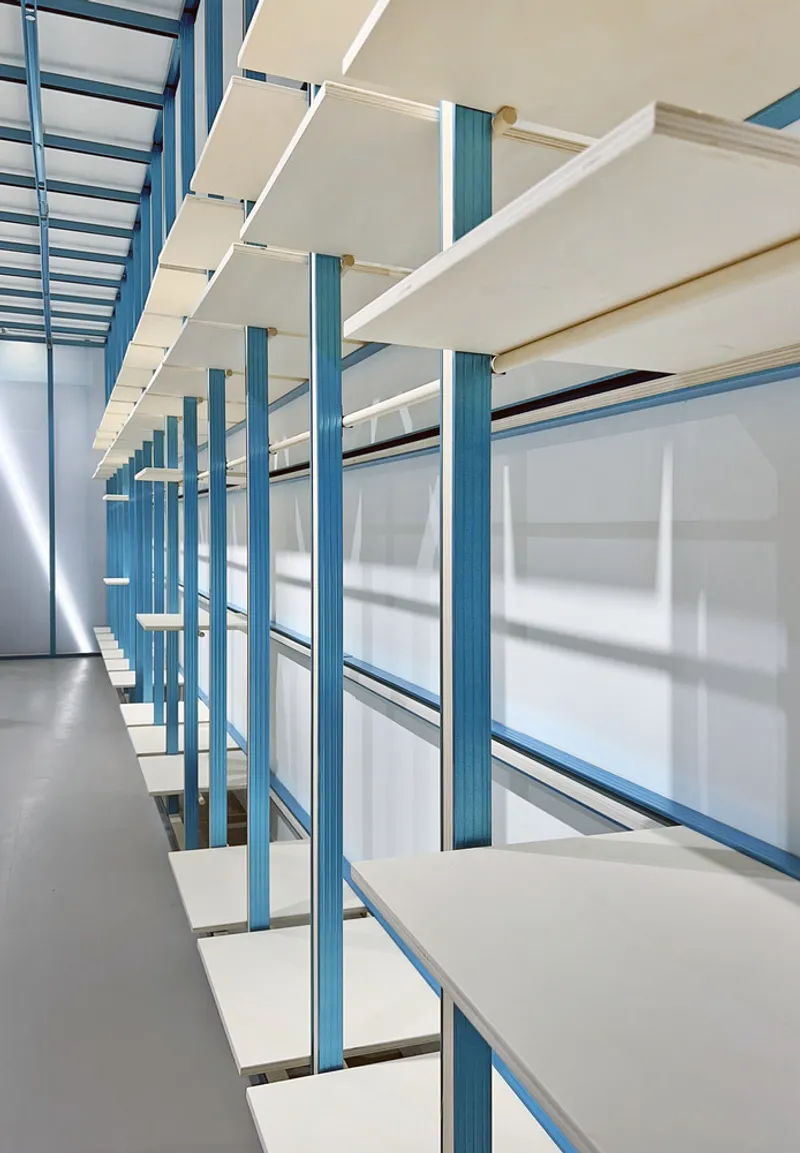
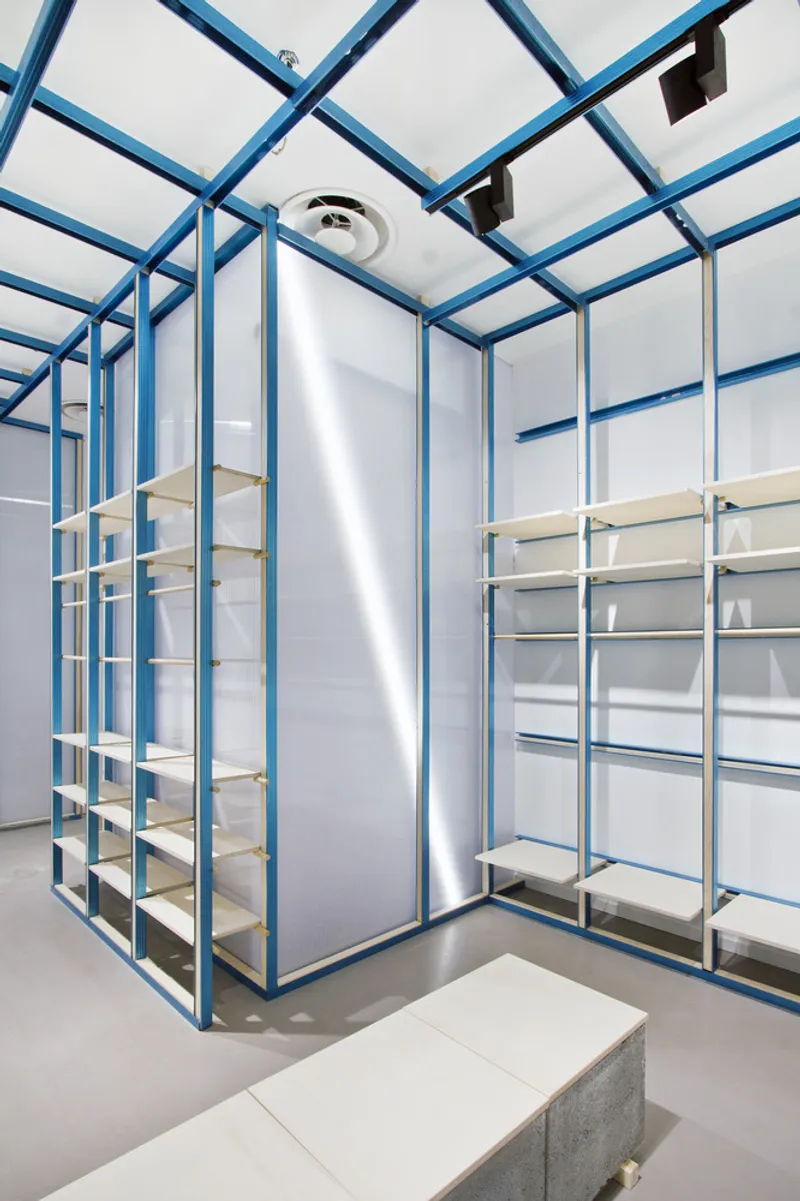
The interior is defined by a bold, exposed framework of bright blue anodized steel, forming a structural grid that wraps the walls and ceiling. This industrial system is softened by poplar wood shelving and inserts, creating a balanced dialogue between raw and natural materials.
Additional materials: including prefabricated concrete blocks, polycarbonate panels, and mirror finishes, enhance the spatial experience. The signature blue coating unifies the palette, reinforcing the store’s strong visual identity while emphasizing durability and reuse.


Spatial Organization and Retail Experience
The layout follows an open-plan retail strategy, maximizing flexibility and visibility. Merchandise is integrated into the architecture itself, with hanging and folded items displayed along the perimeter grid.
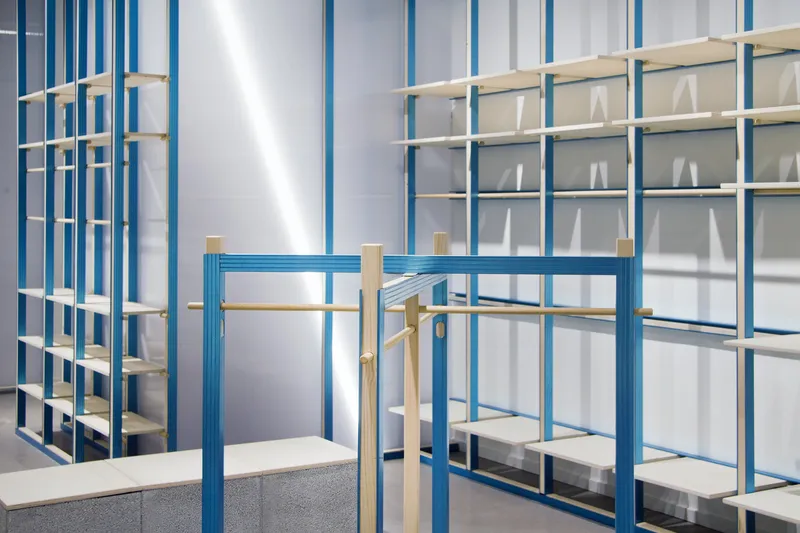
At the center, modular display islands made from repositionable concrete blocks serve as focal points for featured products. These elements can be easily rearranged to meet changing commercial needs, reinforcing the concept of adaptability.
A discreet, mirrored cash counter blends seamlessly into the background, maintaining visual continuity. Meanwhile, polycarbonate dressing rooms offer privacy while preserving material consistency across the space.
Circulation and Visual Connectivity
A clear central pathway organizes movement, ensuring uninterrupted sightlines across the store. Suspended communication panels guide visitors, enhancing navigation and brand interaction.
The design maintains the original architectural shell, applying a “second skin” strategy that overlays the existing space without permanent alteration. Neutral floors and white walls act as a backdrop, allowing the modular system to stand out.

Sustainability and Circular Design Approach
At its core, The Reversible Shop is a response to the urgent need for sustainable retail interiors. By prioritizing reusable materials, minimizing demolition, and enabling future adaptability, the project aligns with contemporary environmental goals.
The reversible system allows components to be:
- Reused in future store layouts
- Recycled back into construction processes
- Reconfigured without waste-intensive renovations
This innovative approach positions the project as a model for low-impact, future-ready retail design.


All photographs are works of
Francesca Perani


Popular Articles
Popular articles from the community


Aquadapt: An Underwater Habitat That Rewrites Its Rooms by the Hour
Curved modules ring the seabed while one shell shifts from breakfast room to cinema, farm and football pitch as residents' needs change.

Singing Woman: An Opera House That Performs Before the Curtain Rises
Ovidiu Cristian Pavel's conceptual opera house translates Estonia's choral identity into a sculpted waterfront landmark facing the Baltic Sea.

The Amber Palace Opera: A Geological Fiction Surfaces on Tallinn's Baltic Waterfront
Pierre Brillard reimagines a Baltic legend as a public landscape, opera house, and waterfront promenade rooted in Tallinn's coastal identity.


graciastudio Turns a Viewless Tijuana Lot Inward Around a Courtyard of Concrete, Timber and Trees
In Tijuana, Jorge Gracia's GA2 House stacks a timber-clad private floor over exposed concrete and replaces a missing view with a planted interior patio.

Similar Reads
You might also enjoy these articles

Cube Design Draws an Ecological Corridor Between Two Shenzhen Hills with the Nankai Building
Beside Shenzhen's container docks, the Nankai Building pairs stacked balconies with a climbing green screen to connect two hillsides across its height.

Praksis A and Studio Sted Bend a Red Timber Cabin Across the Granite of Norway's Southern Coast
On the southern Norwegian coast, a 105 m² cabin follows the rock on slender posts, pairing red cladding outside with pine, brick and plywood within.

David Ortega Stacks a Two-Story Mexico City Penthouse Around a Steel Stair and a Pergola-Shaded Roof Terrace
In Colonia Roma, a 300 m² penthouse uses oak joinery, a planted steel stair and a slatted roof pergola to make a new-build apartment feel like a house.

PARALELA and LB2 Thread a Public Walkway Through the Base of a Las Condes Residential Tower
In Las Condes, Santiago, the Hamlet Building gives its fenceless ground floor to a 70-metre wooded passage linking two streets and the metro.

Explore Architecture Competitions
Discover active competitions in this discipline

Challenge to design luxury tourism on rails

Challenge to reimagine the Iron Throne

Photograph architecture without architects

VR headsets Storefront design competition
Comments (0)
Please login or sign up to add comments
No comments yet. Be the first to comment!