

The Ridge at V&A Waterfront by StudioMAS: A Landmark of Sustainable Architecture in Cape Town
The Ridge is a sustainable office building in Cape Town featuring CLT façade, passive cooling, and natural ventilation strategies.


Located at the iconic V&A Waterfront in Cape Town, The Ridge is a pioneering office development that sets a new standard for environmentally responsive commercial architecture in South Africa. Designed by StudioMAS in collaboration with Arup, this award-winning building showcases an integrated approach to architecture and engineering, where sustainability and innovation converge seamlessly in both form and function.
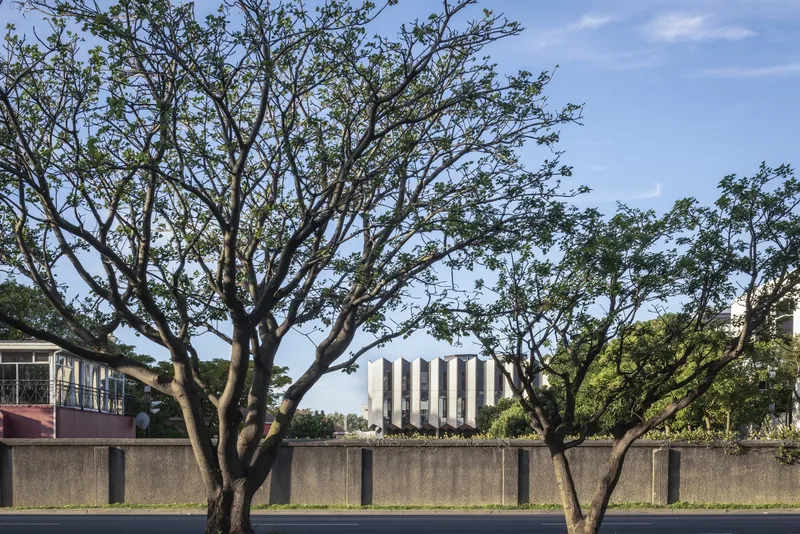

A Sustainable Landmark in a Historic Urban Context
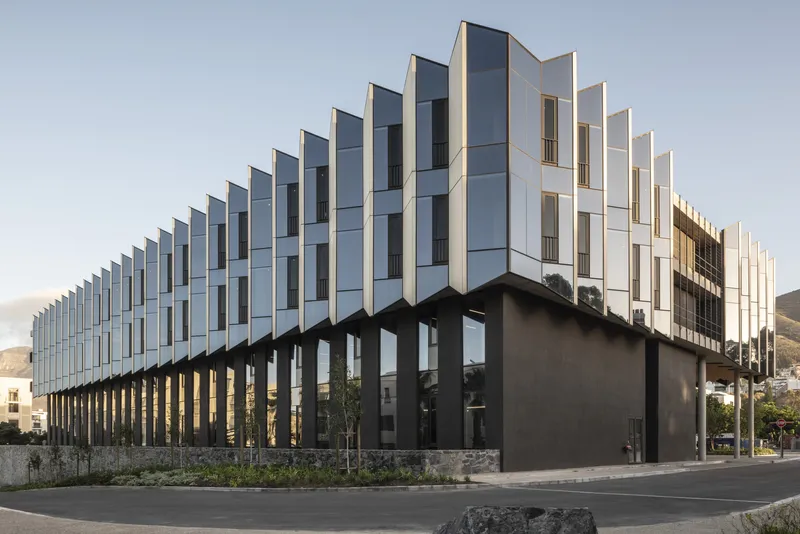
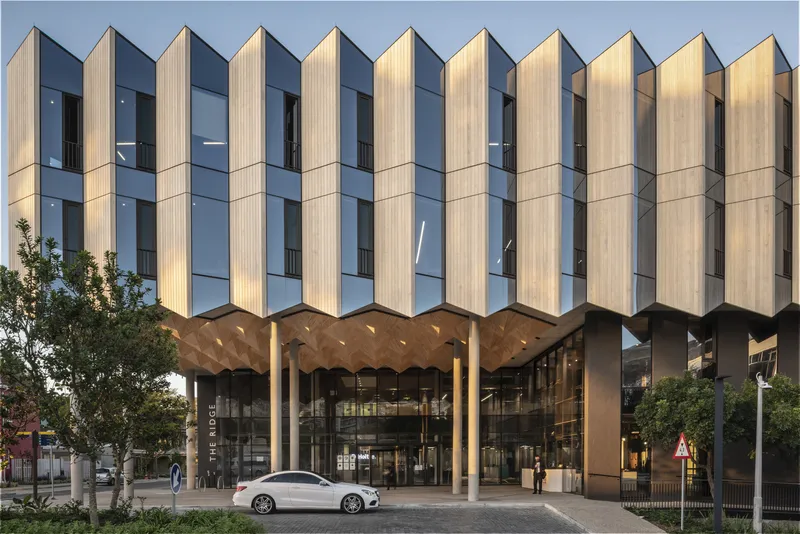
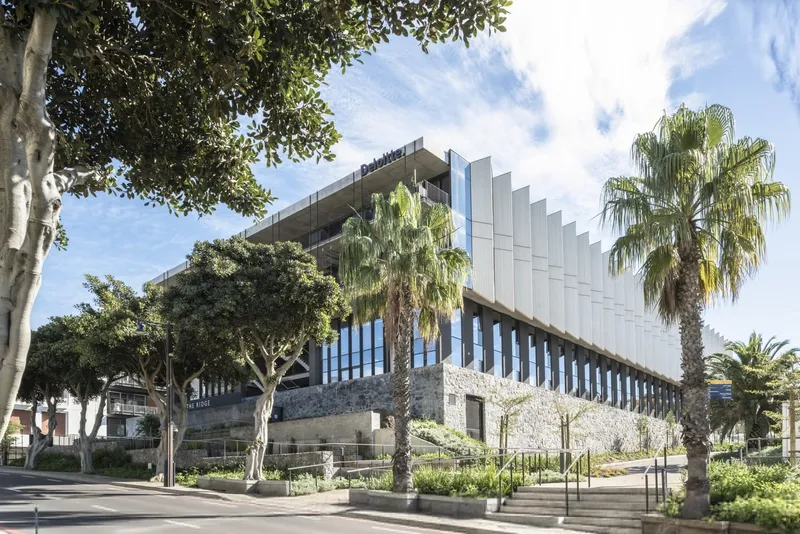
Previously a surface parking lot, the rectangular site is subtly skewed from a true north-south orientation. StudioMAS responded to this with a pleated Cross-Laminated Timber (CLT) façade—a key architectural gesture that corrects the orientation to maximize solar control. These pleats, alternating between solid timber and high-performance glazing, respond dynamically to sunlight and temperature throughout the day.
Notably, the use of Cross-Laminated Timber—a locally sourced, renewable material—anchors the project's low-carbon strategy. CLT is celebrated not only for its reduced embodied carbon but also for its tactile and enduring aesthetic. The Ridge's façade requires no additional cladding or insulation, relying instead on timber’s natural thermal properties. As the building weathers over time, its visual character will evolve, reinforcing the architectural narrative of longevity and organic transformation.
Passive Climate Control and Natural Ventilation
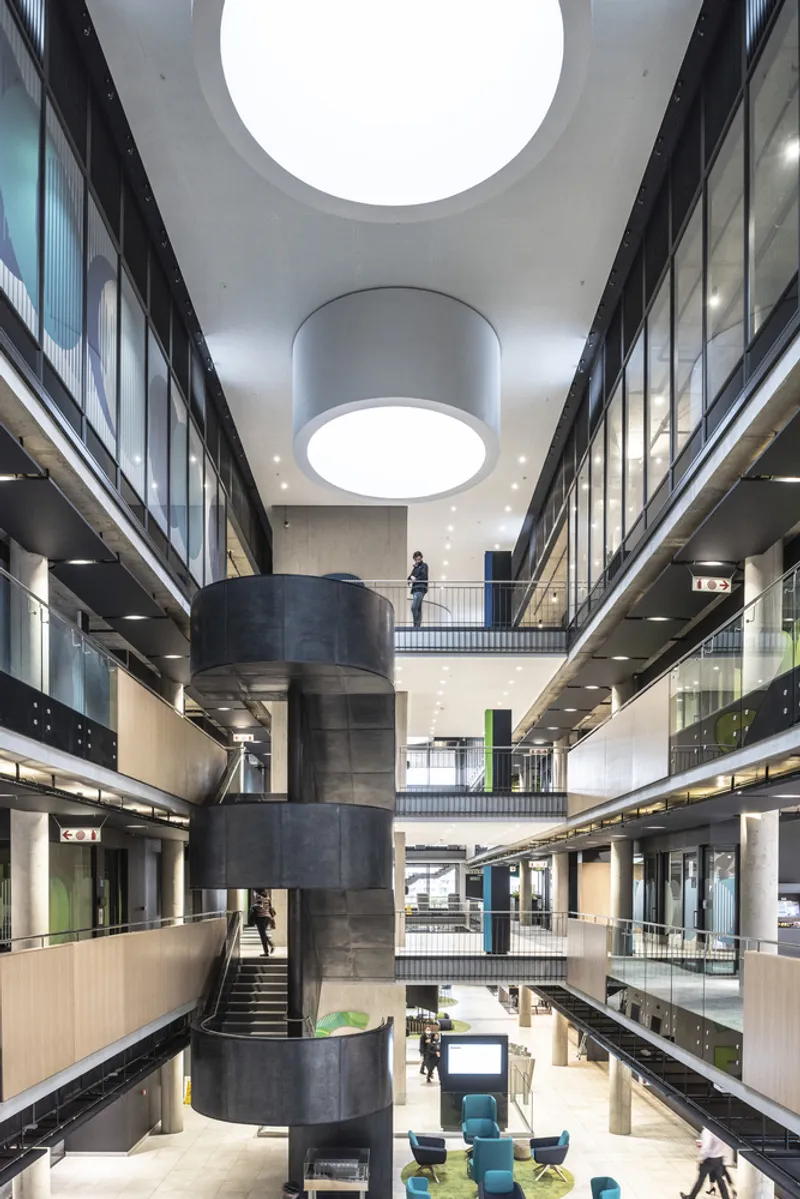
At the core of The Ridge’s sustainability performance is its passive design strategy, aimed at minimizing mechanical interventions. The building's deep floor plates are split by a naturally ventilated central atrium—referred to as the "nat-vent street"—which functions as both a circulation spine and an environmental buffer.
Natural ventilation is achieved via manually and automatically operable windows, enabling cross ventilation throughout the building. Above the central street, large high-level ventilation drums serve as light scoops and chimneys. These drums, controlled by automated windows at roof level, regulate internal air movement, enhancing thermal comfort and indoor air quality.
Supporting this is a Thermally Activated Building System (TABS)—chilled water pipes embedded within the floor slabs—which enables the building to passively control indoor temperatures for approximately 82% of the year. Together, these systems reduce dependence on conventional HVAC, resulting in significant energy savings and improved user wellbeing.
Interior Experience and Urban Integration
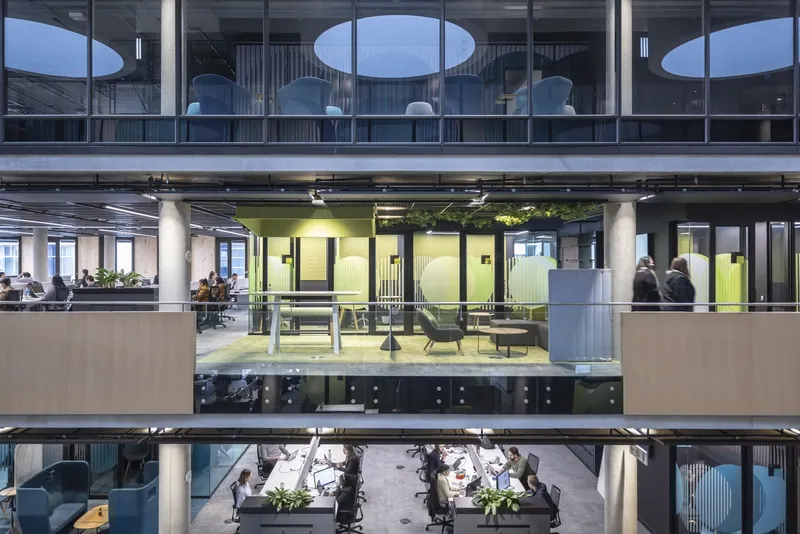
Internally, The Ridge is defined by its transparent, communal atmosphere. The central street is not just an environmental corridor but a social and collaborative space where employees circulate, interact, and connect. Its design encourages a shift in user behavior—such as manually adjusting windows or adapting clothing for seasonal comfort—creating a more engaged and environmentally attuned workplace culture.
The building’s urban strategy is equally forward-thinking. The public-facing entrance piazza and open ground-level street connect seamlessly with the larger precinct masterplan, forging pedestrian links between the V&A Waterfront and Greenpoint. This integration aims to foster a more walkable, accessible, and inclusive urban environment.
A Model for the Future of Workplace Design
More than just a green building, The Ridge exemplifies a holistic approach to sustainable commercial architecture, where structural innovation, human comfort, and urban design intersect. By combining advanced engineering with natural materials and bioclimatic principles, StudioMAS has created a workplace that is resilient, adaptable, and deeply rooted in its environmental context.
As cities around the world grapple with the challenges of climate change and urban density, The Ridge offers a compelling blueprint for how office buildings can be both carbon-conscious and people-centric—a modern workplace that inspires both productivity and wellbeing.
Project Credits:
- Architects: StudioMAS
- Engineering Collaborator: Arup
- Interior Design: Paragon Interface
- Project Management: Mace
- Quantity Surveyor: Smith & Co
- Lift Consultant: S4E
- Acoustic Consultant: SLR
- Landscape Architecture: Planning Partnership
- Land Surveyor: Geomid
- Main Contractor: GVK
- Photography: © Hyper Structure


Popular Articles
Popular articles from the community


The Musturak Paradise: Senior Living Architecture for a Connected Future in Temara, Morocco
The Musturak Paradise reimagines senior living architecture in Temara via private homes, social spaces, culture, community, and shared care.

Co-life: Sustainable Architecture for Age-Friendly Community Living
Co-life reimagines sustainable architecture for seniors through courtyards, rammed earth, shared gardens, and spaces designed for belonging.

Co-Life: Senior Housing Design That Reconnects Older Adults With the City
Co-Life reimagines senior housing design through healing gardens, shared streets, workshops, and a sustainable community across generations.

Riyadh For All: Intergenerational Urban Design for Active Aging in Rabat
Riyadh For All reimagines urban design in Rabat with intergenerational co-living, adaptive courtyards, and Moroccan cultural exchange today.
Similar Reads
You might also enjoy these articles


Hodi-Mandai Geram
Project Function: Preservation and revitalization of the Intangible heritage and socio-spatial identity of the Hodi by Housing, Cultural Memory Center, Sacred Grove, landscape, local tourism economy


Olio Towers: A Mid-Rise for Performers That Fuses Housing, Rehearsal, and Stage
Located blocks from Houston's Theater District, this modular tower stacks living units around a central performance atrium.

Oasis: Modular Green Housing Carved into Dhaka's Urban Fabric
A shortlisted Plugin Housing entry reclaims unauthorized settlements in Dhaka with stepped concrete volumes, green roofs, and ventilation-driven design.

Black Hole: A Floating Megastructure for the Post-Physical Era
Emiliano Mazzarotto envisions a spherical, self-scaling arena where e-sports, digital hotels, and holographic stadiums replace traditional public space.

Explore Architecture Competitions
Discover active competitions in this discipline



Challenge to design locus for the upliftment of human rights


Challenge to reimagine the Iron Throne


Photograph architecture without architects


Illustrate the lost glory of Angkor Wat - Render Challenge
Comments (0)
Please login or sign up to add comments
No comments yet. Be the first to comment!