

The Sala Garden by LUKSTUDIO: Redefining an Urban Oasis Experience in Shanghai
Urban oasis garden in Shanghai blending Southeast Asian design, pergolas, lush planting, water features, and sensory landscape for relaxation and social interaction.


Located in the vibrant heart of Shanghai, The Sala Garden by LUKSTUDIO is a remarkable example of how landscape architecture can transform an underutilized urban space into a serene, immersive retreat. Designed in 2021, this 530 m² outdoor renovation project reimagines the hospitality experience at the prestigious The Sukhothai Shanghai, blending Southeast Asian design sensibilities with contemporary urban living.


Reimagining Hospitality Through Landscape Design
The concept of the hotel draws inspiration from the ancient Thai kingdom of Sukhothai, meaning “the dawn of happiness.” Reflecting this philosophy, LUKSTUDIO envisioned the Sala Garden as an urban oasis, offering a tranquil escape from the fast-paced city environment.
Previously, the site functioned as a fragmented outdoor terrace with limited accessibility and visual engagement. By introducing layered vegetation, sensory-rich materials, and spatial fluidity, the architects transformed it into a multi-functional garden space that enhances both social interaction and relaxation. A newly installed glass barrier with bamboo screening subtly filters the urban noise, creating a calm transition between the bustling street and the peaceful interior landscape.

Architectural Inspiration: The Traditional Sala Pavilion
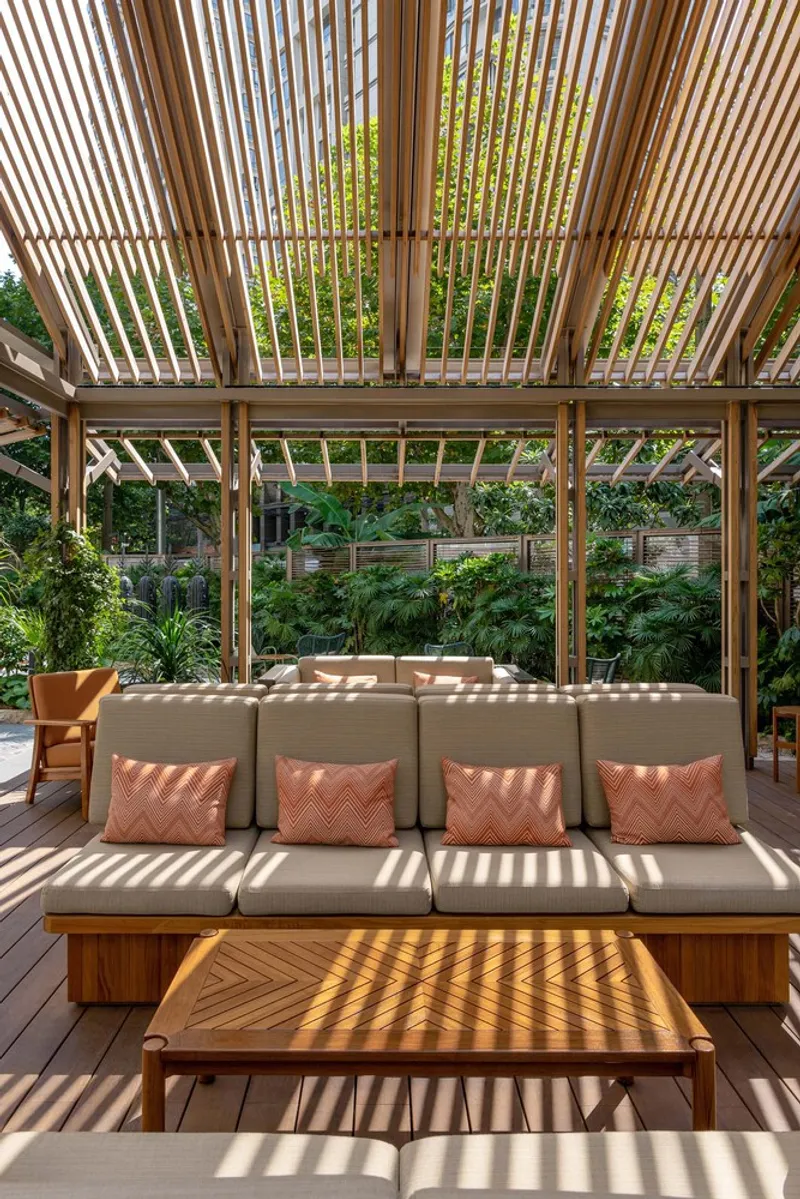
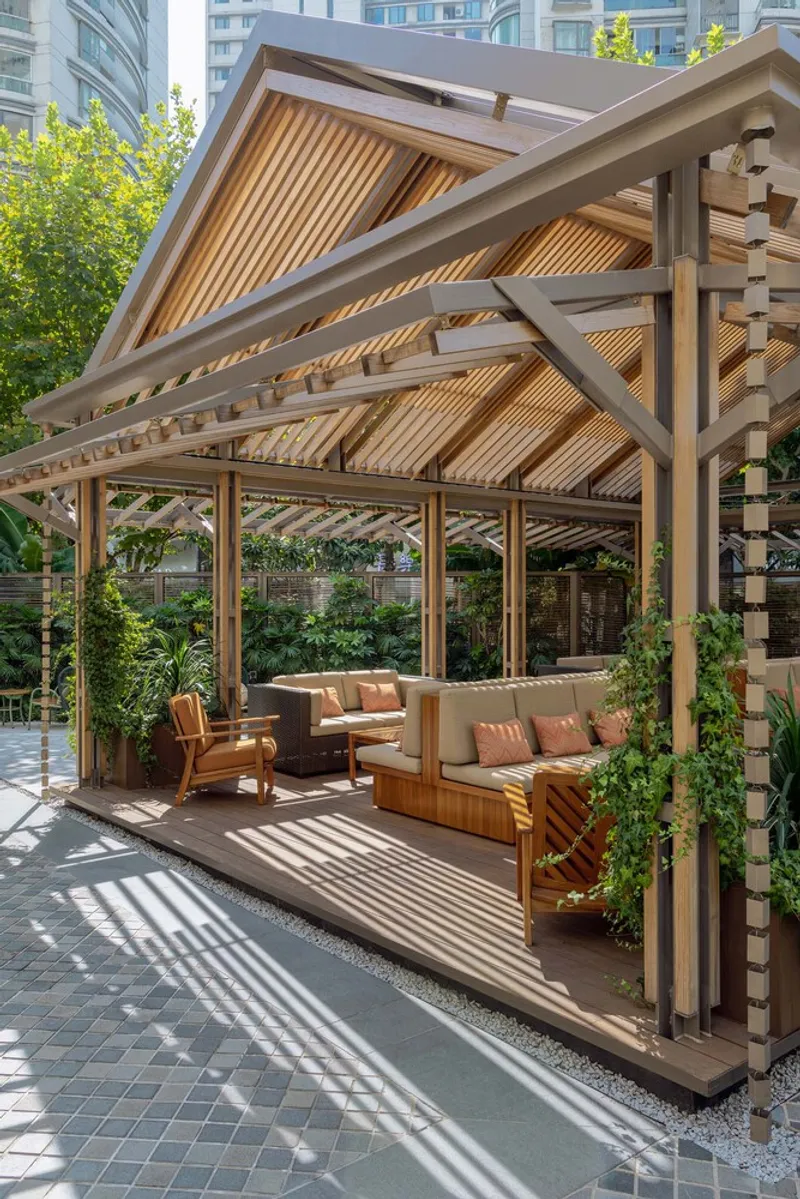
Central to the design is the reinterpretation of the traditional Thai Sala pavilion, an open-air structure used for rest and gathering. Two contemporary pergolas, inspired by this vernacular form, are elevated on wooden platforms and feature elegant gabled roofs with outward-swinging grilles.
Crafted with teak wood slats and a refined steel framework, these structures balance lightness, durability, and warmth. The gradation in slat spacing allows natural light to filter through while maintaining visual connectivity with the surrounding greenery. The integration of weather-responsive elements such as retractable curtains, rain chains, and efficient drainage systems ensures year-round usability, making the space adaptable to Shanghai’s changing climate.

Sensory Landscape: Engaging the Five Senses
At the heart of the Sala Garden lies a thoughtfully designed patio that celebrates multi-sensory landscape architecture. The original rigid flooring has been replaced with hand-cut flagstone paving, enhancing tactile experience and visual richness.
A central water feature, highlighted by four bronze pagoda sculptures, introduces the calming sound of flowing water, reinforcing the garden’s tranquil atmosphere. The planting strategy replaces static hedges with lush, tropical vegetation, carefully selected to thrive in the local climate while evoking Southeast Asian landscapes.
This layered composition of textures, scents, sounds, and visual elements creates an environment that engages all five senses, transforming the garden into a holistic spatial experience rather than just a visual retreat.

Seamless Indoor-Outdoor Integration
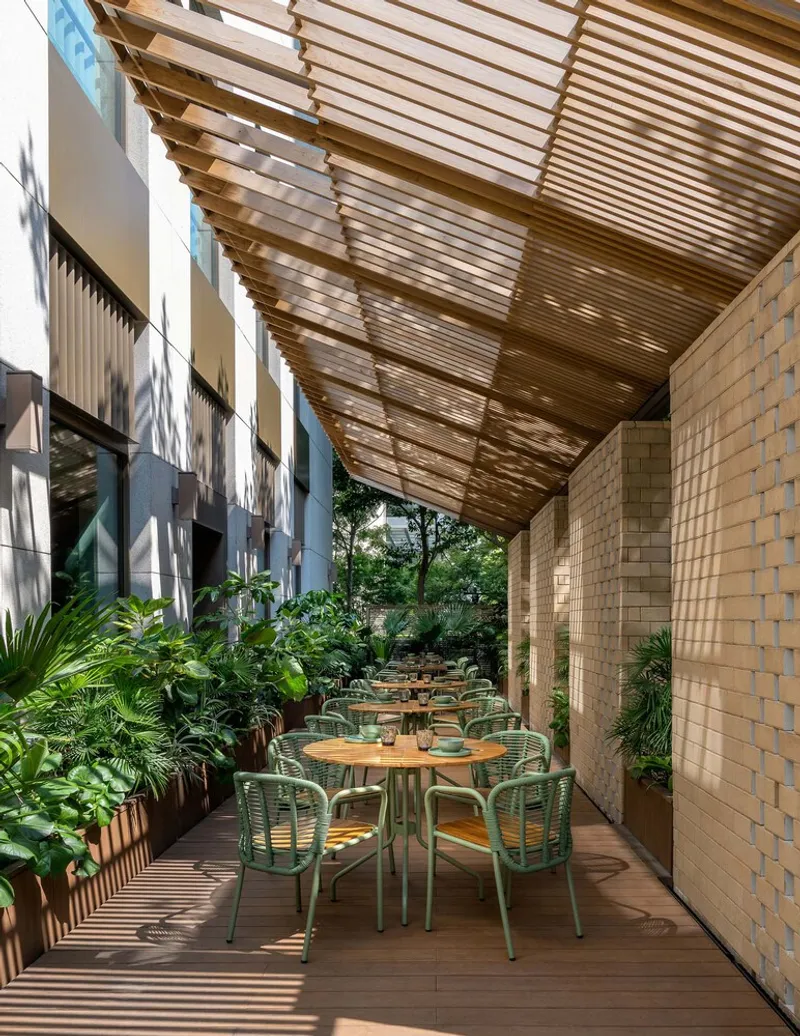
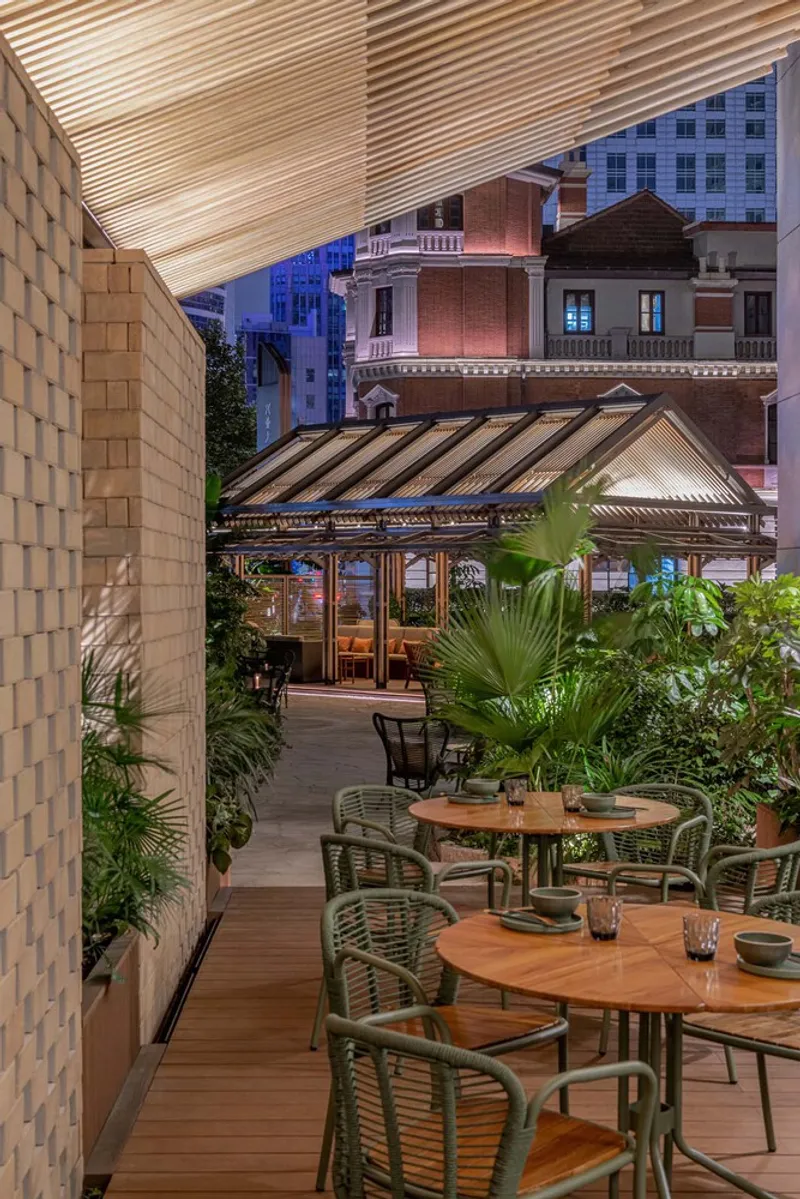
Extending beyond the garden, the URBAN Terrace connects seamlessly with the hotel’s all-day dining restaurant. A cantilevered structure with a retractable canopy provides flexible outdoor dining options while ensuring sufficient daylight penetrates the interior spaces.
The design thoughtfully adapts to different times of day. Warm ambient lighting under the teak pergolas fosters a lively social atmosphere, while softly lit lounge areas within the garden offer intimate, contemplative spaces for guests seeking privacy. This dynamic interplay of light and space enhances the overall hospitality experience.


Bespoke Furniture and Material Expression
To further reinforce the design narrative, LUKSTUDIO curated a bespoke collection of outdoor furniture inspired by organic forms and Southeast Asian craftsmanship. Teak wood elements feature slanted planks that echo the veins of leaves, combining aesthetic elegance with functional water drainage.
Complementing these are lightweight seating options made from aluminum frames and nylon braided rope. Their curved forms not only reflect botanical aesthetics but also provide ergonomic comfort, allowing flexible spatial arrangements for different user experiences.

A New Paradigm in Urban Landscape Architecture
The Sala Garden stands as a compelling example of adaptive reuse and experiential design in contemporary architecture. By merging cultural inspiration with modern construction techniques, LUKSTUDIO has successfully created a space that bridges nature and urbanity.
This project highlights the growing importance of biophilic design, sustainable landscaping, and sensory-driven architecture in redefining urban hospitality. It demonstrates how even compact city spaces can be transformed into meaningful environments that promote well-being, relaxation, and social connection.
All photographs are works of
Dirk Weiblen


Popular Articles
Popular articles from the community


GROUP A Strips a 1969 Rotterdam Harbor Headquarters to Its Frame and Wraps It in Timber Louvers
In Rotterdam's M4H harbor district, Ferro Offices reuses a 1969 frame, adds one timber storey and reaches BREEAM-NL Outstanding.

David Macias Steps a Doorless Stone and Plaster House Down a Tropical Colombian Hillside
In the humid hills of Colombia, Threshold House replaces the front door with an open void and terraces its 850 m² down the slope instead of fighting it.

Architekt Andreas Gruber Scatters 23 Dark Timber Chalets Across a South Tyrolean Forest Edge
In Molini di Tures, Amonti Chalets breaks a resort into a hamlet of gabled timber houses, with parking, storage and services pushed into the slope.

David Ortega Stacks a Two-Story Mexico City Penthouse Around a Steel Stair and a Pergola-Shaded Roof Terrace
In Colonia Roma, a 300 m² penthouse uses oak joinery, a planted steel stair and a slatted roof pergola to make a new-build apartment feel like a house.

Similar Reads
You might also enjoy these articles

Gil Mello Arquitetura Tilts a Single Roof Toward the Waterfalls on a Plateau Above Aiuruoca, Brazil
In Aiuruoca, Minas Gerais, a 200 m² house of local labor and reclaimed poles pairs a low valley veranda with a tall mountain one.

U.GA Architects Wraps an Oval Rooftop Pool in Curved Board-Formed Concrete on Busan's Jeollidan-gil
In Busan's Jeonpo-dong, a 454 m² mixed-use block stacks a neighborhood facility, guest rooms and an oval rooftop pool inside spiraling concrete walls.

Felipe Hess Arquitetos Turns a Blind Stone Wall to the Street and Opens a Brazilian House onto a Courtyard and Canal
A canal-front house in Brazil hides behind painted stone and planting, then opens to an olive-tree courtyard, a reed-ceilinged porch and a curving pool.
David Macias Steps a Doorless Stone and Plaster House Down a Tropical Colombian Hillside
In the humid hills of Colombia, Threshold House replaces the front door with an open void and terraces its 850 m² down the slope instead of fighting it.

Explore Architecture Competitions
Discover active competitions in this discipline

Challenge to reimagine the Iron Throne

Photograph architecture without architects

Illustrate the lost glory of Angkor Wat - Render Challenge

Design challenge to reuse E-waste
Comments (0)
Please login or sign up to add comments
No comments yet. Be the first to comment!