
The Scar: A Radical Exploration of Sustainable Memorial Architecture in the Desert
A monumental scar carved into the desert redefines sustainable memorial architecture, confronting humanity’s impact on nature and time


In contemporary discourse, sustainable memorial architecture has evolved beyond static remembrance into a critical medium for ecological reflection. "The Scar," a project by JiaJie Wang and Runner-up entry of the Hourglass competition, positions itself within this paradigm by transforming the desert into both a site of memory and a canvas of environmental critique.
The project introduces a powerful metaphor: a wound inflicted upon the Earth. This "scar" is not merely symbolic but spatial, experiential, and architectural. It reflects the irreversible impact of human intervention on natural systems while simultaneously proposing a space for contemplation, healing, and awareness.
Conceptual Framework: Architecture as Wound and Reflection
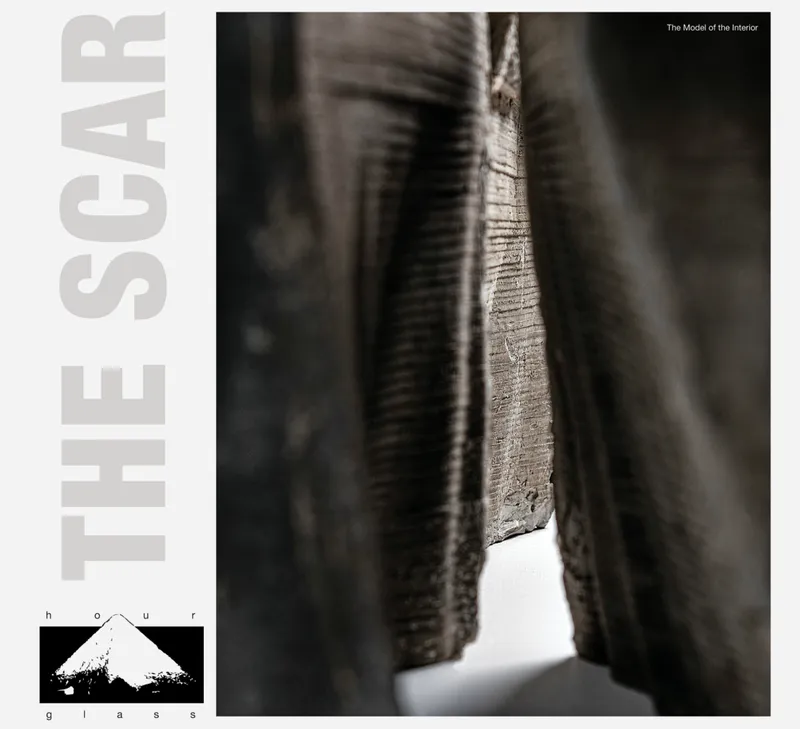
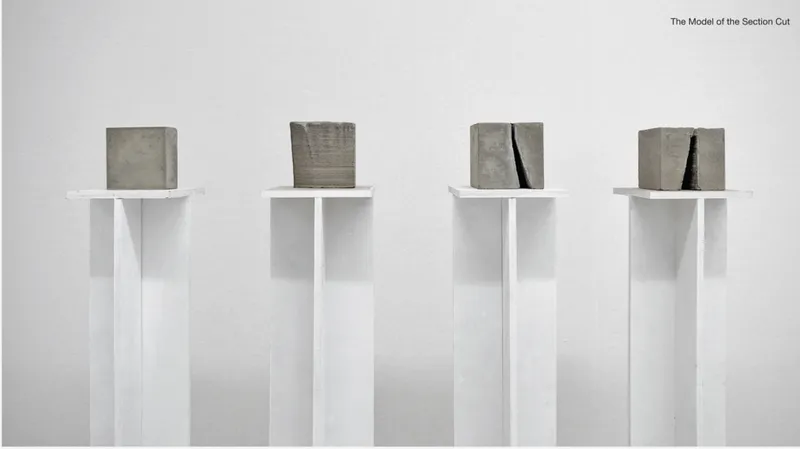
At its core, "The Scar" operates as a conceptual inversion of traditional monumentality. Instead of rising above the ground, it cuts into it. This inversion is critical in redefining sustainable memorial architecture, shifting from dominance over nature to immersion within it.
The project frames the desert as a living entity. The incision represents both destruction and acknowledgment. It suggests that the act of building is inherently transformative and often violent, yet capable of generating meaning when approached with sensitivity.
This duality is reinforced through the project's philosophical stance: architecture is not separate from nature but an extension of it, carrying both responsibility and consequence.
Plan Strategy: The Scar as Spatial Narrative
The plan strategy of "The Scar" introduces a linear incision across the desert landscape, functioning as both circulation and narrative device. The crack evolves into a continuous path, guiding visitors through a sequence of spatial experiences.
Rather than acting as a barrier, the scar becomes a connector, linking east and west, north and south. This reinterpretation challenges conventional urban planning logic, where efficiency often overrides experiential richness.
The project critiques modernist ideals that prioritize singular, optimized routes. Instead, it introduces layered movement systems that encourage dérive, exploration, and emotional engagement. Through this, the architecture becomes phenomenological, engaging the body and perception.
Spatial Experience: Sequence of Exposure and Enclosure
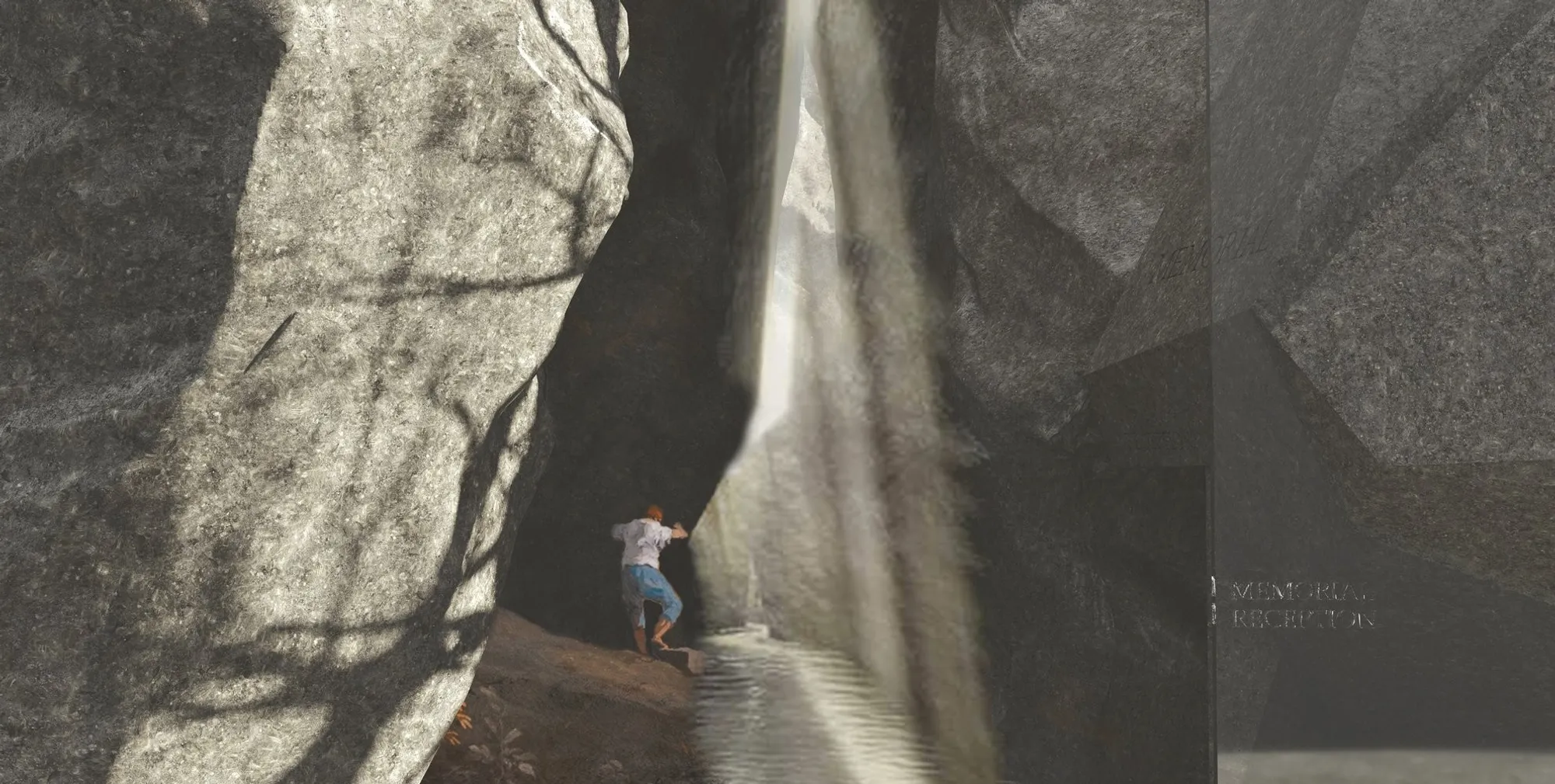
The interior spaces of "The Scar" are orchestrated as a sequence of contrasting conditions. Visitors descend into the earth, entering spaces defined by varying degrees of light, enclosure, and material intensity.
Moments of void and border define the journey. Narrow passages amplify darkness and humidity, while sudden openings allow light to penetrate, creating dramatic visual and emotional shifts. This choreography of light and shadow is central to the project's spatial language.
The use of water introduces reflection, both literal and metaphorical. Shadows projected onto stone surfaces create ephemeral layers of meaning, reinforcing themes of life, death, and transformation.
The architecture does not merely house experience; it constructs it.
Materiality and Form: Dialogue Between Nature and Artifice
Material expression plays a critical role in articulating sustainable memorial architecture within "The Scar." The project juxtaposes raw, eroded stone with precise, geometric interventions.
Natural elements such as rock, sand, and water form the primary palette. These are complemented by minimal artificial insertions, including planar walls and controlled cuts. The contrast between organic irregularity and human precision establishes a dialogue between nature and artifice.
This tension is not resolved but sustained. The architecture acknowledges the inevitability of human intervention while striving to minimize its dominance. Over time, natural processes such as erosion and sedimentation are expected to reshape the intervention, reinforcing its temporal dimension.
Stone and Tombstone: Intimacy Within Monumentality
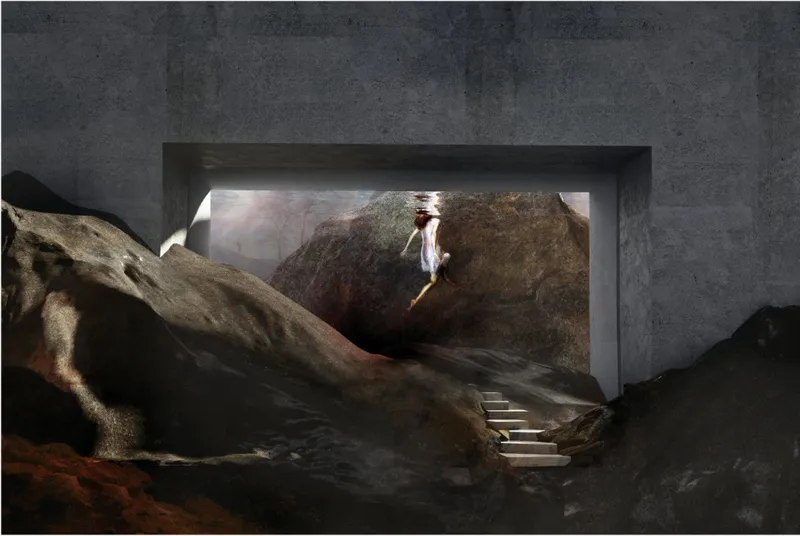
One of the most compelling aspects of the project is its treatment of the tomb as an intimate spatial condition. The "stone and tombstone" strategy introduces a hidden interior where visitors encounter moments of solitude and reflection.
Water becomes a guiding element, leading individuals into enclosed spaces carved within rock formations. These interiors are deliberately minimal, allowing the surrounding material and environmental conditions to define the experience.
The tomb is not an object but a condition. It dissolves boundaries between architecture and landscape, reinforcing the project's commitment to sustainable memorial architecture.
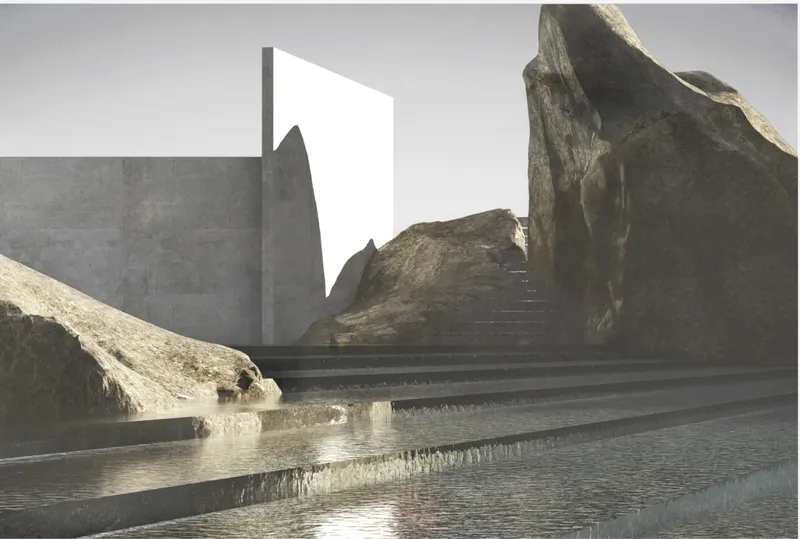
Environmental Integration: Responding to the Desert Context
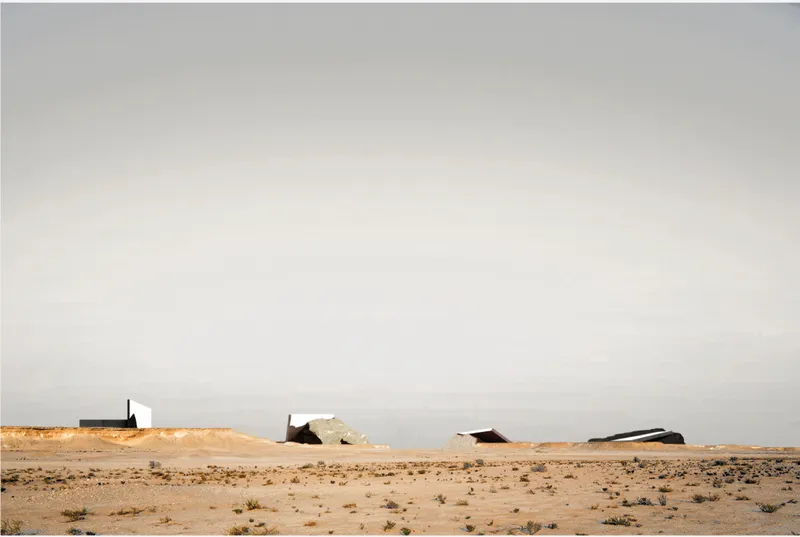
The desert is not treated as a neutral backdrop but as an active participant in the design. Factors such as sunlight, wind, and topography directly inform the project's geometry and orientation.
The incision captures light at specific angles, creating temporal variations throughout the day. Wind flows are harnessed to enhance thermal comfort within subterranean spaces. The project's integration with the landscape ensures minimal disruption while maximizing experiential depth.
However, as noted by juror Kazumasa Takada, the dynamic nature of sandy terrain raises critical questions about permanence and adaptability. The project opens an important dialogue on how sustainable memorial architecture can respond to constantly shifting environmental conditions.
Tension as Narrative: Nature Versus Human Intervention
"The Scar" is fundamentally about tension. It operates between opposing forces: nature and artifice, permanence and change, destruction and healing.
This tension is not merely conceptual but spatially embedded. The project creates an environment where visitors are continuously aware of their position within this duality. The architecture becomes a medium through which the relationship between humans and the Earth is interrogated.
Rather than offering resolution, the project invites reflection. It acknowledges that the scar cannot be erased but suggests that awareness can lead to transformation.
Juror Perspectives: Critical Reception
The project has been recognized for its artistic ambition and conceptual depth.
Jonas Prismontas described it as “very artistic and quite monumental indeed,” emphasizing its experiential quality and the desire it evokes for physical engagement.
Kazumasa Takada highlighted the strength of its metaphor while also questioning its contextual responsiveness, particularly in relation to the shifting nature of desert landscapes. This critique underscores the importance of grounding conceptual narratives within specific environmental conditions.
Together, these perspectives position "The Scar" as both a compelling vision and an open-ended inquiry within sustainable memorial architecture.
"The Scar" challenges conventional approaches to memorial design by embedding memory within the Earth itself. It redefines sustainable memorial architecture as an active, evolving dialogue between humans and the environment.
Through its integration of landscape, materiality, and narrative, the project transcends traditional monumentality. It becomes a living system, shaped by time, nature, and human perception.
In doing so, "The Scar" does not simply commemorate. It confronts. It questions. And ultimately, it proposes a new architectural language rooted in responsibility, awareness, and coexistence.


Popular Articles
Popular articles from the community


Co-Life: Senior Housing Design That Reconnects Older Adults With the City
Co-Life reimagines senior housing design through healing gardens, shared streets, workshops, and a sustainable community across generations.

The Earth Pod: 3D Printed Homes for Resilient Refugee Communities
The Earth Pod reimagines refugee housing through 3D printed homes made from clay, combining resilience, self-sufficiency, and rapid shelter.

Play: Fragments of Their World
Familiar architecture becomes modular playground design, creating safe spaces where displaced children can learn, connect, imagine and play.

The Ocean Hive: Sustainable Architecture for a Self-Sufficient Civilization at Sea
The Ocean Hive imagines sustainable architecture at sea, where modular habitats, algae, wave power and ocean waste sustain a growing colony.

Similar Reads
You might also enjoy these articles

Eco Chapel: A Green Architecture Pavilion Designed in Symbiosis with the Forest
Eco Chapel uses green architecture to weave prayer, learning and reuse into a forest pavilion shaped by modular hexagonal canopies for life.
Kaffeebühnen: Coffee Shop Architecture Designed as a Civic Stage Between Vienna’s City and Park
Kaffeebühnen turns coffee shop architecture into a civic stage, linking Vienna’s park edge, urban life, warm timber yards, and coffee craft.
Healing Façade: Sustainable Architecture for Reforestation, Community, and Sacred Ecology in Ethiopia
Healing Façade reimagines sustainable architecture as a living wall that restores soil, catches water and renews Ethiopia's forest churches.


Urban Forest: A Vertical Ecosystem for 5,000 Workers in Singapore's Changi Business Park
Radially stacked pods and layered green decks turn a 7-acre plot into 47 acres of ecological workspace projected for 2040.


Comments (0)
Please login or sign up to add comments
No comments yet. Be the first to comment!