
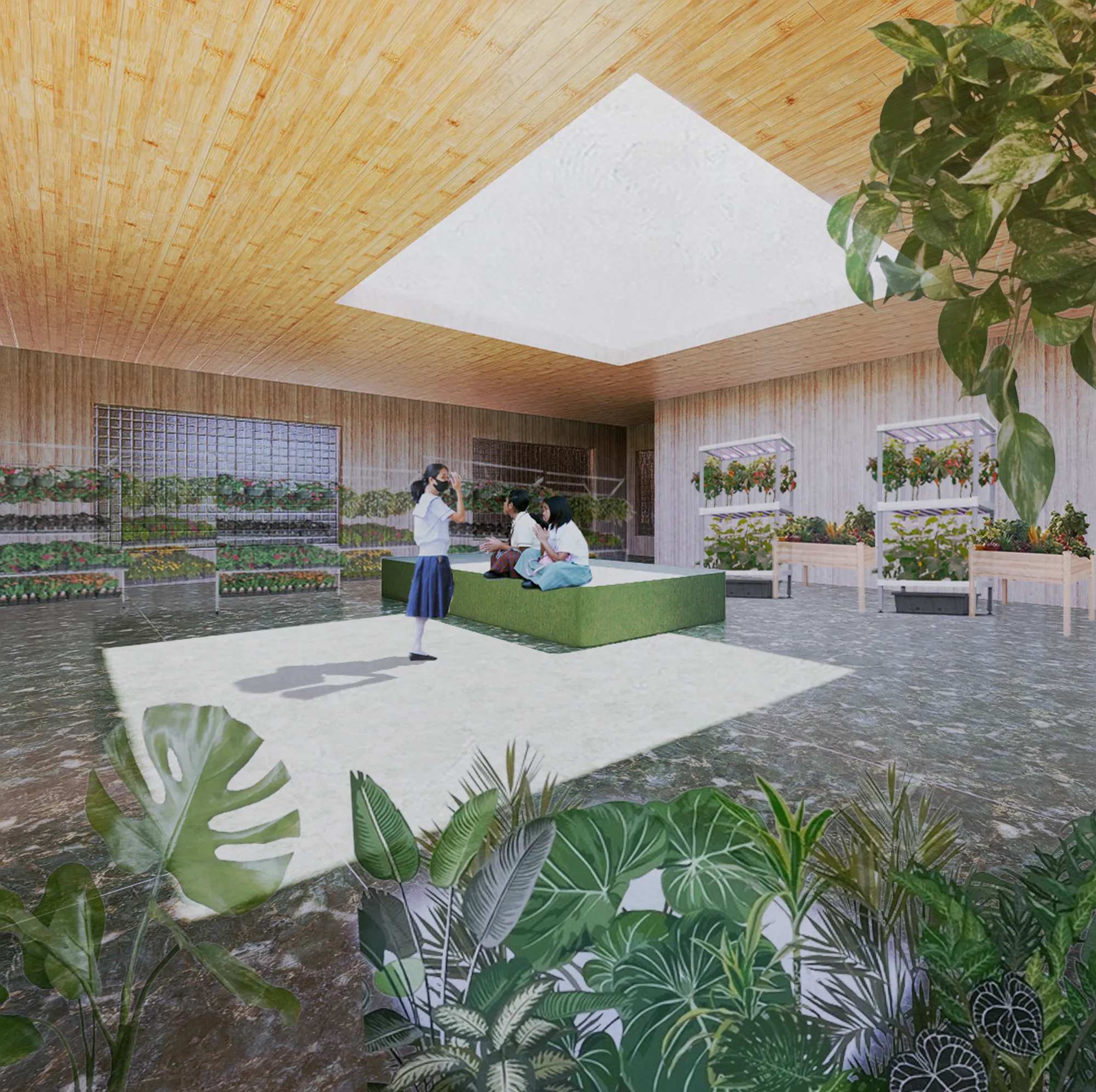
The Story Behind the Magkasuwato School
In a context where nature is diminishing, how do we reconcile the relationship between students and the land? How does their exposure to nature's processes at work improve that connection?

When first presented with the design brief, I was intrigued by the premise of "integrating" by restoring a luscious context and merging a school within that canvas. I began by doing some research on the reality of nature's presence within the Philippines, and specifically within Metro Manila, where the project is situated. To no surprise, I found that the presence of greenspace within the city was steadily decreasing and the lack of tree cover has its roots in colonialism at the time of the Spanish occupation. During their rule, approximately 25% of forested area in the Philippines was cleared (1), and that same sentiment of disregard towards the importance of nature's presence within the urban fabric has still held true to this day.
Given this context, the design inevitably becomes an intersectional exercise in reconciliation, both in colonial and ecosystemic lens. I initially gravitated towards using precedents of vernacular architecture to gain inspiration for material choice and formal logic, especially due to the new challenge I was facing of designing a space within a humid and hot climate where rainfall is persistent.
In this search I landed on the typology of the bahay na bato, which is a traditional form of Filipino construction where the ground floor is non-load bearing and most heavily used habitable spaces are located on raised ground to protect them from flooding (2).
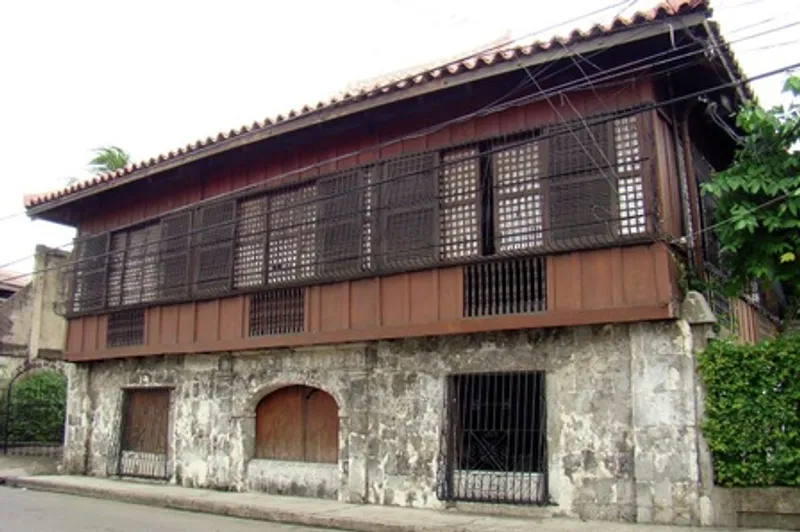
I began working with this scheme in mind as a guideline for my design. Of course, these buildings tended to be residential, so a challenge would also be trying to adapt this style into a public building. My first step was to sketch out a few ideas of how the program would come together, shown in a series of images below.
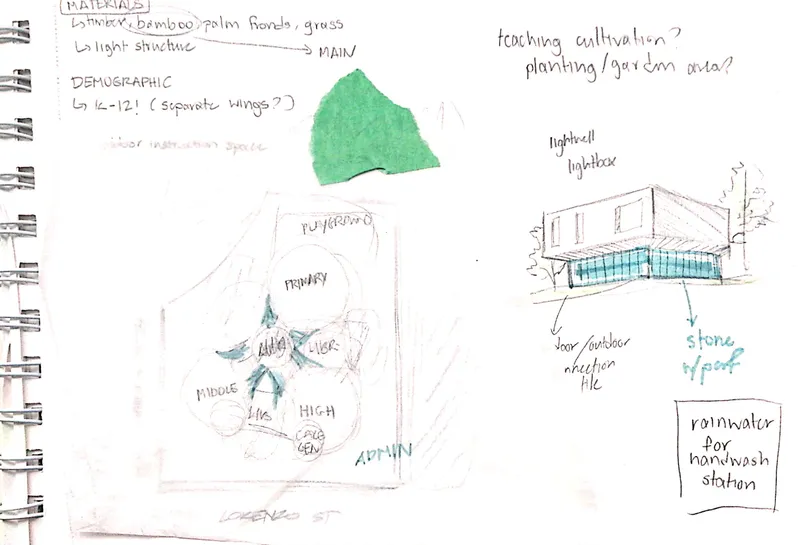
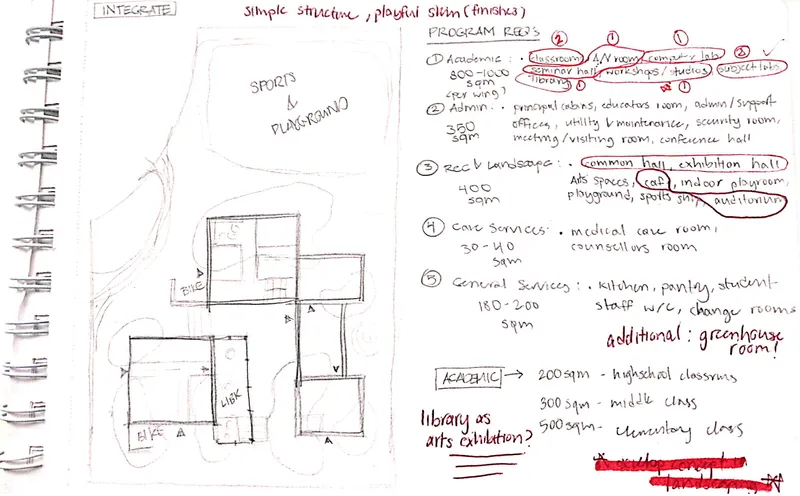
Considering the amount of programs that the building had to support, I realized I had to bundle some together in order for the building to remain within the ground coverage and FAR requirements.
The Next Step: Developing Form and Materials
In terms of materials and form, I knew that the main drivers for these choices would be the rainfall and climate of Manila. In addition, I knew that I wanted to the school to feel welcoming and easy on the eyes, which led to the choice of a very neutral and earthy palette. I determined that bamboo would be the main material due to its flexible nature, making it resistant to storms and earthquakes as well as its traditional presence in Filipino architecture.
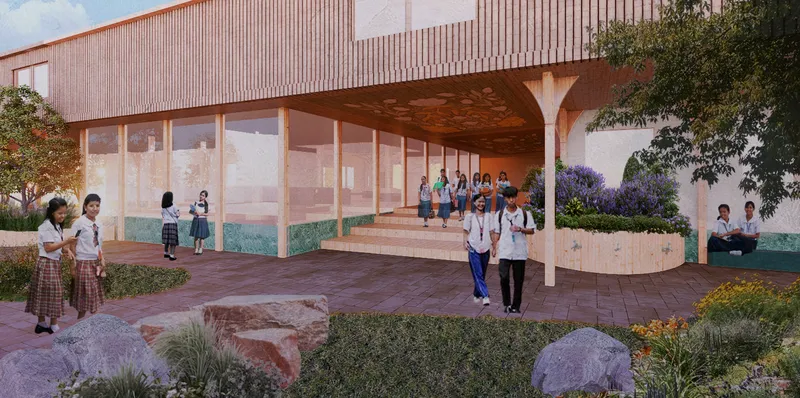
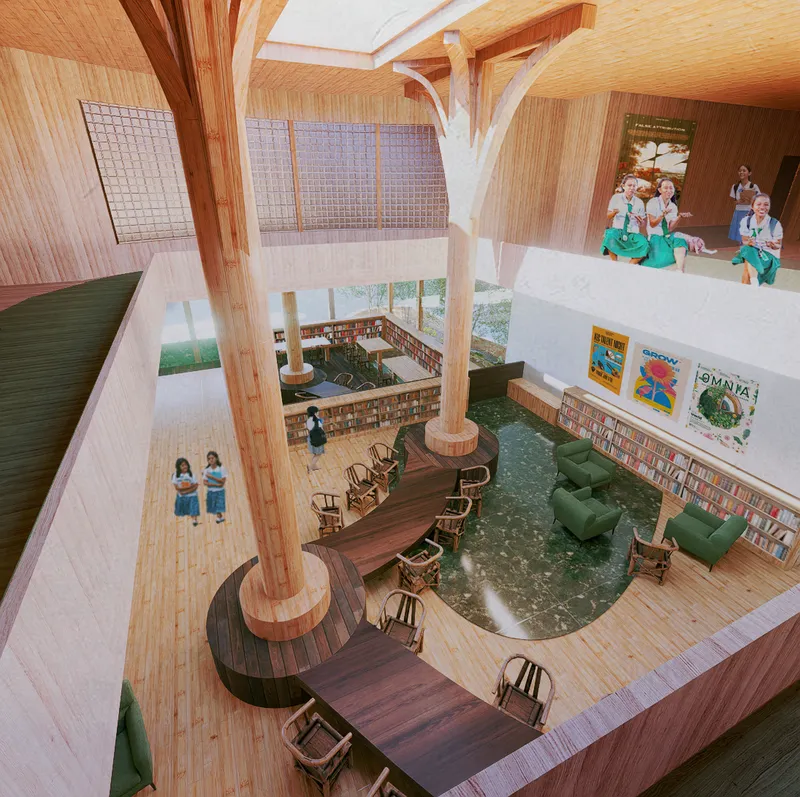
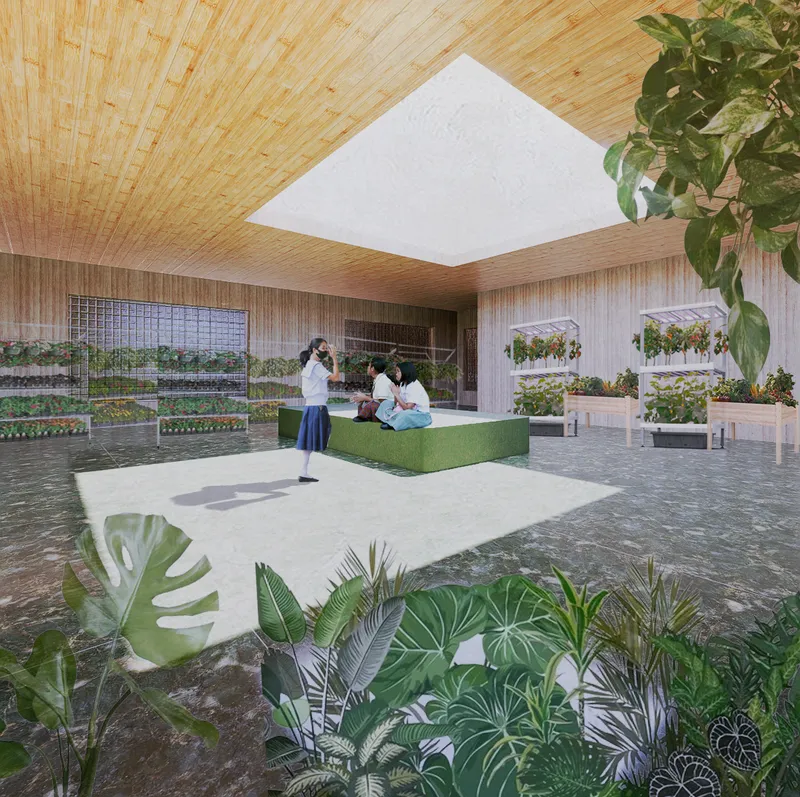
I also wanted the main idea of the building to be a tasteful and playful method of bringing the outside in, which I achieved through extending the form of the planters lining the perimeter of the building into the interior spaces and changing the floor material to evoke the feeling of the greenspace piercing into the inside. This move also creates visual interest that leads the occupants to constantly look out to the source of the pools of green, which always leads them to carefully places glazing that frames the landscaping on the exterior.
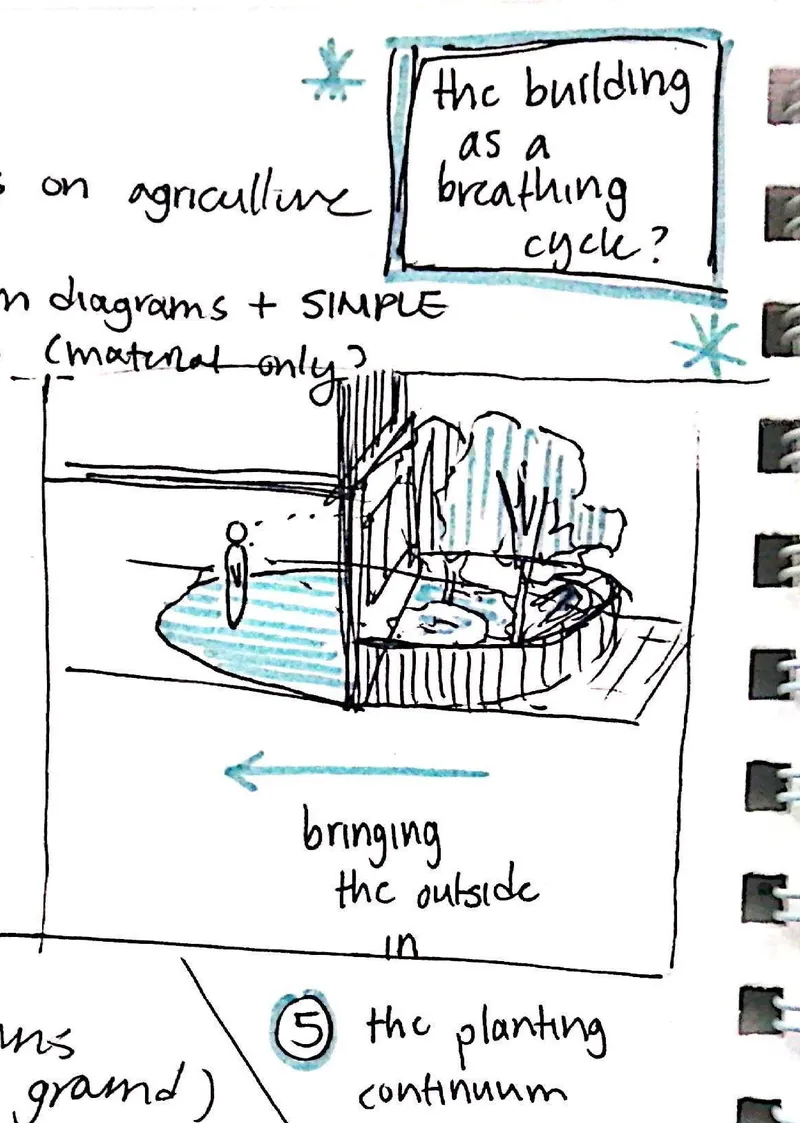
Rainfall Management and Integration
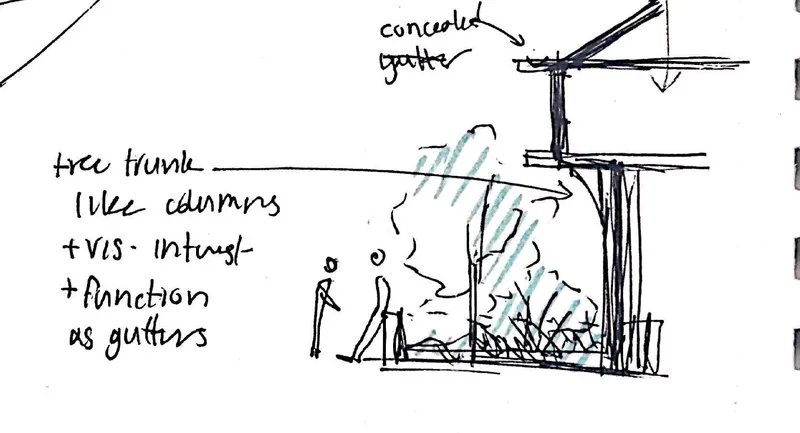
I knew that I wanted the rainfall management system to be integrated within the design. To keep in line with the earthy and tree-like themes present within the building, I decided to line the exterior with columns that encapsulate rain drainage channels accompanied by concealed gutters at the roof level. The pitch of the roof, inspired by vernacular Filipino architecture, is sloped at a not too steep angle in order to maximize the catchment of rainfall. The rain that is captured is guided towards the planters, which ensures that the main contributor to the image and feel of the school is constantly maintained. The whole building's rainwater management system is designed to make the school feel as if it is breathing and metabolizing the rainfall through this simple function.
Conclusion and Final Design
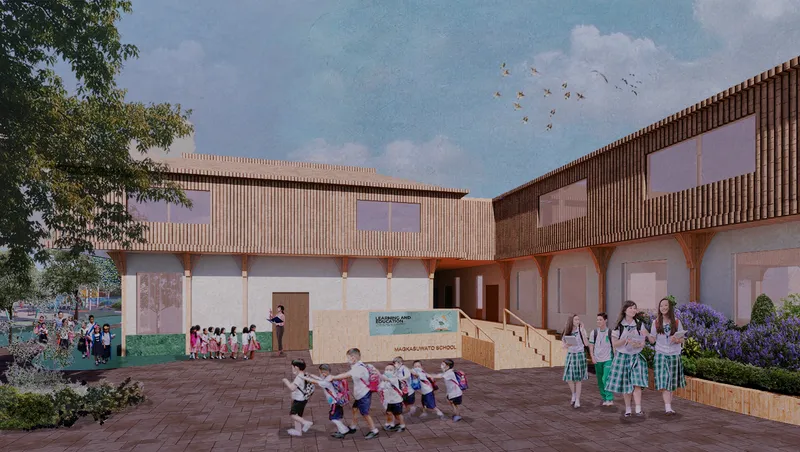
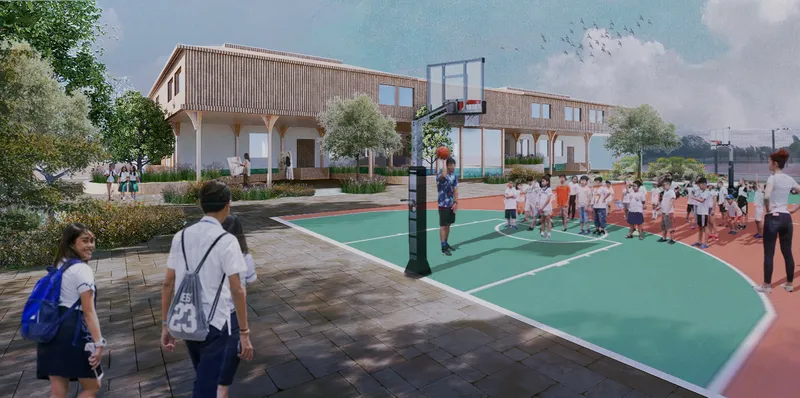
After some formal and spatial iteration (i.e. positioning of the school and program), I arrived at the final design in which all these elements come together to create a building where nature becomes an integral and ever-present part of every student's time at the school. Three separate wings (elementary, intermediate, and high school), are connected through "wells of wonder" which are multi-functional spaces where the main design elements of playful interaction with nature are on full display. Planters line the perimeter of the school and the same formal logic is applied to the rest of the site in order to maintain a consistent sense of rhythm in the landscaping. Overall, the Magkasuwato School ensures that every student, staff and visitor is able to create or repair their relationship with the land and is constantly aware of its presence within their lives.
Citations
1. Schelly, Chelsea. (2018). Bringing the Body into Environmental Behavior: The Corporeal Element of Social Practice and Behavioral Change. Human Ecology Review. 24. 10.22459/HER.24.01.2018.07.
2. Antonio, Senen (n.d.). Lean interpretations from Philippine Vernacular Architecture. Lean Urbanism. https://leanurbanism.org/lean-interpretations-from-philippine-vernacular-architecture/



Popular Articles
Popular articles from the community


The Musturak Paradise: Senior Living Architecture for a Connected Future in Temara, Morocco
The Musturak Paradise reimagines senior living architecture in Temara via private homes, social spaces, culture, community, and shared care.

Co-life: Sustainable Architecture for Age-Friendly Community Living
Co-life reimagines sustainable architecture for seniors through courtyards, rammed earth, shared gardens, and spaces designed for belonging.

Hill & Cross Opera: Sculptural Opera House Architecture Shaped by Tallinn’s Landscape and Identity
Hill & Cross Opera reimagines opera house architecture in Tallinn through its sculptural hill, civic plaza, glass wave and a luminous cross.

Play: Fragments of Their World
Familiar architecture becomes modular playground design, creating safe spaces where displaced children can learn, connect, imagine and play.


Similar Reads
You might also enjoy these articles

The Rhythm of Seasons
A Farmers' Market Connecting Nature and the City

More Than a Building-Designing a Living System
More Than a Building-Designing a Living System
Base Beyond
DESERT COMPOUND ARID: TOURISM OF ABSENCE AND ABUNDANCE

Explore Educational Building Competitions
Discover active competitions in this discipline




Challenge to design public laboratory


Challenge to reimagine the Iron Throne


Photograph architecture without architects


Illustrate the lost glory of Angkor Wat - Render Challenge
Comments (0)
Please login or sign up to add comments
No comments yet. Be the first to comment!