

The Tea Rendezvous
A heaven for Tea Enthusiasts

Our project, The Tea Rendezvous is located on a steep site in Ooty, India. Since the site has a high slope gradient, that itself becomes a dominating factor that impacts design.
Hence, the concept for the campus roots from establishing a deep understanding of the site context and its surroundings. The Ooty lake and dense vegetation nearby make for the idea of immersing the landscape into the built mass. It guides in identifying the vantage points on the site. Also, it lays the foundation for the orientation of the buildings such that they offer aesthetic views from the site. While the key understanding of the macro-context was completed in its entirety; a study of user groups was further taken up to understand the convenience required for the main entry points for the visitors and the service entry near the manufacturing unit for the workers and researchers.
Since tea culture across the world is differentiated by several traditional and local norms, consequently, it is bound by a few factors that have taken their form and developed a historic regional culture in different zones across the world. Namely, Tea History & Routines, Social Impact & Domestic Experience, and Integration with Landscapes, Industry & Technology. Thus, an attempt was made to incorporate the same through the formation of a program that complements these factors.
At the design level, the study for the project began with understanding the living patterns of the Toda community in Ooty. After carefully analyzing the key concepts - concentric settlement pattern, organic circulation pathways as per natural terrain, etc, we arrived at the key theme for the spatial planning of our project. It was implemented to design by dividing the site into five functional zones - The lodging zone, Cultural Zone, Social Zone, Learning Zone, and Industrial zone. These were to encircle the heart of the site - The Visitor Center.
The site planning is further guided by two principles - creating an interactive yet relaxing environment and binding the buildings for experiential learning with the landscape and most importantly, the tea industry. In addition, some intangible aspects such as discovery, exploration, interaction, transition, and comfort were infused into the design. Therefore, the primary intent behind the organization of elements across the site was both architectural and impacted by the site.
The key buildings come together to form the campus. The key concept for the visitor’s center is to bind the whole campus. The manufacturing wing is planned in a multipurpose manner to keep a check on the production output of tea, the research and development wing for growth as well as the introduction of a mezzanine level for the visitor to experience all of it in real-time without disturbing the ongoing processes. The design is such that it explores the distinct features of physical and visual boundaries. The visitors further can enjoy a stay on the campus at the lodges with a restaurant nearby, to enrich their experience. The tea houses focusing on the different tea cultures of the British, Indians, Chinese and Japanese aim at providing an experiential visit through a carefully planned spatial layout, to the tourists who visit the campus from around the world. The museum with a unique design language is in contrast to the other buildings. It immerses well into the landscape and takes one through the tea culture.
The design for the campus came together through a back-and-forth process and numerous iterations. None of the factors could be looked at in isolation, therefore, the design was looked at through both 2D drawings as well as 3D block models. It was with patience that the design for the campus developed gradually, metaphorically, building it brick by brick.
Another important aspect that was looked into for the design delved into coming up with sustainable buildings. In addition to the site and climate considerations, a material palette including the vernacular material wood, brick, and stone was carefully selected.
All in all, the campus encapsulates the visitor experience, through a wholesome and sustainable design proposal. It comes together through exploring the various parameters that impact the site. The solutions are coherent in nature and add to the final design layout.


Popular Articles
Popular articles from the community


Manzana Morphosis: Stretching Barcelona's Grid into a Living Landscape for 2050
A radical reworking of the Eixample manzana turns density into a tool for generous public space, vertical ecology, and environmental performance.
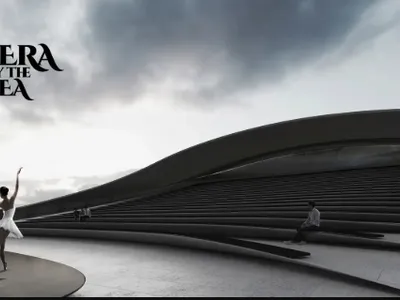
Opera by the Sea Estonia: Three Shells Dissolving Architecture into Tallinn's Coastline
A winning opera house proposal replaces monumental form with interconnected shells that blur the boundary between building, park and Baltic Sea.
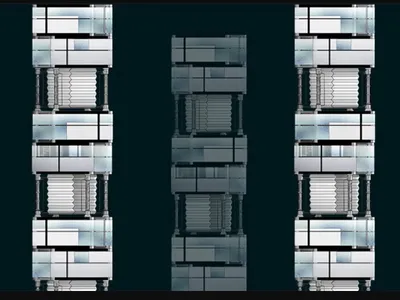
Tsunami Convergenics: Turning Catastrophic Ocean Forces into Underwater Housing Infrastructure
A speculative underwater settlement off the coast of Onagawa, Japan, treats tsunamis and typhoons as energy sources rather than threats.

Temporary Home for Dogs: A Reversed Zoo Rethinks Animal Shelter Architecture
In Bucharest, a sinuous corridor and freed landscape flip the logic of containment, designing a shelter that works to make itself unnecessary.

Similar Reads
You might also enjoy these articles

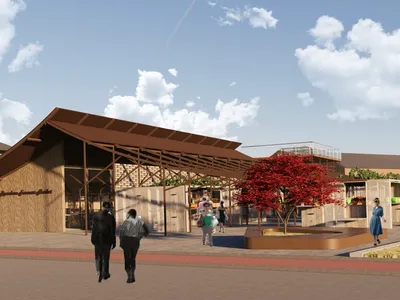
The Rhythm of Seasons
A Farmers' Market Connecting Nature and the City

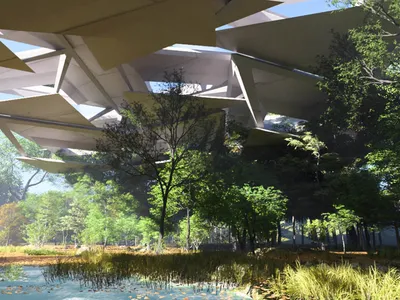

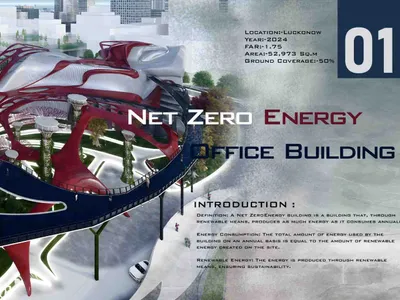
More Than a Building-Designing a Living System
More Than a Building-Designing a Living System
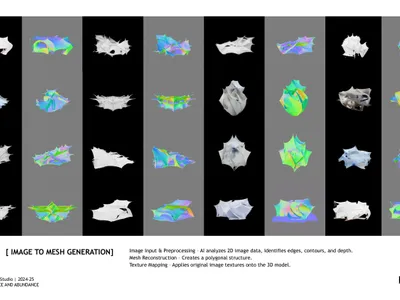
Base Beyond
DESERT COMPOUND ARID: TOURISM OF ABSENCE AND ABUNDANCE

Explore Coffee Set Competitions
Discover active competitions in this discipline


Challenge to reimagine the Iron Throne

Photograph architecture without architects

Illustrate the lost glory of Angkor Wat - Render Challenge

Design challenge to reuse E-waste
Comments (0)
Please login or sign up to add comments
No comments yet. Be the first to comment!