

The Treasury Museum Khonkaen by Plan Architect – Revitalizing Modern Heritage in Thailand
Adaptive reuse transforms Khonkaen’s former bank into a vibrant museum, blending modernist heritage, local culture, public spaces, and sustainable design.


From Bank Headquarters to Cultural Landmark
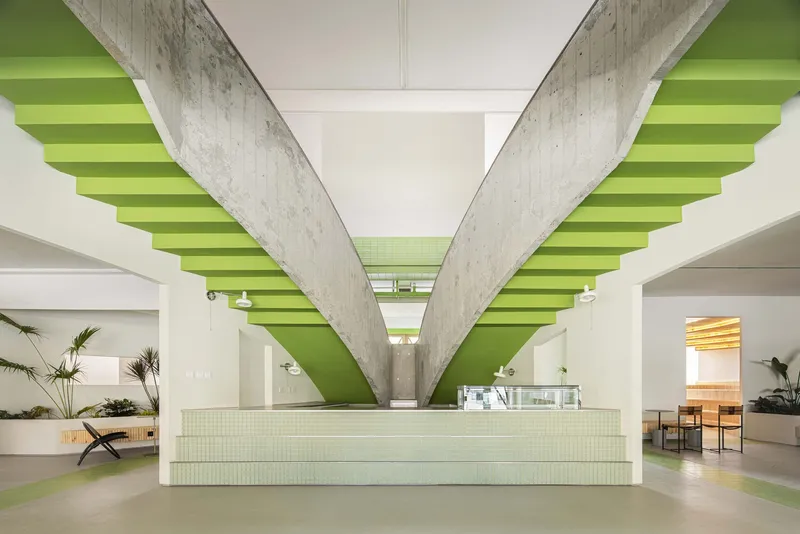
Once serving as the Bank of Thailand Northeastern Region Office, the building in central Khonkaen stood as a testament to Thailand’s modernist architectural era. Located amid schools, markets, residential zones, and community spaces, its defining features—waffle slab roofing, cantilevered floors, and a visible modular grid—set it apart as a distinctive civic landmark.
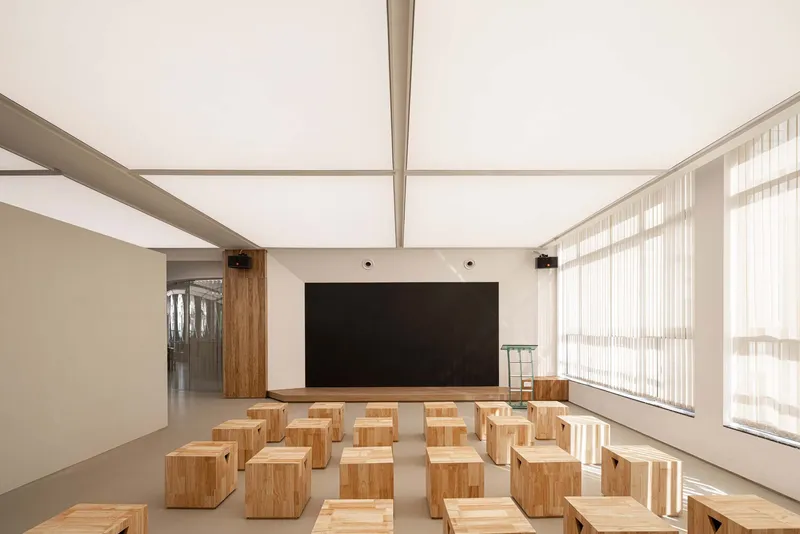
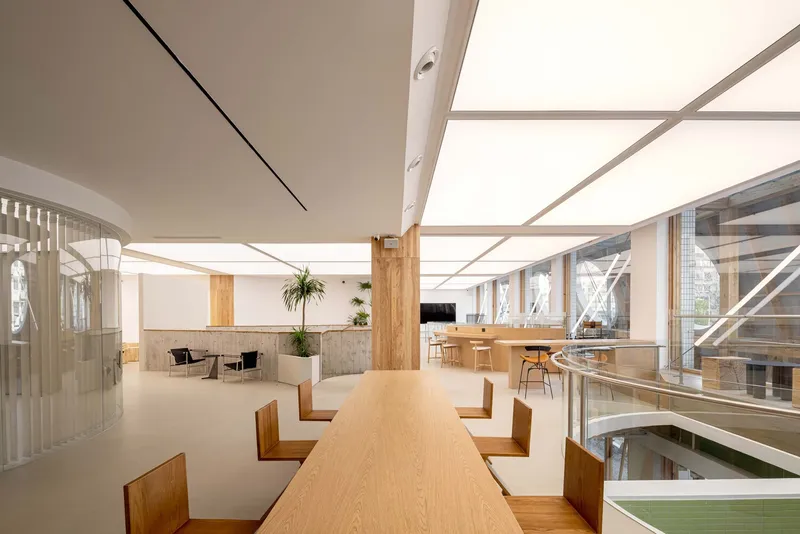
After the Bank relocated, the site was reimagined as The Treasury Museum Khonkaen, a vibrant cultural and public hub. The adaptive reuse project transforms the once-closed financial institution into an inclusive museum complex featuring exhibition galleries, a multi-purpose pavilion, public park, and administrative spaces—designed to serve the city’s evolving cultural needs.
Preserving Modernist Identity with New Functions
The renovation balances heritage preservation with functional upgrades. Key modern-era design elements were retained, while spatial configurations were adapted for public use:
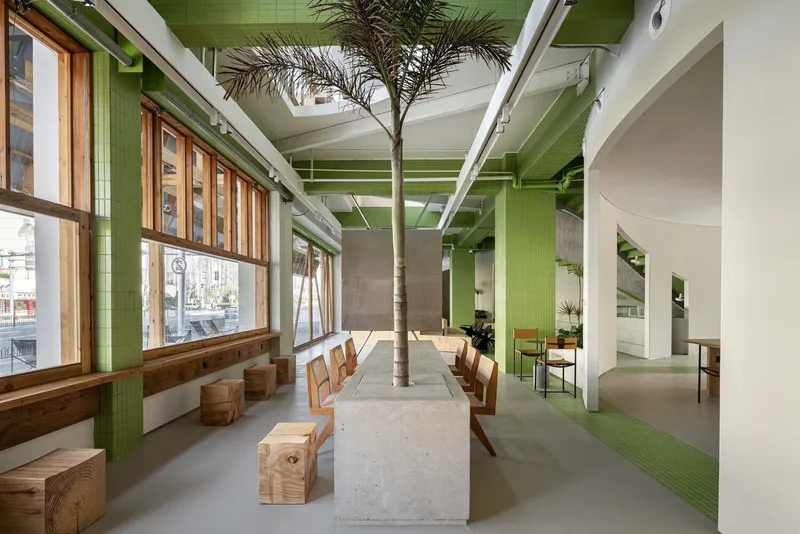
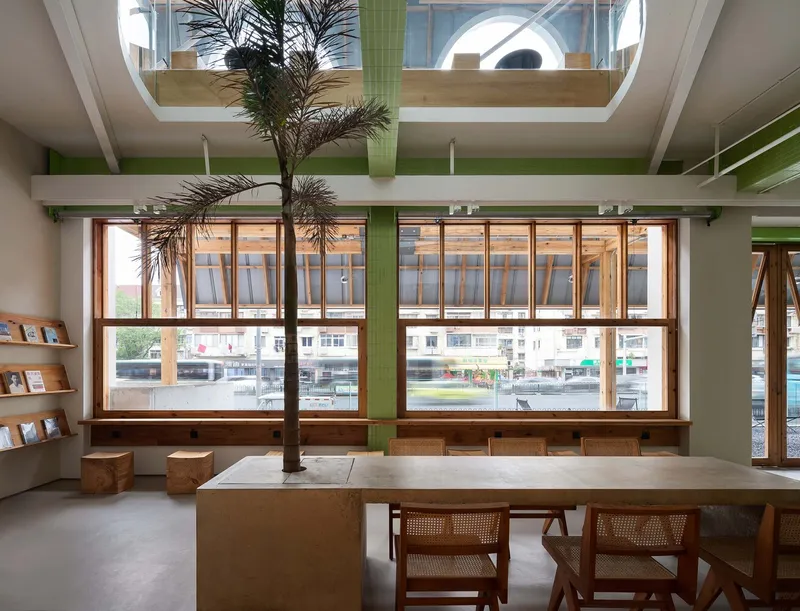
- First Floor Transformation: Opaque security walls were removed to invite natural light, improving visibility between the common areas, library, and outdoor gardens. This change redefines the ground level as an open, welcoming social zone.
- Second Floor Adaptation: The former central roof garden was transformed into a double-volume exhibition hall under a newly designed roof that channels indirect daylight while connecting vertically to the first floor.
- Historic Material Reuse: Original steel bars and curved steel components, once part of the bank’s security infrastructure, were creatively integrated into the main hall, lift shaft coverings, and even as ceiling details in the office area—reinforcing the narrative of transformation.
Gallery & Café – A New Social Magnet
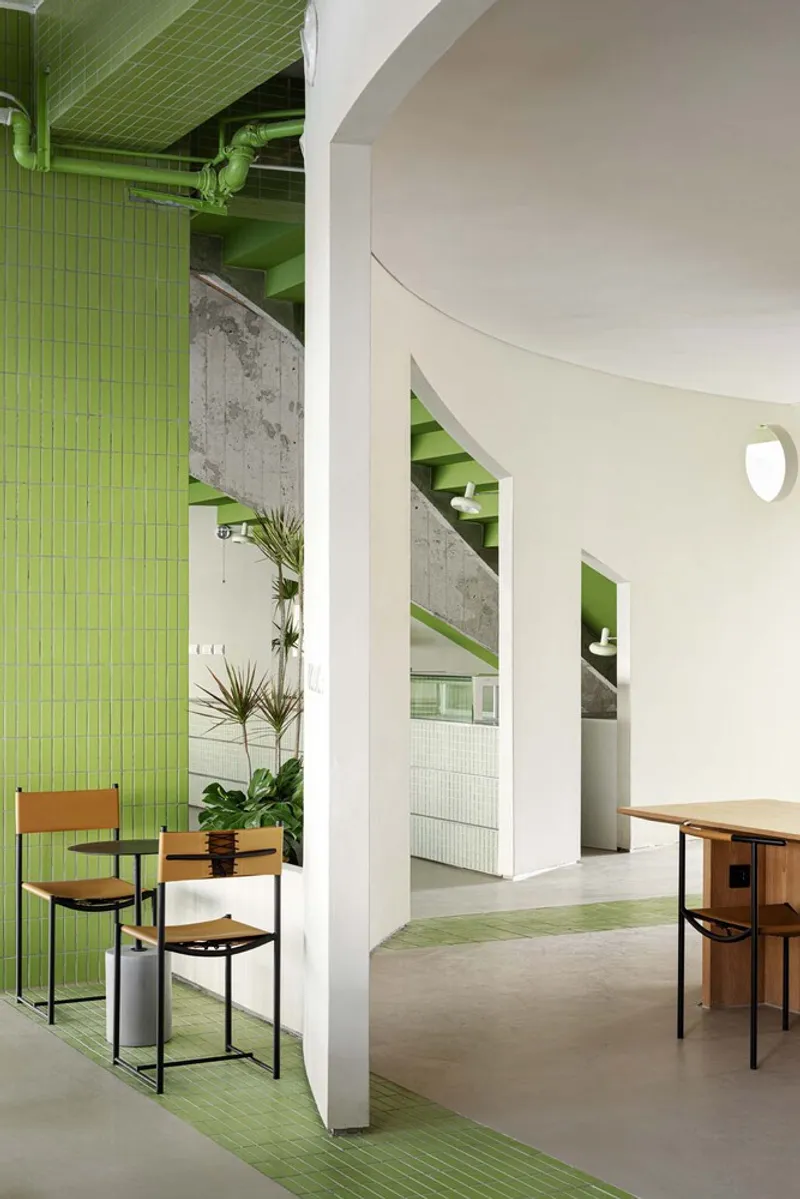
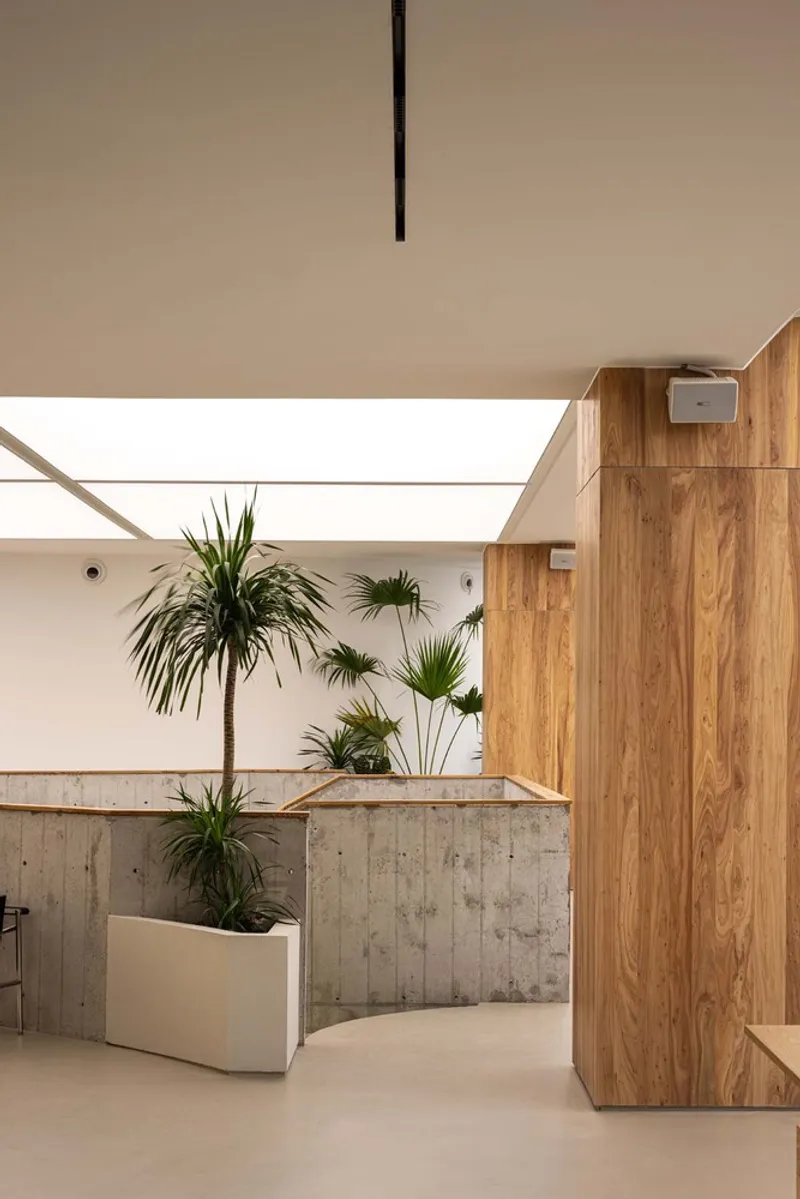
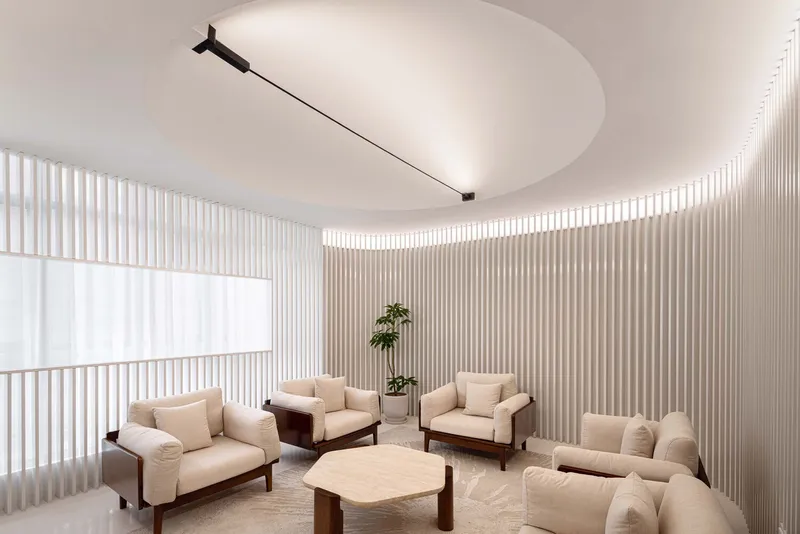
The former staff residence was repurposed into a two-level cultural space—with a café on the ground floor and gallery space above. Exposed structural elements celebrate the building’s original charm, while vertical fins pay homage to the original architect’s intention of achieving a “floating” visual effect.
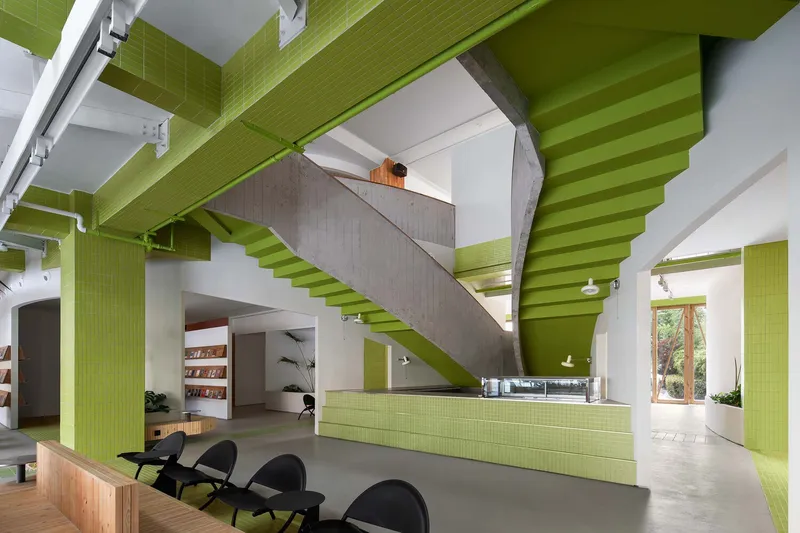

Public Park & Multi-Purpose Pavilion
A striking cantilever-roof pavilion now anchors the site’s new public park, replacing what was once a car park. The landscape design draws inspiration from the local ‘Pha-Khao-Mah’ weaving tradition—its colorful grids and patterns translated into dynamic outdoor spaces. This weaving motif symbolizes the interconnection of people, culture, and architecture, encouraging community engagement through lively, interactive spaces.
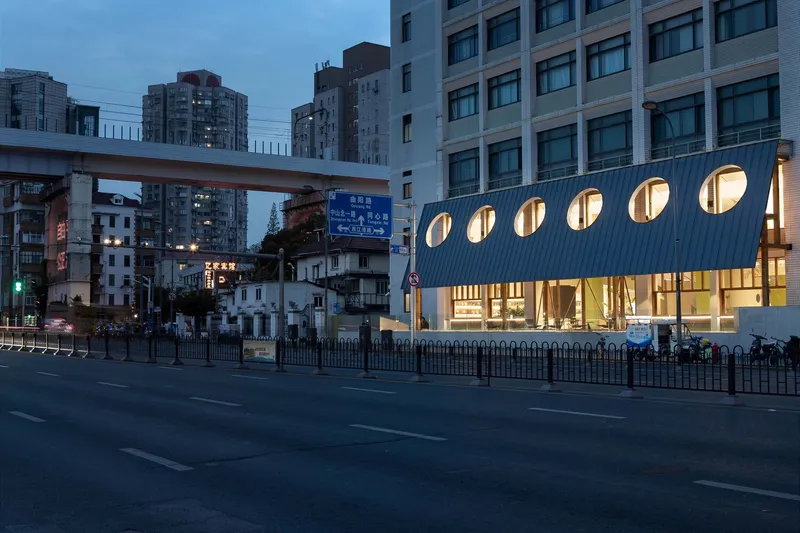

Urban Renewal with Cultural Resonance
The Treasury Museum Khonkaen is more than an adaptive reuse project—it’s a civic revival, merging the modernist architectural heritage of Thailand with local cultural identity. By weaving together history, design, and community activity, the project not only preserves the city’s architectural memory but also injects it with new energy, making it a valuable asset for Khonkaen’s cultural future.

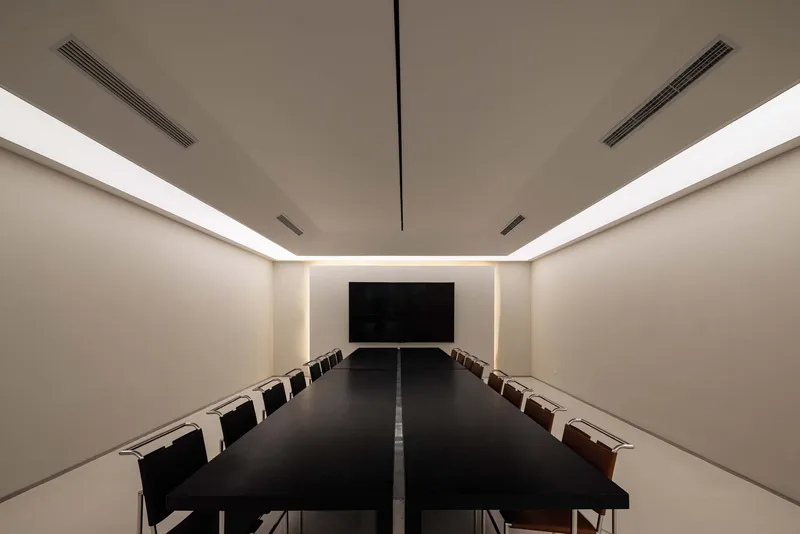
All photographs are works of Andy, ACTSTUDIO


Popular Articles
Popular articles from the community


longwave studio Reorganizes a 112 m² Tainan Apartment Around the Daily Routines of a Family and Two Cats
In Tainan, Taiwan, birch plywood, rust-red furniture and a freestanding plaster wall link arrival, storage, work and family life in one apartment.

David Macias Steps a Doorless Stone and Plaster House Down a Tropical Colombian Hillside
In the humid hills of Colombia, Threshold House replaces the front door with an open void and terraces its 850 m² down the slope instead of fighting it.

U.GA Architects Wraps an Oval Rooftop Pool in Curved Board-Formed Concrete on Busan's Jeollidan-gil
In Busan's Jeonpo-dong, a 454 m² mixed-use block stacks a neighborhood facility, guest rooms and an oval rooftop pool inside spiraling concrete walls.

David Ortega Stacks a Two-Story Mexico City Penthouse Around a Steel Stair and a Pergola-Shaded Roof Terrace
In Colonia Roma, a 300 m² penthouse uses oak joinery, a planted steel stair and a slatted roof pergola to make a new-build apartment feel like a house.

Similar Reads
You might also enjoy these articles


Hodi-Mandai Geram
Project Function: Preservation and revitalization of the Intangible heritage and socio-spatial identity of the Hodi by Housing, Cultural Memory Center, Sacred Grove, landscape, local tourism economy


Olio Towers: A Mid-Rise for Performers That Fuses Housing, Rehearsal, and Stage
Located blocks from Houston's Theater District, this modular tower stacks living units around a central performance atrium.

Oasis: Modular Green Housing Carved into Dhaka's Urban Fabric
A shortlisted Plugin Housing entry reclaims unauthorized settlements in Dhaka with stepped concrete volumes, green roofs, and ventilation-driven design.

Black Hole: A Floating Megastructure for the Post-Physical Era
Emiliano Mazzarotto envisions a spherical, self-scaling arena where e-sports, digital hotels, and holographic stadiums replace traditional public space.

Explore Architecture Competitions
Discover active competitions in this discipline

Challenge to reimagine the Iron Throne

Photograph architecture without architects

Illustrate the lost glory of Angkor Wat - Render Challenge

Design challenge to reuse E-waste
Comments (0)
Please login or sign up to add comments
No comments yet. Be the first to comment!