

The Untrodden Trail: Architectural Heritage Landscape
A journey through memory, borders, and forgotten infrastructures shaping an architectural heritage landscape.


Situated along the northern Jordan Valley, at the sensitive borderline between Jordan and Occupied Palestine, Al-Baqourah is a site layered with political tension, environmental richness, and abandoned infrastructures. The Untrodden Trail is an architectural thesis project that reimagines this contested territory as an architectural heritage landscape, transforming its inaccessible ruins into a narrated spatial journey that reconnects people with land, memory, and history.
Designed as a continuous trail, the project by Jude AbuElGhanam uncovers fragmented remnants of industrial, military, and civic structures scattered across the terrain. These remnants: once disconnected and forgotten: are stitched together through architecture, landscape, and storytelling, allowing visitors to traverse a territory that has remained physically and symbolically untrodden for decades.


Site as Narrative: Reading the Architectural Heritage Landscape
Al-Baqourah’s significance lies not in a single monument, but in the accumulation of layers that span centuries. From Ottoman-era bridges and customs houses to British-mandate railway infrastructure and early hydroelectric power plants, the site represents a rare convergence of historical, natural, and industrial heritage.
The project approaches the site as a living archive. Instead of isolating individual structures, it frames the entire territory as an architectural heritage landscape: one where topography, water channels, ruins, and vegetation collectively narrate the story of place. The Jordan and Yarmouk Rivers, their junction, and the surrounding wetlands become integral spatial actors rather than passive backdrops.
Design Approach: A Journey Through Time and Memory
The central architectural strategy is a walking trail that follows the traces of the historic Hejaz Railway and former industrial routes. This trail becomes both a physical and emotional journey, guiding visitors through a sequence of spatial experiences that unfold the site’s story chronologically and symbolically.
Minimal architectural interventions: constructed primarily from weathered concrete, corten steel, and glass, are carefully inserted to preserve the rawness of the ruins. Rather than competing with existing structures, these additions act as frames, thresholds, and markers that heighten awareness of what already exists. The architecture remains intentionally restrained, allowing the landscape and history to take precedence.

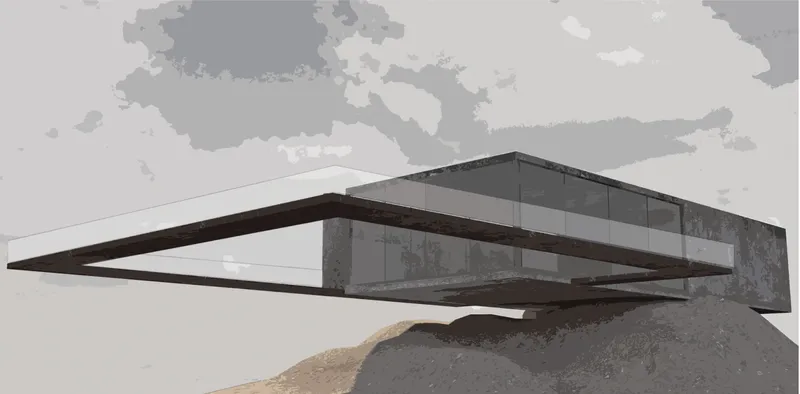
Programmatic Layers Along the Trail
The architectural heritage landscape is activated through a series of points of interest, each contributing a distinct narrative role:
- Visitors’ Center: Located within rehabilitated staff houses, marking the beginning of the journey and introducing the site’s layered history.
- Train Station Gallery: A subtle glass intervention that transforms the abandoned station into an exhibition space recounting the Hejaz Railway and passenger memories.
- Zero Channel Stopover: A non-intervention point highlighting the hydrological systems that once powered the region.
- Junction Point Lookout: A sculptural platform overlooking the meeting of the Jordan and Yarmouk Rivers, emphasizing geography as destiny.
- Hydroelectric Power Plant Museum: The heart of the trail, where industrial ruins are preserved and reinterpreted as exhibition spaces narrating energy, labor, and modernization.
- Memorial and Commemoration Stops: Corten steel elements inscribed with historical events, transforming memory into a tactile architectural experience.
- Hope Lookout: The final destination, overlooking the river and border, offering a contemplative space that symbolizes reclamation and continuity.
Architecture as Reclamation, Not Erasure
Rather than restoring the site to a singular historical moment, The Untrodden Trail embraces decay, absence, and fragmentation. The project treats architecture as a tool of reclamation through acknowledgment, allowing contested narratives to coexist without resolution. This approach reinforces the idea of the architectural heritage landscape as an evolving entity shaped by time, conflict, and nature.
Ecological considerations are embedded throughout the project, particularly in wetland preservation and bird-watching zones. The trail accommodates seasonal migration patterns, reinforcing the site’s role as both a cultural and environmental corridor.
The Untrodden Trail redefines how abandoned and politically charged territories can be approached through architecture. By framing Al-Baqourah as an architectural heritage landscape, the project shifts focus from ownership and control to memory, continuity, and spatial storytelling. It invites visitors to walk, observe, and reflect: transforming an inaccessible borderland into a meaningful journey through history, landscape, and hope.


Popular Articles
Popular articles from the community


Manzana Morphosis: Stretching Barcelona's Grid into a Living Landscape for 2050
A radical reworking of the Eixample manzana turns density into a tool for generous public space, vertical ecology, and environmental performance.

Temporary Home for Dogs: A Reversed Zoo Rethinks Animal Shelter Architecture
In Bucharest, a sinuous corridor and freed landscape flip the logic of containment, designing a shelter that works to make itself unnecessary.

Opera by the Sea Estonia: Three Shells Dissolving Architecture into Tallinn's Coastline
A winning opera house proposal replaces monumental form with interconnected shells that blur the boundary between building, park and Baltic Sea.

Opera on the Sea: Driftwood Logic Shapes a Timber Opera House on Estonia's Coast
Trevor Orgill's opera house translates the entangled drift of floating timber into a civic building where wood, water, and music converge.

Similar Reads
You might also enjoy these articles

Maya Harvest: A Cacao Resort Village Rooted in Mayan Tradition and Local Craft
Situated within a Tabasco cacao plantation, this shortlisted resort proposal merges vernacular materials with hands-on cultural immersion.
Harmonia: A River-Shaped Community That Grows Over Decades in Boa Vista
Curved pathways and modular grid structures along the Branco River create a phased settlement designed to evolve from 2030 to 2050.
The Architecture of Bathing: A Mughal Hammam Reimagined Across the Yamuna
Charlotte May's honorable mention entry for The Black Taj reinterprets Agra's bathing rituals through red sandstone, water, and framed views of the Taj Mah

Om-1: A Wall-Hung System That Moves Your Workspace Off the Desk
Modular plywood boards, magnetic pegs, and utility elements migrate clutter from the horizontal surface to the vertical plane.

Comments (0)
Please login or sign up to add comments
No comments yet. Be the first to comment!