
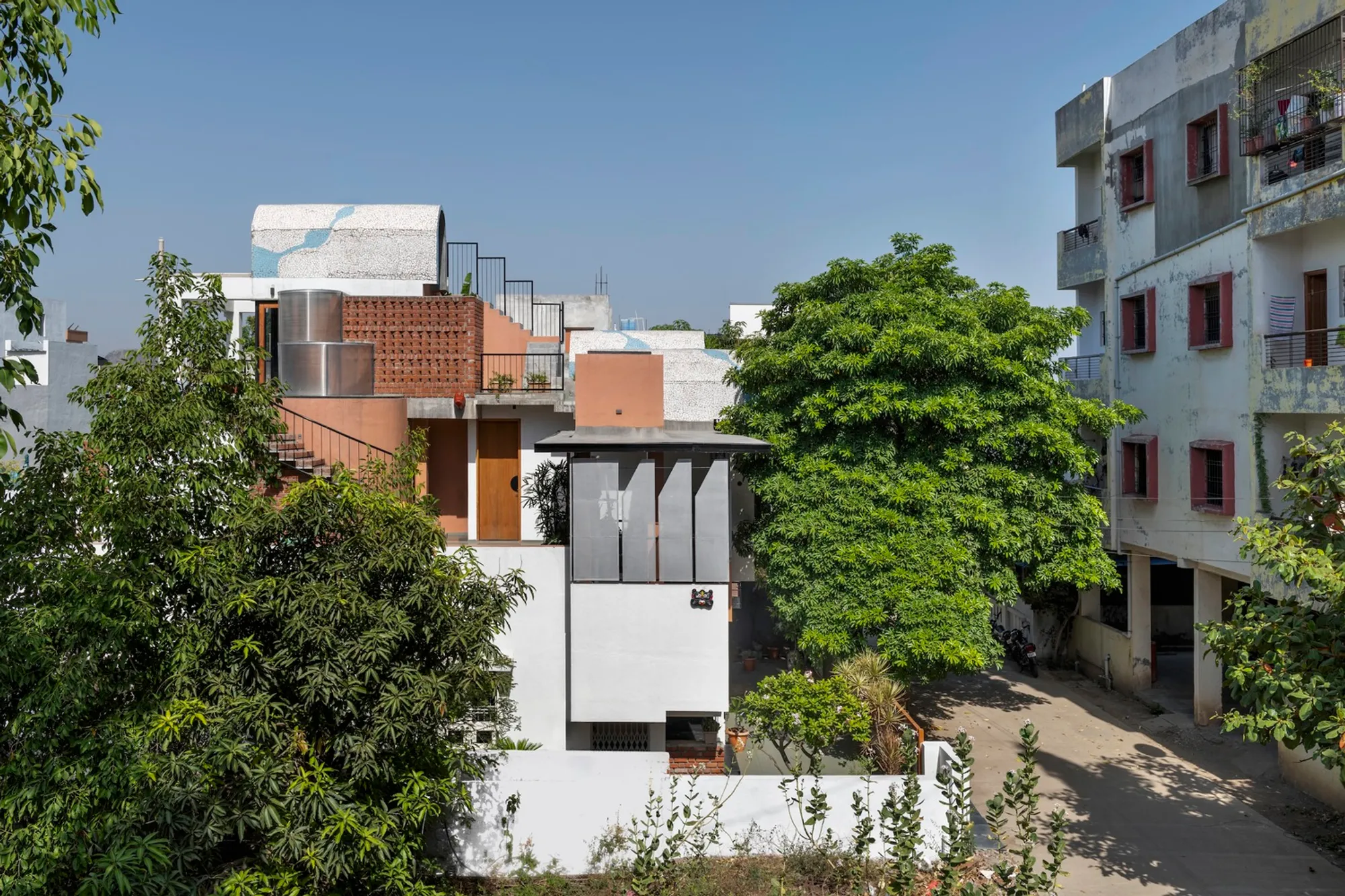
The Vaulted House by Vrushaket Pawar and Architects VP+A in Aurangabad, India
The Vaulted House integrates vaulted ceilings, stepped terraces, and a central courtyard, blending passive cooling, natural light, and privacy for an artist.


The Vaulted House, located in Aurangabad (Chhatrapati Sambhajinagar), India, is an innovative residential design by Vrushaket Pawar + Architects VP+A, created for an artist and his family. The project expands a humble two-bedroom ground floor home built over 20 years ago, transforming it into a dynamic 4 BHK residence without demolishing the original structure.
Situated in a hot and dry climate zone, the design carefully responds to passive cooling, sunlight penetration, and ventilation, ensuring year-round comfort while maintaining privacy in a relatively densely populated area.
Multi-Level Spatial Planning
The house spans three floors (ground, first, and second), each thoughtfully arranged for function and experience:
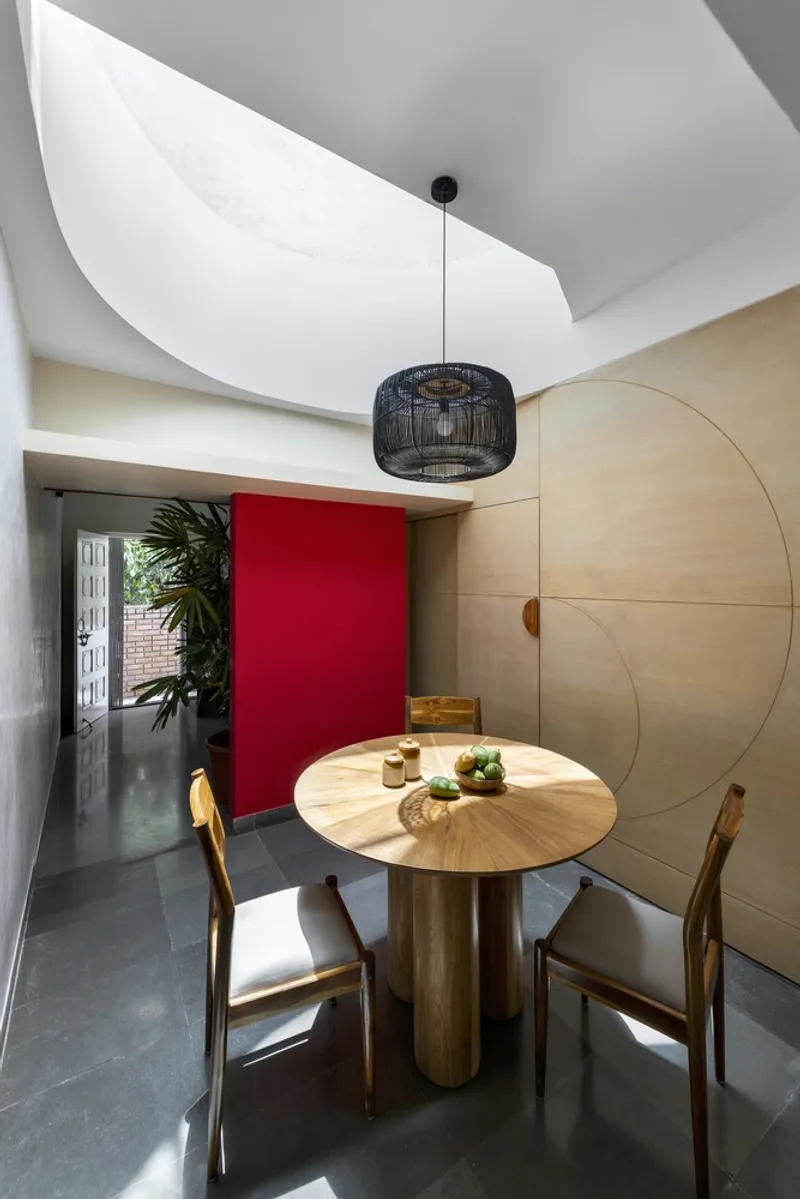
- Ground Floor: Living room, dining area, kitchen, master bedroom, guest bedroom.
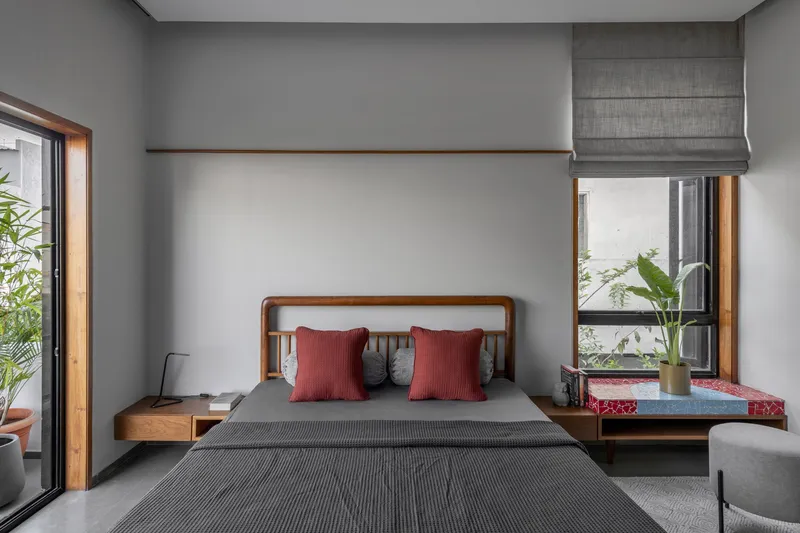
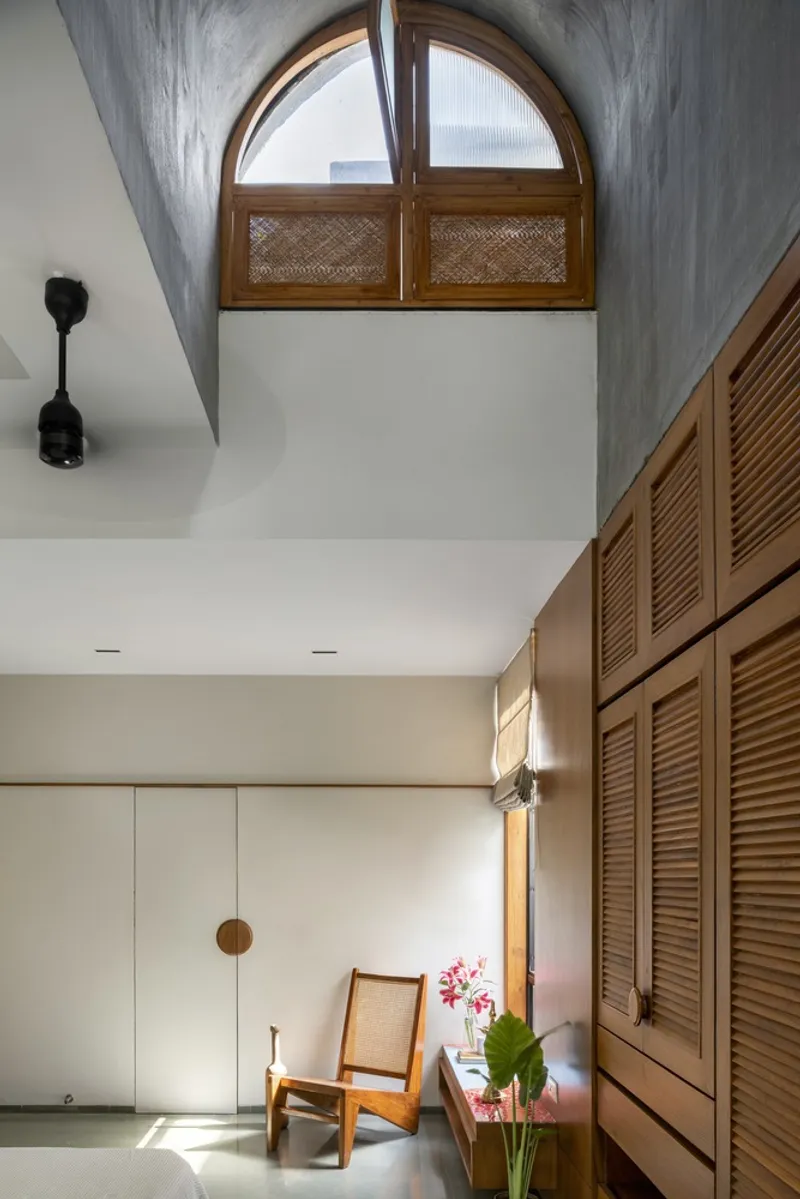
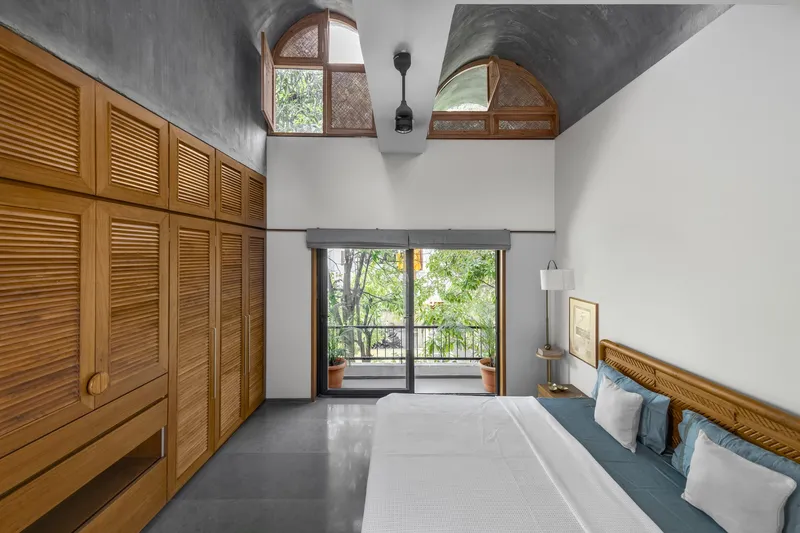
- First Floor: Sons’ bedrooms with high vaulted ceilings for thermal comfort.
- Second Floor: Private artist’s den, offering panoramic views and a serene creative retreat.
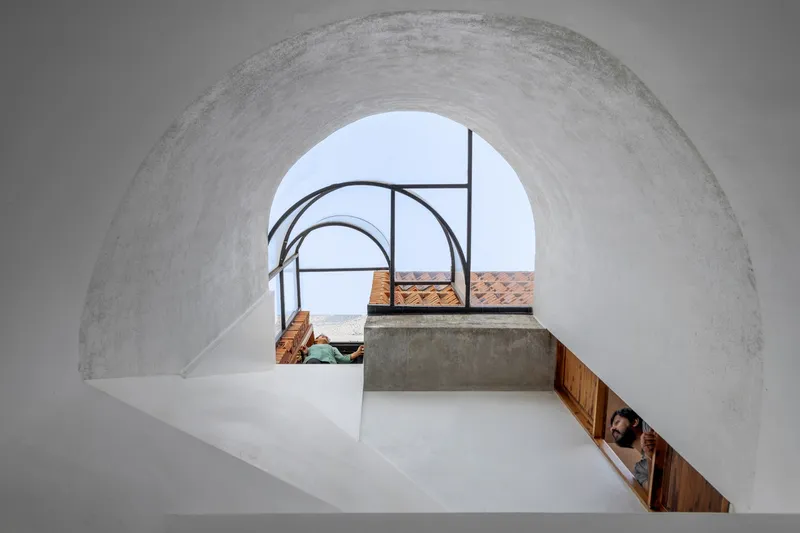
A central three-story high stepped courtyard, puncturing the original slab, brings abundant natural light into the heart of the house. This central courtyard not only illuminates interiors but also generates an upward wind draft, removing hot air from the kitchen, dining, and master bedroom during summers, while welcoming winter sunlight without exposure to cold winds.
Vaulted Ceilings and Passive Cooling
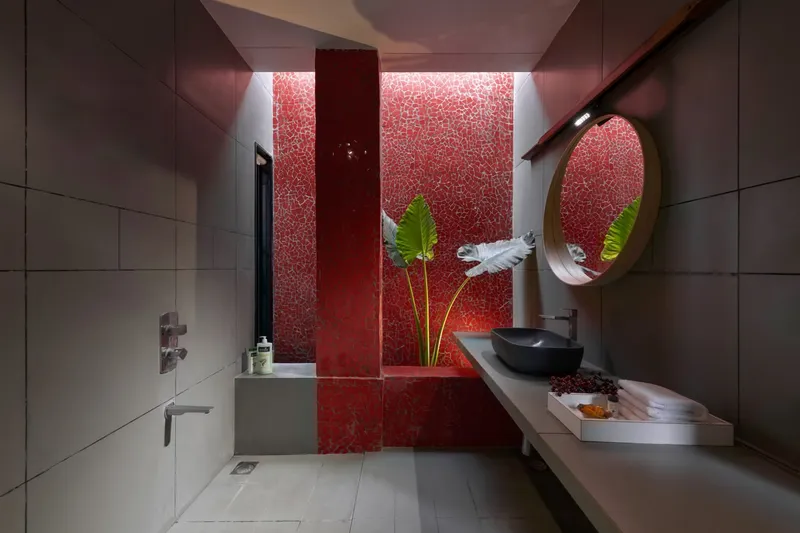
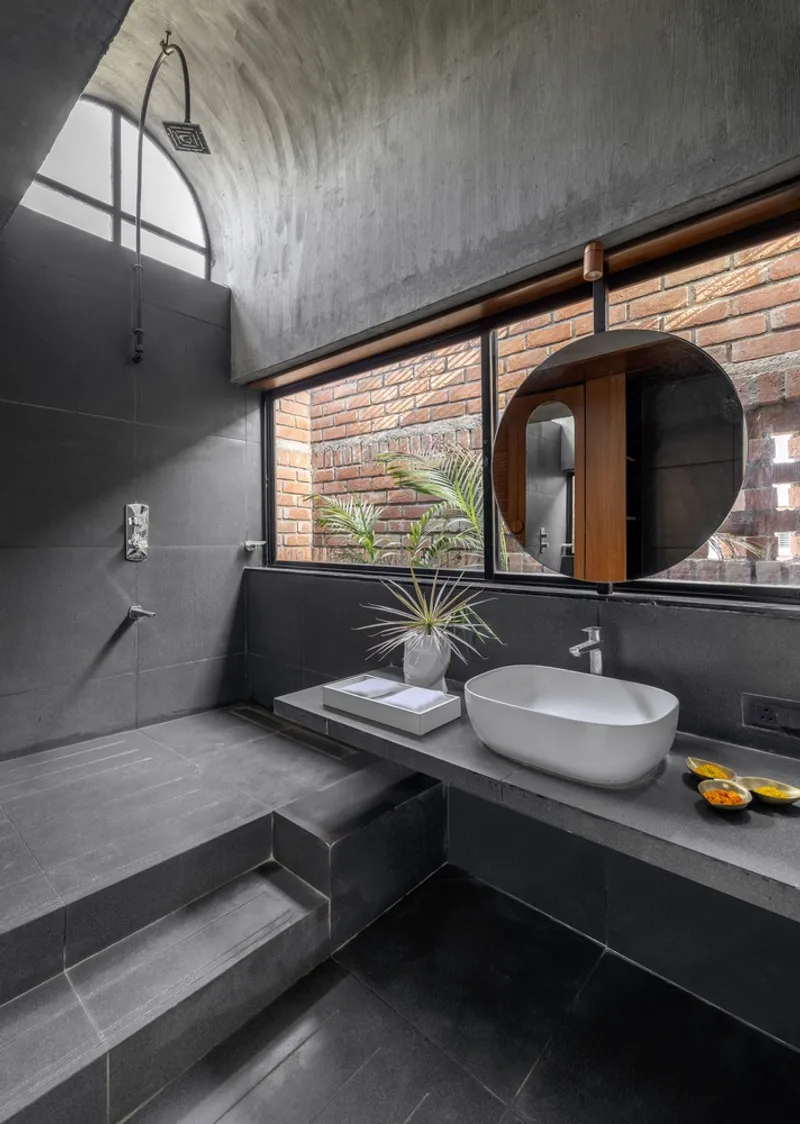
The design prominently features vaulted ceilings, particularly in the northwest bedroom, which reduces heat gain during summer while capturing the winter sun. The south-facing vaults maintain privacy and allow daylighting, while skylights in bathrooms enhance natural ventilation and light, doubling as planter spaces to add greenery to daily routines.
Stepped Terraces and Multi-Level Stairs
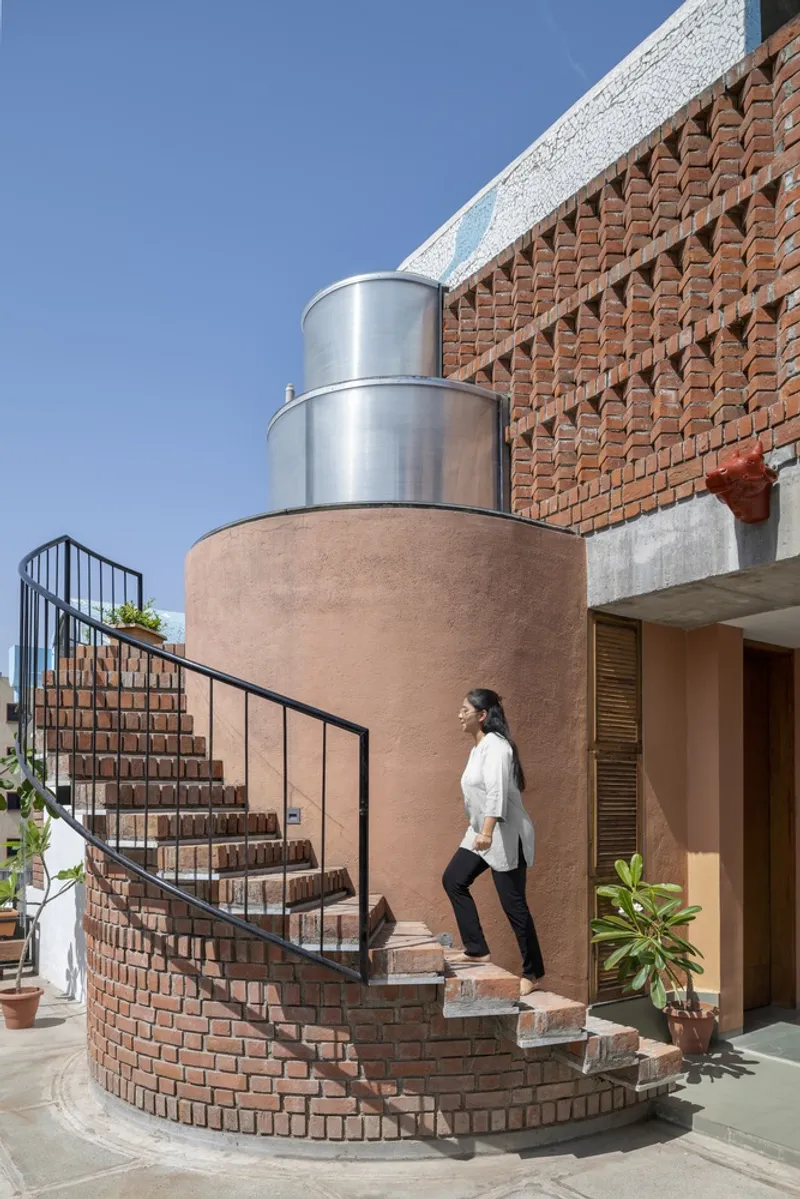
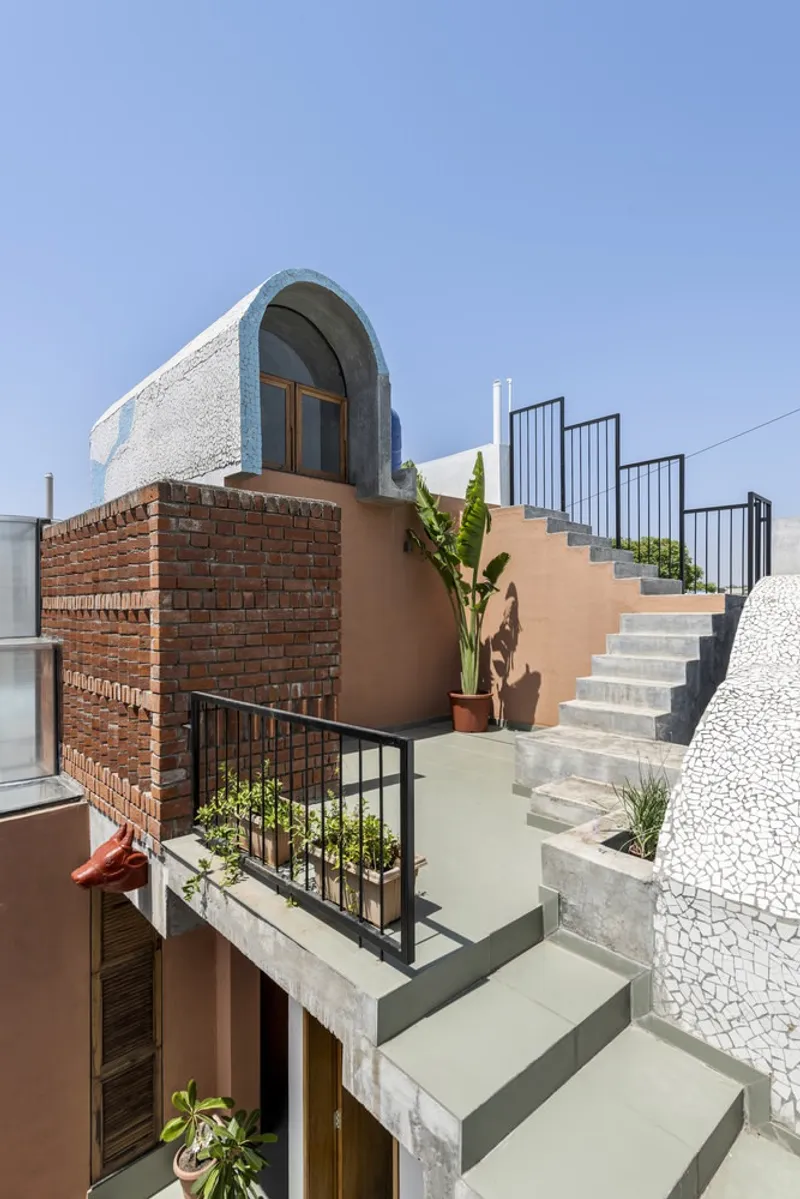
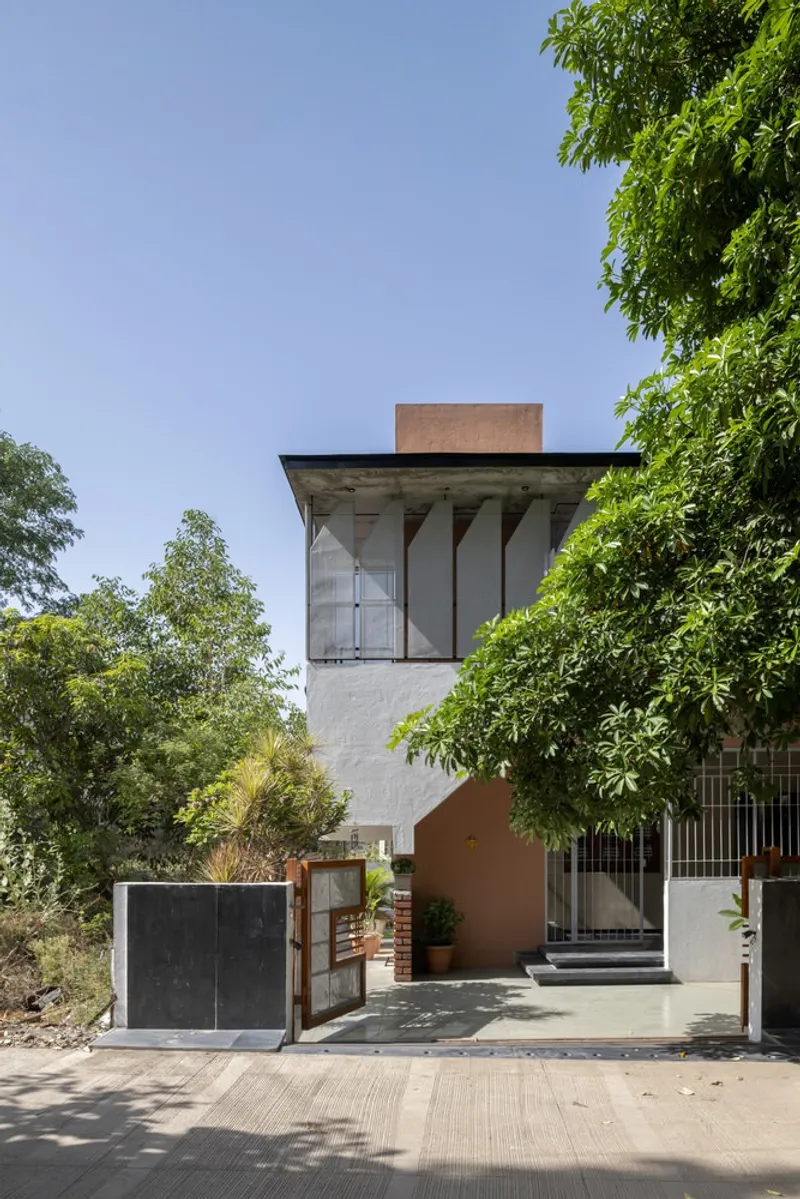
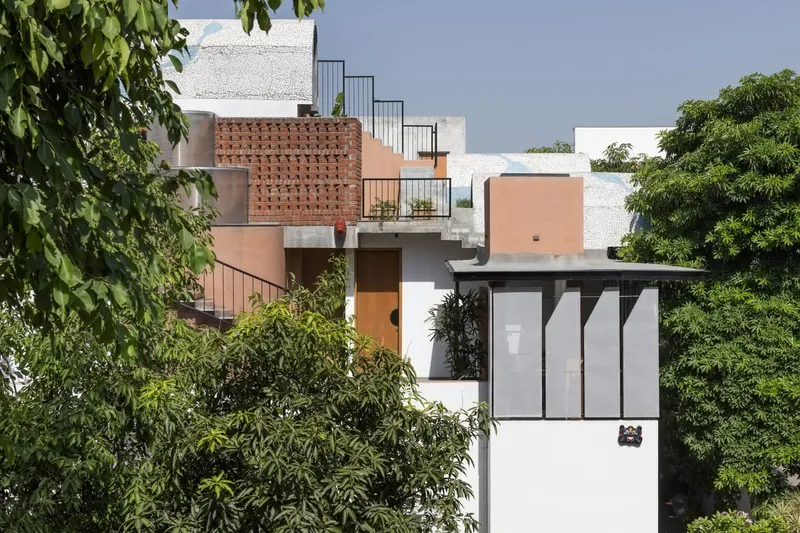
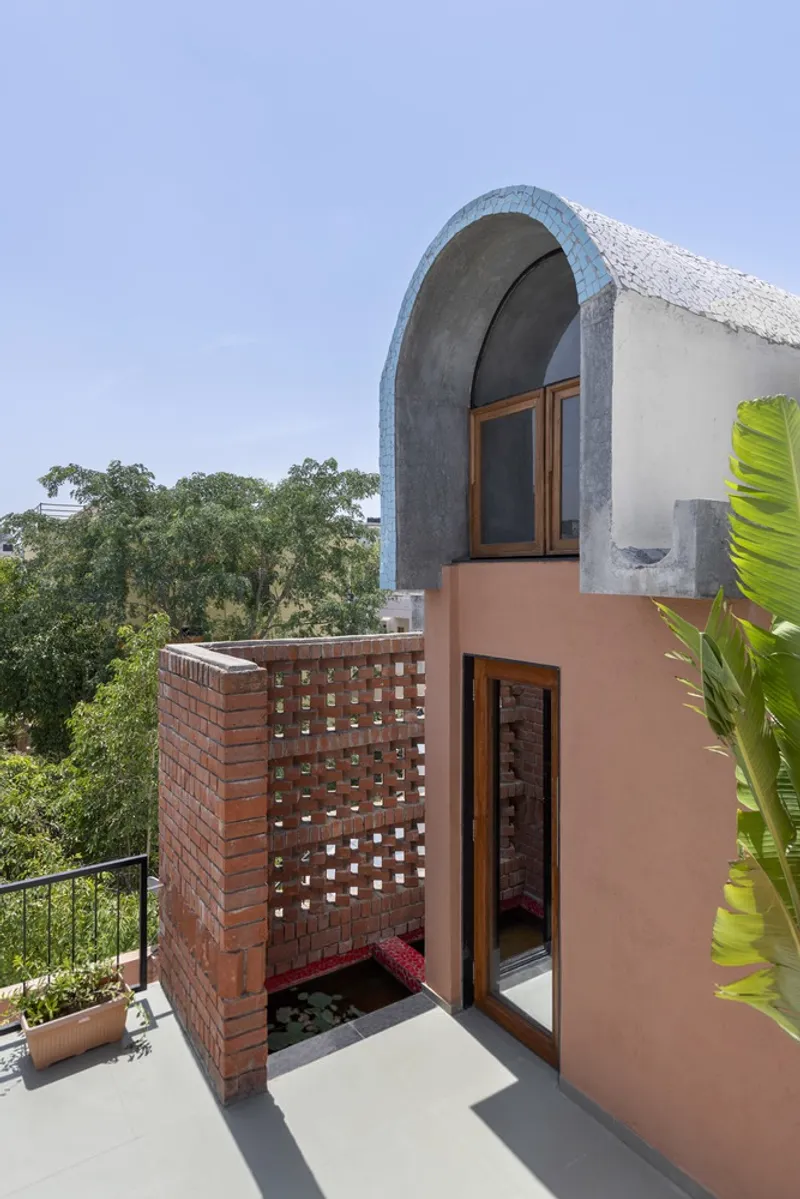
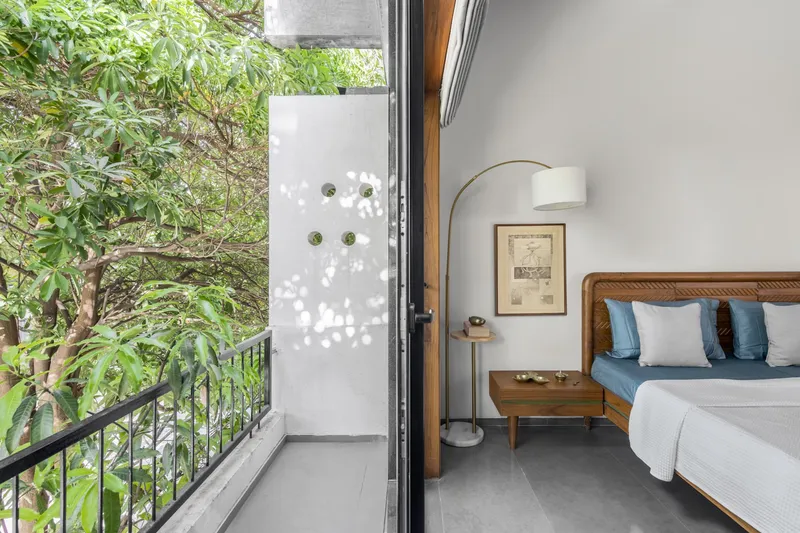
Existing staircases influenced a multi-level, terraced spatial strategy, creating outdoor extensions for each room with a distinct identity. The cantilevered concrete slabs, perforated panels, and exposed brick walls balance openness and privacy, allowing views of a large tree canopy while shielding interiors from the street.
A secondary staircase around the courtyard, built from load-bearing Kota stone and first-quality bricks, connects the living spaces to the den, visually linking multiple levels of the house.
Artist’s Den, A Creative Sanctuary
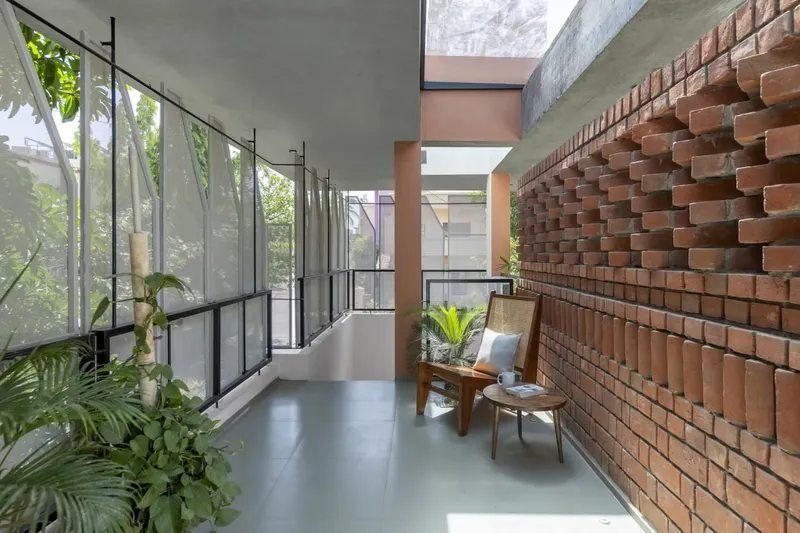
The second-floor artist’s den is a signature space designed for painting, thinking, and leisure. With glass walls on three sides and an overhanging lotus pond, it provides an immersive connection with nature. The den also opens to two terraces with contrasting views, from distant hills to intimate tree canopies, enhancing the occupant’s experience of the landscape.
A freestanding brick jaali wall provides privacy, while a partly vaulted ceiling facilitates passive cooling and enhances spatial drama. An indoor standing balcony overlooks the dining area, establishing visual and vocal connections across multiple levels.
Minimal Material Palette with Local Character
The material palette embraces humility and authenticity, reflecting the client’s background. Key materials include:
- Kota stone slabs and exposed brick
- Concrete work for structure and vaults
- Locally sourced reclaimed wood from an old wada
The stepped terraces, large vaults, and textured materials narrate the artist’s life: resilient, fluid, and firm, echoing his creative spirit.
Sustainability and Passive Design Strategies
The Vaulted House exemplifies climate-responsive design, blending sustainable architecture, passive ventilation, daylighting, and minimal material use. It integrates the old with the new, creating a home that balances heritage, privacy, and modern living for a creative family in Aurangabad.
All photographs are works of
PHX India



Popular Articles
Popular articles from the community


Co-Life: Senior Housing Design That Reconnects Older Adults With the City
Co-Life reimagines senior housing design through healing gardens, shared streets, workshops, and a sustainable community across generations.

The Earth Pod: 3D Printed Homes for Resilient Refugee Communities
The Earth Pod reimagines refugee housing through 3D printed homes made from clay, combining resilience, self-sufficiency, and rapid shelter.

Conexión: Biophilic Design Reimagines High-Rise Living in Hong Kong
Conexión reimagines high-rise living in Hong Kong through biophilic design, green facades, shared spaces, daylight, water and nature within.

Hill & Cross Opera: Sculptural Opera House Architecture Shaped by Tallinn’s Landscape and Identity
Hill & Cross Opera reimagines opera house architecture in Tallinn through its sculptural hill, civic plaza, glass wave and a luminous cross.


Similar Reads
You might also enjoy these articles


FAMM Arquitectura Organizes Ten Villas Around Courtyards and Jungle in Nosara, Costa Rica
El Molino pairs two elongated volumes with deep overhangs and timber louvers to build a compact coastal community five minutes from the beach.

Oscar Niemeyer's Ibirapuera Park Pavilions Define São Paulo's Cultural Identity in Concrete and Curve
A constellation of modernist volumes set within São Paulo's most important urban park, conceived for the city's 400th anniversary in 1954.
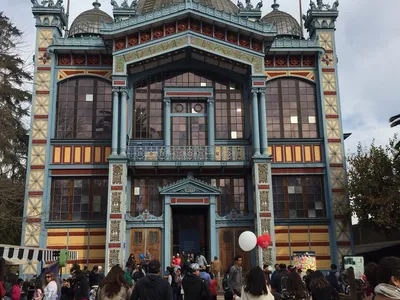
How Henri Picq's 1889 Paris Pavilion Traveled 11,000 Kilometers to Become Santiago's Artequín Museum
A prefabricated iron and glass pavilion built for the Paris Universal Exposition found a second life as a children's art museum in Chile.

Sanjay Puri Architects Wraps a Jaipur Office Tower in Capsule-Shaped Green Buffers
A nine-level climate-responsive workplace near Jaipur Airport uses stacked planter terraces and aluminium screens to fight 40°C heat.


Explore Architecture Competitions
Discover active competitions in this discipline



Challenge to reimagine the Iron Throne


Photograph architecture without architects


Illustrate the lost glory of Angkor Wat - Render Challenge


Design challenge to reuse E-waste
Comments (0)
Please login or sign up to add comments
No comments yet. Be the first to comment!