
The Village by Sordo Madaleno Arquitectos: A Contextual Residential Masterplan Rooted in Nature and Mayan Heritage
A low-rise residential complex in Playa del Carmen integrating modular design, stepped terraces, native vegetation, and Mayan-inspired forms within nature.


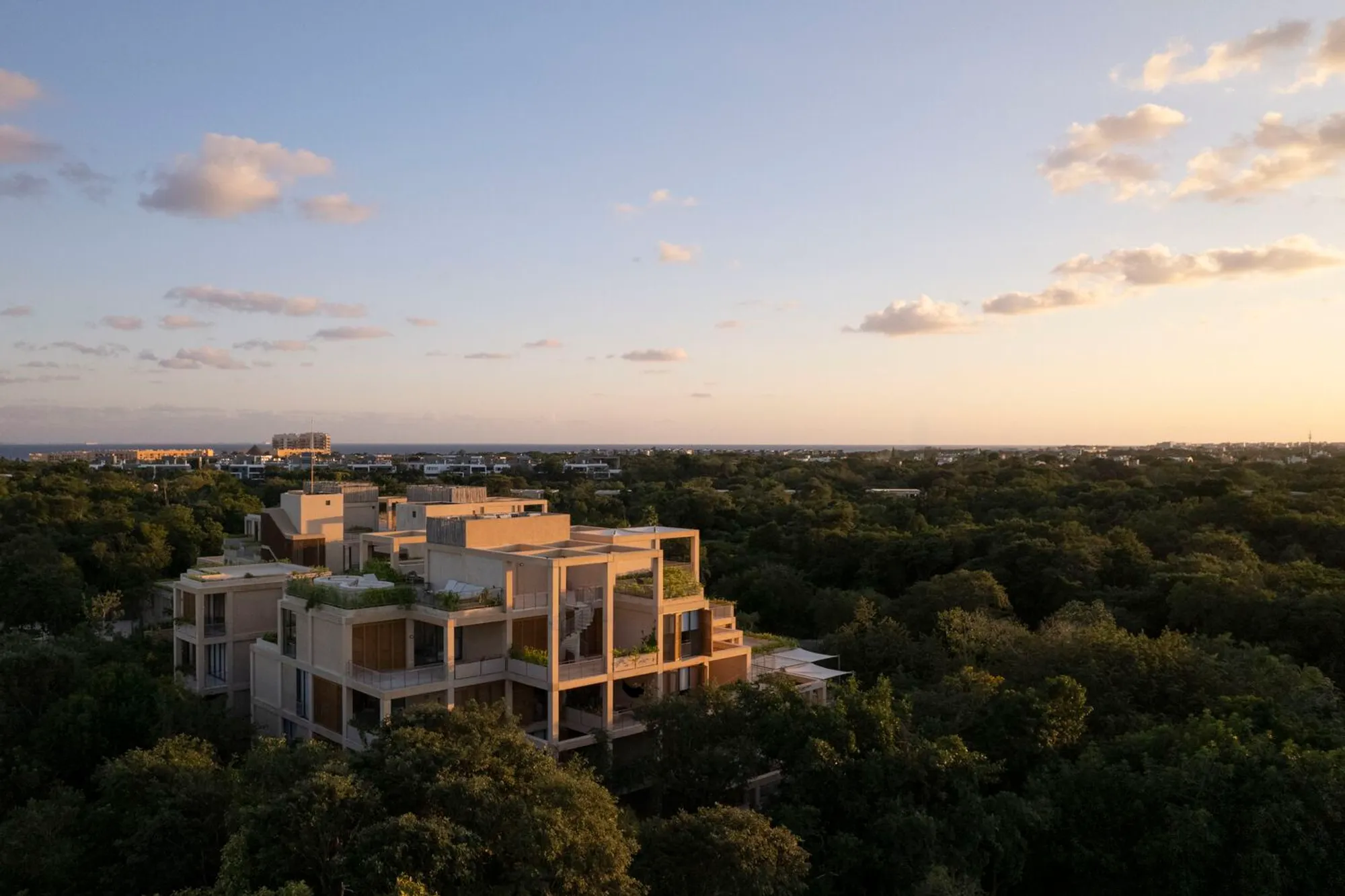
The Village is a large-scale residential architecture project designed by Sordo Madaleno Arquitectos in Playa del Carmen, Mexico, forming a central component of a broader masterplan located on the north-eastern Yucatán Peninsula. Completed in 2023, the project occupies a site of exceptional ecological and cultural value, characterized by dense native vegetation, diverse wildlife, tropical climatic conditions, and the historical presence of Mayan monuments. Responding sensitively to this context, The Village is conceived as an architecture of adaptation, where site-specific data becomes the primary driver of form, scale, and spatial organization.
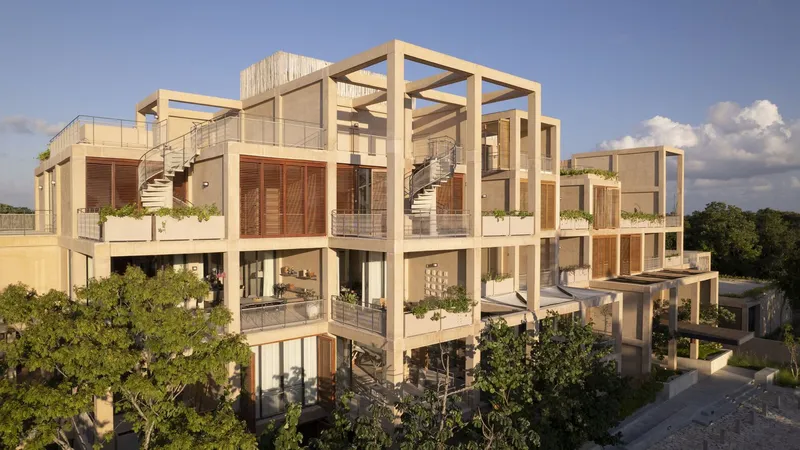
From the outset, the project embraces a design philosophy deeply embedded in the studio’s long-standing practice, emphasizing harmony between built form and natural surroundings. Rather than imposing a singular monumental gesture, The Village evolves as a carefully calibrated residential environment that integrates seamlessly into the landscape. According to Fernando Sordo Madaleno De Haro, the project seeks to become “a singular, fully adapted architecture,” one that is inseparable from its setting and shaped by the environmental and cultural forces that define it.
Architectural Form Inspired by Regional History and Landscape
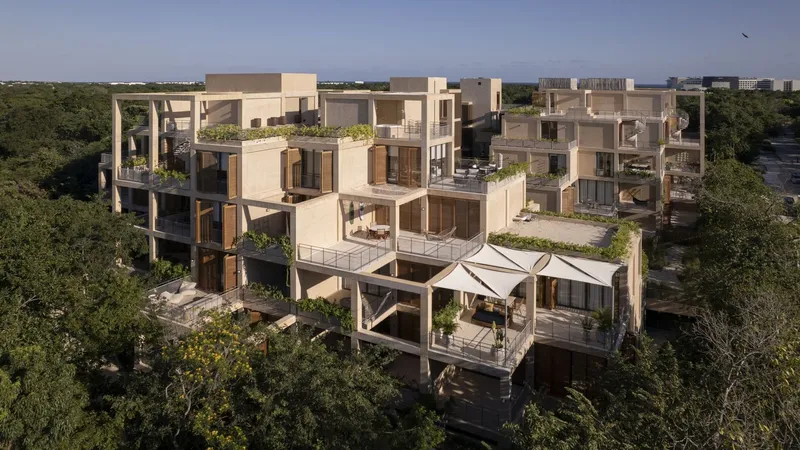
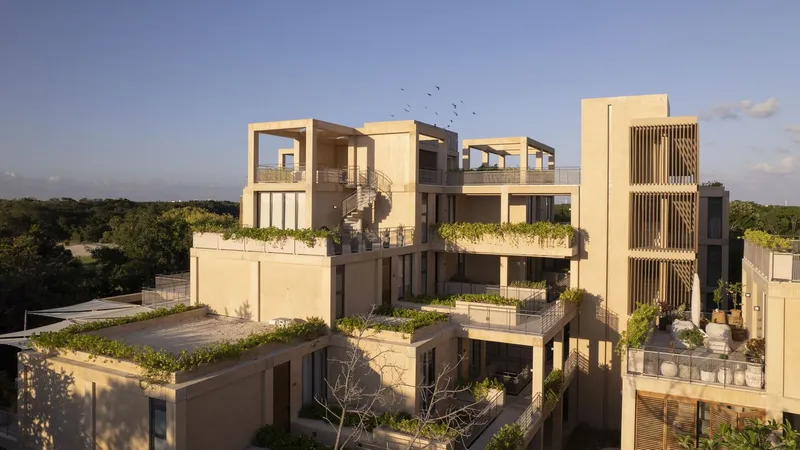
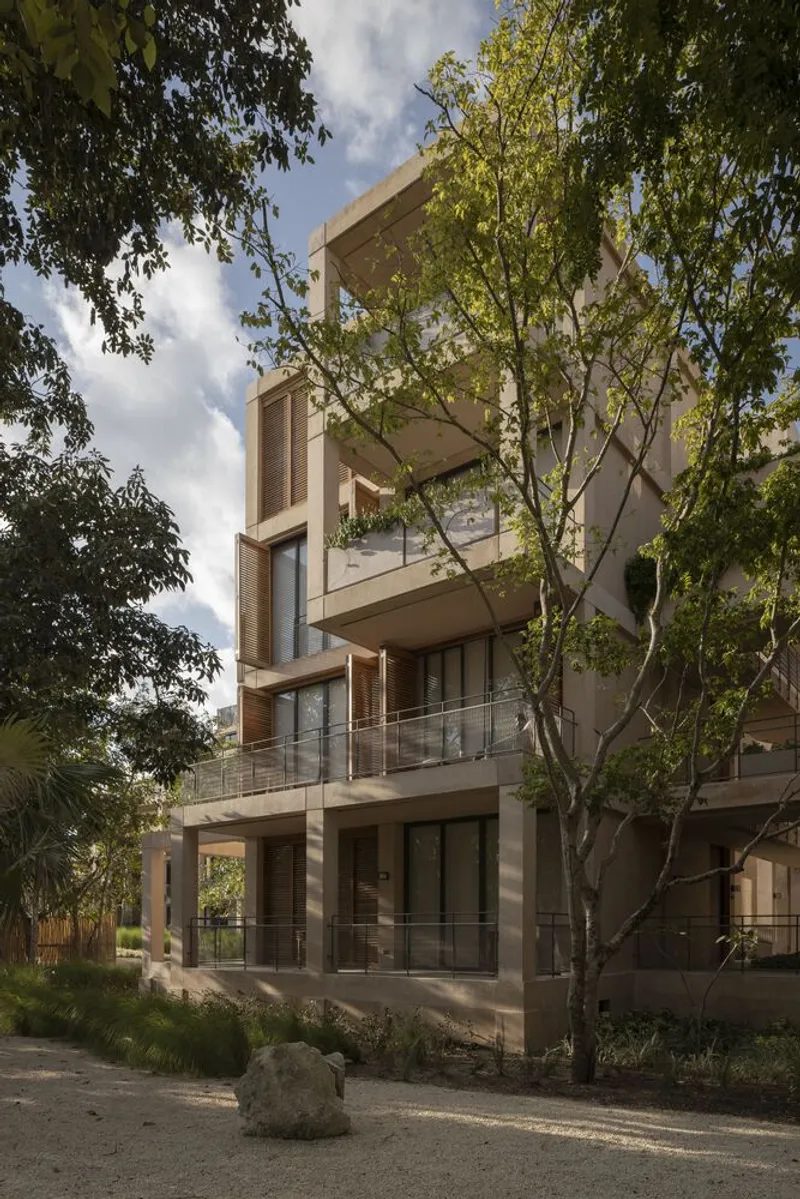
The architectural language of The Village draws subtle inspiration from the stepped pyramids of ancient Mayan civilization, reinterpreted through a contemporary residential typology. This influence is expressed in the staggered massing of the initial 14,885-square-meter apartment block, where setbacks and terraces articulate the building volume while preserving uninterrupted views toward the surrounding jungle and the Caribbean Sea beyond. The design prioritizes horizontality and openness, aligning with the low-rise architectural character of the region.
Buildings are limited to a maximum height of 12 meters, distributed across up to five floors, reinforcing a human-scale environment that avoids visual dominance over the landscape. This restrained verticality allows residents on upper levels to remain visually and physically connected to the treetops, strengthening the experiential relationship between architecture and nature. The result is a residential complex that feels embedded rather than imposed, offering a sense of intimacy despite its density.
Modular Housing and Flexible Living Configurations
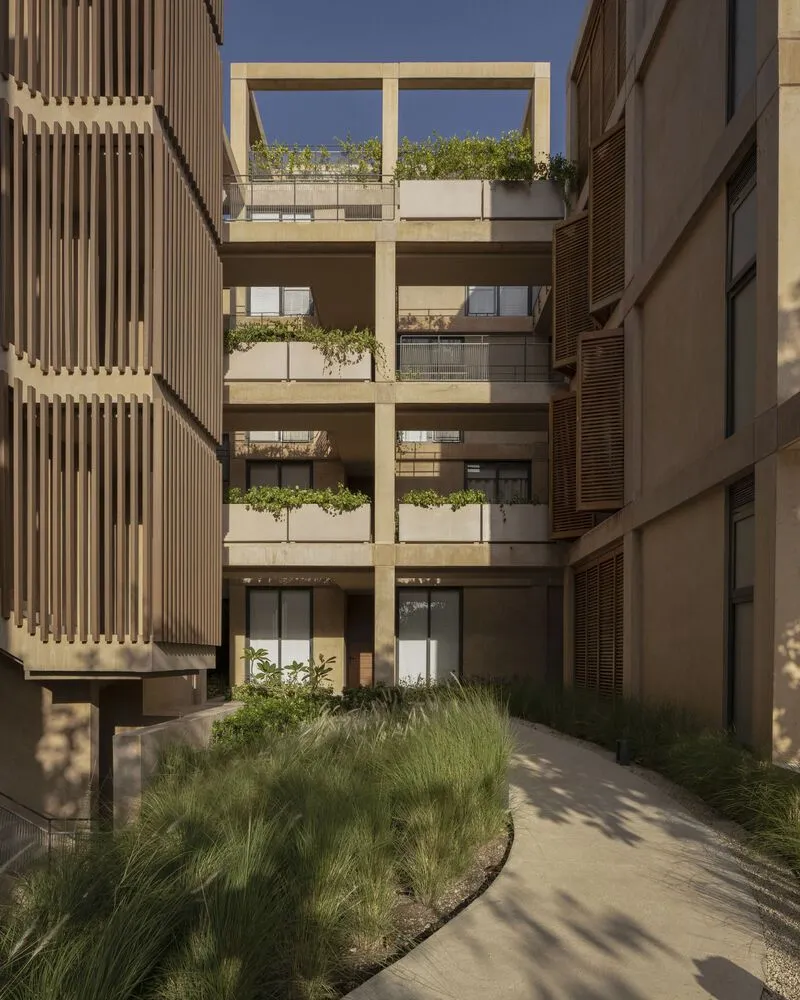
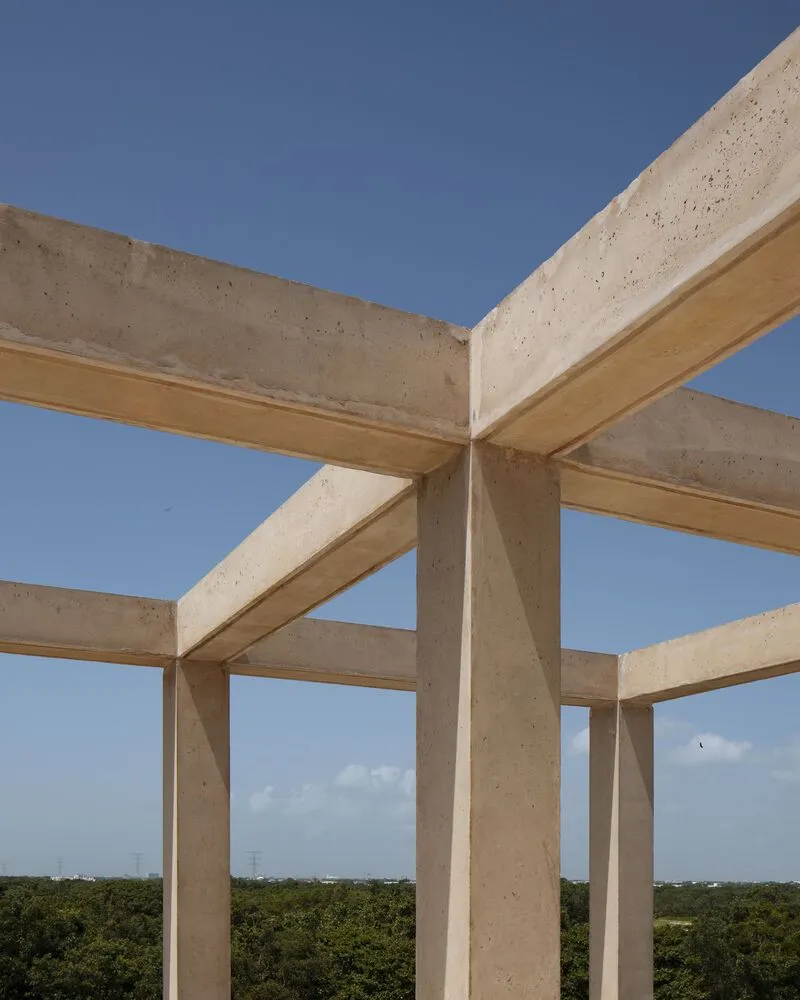
At the core of The Village’s residential strategy lies a rigorous yet adaptable modular system based on a 4-by-4-meter grid. This structural logic governs the layout of all apartments, which range in size from 80 to 160 square meters. The modular framework enables a wide variety of apartment typologies and configurations, allowing units to be customized while maintaining overall coherence across the development.
This balance between order and flexibility is fundamental to the project’s architectural identity. The grid acts as a generative tool, capable of producing diverse spatial qualities while ensuring efficiency in construction and long-term adaptability. The architecture navigates a deliberate tension between the intimacy of a small village and the complexity of a high-density residential project, offering both personal privacy and collective identity.
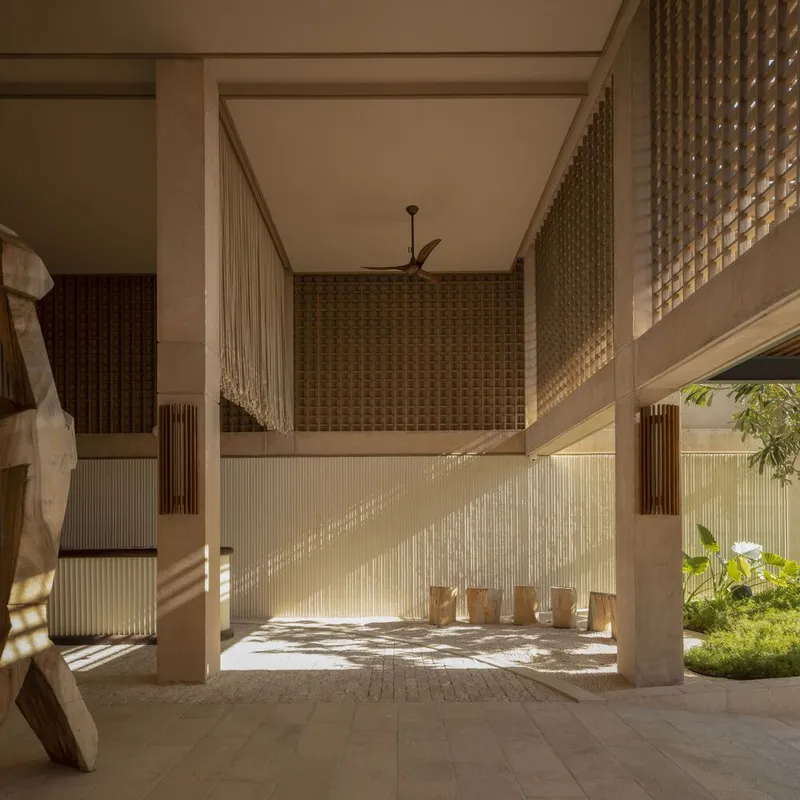
Terraces, Vegetation, and the Idea of the Overgrown Ruin
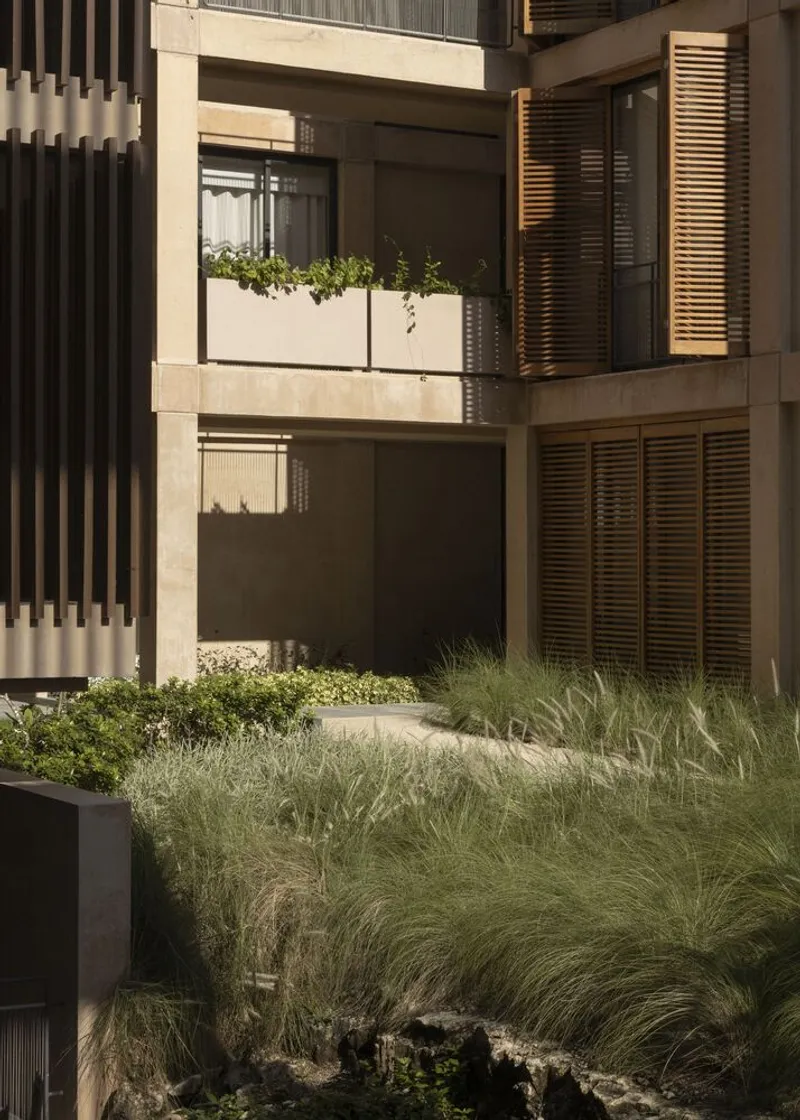
One of the defining features of The Village is its extensive system of terraces, which are set back at irregular intervals and across multiple levels. This strategy breaks down the overall building mass and increases permeability within the rectilinear structure. Rather than presenting a uniform façade, the architecture unfolds organically, echoing the informality of vernacular settlements and invoking the image of an overgrown ruin reclaimed by nature.
These terraces are densely planted, reinforcing the project’s integration with its environment while introducing a timeless, almost archaeological quality to the architecture. Approximately 80 percent of the vegetation consists of native plant species, ensuring ecological compatibility and reduced maintenance. Beyond their aesthetic role, the terraces are designed as productive landscapes, equipped with planters that allow residents to cultivate self-sustaining vegetable gardens, encouraging environmental awareness and everyday interaction with nature.
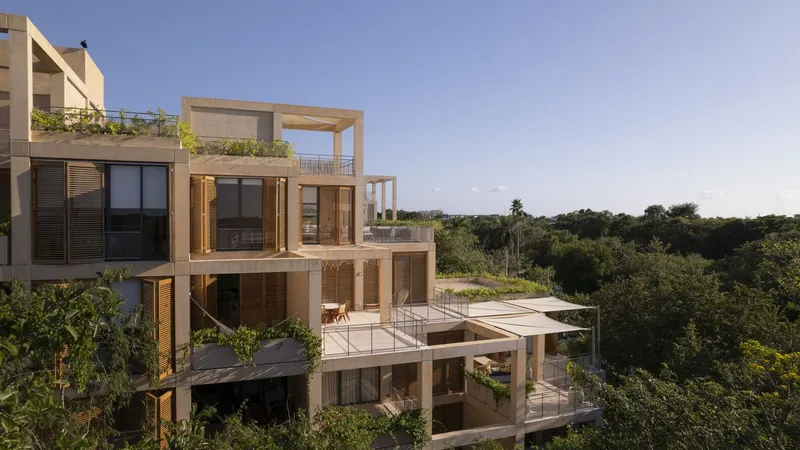
Shared Spaces, Wellness, and Community Living
Nearly half of the site is dedicated to shared public spaces, underscoring the project’s commitment to collective well-being and community life. These areas are thoughtfully designed to support wellness, recreation, and sports, transforming the residential complex into a holistic living environment rather than a purely private enclave. Pathways, green zones, and communal amenities foster social interaction while maintaining a strong connection to the surrounding ecosystem.
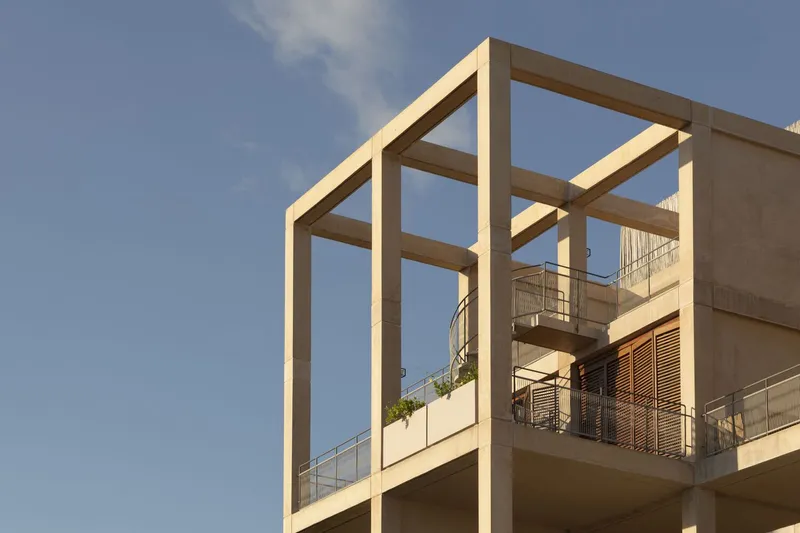
Through this emphasis on shared outdoor spaces, The Village redefines contemporary residential architecture in Playa del Carmen, proposing a model where density coexists with openness, and private living is enriched by collective experience. The integration of architecture, landscape, and community-oriented design positions the project as a benchmark for sustainable housing developments in ecologically sensitive contexts.
A Contemporary Interpretation of Contextual Architecture in Mexico
The Village stands as a compelling example of contextual residential architecture in Mexico, demonstrating how modular design, low-rise density, and landscape integration can coexist within a large-scale development. By responding to climate, culture, and ecology with equal rigor, Sordo Madaleno Arquitectos delivers a project that transcends conventional housing models, offering a nuanced architectural response rooted in place, adaptability, and long-term sustainability.
All photographs are works of
Óscar Caballero para Sordo Madaleno Arquitectos



Popular Articles
Popular articles from the community


Co-life: Sustainable Architecture for Age-Friendly Community Living
Co-life reimagines sustainable architecture for seniors through courtyards, rammed earth, shared gardens, and spaces designed for belonging.

Lunar Spiral: Space Architecture Shaped by the Mathematics of the Universe
Lunar Spiral reimagines space architecture through Fibonacci geometry, lunar regolith, levitating habitats, and self-sustaining Moon living.

Co-Life: Senior Housing Design That Reconnects Older Adults With the City
Co-Life reimagines senior housing design through healing gardens, shared streets, workshops, and a sustainable community across generations.

Hill & Cross Opera: Sculptural Opera House Architecture Shaped by Tallinn’s Landscape and Identity
Hill & Cross Opera reimagines opera house architecture in Tallinn through its sculptural hill, civic plaza, glass wave and a luminous cross.


Similar Reads
You might also enjoy these articles


Hodi-Mandai Geram
Project Function: Preservation and revitalization of the Intangible heritage and socio-spatial identity of the Hodi by Housing, Cultural Memory Center, Sacred Grove, landscape, local tourism economy


Olio Towers: A Mid-Rise for Performers That Fuses Housing, Rehearsal, and Stage
Located blocks from Houston's Theater District, this modular tower stacks living units around a central performance atrium.

Oasis: Modular Green Housing Carved into Dhaka's Urban Fabric
A shortlisted Plugin Housing entry reclaims unauthorized settlements in Dhaka with stepped concrete volumes, green roofs, and ventilation-driven design.

Black Hole: A Floating Megastructure for the Post-Physical Era
Emiliano Mazzarotto envisions a spherical, self-scaling arena where e-sports, digital hotels, and holographic stadiums replace traditional public space.


Explore Village Competitions
Discover active competitions in this discipline


Challenge to design mud housing for contemporary communities


Challenge to reimagine the Iron Throne


Photograph architecture without architects


Illustrate the lost glory of Angkor Wat - Render Challenge
Comments (0)
Please login or sign up to add comments
No comments yet. Be the first to comment!