

The Webster Los Angeles by Adjaye Associates
A sculptural concrete flagship store in Los Angeles by Adjaye Associates, blending luxury retail, public space, and experiential urban architecture.


The Webster Los Angeles, designed by Adjaye Associates, is an 11,000-square-foot flagship retail building completed in 2020, positioned beside the iconic Beverly Center in Los Angeles. Conceived as both an architectural statement and an urban intervention, the project redefines luxury retail by merging sculptural form, public space, and experiential design into a single, unmistakable presence.
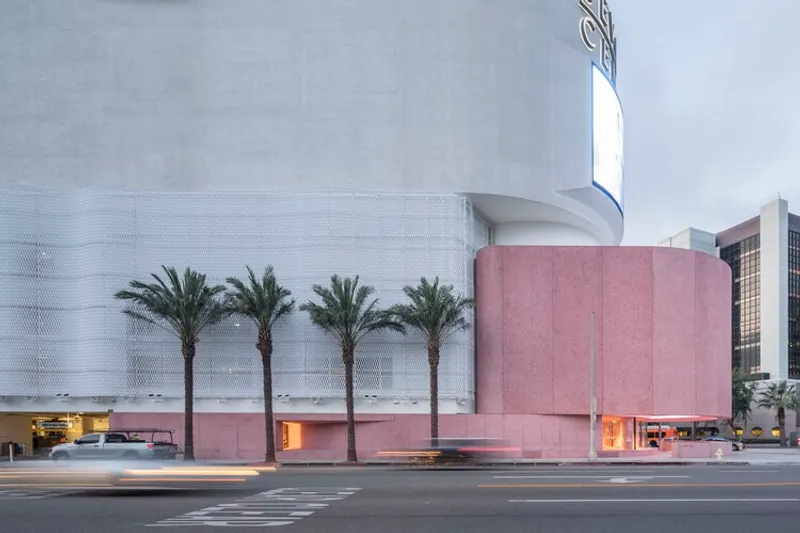
Rather than competing directly with the scale and spectacle of the neighboring Beverly Center, The Webster asserts itself as a counterpoint—a tactile, material-driven structure that privileges atmosphere, intimacy, and civic engagement over conventional retail theatrics.
A Sculptural Response to Context
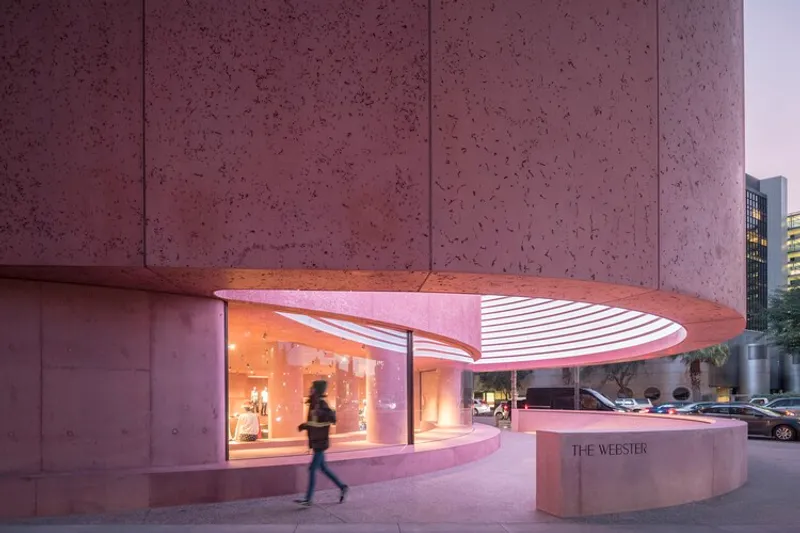
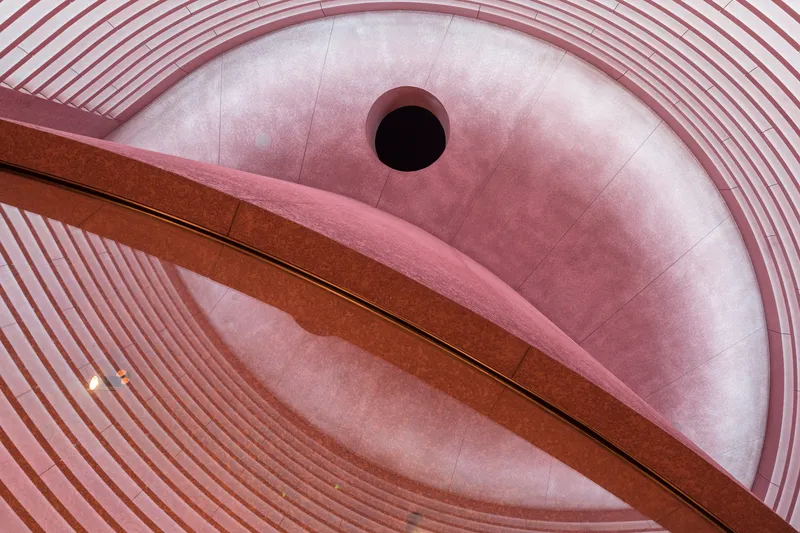
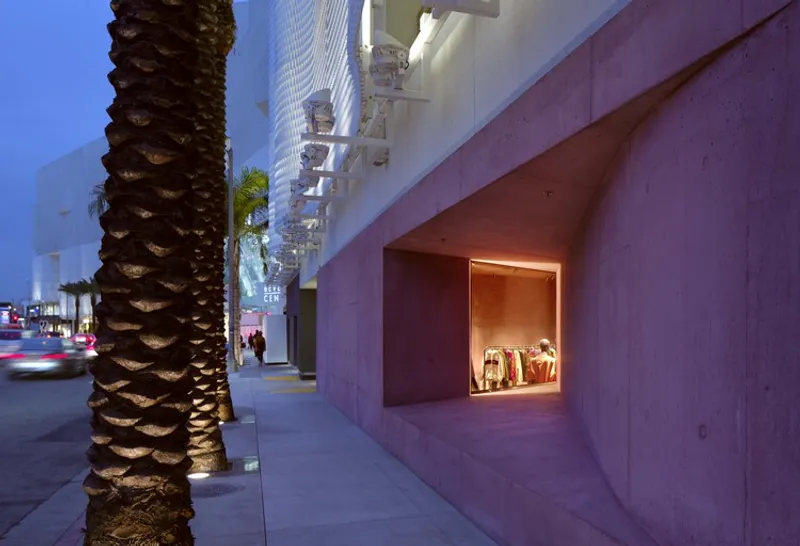
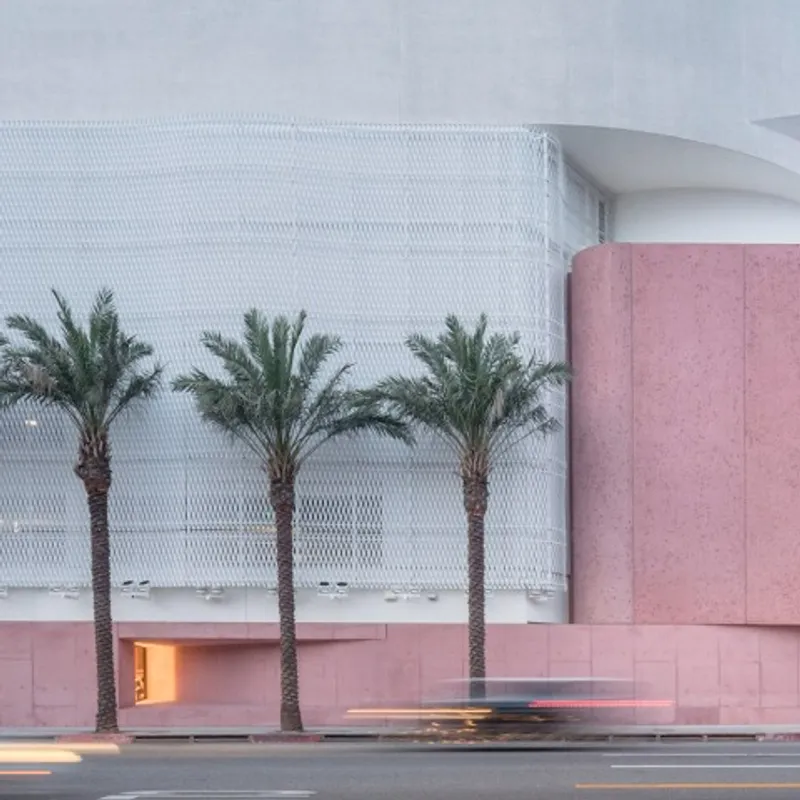
The building’s most striking feature is its cantilevered concrete façade, which hovers with quiet confidence at the intersection of San Vicente and Beverly Boulevards. This monolithic form references the brutalist language of the site’s original structure while reinterpreting it through a contemporary lens.
Infused with a pink pigment, the concrete surface reflects Sir David Adjaye’s ongoing exploration of saturated color. The hue responds directly to the luminous quality of California light, where strong sun amplifies chromatic intensity and softens material weight. The result is a façade that feels at once robust and delicate, monumental yet inviting.
Adjaye has described pink as a color that evokes fashion while remaining emotionally complex—“tough and gentle at the same time.” This duality is central to the building’s identity.
Retail as Urban Space
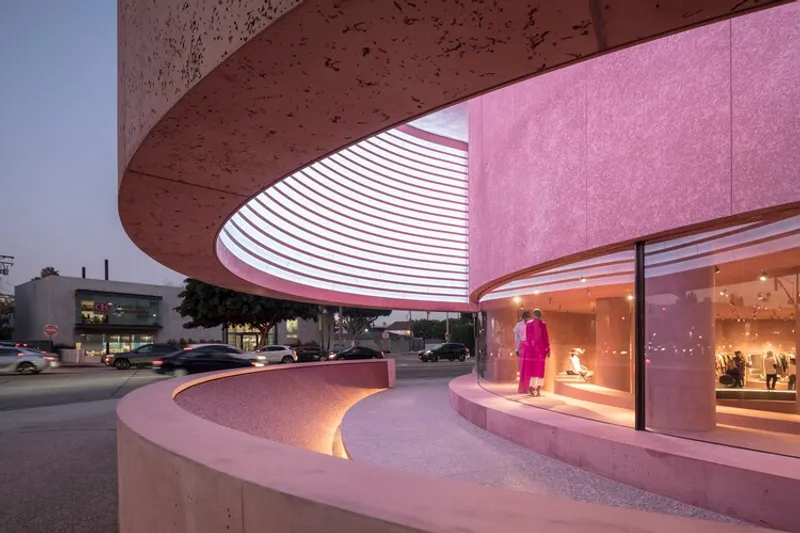
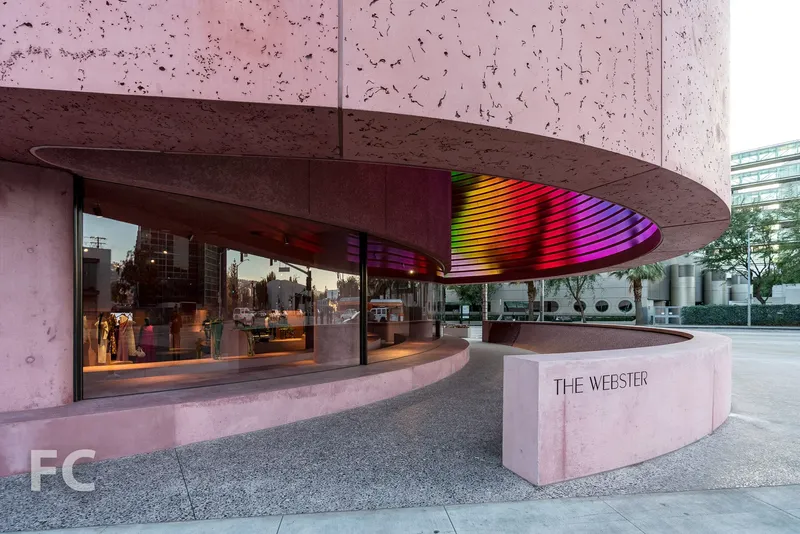
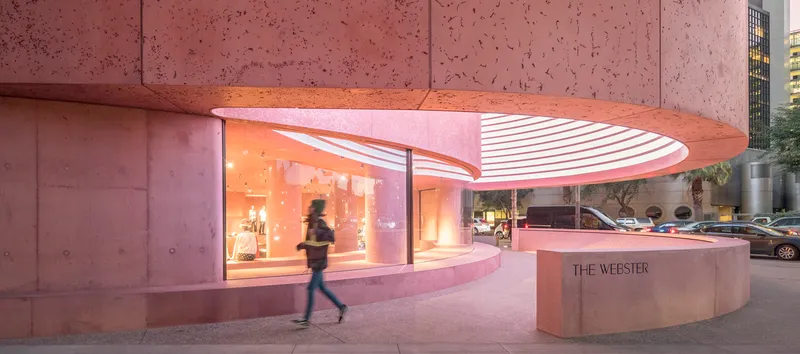
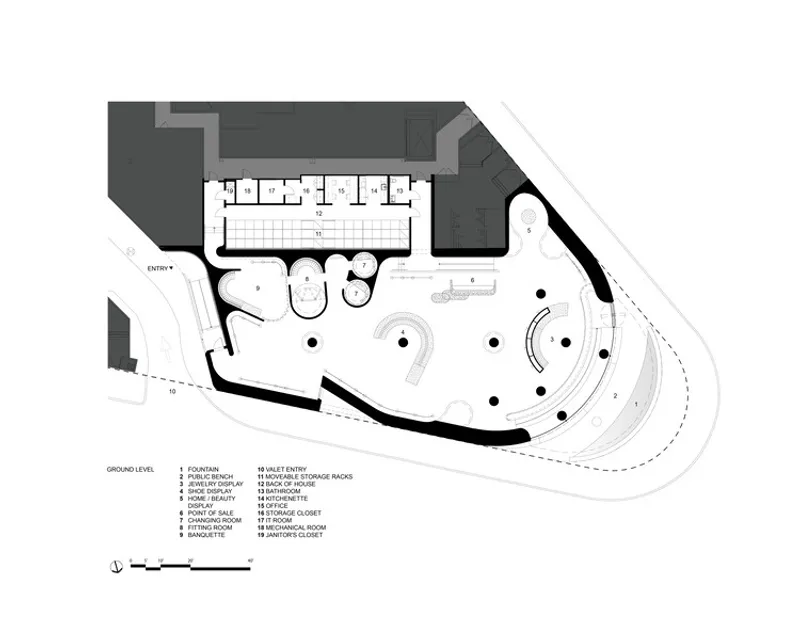
One of the project’s most radical gestures is the decision to sacrifice interior retail area in favor of a new public plaza beneath the cantilever. This shaded urban room transforms a formerly residual corner into a civic gathering space, extending the store’s influence beyond commerce.
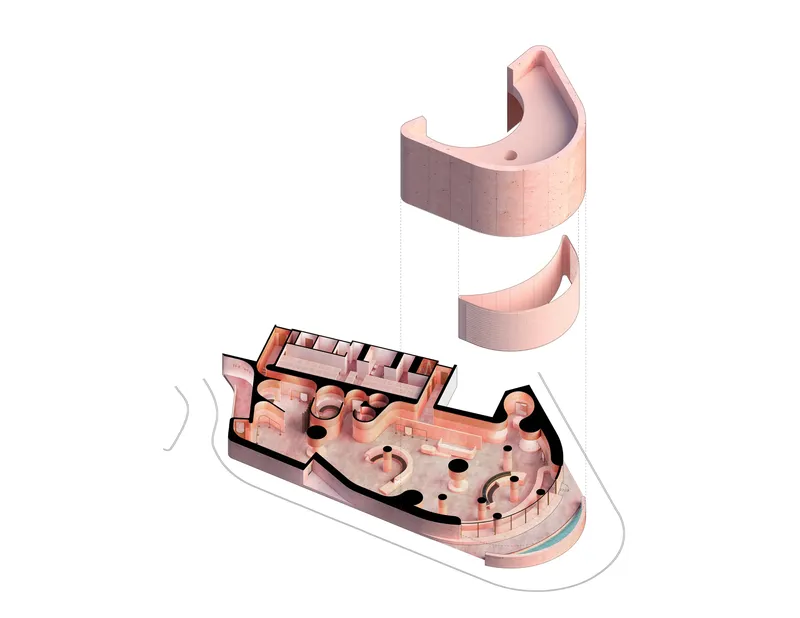
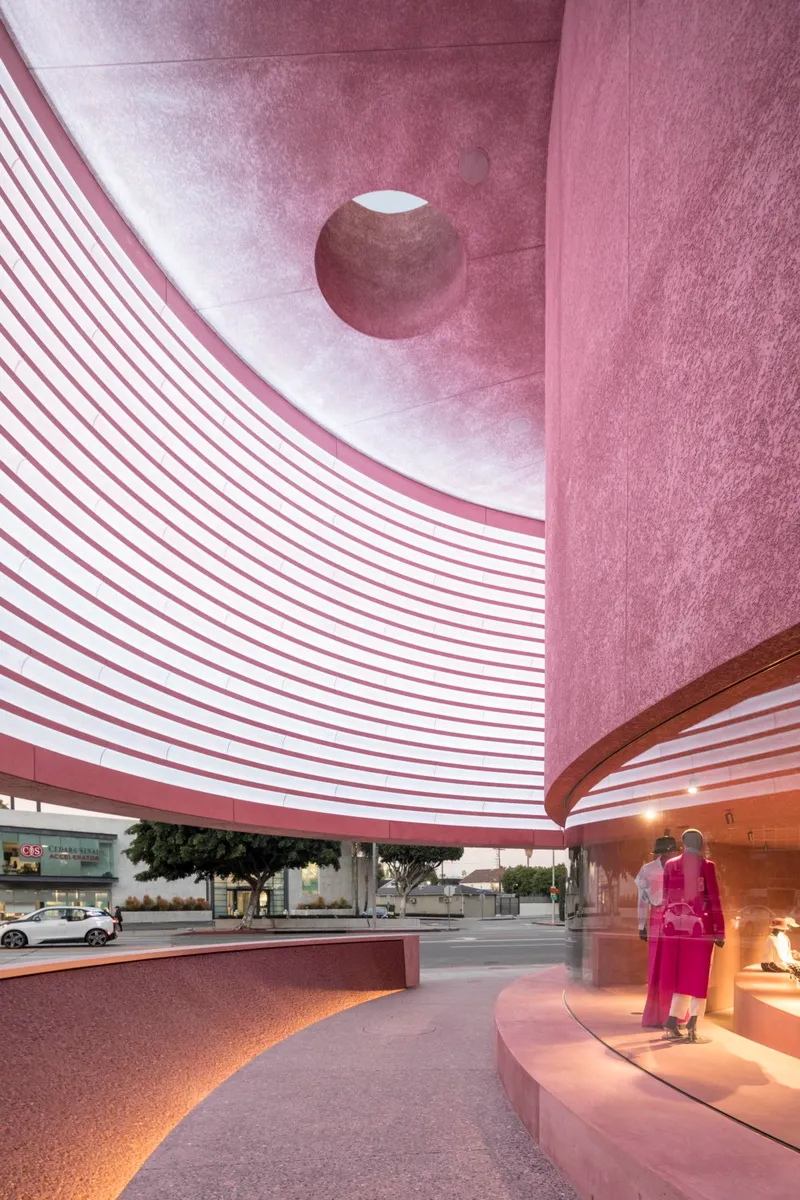
The plaza features banquette seating, a sculptural water fountain, and a digital art wall mounted on the underside of the cantilever. Visible only from below, the digital installation spans the entire soffit, forming a columnless portico that blurs architecture, art, and infrastructure.
In deliberate contrast to Hollywood’s high-resolution digital saturation, the art wall operates at an intentionally low resolution—1,472 pixels wide and just 20 pixels tall. This limitation reframes digital media as a sculptural surface rather than a commercial screen, hosting bespoke art commissions curated by The Webster.
Transparency and Threshold
At the main entrance, a dramatic panoramic window composed of three curved glass panels dissolves the boundary between exterior and interior. This angular aperture functions as both storefront and urban lens, allowing passersby to glimpse the spatial drama within while maintaining a sense of mystery.
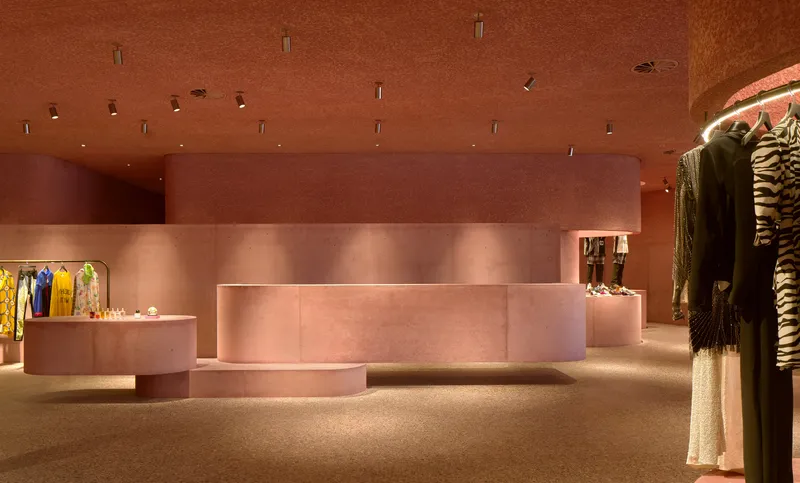
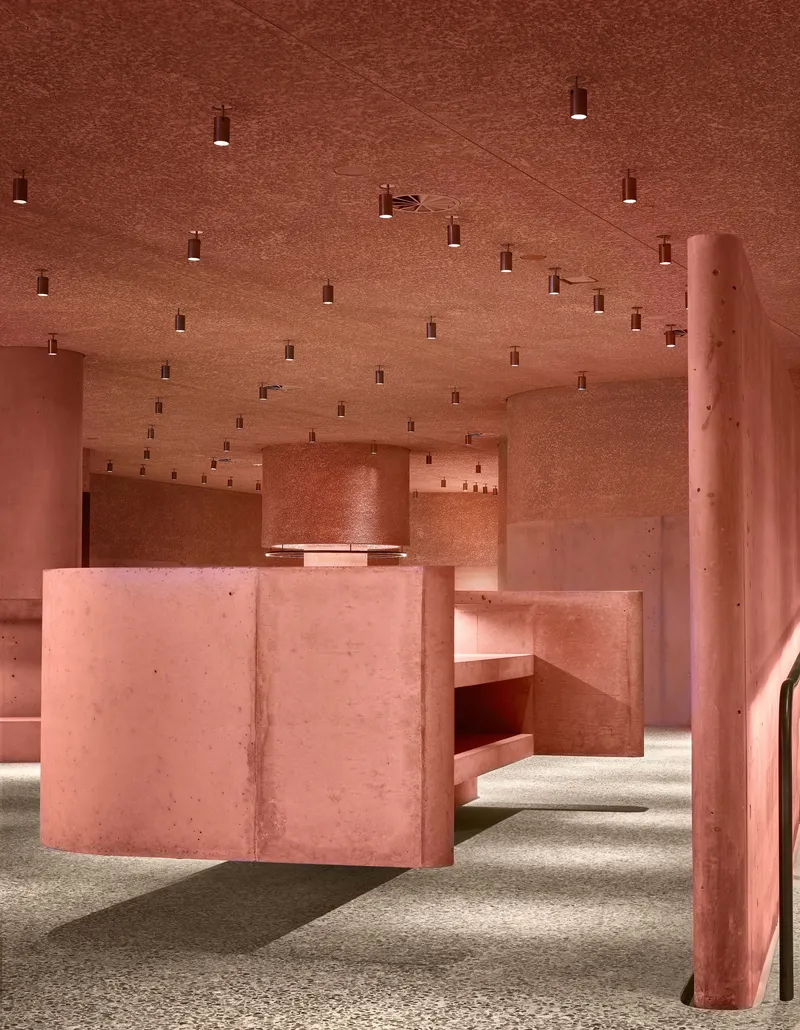
The transition from public plaza to retail interior is conceived as a threshold experience, where material continuity and spatial sequencing guide visitors inward. The exterior palette—concrete, bronze, and muted pink—flows seamlessly into the interior, reinforcing the building’s identity as a unified architectural object.
Interior as Sculptural Landscape
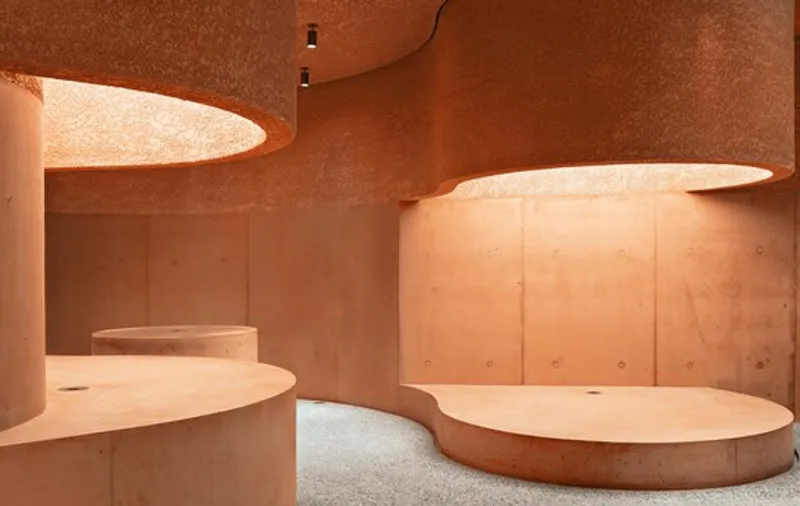
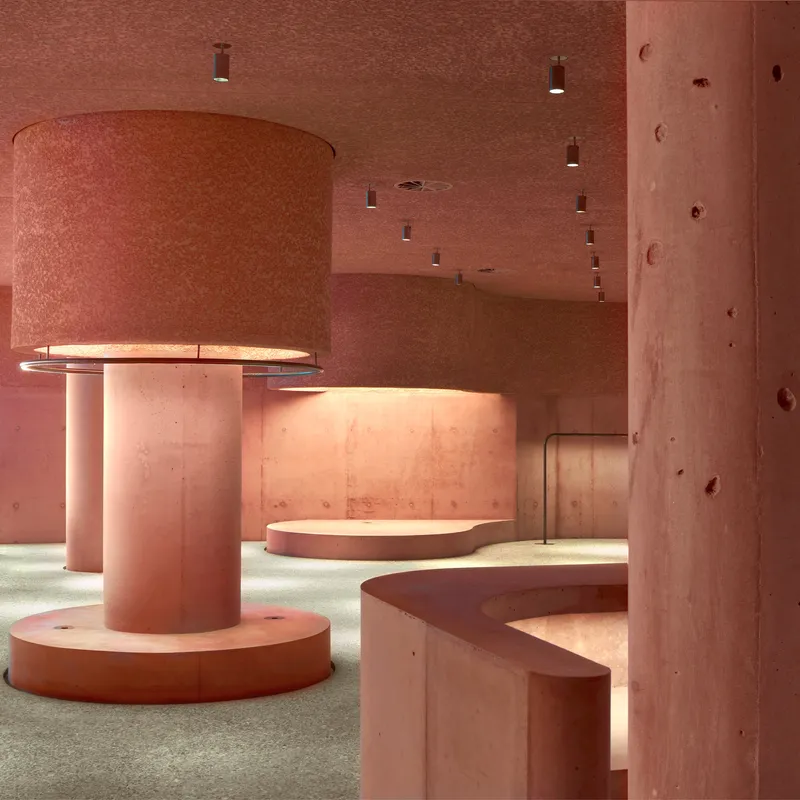
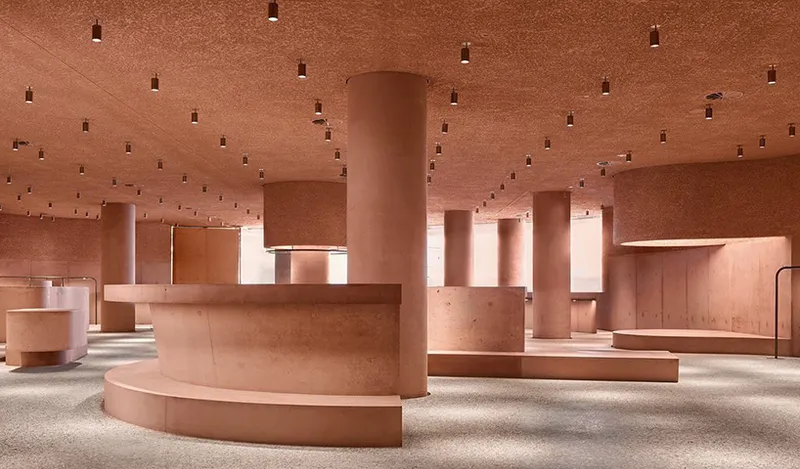
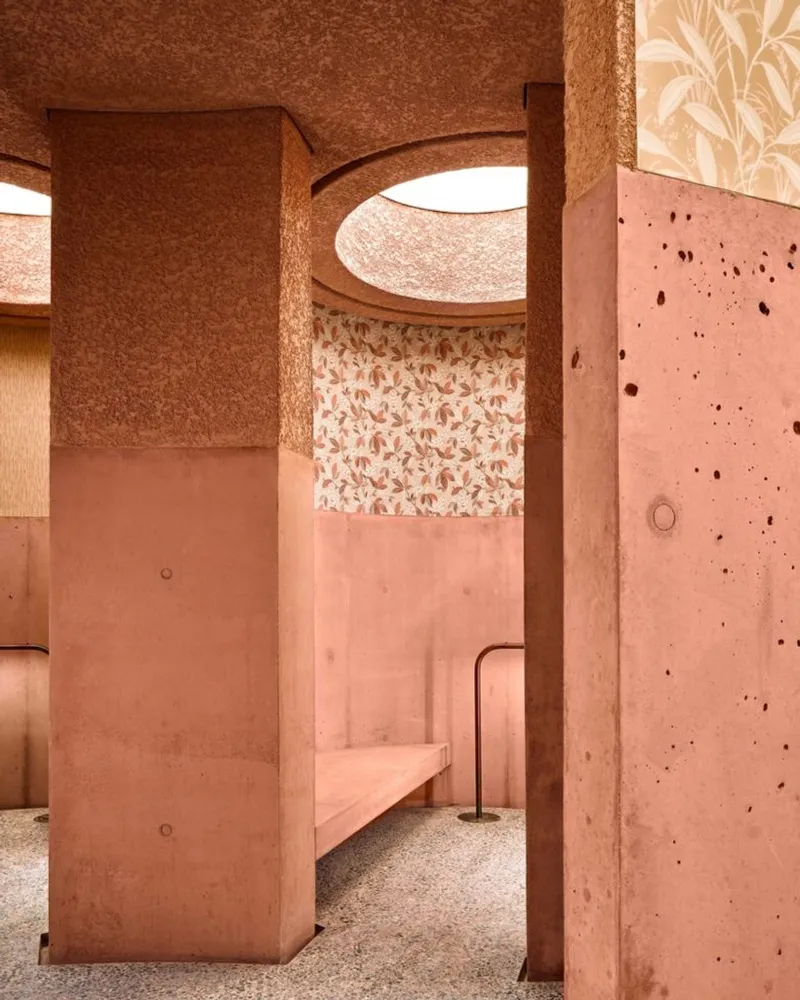
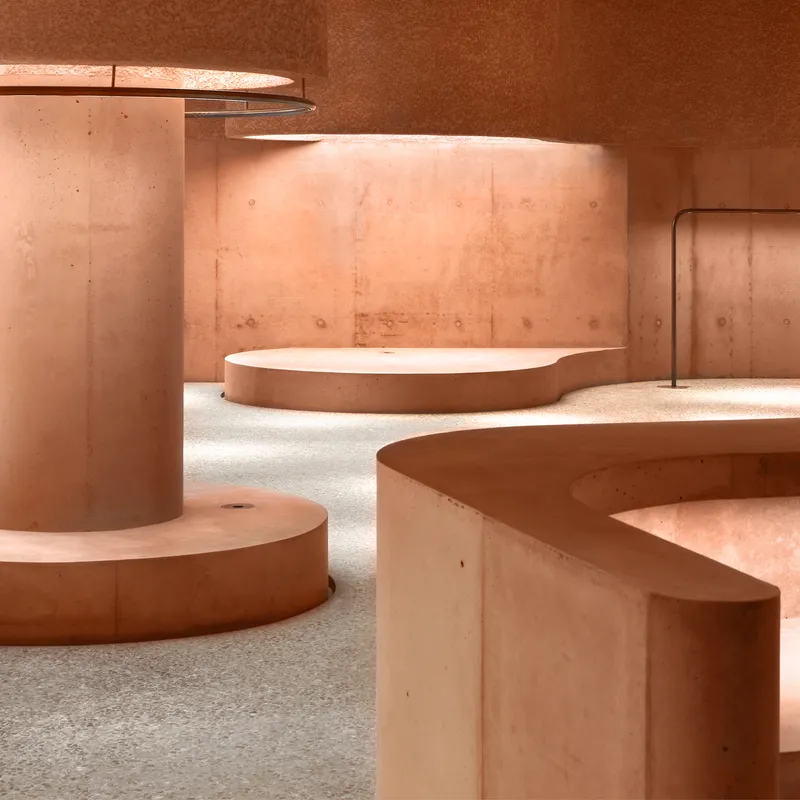
Inside, The Webster unfolds as a field of concrete forms, evoking a gallery more than a traditional retail floor. Cast-in-place concrete columns punctuate the space, while teardrop-shaped display plinths create intimate vignettes for curated fashion pieces.
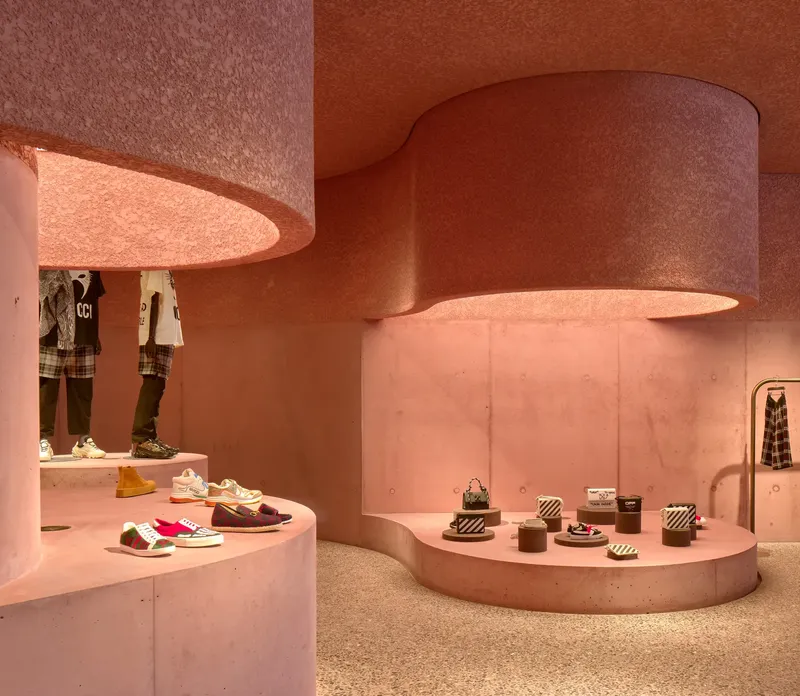
Rather than lining products along walls, the layout encourages exploration, with merchandise integrated into the architectural terrain. This approach elevates the act of shopping into a spatial journey—slow, tactile, and immersive.
The concrete flooring is subtly inlaid with black cherry marble fragments, adding depth and texture without distracting from the overall material restraint.
Material Balance and Detail
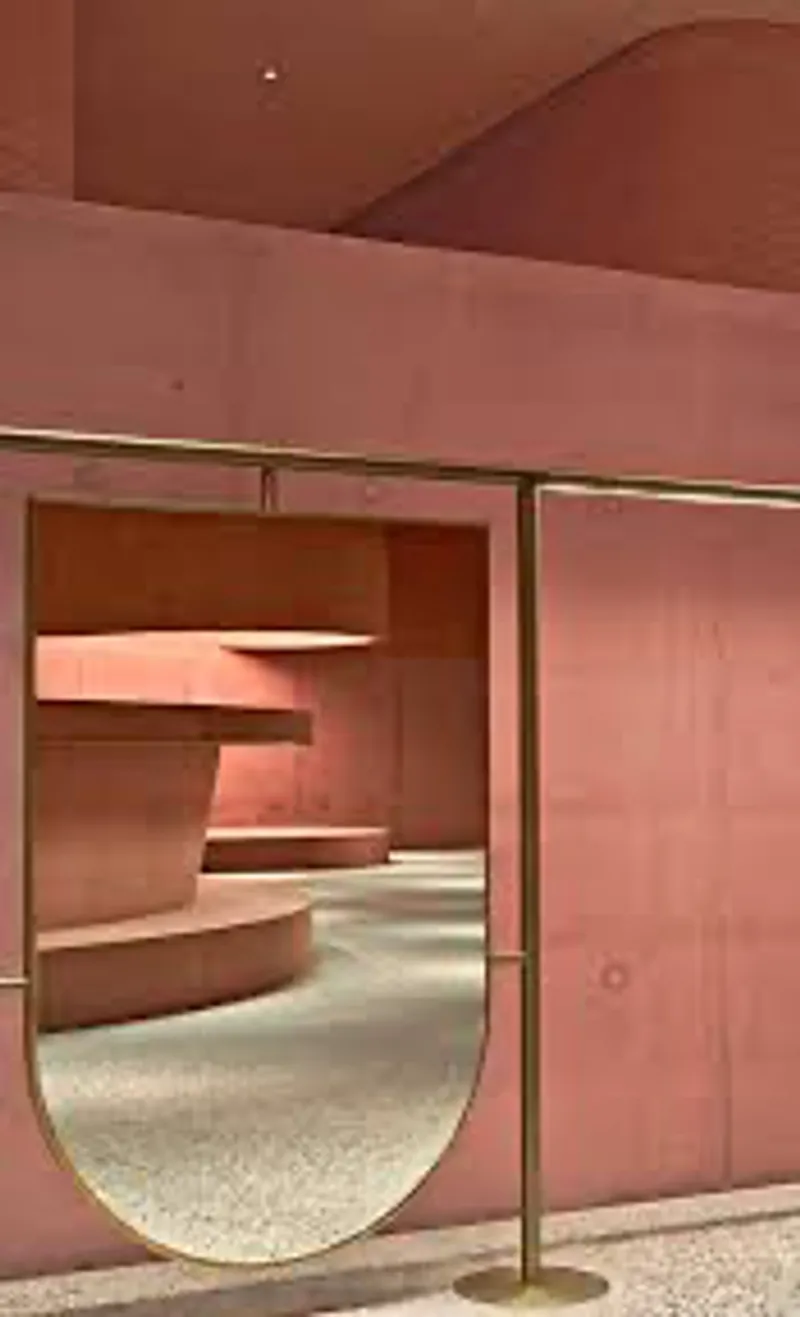
To counterbalance the rawness of concrete, bronze-framed mirrors and display racks line the perimeter. These reflective surfaces introduce warmth and elegance, enhancing the sculptural qualities of the space while keeping attention focused on the garments.
In the fitting rooms, the atmosphere softens further. The upper walls are clad in vintage 1950s wallpaper, sourced from the client’s personal collection. This unexpected domestic detail introduces intimacy and nostalgia, contrasting with the monumentality of the surrounding architecture.
Throughout the interior, restraint is key. Materials are allowed to speak quietly, creating a backdrop that enhances fashion rather than competing with it.
Engineering the Cantilever
Behind the building’s serene presence lies a complex feat of engineering. The structural system—developed in collaboration with Ludwig Structural and Guy Nordenson Associates—supports the dramatic cantilever without visible columns at ground level, preserving the openness of the public space below.

Concrete consultants and engineers worked closely to ensure the pigmented concrete achieved both structural performance and chromatic consistency. The result is a façade that feels simultaneously precise and elemental, embodying both craft and innovation.
Redefining Luxury Retail
The Webster Los Angeles challenges the prevailing model of brick-and-mortar retail as purely transactional. Instead, it positions the store as a destination, one that offers architectural depth, public engagement, and cultural relevance.
By integrating public space, digital art, and sculptural architecture, Adjaye Associates reimagines the retail building as part of the city’s social fabric. The project acknowledges Los Angeles’ unique relationship with image, fashion, and spectacle—yet responds with subtlety rather than excess.
Architecture Beyond Commerce
More than a flagship store, The Webster operates as an urban artifact—a building that contributes meaningfully to its surroundings while redefining how architecture can support contemporary retail culture.
Through its bold materiality, civic generosity, and spatial sophistication, the project demonstrates how architecture can transcend commerce, offering an experience that resonates with both shoppers and the city at large.
All the Photographs are works of Laurian Ghinitoiu, Dror Baldinger


Popular Articles
Popular articles from the community


David Ortega Stacks a Two-Story Mexico City Penthouse Around a Steel Stair and a Pergola-Shaded Roof Terrace
In Colonia Roma, a 300 m² penthouse uses oak joinery, a planted steel stair and a slatted roof pergola to make a new-build apartment feel like a house.

Juan García Correa, John González and Claudia Rueda Sink a Circular Amphitheater into a Manizales Engineering Building
On the La Nubia campus in Manizales, Colombia, the S1 Building folds labs and offices into a hillside of ramped lawns that double as a campus route.

longwave studio Reorganizes a 112 m² Tainan Apartment Around the Daily Routines of a Family and Two Cats
In Tainan, Taiwan, birch plywood, rust-red furniture and a freestanding plaster wall link arrival, storage, work and family life in one apartment.

Architekt Andreas Gruber Scatters 23 Dark Timber Chalets Across a South Tyrolean Forest Edge
In Molini di Tures, Amonti Chalets breaks a resort into a hamlet of gabled timber houses, with parking, storage and services pushed into the slope.

Similar Reads
You might also enjoy these articles


Hodi-Mandai Geram
Project Function: Preservation and revitalization of the Intangible heritage and socio-spatial identity of the Hodi by Housing, Cultural Memory Center, Sacred Grove, landscape, local tourism economy


Olio Towers: A Mid-Rise for Performers That Fuses Housing, Rehearsal, and Stage
Located blocks from Houston's Theater District, this modular tower stacks living units around a central performance atrium.

Oasis: Modular Green Housing Carved into Dhaka's Urban Fabric
A shortlisted Plugin Housing entry reclaims unauthorized settlements in Dhaka with stepped concrete volumes, green roofs, and ventilation-driven design.

Black Hole: A Floating Megastructure for the Post-Physical Era
Emiliano Mazzarotto envisions a spherical, self-scaling arena where e-sports, digital hotels, and holographic stadiums replace traditional public space.

Explore Public Building Competitions
Discover active competitions in this discipline

Challenge to design locus for the upliftment of human rights

Challenge to reimagine the Iron Throne

Photograph architecture without architects

Illustrate the lost glory of Angkor Wat - Render Challenge
Comments (0)
Please login or sign up to add comments
No comments yet. Be the first to comment!