
The Wine House by NORM Architects
Hillside wine house in Sweden blending Nordic minimalism, green roofs, timber interiors, panoramic terraces, and immersive vineyard hospitality experiences.


Set within the rolling terrain of the Swedish countryside, The Wine House (Vinhuset) represents the latest chapter in NORM Architects’ ongoing collaboration with Ästad Vingård: a destination where architecture, landscape, gastronomy, and hospitality design merge into a unified sensory experience.
Following the acclaimed Restaurant ÄNG and the lakeside retreat Sjöparken, this transformation deepens the architectural narrative of the estate. The Wine House acts as both connector and anchor, a central hub that strengthens the vineyard’s identity while offering a distinct spatial character rooted in material honesty and Nordic minimalism.
Landscape-Embedded Architecture in the Swedish Countryside
Carved into a planted hillside, the building is carefully integrated into its topography. A series of interconnected levels, outdoor staircases, and terraces allow the structure to subtly shift with the terrain, reducing its perceived scale and reinforcing harmony with the surrounding forest and spa buildings.
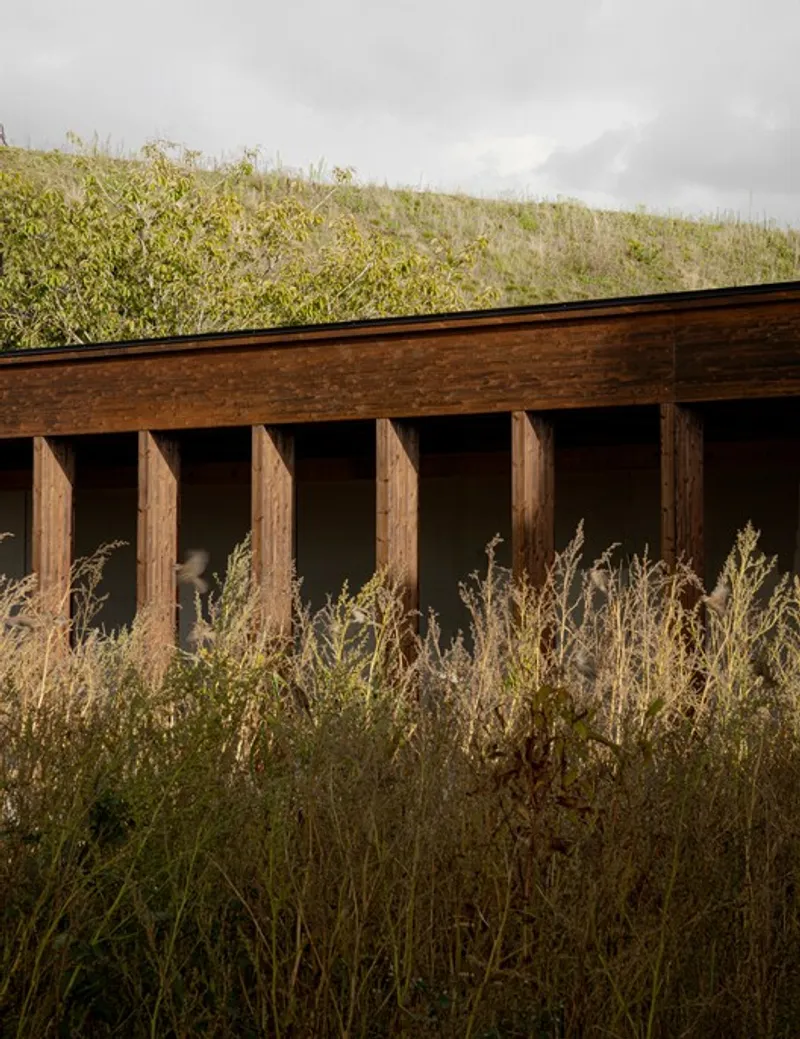
The façade expresses quiet modernism: clean lines, rhythmic railings, and broad stairways guide the eye across the landscape. Green roofs extend the architectural language established in Sjöparken, enhancing biodiversity while visually embedding the structure into the hillside.
This approach exemplifies Scandinavian landscape architecture, where built form and natural terrain coexist without hierarchy.
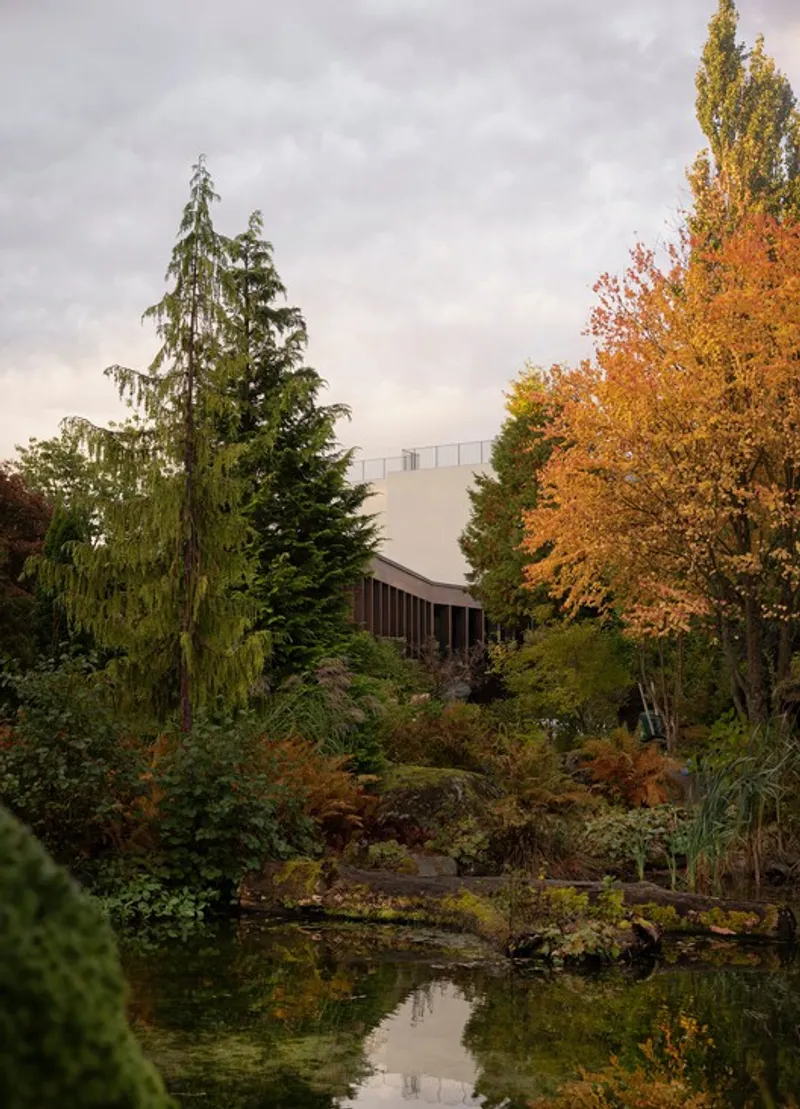
A Quiet Architectural Expression
For The Wine House, NORM Architects refined and simplified the existing structure, removing visual irregularities to achieve a timeless and composed aesthetic. The result is a building that feels grounded, rural, and tactile, yet unmistakably contemporary.
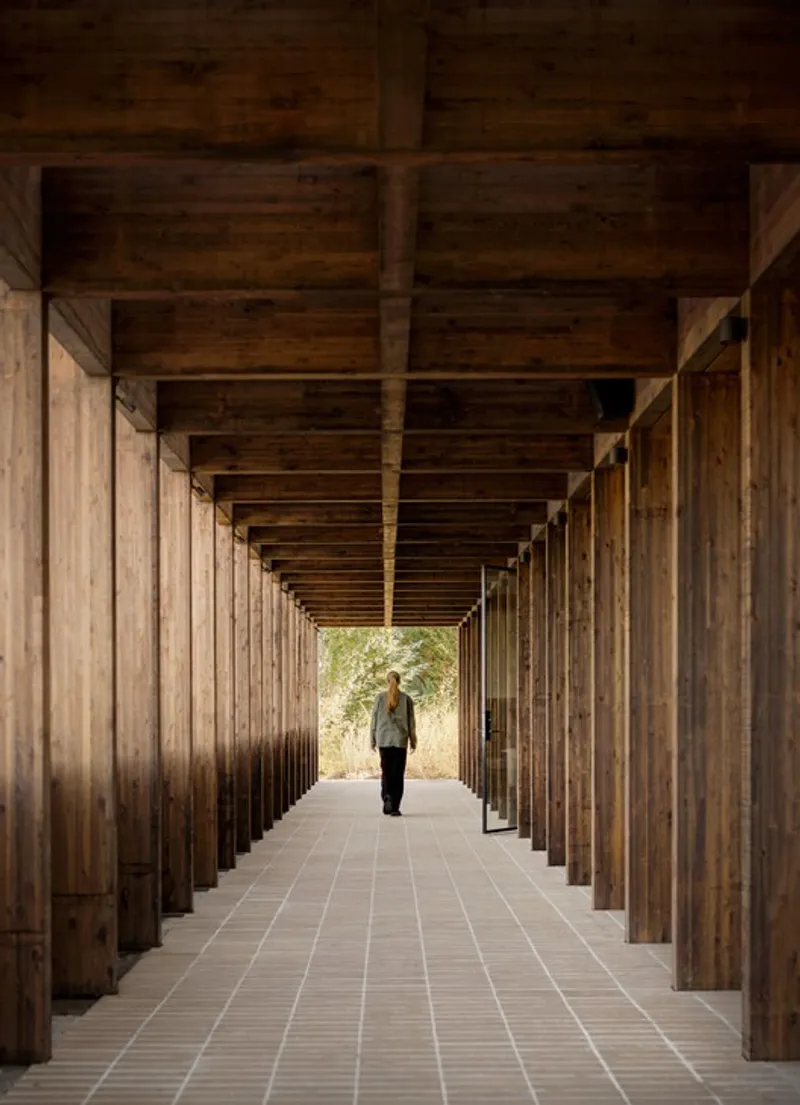
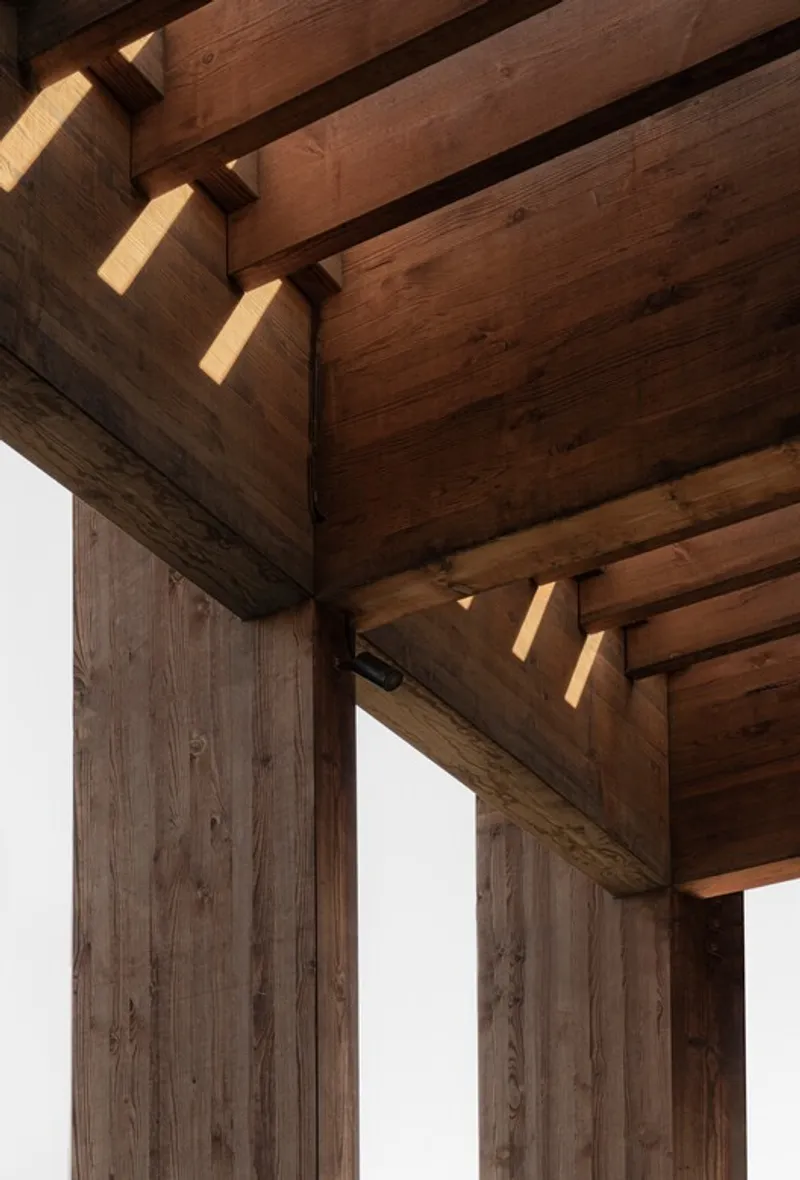
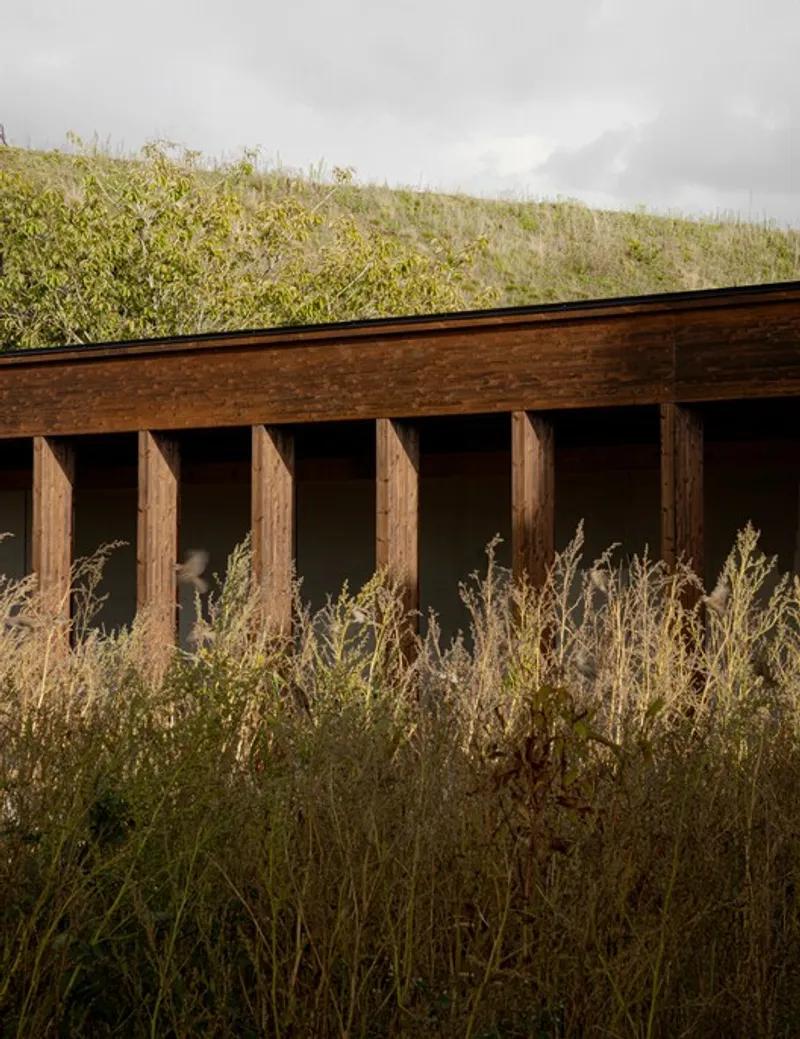
At the entrance, a wooden pergola frames the arrival sequence, encouraging guests to slow down before entering. This transitional threshold reflects the project’s overarching philosophy: architecture as a tool for mindfulness and immersion.
Sensory Interior Design Inspired by Nordic Craft
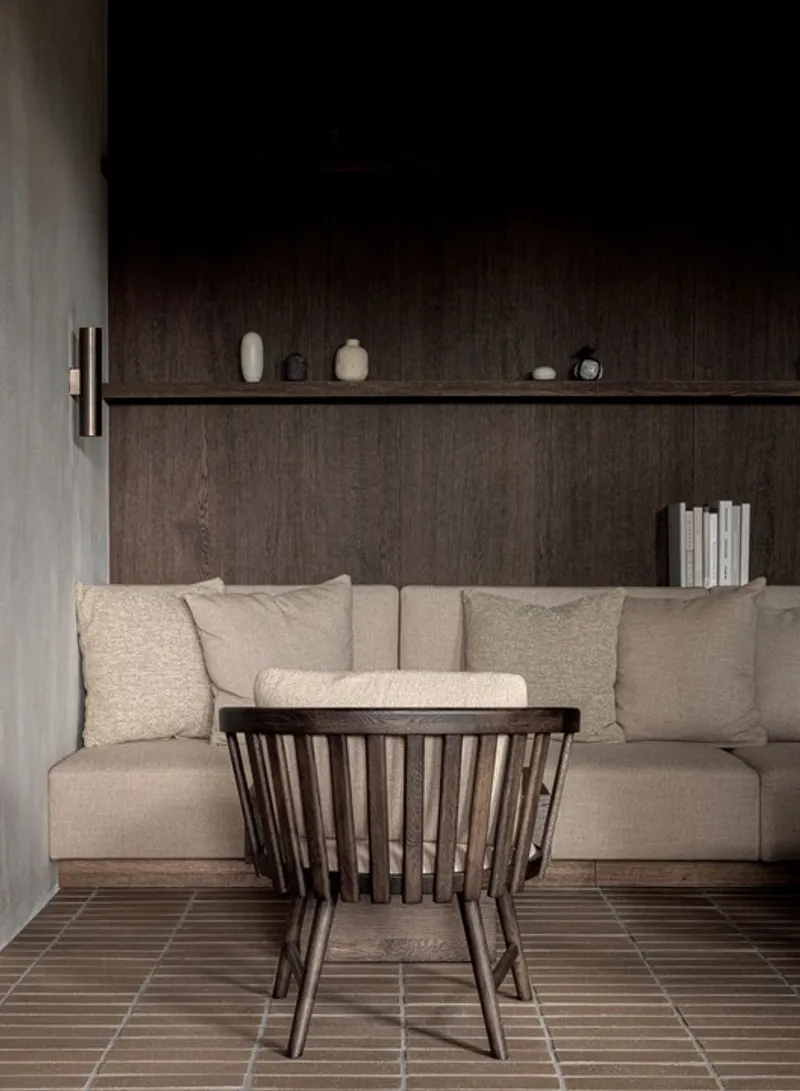
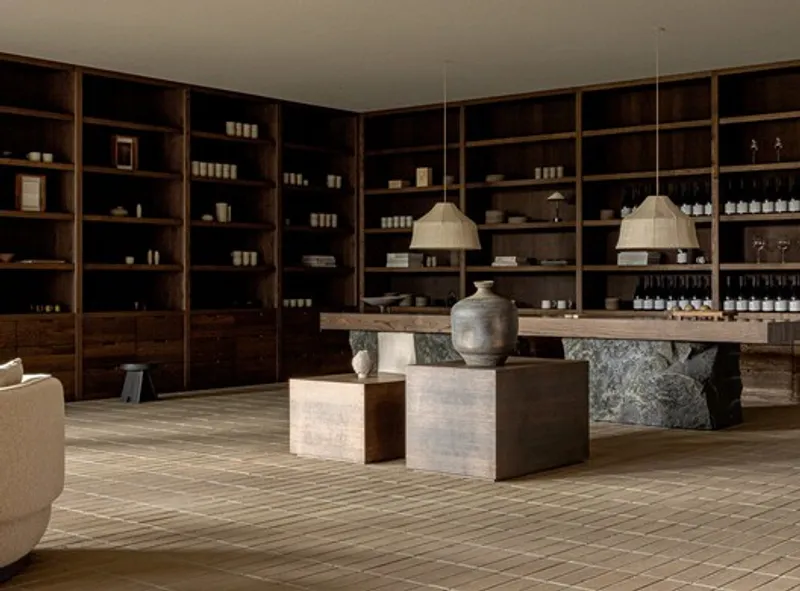
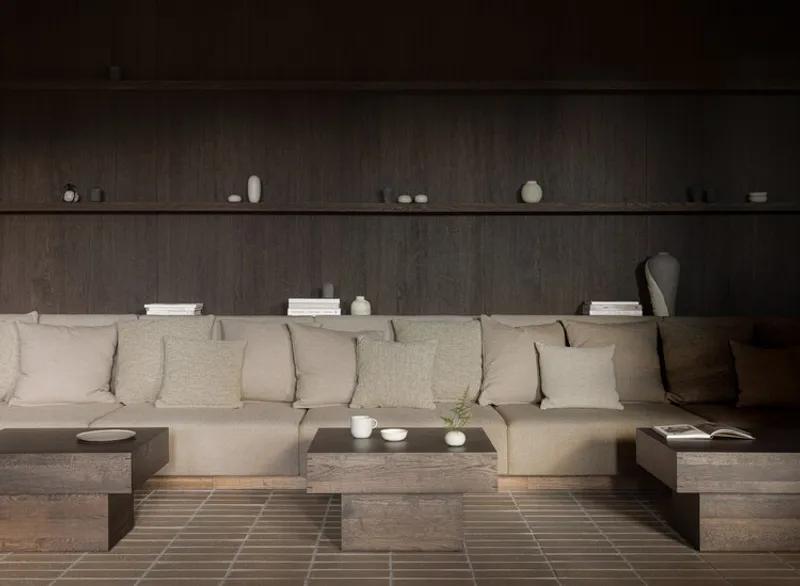
Inside, the spatial sequence unfolds as a choreography of atmospheres. The reception area establishes a warm and intimate tone through brick flooring, exposed timber structures, textured walls, and subdued lighting. Acoustics are carefully considered, creating a sense of calm from the first moment of arrival.
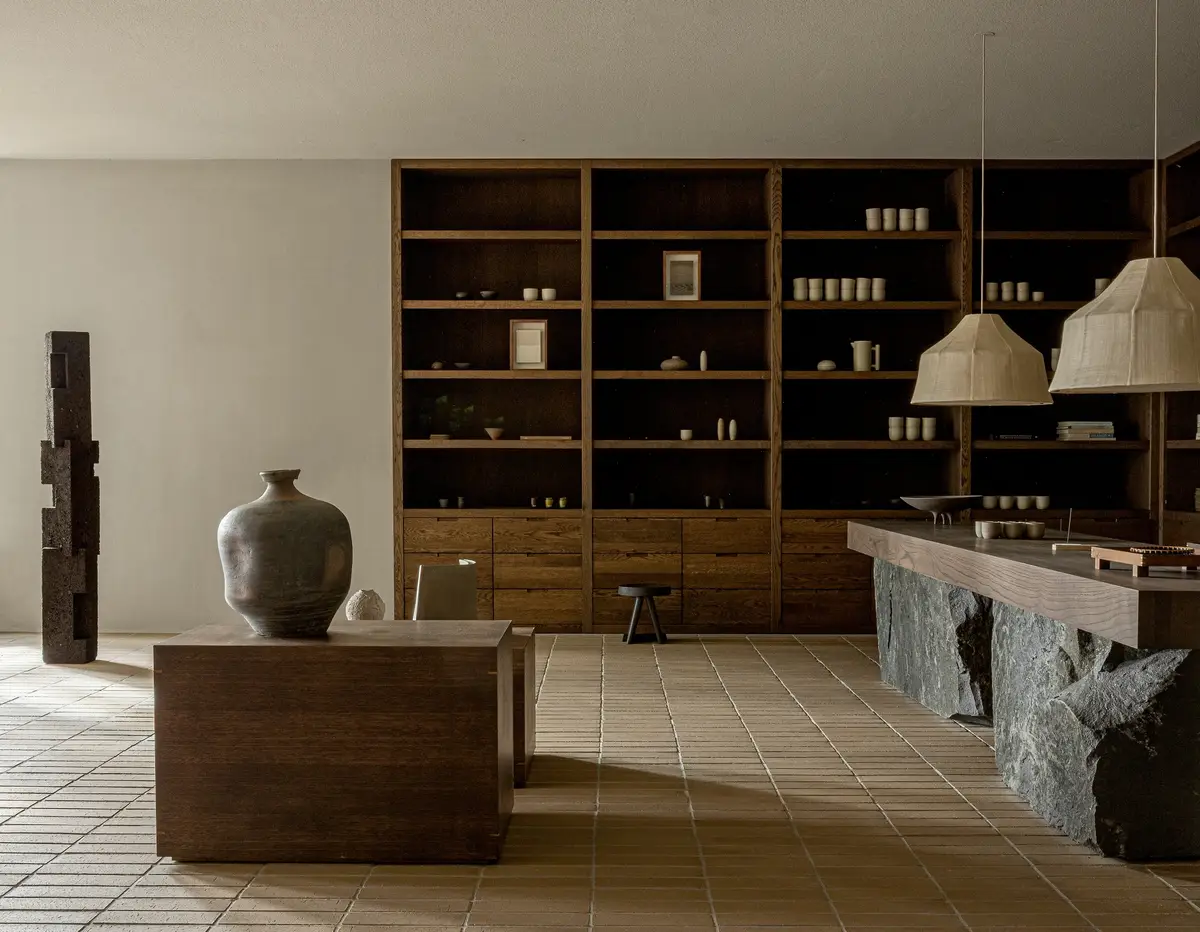
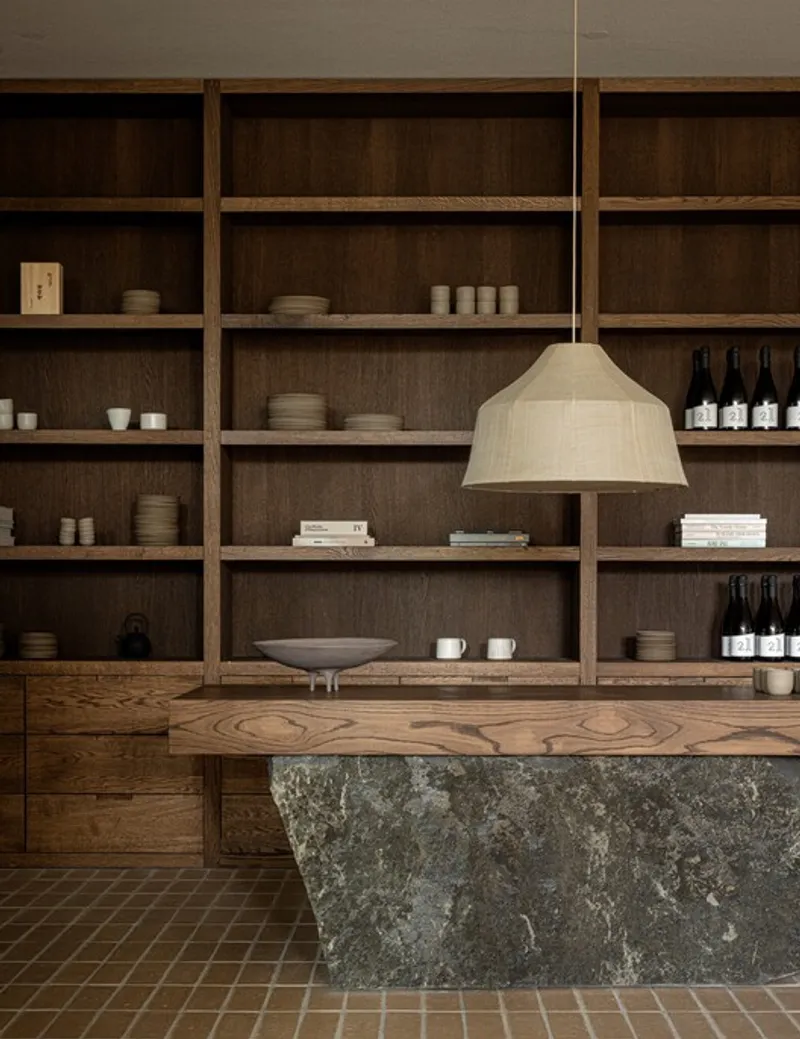
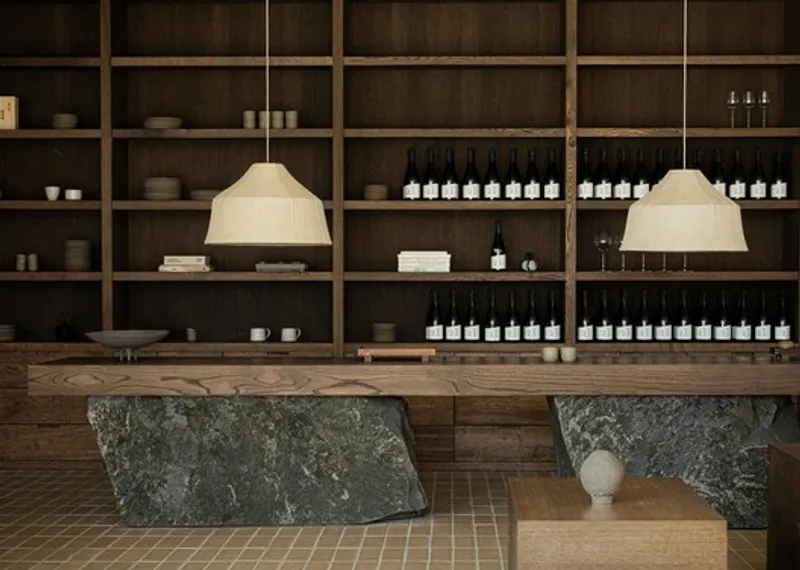
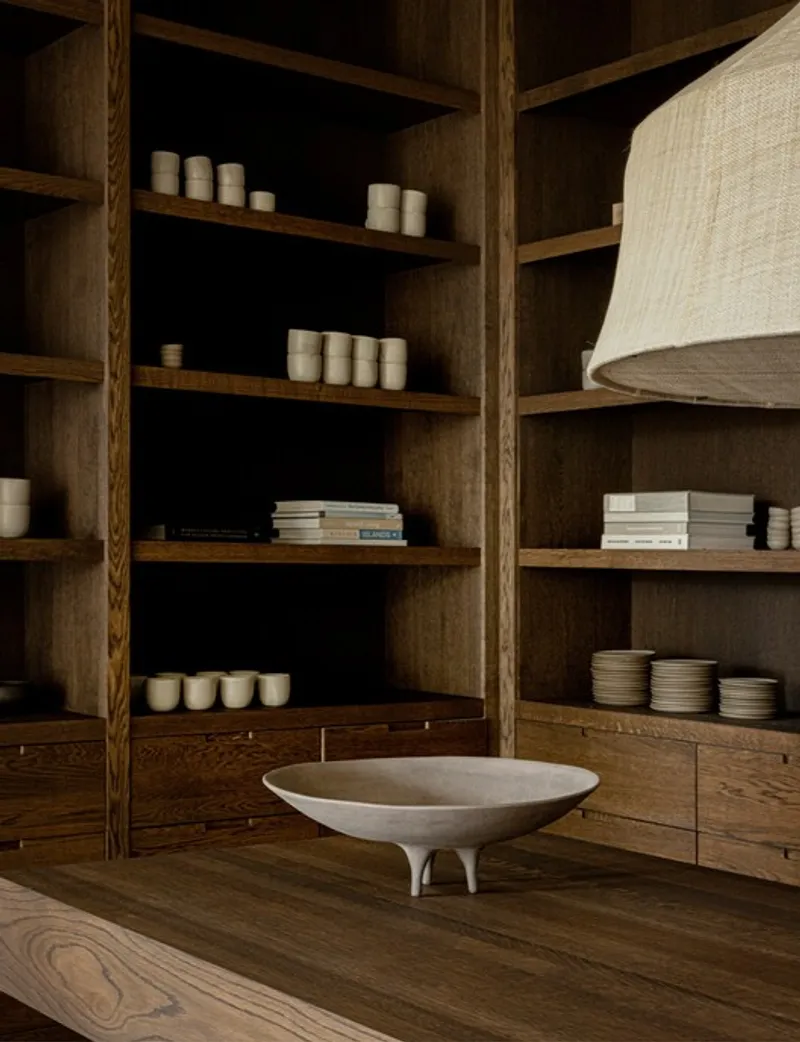
Adjacent to reception, a boutique space showcases the vineyard’s wines alongside curated ceramics and crafted objects. A long wooden counter resting on carved stone references the raw materiality of the surrounding fields, subtly echoing the spirit of Restaurant ÄNG.
Throughout the interior, Nordic minimalism meets tactile richness:
- Heavy timber beams and brick surfaces
- Dark oiled oak staircases
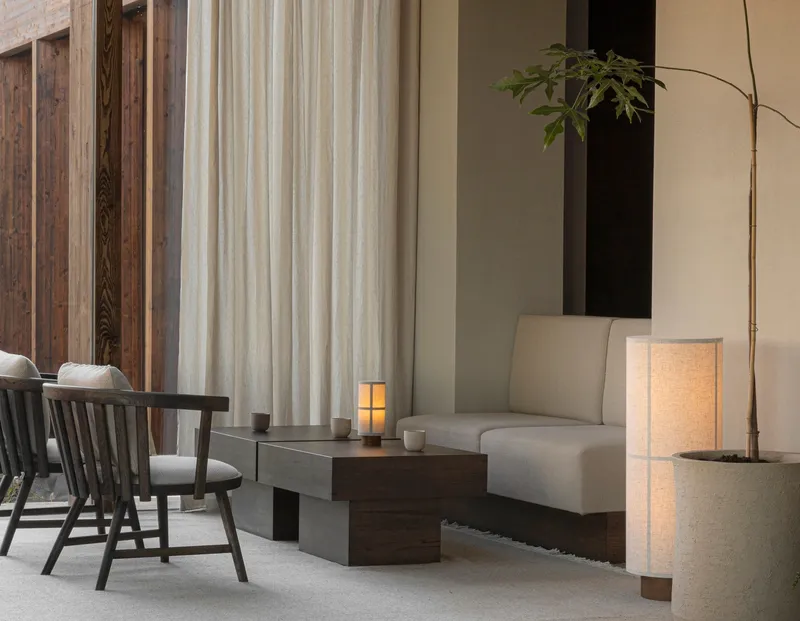
- Soft textiles and semi-transparent curtains
- Built-in seating niches and intimate corners
Views are framed like living paintings, reinforcing the relationship between architecture and the Swedish landscape.
Orangery and Panoramic Hospitality Spaces
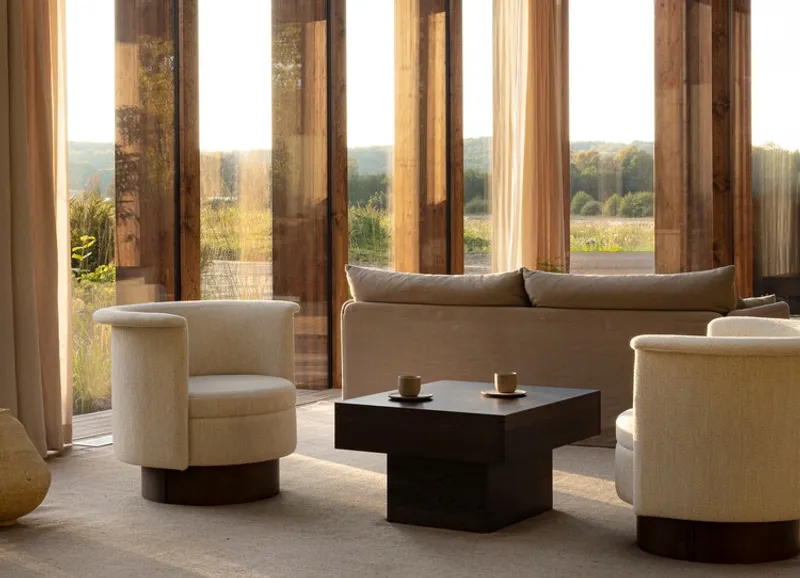
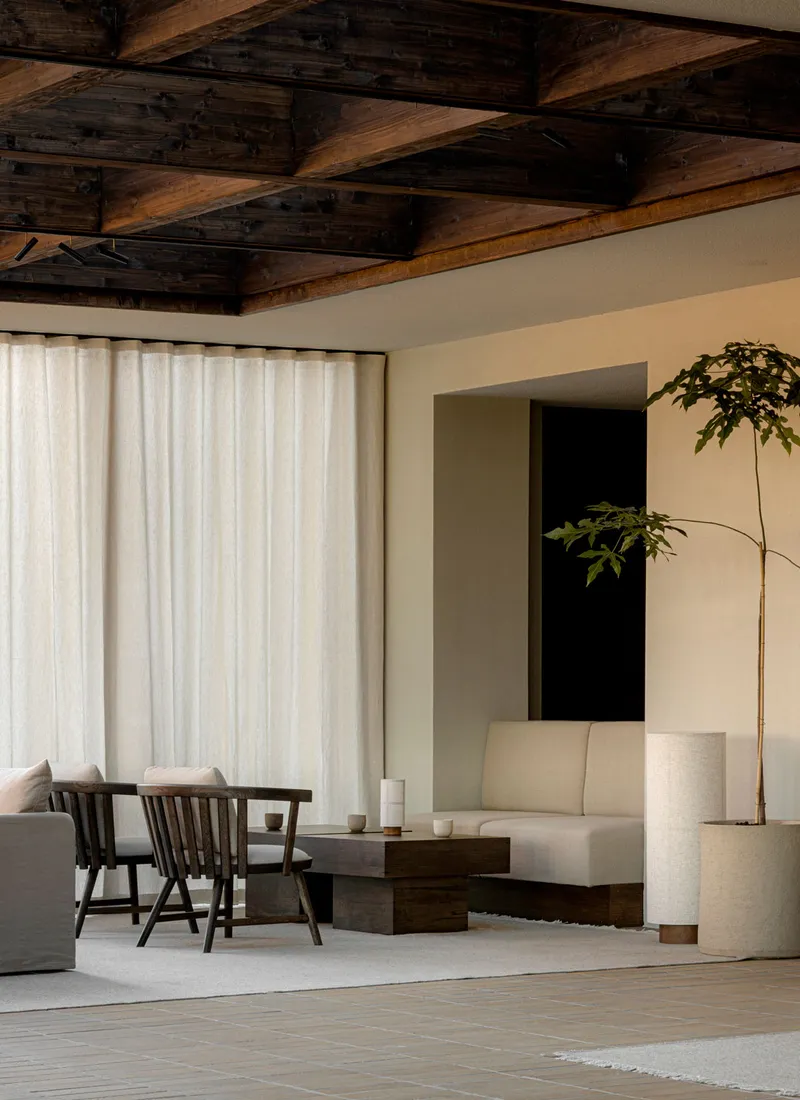
A newly introduced orangery-like structure opens panoramic views toward the lake and surrounding vineyard. This glazed in-between space functions as a lounge for wine tastings, morning coffee, or quiet reflection by the fireplace.
The architecture balances solidity and softness, brick and timber contrasted with light-filled transparency. This interplay creates an atmosphere aligned with luxury hospitality architecture in Sweden, yet grounded in simplicity.
Wellness, Rooftop Terraces, and Immersive Retreat Design
A sculptural staircase in dark oak leads to the upper floor, where the material palette transitions into lighter tones. A colonnaded space accommodates yoga, relaxation, and meditation, emphasizing the estate’s holistic wellness offering.
Outdoor terraces blend seamlessly into the hillside, guiding visitors toward a rooftop vantage point. From here, panoramic views over forest, vineyard, and water complete the architectural journey.
The Wine House functions as both destination and connector: linking spa, restaurant, vineyard, and accommodation into a cohesive experiential landscape.
Sustainable Design and Estate Continuity
Sustainability is embedded in both form and function:
- Green roofs enhancing thermal performance
- Natural materials with low environmental impact
- Passive landscape integration
- Durable craftsmanship rooted in Scandinavian tradition
The building reinforces Ästad Vingård’s broader ambition: to create immersive environments that heighten sensory awareness and reconnect guests with the rhythms of nature.
All the photographs are works of
Jonas Bjerre-Poulsen, Karl Tranberg Knudsen


Popular Articles
Popular articles from the community


Jaramillo Van Sluys Arquitectura and Urbanismo Turn a Demolished Registry Lot in Quito into an Orchard Plaza
In Quito's Centro Histórico, a 2,800 m² plaza exposes the San Agustín convent wall and redraws its lost Augustinian orchard in volcanic stone.

Architekt Andreas Gruber Scatters 23 Dark Timber Chalets Across a South Tyrolean Forest Edge
In Molini di Tures, Amonti Chalets breaks a resort into a hamlet of gabled timber houses, with parking, storage and services pushed into the slope.

LT2A and OPEN Architectes Thread a Brick and Glass High School Through a Wooded Belgian Campus
In Braine-l'Alleud, a 3,000 m² wing for Collège Cardinal Mercier pairs pale brick with a glazed colonnade, deferring to a small chapel and a dense wood.

Cube Design Draws an Ecological Corridor Between Two Shenzhen Hills with the Nankai Building
Beside Shenzhen's container docks, the Nankai Building pairs stacked balconies with a climbing green screen to connect two hillsides across its height.

Similar Reads
You might also enjoy these articles

Gil Mello Arquitetura Tilts a Single Roof Toward the Waterfalls on a Plateau Above Aiuruoca, Brazil
In Aiuruoca, Minas Gerais, a 200 m² house of local labor and reclaimed poles pairs a low valley veranda with a tall mountain one.

U.GA Architects Wraps an Oval Rooftop Pool in Curved Board-Formed Concrete on Busan's Jeollidan-gil
In Busan's Jeonpo-dong, a 454 m² mixed-use block stacks a neighborhood facility, guest rooms and an oval rooftop pool inside spiraling concrete walls.

Felipe Hess Arquitetos Turns a Blind Stone Wall to the Street and Opens a Brazilian House onto a Courtyard and Canal
A canal-front house in Brazil hides behind painted stone and planting, then opens to an olive-tree courtyard, a reed-ceilinged porch and a curving pool.

David Macias Steps a Doorless Stone and Plaster House Down a Tropical Colombian Hillside
In the humid hills of Colombia, Threshold House replaces the front door with an open void and terraces its 850 m² down the slope instead of fighting it.

Explore Architecture Competitions
Discover active competitions in this discipline

Challenge to reimagine the Iron Throne

Photograph architecture without architects

Illustrate the lost glory of Angkor Wat - Render Challenge

Design challenge to reuse E-waste
Comments (0)
Please login or sign up to add comments
No comments yet. Be the first to comment!