
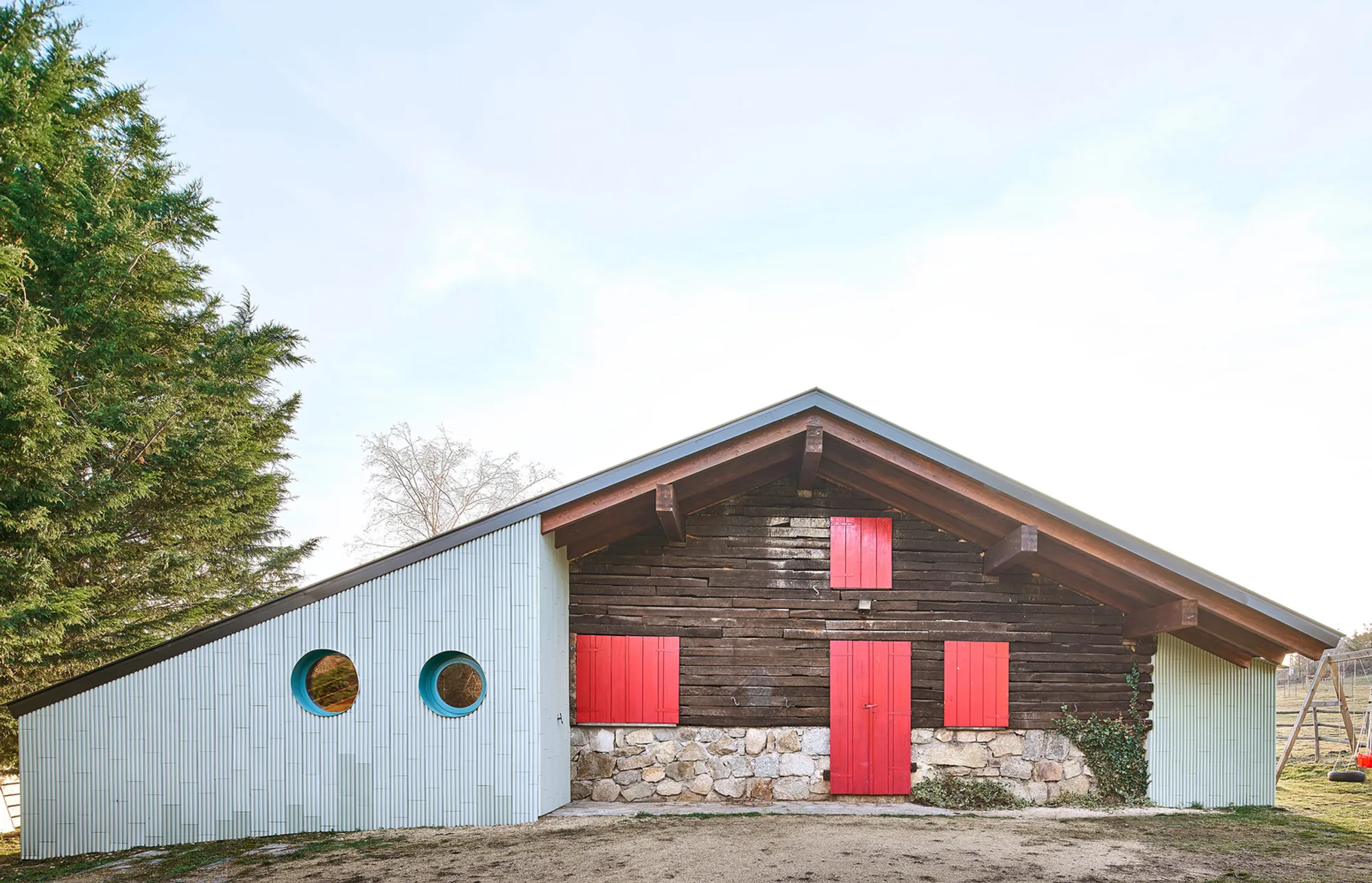
The Young Old House: A Fusion of Rural and Urban Living
The Young Old House blends tradition and innovation, using sustainable materials and adaptive design to harmonize rural and urban living in Spain.


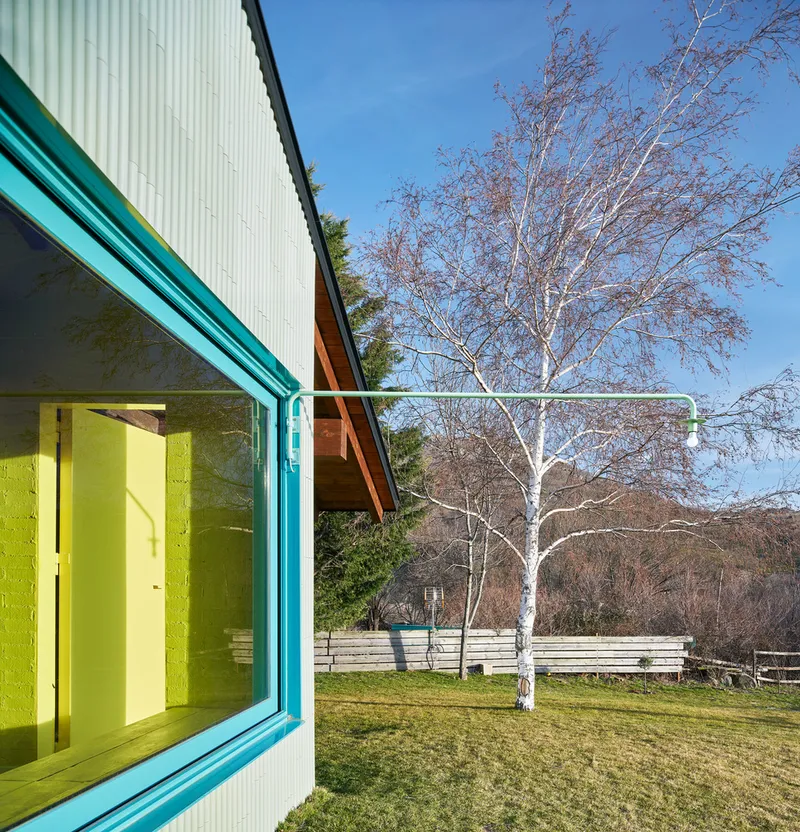
Nestled in the picturesque Sierra de Guadarrama, The Young Old House redefines the concept of rural living through a seamless blend of tradition and innovation. Designed by Enrique Espinosa and Lys Villalba, this renovation project transforms a 1970s summer house into a dynamic space that adapts to both its natural surroundings and contemporary needs.
Reimagining Rural Living
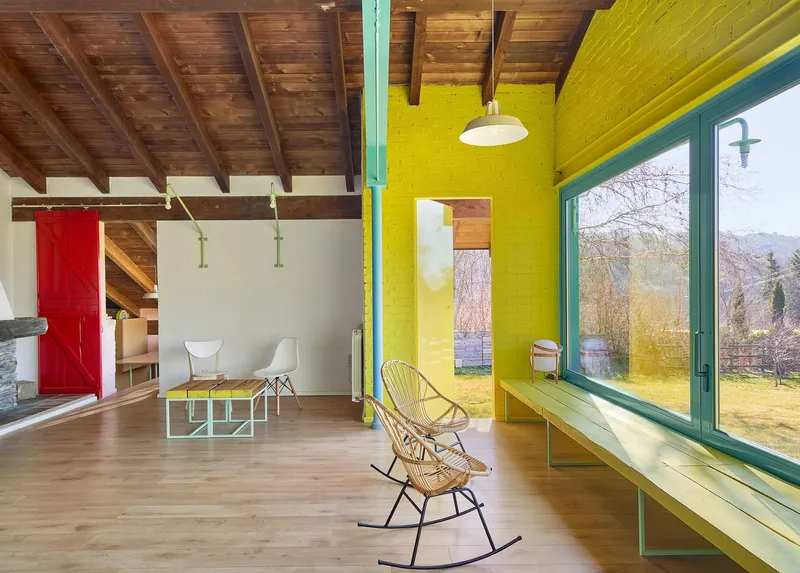
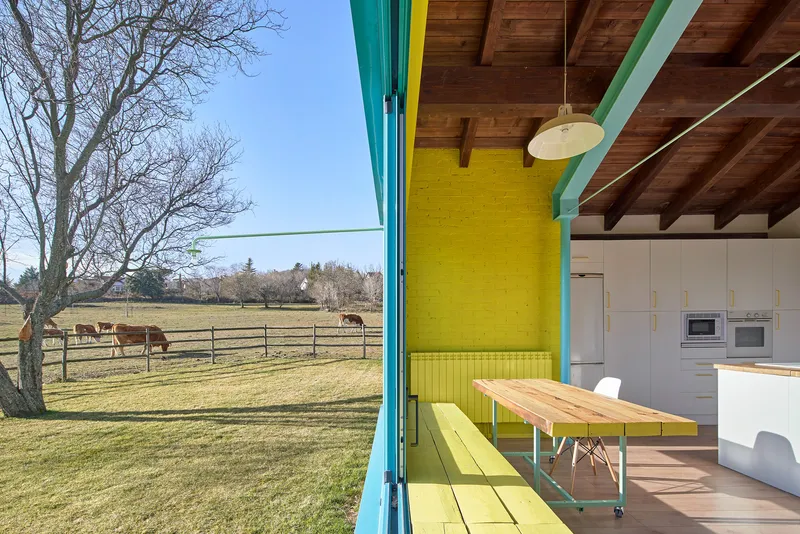
Cercedilla, located 57 km from Madrid, has witnessed a unique demographic shift—where urban dwellers embrace a rural lifestyle while maintaining strong city ties. This evolving rural-urban identity is central to The Young Old House, where coexistence between traditional farmers and new residents fosters a sustainable, self-sufficient ecology. Local cattle farmer Luis grazes his cows in the meadow, helping maintain the landscape while benefiting from fresh pasture—an organic symbiosis that underpins the project’s ethos.
Sustainable Transformation Through Phased Adaptation
After inheriting the house, Ana and Manolo, along with their four daughters, embarked on an ambitious journey to expand and upgrade it. Originally built without thermal insulation and disconnected from its surroundings, the house required three key design strategies:
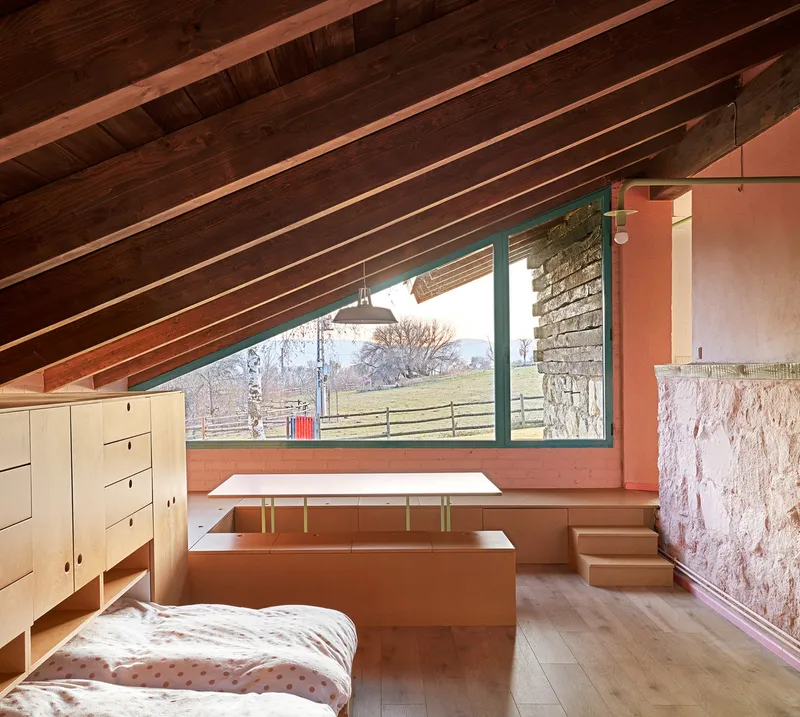
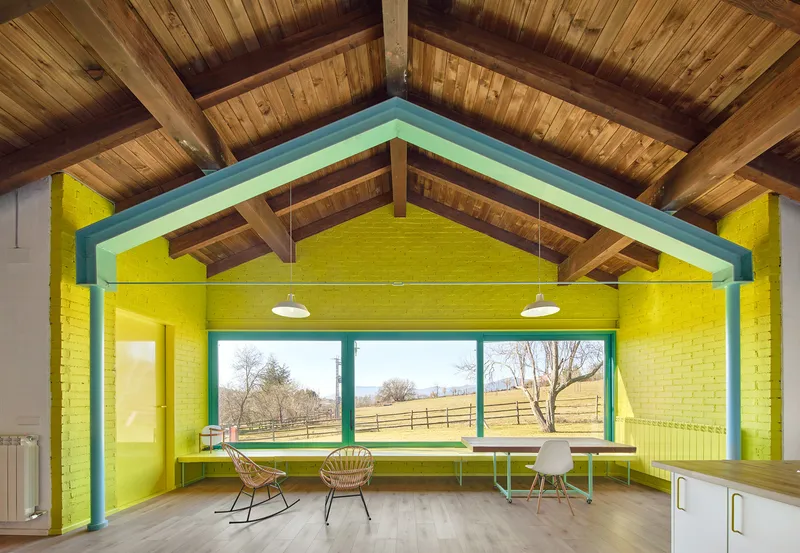
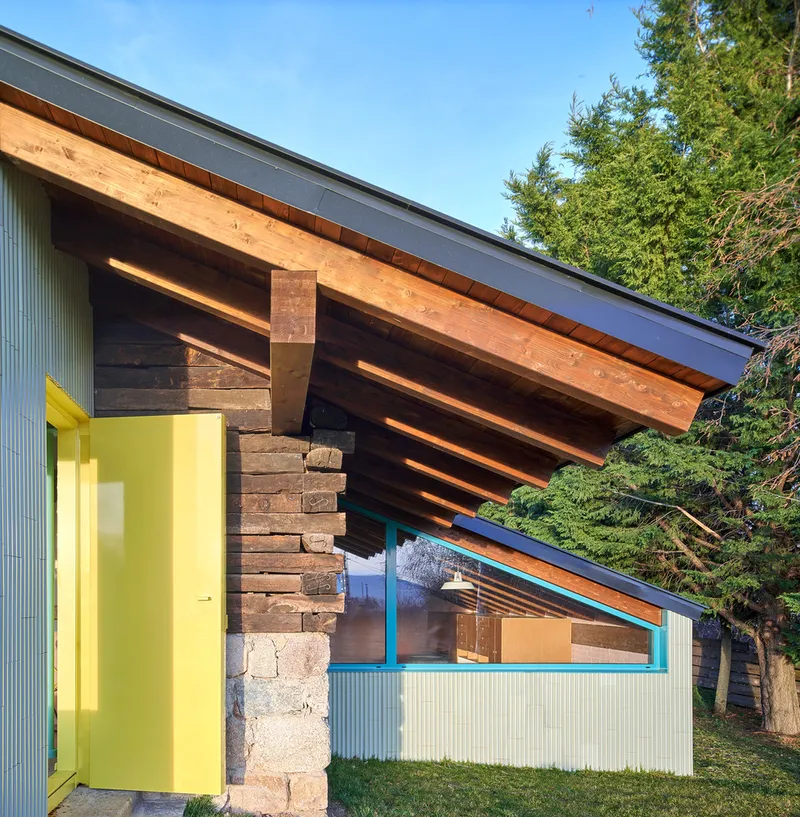
- Expansion – Introducing three new volumes beneath the roof to house an extended living area, a new bedroom for the daughters (in the former garage and wood storage space), and a dedicated heating room.
- Structural Modification – Stone walls were strategically cut to install a metal framework with beams and tensioners, creating an open, fluid connection with the landscape.
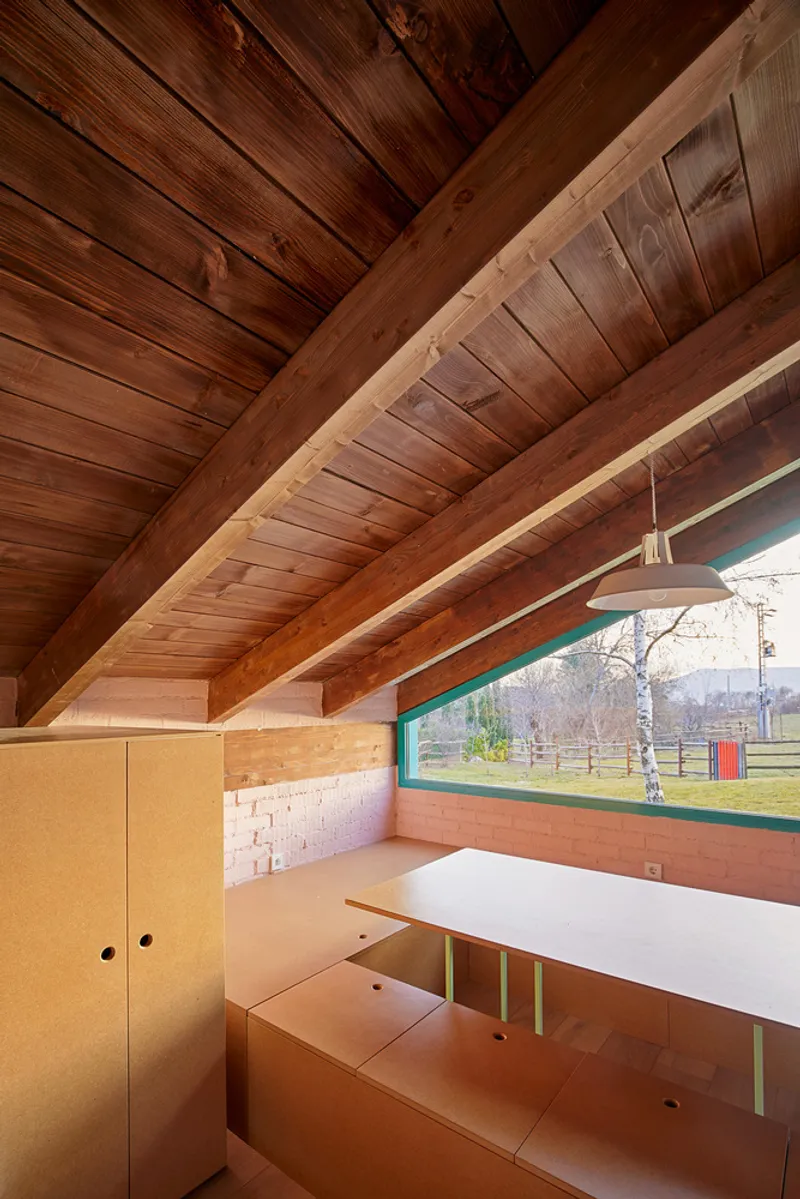
- Material Reuse & Energy Efficiency – The original roof materials were salvaged and repurposed into custom furniture, minimizing waste and reinforcing the circular construction approach.
Layered Growth: A Home That Evolves Over Time
A unique aspect of the project is its phased transformation, ensuring sustainable adaptation with minimal waste. Sahari, a former mason and now a family employee, will disassemble and rebuild sections of the house each year, incorporating thermal insulation while reusing the original materials in a fresh, innovative pattern.
A Home Where Past Meets Future
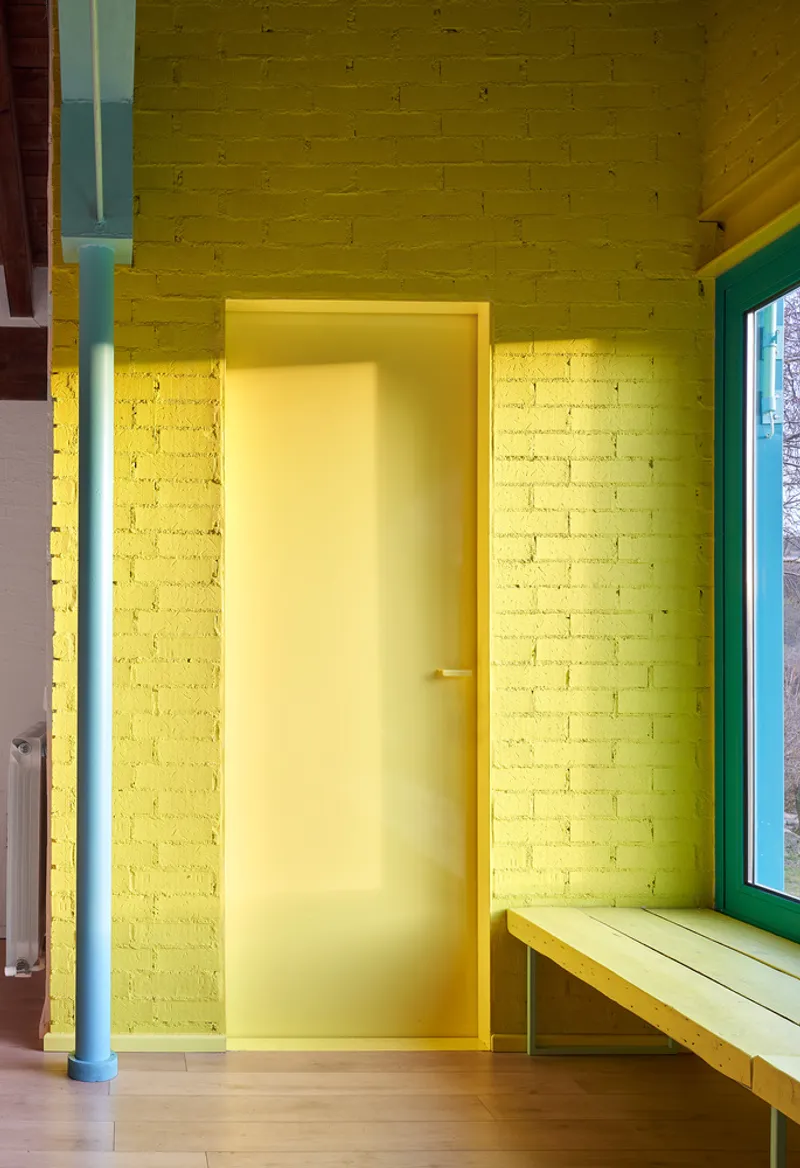
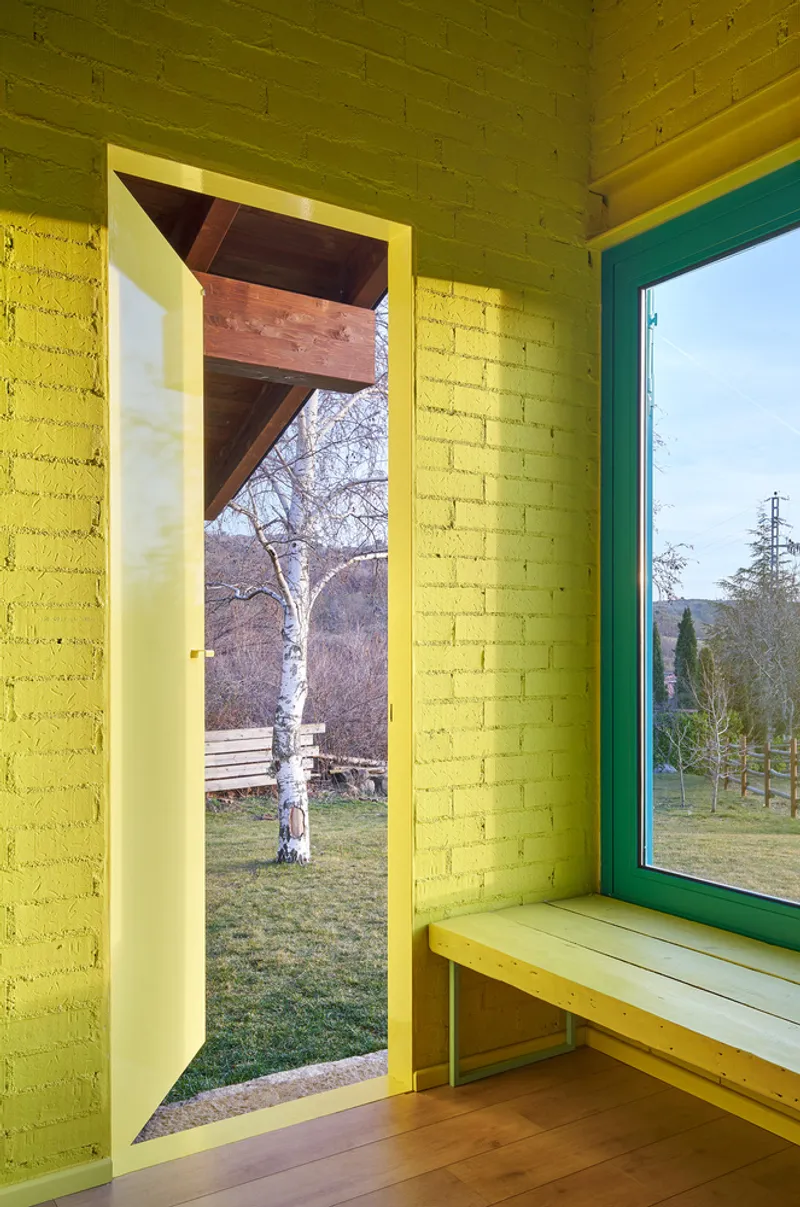
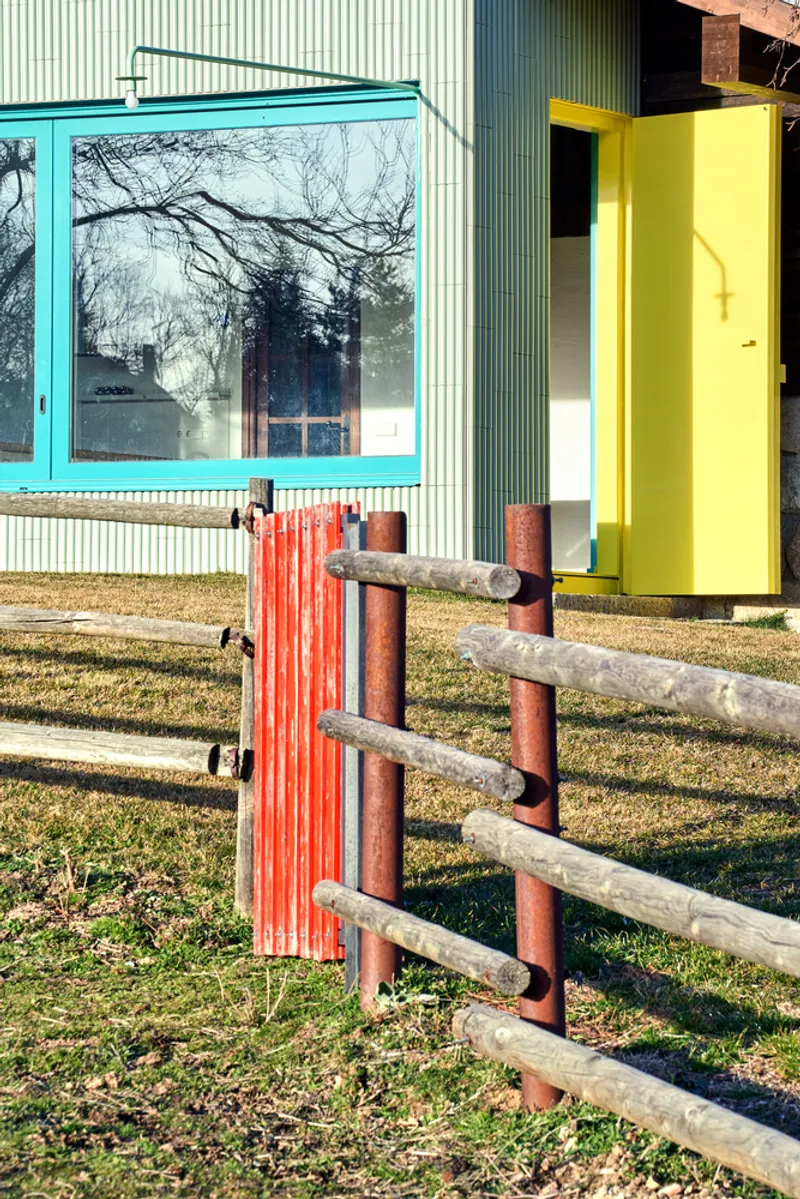
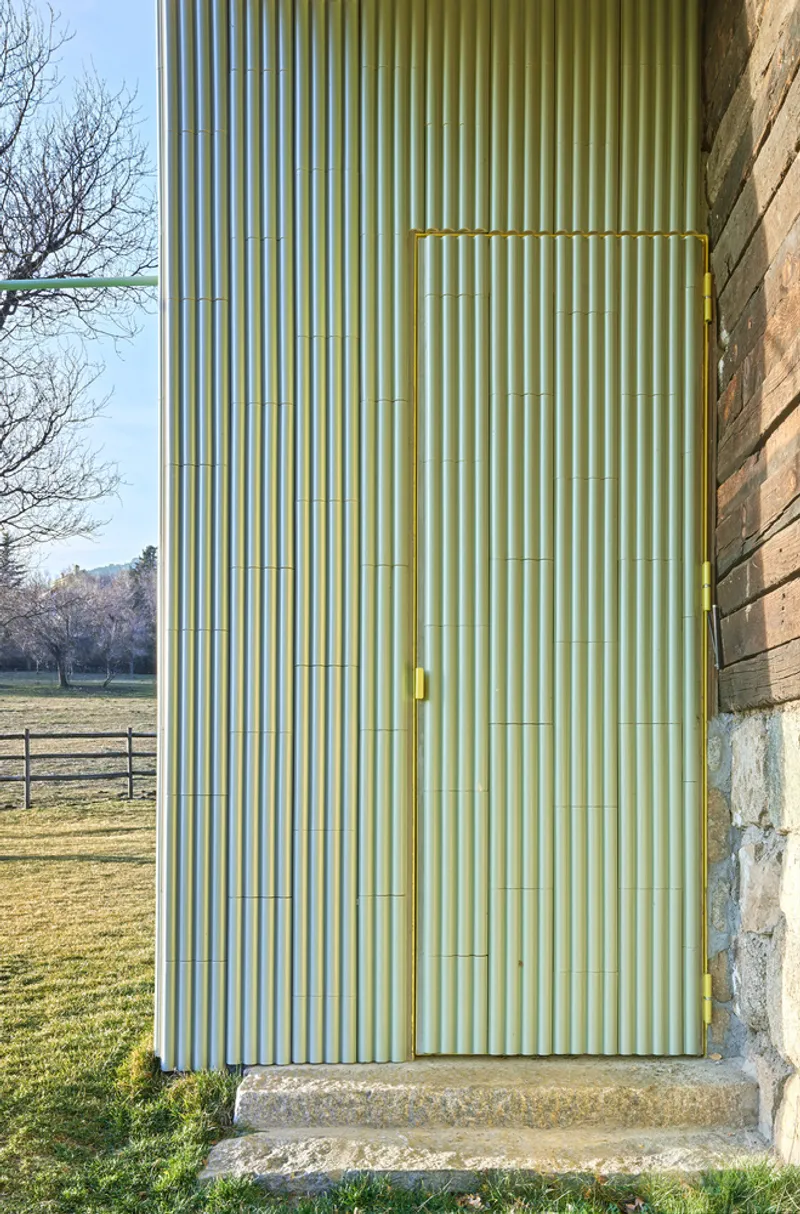
In The Young Old House, every element tells a story. Beams from the old ceiling now serve as dining tables, railway sleepers form a long bench, and reclaimed shutters become doors. Even the slate from the former roof awaits its new role as a future façade. This seamless integration of heritage materials and modern adaptability turns the house into an ever-evolving entity.
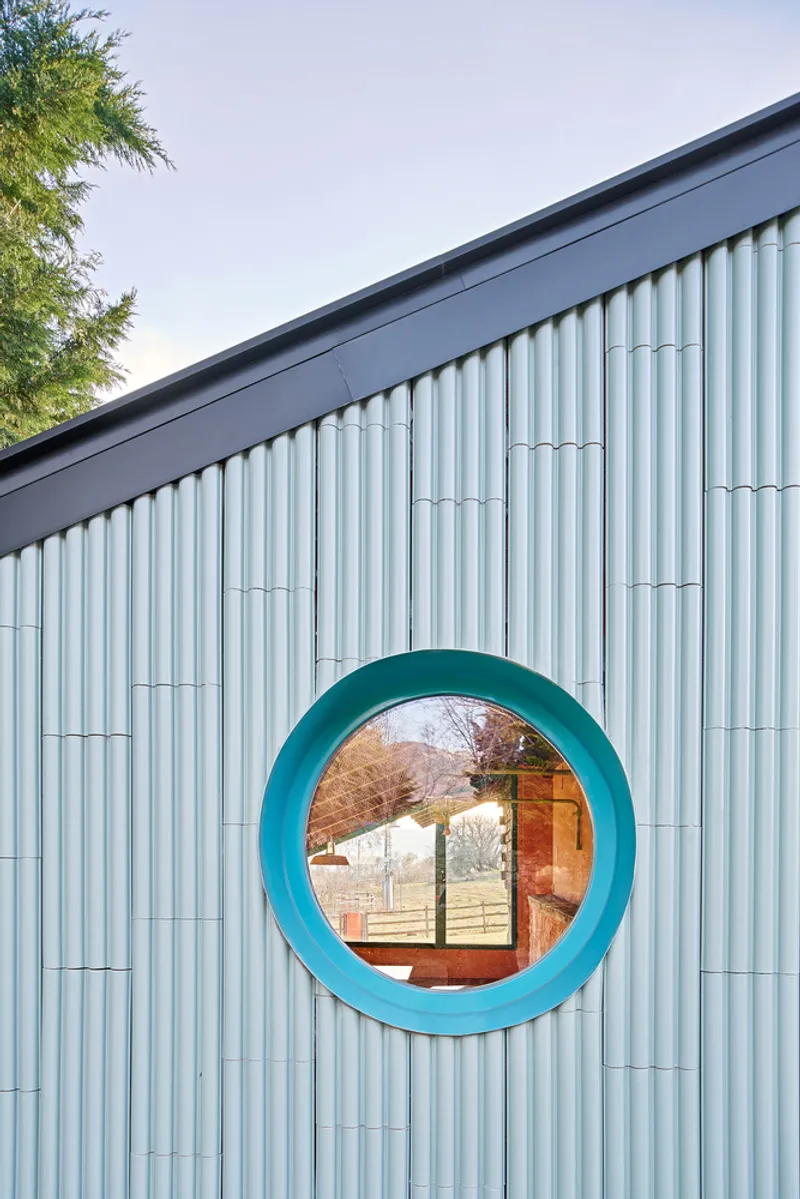
Additionally, custom metal elements enhance the connection with nature—hidden doors lead directly into the countryside, rotating lamps illuminate outdoor dining in the meadow, and strategically placed portholes frame views of the changing landscape.
A Blueprint for Contemporary Rural-Urban Living
More than a renovation, The Young Old House embodies a new model of sustainable rural living, where architecture, environment, and community intertwine. By bridging tradition with innovation, the project challenges conventional notions of urban vs. rural, proving that thoughtful design can create a harmonious, self-sustaining future.



Popular Articles
Popular articles from the community


Hill & Cross Opera: Sculptural Opera House Architecture Shaped by Tallinn’s Landscape and Identity
Hill & Cross Opera reimagines opera house architecture in Tallinn through its sculptural hill, civic plaza, glass wave and a luminous cross.

The Musturak Paradise: Senior Living Architecture for a Connected Future in Temara, Morocco
The Musturak Paradise reimagines senior living architecture in Temara via private homes, social spaces, culture, community, and shared care.

The Ocean Hive: Sustainable Architecture for a Self-Sufficient Civilization at Sea
The Ocean Hive imagines sustainable architecture at sea, where modular habitats, algae, wave power and ocean waste sustain a growing colony.

Riyadh For All: Intergenerational Urban Design for Active Aging in Rabat
Riyadh For All reimagines urban design in Rabat with intergenerational co-living, adaptive courtyards, and Moroccan cultural exchange today.

Similar Reads
You might also enjoy these articles


Hodi-Mandai Geram
Project Function: Preservation and revitalization of the Intangible heritage and socio-spatial identity of the Hodi by Housing, Cultural Memory Center, Sacred Grove, landscape, local tourism economy


Olio Towers: A Mid-Rise for Performers That Fuses Housing, Rehearsal, and Stage
Located blocks from Houston's Theater District, this modular tower stacks living units around a central performance atrium.

Oasis: Modular Green Housing Carved into Dhaka's Urban Fabric
A shortlisted Plugin Housing entry reclaims unauthorized settlements in Dhaka with stepped concrete volumes, green roofs, and ventilation-driven design.

Black Hole: A Floating Megastructure for the Post-Physical Era
Emiliano Mazzarotto envisions a spherical, self-scaling arena where e-sports, digital hotels, and holographic stadiums replace traditional public space.

Explore Architecture Competitions
Discover active competitions in this discipline



Challenge to reimagine the Iron Throne


Photograph architecture without architects


Illustrate the lost glory of Angkor Wat - Render Challenge


Design challenge to reuse E-waste
Comments (0)
Please login or sign up to add comments
No comments yet. Be the first to comment!