
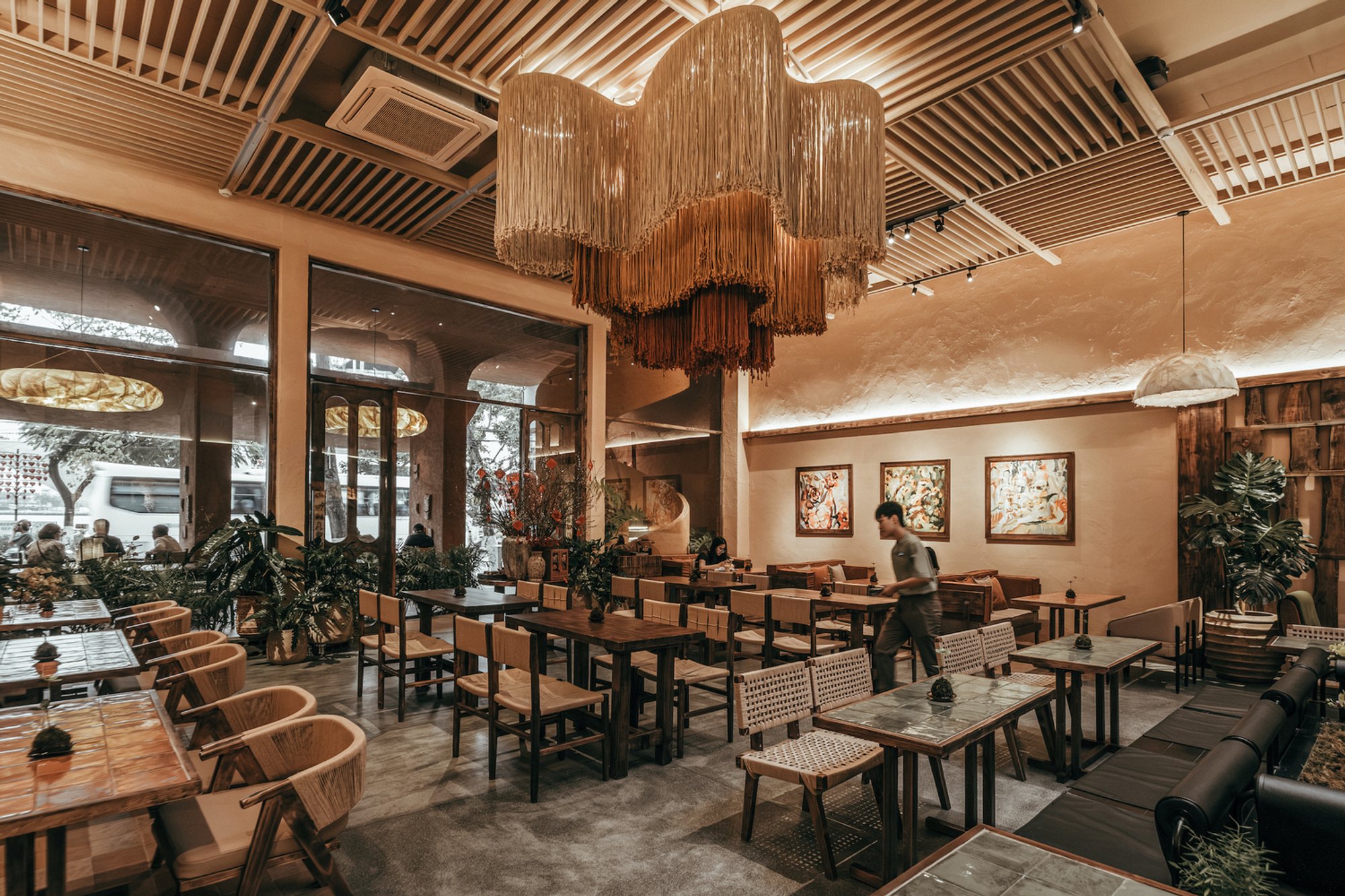
ThiLa Bistro & Café: A Fusion of Traditional Vietnamese Architecture in Modern Design
ThiLa Bistro & Café seamlessly integrates traditional Vietnamese architecture with modern design, creating an immersive cultural and architectural dining experience.

A Cultural Bridge Between Past and Present
Nestled in the heart of Da Nang, ThiLa Bistro & Café by 3fconcept is an architectural masterpiece that harmoniously blends traditional Vietnamese architecture with contemporary design. Situated along the Han River, this space encapsulates the rich cultural heritage of Vietnam while embracing modern spatial and material innovations. The project is deeply influenced by the architectural vernacular of Hue’s nha ruong houses and Hoi An’s tube houses, celebrating the timeless aesthetics of Vietnam while catering to a modern urban lifestyle.
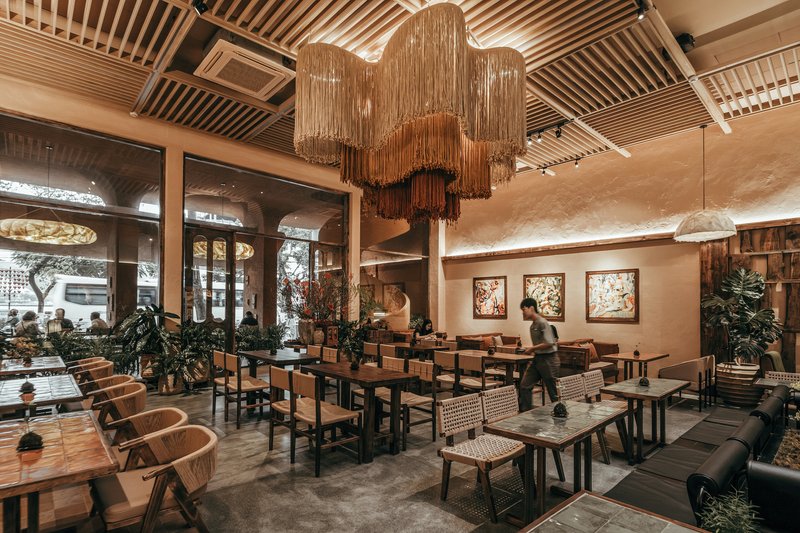
Revitalizing a Commercial Space with Traditional Design Elements
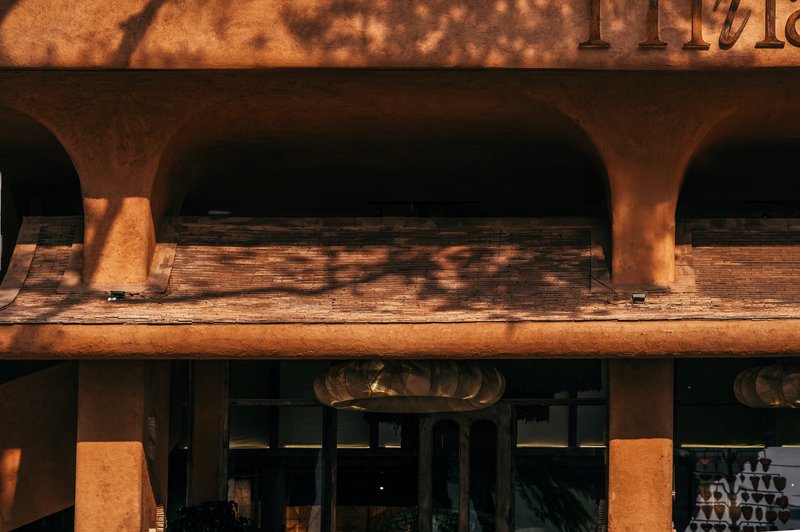
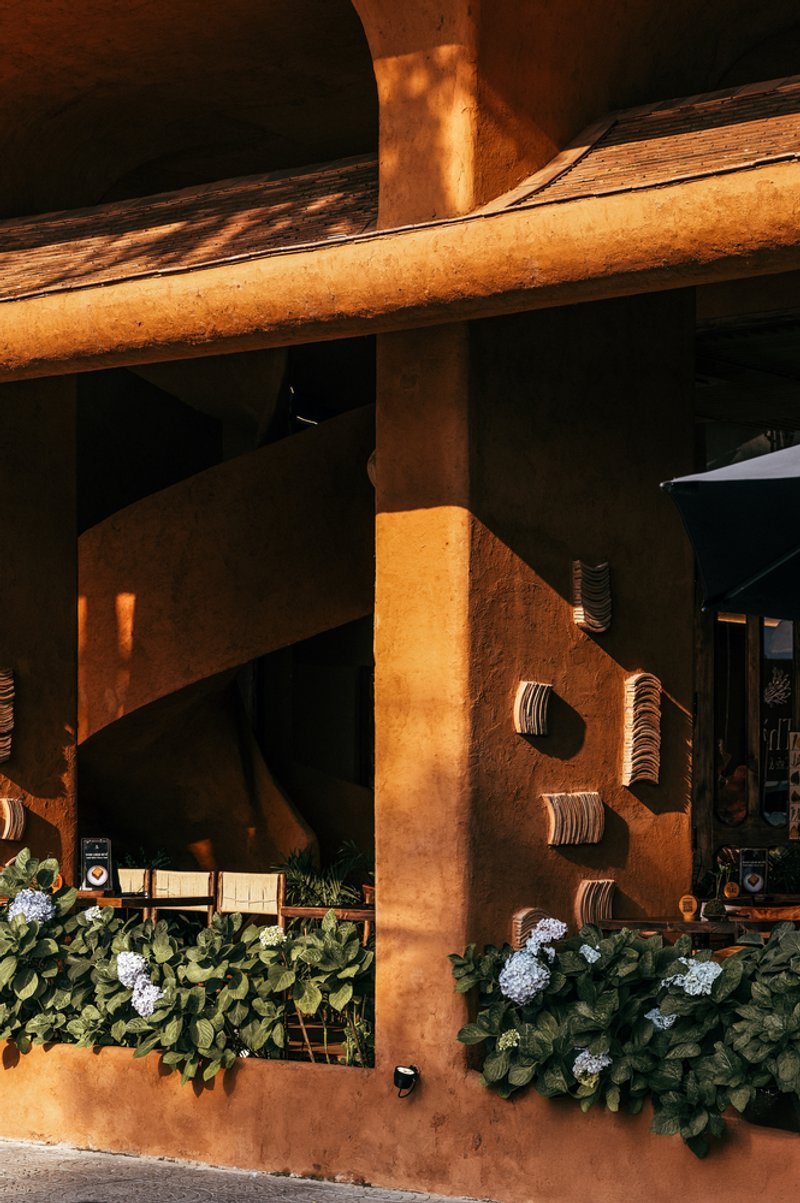
Originally a one-story supermarket, the transformation of the structure into a two-level restaurant posed a significant architectural challenge. The design team introduced two curved tiled roofs—a prominent main roof and a secondary smaller roof below—to balance the proportions and visually lower the ground floor. This adaptation allows the modern space to adopt a traditional Vietnamese silhouette, creating a connection to the region’s architectural past.
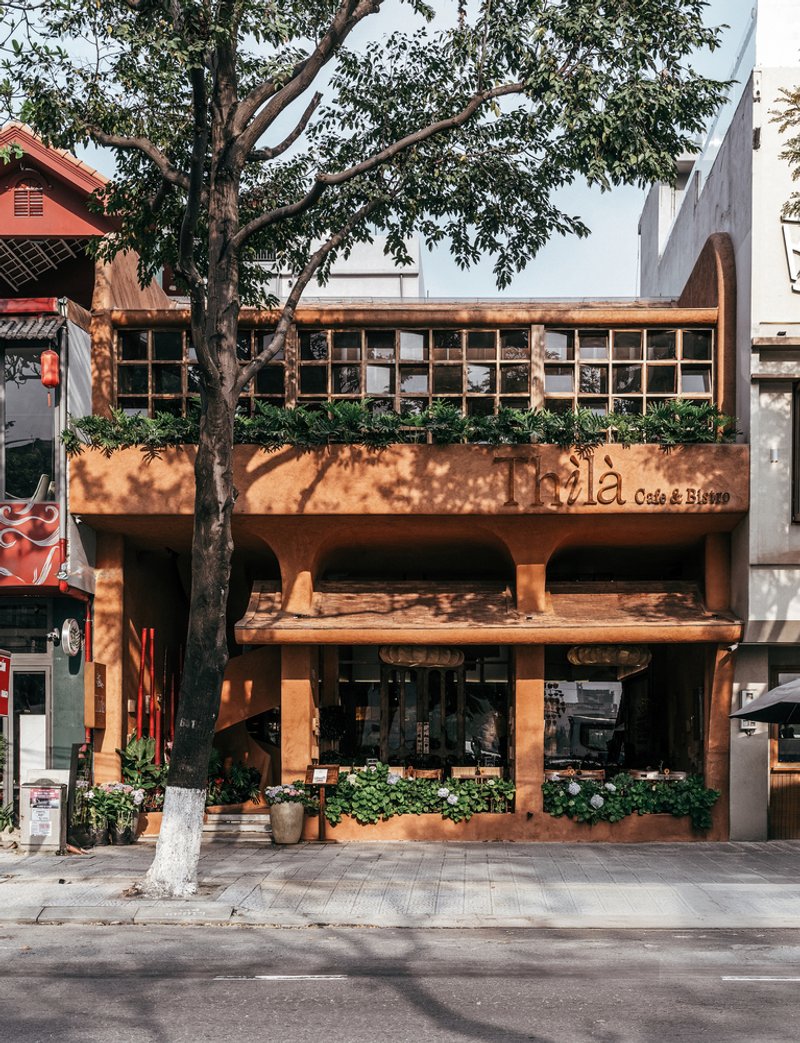
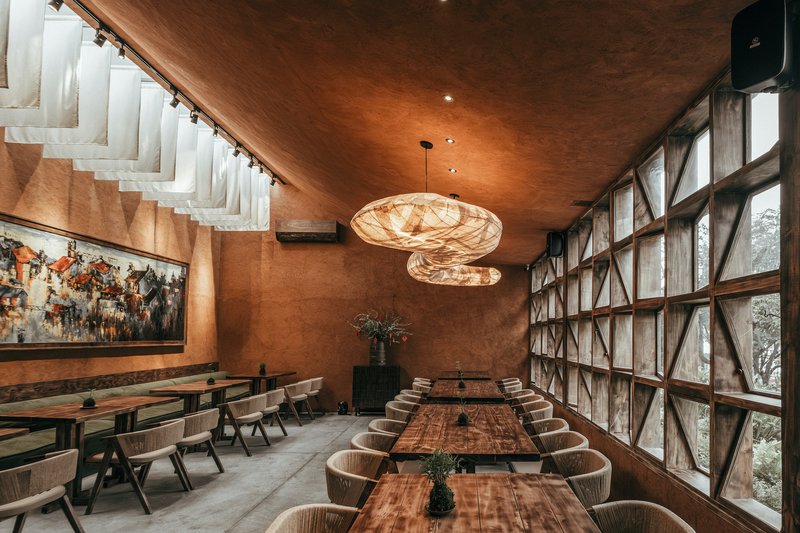
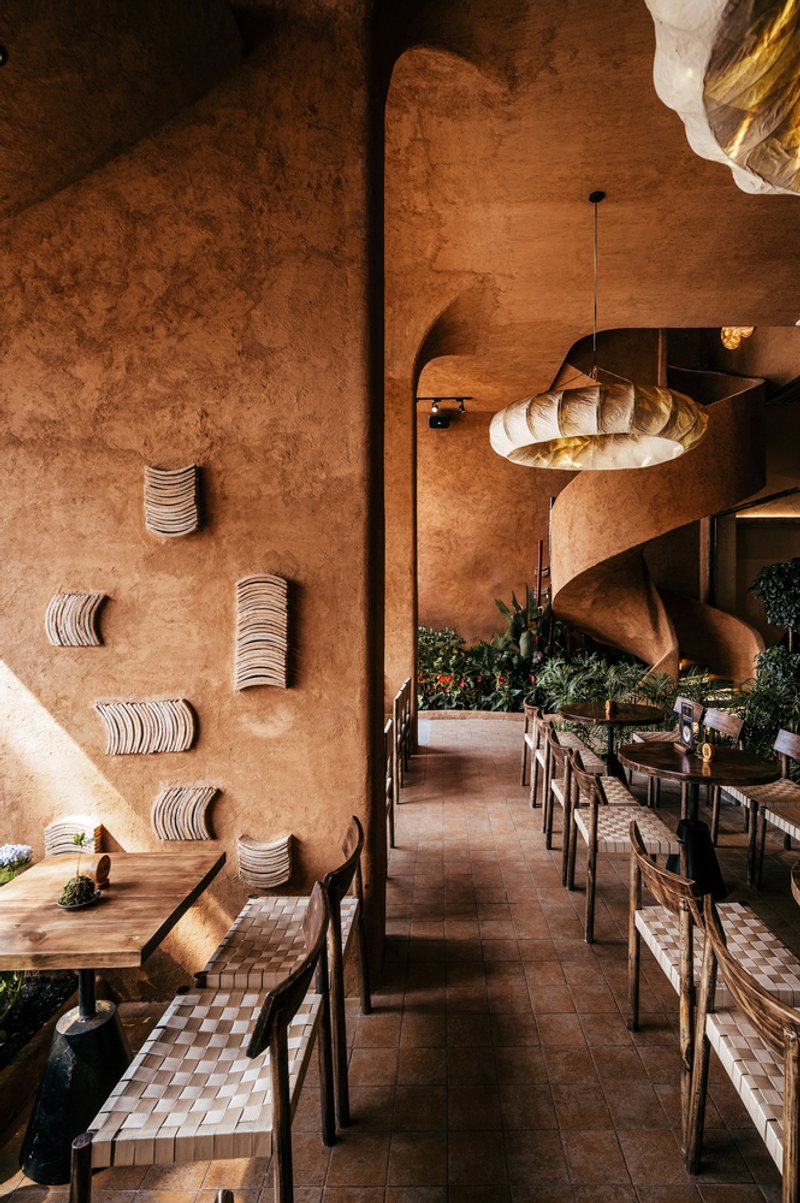
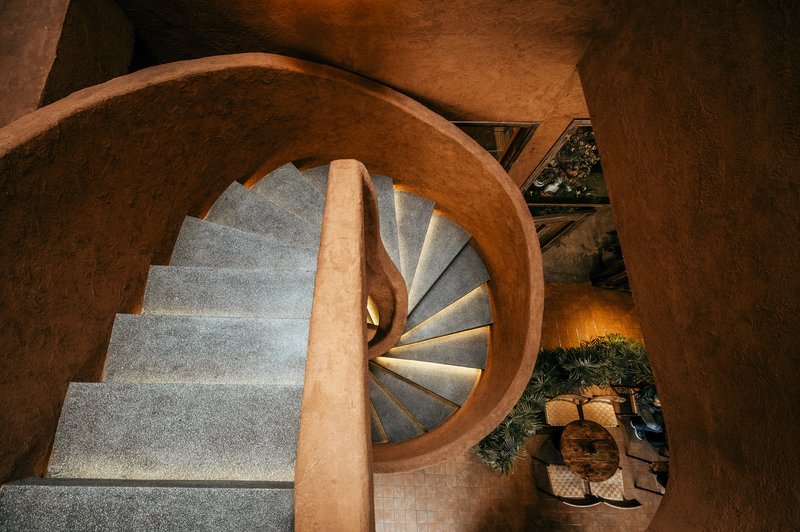
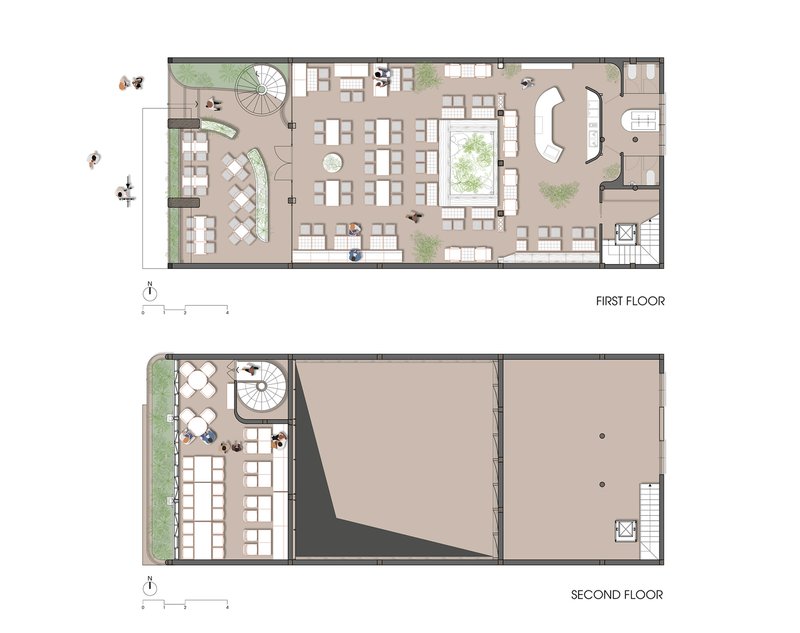
A striking spiral staircase was incorporated to connect the two levels, functioning as both an access point and an aesthetic statement. This architectural feature enhances the restaurant’s façade while maintaining a seamless integration with the overall design language.
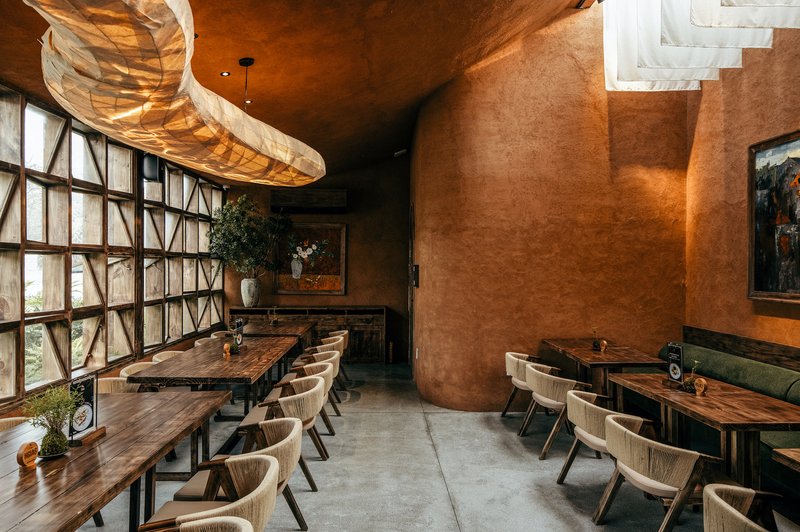
Embracing Natural Light and Indoor Greenery
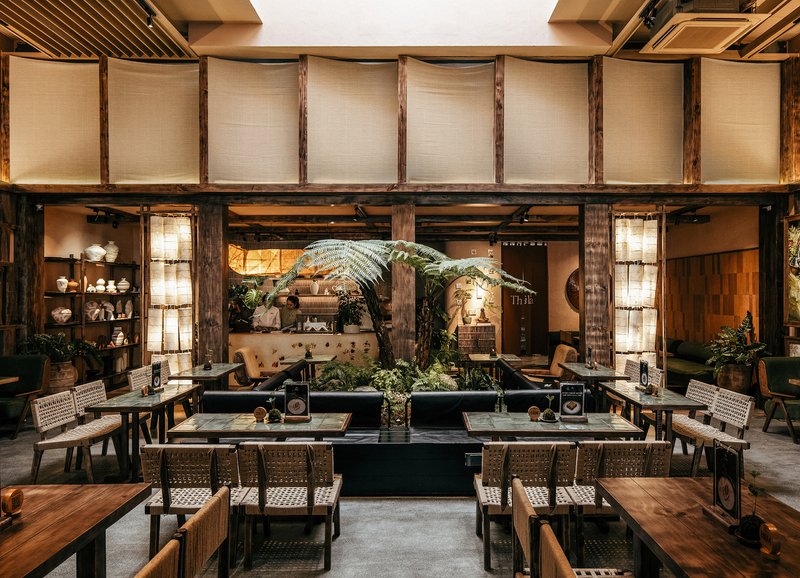
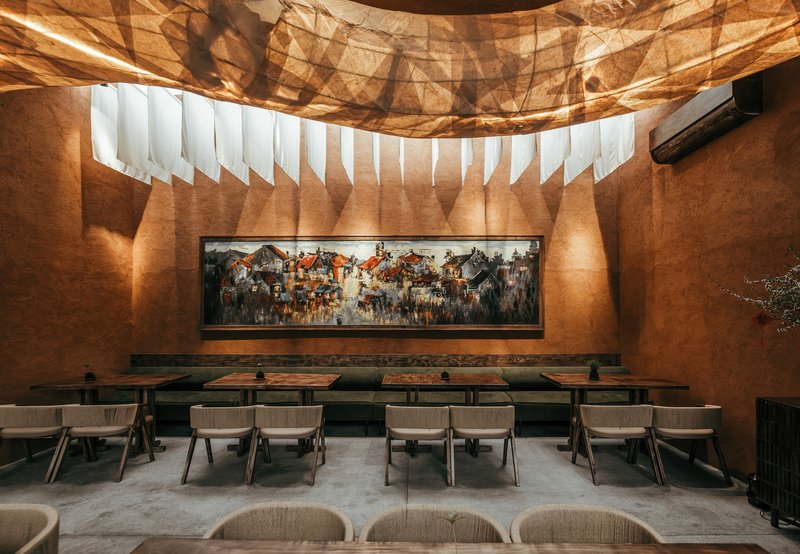
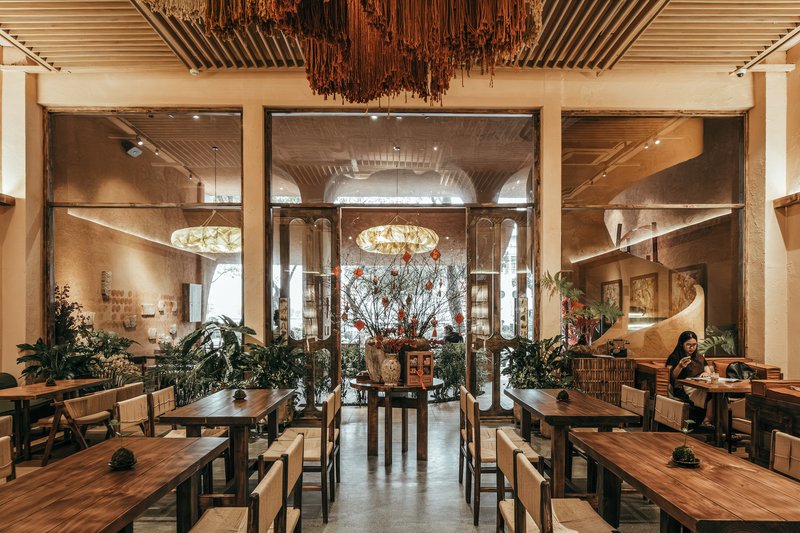
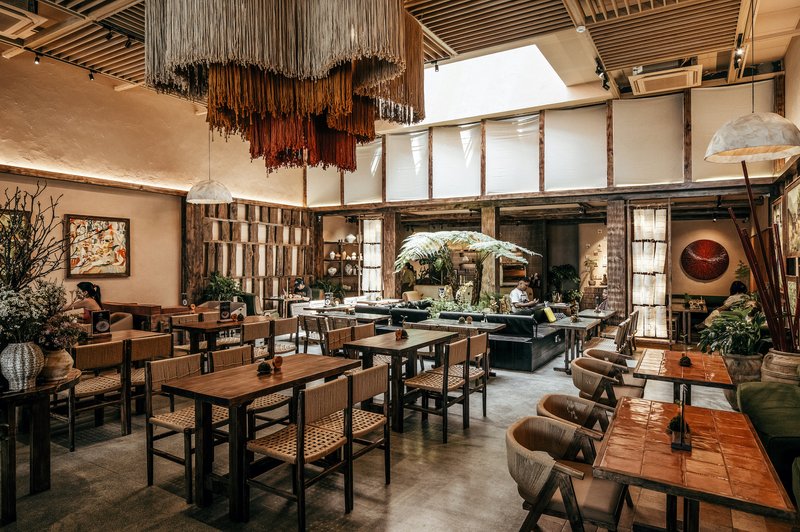
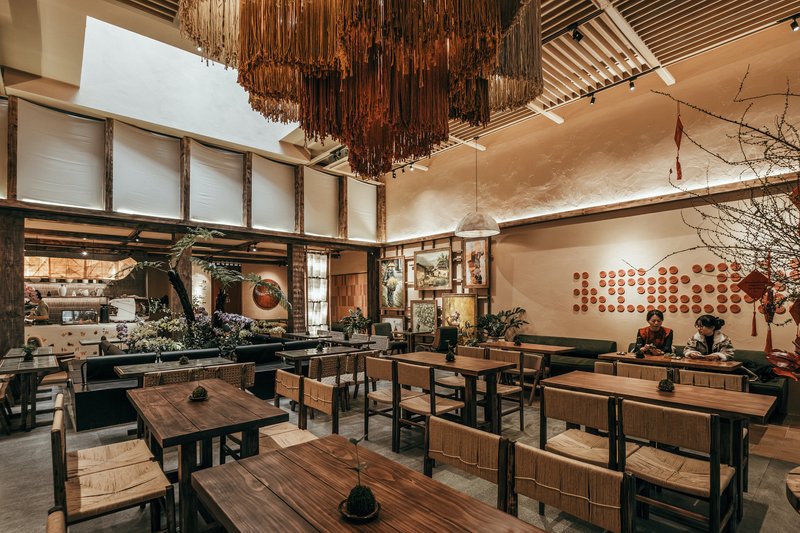
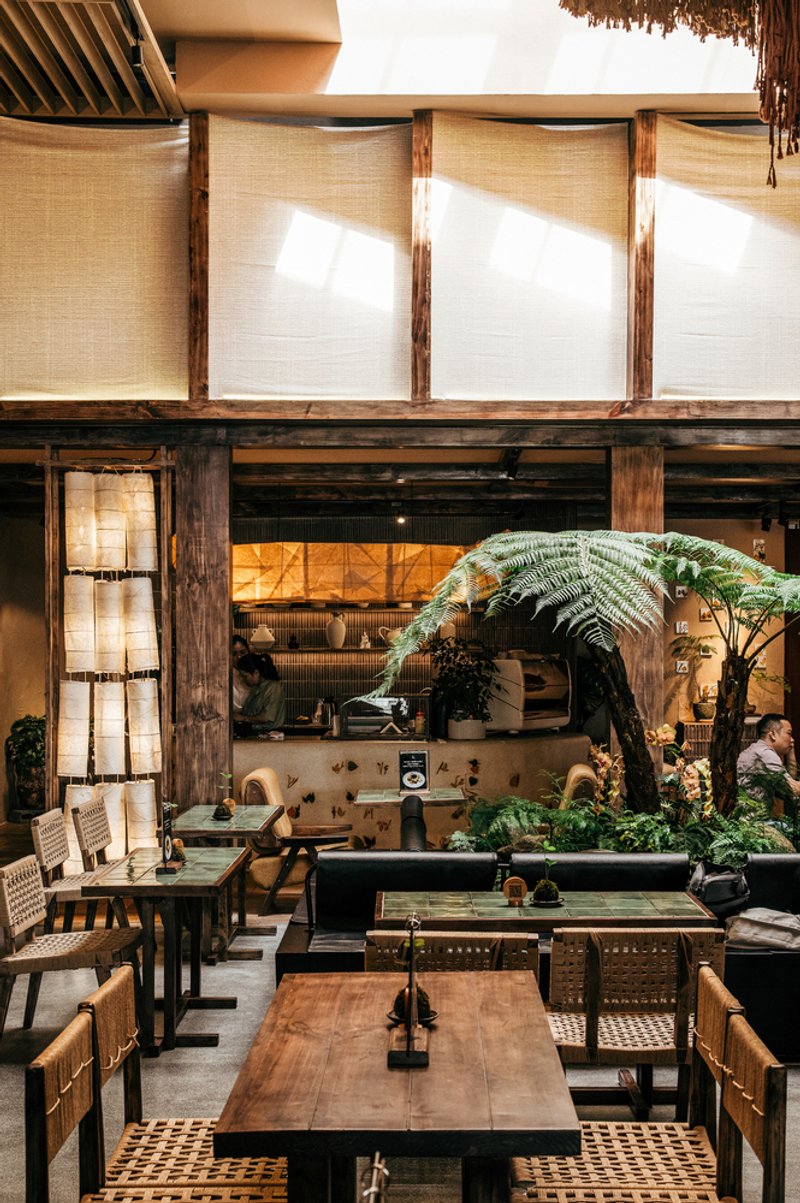
Given the building’s considerable depth, natural light from the façade could not penetrate the inner sections of the space. To address this, a large skylight was introduced alongside an indoor garden featuring shade-loving plants such as ferns, moss, and wild greenery. The integration of biophilic design elements fosters a refreshing and organic ambiance, ensuring guests feel immersed in nature while dining.
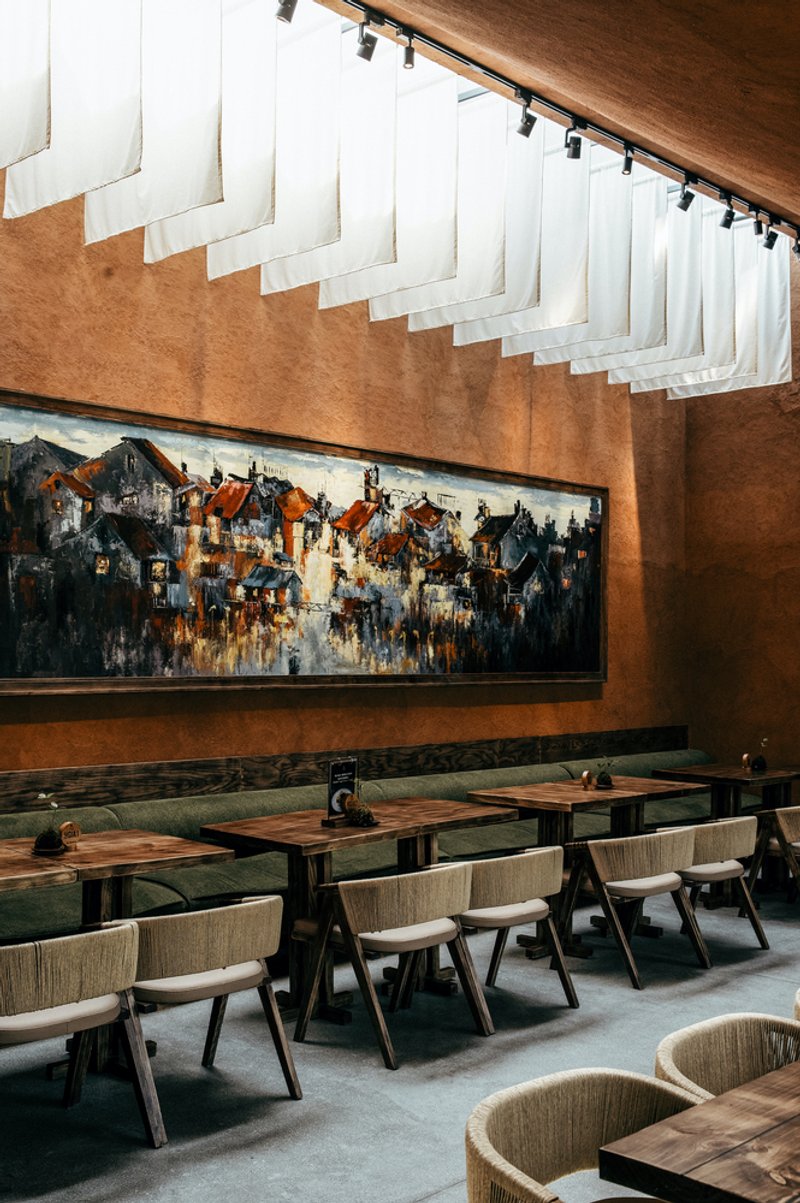
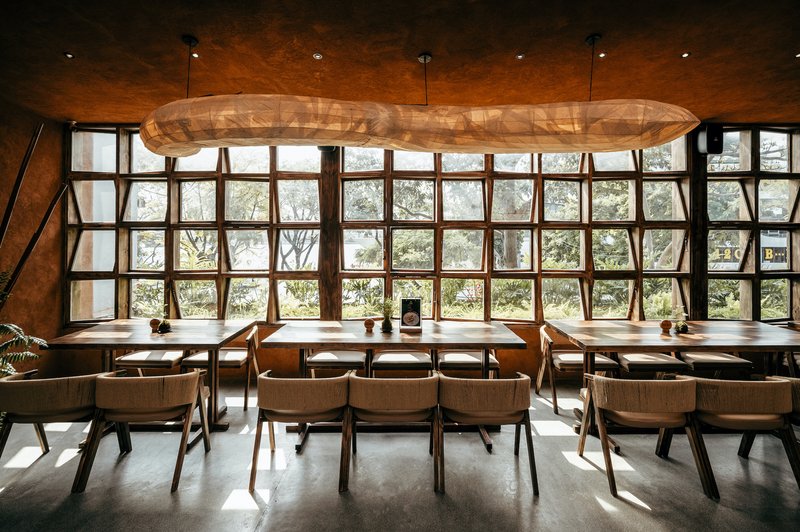
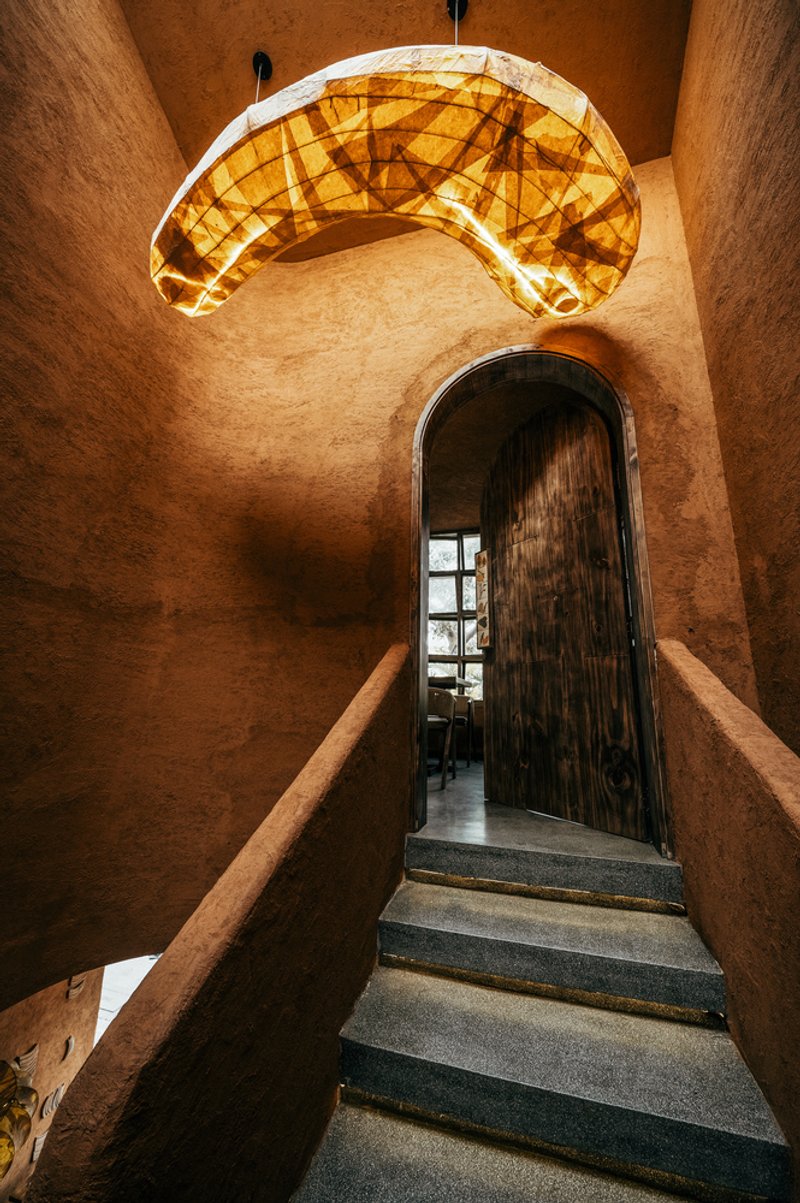
On the upper level, large glass windows divided into smaller panes allow additional daylight to filter through. To prevent excessive glare, a strategically placed light well, combined with hanging fabric panels, diffuses sunlight, creating a soft and inviting interior environment. This approach reflects the sensitivity of traditional Vietnamese architecture, which often prioritizes natural ventilation and passive cooling strategies.
Materiality and Craftsmanship: A Nod to Vietnamese Heritage
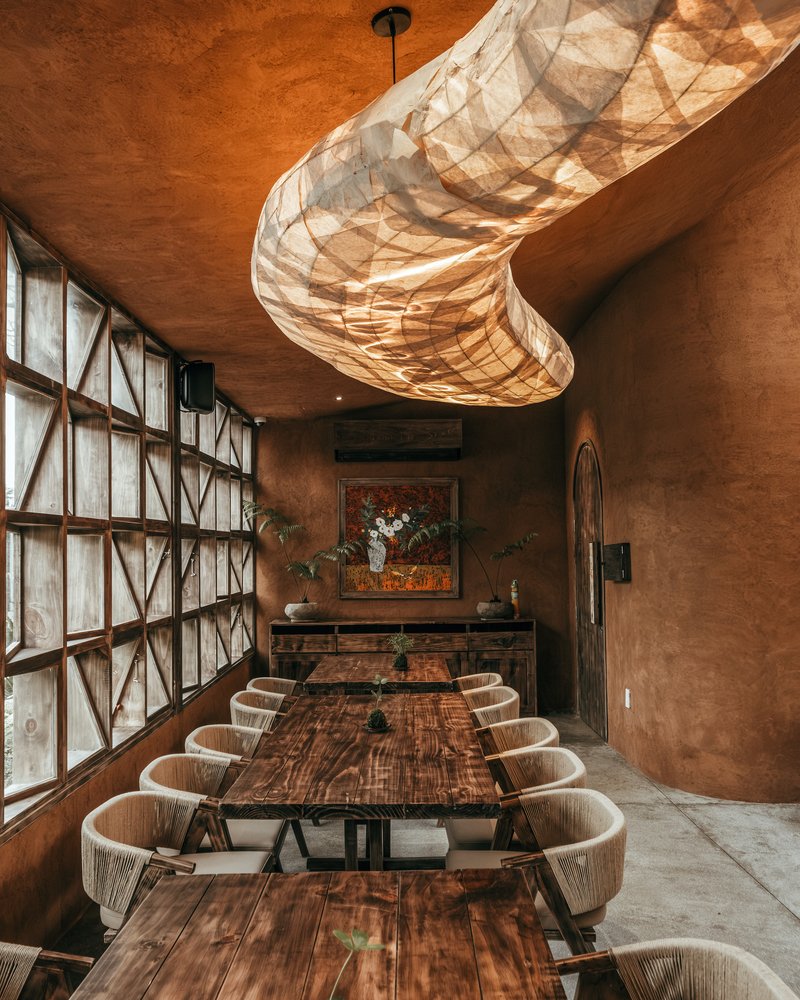
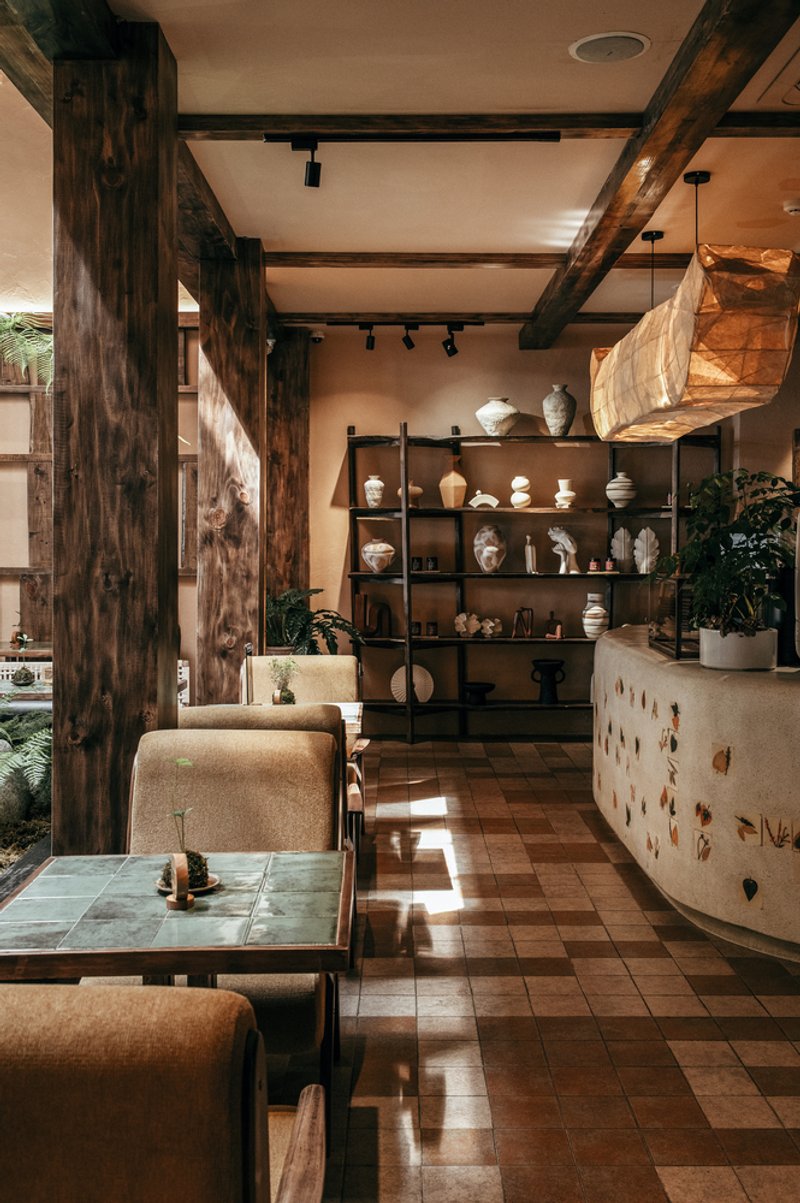
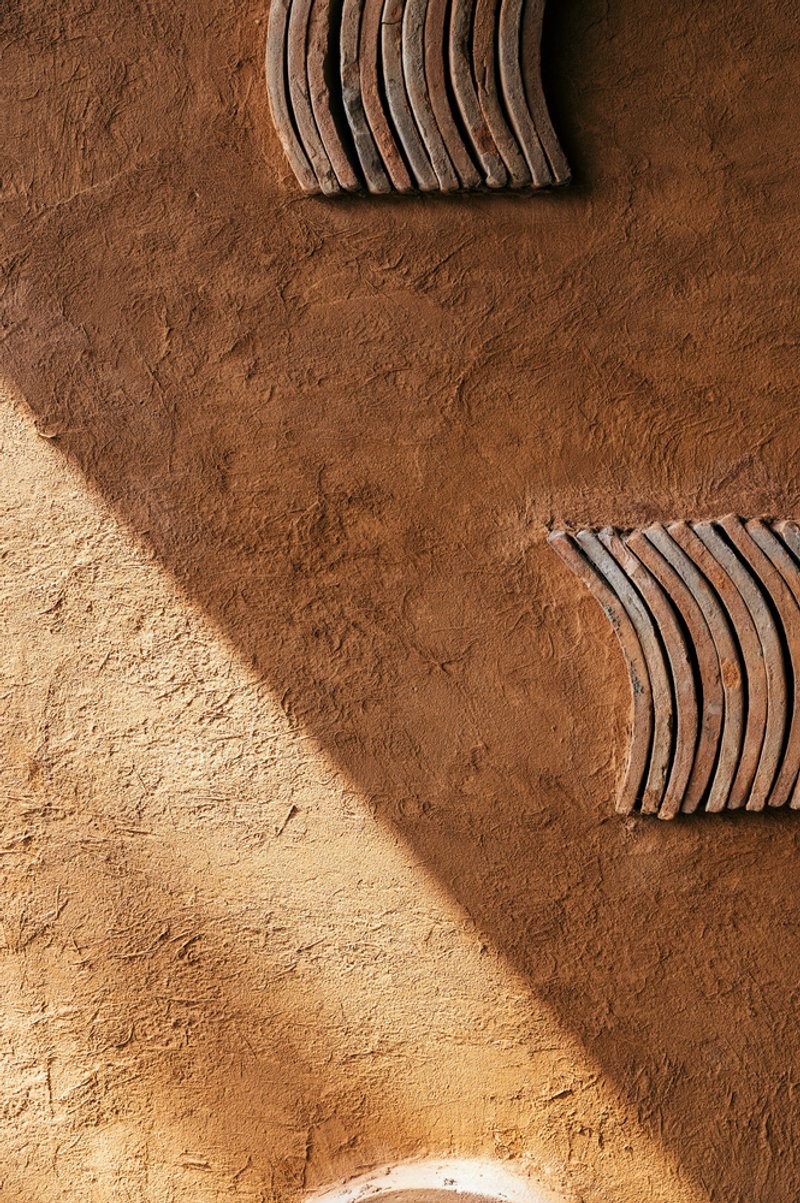
The interior design of ThiLa Bistro & Café is a tribute to Vietnam’s rich artisanal heritage. The walls are coated with a handmade plaster mixture of brown paint and straw, reminiscent of the earthen walls commonly found in historic Vietnamese homes. This tactile finish enhances the rustic charm of the space while reinforcing the project’s dedication to authenticity.
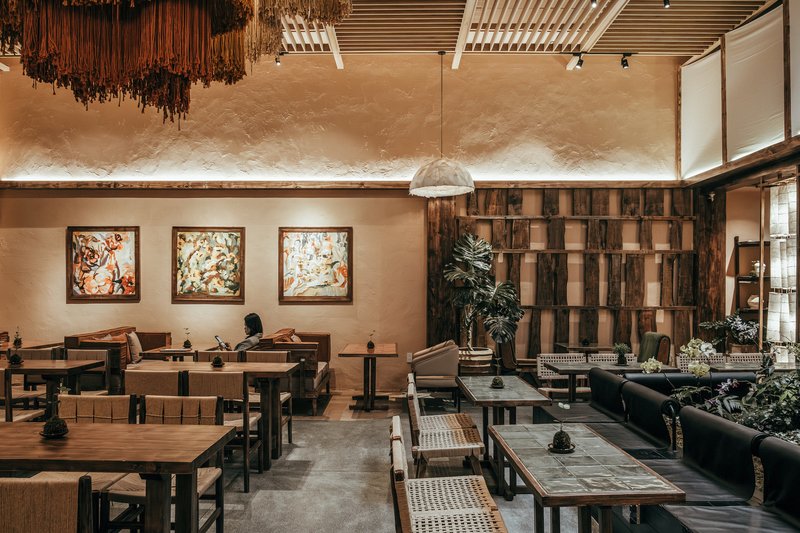
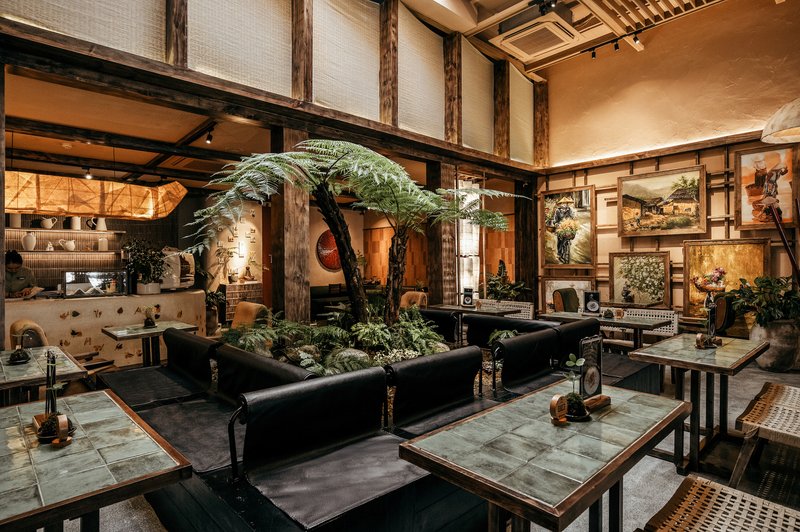
The flooring combines polished stone with handcrafted cement tiles, echoing the craftsmanship of Vietnamese artisans. Hand-painted ceramic tiles and locally sourced artworks further enrich the visual experience, offering an immersive cultural journey for visitors. Lighting elements are crafted from giay do, a traditional Vietnamese handmade paper known for its durability and delicate texture. Historically used for calligraphy, lanterns, and folk paintings, this material reinforces the connection between past and present in a subtle yet impactful manner.
A Harmonious Blend of Nostalgia and Modernity
ThiLa Bistro & Café achieves a delicate balance between nostalgia and modernity. The furniture selection plays a crucial role in this interplay, with wooden furnishings featuring woven paper accents to enhance the organic, handcrafted aesthetic. Each design detail, no matter how subtle, has been carefully curated to evoke a sense of nostalgia for local guests while providing an enriching cultural experience for international visitors.
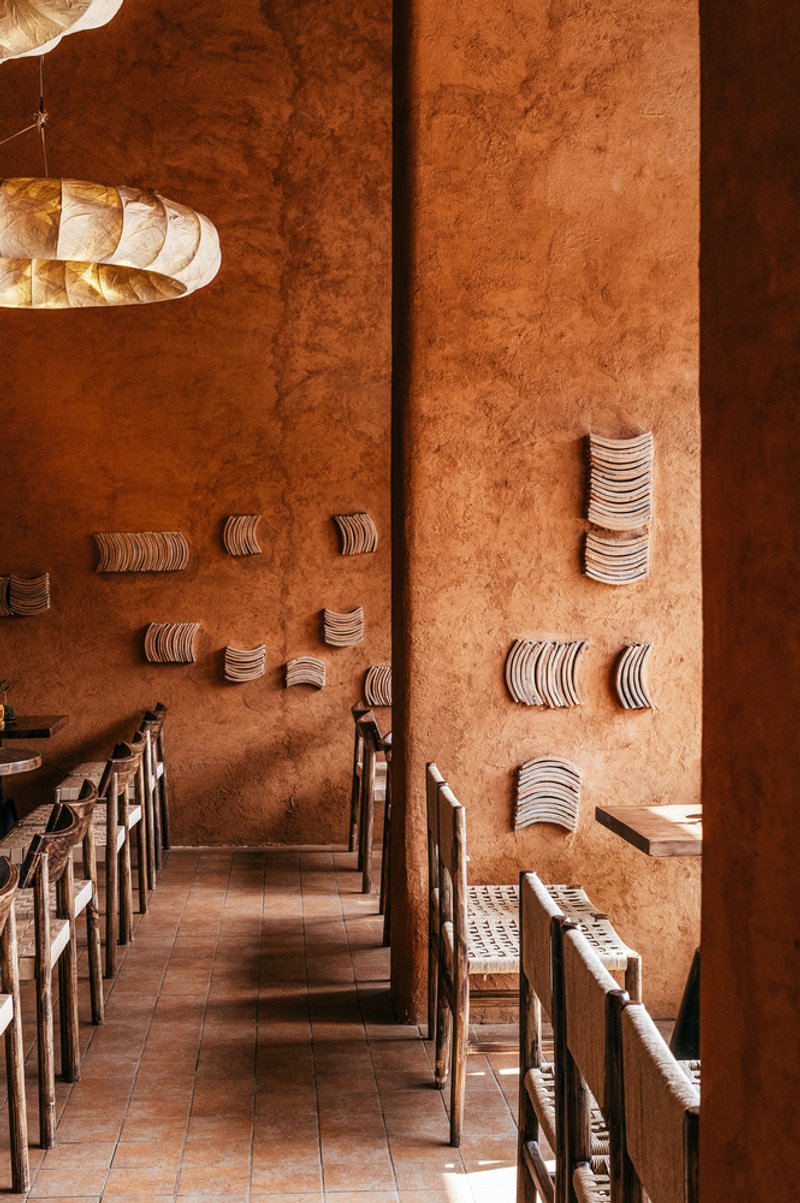
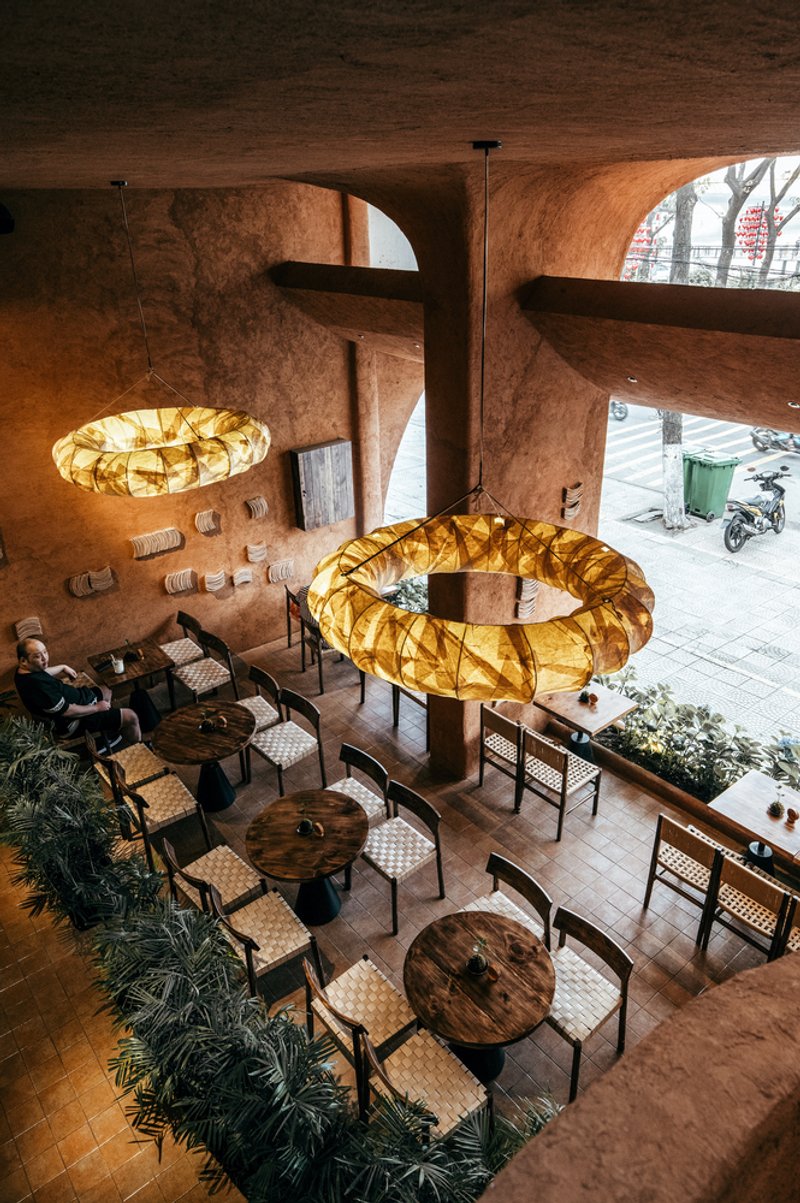
Despite its deep-rooted traditional influences, the spatial layout adheres to contemporary design principles, offering a seamless blend of openness, functionality, and visual coherence. The restaurant is not merely a dining space but an architectural narrative that bridges historical references with modern aspirations.
Preserving Tradition Through Contemporary Design
ThiLa Bistro & Café stands as a testament to the enduring influence of traditional Vietnamese architecture in modern design. By thoughtfully integrating historical elements with contemporary materials and spatial strategies, the project redefines the role of heritage in a rapidly evolving urban context. The result is a space that not only serves as a culinary destination but also as a cultural landmark, inviting guests to step into a world where the past and present coexist in perfect harmony.
All Photographs are works of Nguyen Dang Hieu




Popular Articles
Popular articles from the community

Treehouse Apartment: A Warm Timber Interior Blending Craft, Play, and Contemporary Living
Warm timber apartment with integrated treehouse, combining natural materials, craftsmanship, and playful design to create a flexible, family-oriented living environment.
Louis Malle Cinema: A Limestone Cultural Landmark Revitalizing Community Life in Prayssac
Limestone cinema extension with public forecourt, blending heritage and modern design to create flexible cultural spaces and strengthen community interaction.
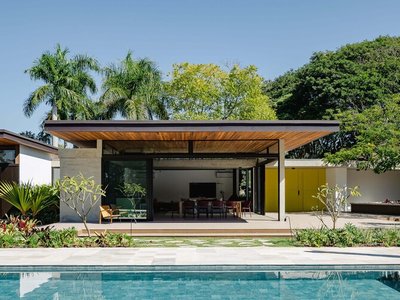
Flamboyant House by Juliana Camargo + Prumo Projetos
Modern Brazilian house integrating existing tree, pool, and volumes with glass, wood, and transitional spaces blending interior, exterior, and landscape seamlessly.

On the Brooks House by Monsoon Collective – A Contemporary Kerala Home Rooted in Tradition
Kerala home blending tradition and modernity with water-inspired design, brick architecture, courtyard planning, and sustainable rainwater harvesting strategies.


Similar Reads
You might also enjoy these articles


Top 15 Architecture Competitions to Enter in 2026
From student-friendly idea competitions to prestigious international awards, here are the best architecture competitions open for entries in 2026. Updated regularly.

DIY & Engineering in Computational Design : Enter the BeeGraphy Design Awards
Showcase Your Creativity with Computational Design and Open Source Projects
Innovative Design Solutions: Award-Winning Projects from Recent Architecture Competitions
Exploring award-winning architectural projects shaping the future of design, sustainability, and community.



Explore Architecture Competitions
Discover active competitions in this discipline




The International Standard for Design Portfolios


The Global Benchmark for Architecture Dissertation Awards


The Global Benchmark for Graduation Excellence


Challenge to reimagine the Iron Throne
Comments (0)
Please login or sign up to add comments
No comments yet. Be the first to comment!