
Tibdewal Weekend Home by Studio Dot – A Harmonious Blend of Architecture and Landscape
Tibdewal Weekend Home by Studio Dot harmonizes with nature through curving basalt walls, Catalan vaults, and lush garden integration.

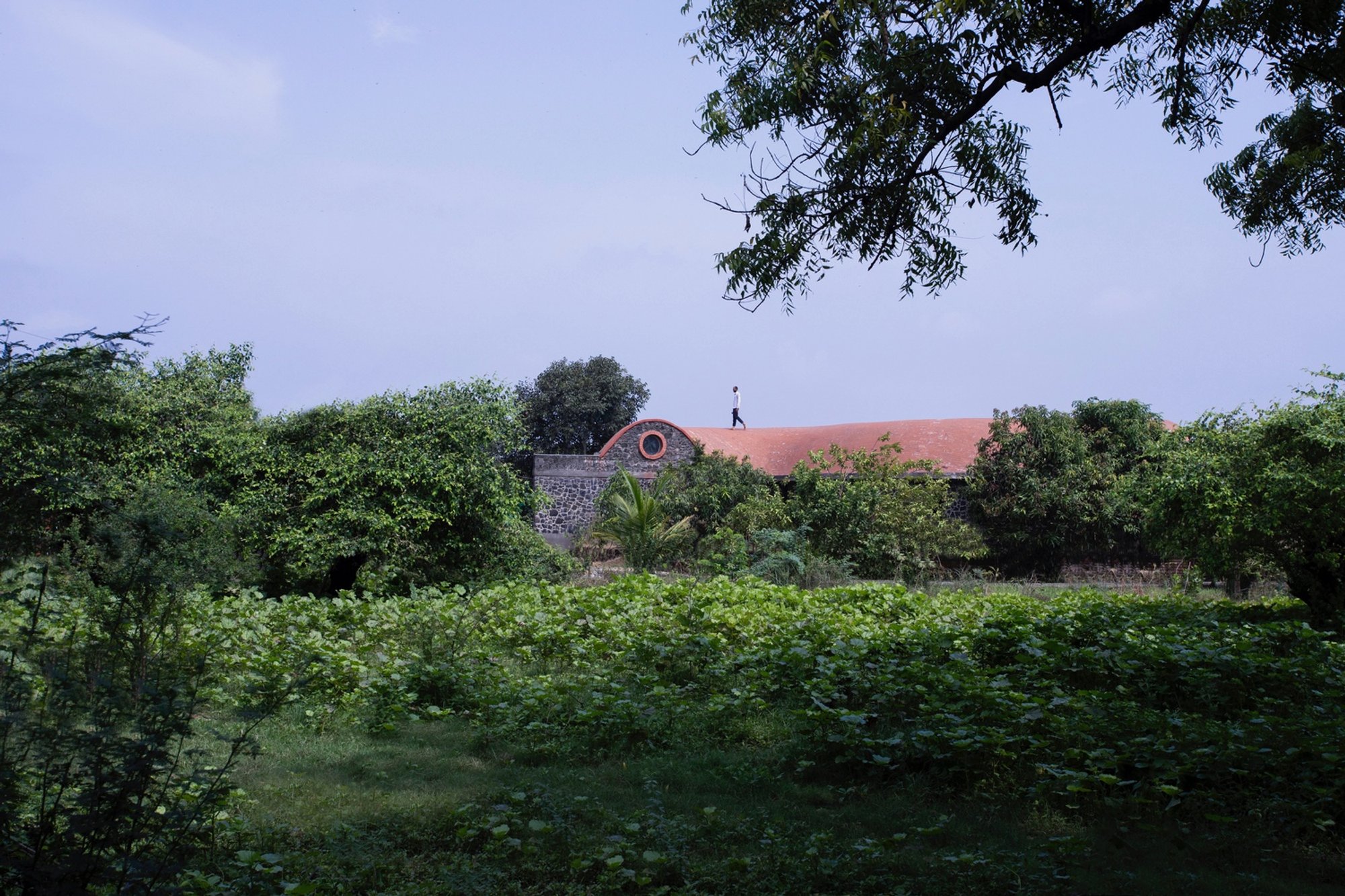
Nestled on the serene outskirts of Bharuch, India, the Tibdewal Weekend Home by Studio Dot is a poetic architectural retreat that embraces nature rather than imposing upon it. Designed by Ar. Satya Vaghela, this 1400-square-foot residence serves as a weekend escape for a family seeking calm amidst lush greenery and mature fruit-bearing trees.
Architecture Rooted in the Land
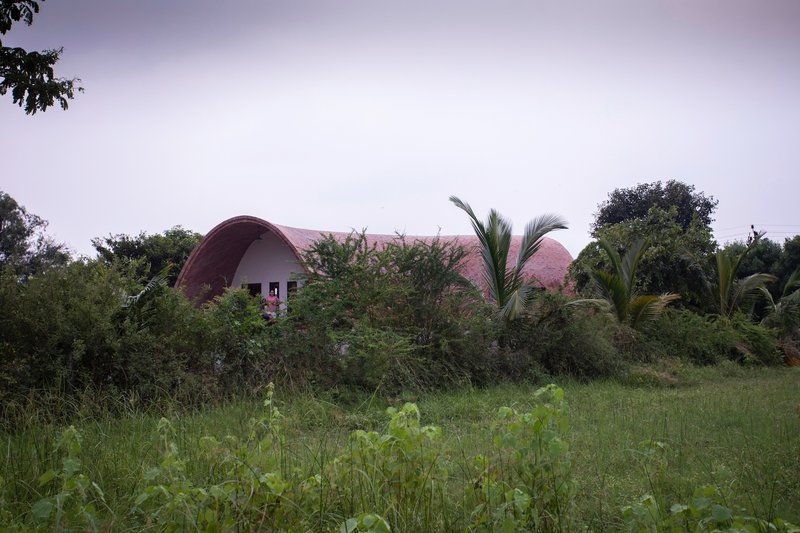
The site came with an existing orchard of mango, chickoo, and jamun trees—elements that shaped the architectural narrative from the very beginning. Rather than clearing the site, the architects chose to design around the trees, crafting a curvilinear plan that flows with the land. The house unfolds as an organic form—a seamless blend of structure and landscape, where nature becomes both boundary and backdrop.c
Design Concept and Spatial Flow
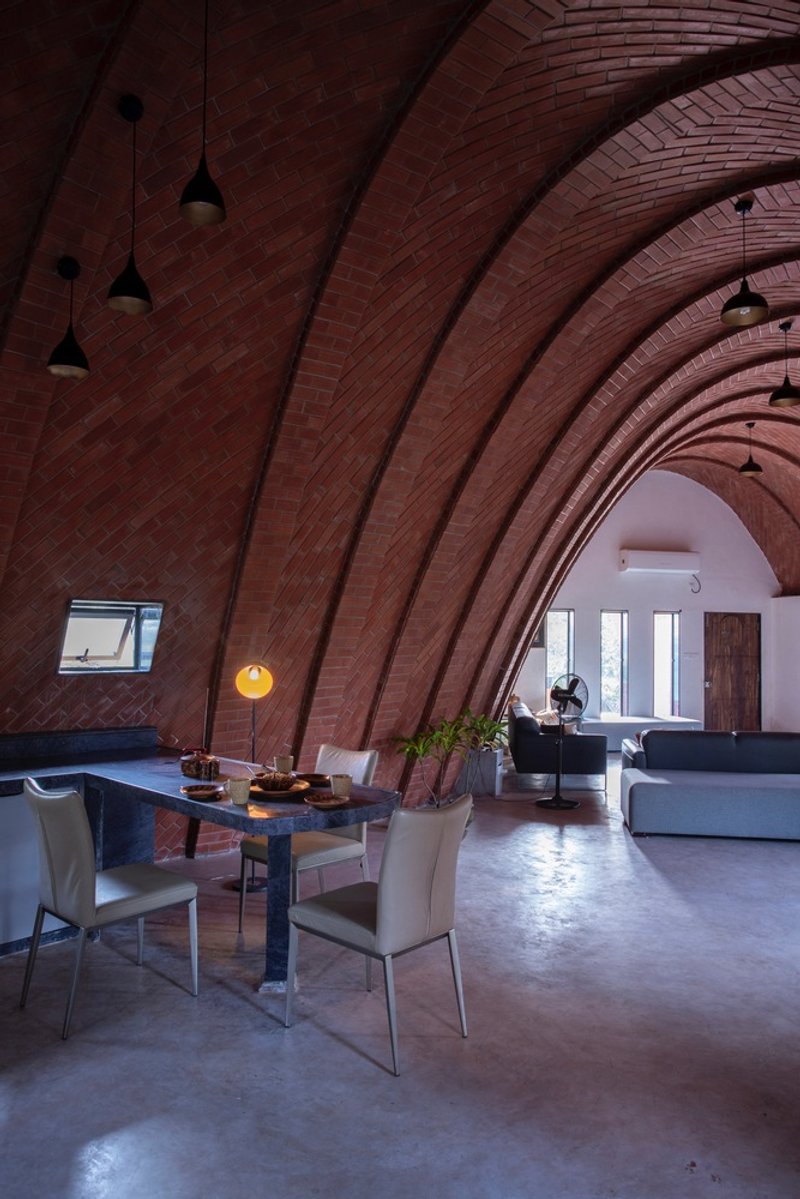
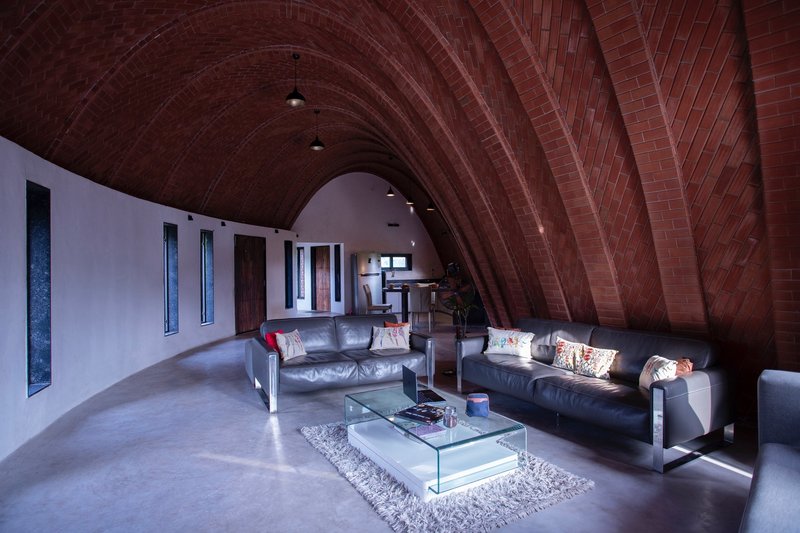
At its heart, Tibdewal Weekend Home is about simplicity, connection, and continuity. The plan is deliberately compact, consisting of a single bedroom and a large open living-dining-kitchen area. This openness encourages interaction and reflects the client’s social lifestyle—hosting friends, family, and spontaneous gatherings.
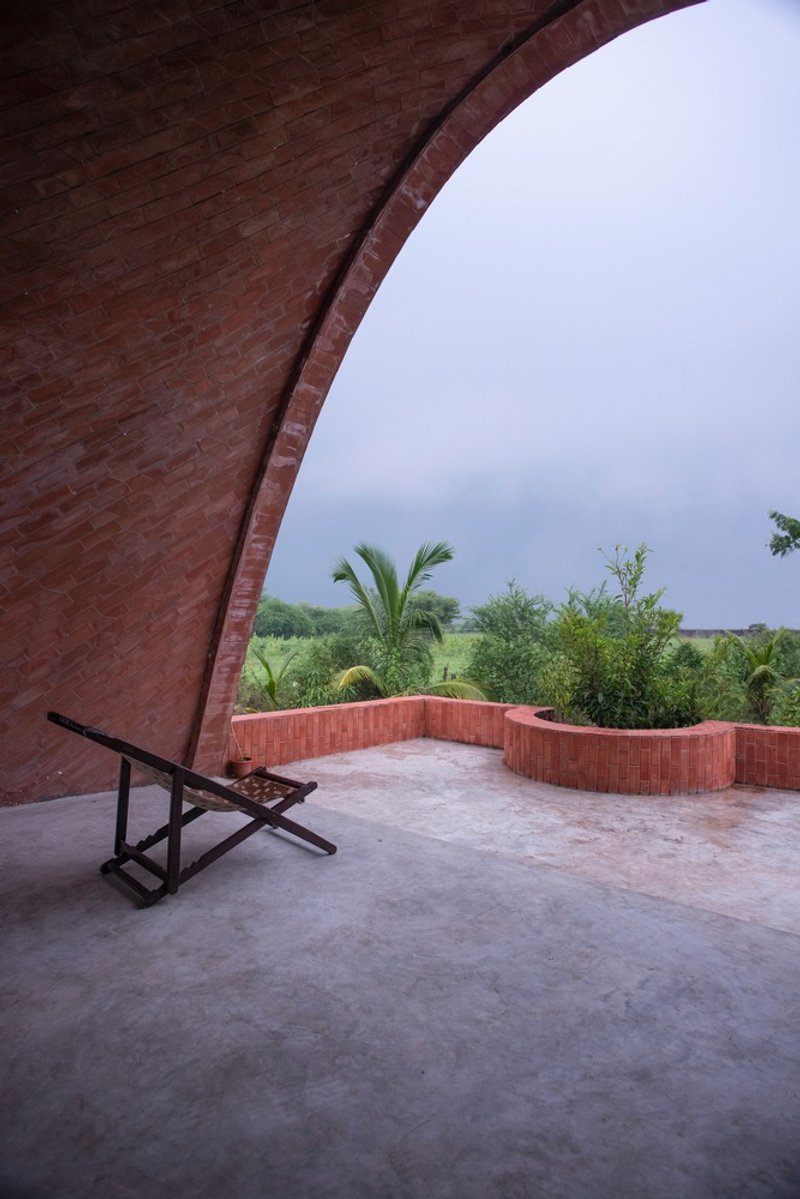
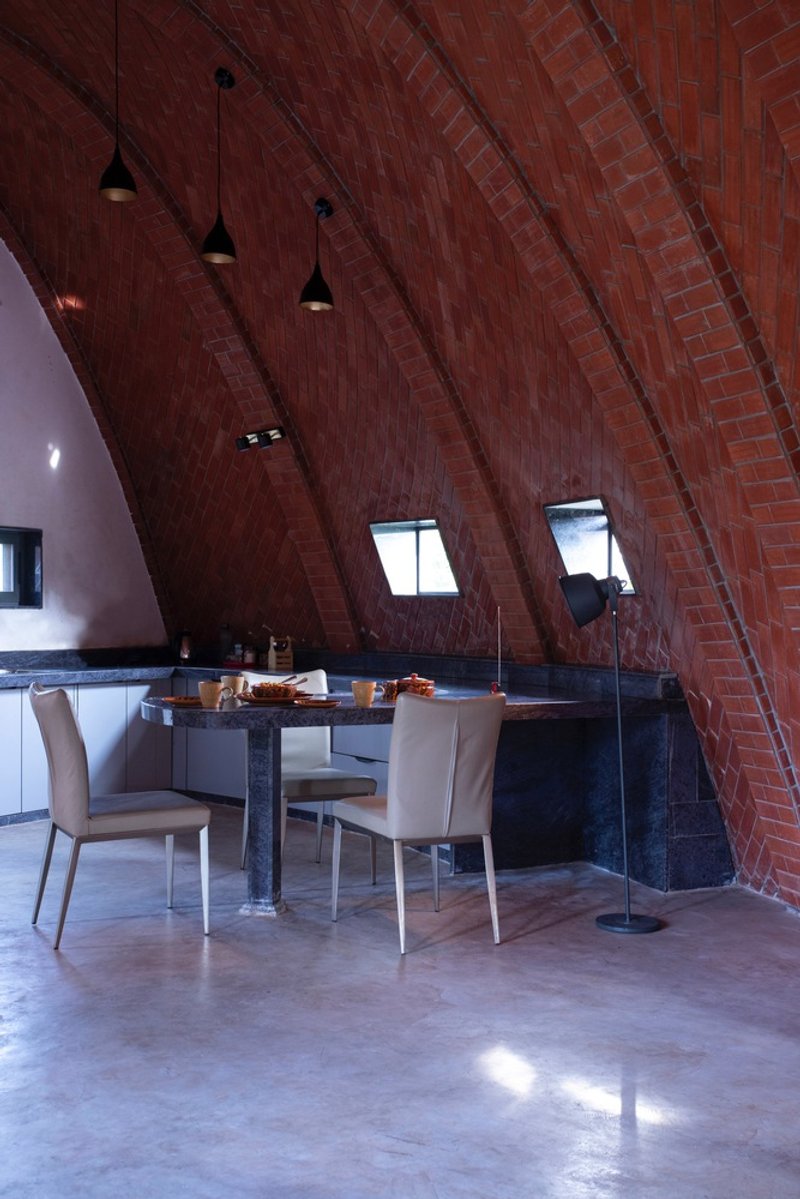
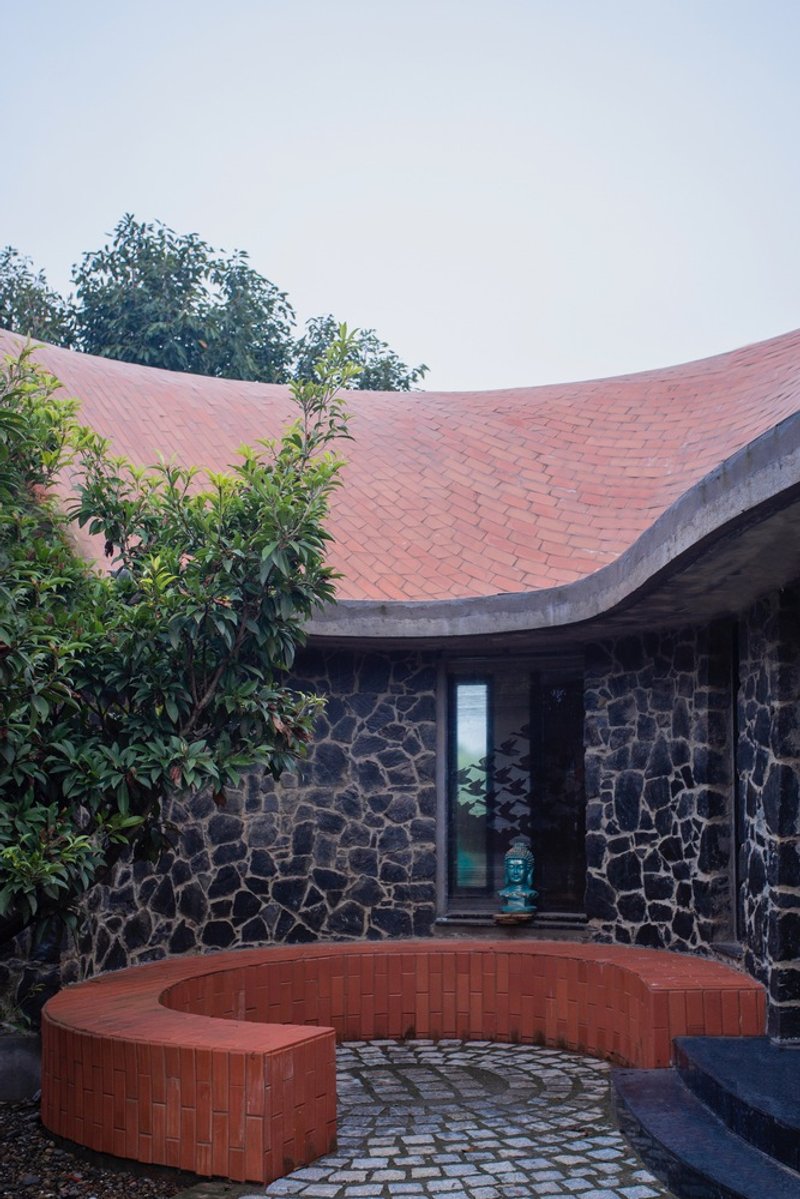
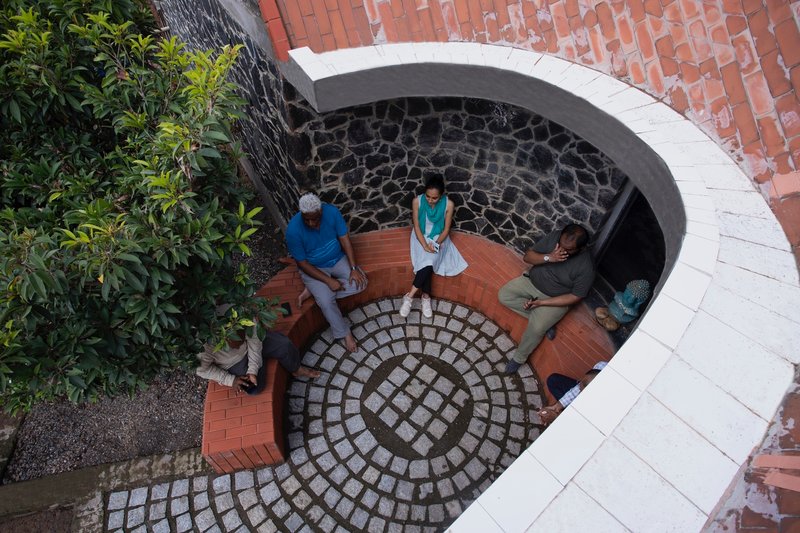
A raised garden court extends from the dining space, creating a tranquil transition between the indoors and the landscape. With built-in seating nooks, it doubles as a social hub and a meditative corner, connecting residents directly with the surrounding trees.
Material Expression and Craftsmanship
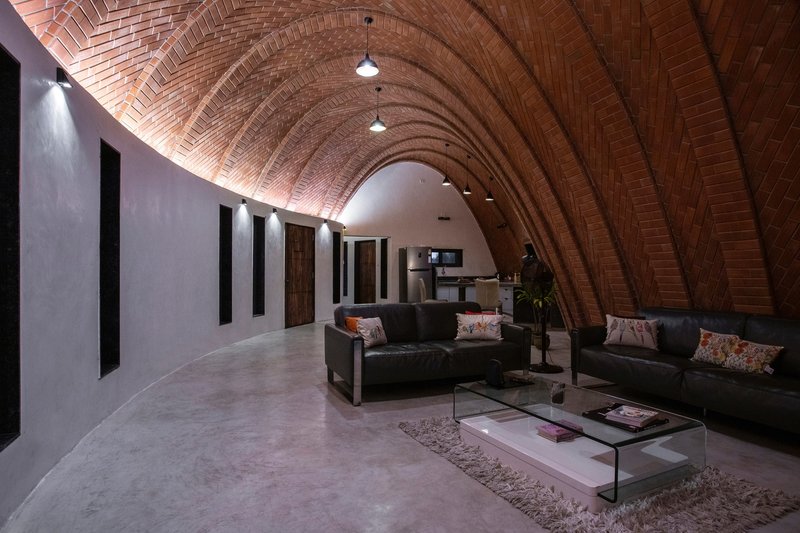
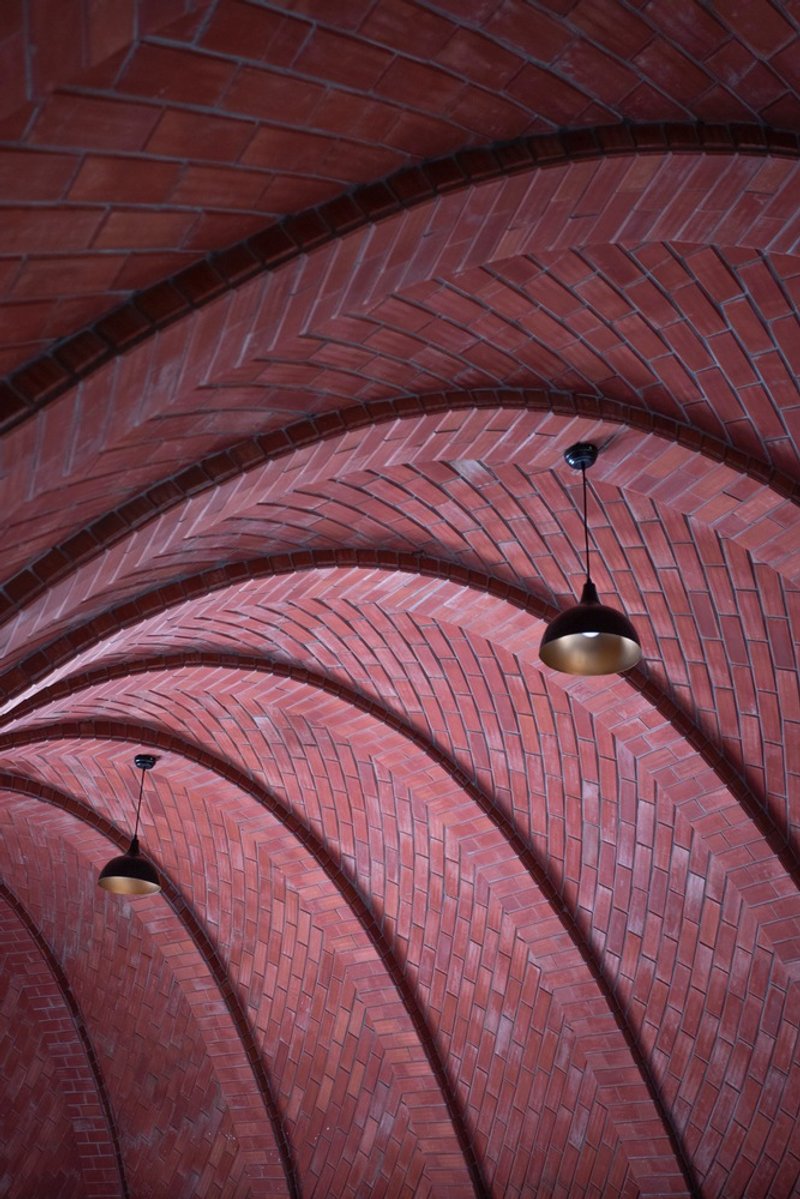
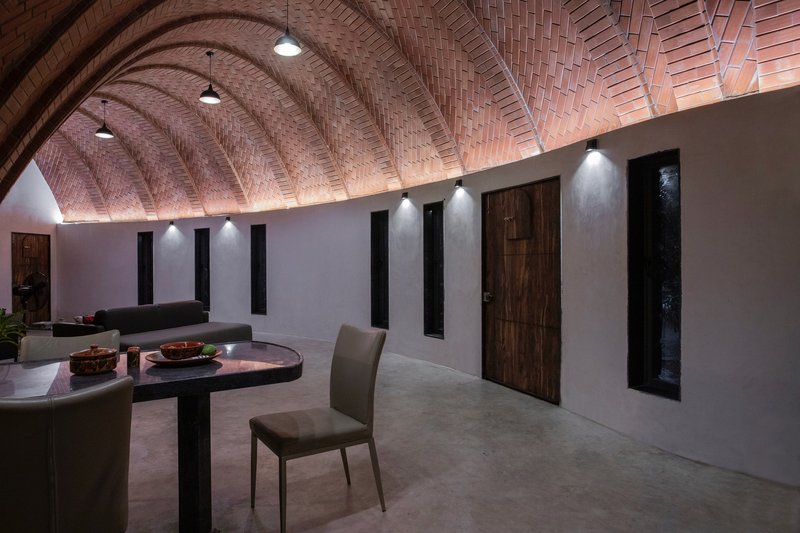
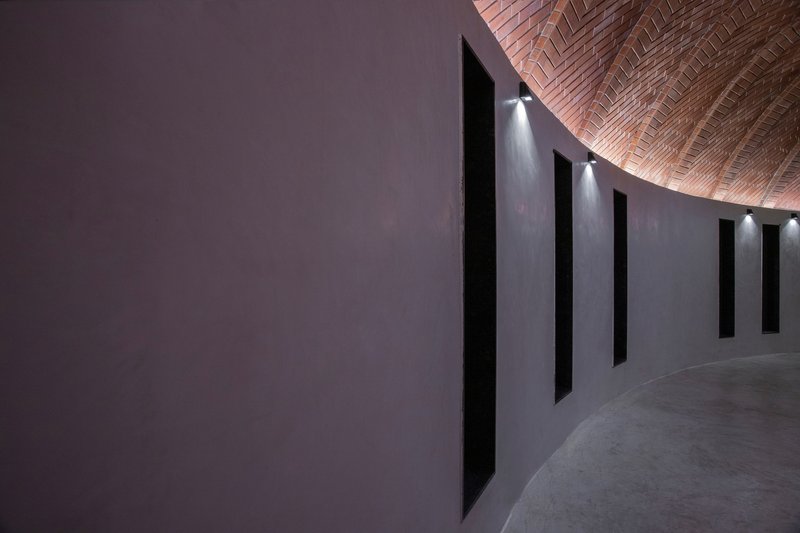
The architecture celebrates regional materials and traditional craftsmanship. The home is defined by its Catalan-tile vaulted roof, a curving shell that rises gracefully before meeting thick basalt rubble walls. The juxtaposition of the smooth, rhythmic vault with the raw, hand-laid stone walls captures a balance between lightness and permanence.
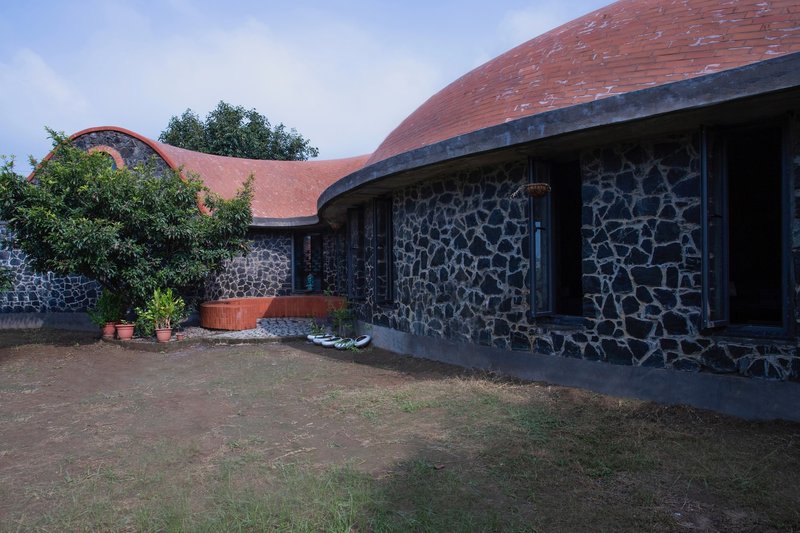
Each Catalan tile was carefully placed by skilled artisans, forming a structural and aesthetic gesture of precision and artistry. The lime concrete flooring continues this handcrafted ethos—polished yet natural, reflecting the home’s tactile honesty.
A Dialogue Between Inside and Outside
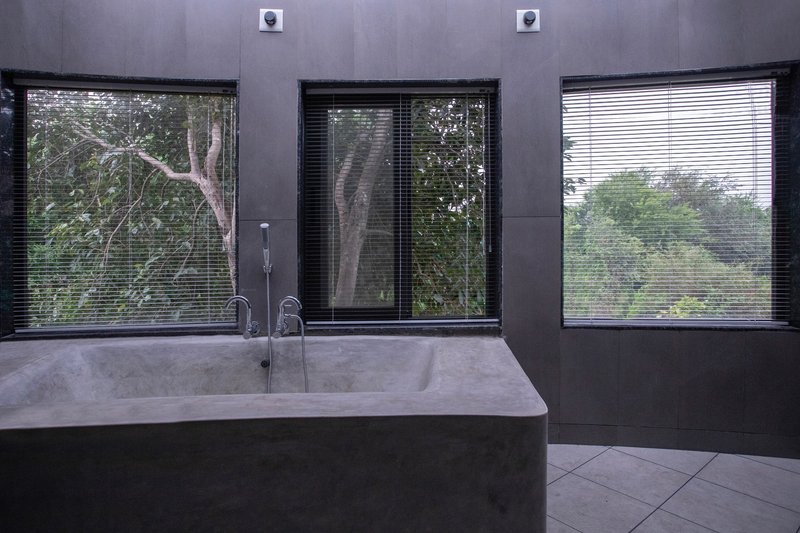
Despite its modest size, the house feels expansive. The curved walls and vaulted ceilings soften the edges of the rooms, dissolving the boundaries between inside and outside. Natural light seeps in gently, illuminating textured surfaces and casting ever-changing patterns across the interiors.
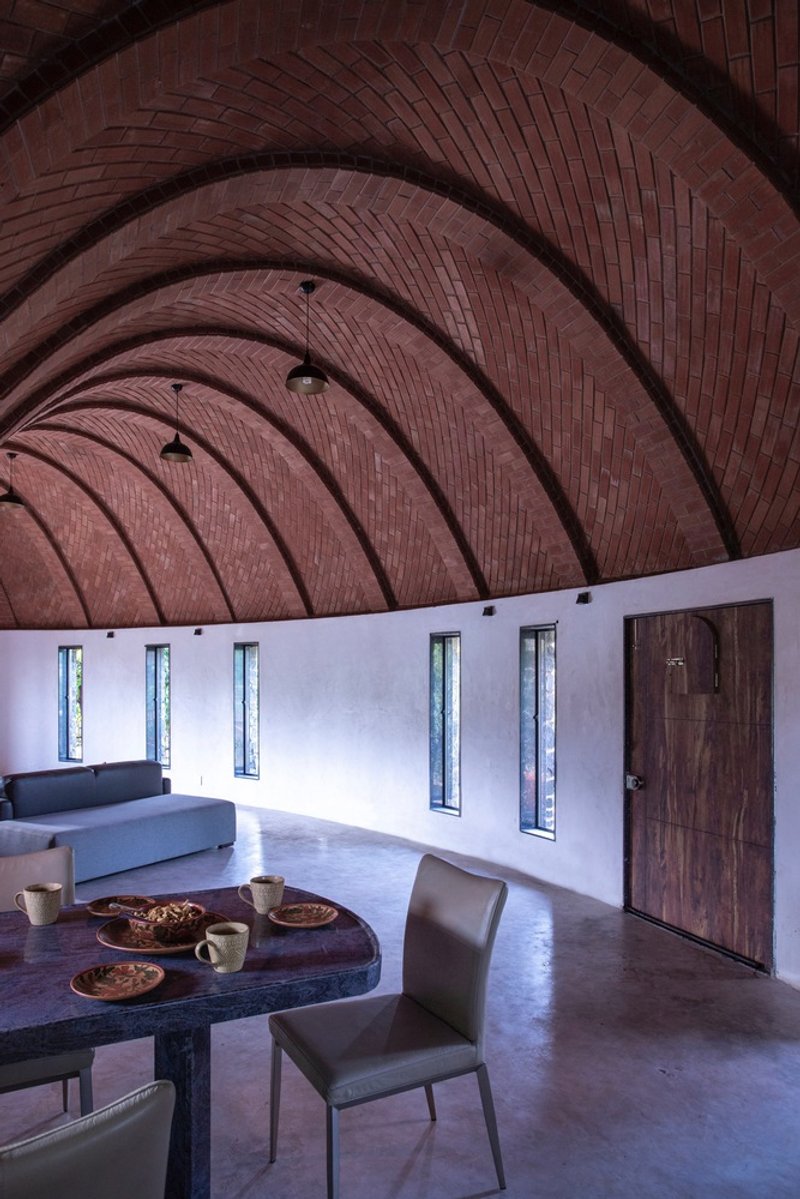
The design encourages slowness—a space where time feels suspended, where morning light, evening shadows, and rustling leaves shape the rhythm of living. Here, architecture doesn’t dominate the land—it becomes part of its ecosystem.
Sustainable and Contextual Living
Built with locally sourced materials and traditional techniques, the Tibdewal Weekend Home demonstrates a deep respect for the environment. Its form responds to the climate of Gujarat, ensuring thermal comfort while minimizing energy use. The use of natural ventilation, shaded outdoor spaces, and minimal mechanical intervention reflects a sustainable architectural philosophy rooted in place.
Conclusion
Studio Dot’s Tibdewal Weekend Home is not merely a structure—it’s a living dialogue between craft, nature, and architecture. It stands as a reminder that meaningful design is not about grandeur but about harmony, restraint, and the poetic union of the built and the grown.
All the photographs are works of Nikhil Patel




Popular Articles
Popular articles from the community


The Ken Roberts Memorial Delineation Competition (Krob)
As the most senior architectural drawing competition currently in operation anywhere in the world, it draws hundreds of entries each year, awarding the very best submissions in a series of medium-based categories.


Gads Hill Early Learning Center by JGMA: Adaptive Reuse Shaping Community-Focused Educational Architecture
Adaptive reuse transforms fragmented structure into vibrant early learning center with playful façade, natural light, and community-focused sustainable design.



Solar Steam: A Climate-Responsive Architecture That Redefines the Monument
A climate-responsive memorial architecture that transforms heat, decay, and time into a living system reflecting humanity’s ecological impact.

Similar Reads
You might also enjoy these articles
The Ken Roberts Memorial Delineation Competition (Krob)
As the most senior architectural drawing competition currently in operation anywhere in the world, it draws hundreds of entries each year, awarding the very best submissions in a series of medium-based categories.


Waterfront Redevelopment and Urban Revitalization in Mumbai: Forging a New Dawn for Darukhana
A transformative waterfront redevelopment project reimagining Darukhana’s shipbreaking heritage into an inclusive urban future.

OUT-OF-MAP: A Call for Postcards on Feminist Narratives of Public Space
Rhizoma Design and Research Lab invites artists, designers, architects, researchers, and students to reflect on how feminist perspectives can reshape public space. Selected works will be exhibited in Barcelona, October 2026. Submissions open until 15 April 2026.


Documentation Work on Buddhist Wooden Temple
Architectural syncretism and cultural hybridity: A comparative study of the Buddhist temples in Chattogram Hill tracks


Explore Architecture Competitions
Discover active competitions in this discipline




The International Standard for Design Portfolios


The Global Benchmark for Architecture Dissertation Awards


The Global Benchmark for Graduation Excellence


Challenge to reimagine the Iron Throne
Comments (0)
Please login or sign up to add comments
No comments yet. Be the first to comment!