
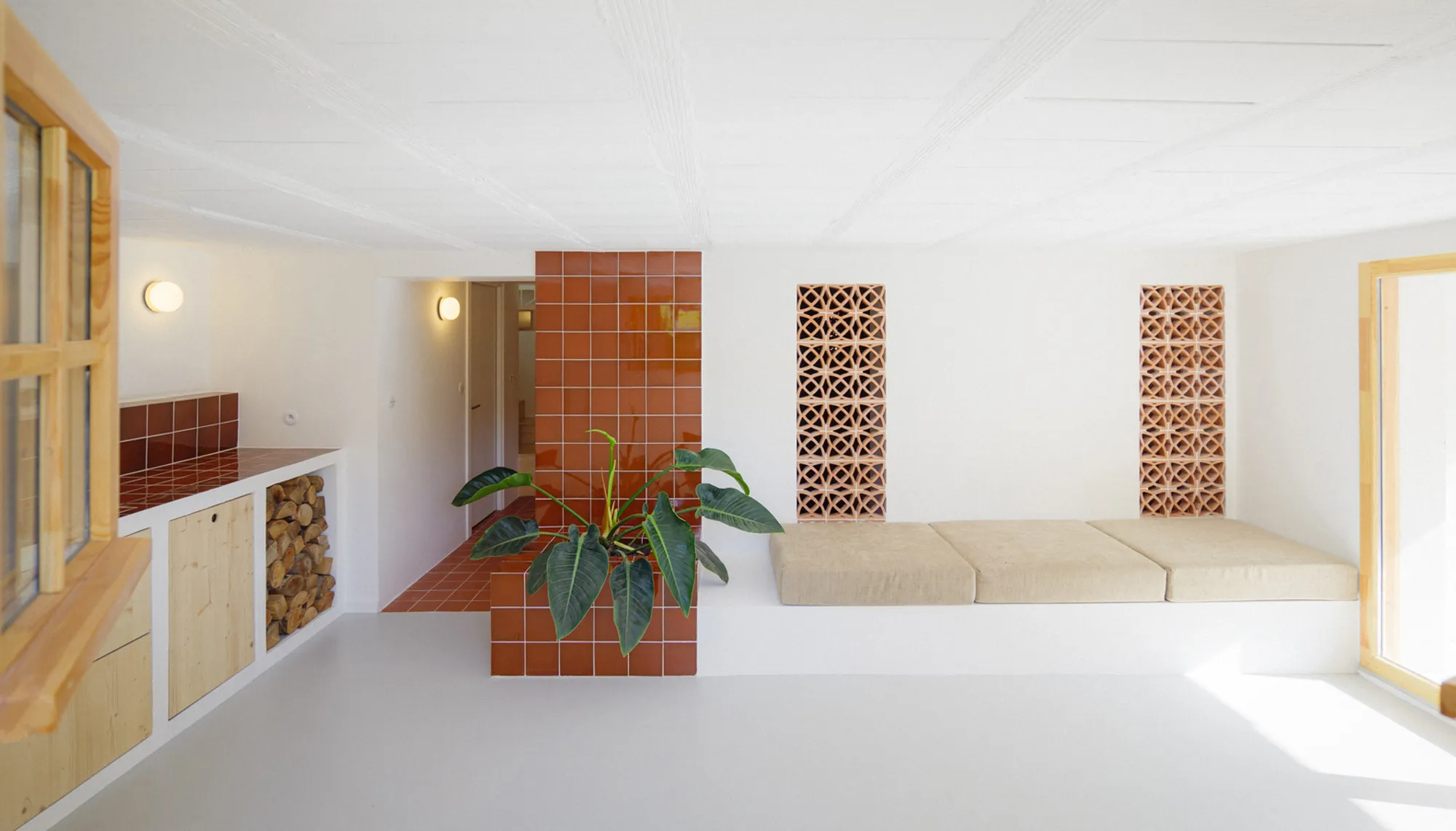
Tintoretto House: A Mediterranean-Inspired Interior Rehabilitation by Symbiose Interior Architecture & Design
Mediterranean-inspired renovation with organic forms, arched thresholds, warm wood, and terracotta elements creating fluid, light-filled, contemporary interior spaces.


The Tintoretto House Rehabilitation in Saint-Cyprien, France, redefines contemporary Mediterranean living through a sensitive transformation led by Symbiose Interior Architecture & Design. Completed in 2022 and spanning 135 m², this project blends organic forms, natural materials, and regional architectural traditions to create a warm, immersive domestic environment. Photographed by Lucille Descazaux, the home stands as a testament to craftsmanship, spatial fluidity, and timeless design ethos.

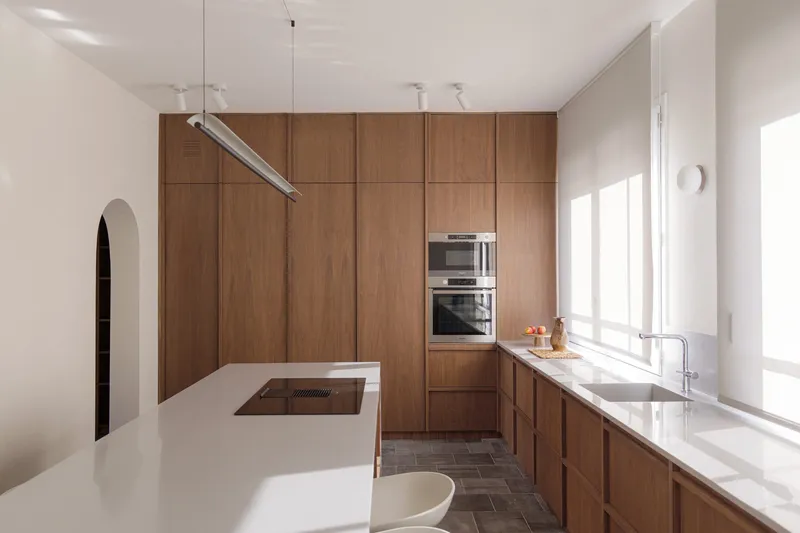
A Contemporary Interpretation of Mediterranean Heritage
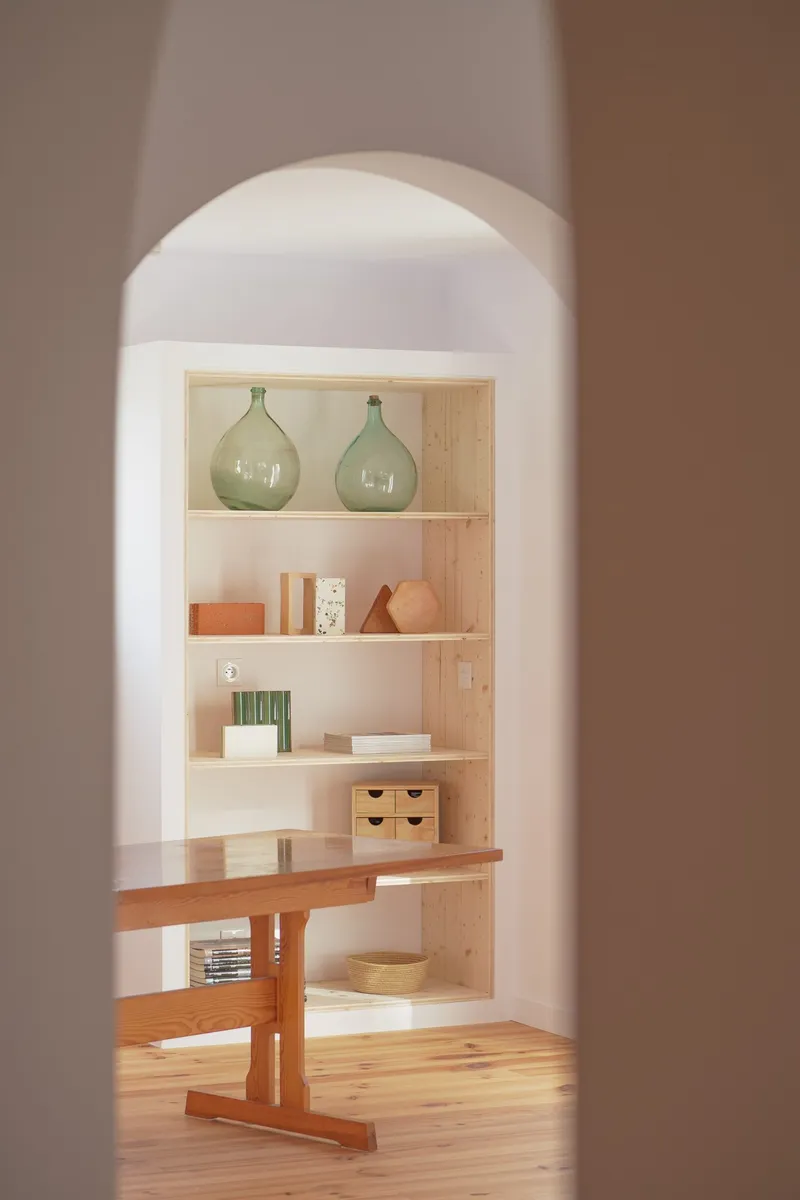
The design draws heavily from the Mediterranean spirit that characterizes the region. Rather than recreating traditional motifs, the architects reinterpret familiar elements—arched passages, sculptural columns, masonry textures, and terracotta accents—to establish a contemporary yet grounded spatial identity. The interiors foster a strong relationship with nature, achieved through tactile materiality and softly curved geometries that evoke the landscapes and architecture of Southern Europe.
This approach results in a home that feels intrinsically connected to its environment while maintaining a refined, modern character. Organic forms and natural light guide the circulation, offering a living experience rooted in tranquillity and authenticity.


Fluid, Organic Spatial Configuration
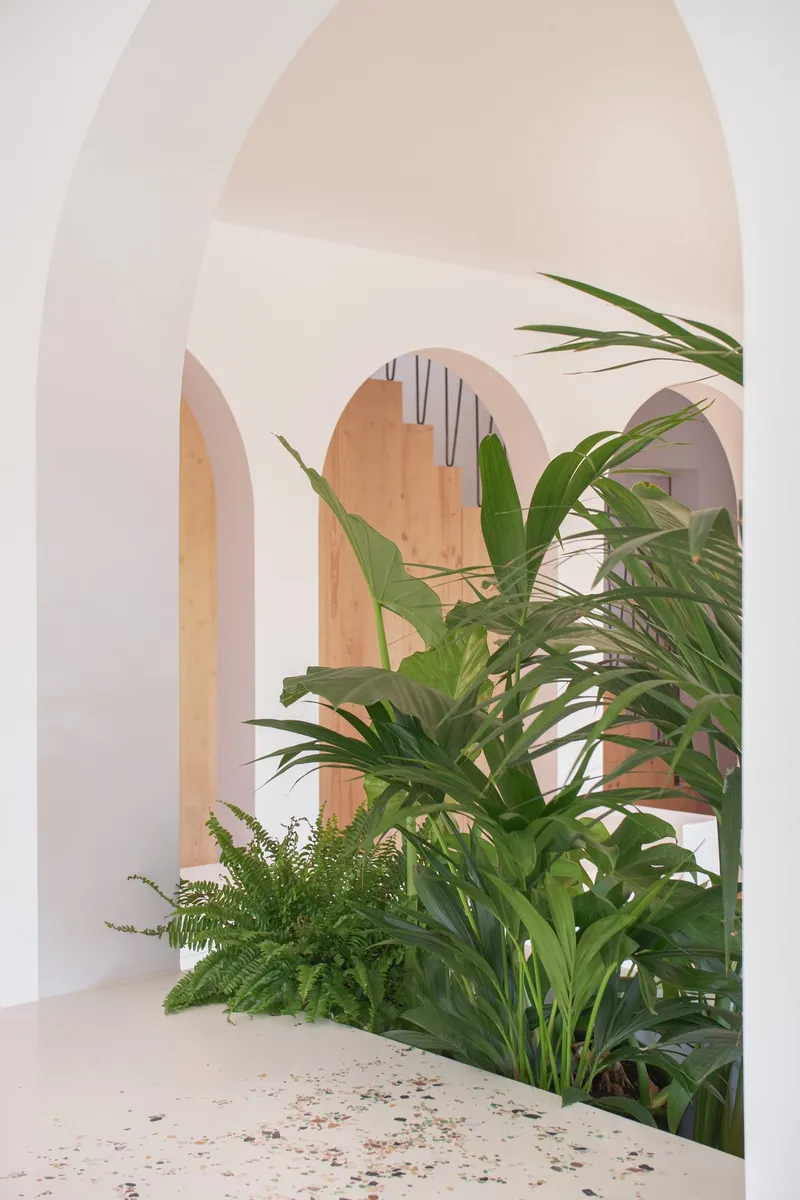
At the core of the rehabilitation is the reimagining of spatial connections. The architects introduce a plan defined by open, permeable zones rather than rigid room divisions. Semi-open spaces unfold progressively, creating a sense of movement and continuity throughout the home.


Materiality Rooted in Craft and Tradition
Materials play a crucial role in narrating the design story. Symbiose Interior Architecture & Design employs a palette influenced by Mediterranean craftsmanship, choosing surfaces and textures that age gracefully and invite touch.
Key material features include:
- Warm wood surfaces that bring softness and continuity
- Terracotta sun breaks casting dynamic patterns of light
- Custom masonry planters integrating greenery into the architecture
- Ceramic and stone elements sourced from manufacturers such as Ceràmica Ferres, Huguet, and Roca
These elements pay homage to regional building traditions while elevating them through contemporary detailing. The sculptural staircase railing, for instance, echoes artisanal fabrication methods but is reinterpreted with modern refinement.
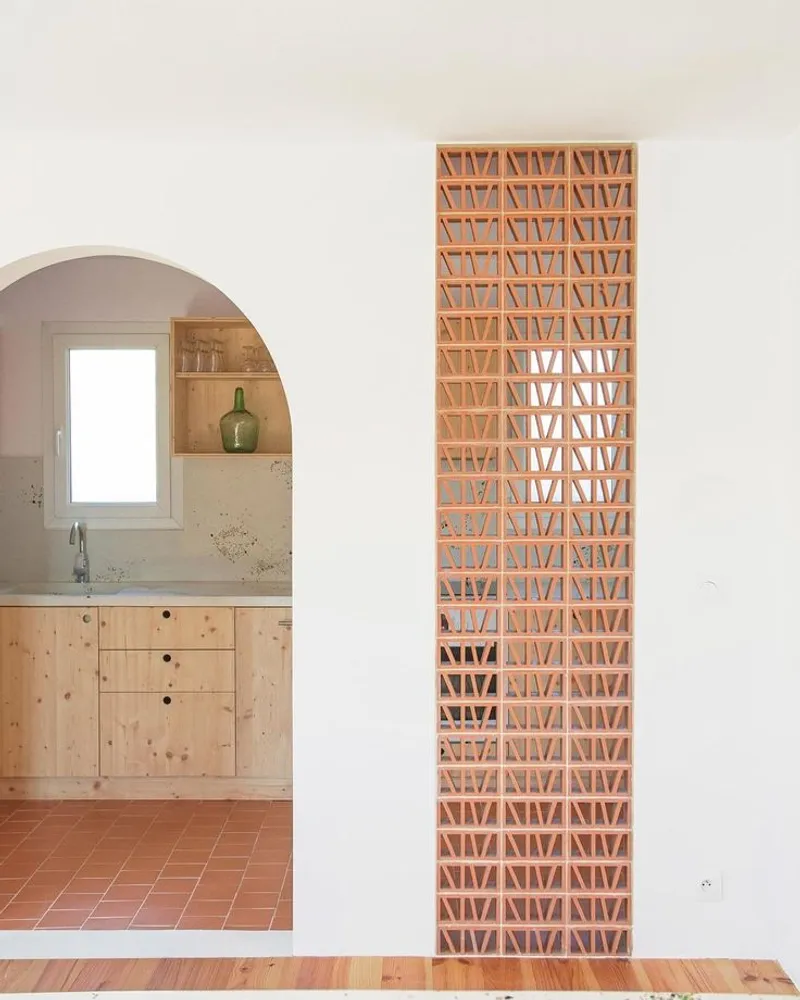
A Home That Blurs Boundaries
The overall design intent is to dissolve the boundaries between spaces, functions, and sensorial experiences. By prioritizing fluidity, openness, and visual continuity, the home becomes a series of interconnected atmospheres rather than isolated rooms. Light, shadow, and material transition shape these atmospheres throughout the day, offering a living experience that evolves with time.
Tintoretto House stands as a model of how interior rehabilitation can renew a space without erasing its roots. Through thoughtful reinterpretation, the project achieves a delicate balance between tradition and modernity, craft and innovation, permanence and organic transformation.


All photographs are works of Lucille Descazaux



Popular Articles
Popular articles from the community

EW PARK: Sustainable Architecture Reimagines the Future of Urban Parking
EW PARK reimagines city parking as a modular wooden tower combining automation, solar energy, electric mobility, and adaptable urban design.

Hill & Cross Opera: Sculptural Opera House Architecture Shaped by Tallinn’s Landscape and Identity
Hill & Cross Opera reimagines opera house architecture in Tallinn through its sculptural hill, civic plaza, glass wave and a luminous cross.

The Musturak Paradise: Senior Living Architecture for a Connected Future in Temara, Morocco
The Musturak Paradise reimagines senior living architecture in Temara via private homes, social spaces, culture, community, and shared care.

Co-Life: Senior Housing Design That Reconnects Older Adults With the City
Co-Life reimagines senior housing design through healing gardens, shared streets, workshops, and a sustainable community across generations.


Similar Reads
You might also enjoy these articles


Hodi-Mandai Geram
Project Function: Preservation and revitalization of the Intangible heritage and socio-spatial identity of the Hodi by Housing, Cultural Memory Center, Sacred Grove, landscape, local tourism economy


Olio Towers: A Mid-Rise for Performers That Fuses Housing, Rehearsal, and Stage
Located blocks from Houston's Theater District, this modular tower stacks living units around a central performance atrium.

Oasis: Modular Green Housing Carved into Dhaka's Urban Fabric
A shortlisted Plugin Housing entry reclaims unauthorized settlements in Dhaka with stepped concrete volumes, green roofs, and ventilation-driven design.

Black Hole: A Floating Megastructure for the Post-Physical Era
Emiliano Mazzarotto envisions a spherical, self-scaling arena where e-sports, digital hotels, and holographic stadiums replace traditional public space.


Explore Architecture Competitions
Discover active competitions in this discipline



Challenge to reimagine the Iron Throne


Photograph architecture without architects


Illustrate the lost glory of Angkor Wat - Render Challenge


Design challenge to reuse E-waste
Comments (0)
Please login or sign up to add comments
No comments yet. Be the first to comment!