
Tjukula Jukurrpa: A Veterinary Clinic and Temporary Habitat for Koalas
Sustainable veterinary clinic and habitat for rehabilitating injured koalas, inspired by indigenous values.


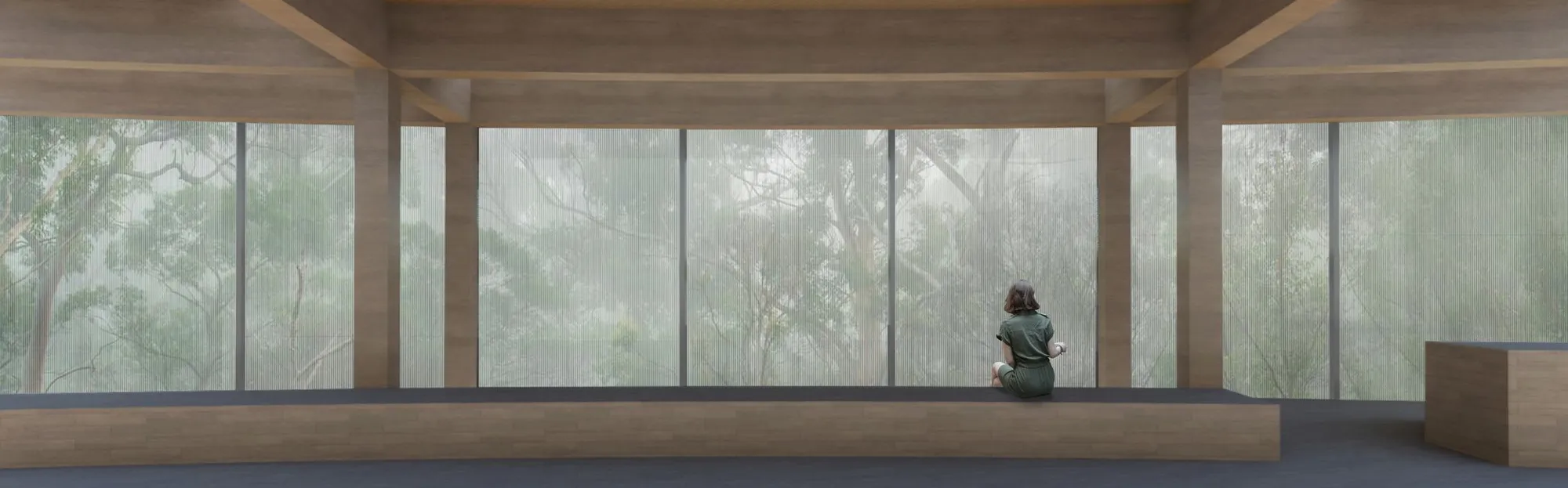
The Tjukula Jukurrpa project is a groundbreaking architectural endeavor designed by Klaudia Trębska, Winner entry of Haven competition. It aims to create a veterinary clinic with a temporary habitat for injured animals, focusing on the rescue and rehabilitation of koalas. The project not only addresses the immediate needs of injured animals but also explores the human impact on natural ecosystems and draws inspiration from indigenous Australian values, specifically the concept of 'Tjukula Jukurrpa' or Dreamtime.

Inspiration
Human activities and industrial expansion in Australia have led to significant loss of natural habitats. Intensive deforestation and frequent bushfires, especially in the eastern part of the continent, have severely impacted native species such as koalas. The Tjukula Jukurrpa project aims to mitigate these effects by providing a safe space for the rehabilitation of injured koalas, enabling their eventual return to the wild.
The project title, 'Tjukula Jukurrpa,' refers to the Aboriginal belief system that defines the relationship between people, plants, animals, and the physical features of the earth. This belief system is deeply rooted in the traditions and culture of the indigenous people who have inhabited Tamborine Mountain for thousands of years. The design of the project draws heavily on these traditions, incorporating indigenous methods and symbolism into its structure and functionality.

Design and Structure
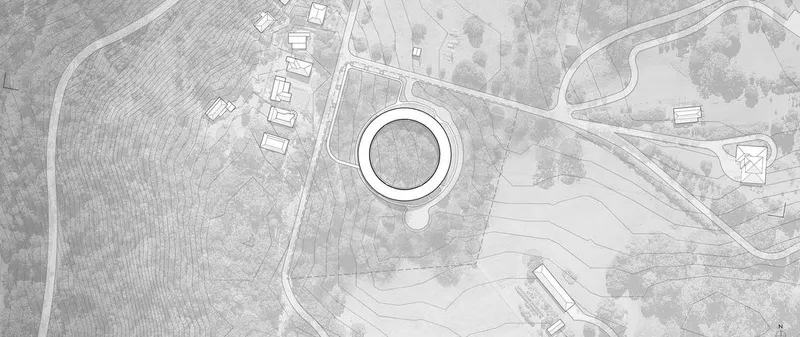
The veterinary clinic and temporary habitat are located on the Tamborine Mountain plateau, formed by a volcanic eruption 22 million years ago. The plateau's gently undulating topography and subtropical climate provide an ideal setting for the project. The design aims to blend seamlessly with the natural landscape, minimizing its environmental footprint while providing a functional and aesthetically pleasing space for animal rehabilitation.
The building is a timber frame structure, chosen for its renewability and the advantages it offers when processed into Cross Laminated Timber (CLT) panels. This modular construction approach allows for easy transportation and assembly on-site, making the building adaptable for future purposes. The structure is supported on CLT pillars and is elevated above ground level, allowing for the free flow of rainwater and minimizing disruption to the natural terrain.
Sustainability Features
One of the standout features of the Tjukula Jukurrpa project is its commitment to sustainability. The building's external envelope consists of large-sized panels that collect condensed water vapor, known as 'fog catchers.' Inspired by the 'Fog Harp' project developed by researchers at Virginia Tech University, these panels efficiently harvest water, which is then stored in underground retention tanks for use in irrigation and other purposes.
The building also incorporates photovoltaic panels on the rooftop, taking advantage of the area's high sun exposure to generate electricity. This renewable energy source not only powers the facility but also contributes surplus energy back to the grid, further enhancing the project's sustainability credentials.

Functionality and Animal Care
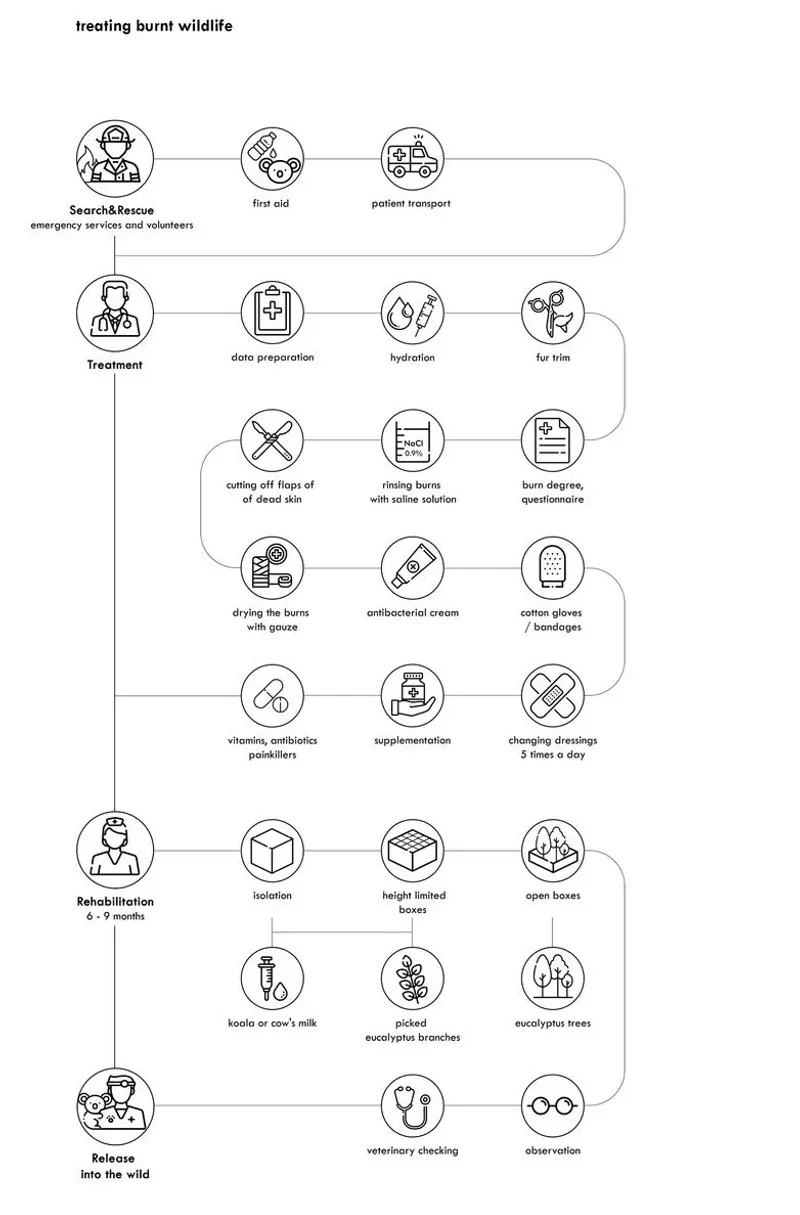
The ground floor of the building houses the veterinary clinic, including an entrance lobby, technical rooms, and surgical facilities. Injured animals are brought to the clinic by rescue services and volunteers, and those requiring immediate surgery are moved to the operating theater. Animals in recovery are placed in intensive care rooms or veterinary incubators.
As the animals' conditions improve, they are moved to cubicles on the upper levels of the building. The design includes a courtyard where rehabilitated koalas can gradually reacclimate to their natural environment. The courtyard is planted with native species to provide food and support the ecosystem, ensuring that the koalas' nutritional needs are met during their rehabilitation.

Cultural and Educational Impact
The Tjukula Jukurrpa project is not only a functional veterinary clinic but also an educational center aimed at raising awareness about the importance of conserving and protecting native animals. The design incorporates elements of Aboriginal culture and symbolism, creating a space that honors the traditions and knowledge of the indigenous people.

The inner courtyard features mini wells inspired by traditional Aboriginal water harvesting methods. These wells are designed to resemble the Aboriginal symbol of multiplied circles, signifying a meeting place or camp. This element of the design serves as a reminder of the deep connection between the land and its original inhabitants, encouraging visitors to reflect on the importance of preserving natural habitats.

Tjukula Jukurrpa is a visionary project that combines modern architectural techniques with indigenous knowledge and values. By providing a safe and sustainable space for the rehabilitation of injured koalas, it addresses the urgent need to protect and conserve Australia's unique wildlife. The project's innovative design and commitment to sustainability make it a model for future developments aimed at harmonizing human activities with the natural environment.



Popular Articles
Popular articles from the community


The Musturak Paradise: Senior Living Architecture for a Connected Future in Temara, Morocco
The Musturak Paradise reimagines senior living architecture in Temara via private homes, social spaces, culture, community, and shared care.

The Earth Pod: 3D Printed Homes for Resilient Refugee Communities
The Earth Pod reimagines refugee housing through 3D printed homes made from clay, combining resilience, self-sufficiency, and rapid shelter.

Conexión: Biophilic Design Reimagines High-Rise Living in Hong Kong
Conexión reimagines high-rise living in Hong Kong through biophilic design, green facades, shared spaces, daylight, water and nature within.

Co-life: Sustainable Architecture for Age-Friendly Community Living
Co-life reimagines sustainable architecture for seniors through courtyards, rammed earth, shared gardens, and spaces designed for belonging.
Similar Reads
You might also enjoy these articles

Day and Night Park: A Time-Based Urban Newsstand in Beijing
A temporary urban newsstand in Beijing blending travel, light, and reading through poetic colors, compact form, and community-focused design.

Modernist Patio Renovation in El Masnou, Barcelona by Oliver Segura Arquitectura + Cebrià Arquitectura
Modernist patio renovation blending tradition and innovation with a movable pool, leveled floors, and Catalan materials in El Masnou.

Alto Residencial Coop: Cooperative Housing Development in Santiago de Compostela by Carbajo Barrios Arquitectos
A linear cooperative housing complex blending white volumes and perforated metal façades, enhancing community living, natural light, privacy, and urban integration.

Vil Genis School by BPA ARCHITECTURE – Massy, France
Vil Genis School in Massy, France, features sustainable design, south-facing classrooms, community integration, accessible spaces, and modern educational architecture.
Explore Koala Competitions
Discover active competitions in this discipline



Challenge to reimagine the Iron Throne


Photograph architecture without architects


Illustrate the lost glory of Angkor Wat - Render Challenge


Design challenge to reuse E-waste
Comments (0)
Please login or sign up to add comments
No comments yet. Be the first to comment!