

Tom and Jerry Hostel by DL Atelier: A Playful Rural Retreat Near the Great Wall
Playful rural hostel near the Great Wall combining hutong-inspired courtyards, layered spaces, and social interaction through experimental contemporary architecture.


Tom and Jerry Hostel, designed by DL Atelier, is a unique rural hospitality project located near the Great Wall of China in Beijing. Completed in 2021, the 428-square-meter complex reinterprets traditional courtyard living through playful spatial strategies, layered courtyards, and a community-oriented design philosophy.
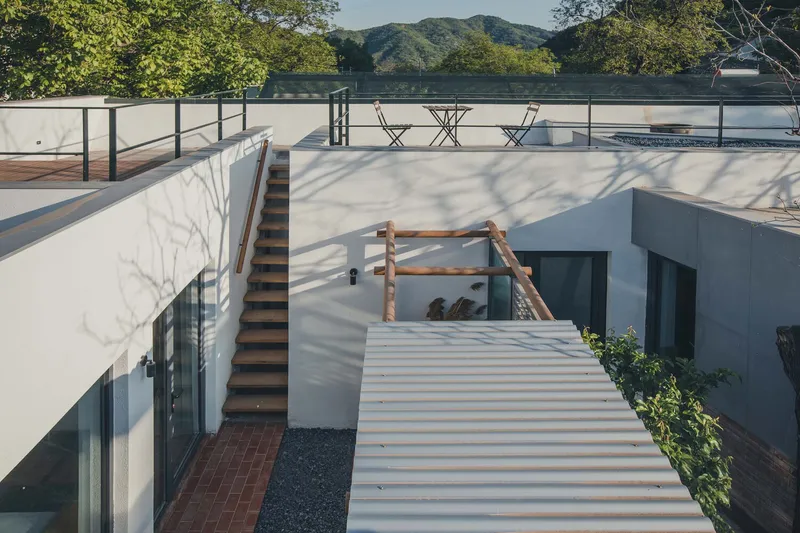
The hostel explores how architecture can create a temporary lifestyle experience: one that allows visitors to escape daily routines and immerse themselves in an environment shaped by interaction, exploration, and discovery. Rather than functioning as a conventional home, the project acts as a spatial “game,” where architecture sets the rules and visitors become participants.
Rural Hospitality Design Near the Great Wall
Located near Shuiguan in the Huairou district, the project sits within a rural village landscape dominated by mountains and historical fortifications. The presence of the Great Wall adds a powerful contextual layer to the design.
The architects approached the project by reflecting on the emotional and symbolic meaning of the Great Wall. Built as a response to danger and defense, the monument represents courage and determination in the face of uncertainty. Inspired by this idea, the architects experimented with spatial tension and risk, creating subtle architectural moments that evoke curiosity and exploration.
Three experimental hospitality projects were developed simultaneously for Xiaoxi B&B. Instead of traditional bed-and-breakfast accommodations, these projects function more like rural boutique hotels where architecture becomes an immersive experience.

Biodiversity and the “Tom and Jerry” Scene
The name “Tom and Jerry Hostel” was inspired by the lively and somewhat chaotic atmosphere found on the site. Upon first visiting the courtyard, the architects encountered a scene filled with life: kittens running across the yard, dogs relaxing under the sun, and chickens wandering freely.
This vibrant coexistence of animals reminded the designers of the animated world of Tom and Jerry, a place that appears chaotic yet feels harmonious. The concept of biodiversity became a metaphor for social diversity among guests.
Just as animals share space naturally, the hostel encourages visitors to share and interact within a close-knit environment. Young travelers, friends, and strangers coexist in spaces that blur the boundaries between private and public life.
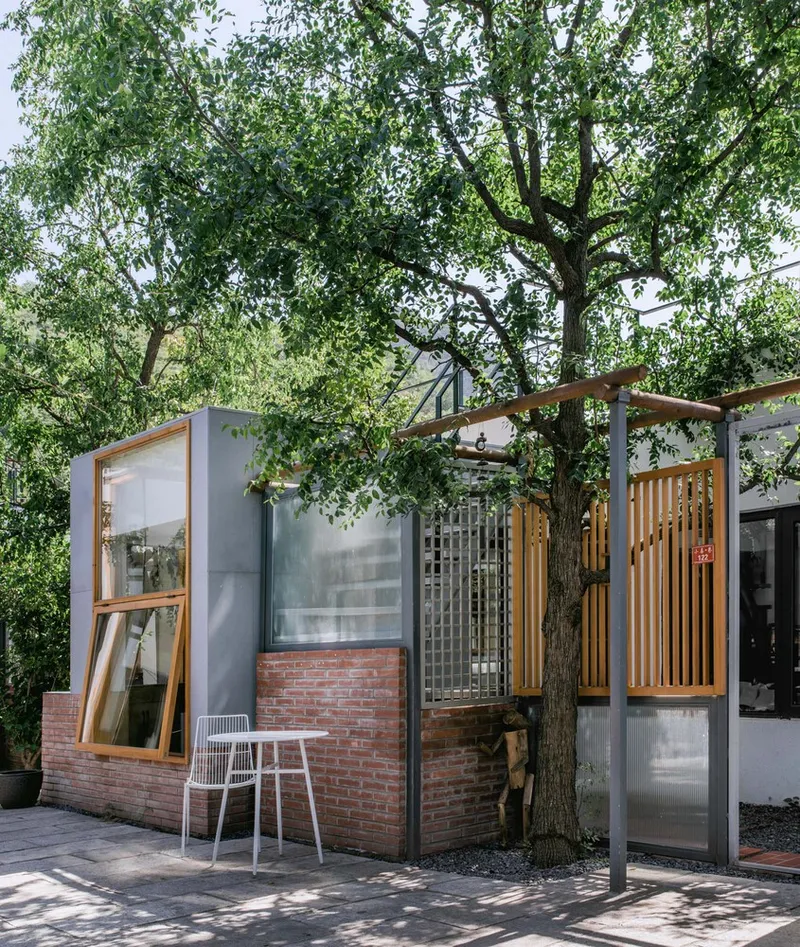

Inspiration from Beijing Hutong Living
The design draws significant inspiration from the traditional hutong neighborhoods of Beijing. Hutongs are narrow alleys surrounded by courtyard houses that have evolved organically over centuries.
Within these historic neighborhoods, old structures coexist with newer additions, creating a layered urban fabric. Residents include people from different professions and social backgrounds, yet they form a lively community through daily interactions.
The architects translated this social model into the hostel design. By compressing spatial distances and encouraging visual connections, the architecture promotes spontaneous communication and shared experiences among guests.


Courtyard System and Spatial Density
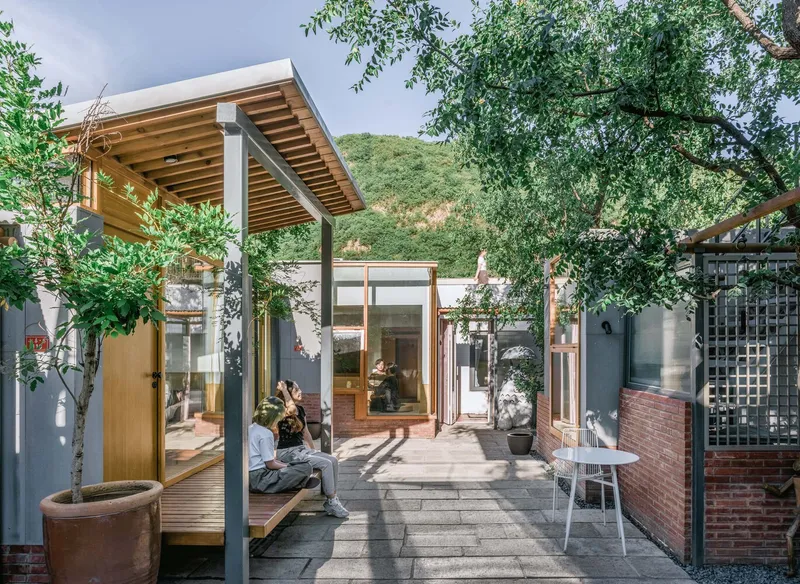
The project occupies a courtyard site of approximately 600 square meters, where the original village houses were carefully preserved. With the addition of communal facilities and activity rooms, the total built area reaches about 428 square meters.
Within this compact environment, the architects introduced an intricate system of 13 courtyards and 27 rooms designed to host more than 20 guests. The high density intentionally echoes the intimate spatial scale of hutong neighborhoods.
This arrangement generates a collage-like environment where architecture appears to evolve organically. Multiple layers of circulation, courtyards, and terraces intersect to create a complex yet comfortable atmosphere.
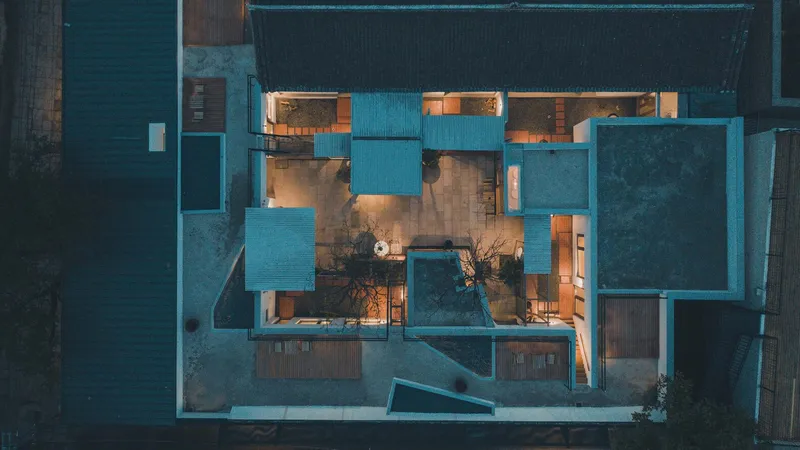
Collage Construction and Layered Architecture
The architectural composition unfolds across several spatial layers that balance public and private experiences.
The first layer includes the main communal areas: a public dining room, kitchen, game room, and a central courtyard. These spaces connect directly with the walnut forest outside the site, establishing a seamless relationship between nature and architecture.
The second layer organizes residential areas into three groups that can function independently or together. Each group contains activity rooms, small courtyards, terraces, and bedrooms, allowing flexible use for different guest groups.
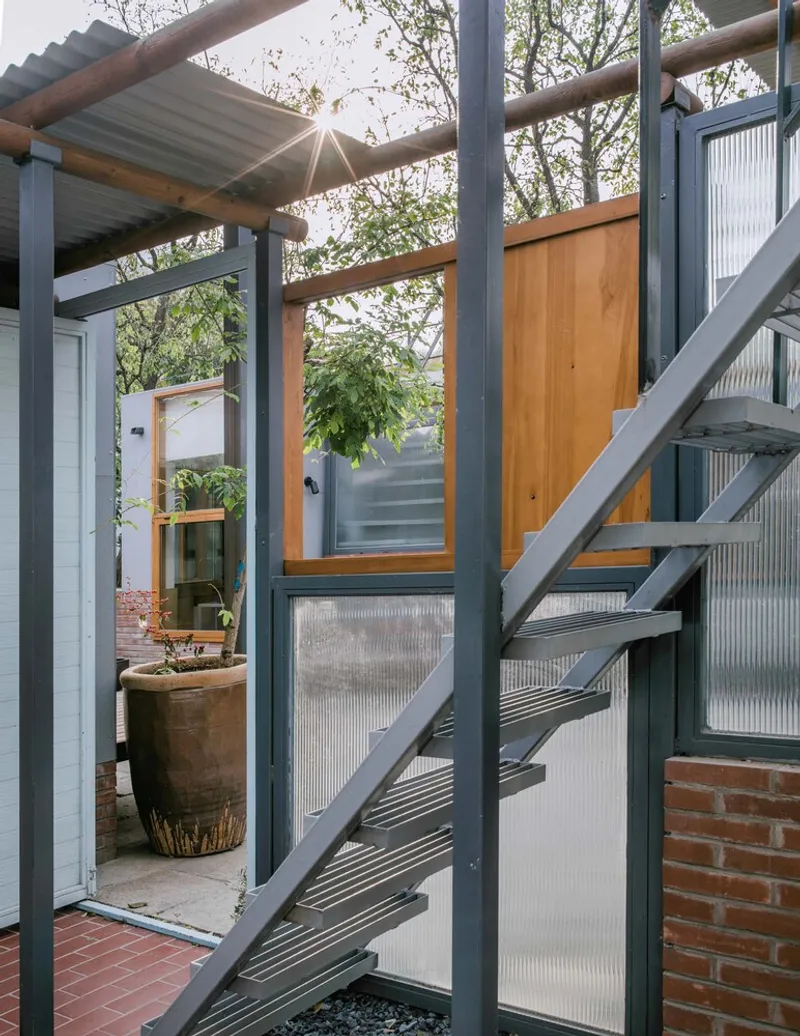
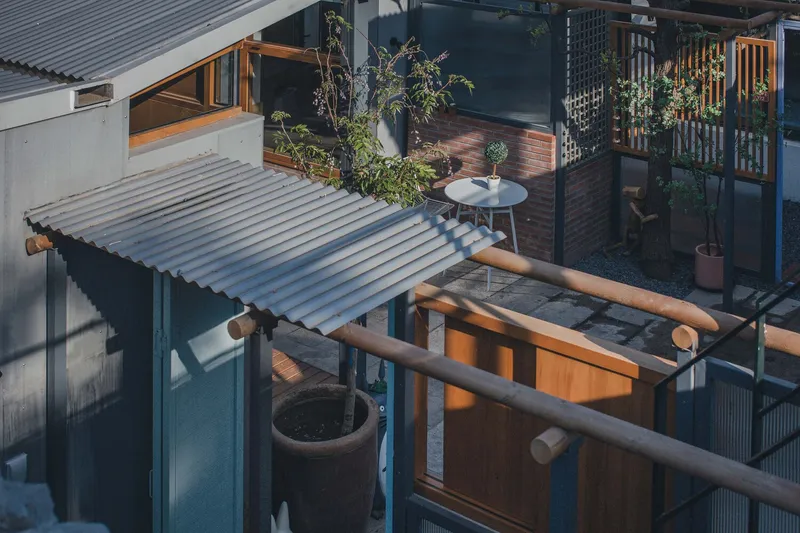
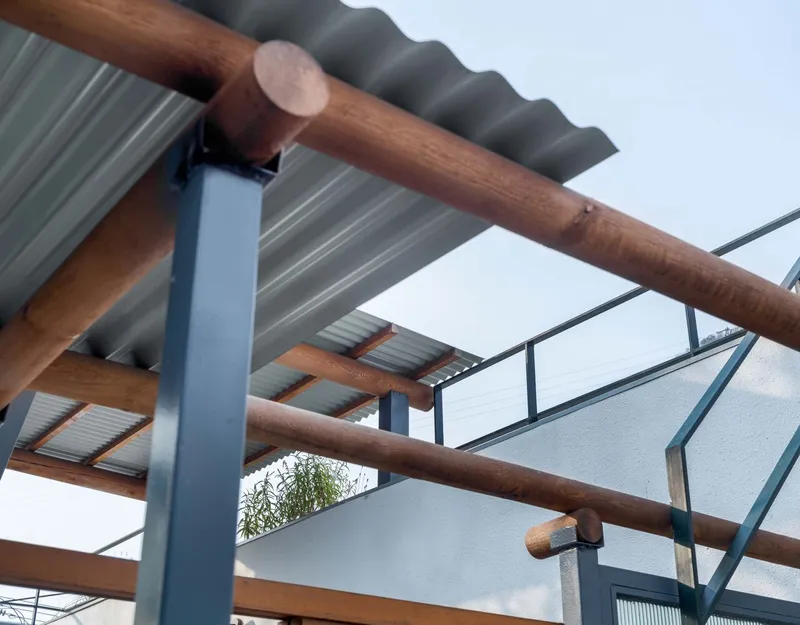
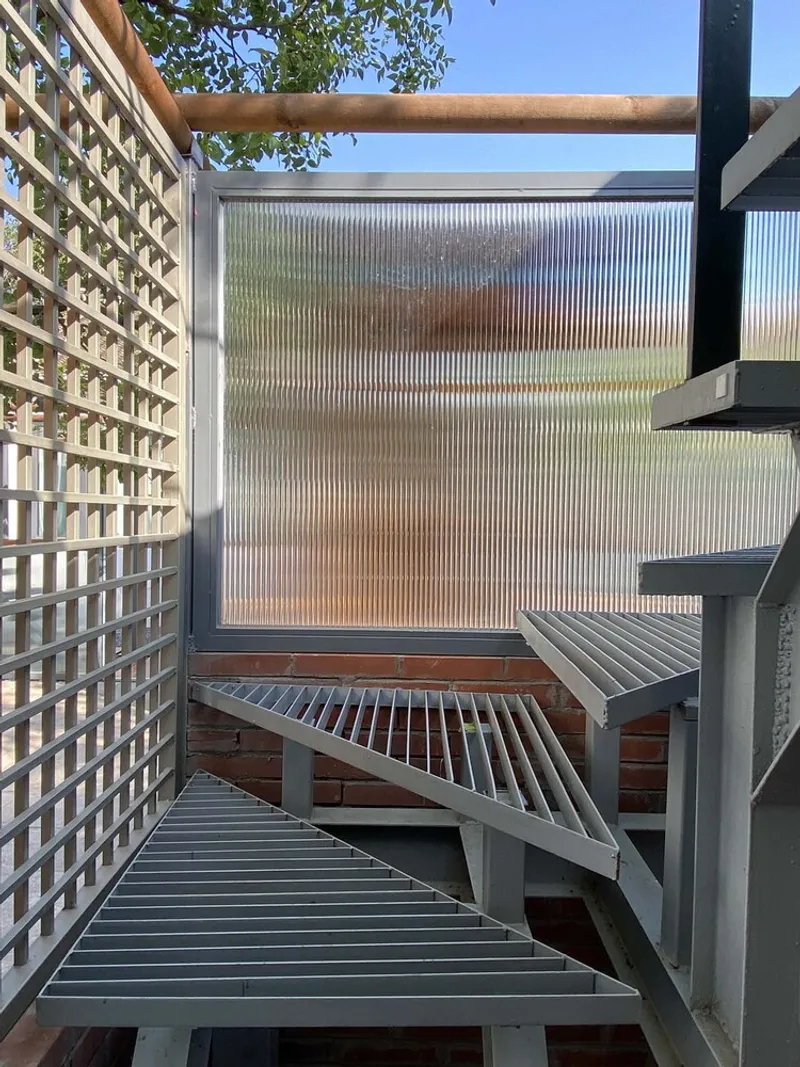
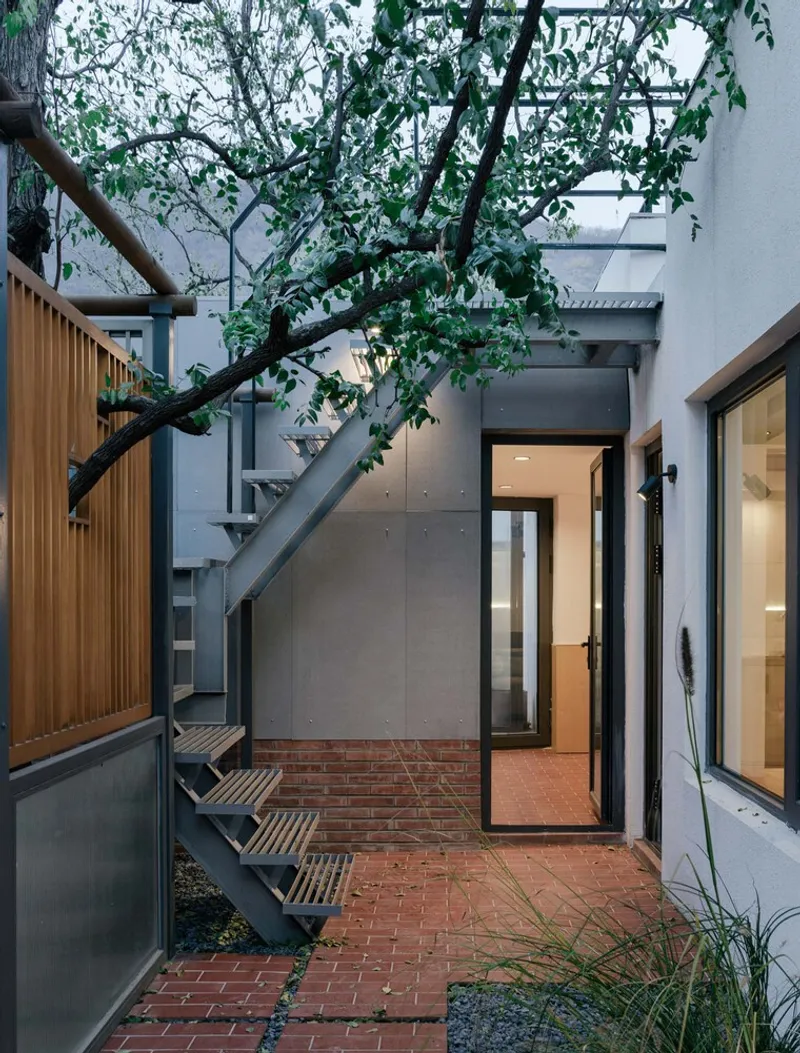
Material choices reinforce the collage aesthetic. Red brick walls, cement boards, wooden floors, steel columns, and wooden beams combine with corrugated aluminum roofs and varied window openings. These elements form an informal architectural language that feels both experimental and relaxed.
Private Courtyards and Flexible Privacy
A third layer introduces five small courtyards scattered around the central space. These courtyards partially conceal the bedrooms while creating adjustable levels of privacy.
Rather than simply separating spaces, the courtyards act like soft architectural curtains. They filter views, light, and movement, allowing the environment to shift dynamically as guests move through it.
This strategy intentionally breaks the rigidity of traditional spatial order. The architects aimed to cultivate an atmosphere that feels spontaneous, playful, and open to interpretation.
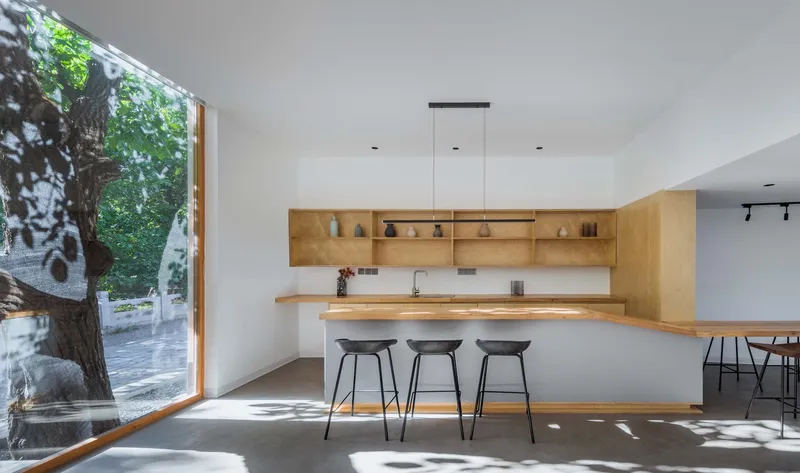
Interior Design and Material Expression
The hostel contains eight uniquely shaped bedrooms. Each room uses a combination of industrial and warm materials to create a distinctive character.
Adjacent walls are wrapped with gray acoustic felt to improve sound absorption, while opposite walls feature corrugated metal panels that produce dynamic patterns of light and shadow. Birch plywood panels soften the mechanical appearance and add warmth to the interior atmosphere.
Custom-designed furniture made of metal and rainbow glass introduces a futuristic aesthetic. This design choice deliberately contrasts with the natural and gentle environment outside the building, highlighting the tension between industrial expression and rural calm.
Rooftop Terrace and Expansive Landscape Views
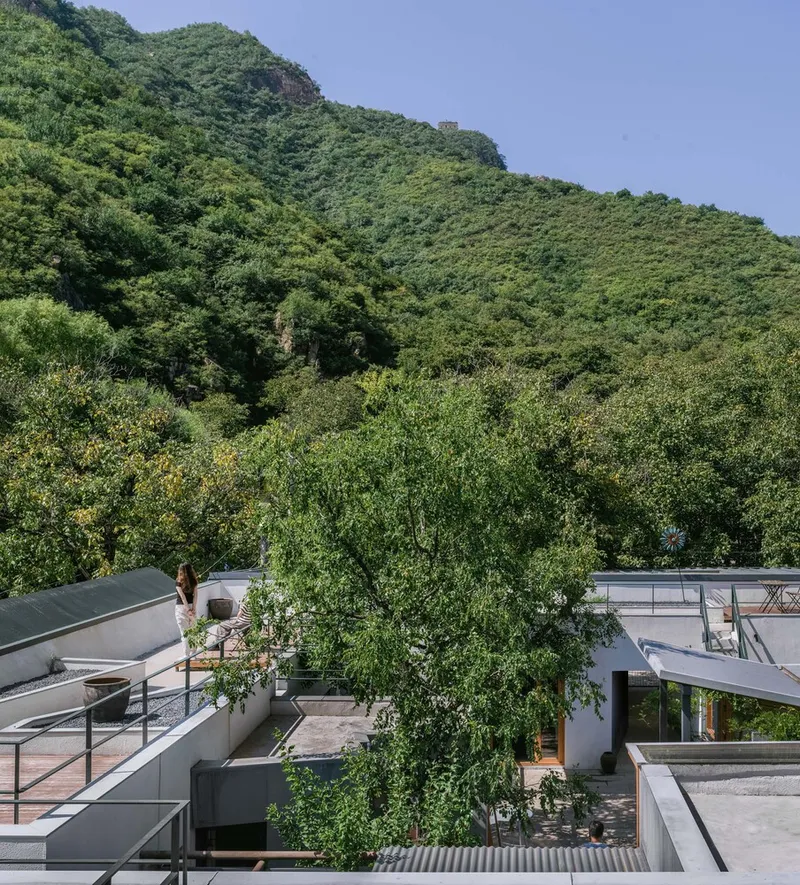
The final spatial layer is the rooftop terrace, divided into different zones by staircases and planted roof elements. From here, visitors can enjoy panoramic views of the surrounding mountains and open sky.
The rooftop provides a dramatic contrast to the compact courtyards below. While the inner courtyard feels intimate and enclosed, the terrace opens outward toward the vast landscape.
This transition creates an emotional shift in the spatial experience. Visitors move from compressed spaces to expansive views, allowing moments of reflection and release.

Architecture as a Social Game
Throughout the hostel, spatial arrangements encourage eye contact, interaction, and shared discovery. The labyrinth-like layout blurs boundaries and continuously stimulates movement and curiosity.
Guests encounter each other in narrow passages, small courtyards, or communal spaces, gradually building familiarity and trust. The architecture itself becomes an instrument for social connection.
Just as the Great Wall symbolizes courage in the face of danger, the hostel invites visitors to step outside their comfort zones, engaging with new people and experiences within a playful architectural environment.
Contemporary Rural Architecture in China
Tom and Jerry Hostel demonstrates how rural hospitality architecture in China is evolving. Instead of copying traditional forms, the project reinterprets cultural spatial patterns through contemporary materials, experimental layouts, and social interaction.
By combining hutong-inspired density, courtyard living, and playful design concepts, DL Atelier created a destination where architecture functions as both shelter and experience.
The result is a vibrant rural retreat that celebrates biodiversity, community, and the joy of shared spaces near one of the world’s most iconic historical landscapes.

All photographs are works of
Yumeng Zhu, Xi Youji Studio, Yang Liu, Yanchun Cheng



Popular Articles
Popular articles from the community


Co-Life: Senior Housing Design That Reconnects Older Adults With the City
Co-Life reimagines senior housing design through healing gardens, shared streets, workshops, and a sustainable community across generations.

Riyadh For All: Intergenerational Urban Design for Active Aging in Rabat
Riyadh For All reimagines urban design in Rabat with intergenerational co-living, adaptive courtyards, and Moroccan cultural exchange today.

The Ocean Hive: Sustainable Architecture for a Self-Sufficient Civilization at Sea
The Ocean Hive imagines sustainable architecture at sea, where modular habitats, algae, wave power and ocean waste sustain a growing colony.

Lunar Spiral: Space Architecture Shaped by the Mathematics of the Universe
Lunar Spiral reimagines space architecture through Fibonacci geometry, lunar regolith, levitating habitats, and self-sustaining Moon living.


Similar Reads
You might also enjoy these articles

FAMM Arquitectura Organizes Ten Villas Around Courtyards and Jungle in Nosara, Costa Rica
El Molino pairs two elongated volumes with deep overhangs and timber louvers to build a compact coastal community five minutes from the beach.
Oscar Niemeyer's Ibirapuera Park Pavilions Define São Paulo's Cultural Identity in Concrete and Curve
A constellation of modernist volumes set within São Paulo's most important urban park, conceived for the city's 400th anniversary in 1954.
How Henri Picq's 1889 Paris Pavilion Traveled 11,000 Kilometers to Become Santiago's Artequín Museum
A prefabricated iron and glass pavilion built for the Paris Universal Exposition found a second life as a children's art museum in Chile.
Sanjay Puri Architects Wraps a Jaipur Office Tower in Capsule-Shaped Green Buffers
A nine-level climate-responsive workplace near Jaipur Airport uses stacked planter terraces and aluminium screens to fight 40°C heat.


Explore Architecture Competitions
Discover active competitions in this discipline



Challenge to reimagine the Iron Throne


Photograph architecture without architects


Illustrate the lost glory of Angkor Wat - Render Challenge


Design challenge to reuse E-waste
Comments (0)
Please login or sign up to add comments
No comments yet. Be the first to comment!