
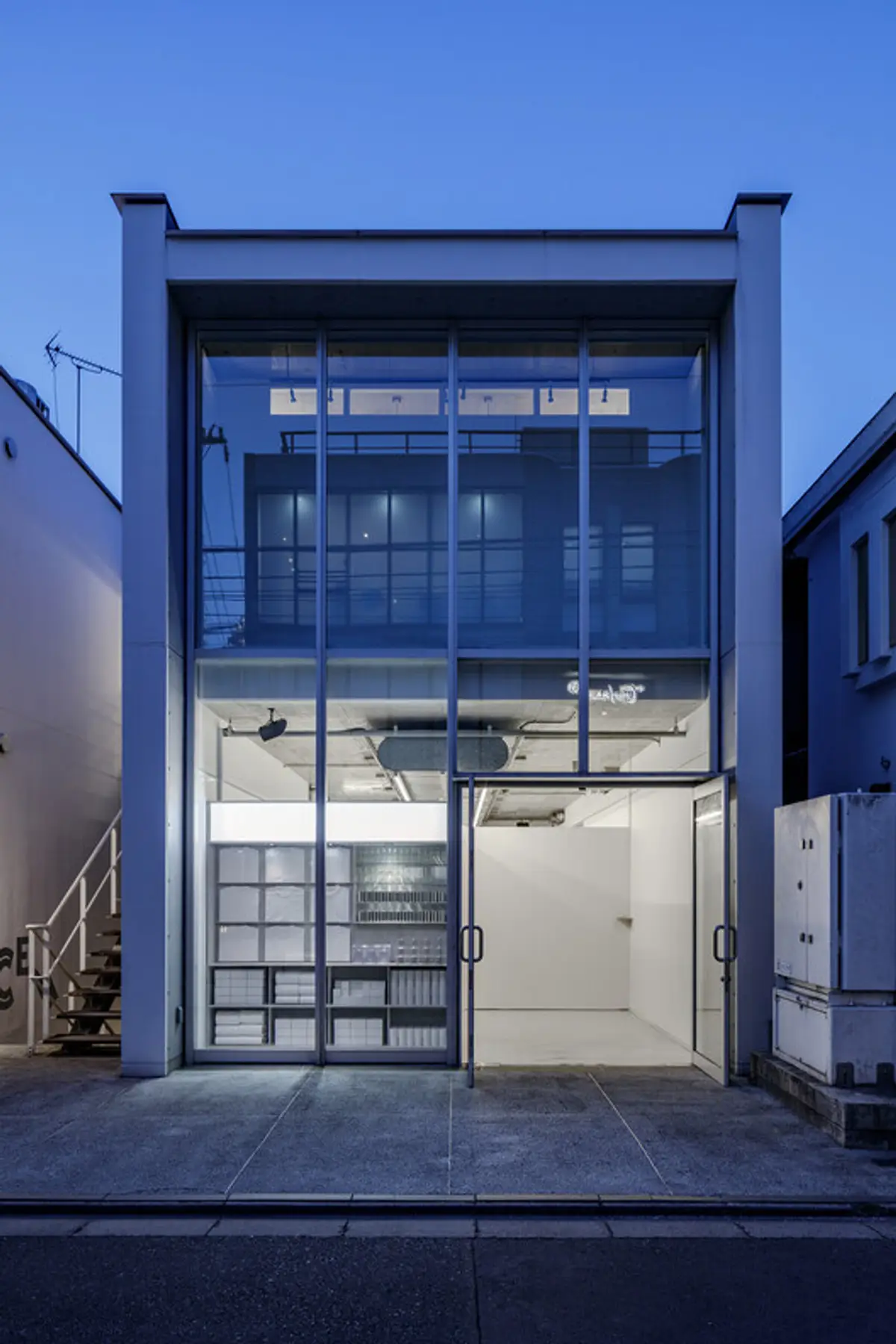
Tracing by ambientdesigns – Redefining Retail and Gallery Interiors in Shibuya, Tokyo
Tracing by ambientdesigns in Shibuya blends store, gallery, and studio, inspired by kiosk design, merging retail, culture, and creativity.


Located in the vibrant heart of Shibuya City, Tokyo, Tracing by ambientdesigns is a multi-functional interior project that blends retail, exhibition, and creative studio spaces into one fluid architectural experience. Completed in 2020, this 113 m² interior design project reinterprets the concept of a kiosk and transforms it into a unique cultural hub for pop art, fashion, and commercial creativity.
Concept and Inspiration
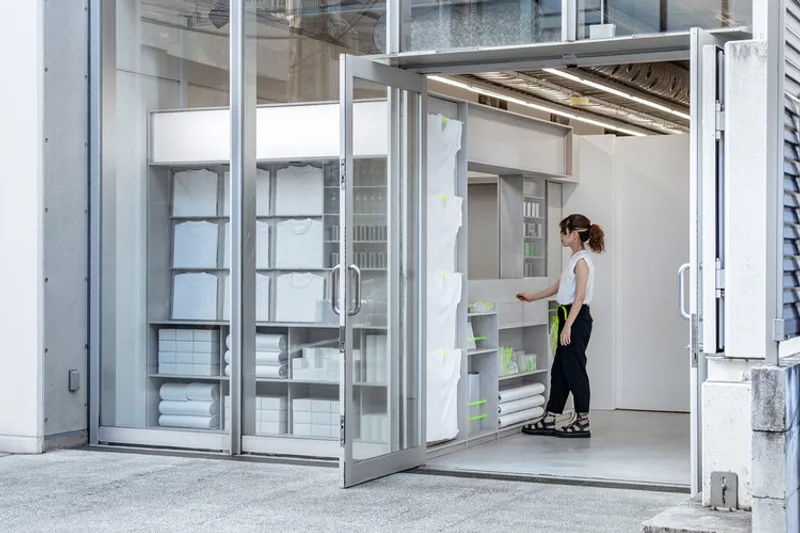
The client’s vision for the project centered around the “kiosk” — a familiar element of Japanese streets and train stations. Ambientdesigns translated this everyday reference into a sophisticated interior language, creating a space that feels approachable yet innovative. The design concept of “tracing” became central to the project: the architects studied and replicated the scale, proportions, and atmosphere of kiosks, adapting them into a modern commercial environment.
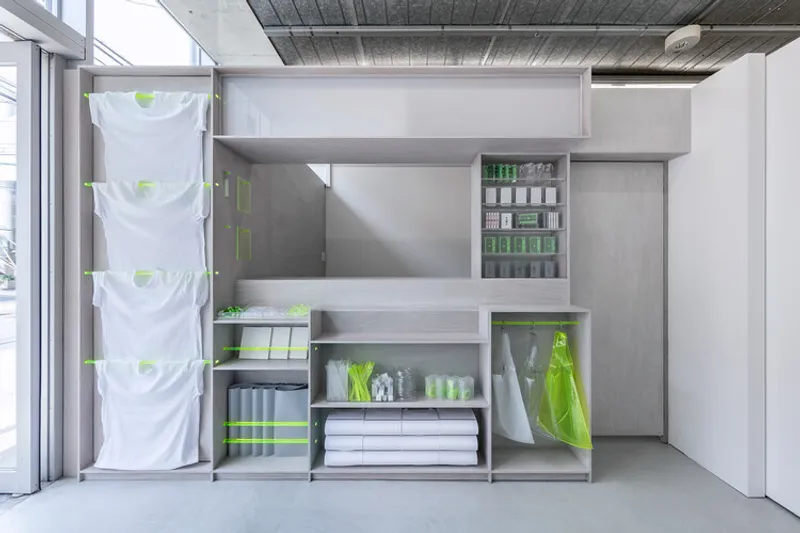
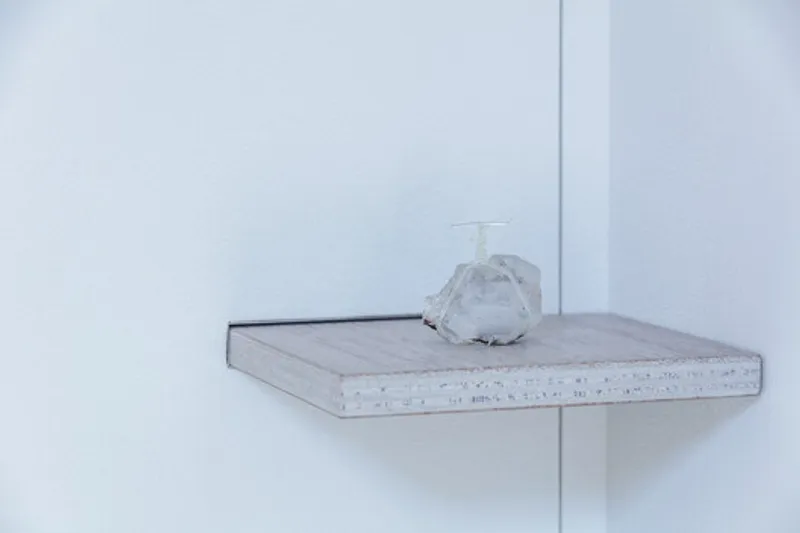
This approach went beyond spatial layout, influencing visual merchandising (VMD) and signage design. Products of similar scale to those typically found in kiosks were displayed in the store, enhancing a sense of familiarity. Even the “No Trespassing” sign separating the store from the gallery was reimagined as an artful detail, crafted from transparent natural stone and vinyl rope in reference to Tomeishi — traditional stones used in Japanese gardens.

Spatial Organization
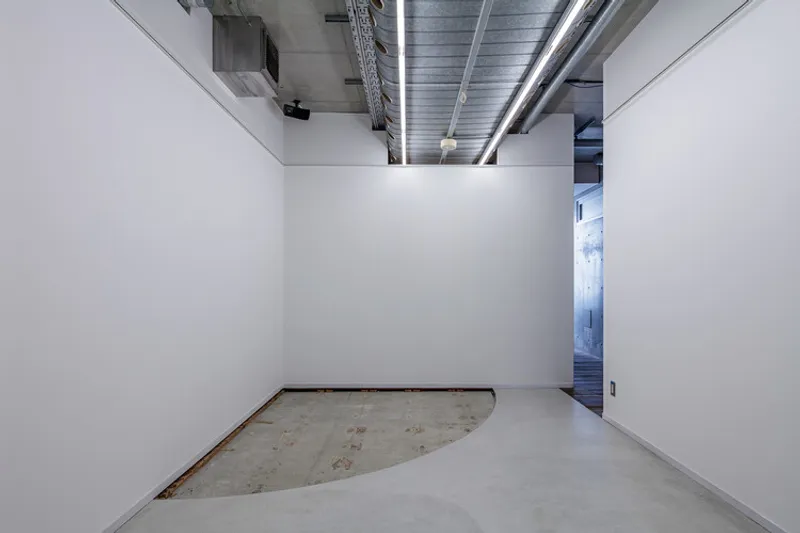
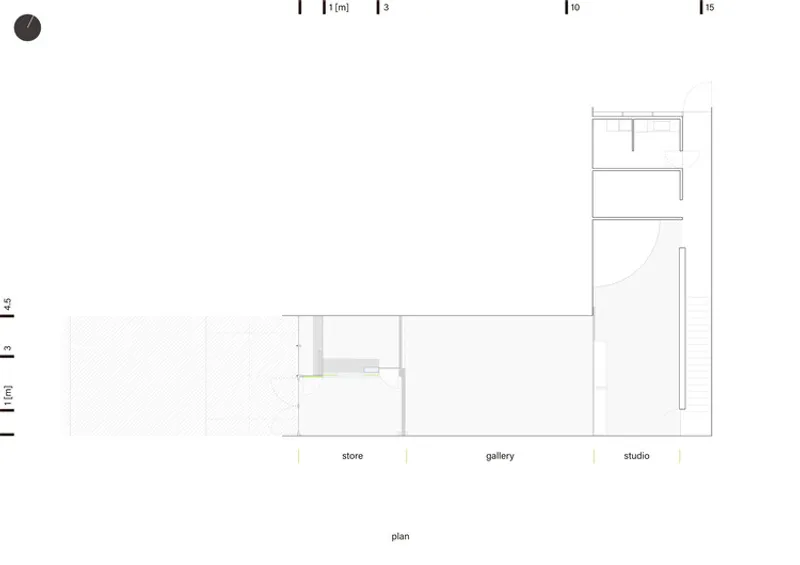
The floor plan of Tracing was carefully designed to maximize efficiency within the deep, street-level site on Omotesando. The spatial sequence is arranged as follows:
- Store – welcoming the public with kiosk-inspired displays and retail goods.
- Gallery – hosting exhibitions of pop art, fashion, and commercial works.
- Studios – private zones at the rear for filming, recording, and creative production.
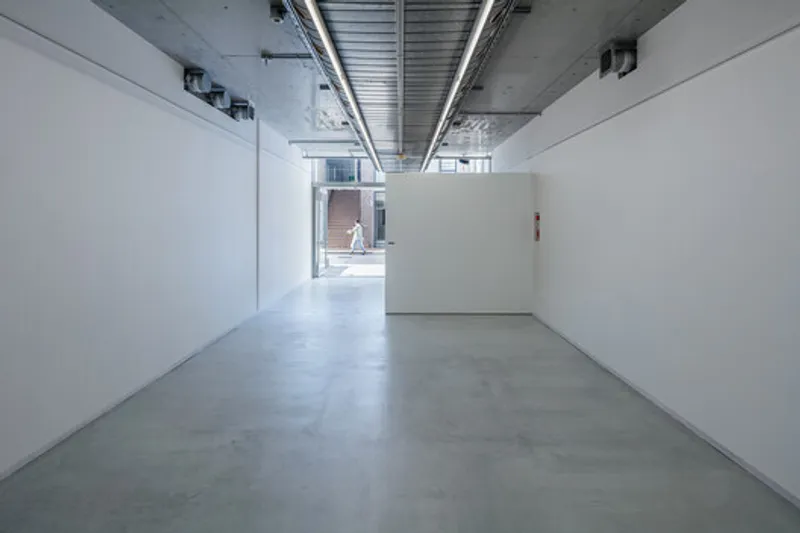
This zoning not only reflects the site’s urban character but also creates a layered journey from public to private spaces.
Methodical Finishing
One of the project’s most notable design philosophies is the idea of “methodical finishing.” In many small-scale commercial interiors, finishes often feel arbitrary, based purely on color or texture preferences. Ambientdesigns instead approached finishes as a structured process of “tracing references” from the client’s imagery and inspirations.
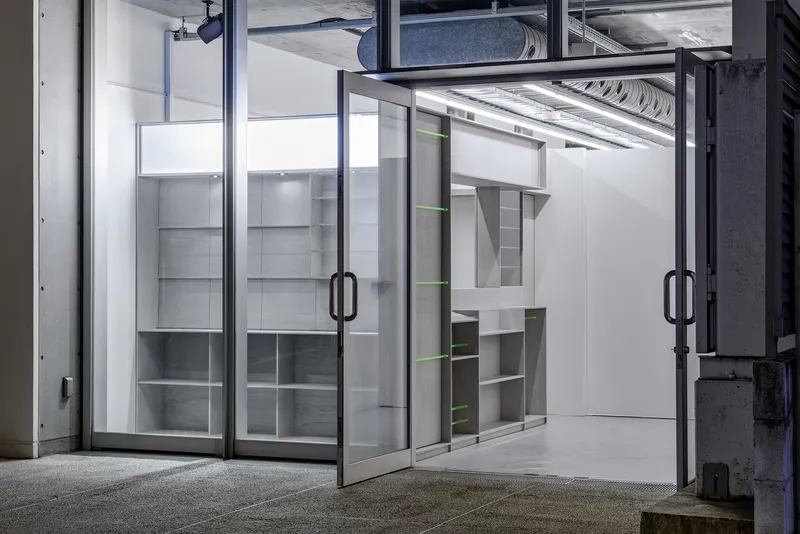
By borrowing proportions, styles, and dimensions from kiosk elements, the designers established a visual language that resonates with visitors. Even first-time passersby intuitively recognize the reference to kiosks, creating a shared cultural connection.
Materials and Atmosphere
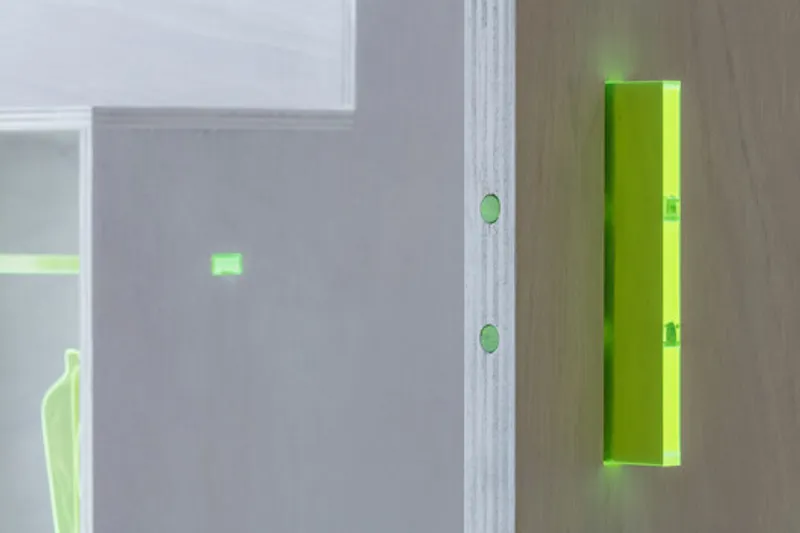
The interior design employs industrial and natural materials to balance a contemporary look with tactile authenticity. Ashford Japan, Lilikara, Osmocolor/Osmo & Edel were key material manufacturers, while Inoue Industries executed the build.
- Wood and stone details emphasize warmth and natural grounding.
- Glass storefront connects the store to the street, echoing kiosk accessibility.
- Minimal yet bold detailing draws attention to merchandise and exhibitions.
The resulting atmosphere is both functional and experiential — a space where retail merges seamlessly with cultural storytelling.
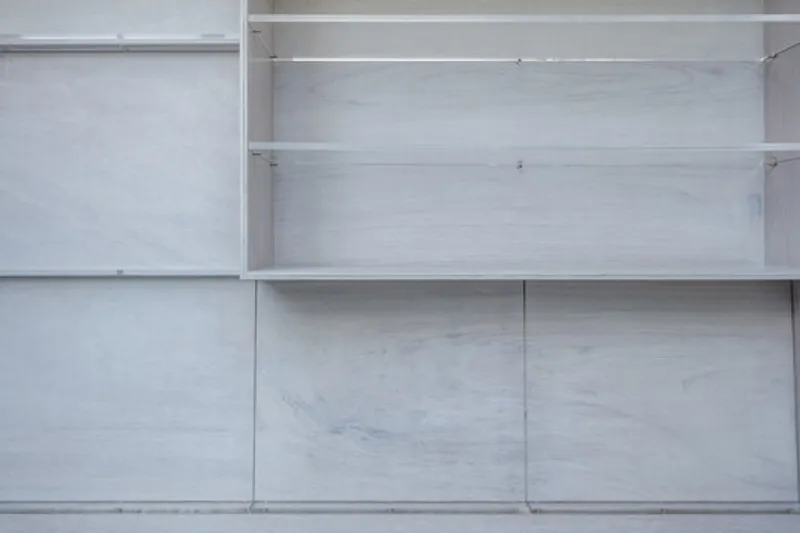
Redefining Small-Scale Commercial Interiors
Through Tracing, ambientdesigns challenges the conventional notion that commercial design is purely surface-driven. Instead, the project proves that even in limited space, planning, cultural references, and methodical design choices can create impactful environments that go beyond aesthetics.
The outcome is a retail-gallery-studio hybrid that not only showcases art and fashion but also tells a story rooted in Tokyo’s urban identity.
All thr photographs are works of Masato Chiba


Popular Articles
Popular articles from the community


Co-Life: Senior Housing Design That Reconnects Older Adults With the City
Co-Life reimagines senior housing design through healing gardens, shared streets, workshops, and a sustainable community across generations.

Lunar Spiral: Space Architecture Shaped by the Mathematics of the Universe
Lunar Spiral reimagines space architecture through Fibonacci geometry, lunar regolith, levitating habitats, and self-sustaining Moon living.

Hill & Cross Opera: Sculptural Opera House Architecture Shaped by Tallinn’s Landscape and Identity
Hill & Cross Opera reimagines opera house architecture in Tallinn through its sculptural hill, civic plaza, glass wave and a luminous cross.

Little Red Riding Hood: Architectural Design as a Journey Through Fear, Light, and Storytelling
Little Red Riding Hood reimagines the fairy tale through architectural design shaped by fear, light, scale, memory, uncertainty, and choice.

Similar Reads
You might also enjoy these articles


Hodi-Mandai Geram
Project Function: Preservation and revitalization of the Intangible heritage and socio-spatial identity of the Hodi by Housing, Cultural Memory Center, Sacred Grove, landscape, local tourism economy


Olio Towers: A Mid-Rise for Performers That Fuses Housing, Rehearsal, and Stage
Located blocks from Houston's Theater District, this modular tower stacks living units around a central performance atrium.

Oasis: Modular Green Housing Carved into Dhaka's Urban Fabric
A shortlisted Plugin Housing entry reclaims unauthorized settlements in Dhaka with stepped concrete volumes, green roofs, and ventilation-driven design.

Black Hole: A Floating Megastructure for the Post-Physical Era
Emiliano Mazzarotto envisions a spherical, self-scaling arena where e-sports, digital hotels, and holographic stadiums replace traditional public space.

Explore Spatial & Interior Design Competitions
Discover active competitions in this discipline

Challenge to reimagine the Iron Throne

Photograph architecture without architects

Illustrate the lost glory of Angkor Wat - Render Challenge

Design challenge to reuse E-waste
Comments (0)
Please login or sign up to add comments
No comments yet. Be the first to comment!