
Transforming Design Limitations into Creative Solutions: A Stunning Apartment Design with a Cat-Friendly Twist
Weaving Space Between Cats and Clients: A Creative Design for a Historic Apartment

Apartment design is a challenging task that requires balancing various factors such as the client's needs, the space available, and the existing furniture. A recent project undertaken by a team of architects showcases the successful weaving of space between a client and their two cats, as well as new and existing furniture.
Located in the dormitory area of Tiantan Biological Products Co., Ltd, the building is a historic structure built with brick-concrete in 1982, making it challenging to adjust the special layout. However, the architects were tasked with respecting the historic building and the existing furniture while turning design limitations into design material.


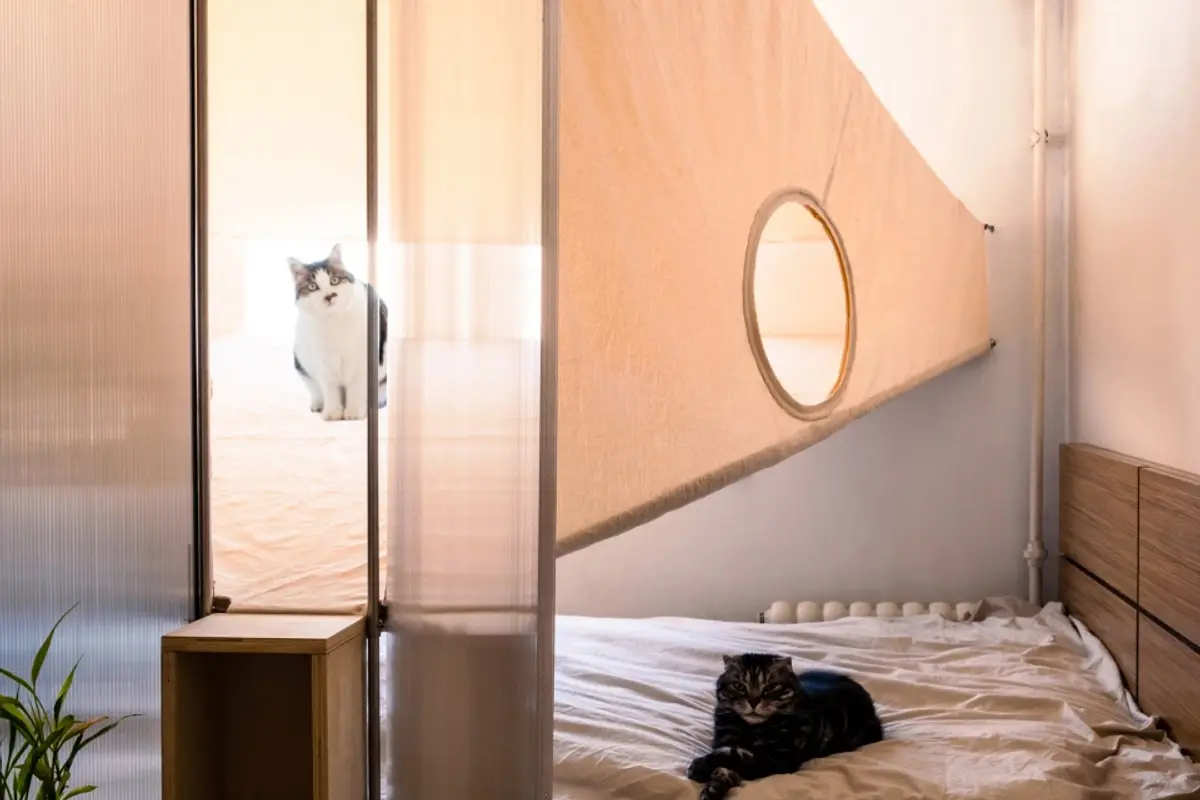
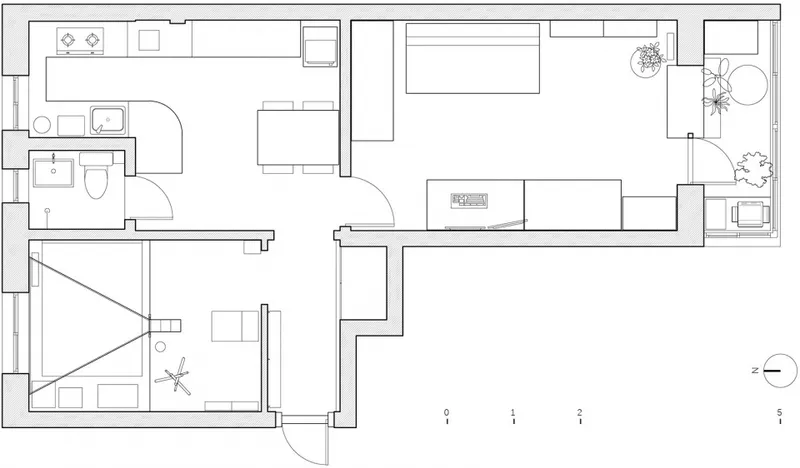
The core space was designed to weave between the client and cats as well as live and work. The combination of cat's tent and bed splits the bedroom into two rooms, a bedroom and "living room." The cat's tent is placed between the window and living room, connecting the two spaces with a vertical and horizontal opening.


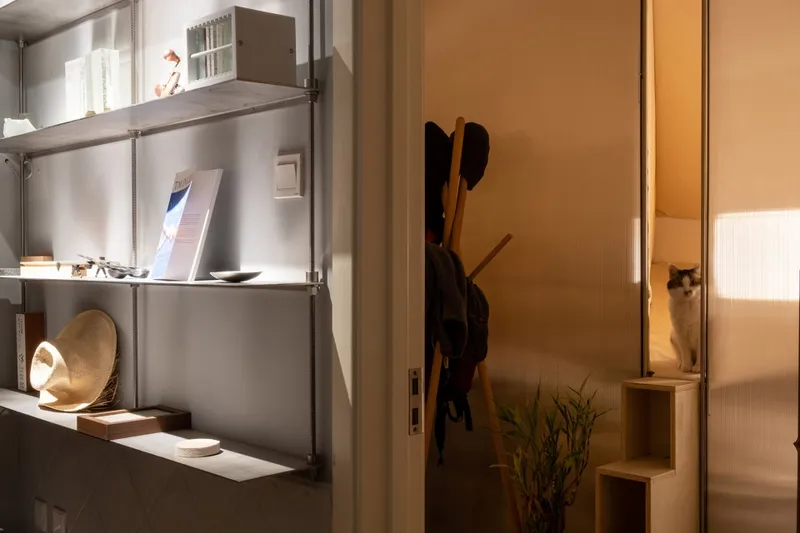
The hallway and dining room were painted gray to emphasize the public area, with a cantilevered stainless steel shelf on the left side and the original wall covered with 10mm thickness polycarbonate hollow sheet on the right side. This treatment on both sides helps avoid the sense of oppression caused by the narrow corridor due to renovation and utilization.

The existing counter, furniture, and new cabinets were organized by a U-shaped countertop, contributing to the strong spatial characteristic and order for the dining room. The architects deliberately kept the pillar of the stainless shelf away from the adjacent cabinets to connect the cabinet in the kitchen and sideboard organically.
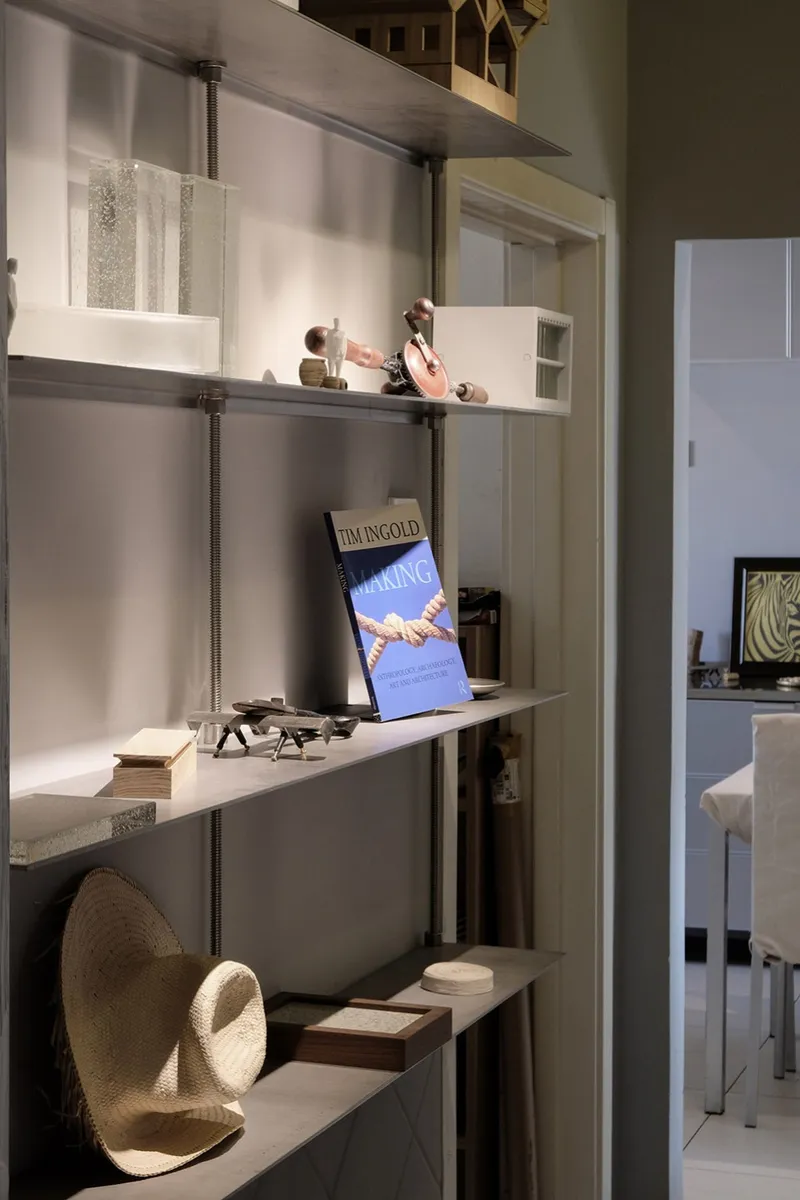


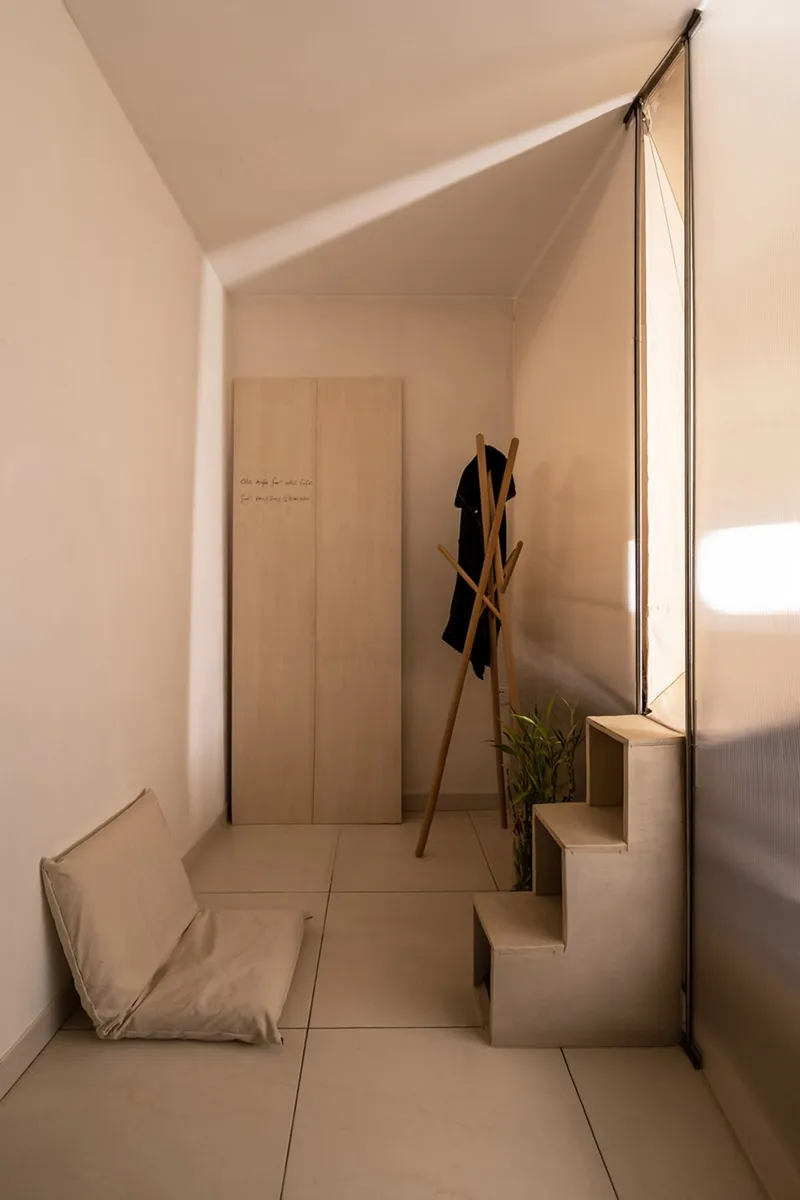
One of the challenges was storing items that the owner wanted to keep, such as the three sliding doors in the kitchen and the wooden door of the bedroom. The architects used the size difference between the existing sideboard and the countertop to create a 100mm cavity to store the sliding doors.

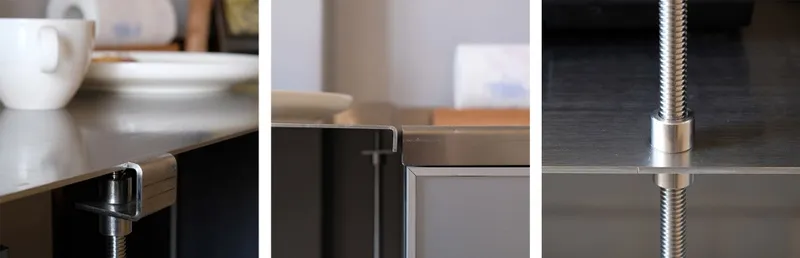

After removing two sliding windows on the inner wall of the balcony, the architects transformed the windowsill into a bar counter for active and flexible use. The construction of the bar top continued the principle of not destroying the existing house, using flat steel and inverted tapered fulcrums to support it and anchored by the original screw used to anchor the window.
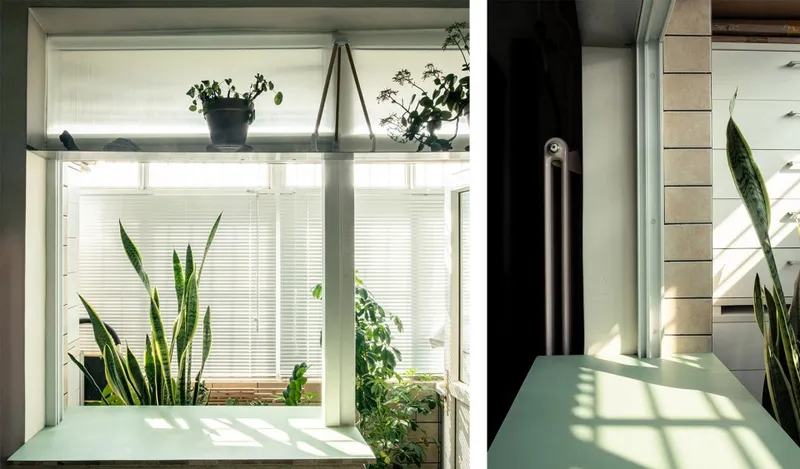
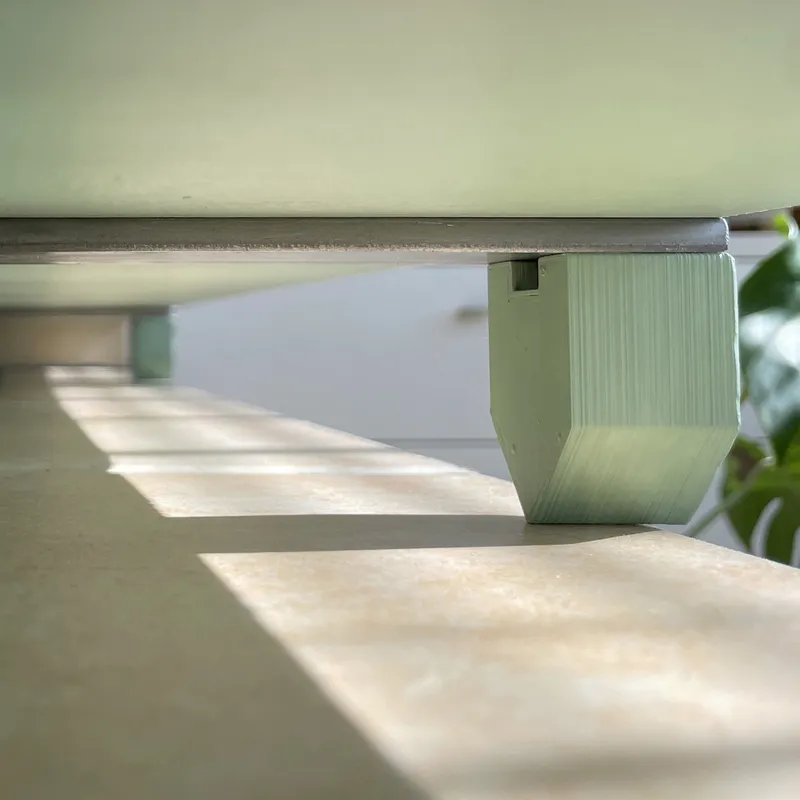

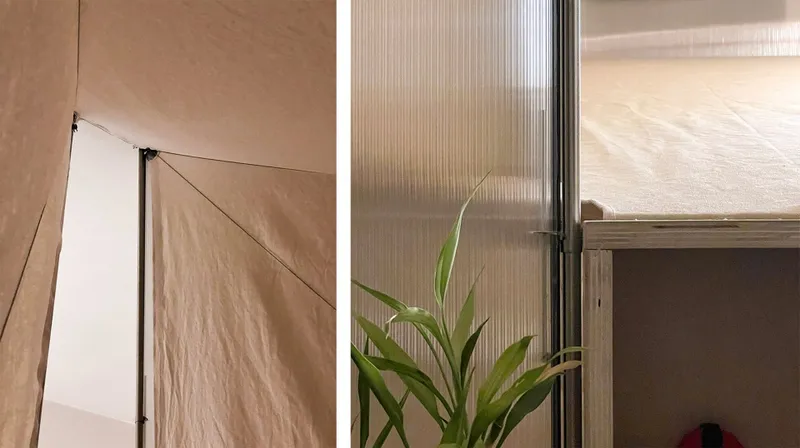
In constructional design, each component only needed to drill one screw hole on the painted wall, resulting in only 10 holes in the wall to complete the renovation of the entire house.
Overall, this project showcases how design limitations can be turned into design material by weaving space and furniture to create a balanced and functional living and working space for the client and their cats.


Project type: interior refurbishment
Design: Beyondtime Architects
Website: https://www.world-architects.com/en/beyondtime-architects-chaoyang-district-beijing
Contact e-mail: qunsun.bta@foxmail.com
Design year: 2022
Completion Year: 2023
Leader designer & Team: Qun Sun, Dongping Sun
Project location: Beijing
Gross built area: 60㎡
Photo credit: BTA
Clients: Private
Materials: stainless steel sheet, wall painting, wood painting, polycarbonate hollow sheet, fabric, brich plywood
Brands:Jordan, sanqing


Popular Articles
Popular articles from the community

Temporary Home for Dogs: A Reversed Zoo Rethinks Animal Shelter Architecture
In Bucharest, a sinuous corridor and freed landscape flip the logic of containment, designing a shelter that works to make itself unnecessary.

Cloaked Colonization: A Mobile Underwater Habitat That Moves Like a Fish
Micah Abaya's shortlisted EHC Pacific entry reimagines ocean settlement as a dispersed network of self-sustaining architectural organisms.

Extended Shell: Retrofitting Kolkata's Balconies as Living Urban Thresholds
A modular retrofit system recovers the social and environmental intelligence of Kolkata's historic verandas for contemporary Park Street residents.

Opera by the Sea Estonia: Three Shells Dissolving Architecture into Tallinn's Coastline
A winning opera house proposal replaces monumental form with interconnected shells that blur the boundary between building, park and Baltic Sea.

Similar Reads
You might also enjoy these articles

Shakur's House: Exposed Brick as an Interior Organiser in a 168 m² Mashhad Residence
Brick moves indoors in this Mashhad residence, where masonry walls, glass partitions and teal planes sequence a compact home without closing it off.

Day and Night Park: A Time-Based Urban Newsstand in Beijing
A temporary urban newsstand in Beijing blending travel, light, and reading through poetic colors, compact form, and community-focused design.

Modernist Patio Renovation in El Masnou, Barcelona by Oliver Segura Arquitectura + Cebrià Arquitectura
Modernist patio renovation blending tradition and innovation with a movable pool, leveled floors, and Catalan materials in El Masnou.

Alto Residencial Coop: Cooperative Housing Development in Santiago de Compostela by Carbajo Barrios Arquitectos
A linear cooperative housing complex blending white volumes and perforated metal façades, enhancing community living, natural light, privacy, and urban integration.

Explore Interior Design Competitions
Discover active competitions in this discipline


Challenge to design mud housing for contemporary communities

Challenge to design luxury tourism on rails

VR headsets Storefront design competition

Designing a staircase for a client
Comments (0)
Please login or sign up to add comments
No comments yet. Be the first to comment!