

Triangle House by Artefact Studio in Epsom
A vibrant triangular extension reimagines a 1950s home with bold color, efficient materials, flowing interiors, and garden-focused living in Epsom.


Triangle House by Artefact Studio is a carefully considered residential extension that reinterprets mid-century suburban housing through colour, geometry, and material restraint. Located at the end of a quiet cul-de-sac overlooking Roseberry Park in Epsom, the detached 1950s home has been transformed through the addition of a distinctive new wing that captures afternoon sunlight while strengthening the home’s relationship with its garden and surrounding landscape.
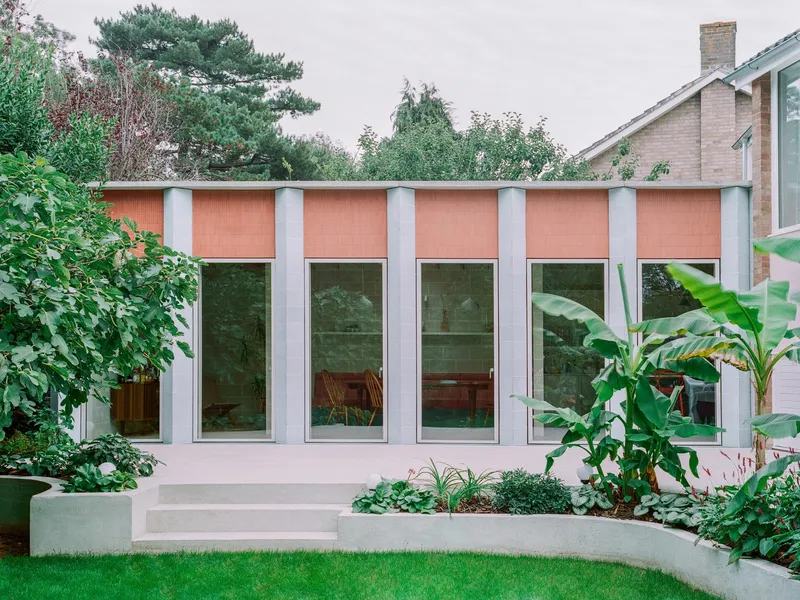
The original house, developed by Ideal Homes in the post-war period, provided a solid yet conventional domestic framework. Artefact Studio’s intervention introduces a bold architectural identity without overpowering the existing structure. The extension is defined by triangular blue pigmented blocks, terracotta tile inlays, and a warm yellow ceiling, drawing tonal references from the original house while also celebrating the client’s Caribbean heritage. Inspired by the book Caribbean Style, the colour palette introduces vibrancy and warmth into the suburban context, allowing cultural narrative to inform architectural expression.
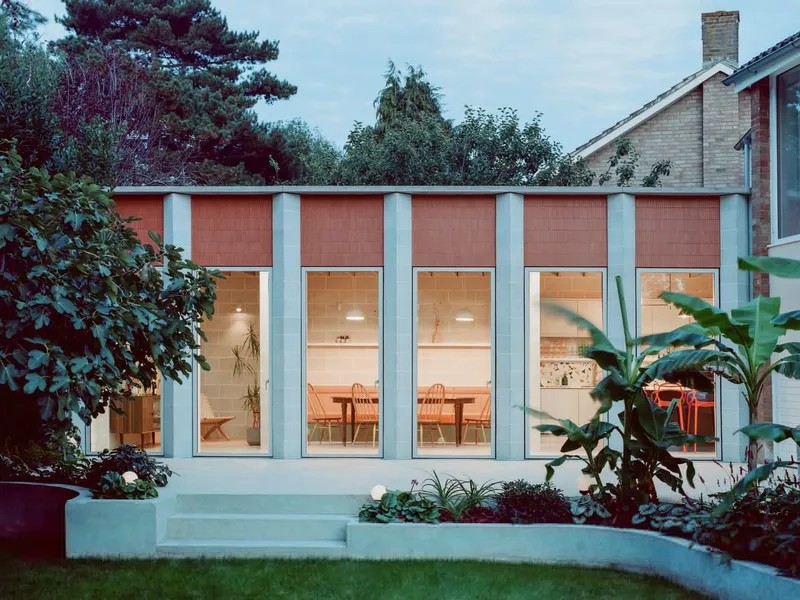
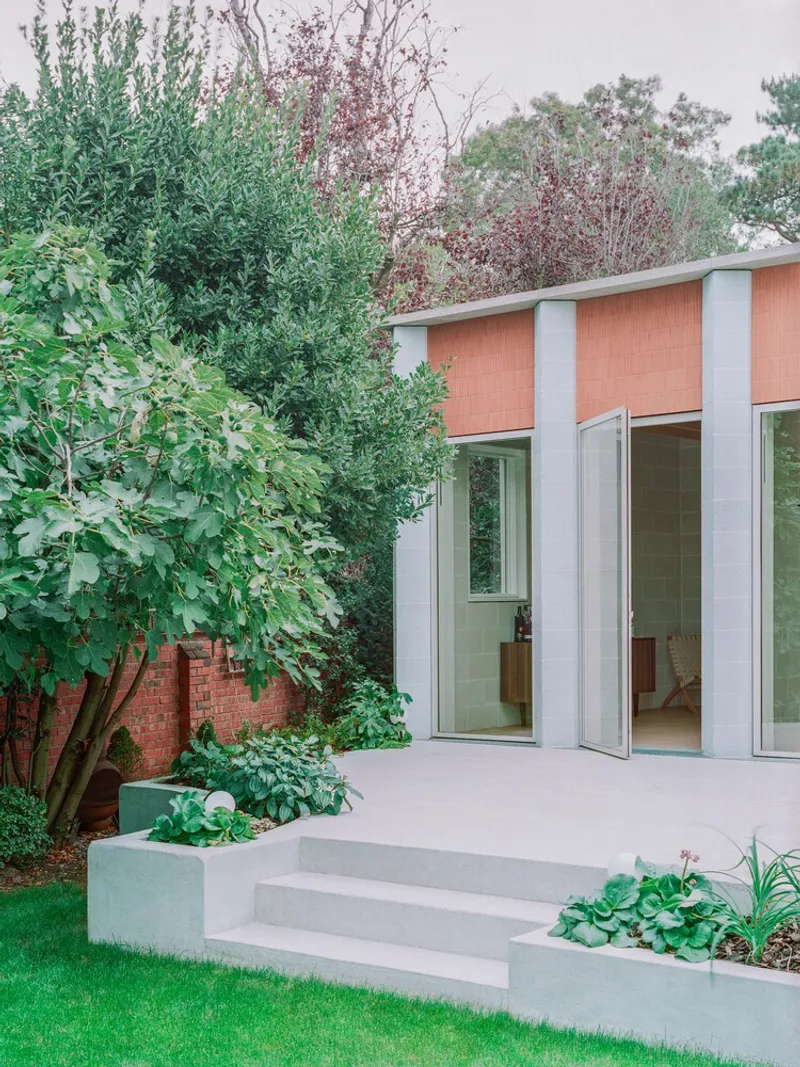
The new garden-facing wing is united with the original house by a sweeping blue terrace, animated by an exotic planting scheme designed by Phenomena. Banana palms and lush foliage soften the geometry of the architecture, creating a layered transition between built form and landscape. This outdoor sequence enhances biodiversity while reinforcing the home’s visual connection to Roseberry Park.
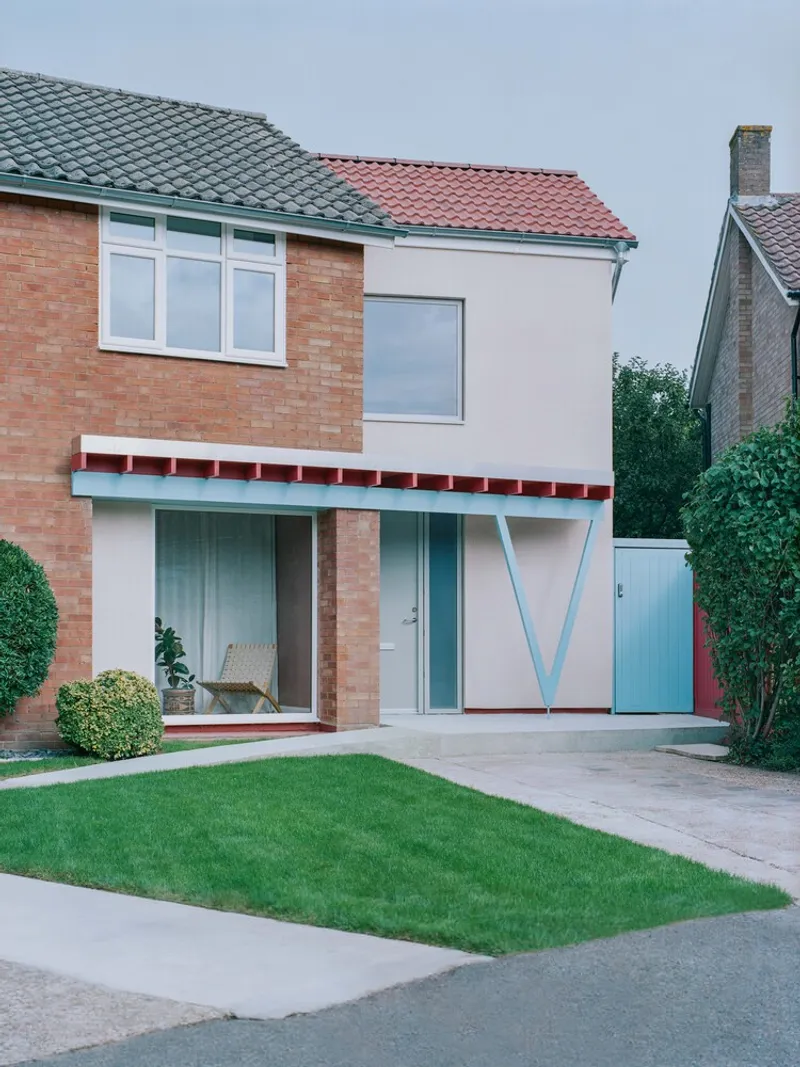
Responding to a compact footprint of just 66 square metres, the client’s brief called for expanded living areas, a family bathroom, a future-proof adaptable bedroom, an office and music room, and a reconfigured garden layout. Artefact Studio translated these requirements into a fluid spatial sequence that runs from the street through to the garden. A new entrance canopy, supported by a striking triangular column, references a mid-century building detail found within the surrounding neighbourhood, anchoring the contemporary addition within its historical context.
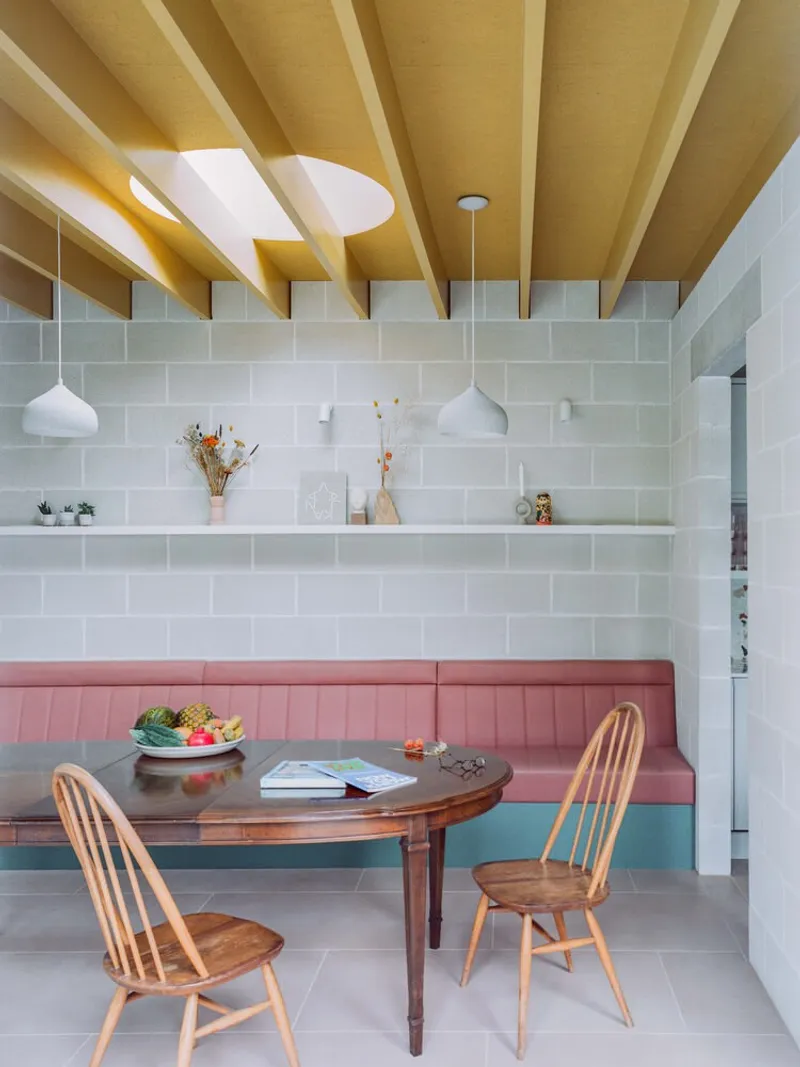
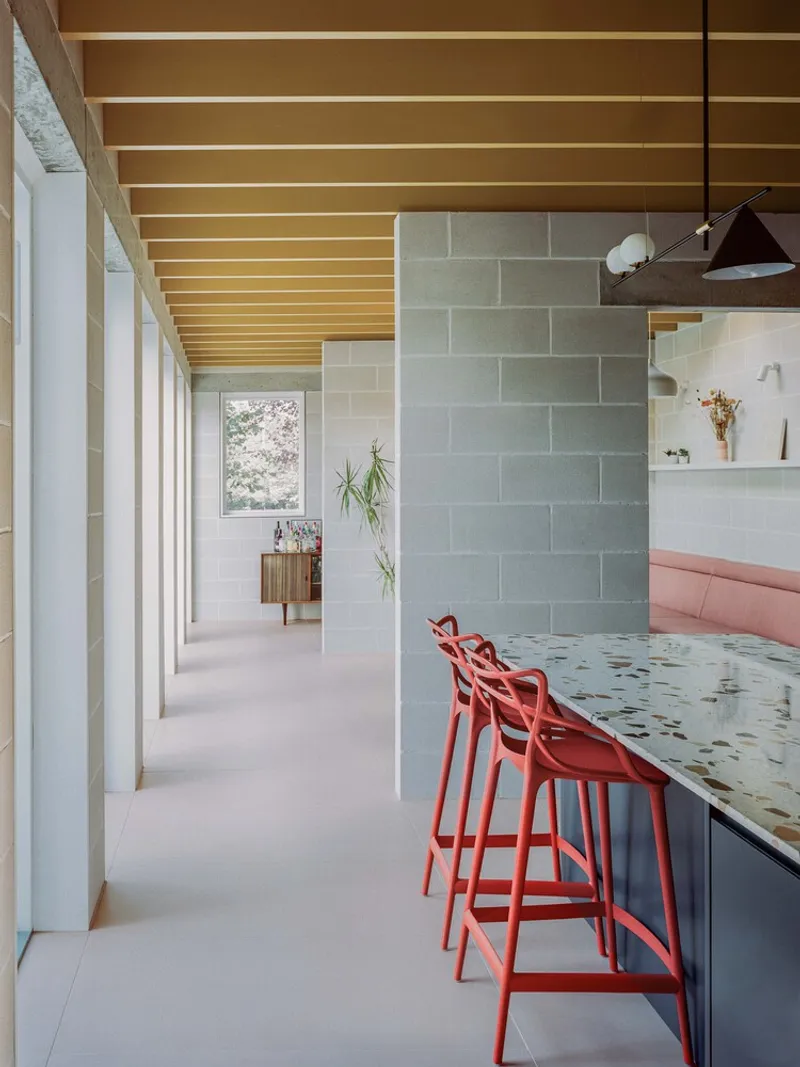
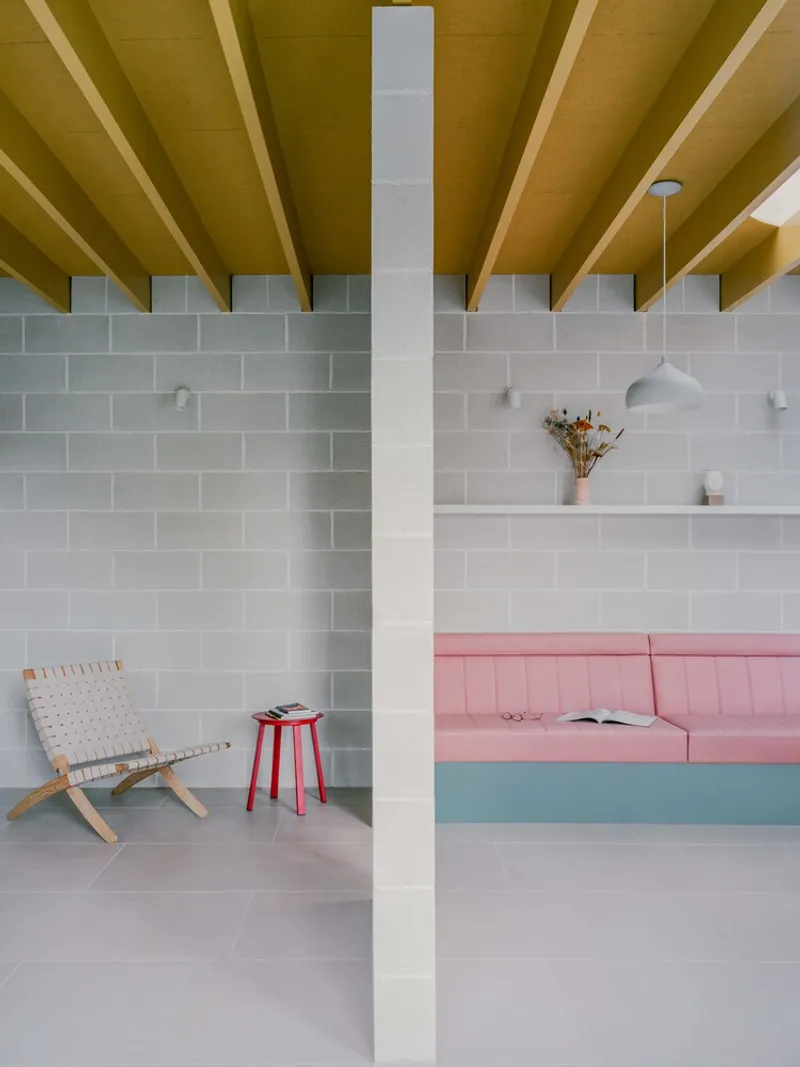
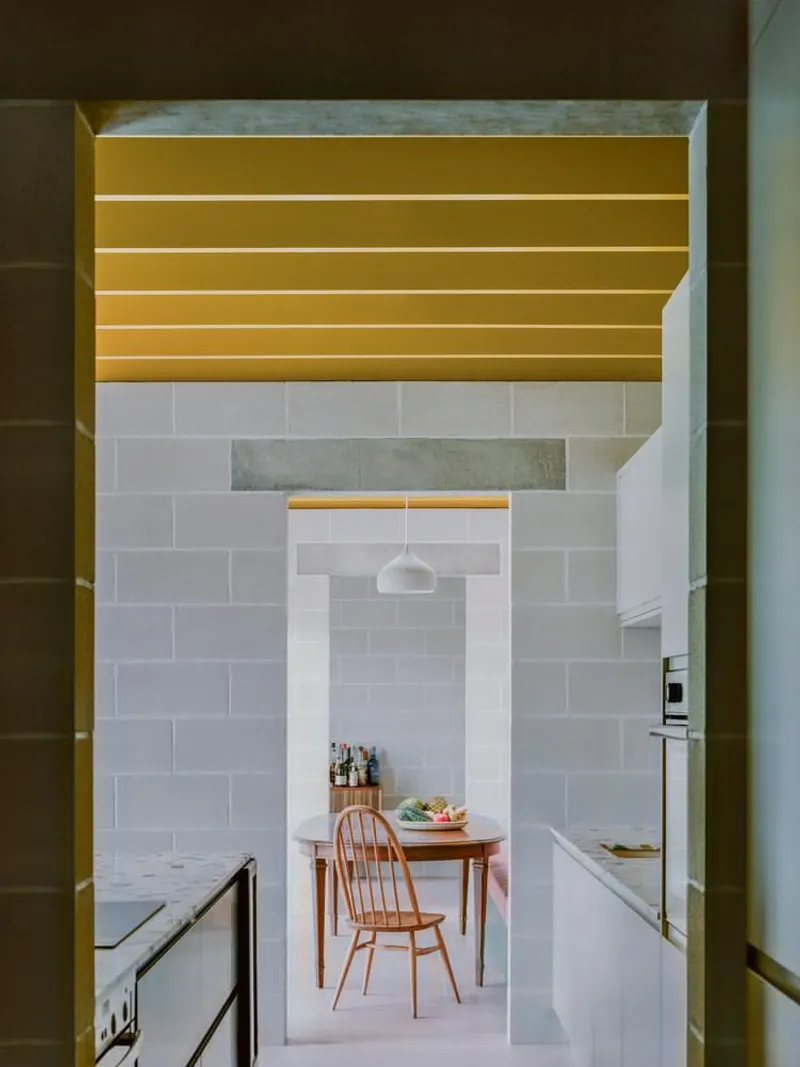
Inside, the entrance opens into a dramatic double-height lobby where old and new intersect beneath an open mezzanine and family bathroom. Moving beyond the threshold, a series of interconnected living spaces unfolds along the garden elevation. This enfilade culminates in a large picture window that frames expansive views of the park, drawing daylight deep into the plan. The absence of internal doors allows the kitchen to flow seamlessly into a top-lit dining room, which in turn leads to an intimate snug at the far end. Carefully calibrated openings maintain a balance between openness and enclosure, ensuring each space retains its own character while remaining visually connected.
Material efficiency plays a central role in the project’s architectural strategy. Working within a tight budget and aiming to reduce embodied carbon, Artefact Studio developed a lean construction system that prioritises honesty and durability. Single-leaf walls built from hollow fair-faced concrete blocks are left exposed internally, while insulation and render are applied externally. Exposed timber beams and OSB sheathing are celebrated rather than concealed, painted in a vivid yellow that reinforces the project’s expressive identity.
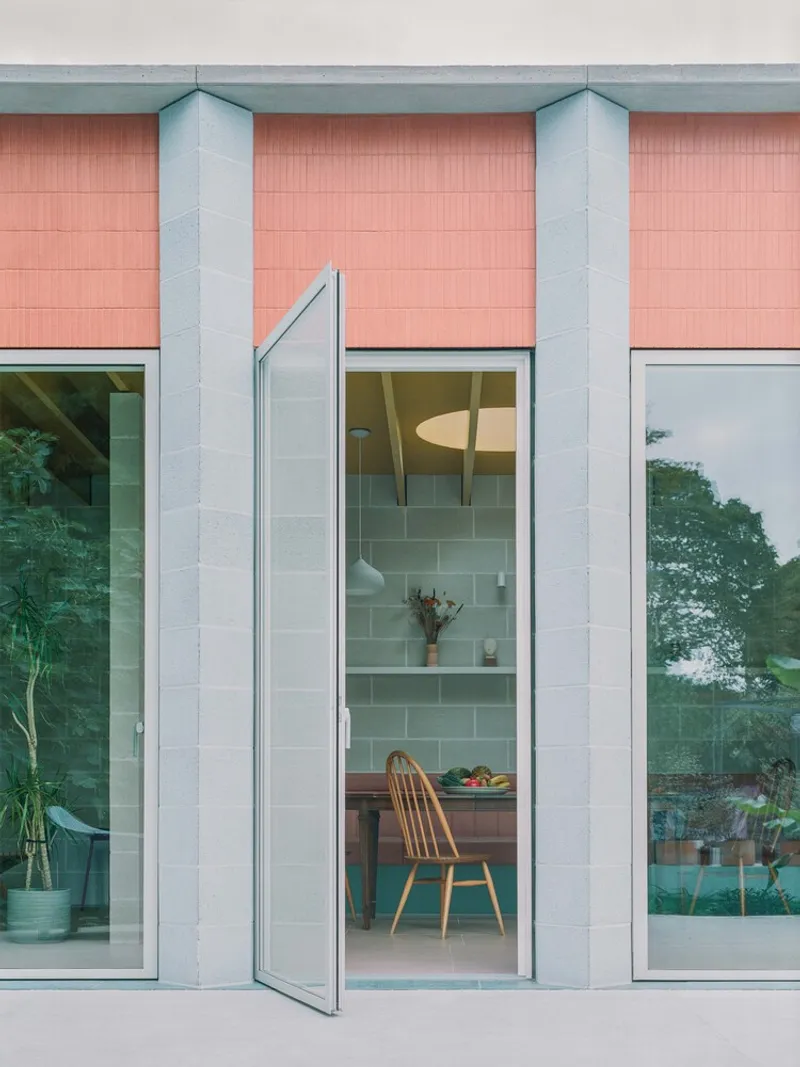
The garden elevation is deliberately more ornamental than the restrained side and rear façades, echoing the tradition of civic architecture where public-facing elements carry greater expression. Off-the-shelf blue pigmented blocks were cut on site to form deep triangular columns, punctuated by inset terracotta tiles that reference the arrowhead tiles of the original 1950s house. This triangular motif becomes a unifying design language, appearing in the plot geometry, entrance canopy, structural details, and even the patterning of the original mid-century wallpaper.
Triangle House demonstrates how thoughtful residential architecture can achieve both economy and richness. Through colour, geometry, and a refined material palette, Artefact Studio has created a distinctive contemporary home that respects its suburban context while embracing cultural identity, sustainable construction, and spatial generosity within a compact footprint.
All photographs are works of
Lorenzo Zandri


Popular Articles
Popular articles from the community


LT2A and OPEN Architectes Thread a Brick and Glass High School Through a Wooded Belgian Campus
In Braine-l'Alleud, a 3,000 m² wing for Collège Cardinal Mercier pairs pale brick with a glazed colonnade, deferring to a small chapel and a dense wood.

longwave studio Reorganizes a 112 m² Tainan Apartment Around the Daily Routines of a Family and Two Cats
In Tainan, Taiwan, birch plywood, rust-red furniture and a freestanding plaster wall link arrival, storage, work and family life in one apartment.

Cube Design Draws an Ecological Corridor Between Two Shenzhen Hills with the Nankai Building
Beside Shenzhen's container docks, the Nankai Building pairs stacked balconies with a climbing green screen to connect two hillsides across its height.

David Macias Steps a Doorless Stone and Plaster House Down a Tropical Colombian Hillside
In the humid hills of Colombia, Threshold House replaces the front door with an open void and terraces its 850 m² down the slope instead of fighting it.

Similar Reads
You might also enjoy these articles

Gil Mello Arquitetura Tilts a Single Roof Toward the Waterfalls on a Plateau Above Aiuruoca, Brazil
In Aiuruoca, Minas Gerais, a 200 m² house of local labor and reclaimed poles pairs a low valley veranda with a tall mountain one.

U.GA Architects Wraps an Oval Rooftop Pool in Curved Board-Formed Concrete on Busan's Jeollidan-gil
In Busan's Jeonpo-dong, a 454 m² mixed-use block stacks a neighborhood facility, guest rooms and an oval rooftop pool inside spiraling concrete walls.

Felipe Hess Arquitetos Turns a Blind Stone Wall to the Street and Opens a Brazilian House onto a Courtyard and Canal
A canal-front house in Brazil hides behind painted stone and planting, then opens to an olive-tree courtyard, a reed-ceilinged porch and a curving pool.
David Macias Steps a Doorless Stone and Plaster House Down a Tropical Colombian Hillside
In the humid hills of Colombia, Threshold House replaces the front door with an open void and terraces its 850 m² down the slope instead of fighting it.

Explore Residential Building Competitions
Discover active competitions in this discipline

Challenge to design mud housing for contemporary communities

Challenge to reimagine the Iron Throne

Photograph architecture without architects

Illustrate the lost glory of Angkor Wat - Render Challenge
Comments (0)
Please login or sign up to add comments
No comments yet. Be the first to comment!