

U FARM Competition
Designing a building revealing the potential in local plant production.

At the present time, the issues related to the need to reduce the exploitation of natural resources, the preservation and restoration of natural ecosystems, the attitude towards our surrounding natural environment and the constant increase in hunger worldwide are becoming more and more urgent for discussion.
But the transition does not need to be abrupt and everywhere - in areas where agriculture is developing well and food is sufficient, the standard way of cultivation needs to be preserved in order not to disturb the balance of ecosystems.
Currently, there are three main techniques of vertical plant cultivation - hydroponics, Аeroponics and Аquaponics. Different types of plant cultivation have been selected in the developed project, one of them being the traditional method.Since the farm is not only for production, but also for training, it should offer more opportunities. Therefore, a study was made of the different types of cultivation, as a result of which the following were chosen to be carried out in the project:
1. Traditional cultivation of crops - planting the crops in soil and growing them in natural conditions (It also include roof cultivation here, although there are some differences)
• Pros: growing through natural conditions [(sunlight, soil nutrients, sometimes rain – (which in the Shanghai study is a significant factor - about 35% rainy days per year)]
• Cons: influence of the seasons; need to spray with pest control chemicals; dependence on weather conditions; smaller output
2. Hydroponics – growing plants in tanks with water rich in growth-stimulating substances
• Pros: no spraying against pests; producing a significantly larger output compared to traditional farming methods; year-round production
• Cons: Use of large amounts of water to maintain plants; limited range of plant species; high energy consumption; more production than traditional farming method

3. Aeroponics - growing plants in vertical facilities. Fueled by growth-promoting-rich steam – similar to hydroponics, but plants absorb smaller amounts of water
• Pros: Using less water resources than hydroponics; high energy consumption; more production than traditional farming method
• Cons: Use of non-natural substances for plant nutrition.

4. Aquaponics
• Pros: faster plant growth (compared to traditional growing methods), due to the perfect conditions (clean air, exact amount of light, satisfied needs for water and nutrients, etc.); less amount of land used; 90% of the water is reused (circulated between the plants and the fish), therefore we have little consumption of the water resource; more production than the traditional cultivation method; less carbon emissions; for the purpose of optimization, the process implies production not only from plants but also from fish; feeding the plants with natural waste matter from the fish.
• Cons: taking more care of the system compared to others, due to its complexity (synchronization between plant species and animals, each with its own specifics for cultivation), an error in the cultivation temperature, pH of the water, etc., can be catastrophic for the whole system – this minus should not stop us, since there is a dependency that the more something is worth (or better for us), the more care it requires; the installation's need for a large amount of energy.
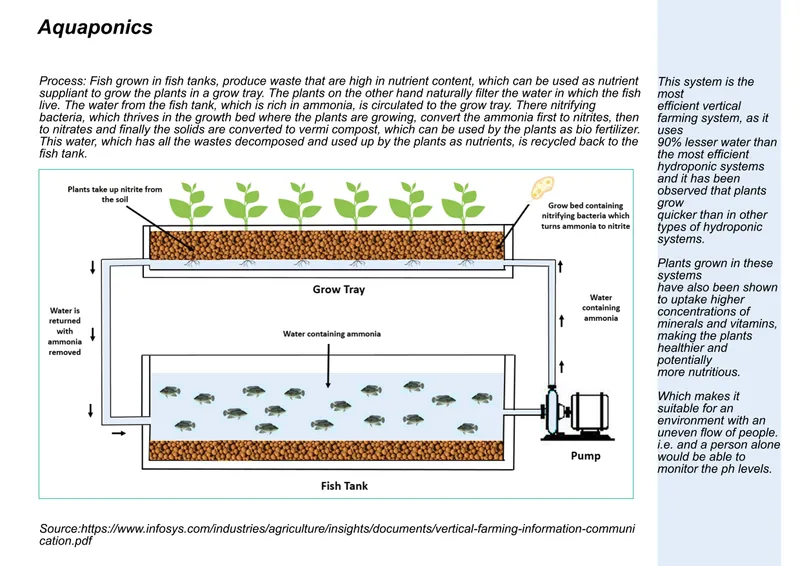
Since Aeroponics and Hydroponics overlap in characteristics to a large extent, but Aeroponics requires less resources, the Aeroponics system was chosen to represent both. The rest of the systems have their big differences, which suggests their independent use.
Another starting point to the vertical farm is the high costs. In terms of energy, this problem will be solved with energy sources and maximum natural lighting. The problem of water consumption is solved by selecting the cultivation methods. Also, the production will rely on the collection of water from the roofs. Shanghai is an extremely suitable city for this purpose, as it rains about 35% of the days per year. A diagram from meteoblue.com will serve as an illustration, as well as a table with more detailed data made from data from the same site.


As a measure to maintain a favorable climate in the buildings, even during the hotter days of the year, natural ventilation of the premises is foreseen, as well as solar protection elements on the facades, attached to rails for between the horizontals of the suspended facade. The sun protection elements are able to be folded in cloudy weather and unfolded in sunny days. They are separated into sectors, which means that they will be used only in the areas that are needed. Thus, the facade will be dynamic and varied at different times of the day.
Regarding the uniform distribution of light on all plants, slowly rotating planters have been selected, and in the darker areas combined lighting, which will be powered by the collector glasses on the roof of the Aeroponics building.
Volume
The volumetric solution comes from the surrounding environment. As we can see in the diagram, U Farm is located on a main street, on the opposite side of which is an Industrial zone. In this regard, the form reacts by utilizing the maximum cornice elevation, creating a rhythmic silhouette on both sides of the street. To the north of the newly designed building there is an existing Residential area, this implies the placement of the openwork building on this side, as well as the opening of the gardens to this area. To the east, an industrial building is located again, the parking of which is oriented towards U Farm. Along with this, the approach from the main street, typical of the area, suggests the location of the freight and vehicular approach to the east. To the west is a fire station with a large farmyard, overflowing the two unbuilt spaces, creating the feeling of spaciousness. At the bottom of this opened space is a positioned approach for the main building on the plot which plays the role of a kind of ramp that leads visitors to show them the secrets of production.
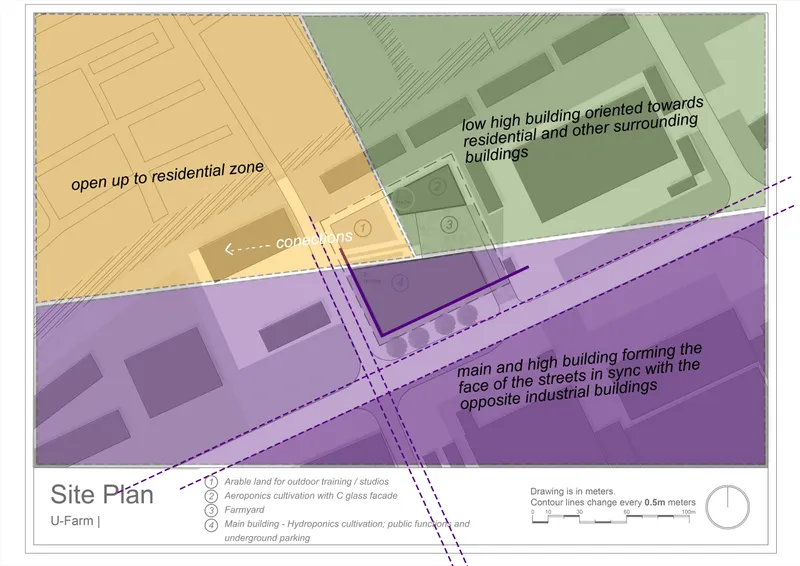

Тhe concept of the volume and architecture of the building is an extremely important topic that is touched upon in the publication. Here I think it is important to mention the things that are missing there, such as the choice of the right processes, or the vegetation itself. They are equally important to the successful functioning of the building. However, the architect needs to take into account not only the design of the building and the surrounding environment, but also the processes that take place inside the building, as they largely shape its appearance.
Selection of the plants
Since the Concept is to create a space open to visitors and volunteers, it implies a diverse production. For this reason, different types of fruits, vegetables and herbs were covered. One of the most frequently used in the culture of the city. They were zoned as follows to find the most suitable place for them on the property.
For the traditional cultivation, vegetables are provided that are not quite suitable for growing on racks system, since the amount of production that will come out would not be competitive with other types. Also, due to their greater height, they would not be suitable for a roof with a small area. Therefore it was chosen to be positioned at ground level. These are cherry tomatoes and the specific variety of cucumbers - sponge gourd. At ground level, cherries and star anise are also grown as part of the landscaping.
Various areas for visitors and children are also designated on the field. different types of vegetation with their characteristics are selected for these areas, which reveal a larger set of information to the learners. Strawberries, Cherries, Star anise, Shepherd's purse, Rose geranium, etc. were selected for the semi-covered training ground and the main walkway for visitors, which, in addition to being actively used in the local cuisine, are also extremely durable and completes the vision of the landscape.
Low root crops that do not need a lot of soil are chosen for cover cultivation, a layer of 50 cm is provided for them, which is quite enough for their cultivation. These are fennel, which is used as a spice for various types of dishes, and carrots, a vegetable often used in local cuisine.
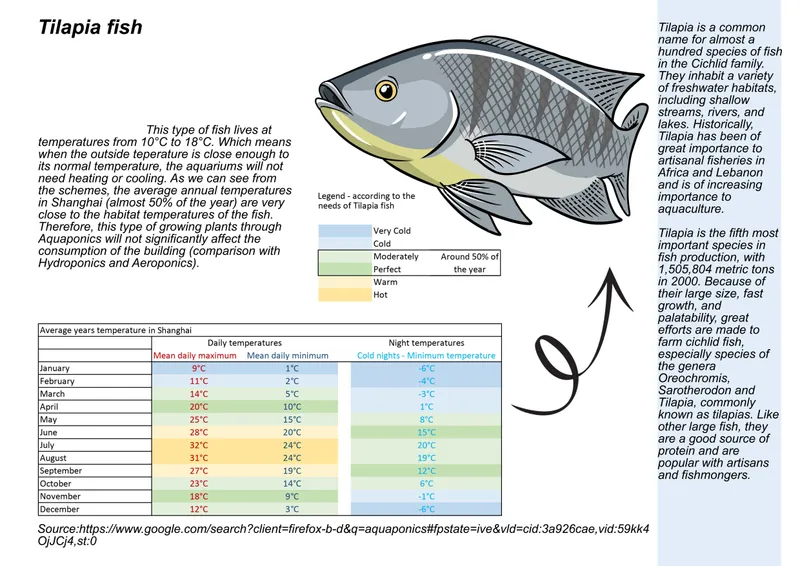
Indoors by the Aeroponics method was selected for cultivation garlic chives. In the Aquaponic system you will see a type of cabbage typical of the culture - bok choy, which corresponds well with the selected type of fish - Tilapia.
Tilapia is considered the gold standard of Aquaponics because it grows to stock size within 8 months, self-regulates its population, and is very tolerant of a wide range of temperatures and water qualities. The fish lives at temperatures of 10-18 degrees Celsius.
Conclusion
Local farming is eminently suitable for a city the size of Shanghai. In this regard, the design solution was inspired by the needs of a place serving a large part of Jiading District, namely a space, representing great diversity of plants and agriculture systems, suitable for occupants of different age groups and providing the opportunity to touch the process, to anyone who is interested.

Popular Articles
Popular articles from the community

Extended Shell: Retrofitting Kolkata's Balconies as Living Urban Thresholds
A modular retrofit system recovers the social and environmental intelligence of Kolkata's historic verandas for contemporary Park Street residents.

Manzana Morphosis: Stretching Barcelona's Grid into a Living Landscape for 2050
A radical reworking of the Eixample manzana turns density into a tool for generous public space, vertical ecology, and environmental performance.

The Amber Palace Opera: A Geological Fiction Surfaces on Tallinn's Baltic Waterfront
Pierre Brillard reimagines a Baltic legend as a public landscape, opera house, and waterfront promenade rooted in Tallinn's coastal identity.

Faces of the Soviet Avant-Garde: Turning Moscow's Street Names into an Open-Air Museum
A network of sculptural installations across a Moscow residential district transforms forgotten architect names into spatial encounters with cultural memor

Similar Reads
You might also enjoy these articles
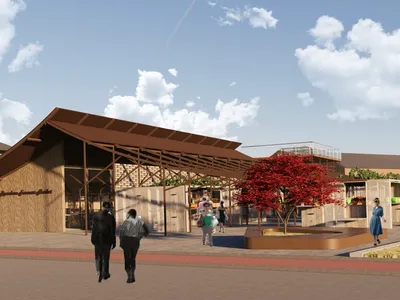
The Rhythm of Seasons
A Farmers' Market Connecting Nature and the City
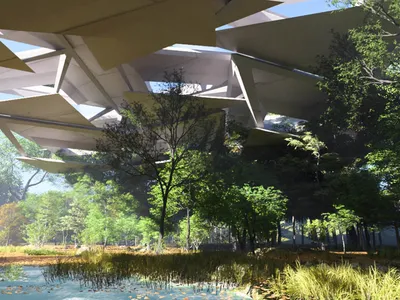

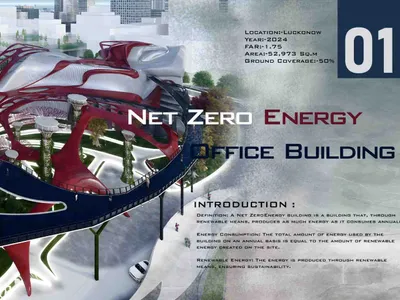
More Than a Building-Designing a Living System
More Than a Building-Designing a Living System
Base Beyond
DESERT COMPOUND ARID: TOURISM OF ABSENCE AND ABUNDANCE

Explore Vertical Farming Competitions
Discover active competitions in this discipline


Challenge to reimagine the Iron Throne

Photograph architecture without architects

Illustrate the lost glory of Angkor Wat - Render Challenge

Design challenge to reuse E-waste
Comments (0)
Please login or sign up to add comments
No comments yet. Be the first to comment!