
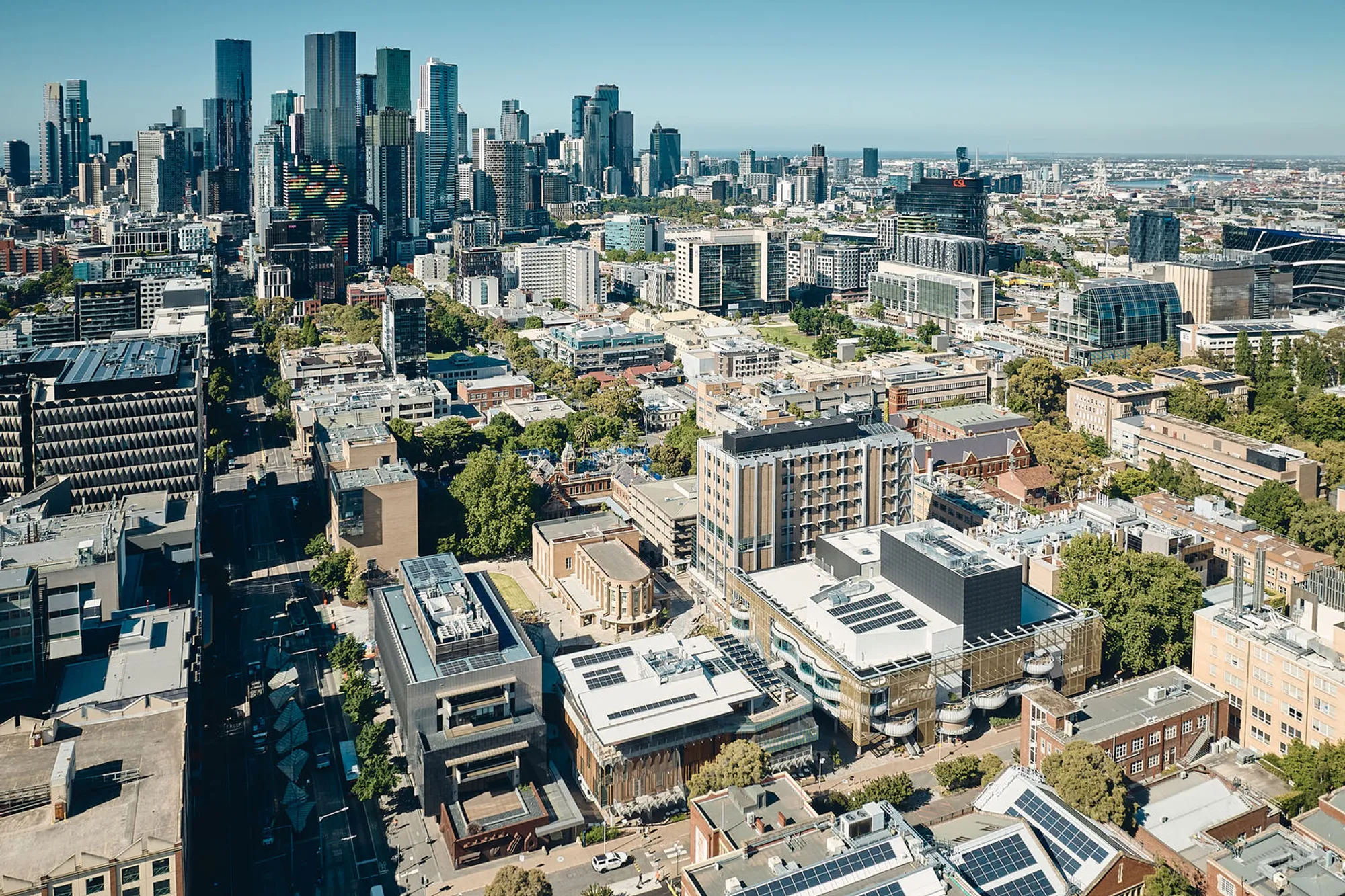
University of Melbourne Student Pavilion by KoningEizenberg Architecture: A Hub of Student Life and Sustainability
The University of Melbourne Student Pavilion blends sustainability, inclusive design, and flexible student spaces with timber, concrete, rooftop gardens, and vibrant campus life.


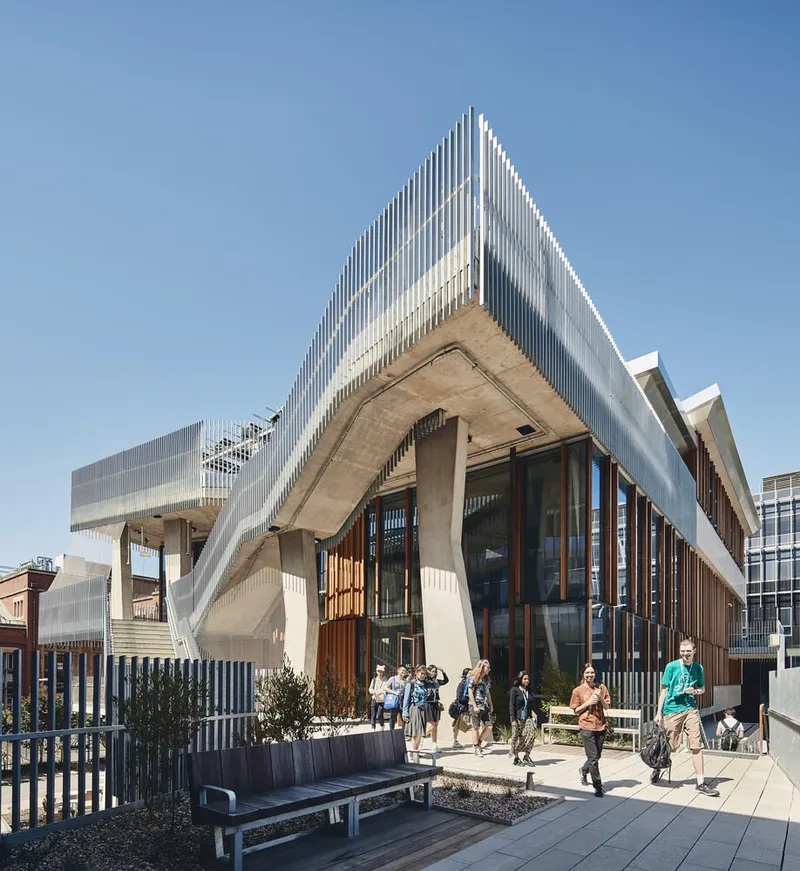
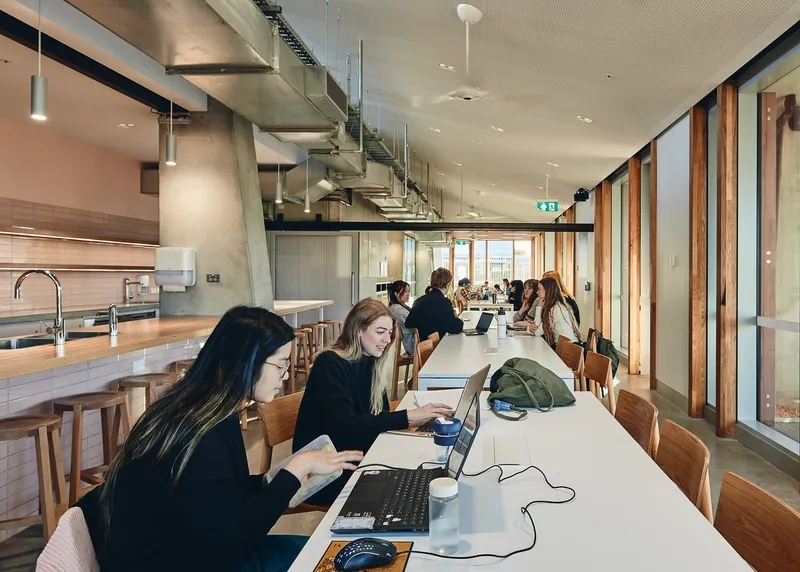
Located in the heart of Parkville, Australia, the University of Melbourne Student Pavilion by KoningEizenberg Architecture is a 27,000 ft² landmark completed in 2022. This contemporary educational facility is designed to foster inclusivity, collaboration, and sustainability, providing a vibrant home for students within the new Student Precinct. The Pavilion expands campus amenities for commuter students, offering informal dining, flexible study areas, arts spaces, meeting zones, and event venues that remain accessible throughout the day.
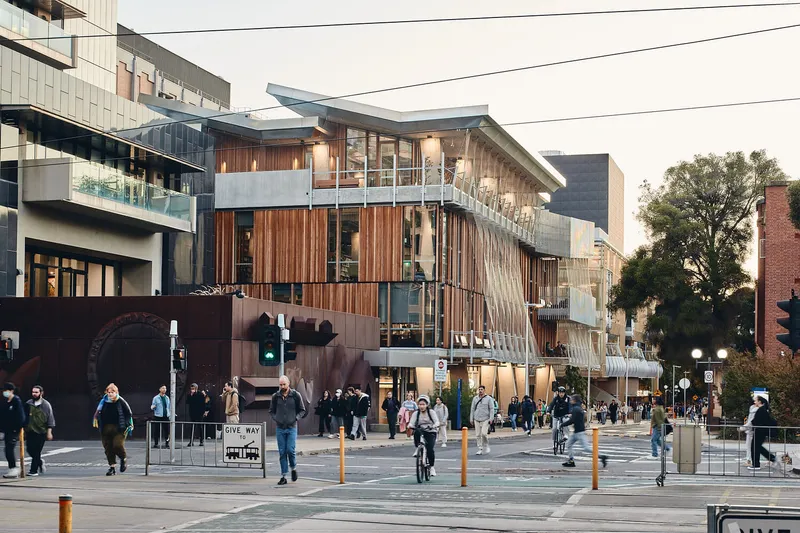
Inclusive and Dynamic Student Spaces
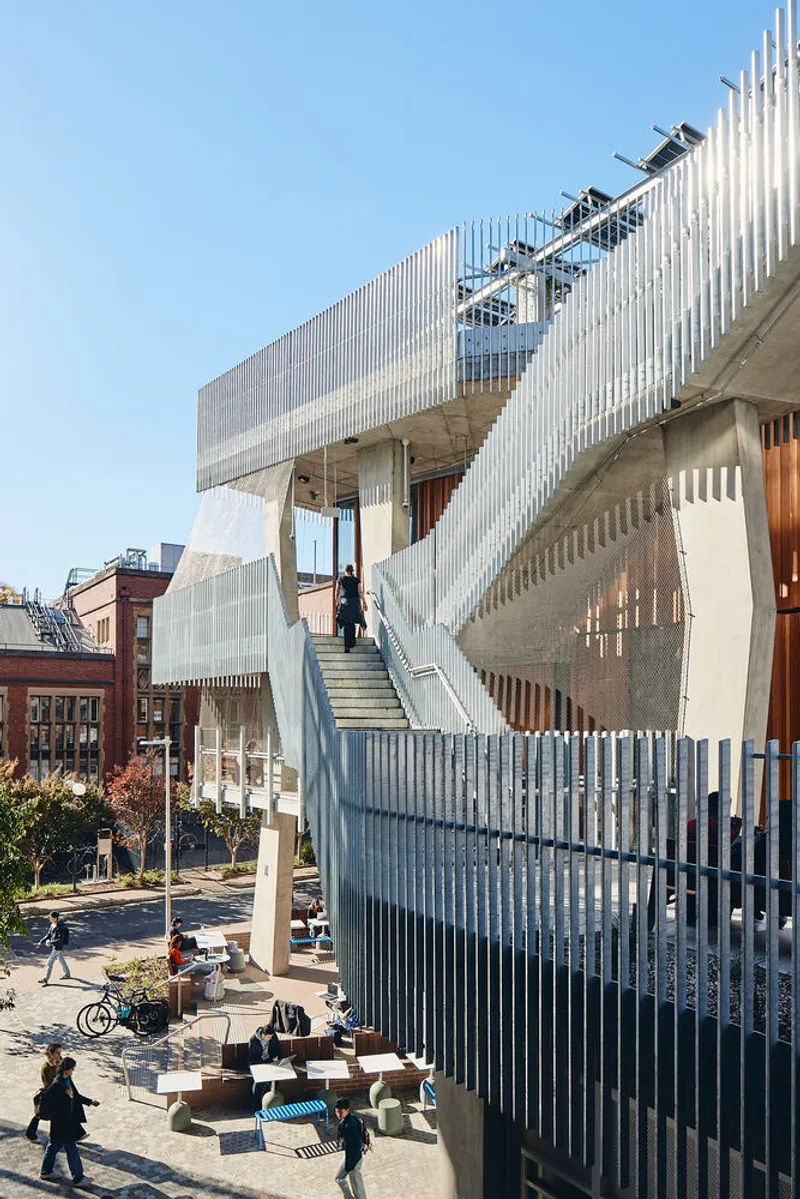
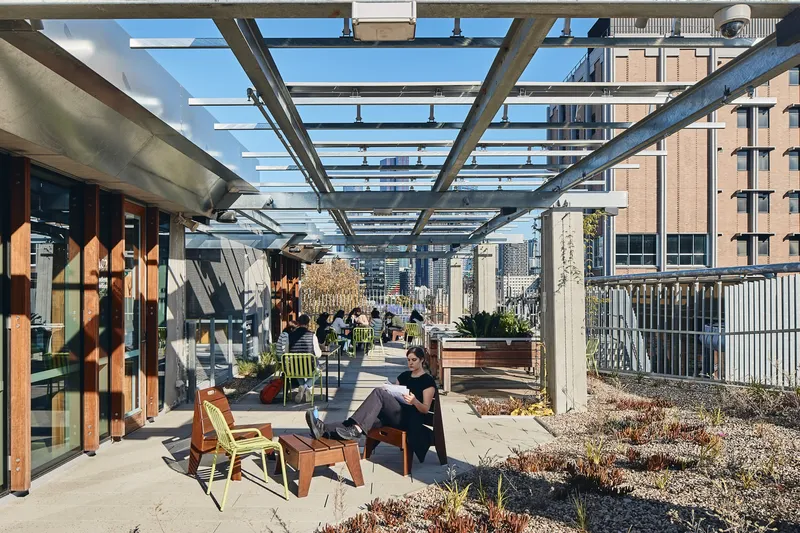
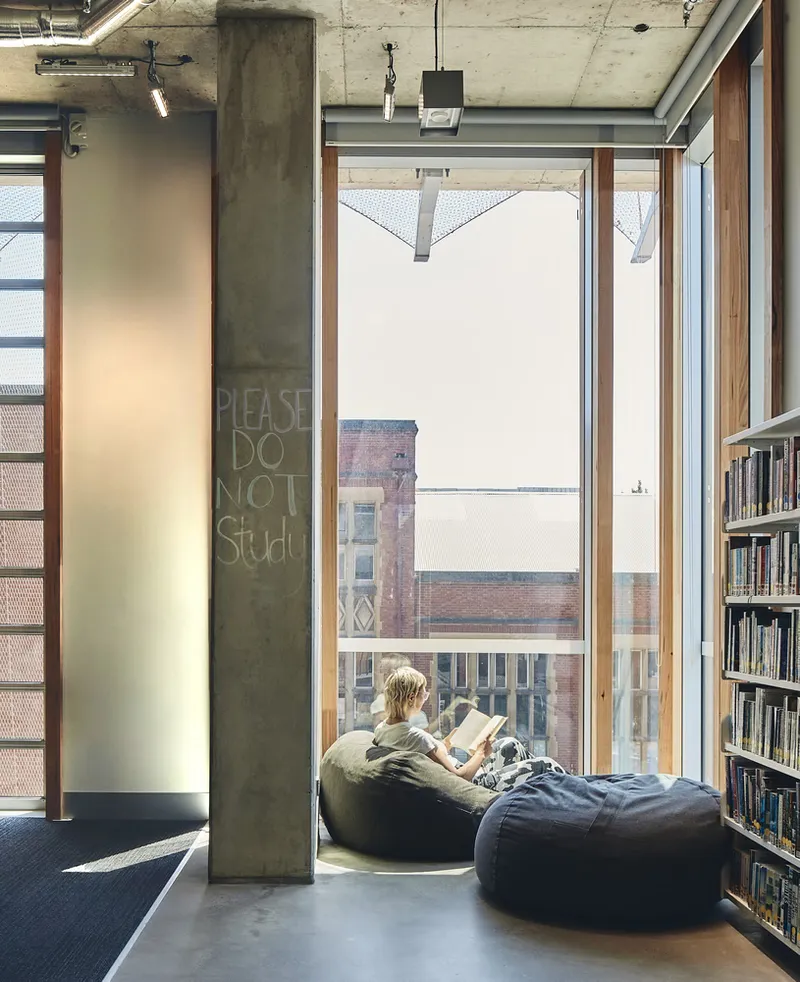
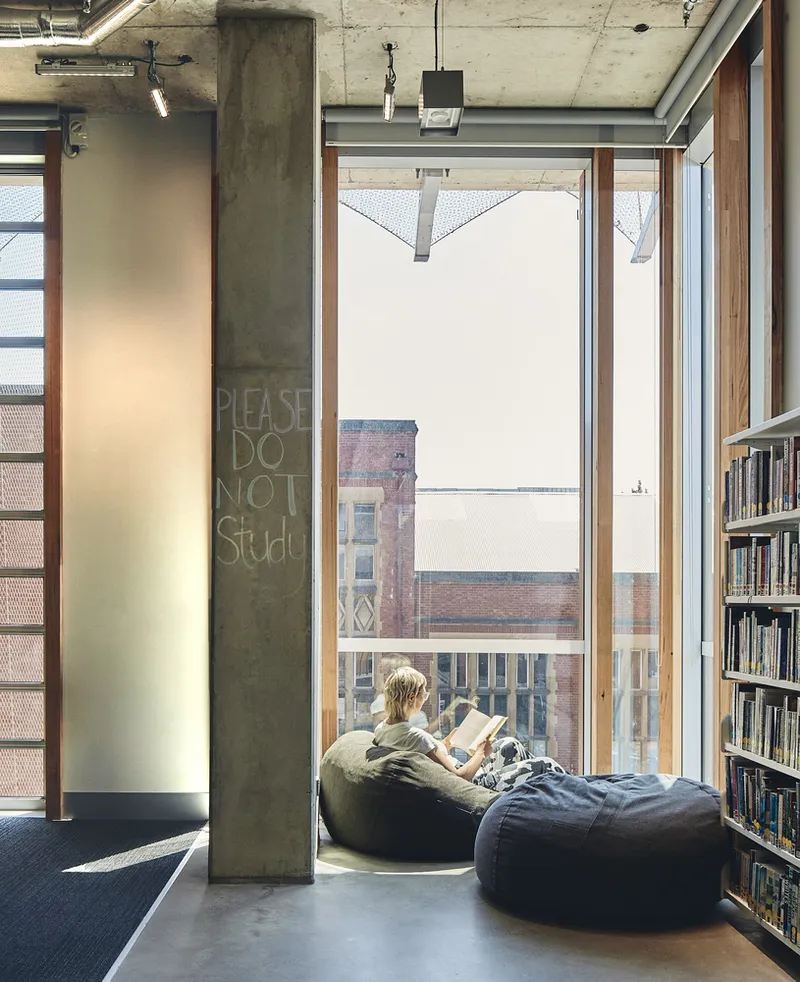
Driven by student input emphasizing diversity, gender equity, and well-being, the Pavilion delivers spaces dedicated entirely to student engagement. Free of traditional classrooms, the design emphasizes relaxed and robust environments where students can study, socialize, and connect. Occupiable outdoor terraces, projecting balconies, rooftop gardens, and exterior circulation on all levels create a dynamic hub of visible activity, reinforcing the Pavilion as a central gathering point for student life.
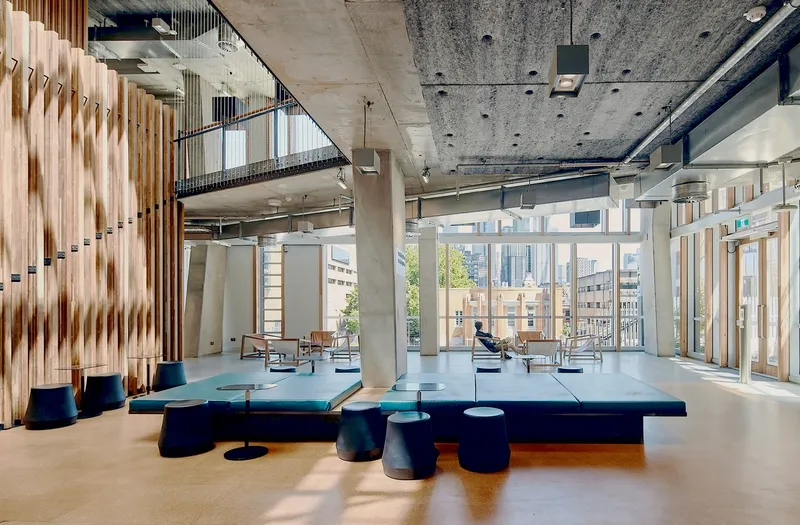
Architectural Expression and Material Innovation
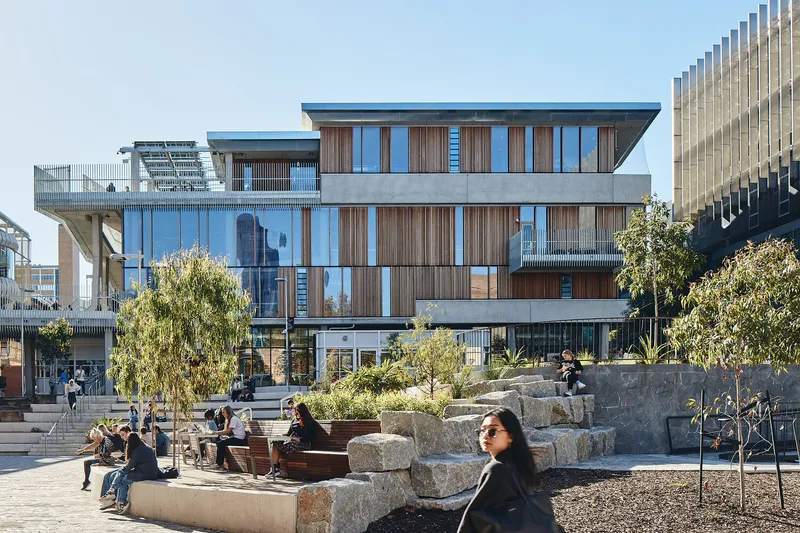
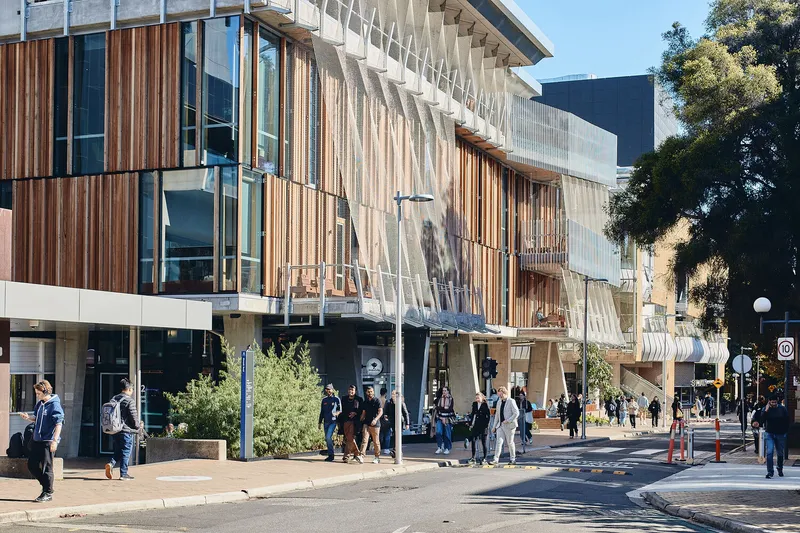
The Pavilion’s architectural language combines an exposed concrete skeleton with sustainably harvested timber, crafting an expressive and environmentally progressive identity. Sculptural columns rise from the ground to the roof, supporting concrete floors while shaping interior spaces. Natural wood accents, generous glazing, and open circulation paths create a transparent, welcoming environment that blurs the boundaries between interior and exterior, encouraging movement, interaction, and visibility across all levels.
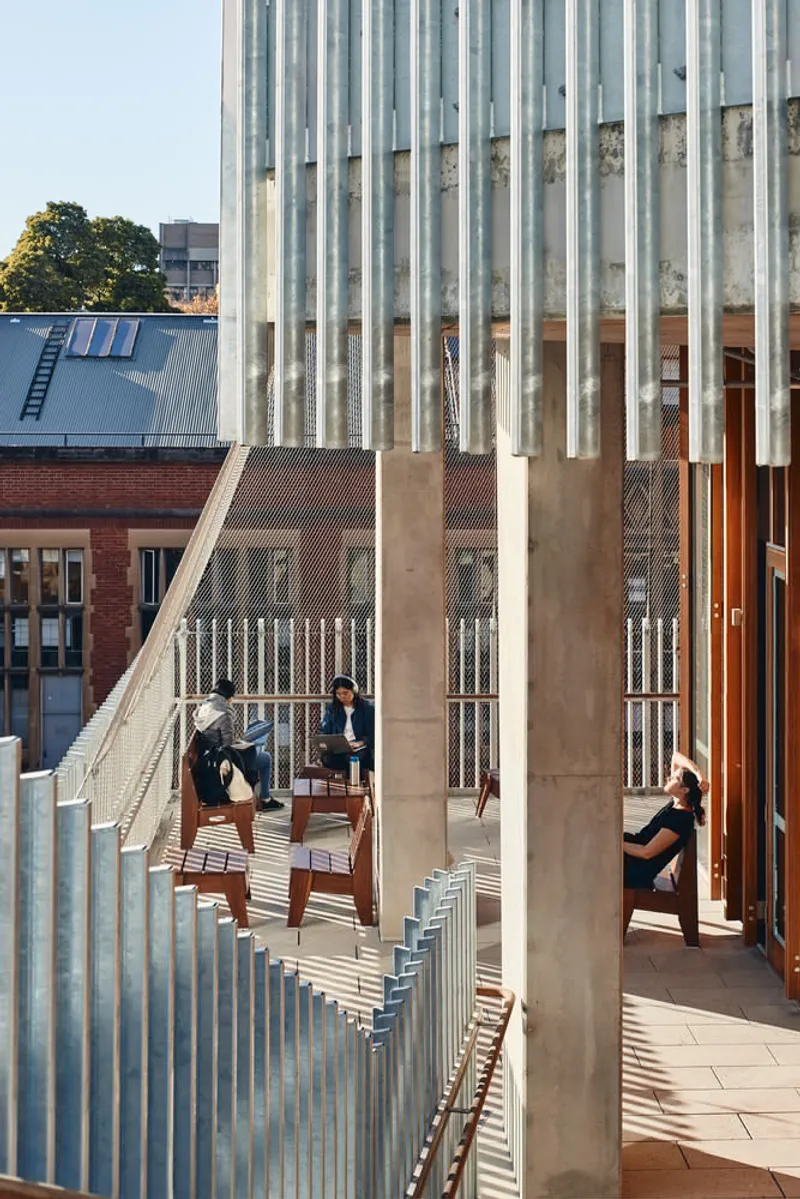
Sustainability and Environmental Design
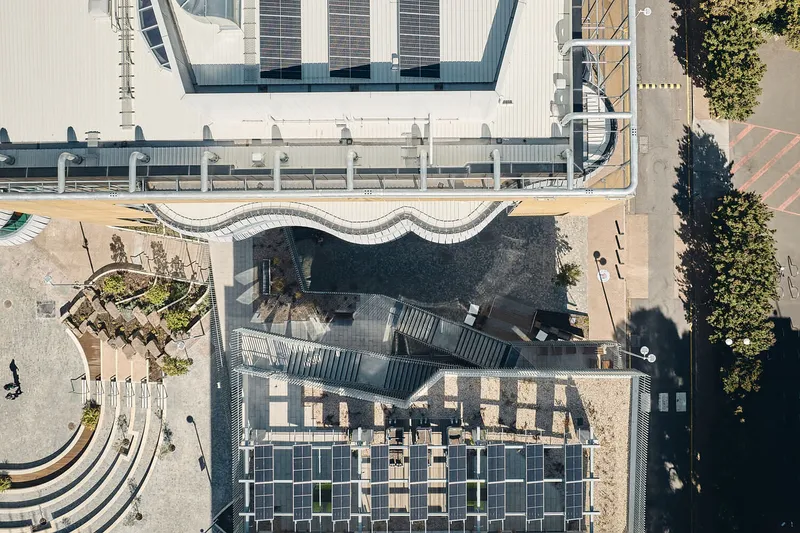
Sustainability is embedded throughout the Pavilion. Photovoltaic panels shade rooftop landscaped terraces, passive environmental strategies reduce energy demand, and large glazed facades optimize natural lighting while enhancing visual connectivity. Seating areas spill from indoors to outdoors, wood siding reflects natural textures, and all circulation paths invite students to freely engage with every part of the building. These features contribute to the University of Melbourne’s pursuit of a GBC Australia 6-Star rating, equivalent to LEED Platinum, highlighting the Pavilion as a model of environmentally responsible architecture.
Integration with Campus and Cultural Context
The Student Pavilion is an integral element of a larger master plan designed in collaboration with local architects to revitalize the Student Precinct. The precinct not only upgrades campus facilities but also restores elements of the precolonial landscape and acknowledges the cultural heritage of its traditional custodians. By combining innovative architecture with cultural sensitivity, the Pavilion strengthens the University’s commitment to inclusivity, sustainability, and student well-being.
A Living Hub for Student Life
The University of Melbourne Student Pavilion represents a forward-thinking approach to educational architecture, prioritizing social connectivity, environmental responsibility, and accessibility. Through thoughtful material choices, sculptural design, and expansive, flexible spaces, it offers students a welcoming, dynamic environment where they can study, collaborate, and thrive.
All photographs are works of
Peter Bennetts



Popular Articles
Popular articles from the community


Lunar Spiral: Space Architecture Shaped by the Mathematics of the Universe
Lunar Spiral reimagines space architecture through Fibonacci geometry, lunar regolith, levitating habitats, and self-sustaining Moon living.

The Earth Pod: 3D Printed Homes for Resilient Refugee Communities
The Earth Pod reimagines refugee housing through 3D printed homes made from clay, combining resilience, self-sufficiency, and rapid shelter.

Riyadh For All: Intergenerational Urban Design for Active Aging in Rabat
Riyadh For All reimagines urban design in Rabat with intergenerational co-living, adaptive courtyards, and Moroccan cultural exchange today.

The Musturak Paradise: Senior Living Architecture for a Connected Future in Temara, Morocco
The Musturak Paradise reimagines senior living architecture in Temara via private homes, social spaces, culture, community, and shared care.


Similar Reads
You might also enjoy these articles

FAMM Arquitectura Organizes Ten Villas Around Courtyards and Jungle in Nosara, Costa Rica
El Molino pairs two elongated volumes with deep overhangs and timber louvers to build a compact coastal community five minutes from the beach.
Oscar Niemeyer's Ibirapuera Park Pavilions Define São Paulo's Cultural Identity in Concrete and Curve
A constellation of modernist volumes set within São Paulo's most important urban park, conceived for the city's 400th anniversary in 1954.
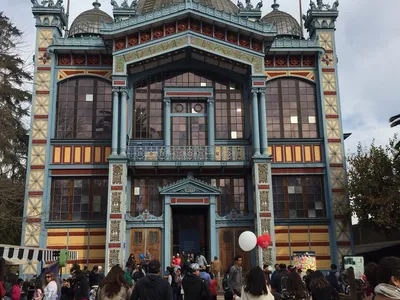
How Henri Picq's 1889 Paris Pavilion Traveled 11,000 Kilometers to Become Santiago's Artequín Museum
A prefabricated iron and glass pavilion built for the Paris Universal Exposition found a second life as a children's art museum in Chile.
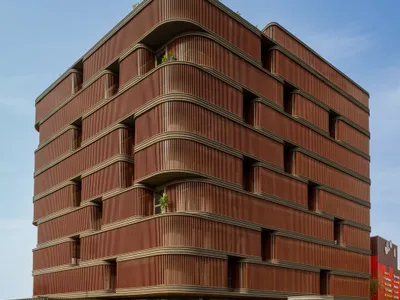
Sanjay Puri Architects Wraps a Jaipur Office Tower in Capsule-Shaped Green Buffers
A nine-level climate-responsive workplace near Jaipur Airport uses stacked planter terraces and aluminium screens to fight 40°C heat.


Explore Architecture Competitions
Discover active competitions in this discipline



Challenge to design public laboratory


Challenge to reimagine the Iron Throne


Photograph architecture without architects


Illustrate the lost glory of Angkor Wat - Render Challenge
Comments (0)
Please login or sign up to add comments
No comments yet. Be the first to comment!