

VA House in Weiler, Austria: A Contemporary Alpine A-Frame by Sebastian David Büscher
Contemporary alpine A-frame house in Austria, combining silver fir timber and concrete, blending mountain landscape with modern minimalist architecture.


Located in Weiler, Austria, VA House is a contemporary reinterpretation of the traditional A-frame house, designed by architect Sebastian David Büscher and completed in 2024. Set within the culturally rich architectural region of Vorarlberg, the project reflects a deep understanding of alpine construction traditions while introducing a refined modern language.


The house merges regional alpine architecture, natural materials, and minimalist detailing to create a holiday retreat that feels both grounded and sculptural. Inspired by surrounding rock formations and mountain silhouettes, the sharply pitched roof form becomes both a functional and symbolic gesture, offering shelter while visually echoing the rugged Austrian landscape.

Architectural Concept: Reinterpreting the Alpine A-Frame
4
Sculptural Geometry Inspired by the Alps
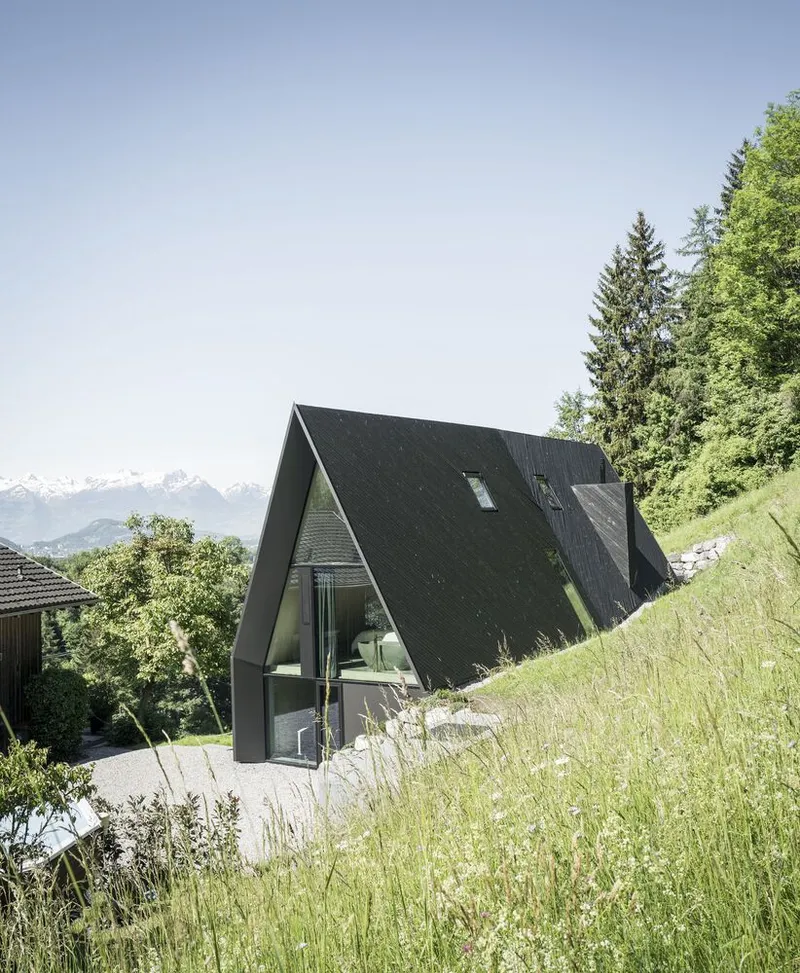
The defining architectural feature of VA House is its A-frame structure, a typology historically associated with mountain cabins and alpine retreats. Here, the form is sharpened and refined. The steep roofline mirrors the dramatic rock formations of the Swiss and Austrian Alps, while bent and folded surfaces enhance the building’s sculptural identity.
Rather than merely replicating vernacular architecture, the design abstracts it. The angular silhouette reads like a carved monolith rising from the terrain, simultaneously protective and expressive.

Material Dialogue: Silver Fir and Concrete
Materiality plays a central role in anchoring the house within its environment.
- Silver fir, a regionally sourced timber, represents the traditional alpine building culture. Its warmth and texture bring softness to the geometric form.
- Exposed concrete serves as a contemporary interpretation of the surrounding rocks and stone formations, grounding the house visually and structurally.
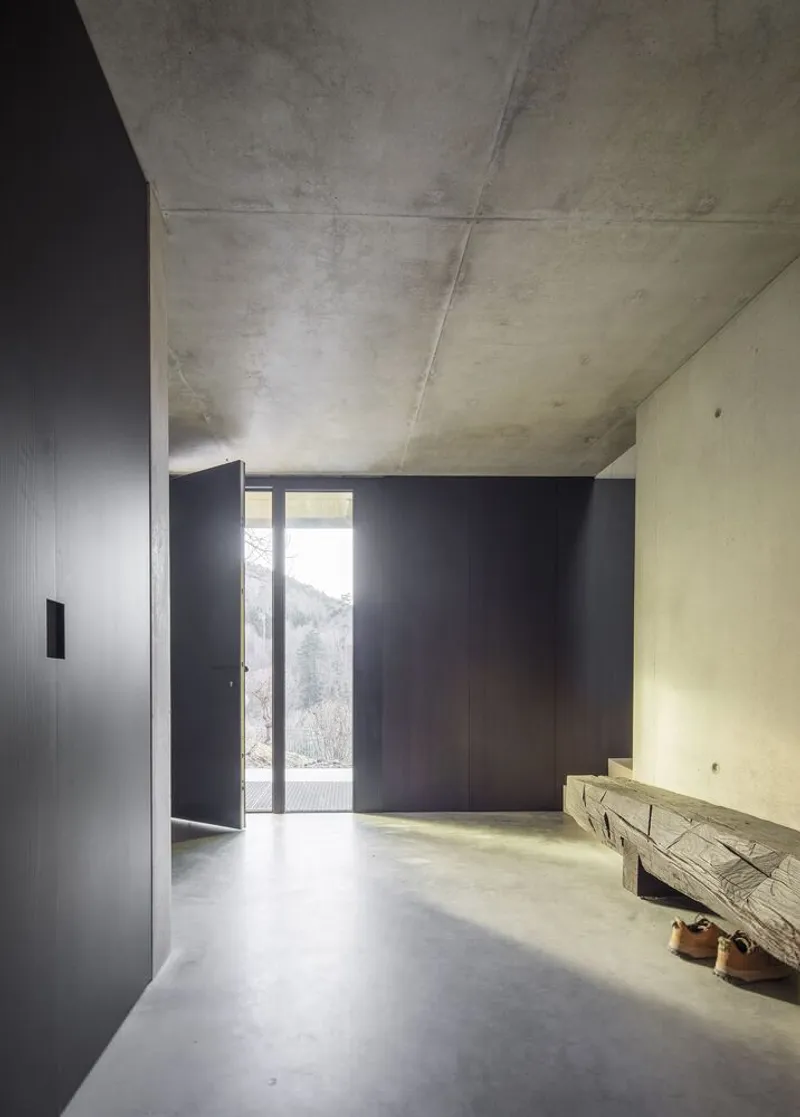
This deliberate contrast between wood and concrete establishes a dialogue between nature and modernity, a recurring theme in Vorarlberg’s architectural identity.
Interior Experience: Warm Minimalism in the Mountains
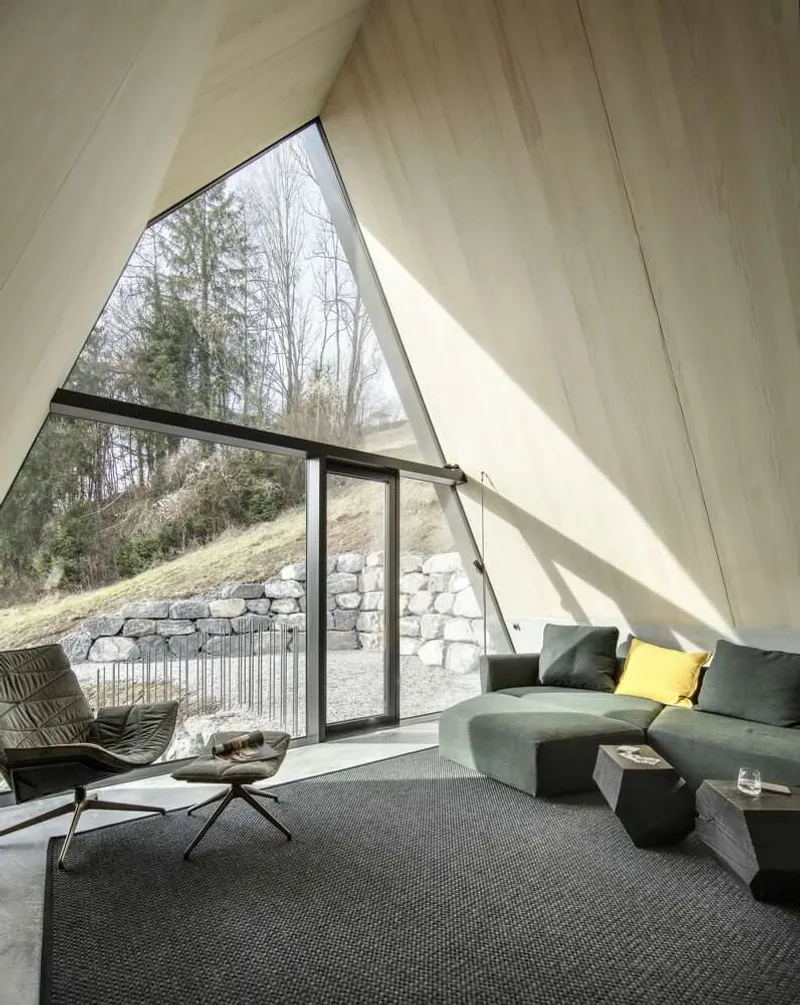
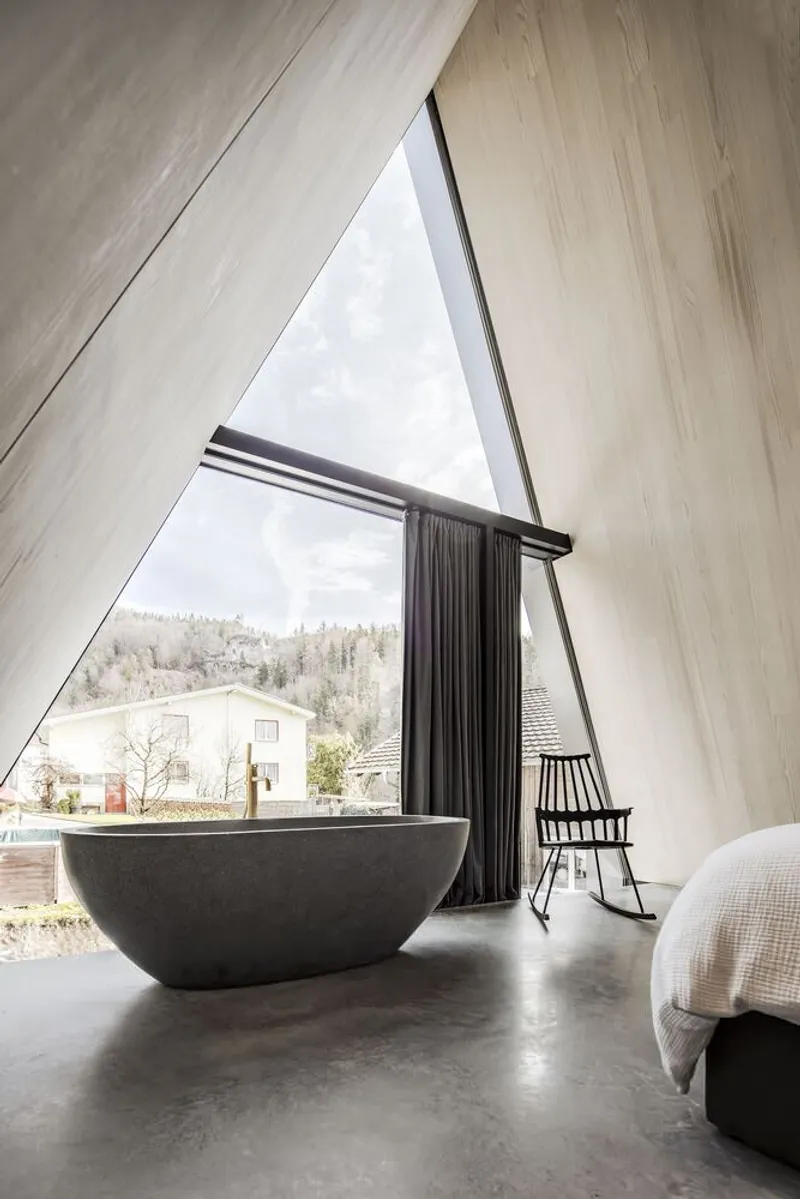
Inside, the spatial atmosphere balances openness with intimacy. The exposed timber structure emphasizes verticality, drawing the eye upward toward the apex of the A-frame. Large windows frame alpine views, reinforcing the seamless connection between interior and landscape.
The design prioritizes:
- Natural daylight penetration
- Clear spatial organization
- Minimal yet warm material palettes
- A sense of retreat and security
The house was conceived as a holiday dwelling, and its spatial composition aims to provide relaxation, shelter, and emotional comfort. The interplay of wood textures, filtered light, and panoramic views creates a calming architectural experience.

Construction and Craftsmanship in Vorarlberg
Vorarlberg is internationally recognized for its architectural culture, where craftsmanship, sustainability, and innovation coexist. In this context, VA House aligns with the region’s design ethos, where good architecture is not exceptional but expected.
The project involved a network of local specialists, including carpentry by Formsache and Fachwerk, concrete construction by Christian Scholz, and civil engineering by HTB. This collaborative approach reflects Vorarlberg’s tradition of close cooperation between architects, engineers, and artisans.

Sustainability and Regional Identity
VA House exemplifies sustainable alpine architecture through:
- Use of locally sourced timber
- Durable concrete construction
- Passive climatic adaptation via roof geometry
- Strong integration with topography
The steep A-frame roof efficiently manages snow loads, while the compact footprint reduces environmental impact. The house does not dominate its surroundings; instead, it feels carved from them.
By merging regional building culture, modern architectural minimalism, and landscape sensitivity, Sebastian David Büscher creates a residence that feels both timeless and contemporary.




Popular Articles
Popular articles from the community

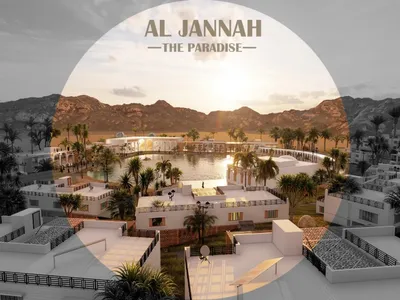
AL-JANNAH: Sustainable Architecture and Permaculture for Afghan Widows
AL-JANNAH uses sustainable architecture and permaculture to create resilient oasis of housing, learning, work and renewal for Afghan widows.

Conexión: Biophilic Design Reimagines High-Rise Living in Hong Kong
Conexión reimagines high-rise living in Hong Kong through biophilic design, green facades, shared spaces, daylight, water and nature within.

Co-Life: Senior Housing Design That Reconnects Older Adults With the City
Co-Life reimagines senior housing design through healing gardens, shared streets, workshops, and a sustainable community across generations.

Riyadh For All: Intergenerational Urban Design for Active Aging in Rabat
Riyadh For All reimagines urban design in Rabat with intergenerational co-living, adaptive courtyards, and Moroccan cultural exchange today.


Similar Reads
You might also enjoy these articles

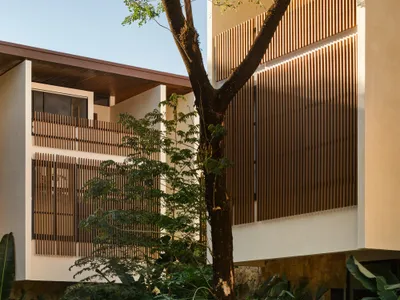
FAMM Arquitectura Organizes Ten Villas Around Courtyards and Jungle in Nosara, Costa Rica
El Molino pairs two elongated volumes with deep overhangs and timber louvers to build a compact coastal community five minutes from the beach.
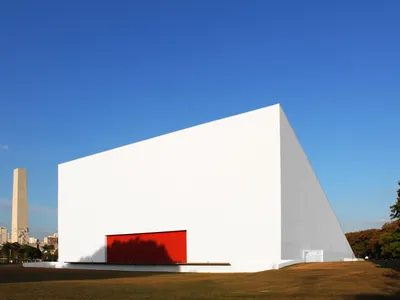
Oscar Niemeyer's Ibirapuera Park Pavilions Define São Paulo's Cultural Identity in Concrete and Curve
A constellation of modernist volumes set within São Paulo's most important urban park, conceived for the city's 400th anniversary in 1954.
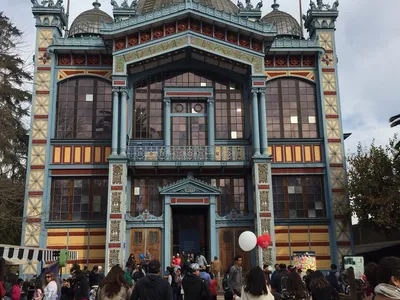
How Henri Picq's 1889 Paris Pavilion Traveled 11,000 Kilometers to Become Santiago's Artequín Museum
A prefabricated iron and glass pavilion built for the Paris Universal Exposition found a second life as a children's art museum in Chile.
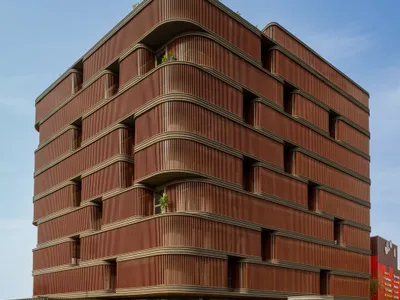
Sanjay Puri Architects Wraps a Jaipur Office Tower in Capsule-Shaped Green Buffers
A nine-level climate-responsive workplace near Jaipur Airport uses stacked planter terraces and aluminium screens to fight 40°C heat.


Explore Architecture Competitions
Discover active competitions in this discipline



Challenge to reimagine the Iron Throne


Photograph architecture without architects


Illustrate the lost glory of Angkor Wat - Render Challenge


Design challenge to reuse E-waste
Comments (0)
Please login or sign up to add comments
No comments yet. Be the first to comment!