
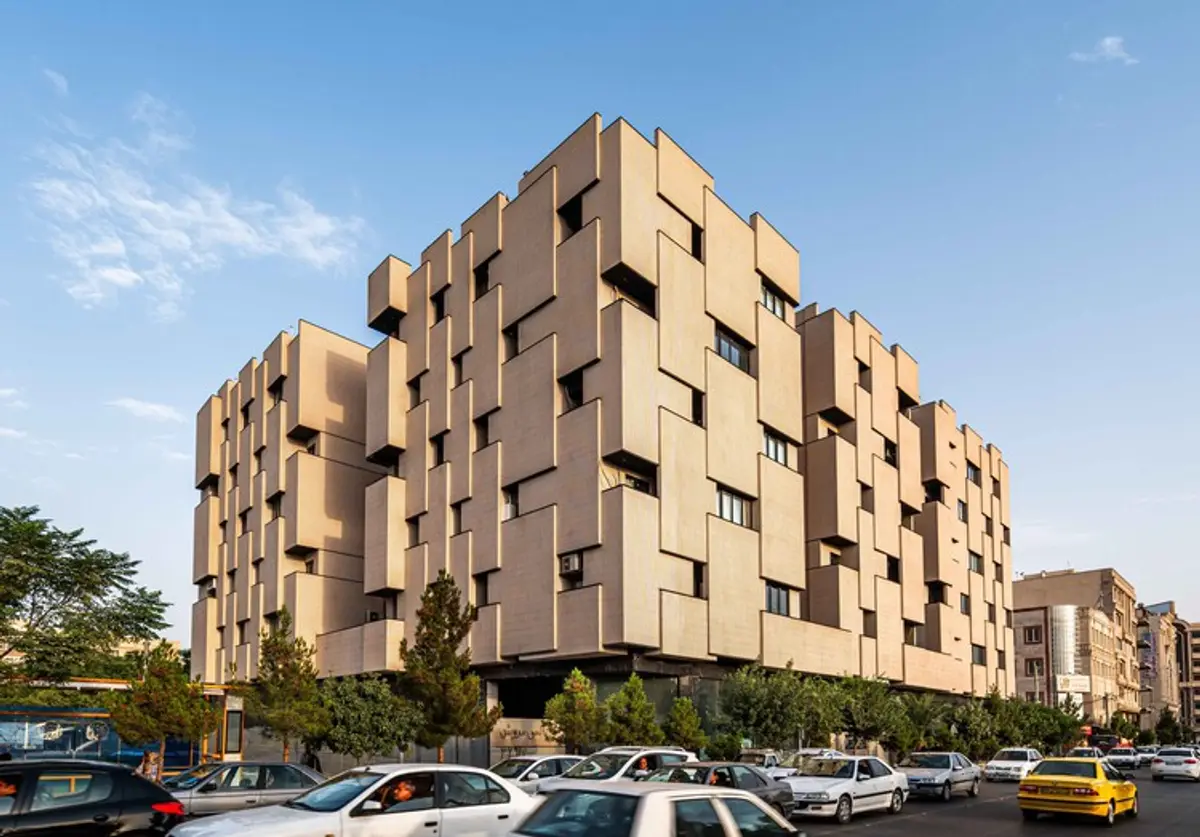
Vala Apartment by Dasein Office
A contemporary apartment building in Qom redefining vertical living through social circulation, concrete architecture, and a renewed sense of neighborhood.


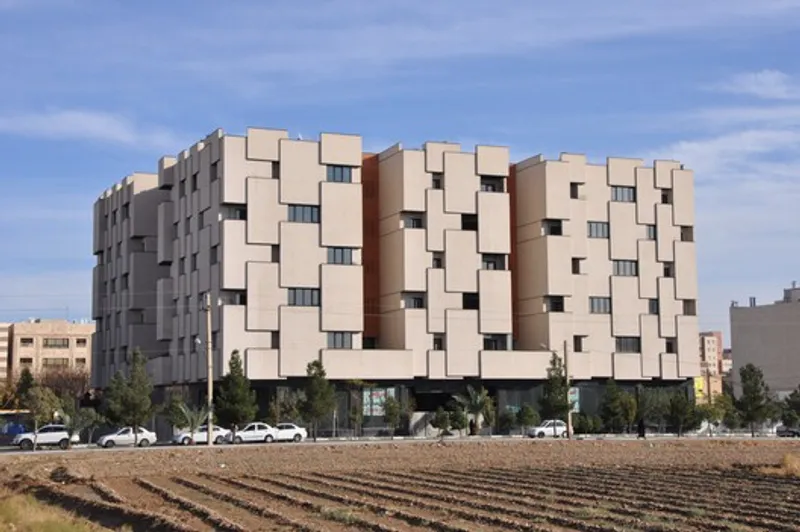
Located in Qom, Vala Apartment is a contemporary residential project that reinterprets collective living within Iran’s dense urban environment. Completed in 2024, the 2,511 m² building accommodates 50 residential units within a single compact volume, proposing a new model for socially connected vertical housing.
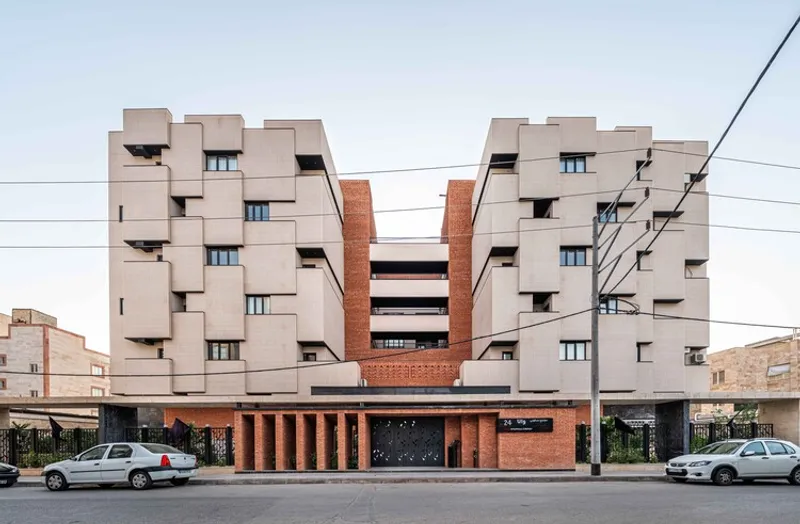
Designed under the leadership of Ali Khosh Mehri, the project responds to a central architectural question: how can high-density housing foster belonging, awareness, and everyday interaction in modern cities?
Context: Housing in a Vertical City
Rapid urban growth in Iranian cities has led to increasingly vertical residential developments. While efficient, many of these buildings prioritize maximum density over social quality, resulting in anonymous corridors, isolated apartments, and weak community ties.
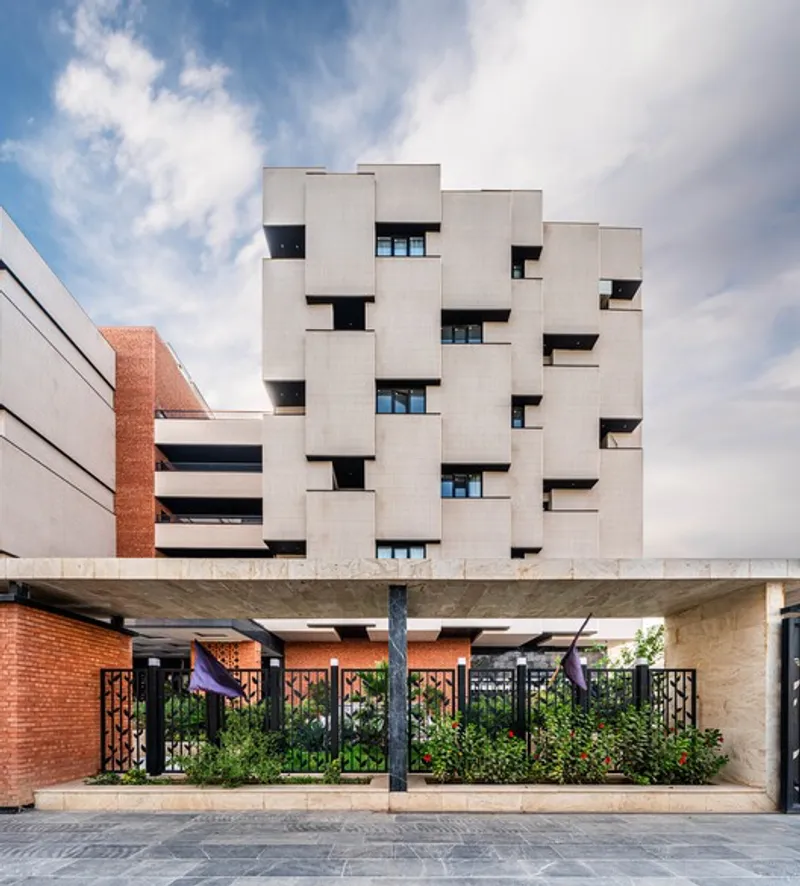
Vala Apartment challenges this model by redefining circulation and shared spaces as active social environments. Instead of treating movement areas as neutral infrastructure, the project transforms them into meaningful places for encounter, pause, and observation.
In doing so, it seeks to restore the sense of neighborhood traditionally found in low-rise urban fabrics.
Design Concept: Reimagining the Vertical Neighborhood
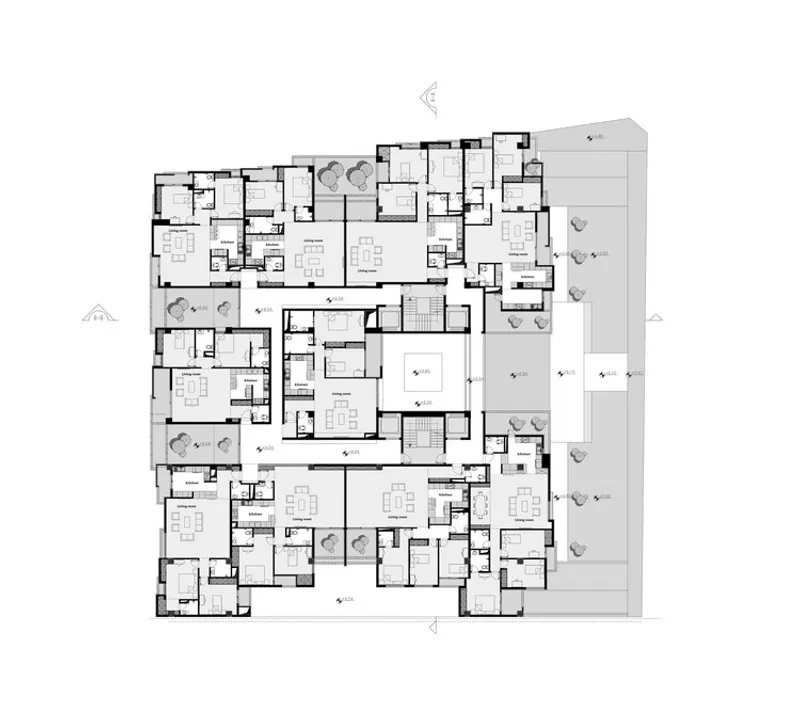
The conceptual foundation of Vala Apartment lies in translating the spatial logic of traditional Iranian alleyways into a vertical format.
In historic neighborhoods, narrow pathways functioned not only as routes of movement but also as social spaces where daily life unfolded. Conversations, informal gatherings, and shared rituals occurred naturally within these transitional zones.
Vala reinterprets this idea through a system of layered circulation paths that extend vertically throughout the building. These routes create a network of interconnected spaces that encourage interaction and presence.
Rather than isolating residents within private units, the architecture promotes collective awareness and shared experience.
Circulation as Social Infrastructure
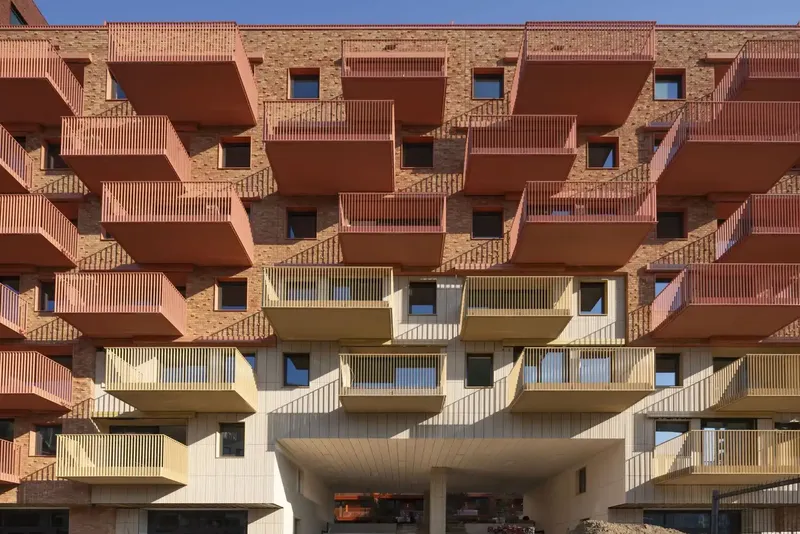
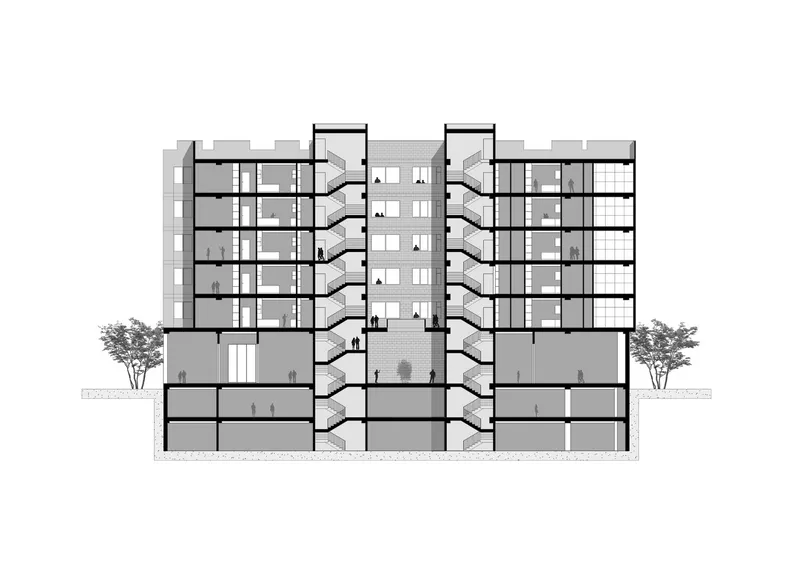
The circulation system is the project’s defining architectural element. Corridors, stairs, and transitional platforms are carefully shaped to function as semi-public spaces.
Through variations in width, height, and enclosure, the architects create a dynamic sequence of spatial conditions:
- Open balconies
- Semi-open corridors
- Enclosed passages
- Overlapping visual connections
- Light-filled transition zones
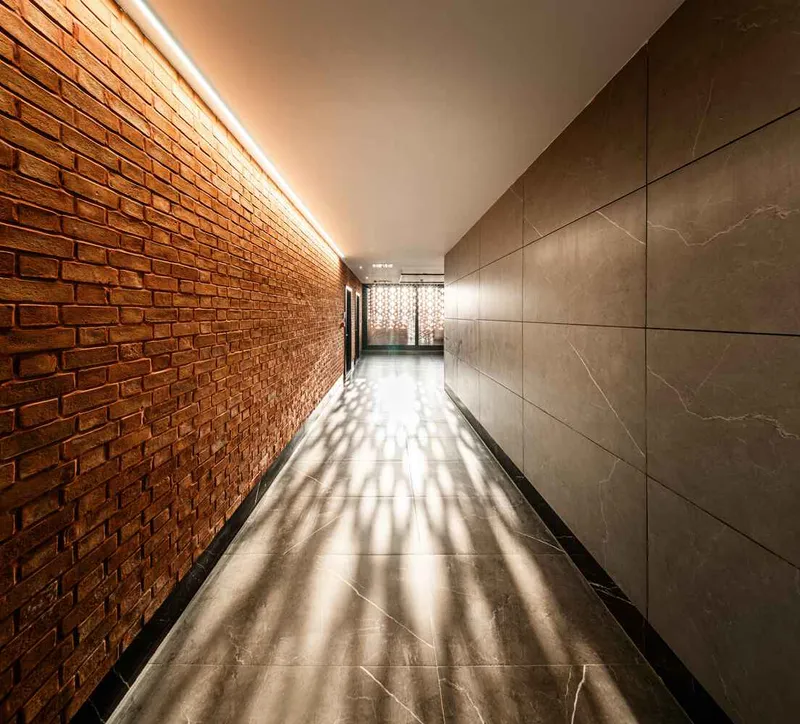
These variations prevent monotony and encourage residents to slow down, observe their surroundings, and engage with others.
Movement becomes an experiential journey rather than a purely functional act.
Spatial Organization and Residential Structure
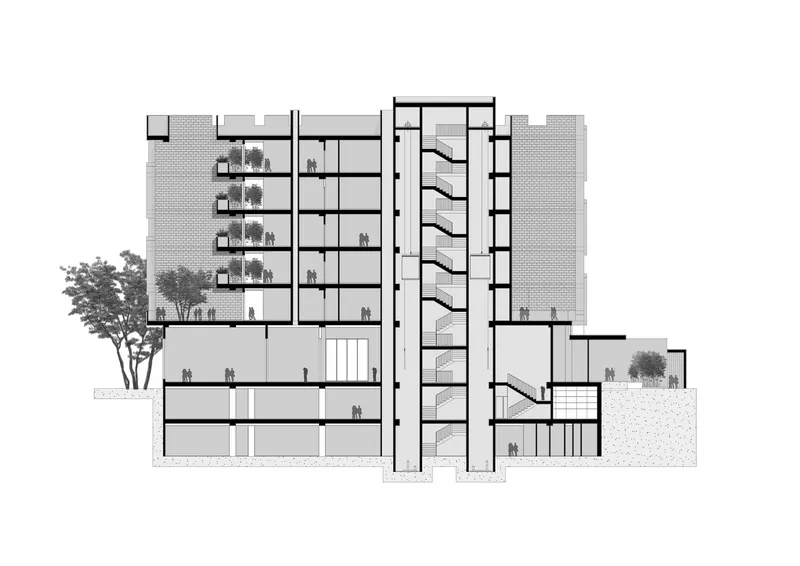
The building contains 50 housing units organized around the vertical circulation network. Apartments are arranged to maintain privacy while remaining visually and spatially connected to shared routes.
This balance allows residents to participate in collective life without sacrificing personal comfort.
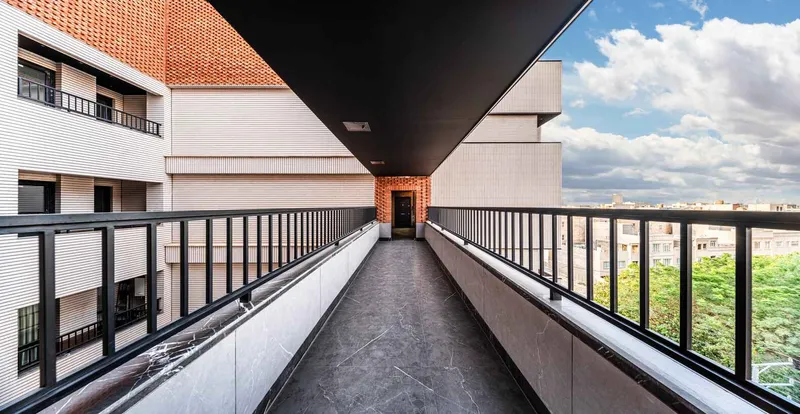
The structure integrates:
- Private living spaces
- Shared circulation zones
- Semi-public balconies
- Intermediate gathering areas
- Visual links between levels
This layered organization supports multiple degrees of interaction, from casual encounters to intentional social exchange.
Materiality and Architectural Expression
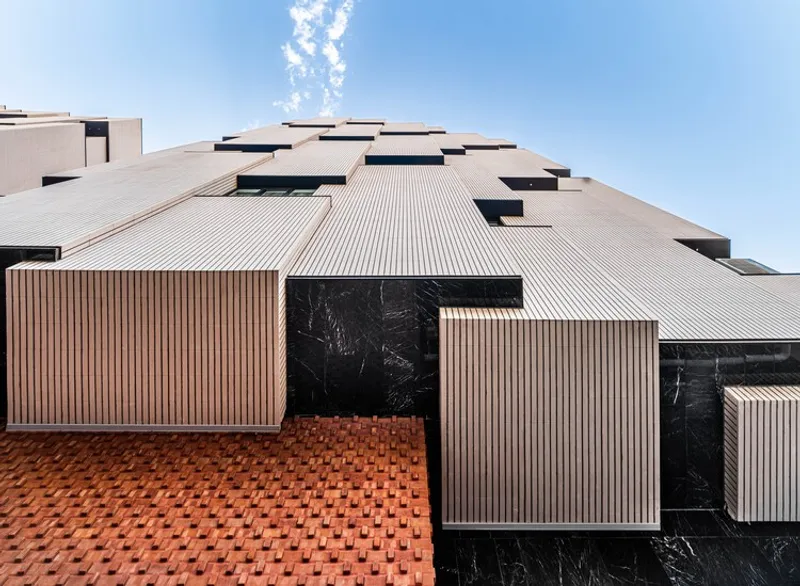
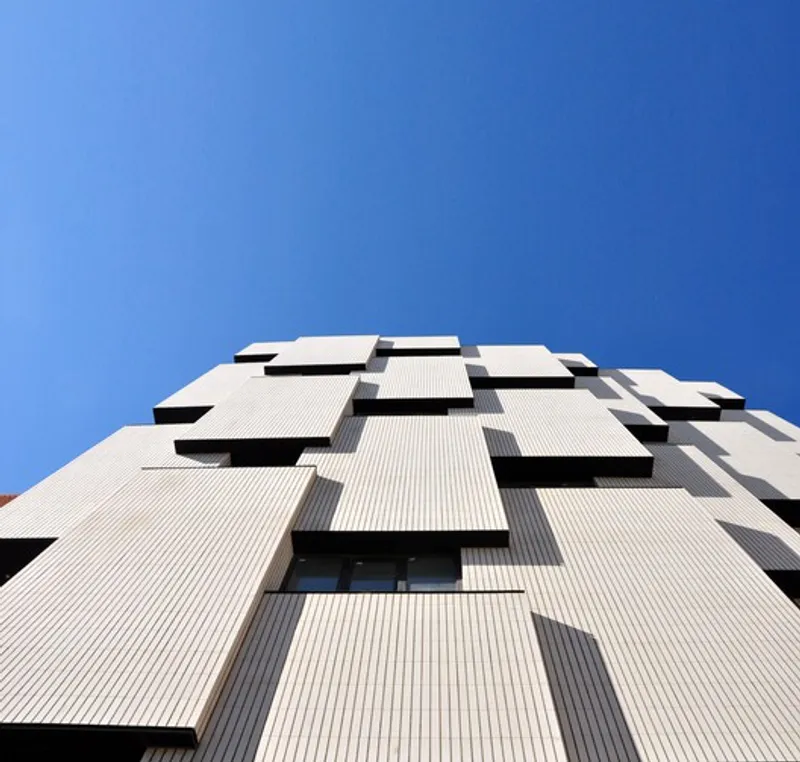
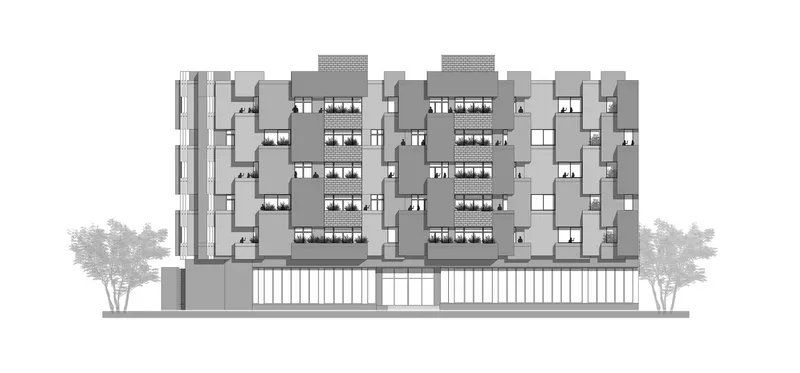
The exterior of Vala Apartment is defined by exposed concrete surfaces and projecting balconies. This material palette expresses solidity, permanence, and honesty.
Concrete serves both structural and aesthetic roles, reinforcing the building’s monolithic character while allowing precise articulation of openings and terraces.
Balconies are treated as extensions of interior life. Their rhythmic repetition establishes a strong urban identity while offering residents outdoor spaces connected to circulation paths.
The restrained material approach ensures durability and minimizes maintenance, supporting long-term sustainability.
Light, Shadow, and Spatial Atmosphere
Natural light plays a crucial role in shaping the building’s spatial experience. Openings, recesses, and balconies allow daylight to penetrate deep into circulation zones.
As sunlight moves throughout the day, it generates shifting patterns of light and shadow along corridors and stairways. These variations enhance spatial richness and reinforce a sense of time and rhythm.
This dynamic atmosphere encourages residents to perceive their environment consciously rather than passively.
Collective Living and Conscious Presence
A central ambition of the project is to transform everyday presence into a meaningful experience.
By designing circulation as social space, Vala encourages residents to become aware of each other’s routines, movements, and rhythms. This shared awareness supports informal bonds and mutual recognition.
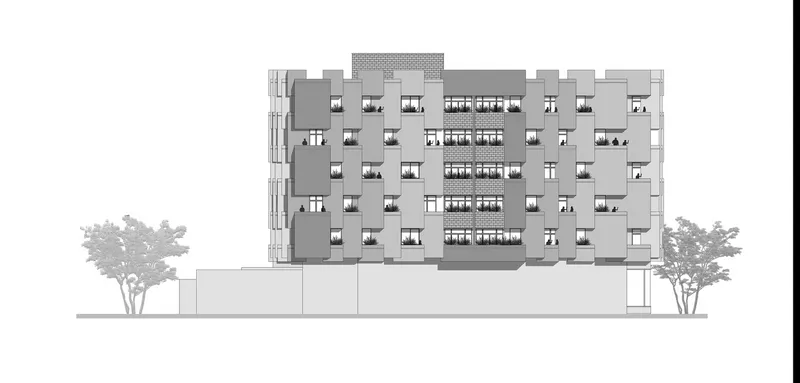
The architecture does not impose social interaction, but gently enables it through spatial proximity and visual connection.
In this way, collective living emerges naturally rather than through programmed activities.
Cultural Continuity and Contemporary Interpretation
While Vala Apartment is a contemporary structure, its spatial logic draws from traditional Iranian urban patterns. Courtyard houses, alleyways, and layered thresholds have long shaped social life in historic settlements.
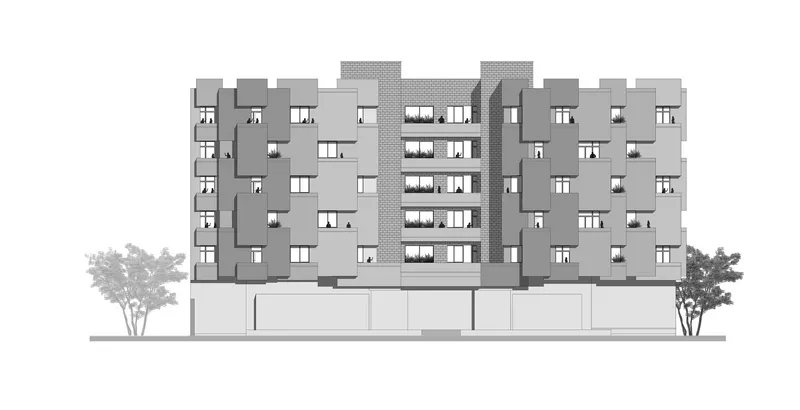
The project translates these principles into a vertical typology suited to modern conditions.
This continuity strengthens cultural relevance and grounds the building within its local context, avoiding imported or generic housing models.
Sustainability Through Social and Spatial Design
Sustainability in Vala Apartment extends beyond energy performance. It is understood as social durability and long-term relevance.
Key sustainable aspects include:
- Compact massing
- Efficient land use
- Passive daylighting
- Reduced dependence on artificial lighting
- Durable concrete construction
- Strengthened community bonds
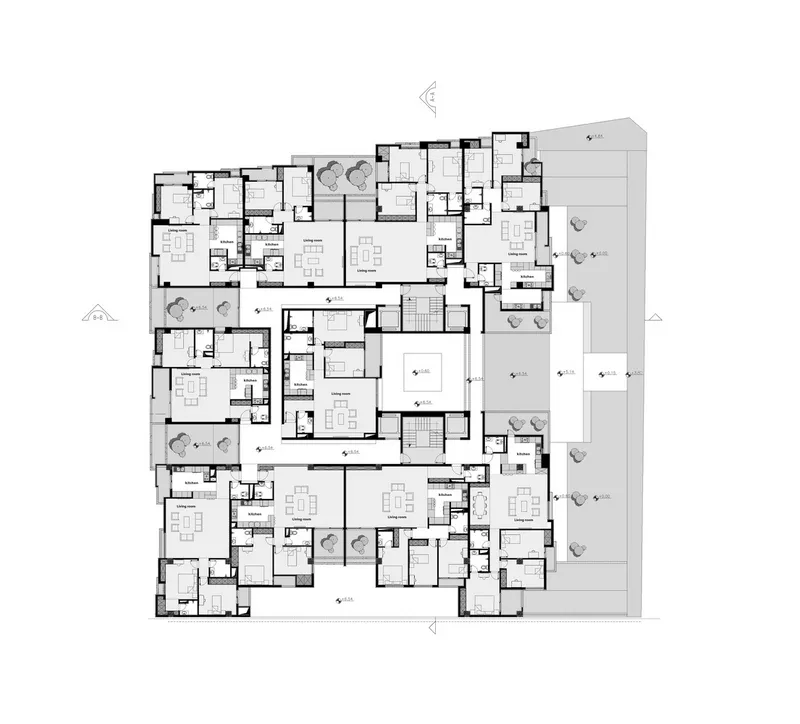
By fostering social cohesion, the building reduces residential turnover and promotes long-term occupancy, contributing to urban stability.
Redefining High-Density Housing
Vala Apartment offers an alternative vision for dense residential development in Iran and similar contexts. Instead of treating density as a limitation, the project uses it as an opportunity to intensify social life.
Through its circulation network and layered spaces, the building demonstrates that vertical housing can support neighborhood identity and emotional connection.
It challenges the assumption that high-rise living must be anonymous.
Architecture as a Framework for Community
More than a residential block, Vala functions as a framework for everyday relationships. It accommodates privacy, interaction, solitude, and participation within a unified spatial system.
Residents are not merely occupants of isolated units but members of a vertically organized community.
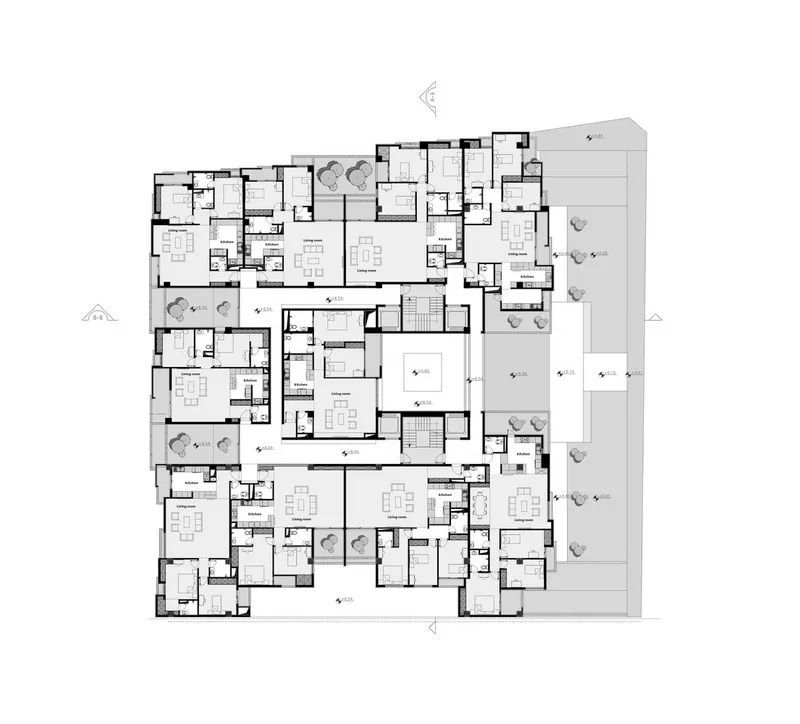
This approach reflects a broader understanding of architecture as a facilitator of social life rather than a neutral container.
A Contemporary Model for Urban Housing
Vala Apartment stands as a significant contribution to contemporary housing design in Iran. By integrating cultural memory, spatial intelligence, and social awareness, Dasein Office presents a thoughtful response to urban densification.
The project illustrates how modest architectural interventions, when strategically conceived, can profoundly influence daily life.
It serves as a reference for future residential developments seeking to balance efficiency with human connection.


Popular Articles
Popular articles from the community


Singing Woman: An Opera House That Performs Before the Curtain Rises
Ovidiu Cristian Pavel's conceptual opera house translates Estonia's choral identity into a sculpted waterfront landmark facing the Baltic Sea.

Manzana Morphosis: Stretching Barcelona's Grid into a Living Landscape for 2050
A radical reworking of the Eixample manzana turns density into a tool for generous public space, vertical ecology, and environmental performance.

The Amber Palace Opera: A Geological Fiction Surfaces on Tallinn's Baltic Waterfront
Pierre Brillard reimagines a Baltic legend as a public landscape, opera house, and waterfront promenade rooted in Tallinn's coastal identity.

Opera on the Sea: Driftwood Logic Shapes a Timber Opera House on Estonia's Coast
Trevor Orgill's opera house translates the entangled drift of floating timber into a civic building where wood, water, and music converge.

Similar Reads
You might also enjoy these articles


Hodi-Mandai Geram
Project Function: Preservation and revitalization of the Intangible heritage and socio-spatial identity of the Hodi by Housing, Cultural Memory Center, Sacred Grove, landscape, local tourism economy


Olio Towers: A Mid-Rise for Performers That Fuses Housing, Rehearsal, and Stage
Located blocks from Houston's Theater District, this modular tower stacks living units around a central performance atrium.

Oasis: Modular Green Housing Carved into Dhaka's Urban Fabric
A shortlisted Plugin Housing entry reclaims unauthorized settlements in Dhaka with stepped concrete volumes, green roofs, and ventilation-driven design.

Black Hole: A Floating Megastructure for the Post-Physical Era
Emiliano Mazzarotto envisions a spherical, self-scaling arena where e-sports, digital hotels, and holographic stadiums replace traditional public space.

Explore Residential Building Competitions
Discover active competitions in this discipline

Challenge to design mud housing for contemporary communities

Challenge to reimagine the Iron Throne

Photograph architecture without architects

Illustrate the lost glory of Angkor Wat - Render Challenge
Comments (0)
Please login or sign up to add comments
No comments yet. Be the first to comment!