
Villa Domes by Maxim Calujac: A Contemporary Residence Blending Sculptural Form, Natural Light, and Landscape Integratio
Contemporary villa in Moldova featuring dome skylights, corten façade, and seamless indoor-outdoor living, blending sculptural architecture with nature and light.


Located in the serene outskirts of Trușeni, near Chișinău, Moldova, Villa Domes by architect Maxim Calujac is a refined example of contemporary residential architecture that seamlessly integrates built form with nature. Designed in 2022 for a family of four, this 200 m² private residence explores the relationship between geometry, materiality, and spatial continuity while creating a calm and immersive living environment.
Architectural Concept: A Dialogue Between Form and Function
At the heart of Villa Domes lies a carefully articulated architectural concept that balances sculptural expression with functional clarity. The design is organized into three primary zones: leisure, green, and common living areas. This zoning strategy ensures fluid transitions between indoor and outdoor spaces, reinforcing the idea of a house that is deeply connected to its surrounding landscape.
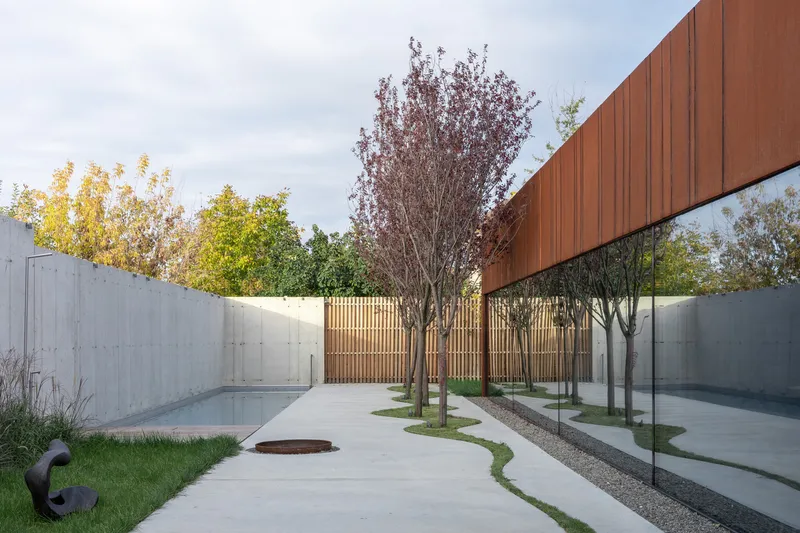
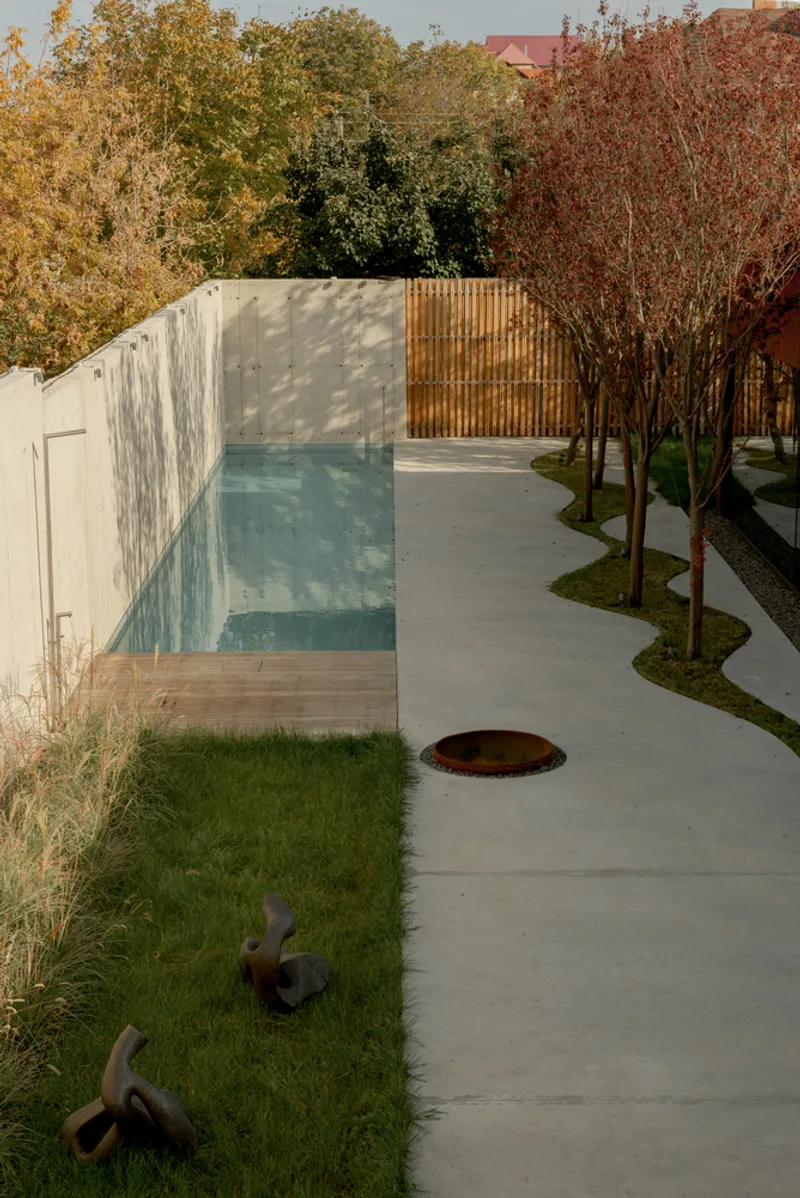
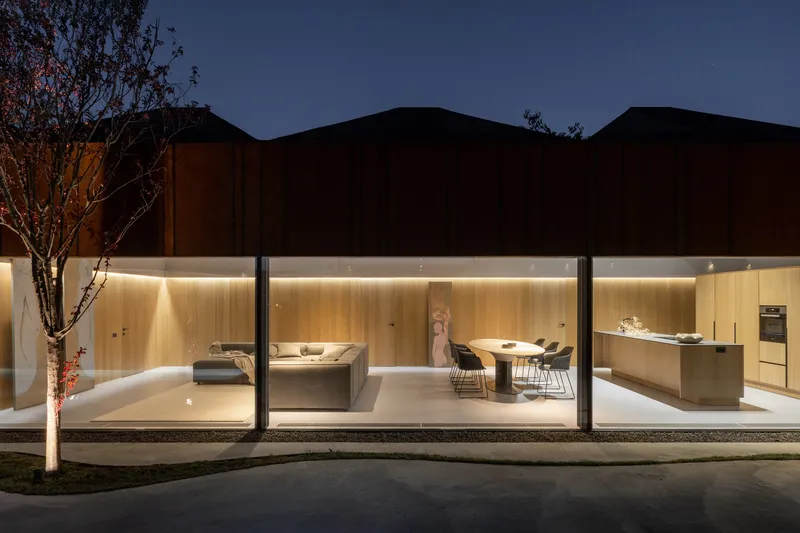
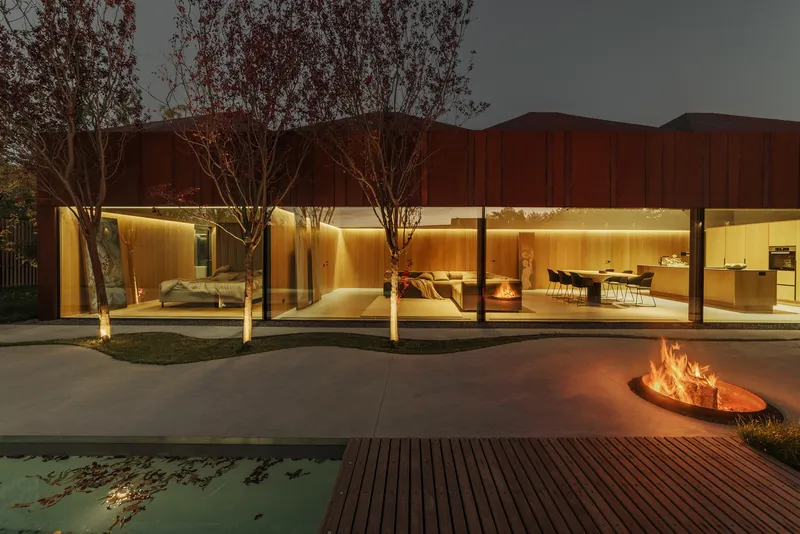
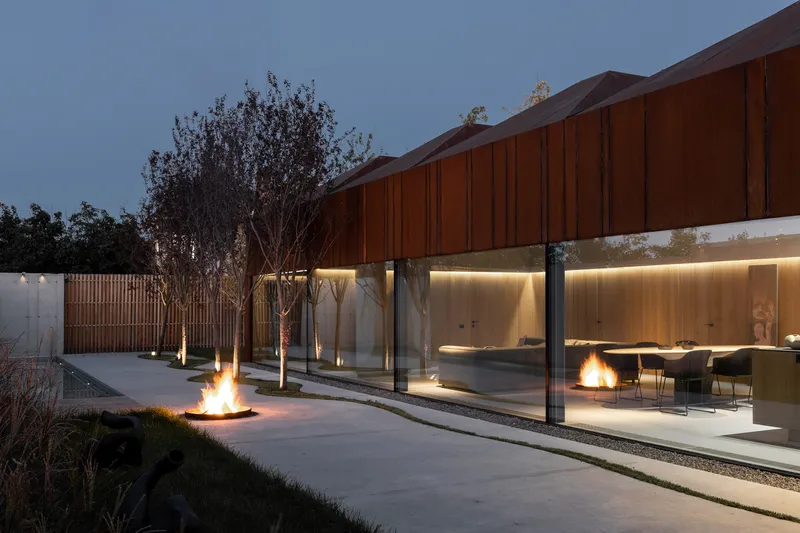
The leisure zone features a terrace, swimming pool, and fire pit, forming a social nucleus for relaxation and gathering. Large glazed surfaces dissolve the boundary between interior and exterior, visually extending the living room into the garden. This transparent architectural language enhances natural light penetration while fostering a continuous spatial experience.
Sculptural Entrance and Structural Expression
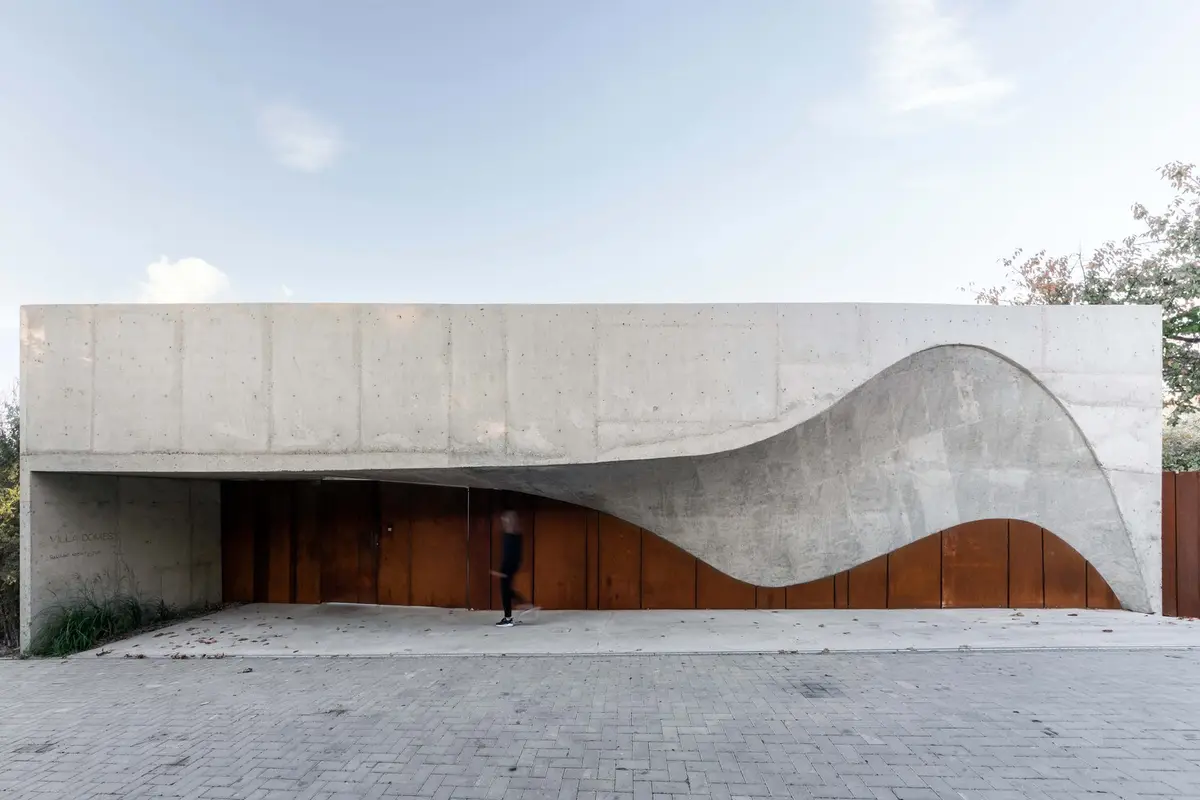
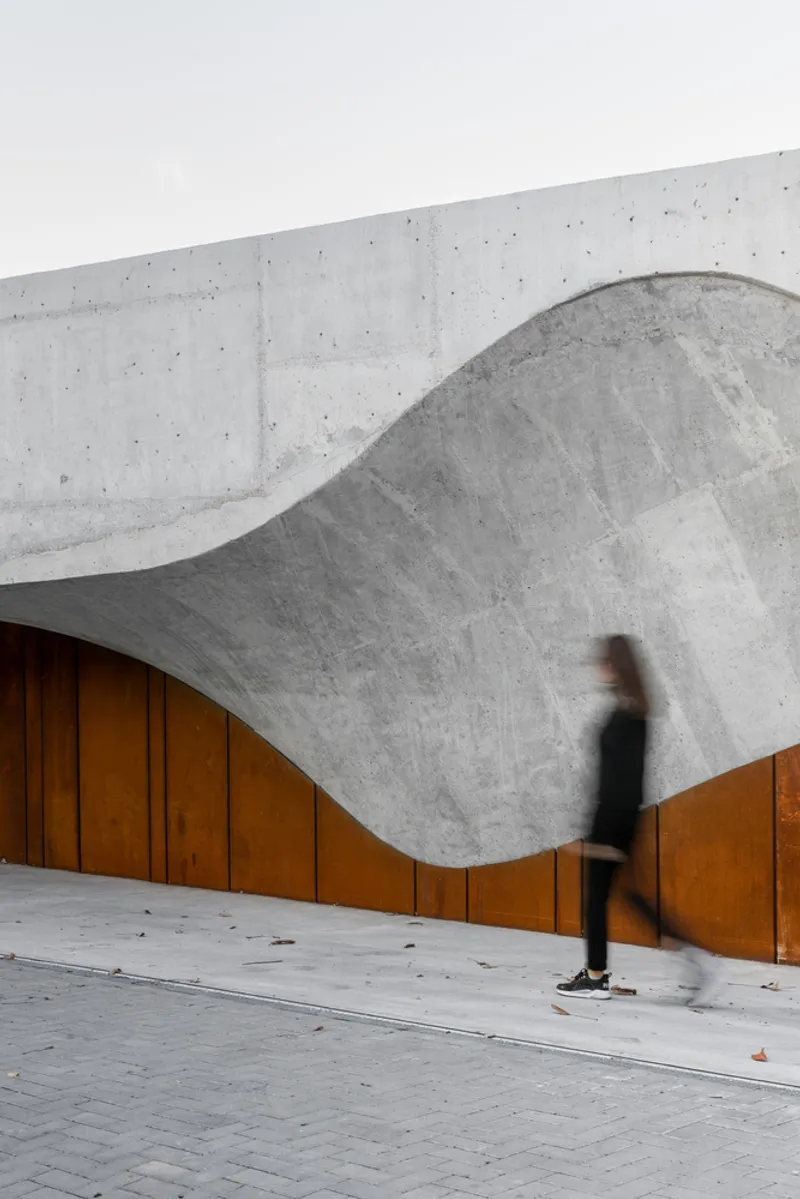
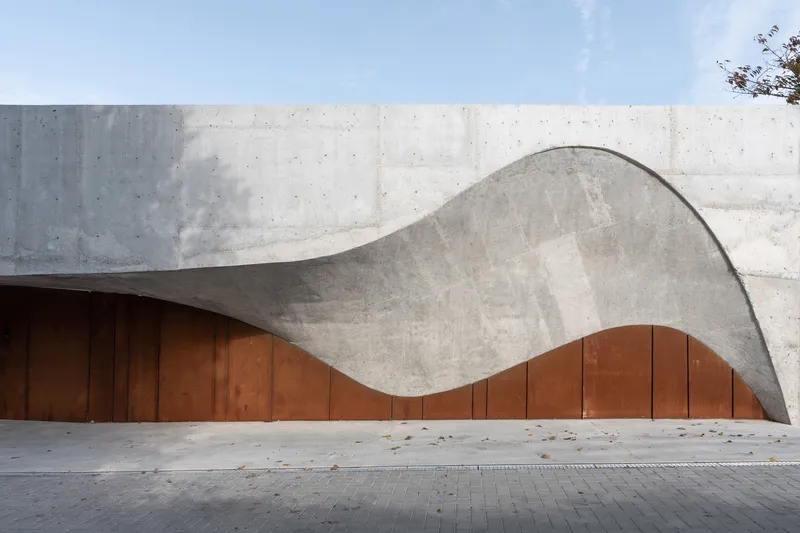
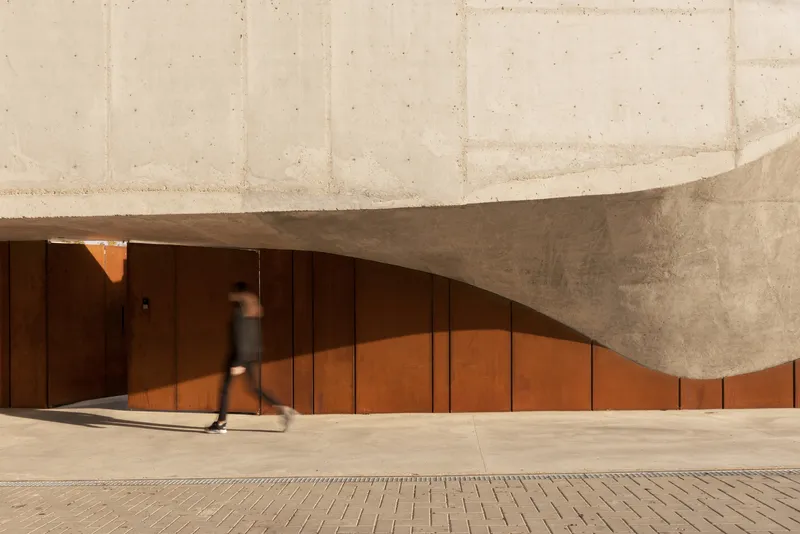
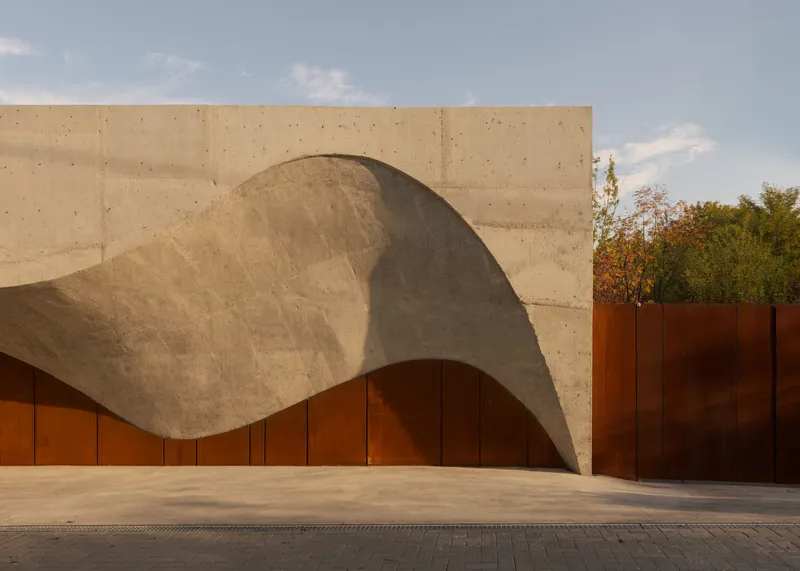
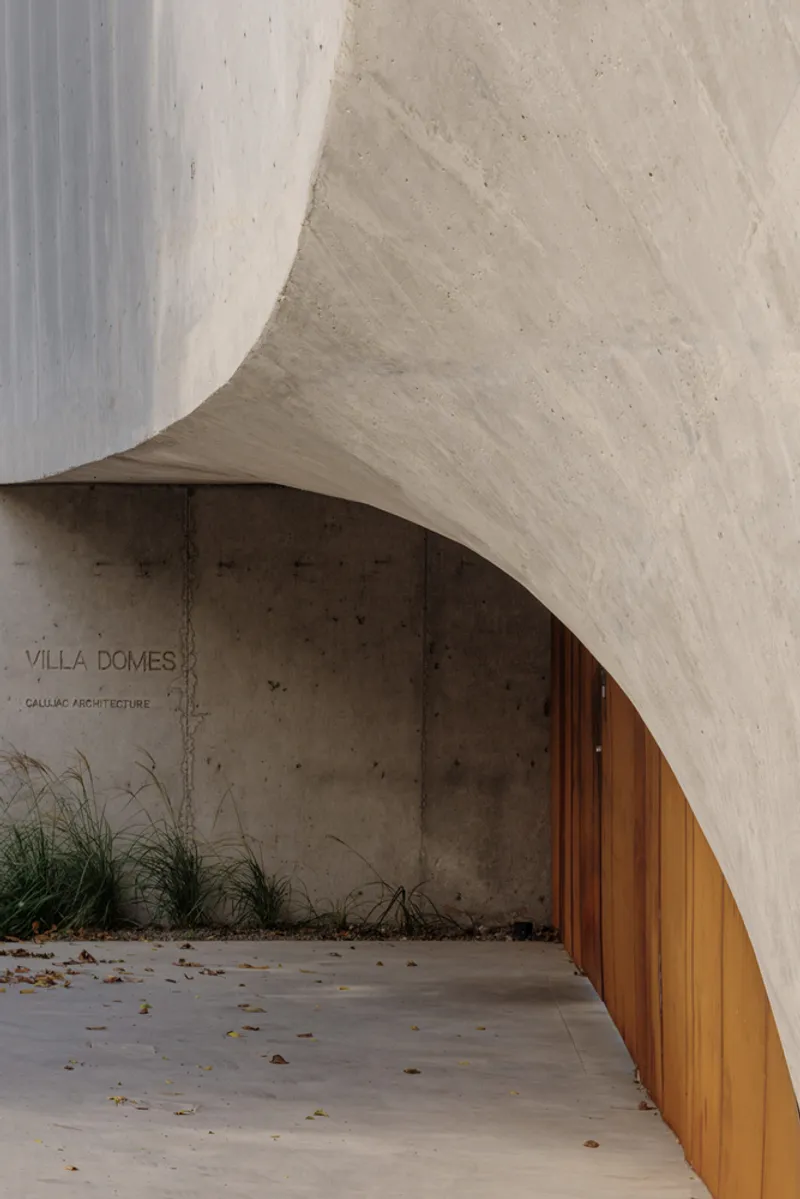
The entrance of Villa Domes acts as a bold architectural statement. A monolithic concrete portal defines the threshold, combining aesthetic elegance with structural performance. This sculptural element not only enhances the visual identity of the house but also contributes to the rigidity of the structural system, simplifying the metal framework used throughout the building.
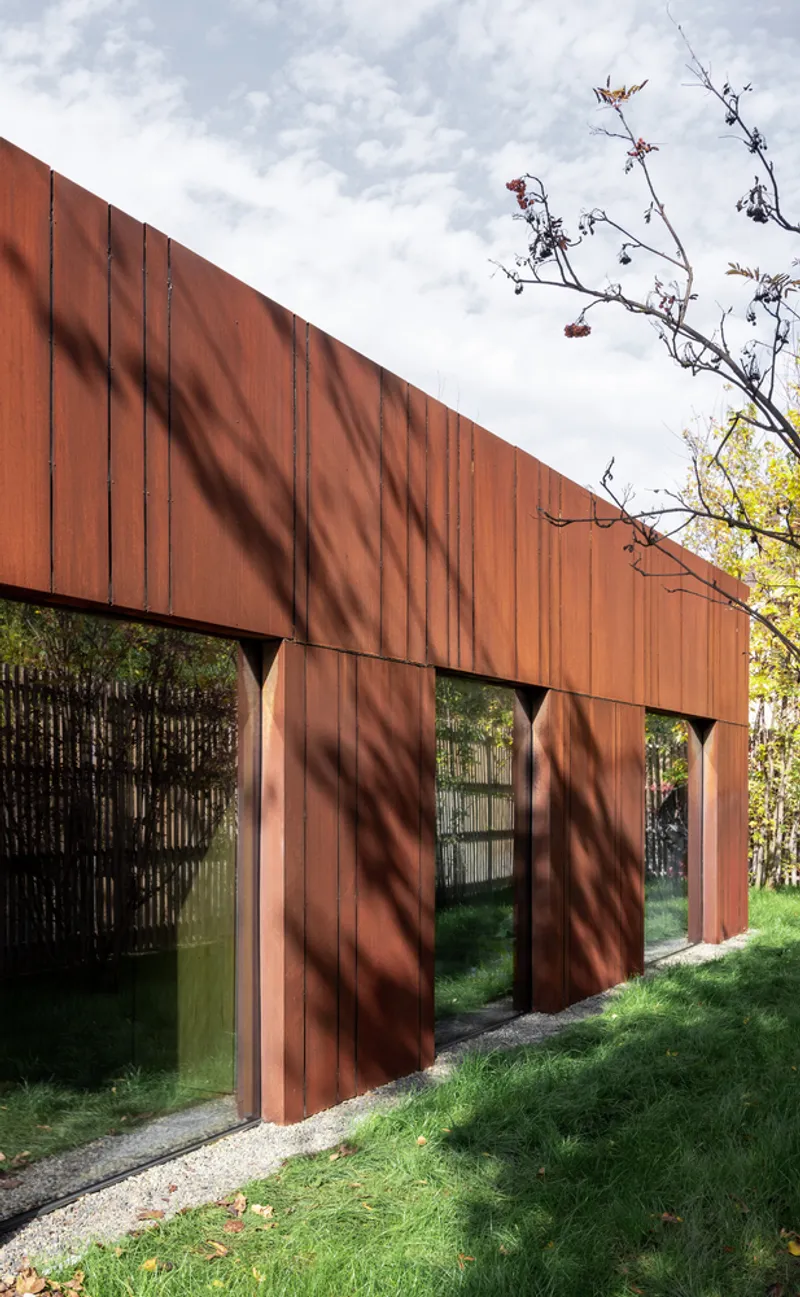
The façade, finished in corten steel, introduces a warm yet industrial character. Its evolving patina allows the building to age gracefully over time, reinforcing the concept of architecture as a living entity. The interplay between corten, concrete, and glass creates a striking contrast that defines the villa’s contemporary identity.
Dome Geometry and Daylight Strategy
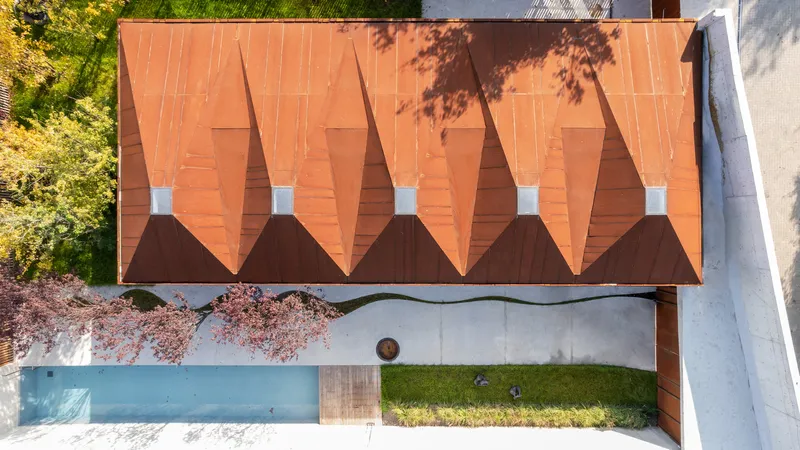
One of the most distinctive features of the project is the incorporation of truncated pyramidal domes. These geometric skylights serve as both functional and symbolic elements within the design. Externally, they appear as rhythmic sculptural forms, adding depth and dynamism to the roofscape.
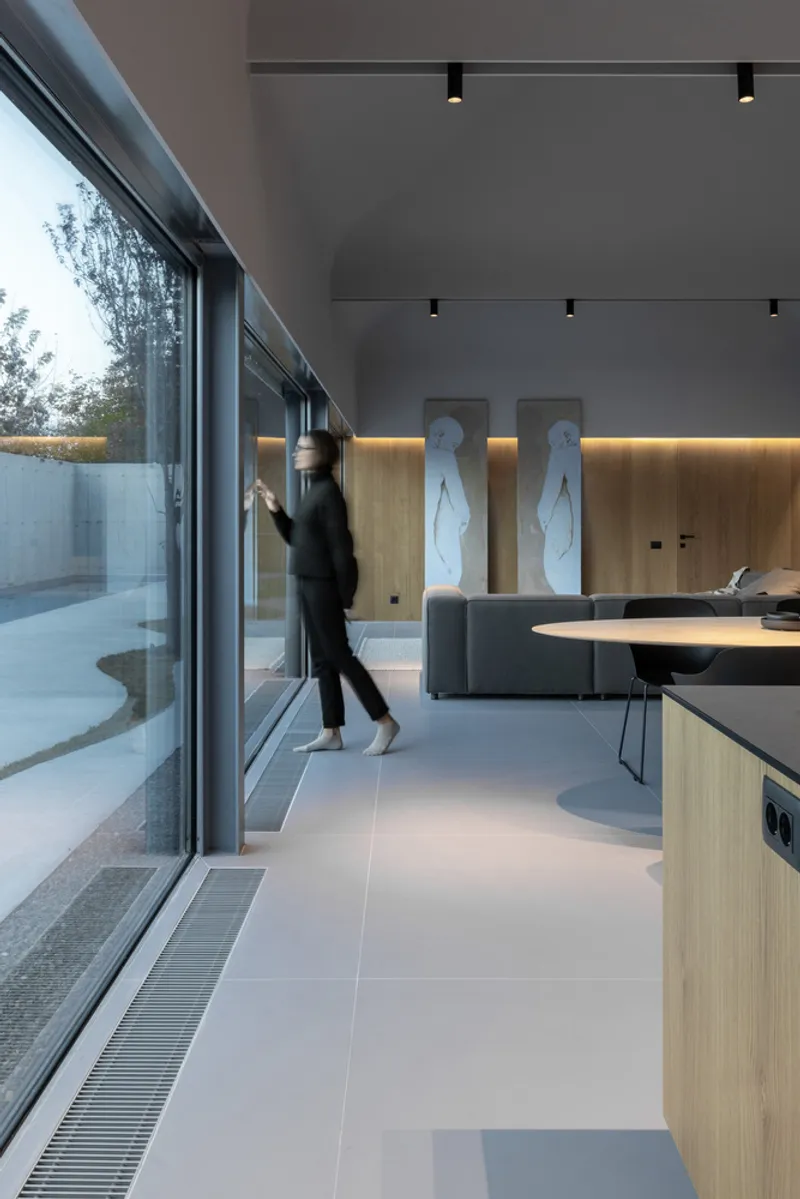
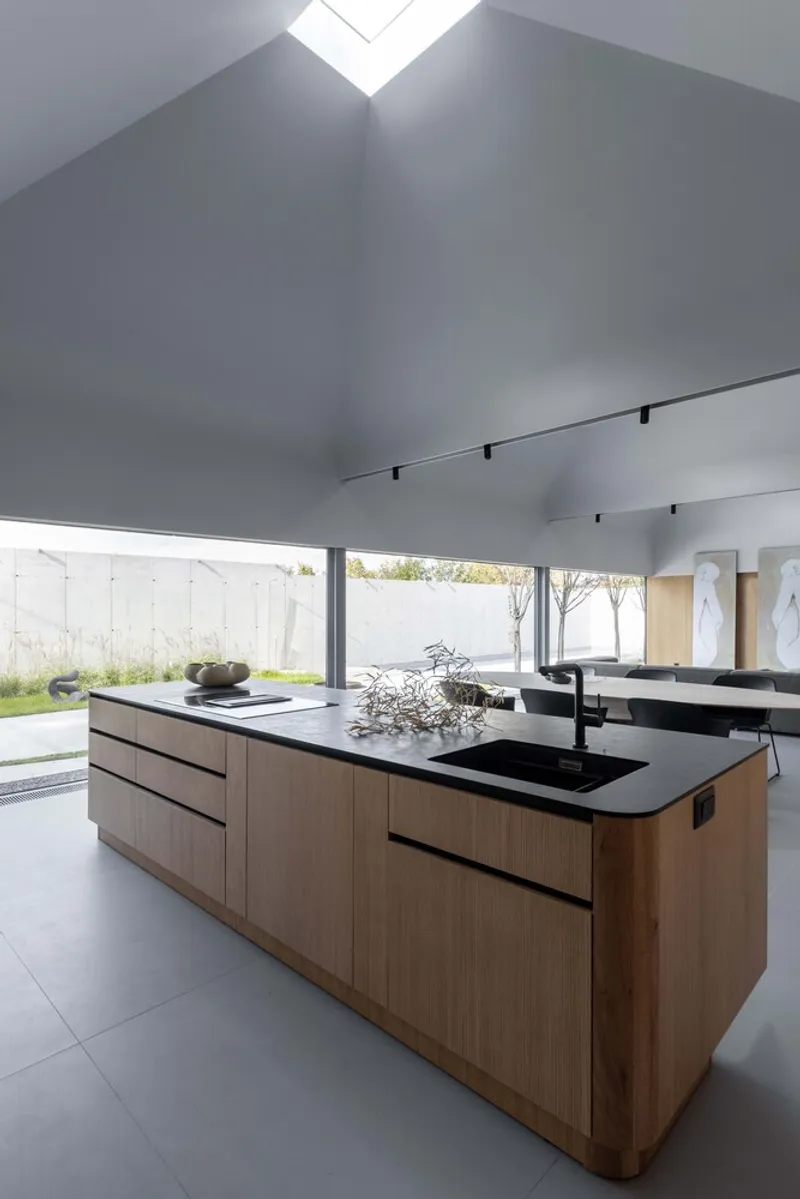
Internally, the domes flood the living spaces with natural light, creating an airy and uplifting atmosphere. This innovative daylighting strategy reduces dependence on artificial lighting while enhancing the spatial quality of the interiors. The domes also establish a strong visual connection between the sky and the interior, reinforcing the house’s relationship with nature.
Interior Design: Warm Minimalism and Material Continuity
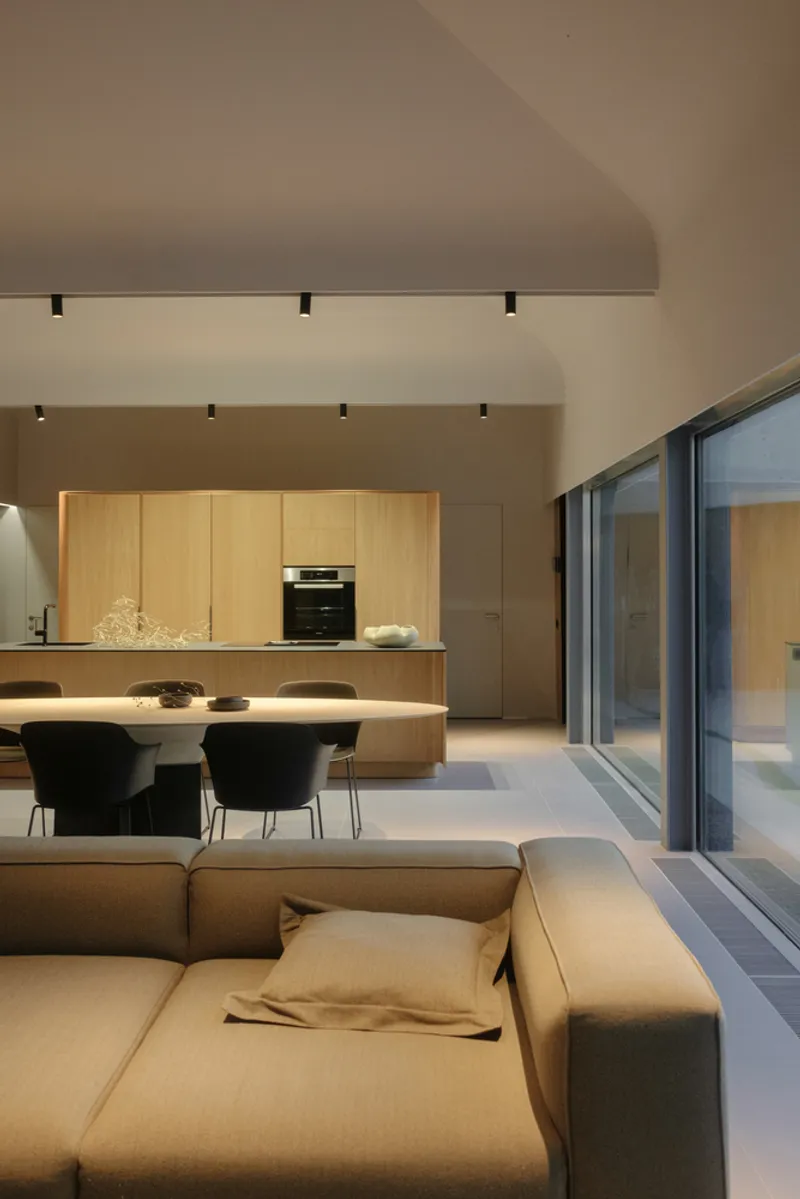
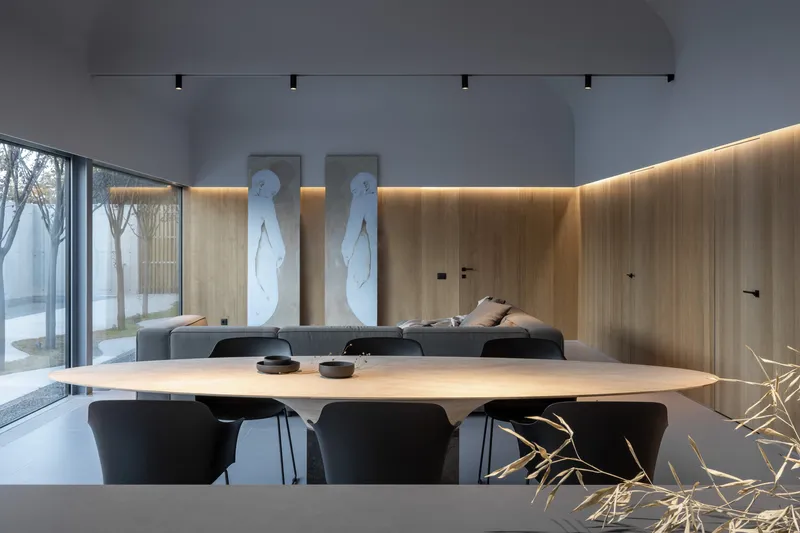
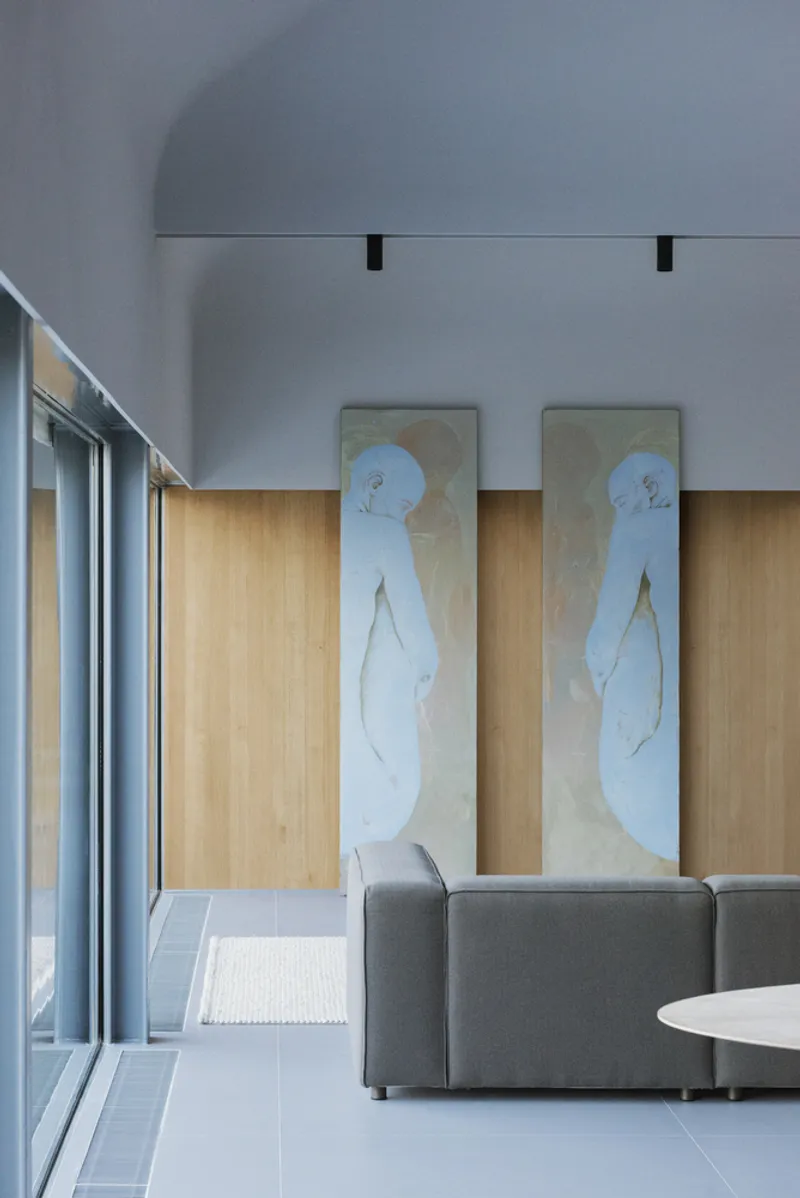
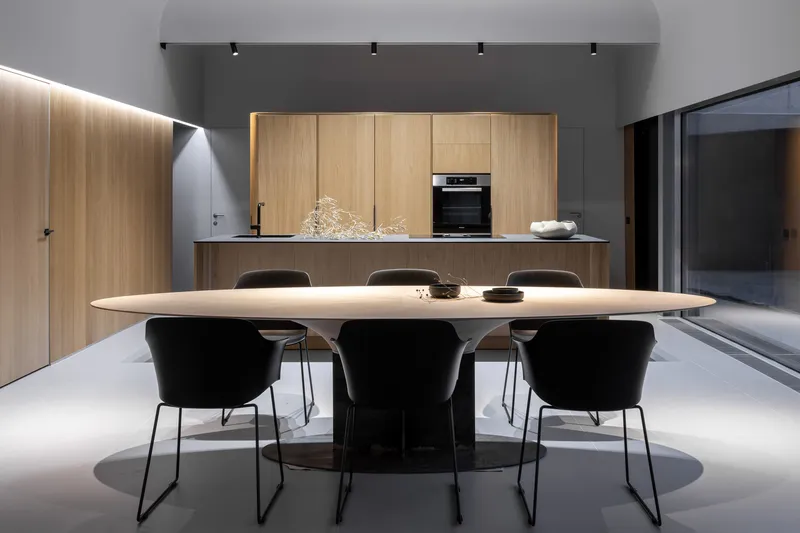
The interior of Villa Domes is characterized by a harmonious blend of minimalism and warmth. Wooden panels line the interior walls, introducing texture and a sense of comfort that contrasts with the cool transparency of the glass façades. This material palette creates a balanced environment where modernity meets natural tactility.
A unique design approach is evident in the integration of furniture into the architectural language. By using the same wood material for both walls and furnishings, the interior achieves a seamless and cohesive aesthetic. Furniture elements visually “dissolve” into the space, allowing art pieces such as paintings and sculptures to become focal points that add vibrancy and contrast.
Spatial Organization and Functional Efficiency
The spatial layout of the house is carefully planned to eliminate unnecessary circulation areas. Corridors are intentionally avoided, with the living room functioning as the central hub that connects all other spaces. This open-plan strategy enhances spatial efficiency and encourages interaction among family members.
The structural grid, composed of a metal frame system, organizes the internal layout while maintaining flexibility. Technical and utility areas are strategically positioned near the entrance, ensuring operational efficiency without disrupting the main living zones. Bedrooms are oriented դեպի the southeast-facing garden, providing privacy, natural light, and tranquil views.
Landscape Integration and Outdoor Experience
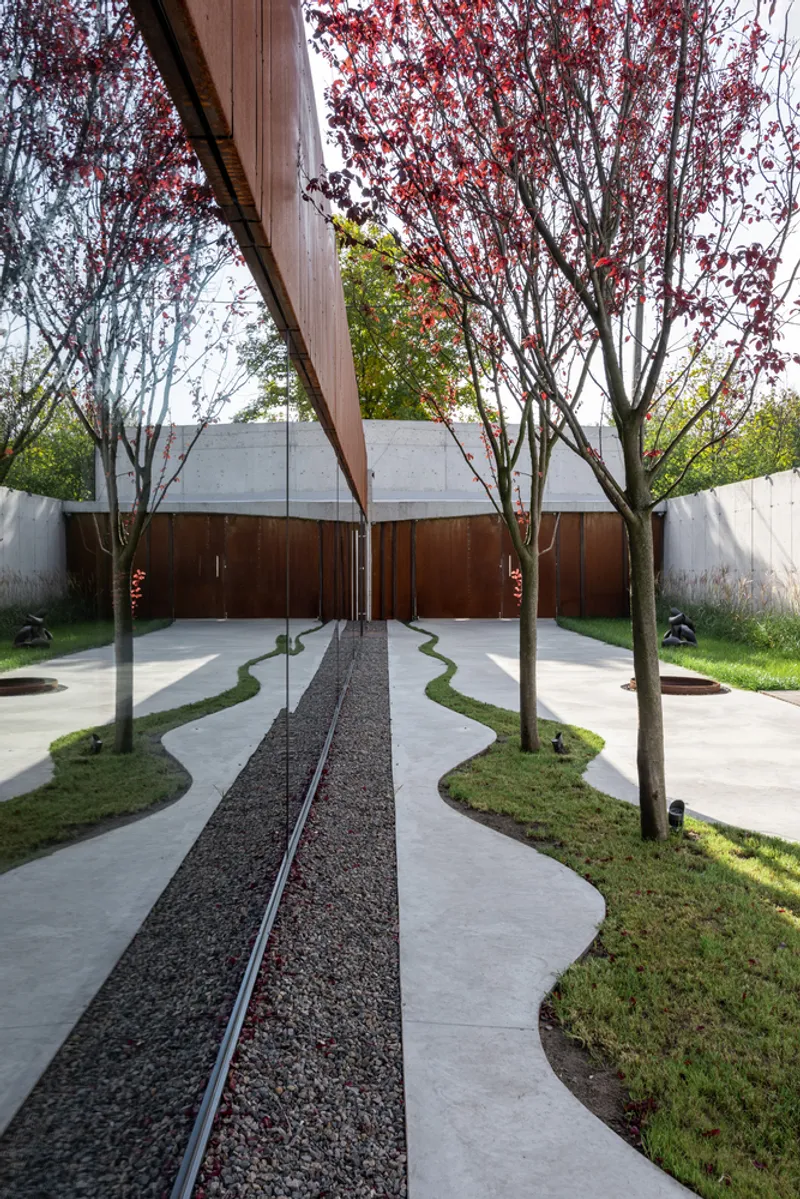
Despite the relatively compact site, Villa Domes successfully establishes a strong connection with nature. The garden plays a crucial role in shaping the living experience, offering shaded areas during summer and transforming into a dynamic play zone for children.
Large glazed openings frame the landscape like a living canvas, bringing greenery into the interior spaces. In the bedrooms, vegetation becomes an extension of the interior, enhancing the sense of intimacy while maintaining visual privacy from neighboring properties.
Materiality and Timeless Evolution
The choice of materials: corten steel, wood, and concrete, reflects a thoughtful approach to durability and aesthetics. These materials are not static; they evolve over time, developing textures and patinas that enrich the architectural expression.
This dynamic quality reinforces the villa’s identity as a living structure that responds to environmental conditions. The smooth architectural lines, combined with the natural aging process of materials, create a timeless design that remains relevant and engaging over the years.
A Contemporary Home Rooted in Nature
Villa Domes stands as a compelling example of modern residential architecture that prioritizes spatial fluidity, natural light, and material authenticity. Through its sculptural forms, innovative dome skylights, and seamless indoor-outdoor integration, the project redefines contemporary living in a natural setting.
By merging architectural clarity with emotional warmth, Maxim Calujac has created a home that not only serves functional needs but also enhances the everyday experience of its inhabitants. The villa embodies a balanced relationship between built environment and landscape, offering a serene retreat that celebrates both design and nature.
All photographs are works of
Oliegh Bazhur


Popular Articles
Popular articles from the community


ALGAL REALM: A Bio-Integrated Lunar Habitat Design for Life Beyond Earth
ALGAL REALM reimagines lunar habitat design with algae-powered life support, 3D-printed regolith, and vertical living for a lunar future.

Lunar Spiral: Space Architecture Shaped by the Mathematics of the Universe
Lunar Spiral reimagines space architecture through Fibonacci geometry, lunar regolith, levitating habitats, and self-sustaining Moon living.

The Musturak Paradise: Senior Living Architecture for a Connected Future in Temara, Morocco
The Musturak Paradise reimagines senior living architecture in Temara via private homes, social spaces, culture, community, and shared care.

Co-Life: Senior Housing Design That Reconnects Older Adults With the City
Co-Life reimagines senior housing design through healing gardens, shared streets, workshops, and a sustainable community across generations.

Similar Reads
You might also enjoy these articles

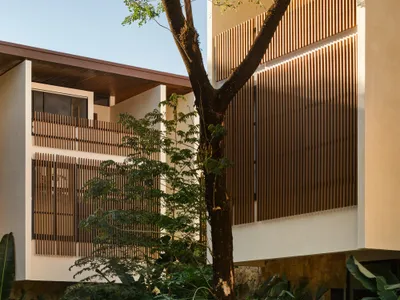
FAMM Arquitectura Organizes Ten Villas Around Courtyards and Jungle in Nosara, Costa Rica
El Molino pairs two elongated volumes with deep overhangs and timber louvers to build a compact coastal community five minutes from the beach.
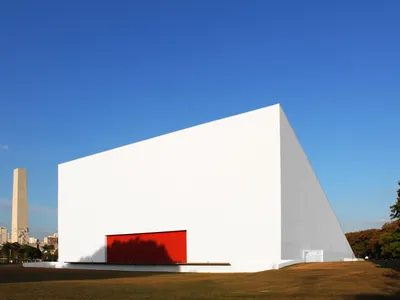
Oscar Niemeyer's Ibirapuera Park Pavilions Define São Paulo's Cultural Identity in Concrete and Curve
A constellation of modernist volumes set within São Paulo's most important urban park, conceived for the city's 400th anniversary in 1954.
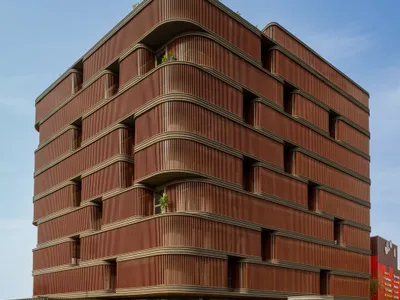
Sanjay Puri Architects Wraps a Jaipur Office Tower in Capsule-Shaped Green Buffers
A nine-level climate-responsive workplace near Jaipur Airport uses stacked planter terraces and aluminium screens to fight 40°C heat.
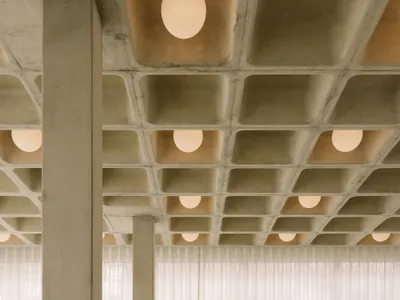
RHO Converts a Berlin Spree-Side Industrial Courtyard into Enkime's 1,000 m² Agency Headquarters
A social media agency's new home in Charlottenburg trades glossy branding for concrete waffle ceilings, glazed tile, and sheer curtains.

Explore Architecture Competitions
Discover active competitions in this discipline

Challenge to reimagine the Iron Throne

Photograph architecture without architects

Illustrate the lost glory of Angkor Wat - Render Challenge

Design challenge to reuse E-waste
Comments (0)
Please login or sign up to add comments
No comments yet. Be the first to comment!