

Villa Nagiso Renovation: A Contemporary Minimalist Retreat in Nagano’s Countryside
Villa Nagiso Renovation blends minimalist design with traditional Kiso Hinoki craftsmanship, creating a sustainable, sensory-rich boutique hotel in Nagano countryside.


Nestled in the serene town of Nagiso in Nagano Prefecture, Japan, the Villa Nagiso Renovation by OTAA.llc redefines rural luxury through thoughtful architecture, sustainable design, and deep local engagement. Surrounded by lush forests and famous for its premium Kiso Hinoki wood, Nagiso is a quiet gem largely unknown even to many Japanese, yet it carries rich artisan traditions including woodworking and hinokasa (hinoki hat) craftsmanship.


A Vision Rooted in Heritage and Community
Villa Nagiso is more than a renovation project—it is a vision to cultivate the countryside through architecture. With the town facing an aging population and gradual decline, OTAA.llc saw an opportunity to contribute to Nagiso’s revitalization. Purchasing the land and existing buildings, the team undertook a full-scale renovation to create a boutique hotel for rent, combining modern design sensibilities with local craftsmanship.
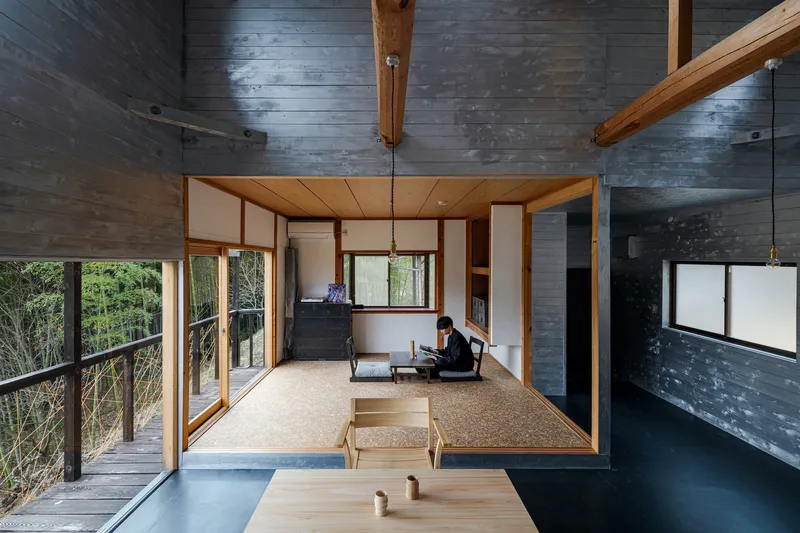
Transforming the Space: Minimalism Meets Nature
One of the key strategies in the renovation was to open up the villa to the surrounding tea plantations and mountainous landscape. Original wooden fixed sashes were replaced to enhance natural light and panoramic views. The central atrium, once a traditional wooden hut, was painted silver, introducing a minimalist aesthetic that contrasts yet harmonizes with the natural textures of wood and glass throughout the villa.


Innovative Use of Kiso Hinoki Materials
The project emphasizes local materials, particularly the Kiso Hinoki tree, a symbol of Nagiso craftsmanship. Traditional tatami mats in the Japanese-style rooms were replaced with Kiso hinoki bark board, developed in collaboration with Katsuno Lumber, a local forestry company. This luxurious flooring utilizes the bark of the Kiso Hinoki tree, preserving local techniques while introducing a modern, tactile experience for visitors.

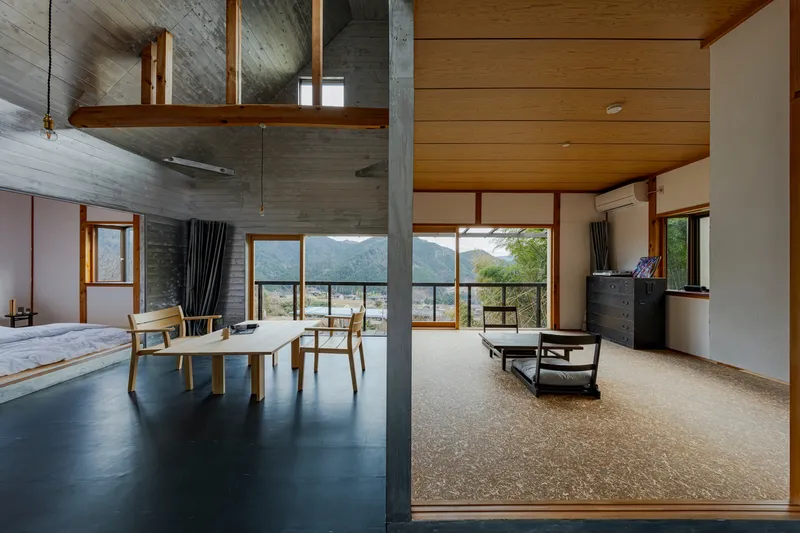

Crafting Experiences Beyond the Visual
The villa’s renovation went beyond structural changes. Fragrance designer Megumi Fukatsu collaborated with architecture students to create a signature Kiso Hinoki scent, adding an invisible layer to the guest experience. Even everyday objects, like cups, were crafted using the Nagiso roroku technique, blending traditional artistry with functional design. This hands-on approach, emphasizing DIY workshops and small-scale craftsmanship, illustrates OTAA.llc’s philosophy that architecture is built through incremental, meaningful actions rather than grand gestures.

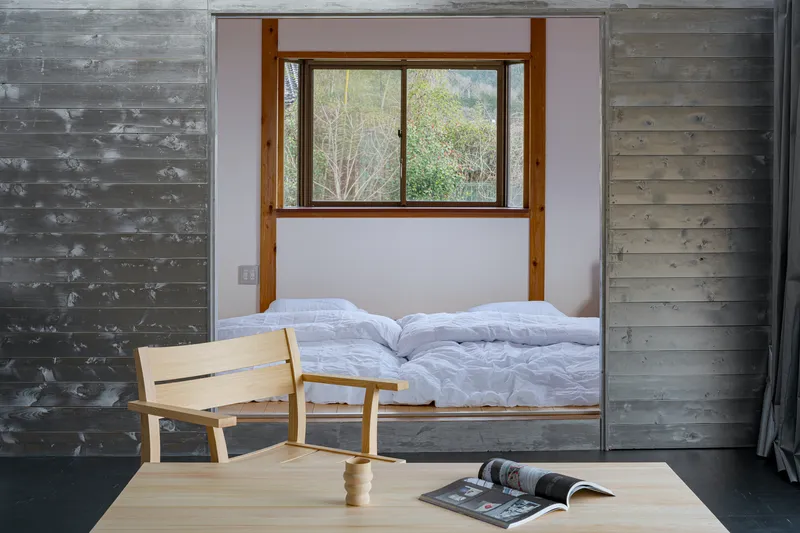
A Model for Rural Revitalization
Villa Nagiso stands as a compelling example of sustainable, community-driven architecture. By integrating local materials, artisan skills, and thoughtful design, the renovation demonstrates how modern architecture can coexist with tradition, preserving cultural heritage while providing functional, aesthetically engaging spaces for contemporary living.

All photographs are works of Takashi Uemura


Popular Articles
Popular articles from the community


LT2A and OPEN Architectes Thread a Brick and Glass High School Through a Wooded Belgian Campus
In Braine-l'Alleud, a 3,000 m² wing for Collège Cardinal Mercier pairs pale brick with a glazed colonnade, deferring to a small chapel and a dense wood.

Juan García Correa, John González and Claudia Rueda Sink a Circular Amphitheater into a Manizales Engineering Building
On the La Nubia campus in Manizales, Colombia, the S1 Building folds labs and offices into a hillside of ramped lawns that double as a campus route.

David Ortega Stacks a Two-Story Mexico City Penthouse Around a Steel Stair and a Pergola-Shaded Roof Terrace
In Colonia Roma, a 300 m² penthouse uses oak joinery, a planted steel stair and a slatted roof pergola to make a new-build apartment feel like a house.

U.GA Architects Wraps an Oval Rooftop Pool in Curved Board-Formed Concrete on Busan's Jeollidan-gil
In Busan's Jeonpo-dong, a 454 m² mixed-use block stacks a neighborhood facility, guest rooms and an oval rooftop pool inside spiraling concrete walls.

Similar Reads
You might also enjoy these articles


Hodi-Mandai Geram
Project Function: Preservation and revitalization of the Intangible heritage and socio-spatial identity of the Hodi by Housing, Cultural Memory Center, Sacred Grove, landscape, local tourism economy


Olio Towers: A Mid-Rise for Performers That Fuses Housing, Rehearsal, and Stage
Located blocks from Houston's Theater District, this modular tower stacks living units around a central performance atrium.

Oasis: Modular Green Housing Carved into Dhaka's Urban Fabric
A shortlisted Plugin Housing entry reclaims unauthorized settlements in Dhaka with stepped concrete volumes, green roofs, and ventilation-driven design.

Black Hole: A Floating Megastructure for the Post-Physical Era
Emiliano Mazzarotto envisions a spherical, self-scaling arena where e-sports, digital hotels, and holographic stadiums replace traditional public space.

Explore Sustainable Design Competitions
Discover active competitions in this discipline

Challenge to reimagine the Iron Throne

Photograph architecture without architects

Illustrate the lost glory of Angkor Wat - Render Challenge

Design challenge to reuse E-waste
Comments (0)
Please login or sign up to add comments
No comments yet. Be the first to comment!