
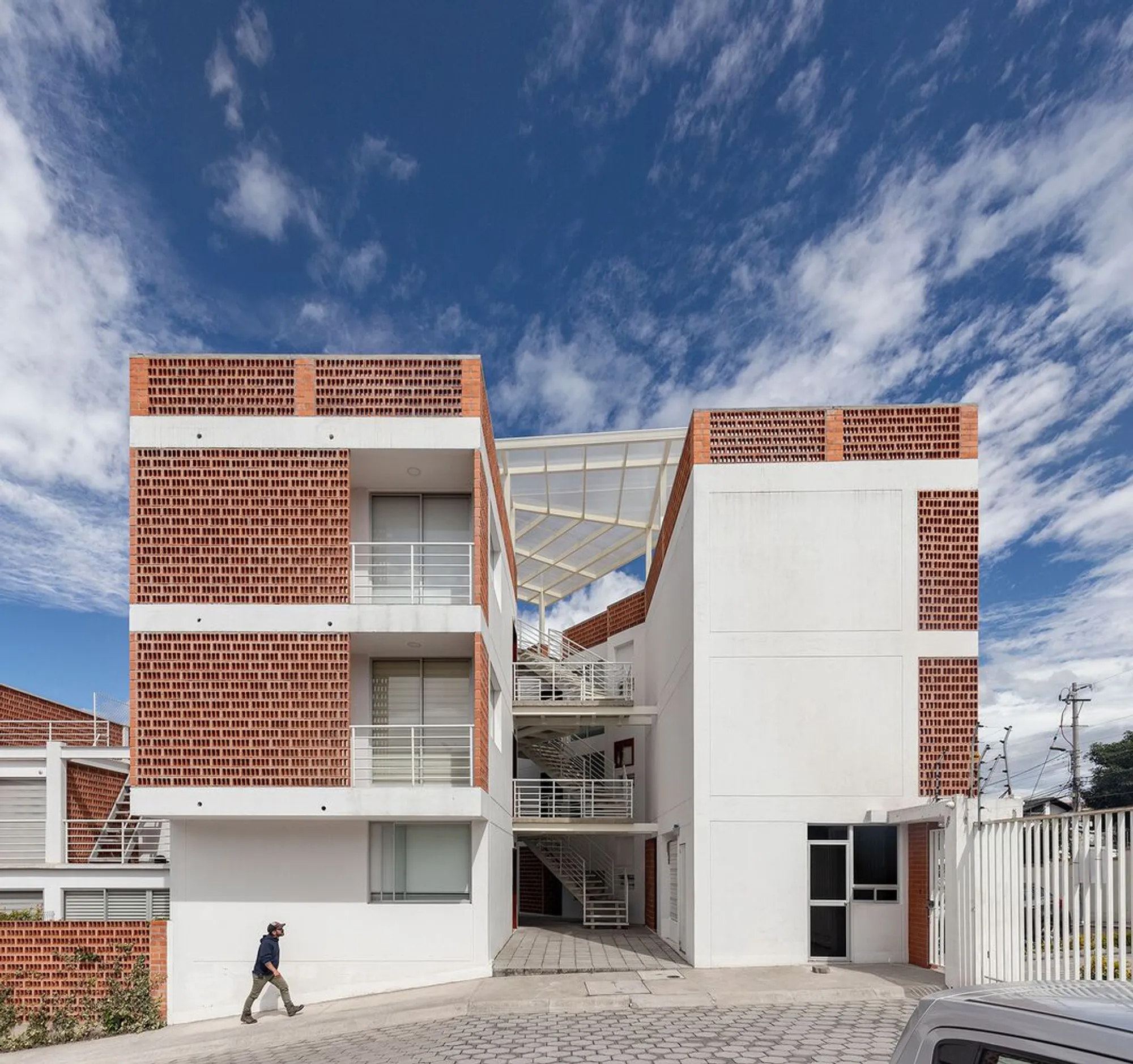
Villanueva Housing by ERDC Arquitectos
Villanueva Housing by ERDC Arquitect combines affordable design, diverse housing typologies, green spaces, and expandable homes, fostering inclusive urban community living.


Villanueva Housing, designed by ERDC Arquitectos, is a socially driven residential project located in Quito, Ecuador. Completed in 2021, the development is part of the Ecuadorian government’s VIP program for affordable housing, offering high-quality yet accessible living spaces for diverse residents. With a mix of apartments and houses, the project emphasizes community integration, affordability, flexibility, and long-term growth, setting a new benchmark for social housing architecture in Latin America.
Design Concept: Social and Progressive Housing
The guiding principle of Villanueva Housing is to create multifamily residences with a strong social character. The project goes beyond standard housing by introducing progressive design strategies that ensure adaptability, livability, and inclusivity.
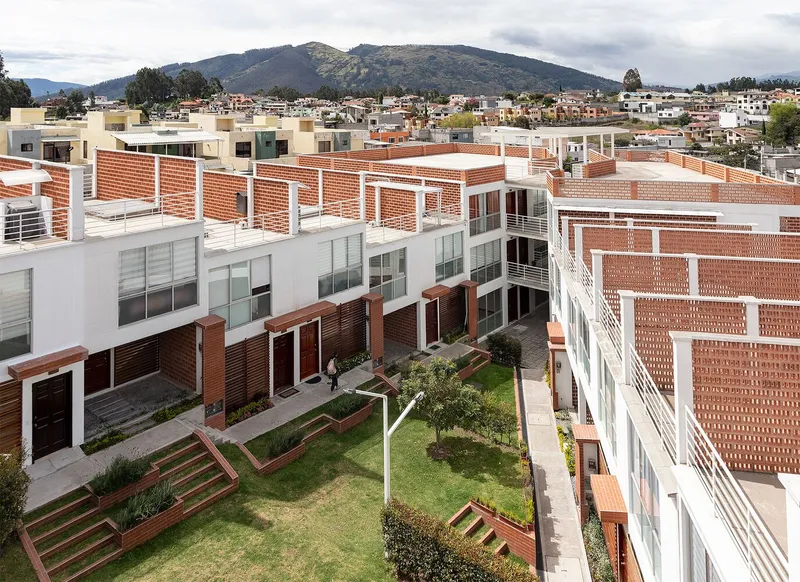
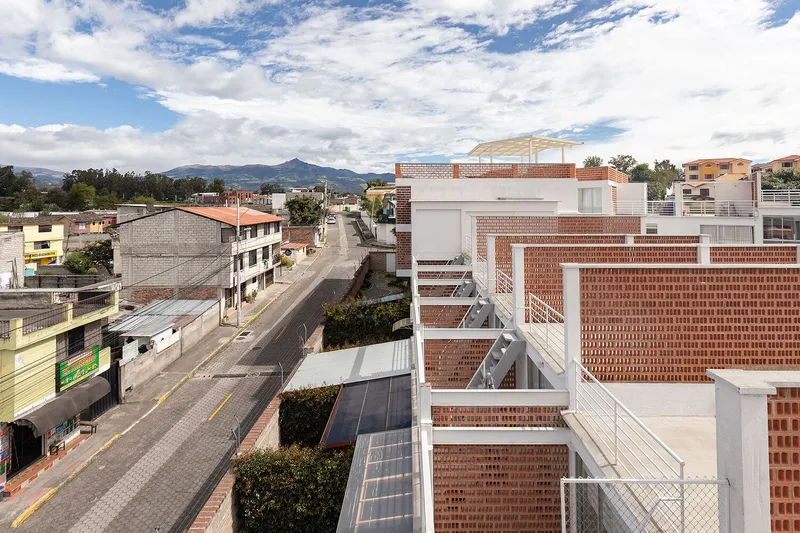
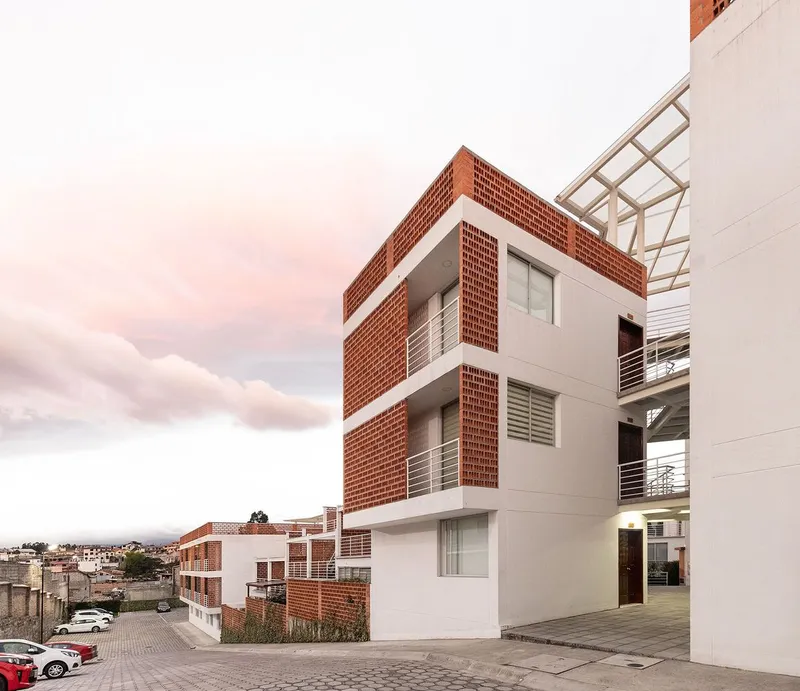
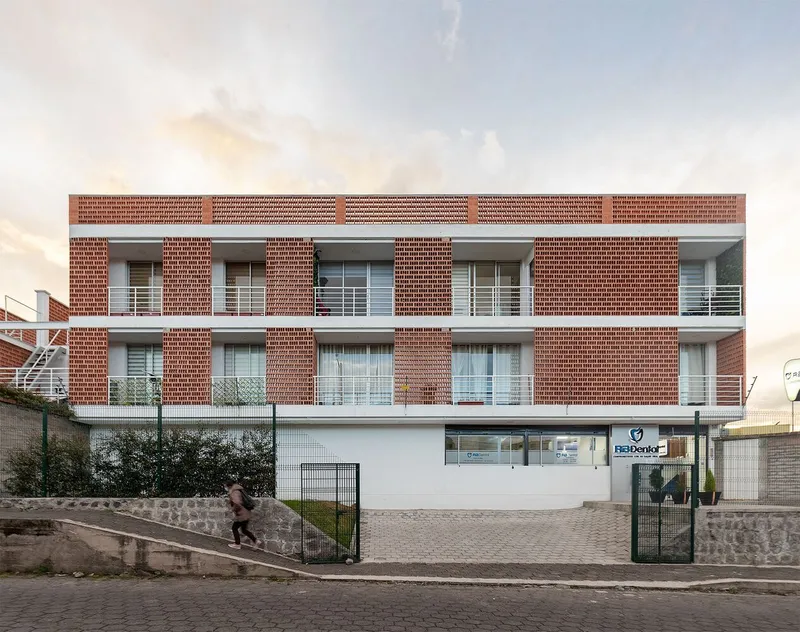
- Diversity of Typologies: The development includes 27 apartments distributed across three corner blocks and 17 houses positioned between them. The apartments vary in typology and size, addressing the needs of students, elderly individuals, and small families. The houses, designed with patios, maintain permeability around the site and ensure a balance between density and green space.
- Central Green Space: A central communal garden forms the heart of the project. Vertical circulation is strategically placed to connect this green core with the three corners of the site, reinforcing accessibility and potential integration with the wider neighborhood.
- Community-Oriented Spaces: Shared courtyards, pedestrian bridges, commercial ground-floor units, and corner entrances are designed to encourage interaction, commerce, and urban connection.
Flexibility and Expansion
One of the most innovative aspects of Villanueva Housing is its mutability. Recognizing the economic realities of many Ecuadorian families, the houses are designed for progressive expansion.
- Initial construction starts with a 60m² two-story house, which can later expand to 120m² on three floors.
- The structural system was predesigned for future vertical growth, ensuring safety, legality, and compliance with building codes.
- This flexibility reflects a cultural reality in Ecuador where families often expand their homes over time, leaving provisions for additional floors.
Government Program and Affordability
The project was executed under Ecuador’s VIP (Vivienda de Interés Público) program, which sets affordability and quality parameters for housing.
- Units must not exceed $90,000 USD or $900 USD/m², and they must serve as the buyer’s first property.
- Despite these constraints, ERDC Arquitectos ensured high spatial and material quality, avoiding the compromises often seen in low-cost housing.
- Financing was facilitated through private banking institutions with government subsidies, making ownership accessible for a wider demographic.
Residents and Occupancy
Villanueva Housing quickly became fully occupied, serving a broad spectrum of urban residents:
- University students from nearby ESPE fill many of the smaller apartments.
- Elderly residents and small families occupy mid-sized units.
- Growing families chose the expandable houses, planning long-term use.
This heterogeneous mix of users enriches the community and reflects the project’s social inclusivity.
Architectural Highlights
- Materiality: Use of brick and concrete balances durability with aesthetic warmth.
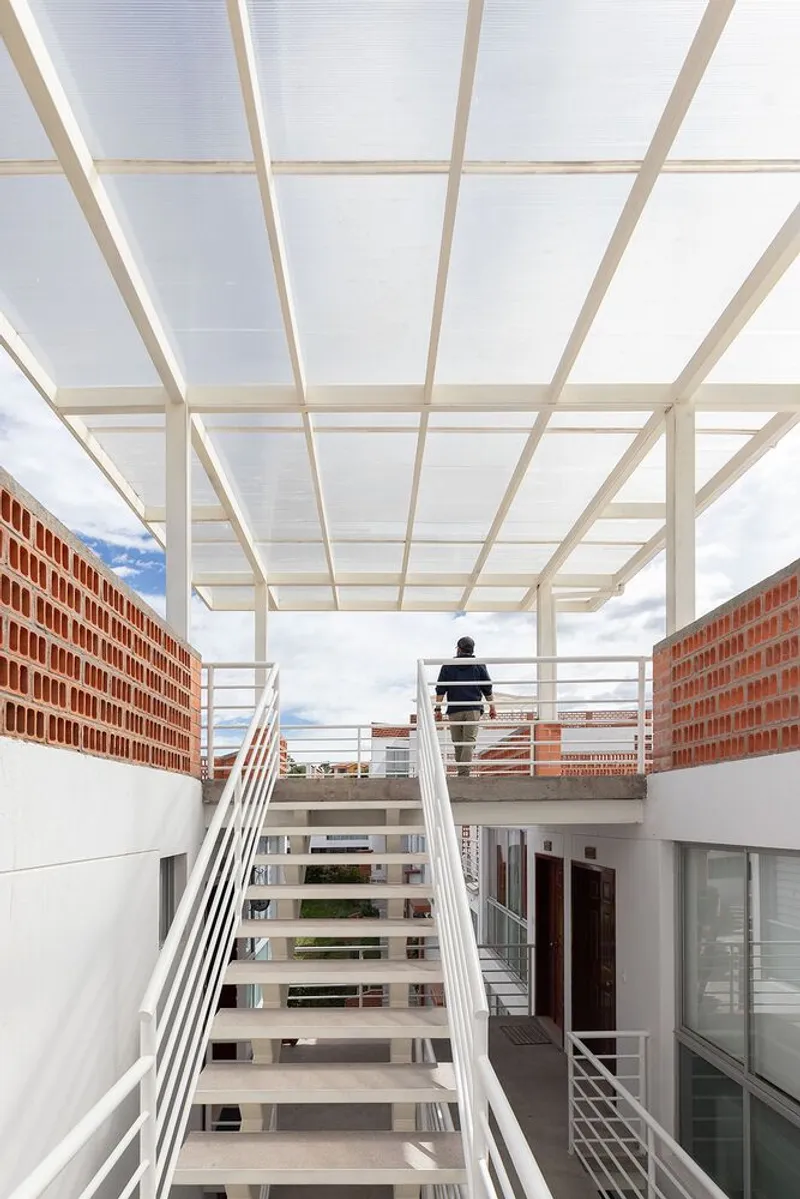
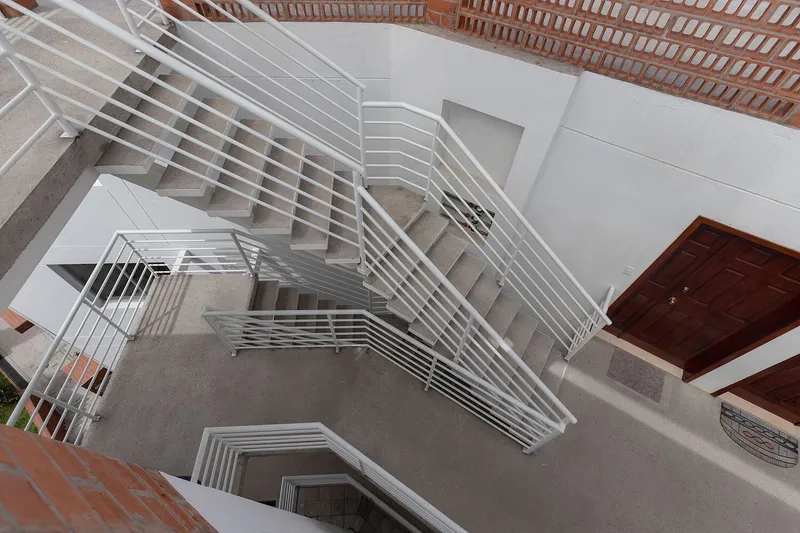
- Vertical Circulation as Skylight: Natural lighting filters through stairwells, creating dynamic communal spaces.
- Green and Permeable Perimeter: Ensures environmental integration and natural ventilation.
- Urban Connectivity: Bridges and open circulation reinforce interaction between residents and neighbors.

Villanueva Housing by ERDC Arquitectos is more than a residential complex—it is a socially responsive, adaptable, and sustainable housing model. By combining affordability, quality design, and community-oriented planning, the project successfully addresses Ecuador’s housing challenges while setting a precedent for future progressive housing developments.




Popular Articles
Popular articles from the community


The Ocean Hive: Sustainable Architecture for a Self-Sufficient Civilization at Sea
The Ocean Hive imagines sustainable architecture at sea, where modular habitats, algae, wave power and ocean waste sustain a growing colony.

Hill & Cross Opera: Sculptural Opera House Architecture Shaped by Tallinn’s Landscape and Identity
Hill & Cross Opera reimagines opera house architecture in Tallinn through its sculptural hill, civic plaza, glass wave and a luminous cross.

Co-life: Sustainable Architecture for Age-Friendly Community Living
Co-life reimagines sustainable architecture for seniors through courtyards, rammed earth, shared gardens, and spaces designed for belonging.

The Musturak Paradise: Senior Living Architecture for a Connected Future in Temara, Morocco
The Musturak Paradise reimagines senior living architecture in Temara via private homes, social spaces, culture, community, and shared care.

Similar Reads
You might also enjoy these articles


Hodi-Mandai Geram
Project Function: Preservation and revitalization of the Intangible heritage and socio-spatial identity of the Hodi by Housing, Cultural Memory Center, Sacred Grove, landscape, local tourism economy


Olio Towers: A Mid-Rise for Performers That Fuses Housing, Rehearsal, and Stage
Located blocks from Houston's Theater District, this modular tower stacks living units around a central performance atrium.

Oasis: Modular Green Housing Carved into Dhaka's Urban Fabric
A shortlisted Plugin Housing entry reclaims unauthorized settlements in Dhaka with stepped concrete volumes, green roofs, and ventilation-driven design.

Black Hole: A Floating Megastructure for the Post-Physical Era
Emiliano Mazzarotto envisions a spherical, self-scaling arena where e-sports, digital hotels, and holographic stadiums replace traditional public space.


Explore Housing Competitions
Discover active competitions in this discipline



Challenge to reimagine the Iron Throne


Photograph architecture without architects


Illustrate the lost glory of Angkor Wat - Render Challenge


Design challenge to reuse E-waste
Comments (0)
Please login or sign up to add comments
No comments yet. Be the first to comment!