

Viridi Residential Building: A Landmark of Computational Design and Sustainable Urban Living in Melbourne
Innovative Melbourne residential building featuring computational design, green terracotta façade, sustainable systems, and a sculptural roof inspired by surrounding parkland.


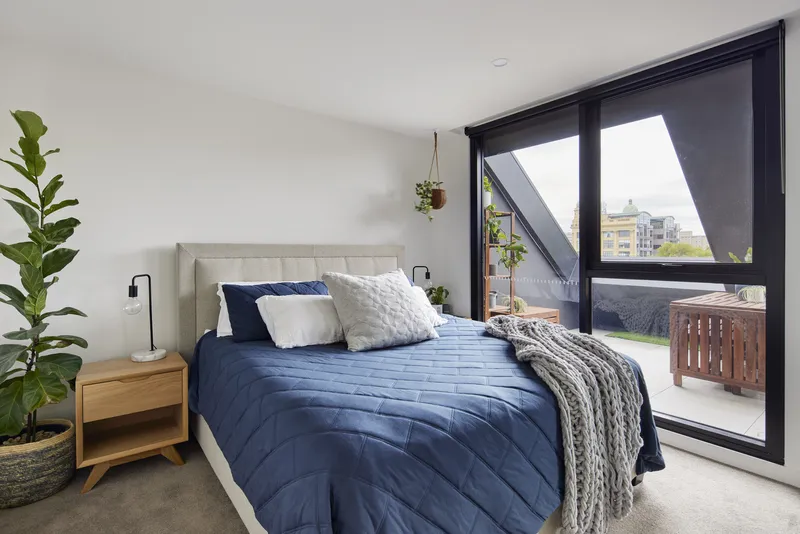
The Viridi Residential Building, designed by Plus Architecture, represents a bold evolution in contemporary residential architecture. Located in Melbourne, this innovative apartment complex redefines urban living through advanced computational design, environmental responsiveness, and a striking material identity.
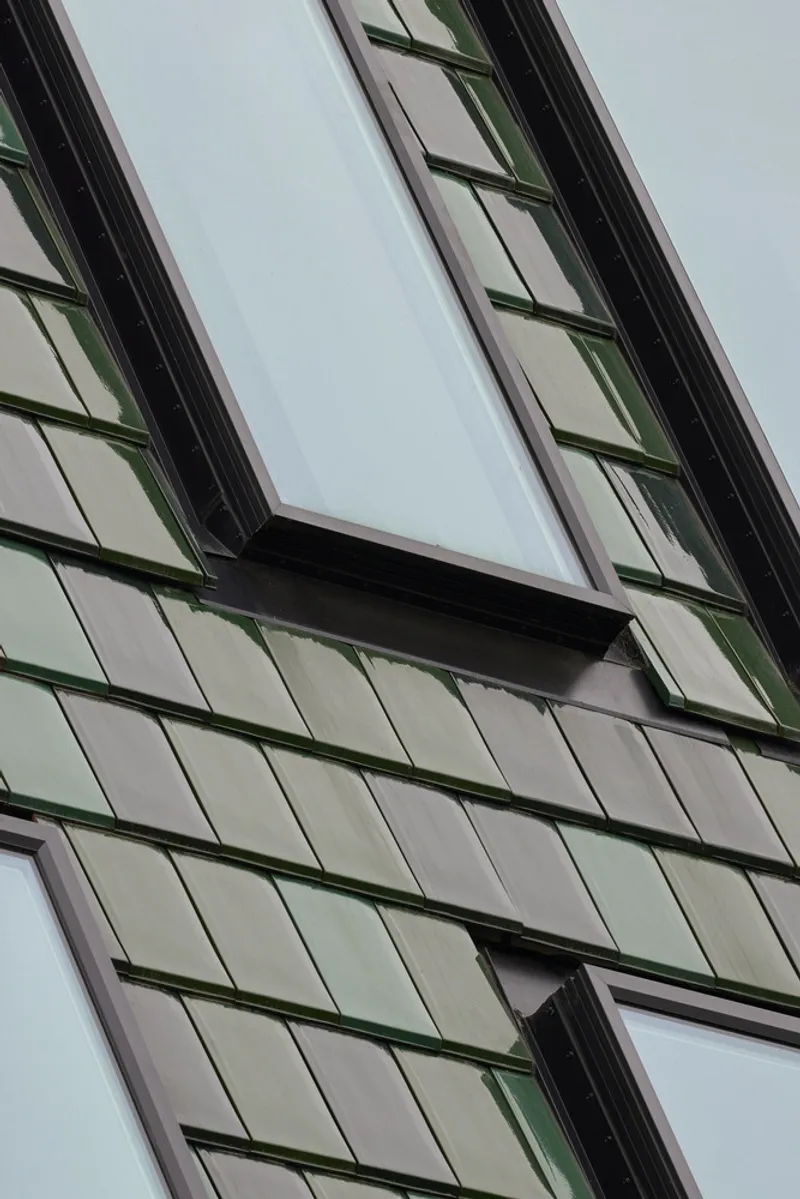
Developed in collaboration with Little Projects and constructed by Cobild, Viridi stands as a visual and technological landmark in Prahran. Spanning 7,777 m², the project was completed in 2022 and introduces a new architectural language shaped by geometry, color, and sustainability.
A Sculptural Roofscape Inspired by Nature
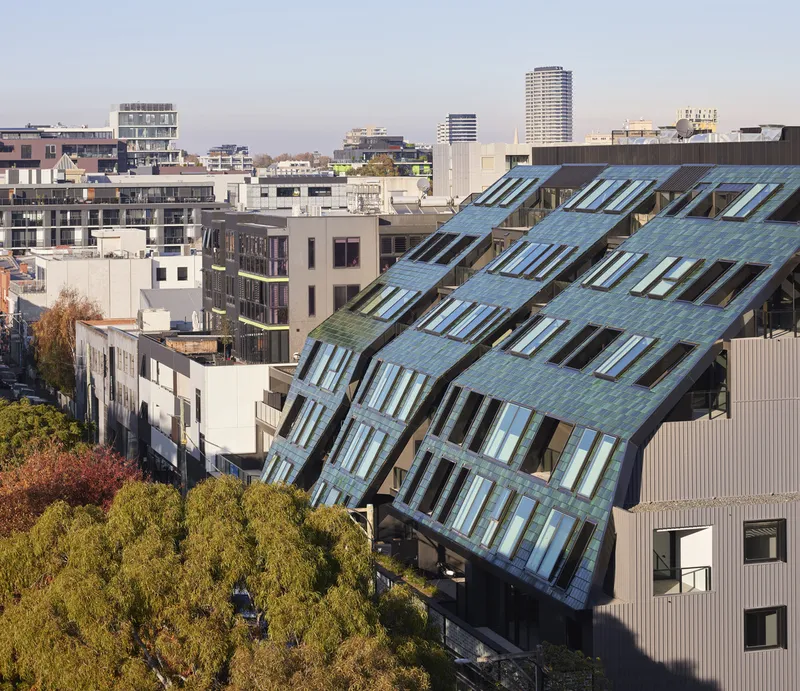
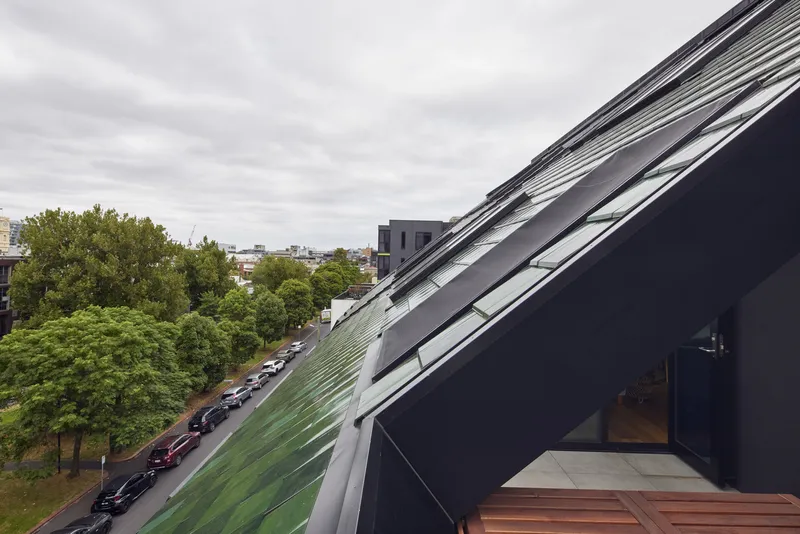
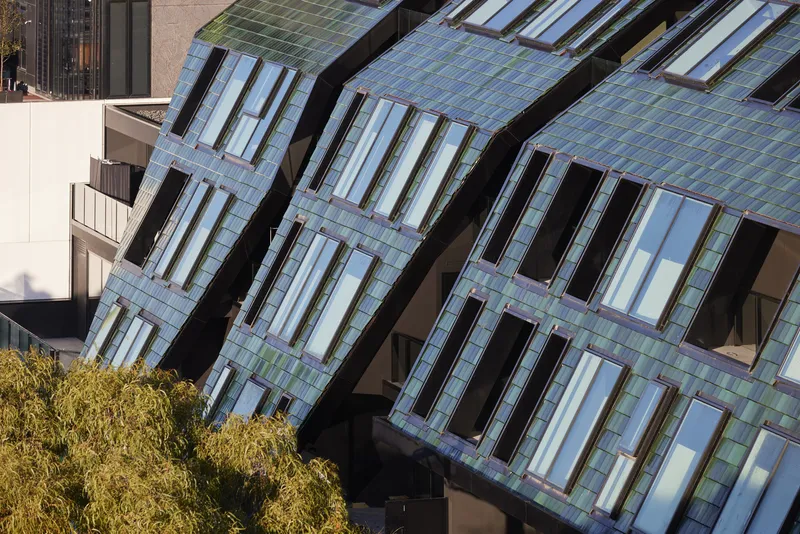
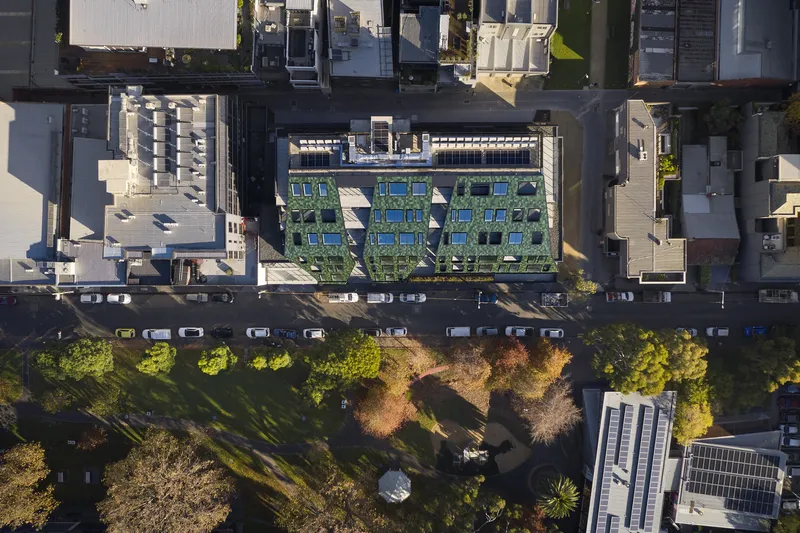
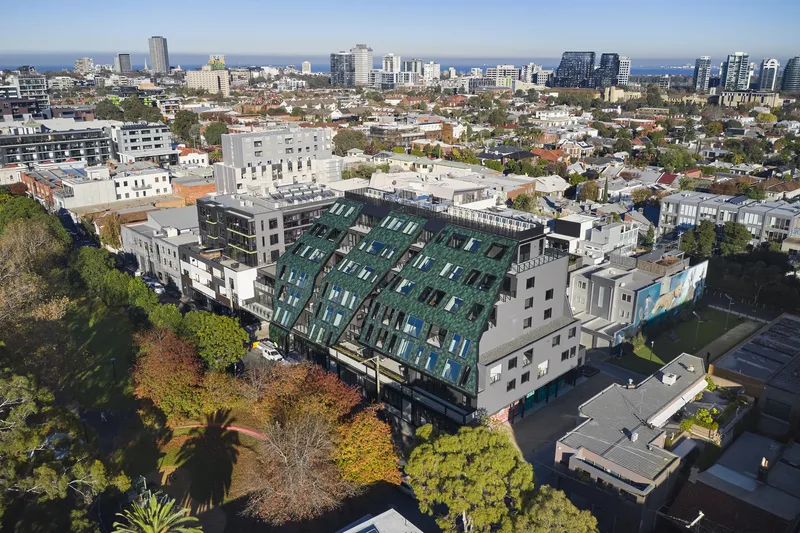
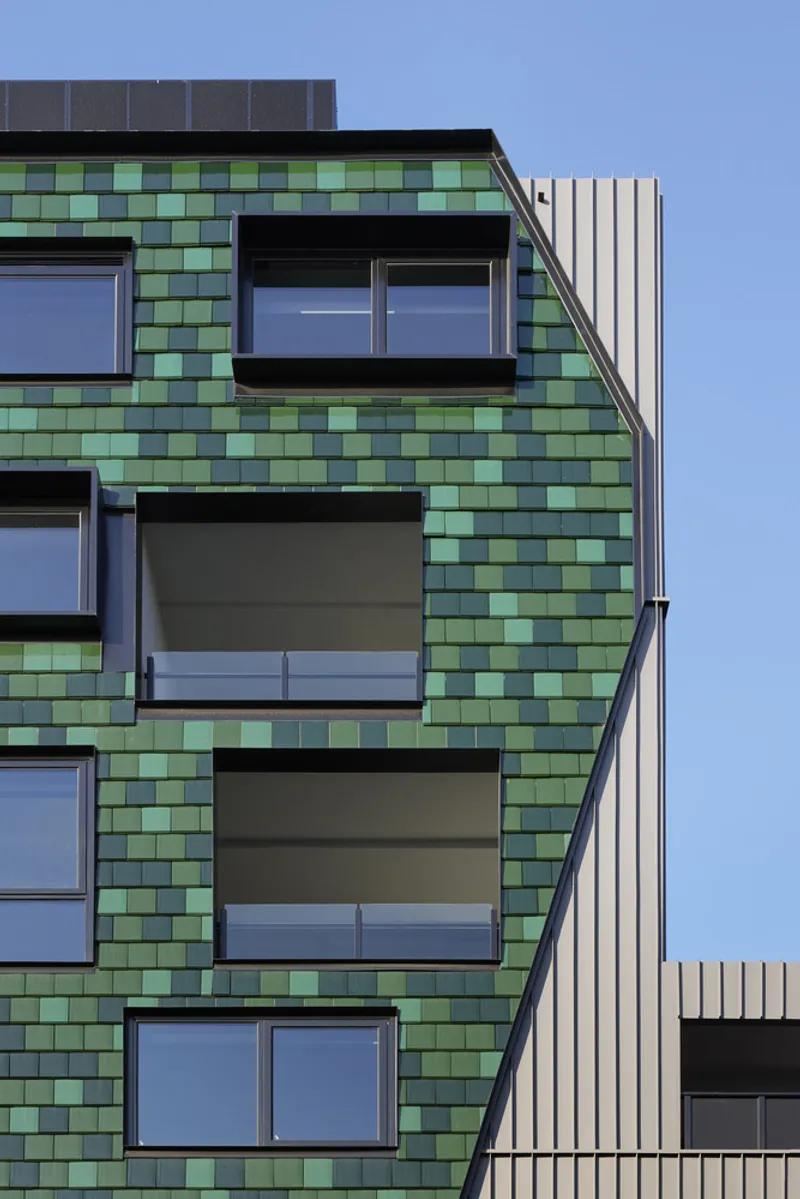
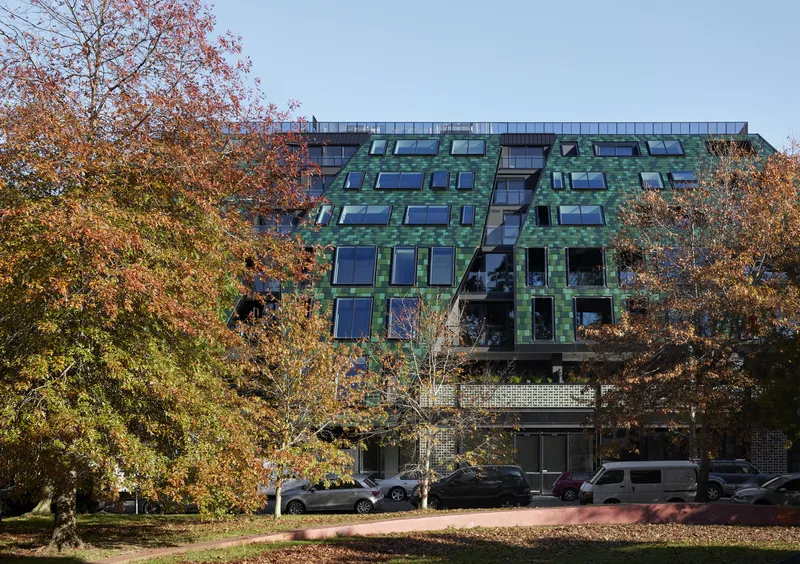
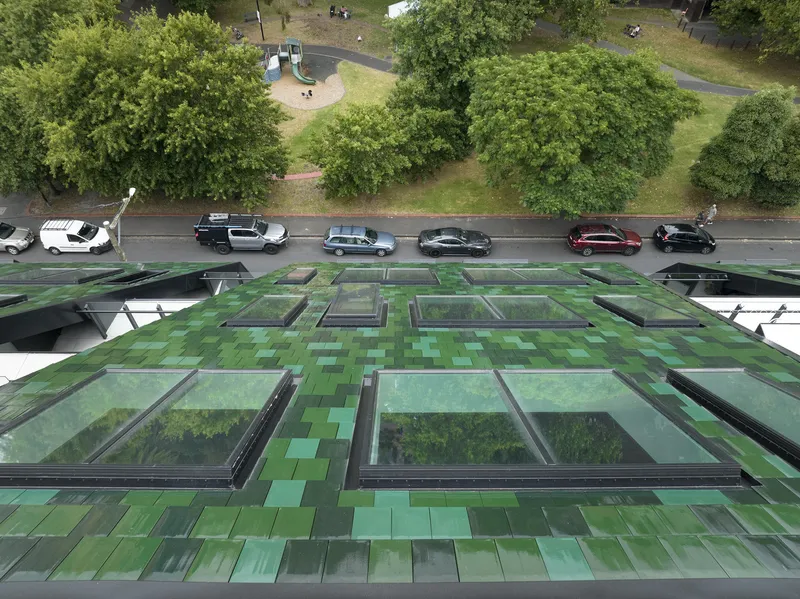
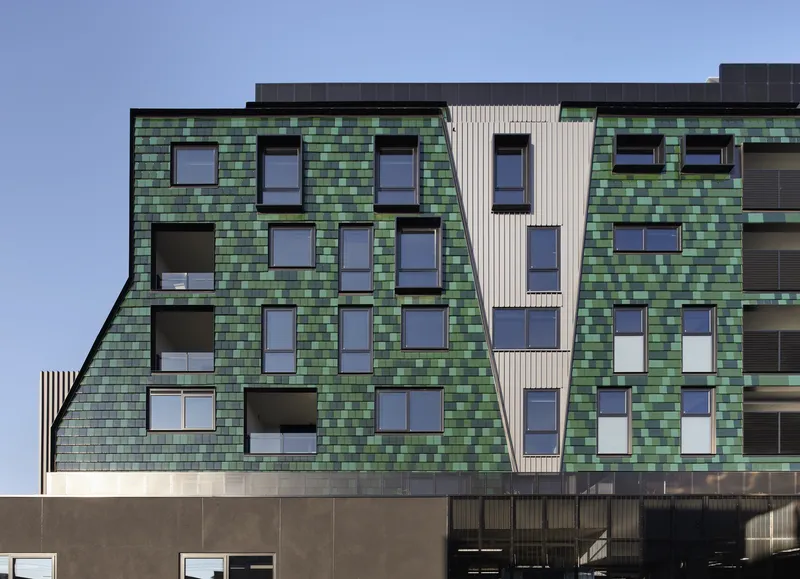
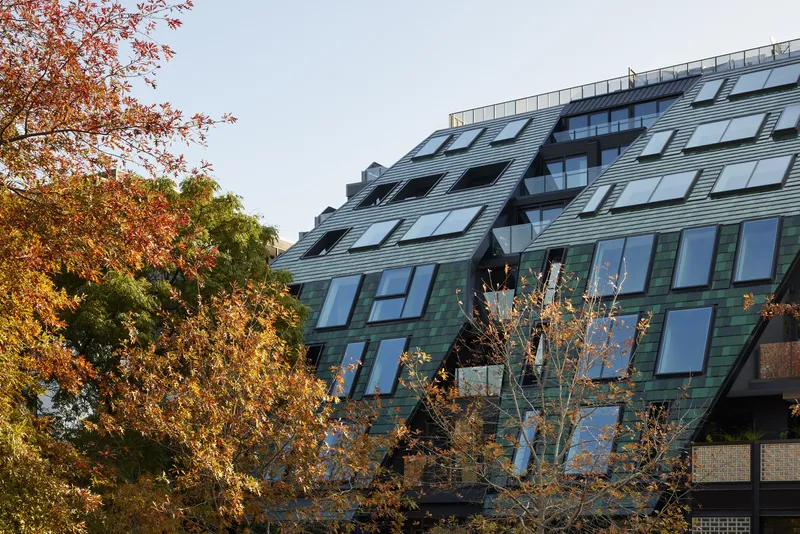
At the heart of Viridi’s design is its distinctive “hill-like” roof form, which transforms the building into a dynamic sculptural presence. The façade is clad with over 15,000 handcrafted terracotta tiles, forming a mosaic-like surface that shifts in tone and texture.
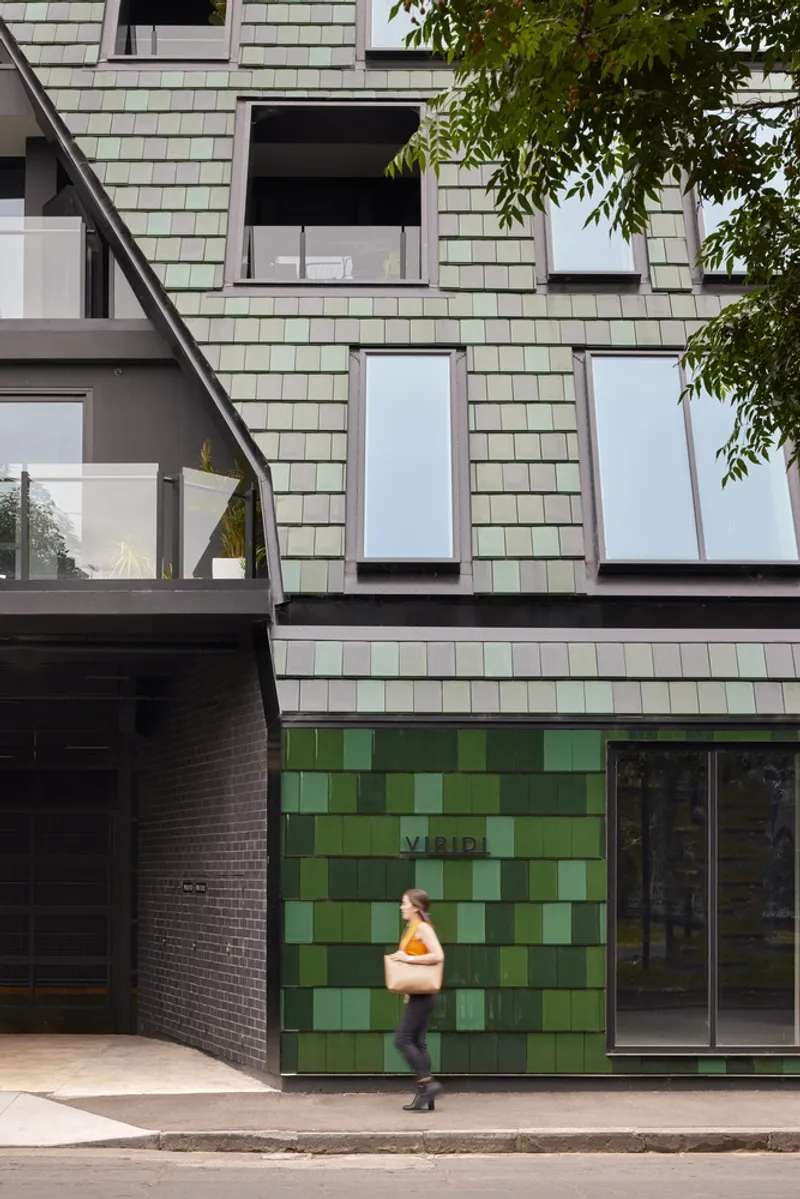
These tiles, produced by TEJAS BORJA, are glazed in three shades of green inspired directly by nearby park foliage. This thoughtful material selection allows the building to visually blend with its surroundings while simultaneously standing out as a contemporary icon.
Computational Design Meets Craftsmanship
One of the most groundbreaking aspects of the project is its use of computational design. The architects developed a custom scripting system to map tile placement, color distribution, and pattern sequencing across the complex façade.
Using advanced 3D modeling, the team simulated how natural light would interact with the tiles throughout the day. This data-driven approach ensured both aesthetic precision and environmental performance, resulting in a façade that behaves almost like a living surface.
The installation process mirrored a “painting-by-numbers” method, where each tile was carefully positioned according to the digital model. This fusion of digital technology and manual craftsmanship highlights a new paradigm in architectural production.
Engineering Innovation and Structural Complexity
Behind the visually expressive façade lies a sophisticated structural system. The building incorporates a custom blue steel truss framework, developed in partnership with Dynamic Steel Frame, to support the angled geometry and heavy tile load.
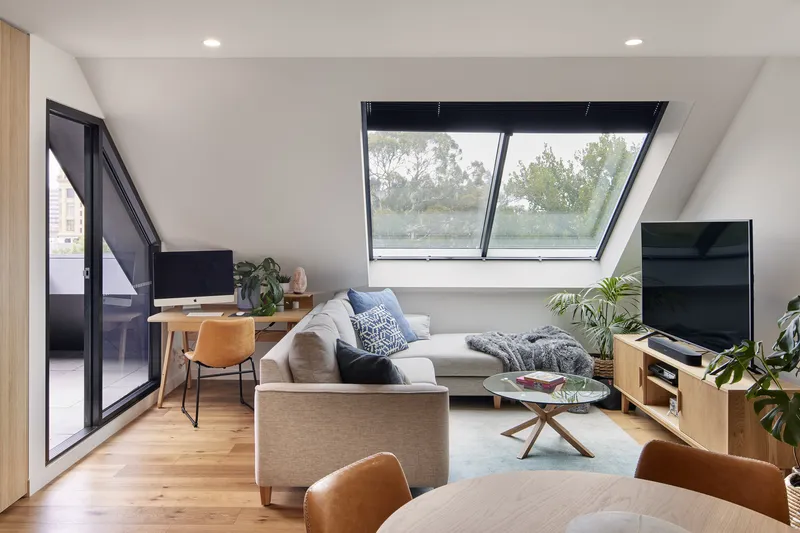
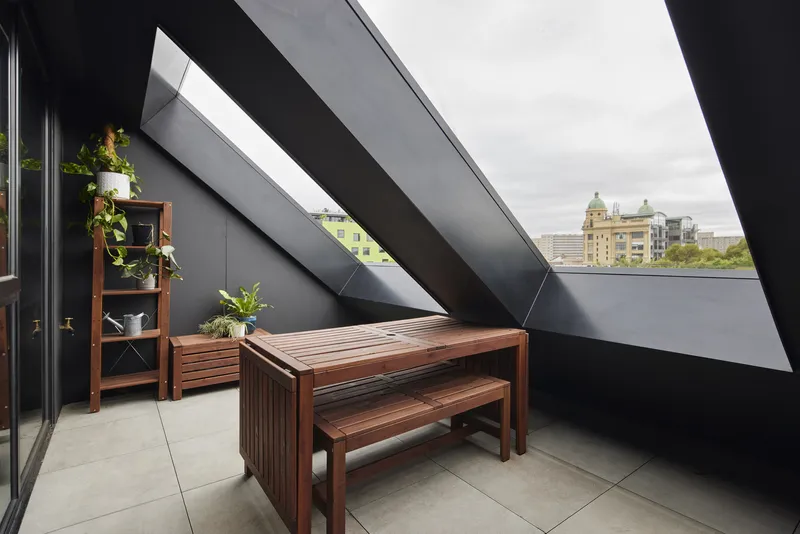
Large glazed openings, some weighing over 500 kg, are seamlessly integrated into the structure, providing expansive views of Melbourne’s skyline while maintaining structural integrity.
The unique raked form of the building was also a response to local planning constraints, ensuring minimal overshadowing of adjacent gardens and pedestrian pathways. This demonstrates how regulatory challenges can inspire creative architectural solutions.
Sustainability and Environmental Performance
Viridi is not only visually compelling but also environmentally responsible. The building has achieved a 7-star ESD (Environmentally Sustainable Design) rating, reflecting its commitment to high-performance residential design.
Key sustainable features include:
- Double-glazed windows for improved thermal efficiency
- Integrated insulation within the façade system
- Passive solar design maximizing natural daylight
- Advanced waterproofing meeting FP1.4 compliance standards
The angled façade enhances daylight penetration, reducing reliance on artificial lighting and improving indoor comfort for residents.
Urban Integration and Community Activation
Beyond its architectural expression, Viridi contributes meaningfully to the urban fabric of Prahran. The development includes 43 residential apartments across seven levels, complemented by ground-floor retail and approximately 500 sqm of office space.
The project emphasizes pedestrian engagement and connectivity, revitalizing the street interface and strengthening links to adjacent parklands. This approach aligns with contemporary urban design principles that prioritize walkability, mixed-use development, and community interaction.
A New Benchmark for Residential Architecture
The Viridi Residential Building sets a new benchmark for parametric architecture, sustainable housing, and façade innovation in Australia. By merging computational design tools with traditional materials and forward-thinking engineering, the project exemplifies how architecture can be both technologically advanced and deeply contextual.
It stands as a testament to how design can respond to environmental, urban, and aesthetic challenges simultaneously, creating spaces that are not only functional but also inspiring.
All photographs are works of
Tom Roe


Popular Articles
Popular articles from the community


Architekt Andreas Gruber Scatters 23 Dark Timber Chalets Across a South Tyrolean Forest Edge
In Molini di Tures, Amonti Chalets breaks a resort into a hamlet of gabled timber houses, with parking, storage and services pushed into the slope.

David Macias Steps a Doorless Stone and Plaster House Down a Tropical Colombian Hillside
In the humid hills of Colombia, Threshold House replaces the front door with an open void and terraces its 850 m² down the slope instead of fighting it.

Juan García Correa, John González and Claudia Rueda Sink a Circular Amphitheater into a Manizales Engineering Building
On the La Nubia campus in Manizales, Colombia, the S1 Building folds labs and offices into a hillside of ramped lawns that double as a campus route.

Cube Design Draws an Ecological Corridor Between Two Shenzhen Hills with the Nankai Building
Beside Shenzhen's container docks, the Nankai Building pairs stacked balconies with a climbing green screen to connect two hillsides across its height.

Similar Reads
You might also enjoy these articles

Gil Mello Arquitetura Tilts a Single Roof Toward the Waterfalls on a Plateau Above Aiuruoca, Brazil
In Aiuruoca, Minas Gerais, a 200 m² house of local labor and reclaimed poles pairs a low valley veranda with a tall mountain one.

U.GA Architects Wraps an Oval Rooftop Pool in Curved Board-Formed Concrete on Busan's Jeollidan-gil
In Busan's Jeonpo-dong, a 454 m² mixed-use block stacks a neighborhood facility, guest rooms and an oval rooftop pool inside spiraling concrete walls.

Felipe Hess Arquitetos Turns a Blind Stone Wall to the Street and Opens a Brazilian House onto a Courtyard and Canal
A canal-front house in Brazil hides behind painted stone and planting, then opens to an olive-tree courtyard, a reed-ceilinged porch and a curving pool.
David Macias Steps a Doorless Stone and Plaster House Down a Tropical Colombian Hillside
In the humid hills of Colombia, Threshold House replaces the front door with an open void and terraces its 850 m² down the slope instead of fighting it.

Explore Residential Building Competitions
Discover active competitions in this discipline

Challenge to design mud housing for contemporary communities

Challenge to reimagine the Iron Throne

Photograph architecture without architects

Illustrate the lost glory of Angkor Wat - Render Challenge
Comments (0)
Please login or sign up to add comments
No comments yet. Be the first to comment!