
Vision Pakistan By DB Studios: Architecture for Social Empowerment in Islamabad
A community-focused institute in Islamabad empowering marginalized youth through education, skills training, and culturally grounded, sustainable architectural design.

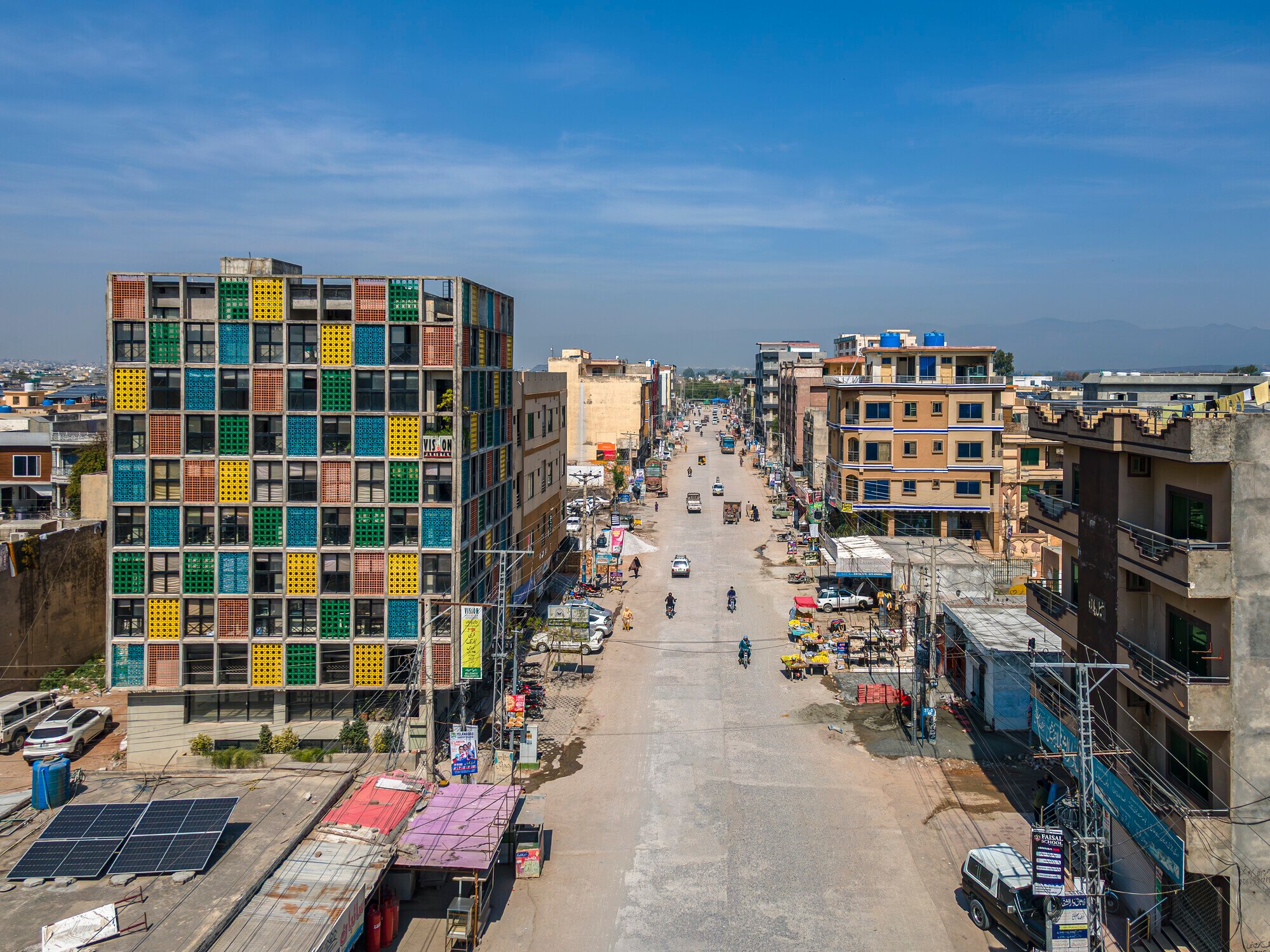
Located in Ghauri Town, Islamabad, the Vision Pakistan Institute by DB Studios stands as a powerful example of community-centered architecture designed to uplift marginalized youth through education, skill-building, and dignity. Completed in 2023, this 848 m², six-storey institutional building replaces inadequate rented facilities and provides a permanent, purpose-built home for the Vision Pakistan Welfare Trust, a non-profit organization established in 2007.
Architecture as a Tool for Social Change
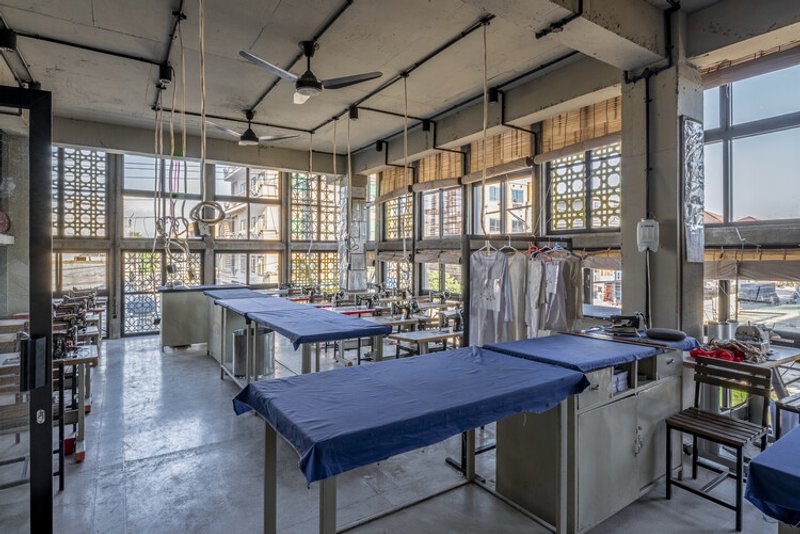
Vision Pakistan Welfare Trust offers a second chance to non-literate, low-income youth aged 16 and above, primarily males from underserved neighborhoods. Funded through Zakat, the institute runs a one-year residential-style program that combines vocational training (tailoring) with basic literacy, life skills, ethical education, and daily responsibilities. The ultimate goal is social independence and economic self-sufficiency.
DB Studios approached the project with the belief that architecture can actively support this mission: by fostering pride, ownership, and community identity through thoughtful spatial design.
Responding to a Dense Urban Context
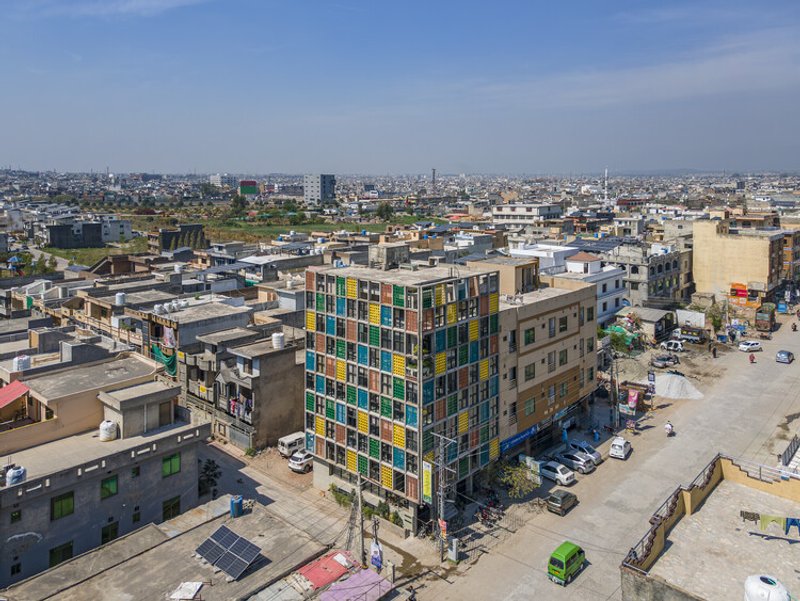
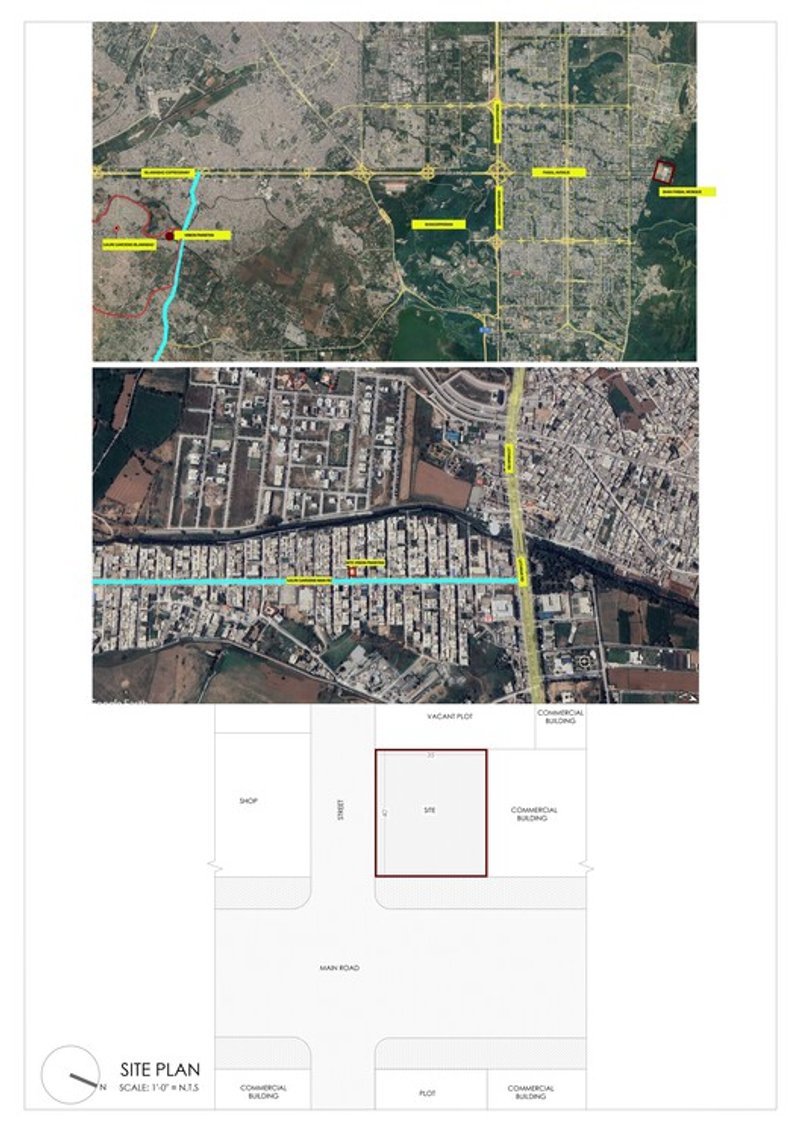
The building occupies a 130 m² corner plot along Ghauri Road, embedded within a dense, informal, peri-urban fabric of mixed-use plazas, small homes, street vendors, and eclectic architectural expressions. Given the tight site constraints, the design maximizes the allowable built volume while maintaining light, ventilation, and flexibility.
A central vertical circulation core enables independent access to each floor, allowing parts of the building to operate separately. This strategy supports revenue generation through rentable spaces, an important step toward the institution’s long-term financial sustainability.
Programmatic Organization and Flexibility
The lower and upper ground floors accommodate retail, exhibition spaces, and parking, creating an interface with the public realm. Upper floors house classrooms, administrative offices, washrooms, and multipurpose halls. Classrooms are positioned along the eastern façade to maximize natural daylight and cross-ventilation.
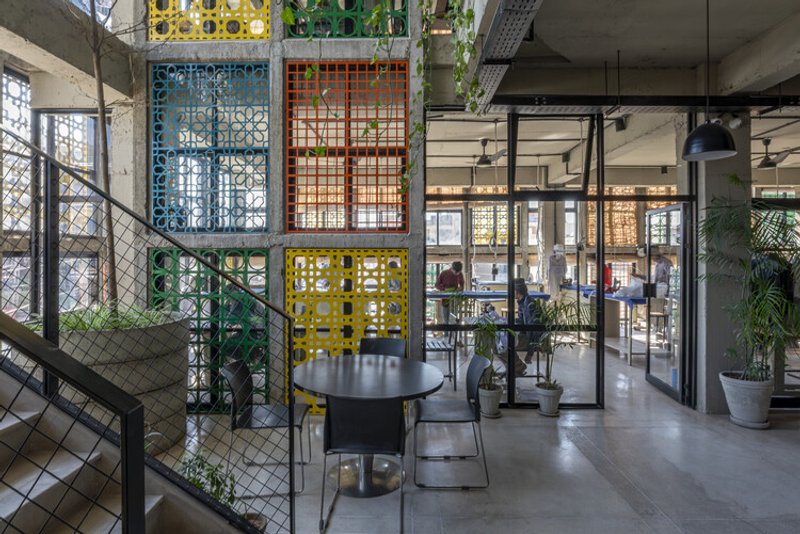
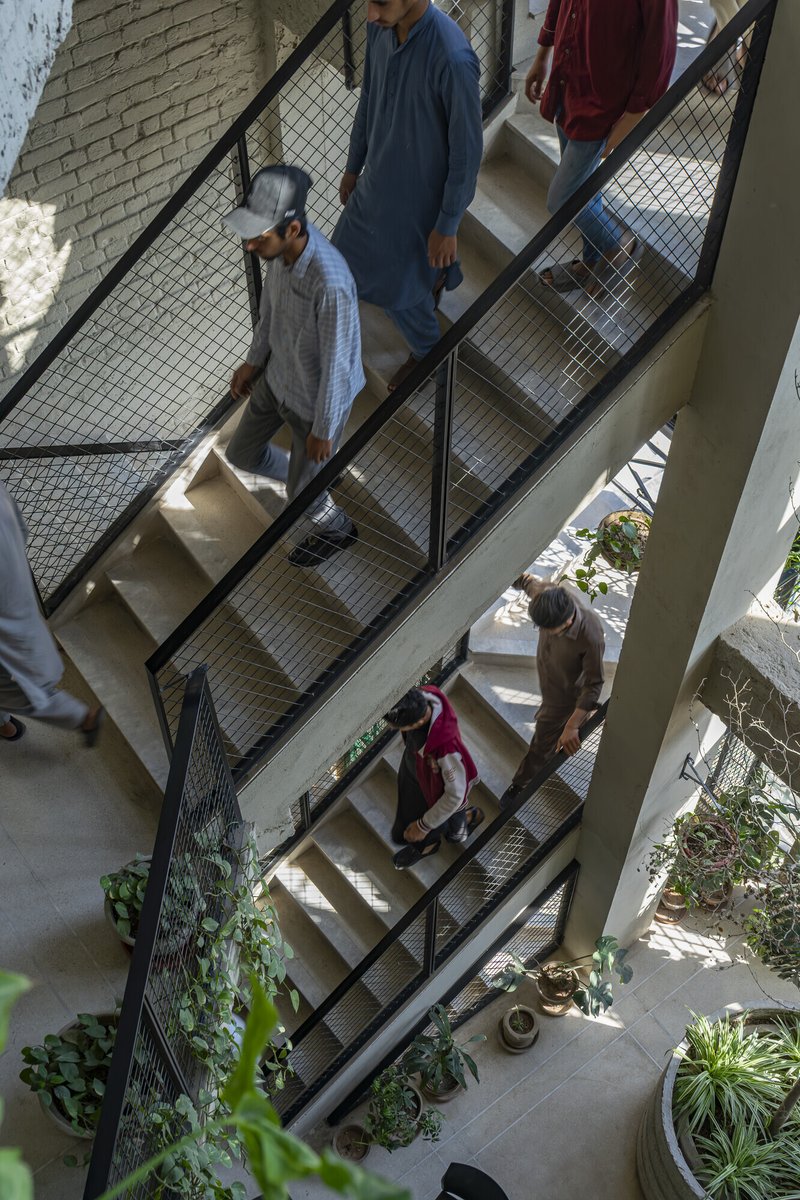
At the heart of the building is a triple-height atrium, anchored by a tall tree that becomes both a symbolic and environmental centerpiece. This open courtyard enhances stack ventilation, visual connectivity, and a sense of unity across floors, crucial in an educational and communal environment.
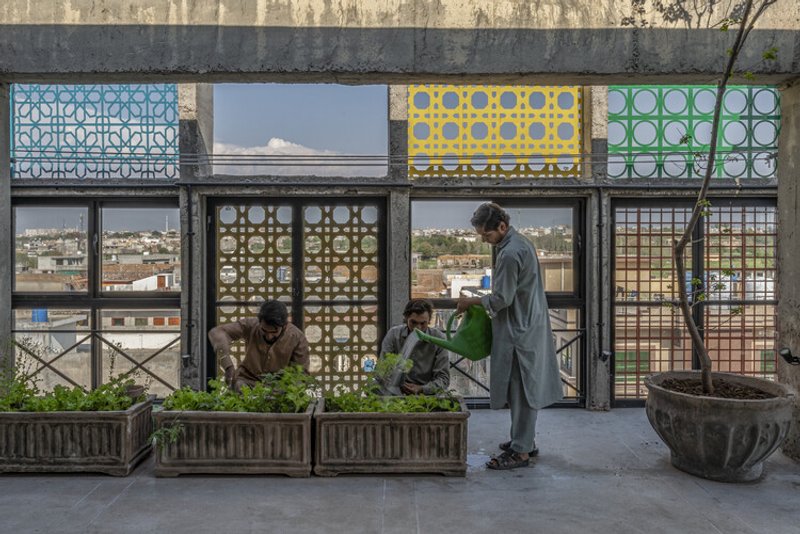
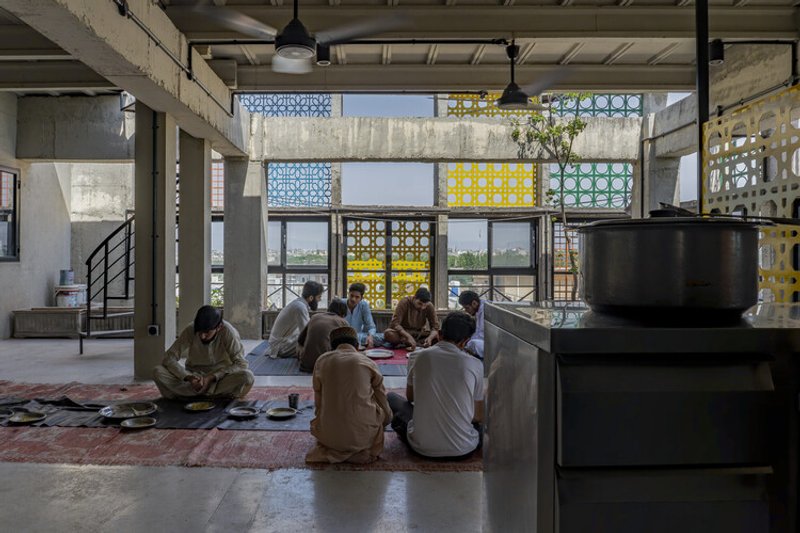
The top floor includes staff accommodation, a dining hall, prayer area, terraces, and a kitchen garden, reinforcing self-sufficiency, well-being, and daily collective rituals.
Material Honesty and Cultural Expression
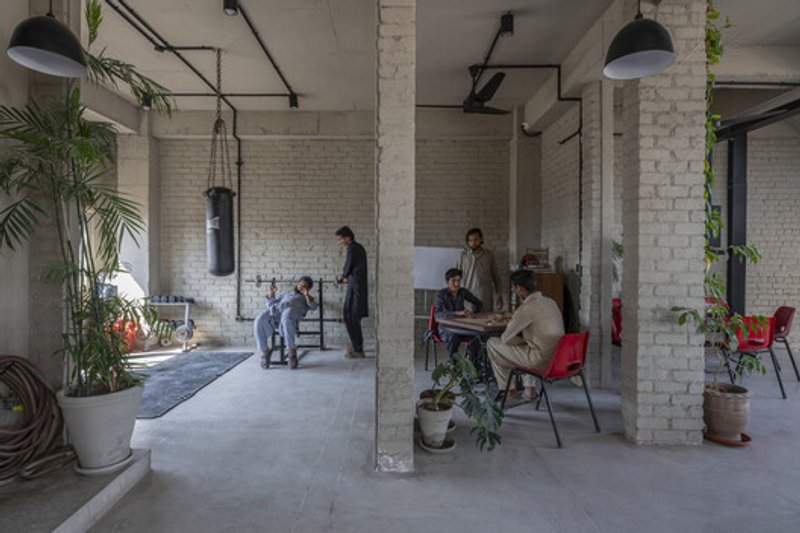
Material choices emphasize low cost, durability, and transparency. The structure is an RCC frame with fair-faced concrete, exposed brick, terrazzo flooring, and visible MEP services, turning necessity into an educational and aesthetic feature. Aluminum windows are designed for easy cleaning from inside, responding to operational realities.
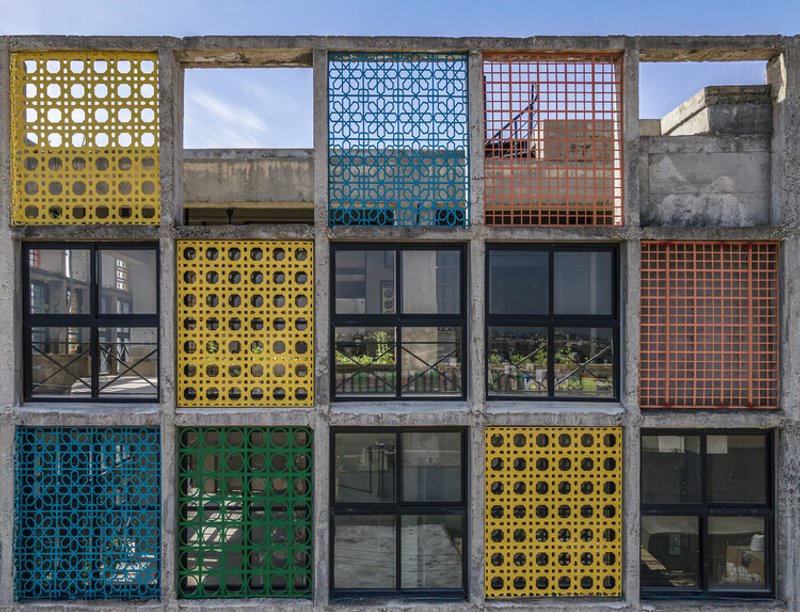
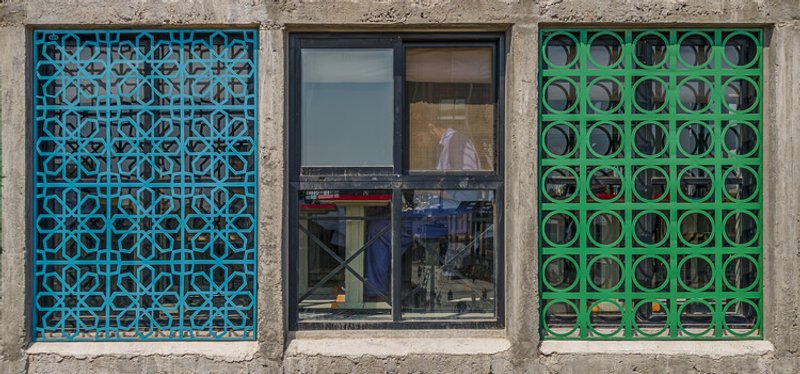
The building’s most striking feature is its vibrant façade, articulated with colorful geometric metal jaali screens. These reference Pakistani craft traditions, Islamic geometric patterns, and the modernist legacy of 1960s Islamabad, creating a culturally grounded yet contemporary identity.
Passive Design and Environmental Responsibility
Passive design strategies: such as shaded openings, controlled glazing, atrium ventilation, and thermal mass, reduce reliance on mechanical systems. These features not only lower operational costs but also instill a sense of environmental responsibility among users.
A Human-Centered Institutional Model
More than an educational facility, Vision Pakistan is a social infrastructure project that demonstrates how architecture can empower overlooked communities. Through flexible planning, cultural resonance, and environmental sensitivity, the building nurtures confidence, belonging, and aspiration, transforming education into a lived, spatial experience.
All the photographs are works of Usman Saqib Zuberi with Courtesy of Aga Khan Trust for Culture



Popular Articles
Popular articles from the community

Milan Crossover: Sustainable Architecture for a New Fashion Culture in Milan
Milan Crossover transforms fashion culture through sustainable architecture, linking material libraries, remake studios, and public runways.

Kaffeebühnen: Coffee Shop Architecture Designed as a Civic Stage Between Vienna’s City and Park
Kaffeebühnen turns coffee shop architecture into a civic stage, linking Vienna’s park edge, urban life, warm timber yards, and coffee craft.
Eco Chapel: A Green Architecture Pavilion Designed in Symbiosis with the Forest
Eco Chapel uses green architecture to weave prayer, learning and reuse into a forest pavilion shaped by modular hexagonal canopies for life.
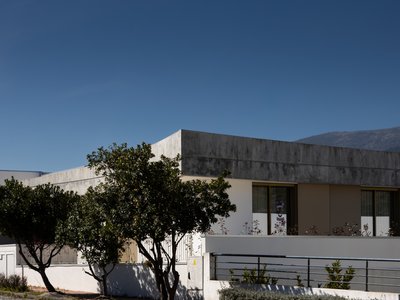
PLATAFORMArq Folds a Concrete Roof Over the Portuguese Mountains in House #474
A 220-square-meter residence in Teixoso, Portugal, wraps board-formed concrete into an angular canopy that frames the Serra da Estrela foothills.


Similar Reads
You might also enjoy these articles

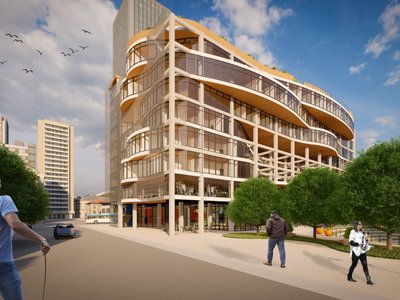
Olio Towers: A Mid-Rise for Performers That Fuses Housing, Rehearsal, and Stage
Located blocks from Houston's Theater District, this modular tower stacks living units around a central performance atrium.
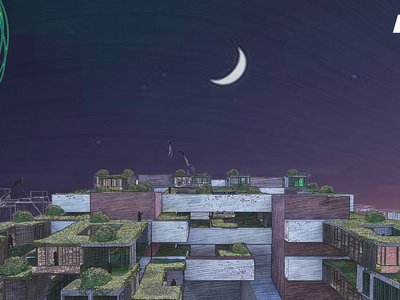
Oasis: Modular Green Housing Carved into Dhaka's Urban Fabric
A shortlisted Plugin Housing entry reclaims unauthorized settlements in Dhaka with stepped concrete volumes, green roofs, and ventilation-driven design.

Black Hole: A Floating Megastructure for the Post-Physical Era
Emiliano Mazzarotto envisions a spherical, self-scaling arena where e-sports, digital hotels, and holographic stadiums replace traditional public space.
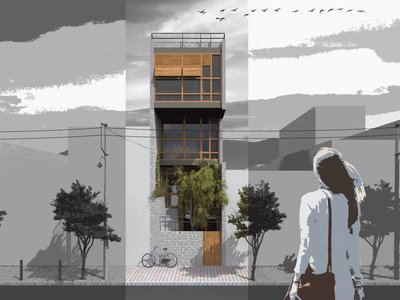
Compact & Sustainable Living in Piraeus: A Four-Level Family Home Built Around Light and Air
A narrow townhouse in one of Greece's densest port cities uses a central atrium and passive strategies to house three generations under one roof.

Explore Educational Building Competitions
Discover active competitions in this discipline




The International Standard for Design Portfolios


The Global Benchmark for Architecture Dissertation Awards


The Global Benchmark for Graduation Excellence


Challenge to design public laboratory
Comments (0)
Please login or sign up to add comments
No comments yet. Be the first to comment!