

Viver Quartier Residential Complex by parte arquitetura: Modern Living in Pelotas, Brazil
Viver Quartier Residential Complex in Pelotas integrates modern apartments, communal spaces, natural light, ventilation, and sustainable design with vibrant urban connectivity.


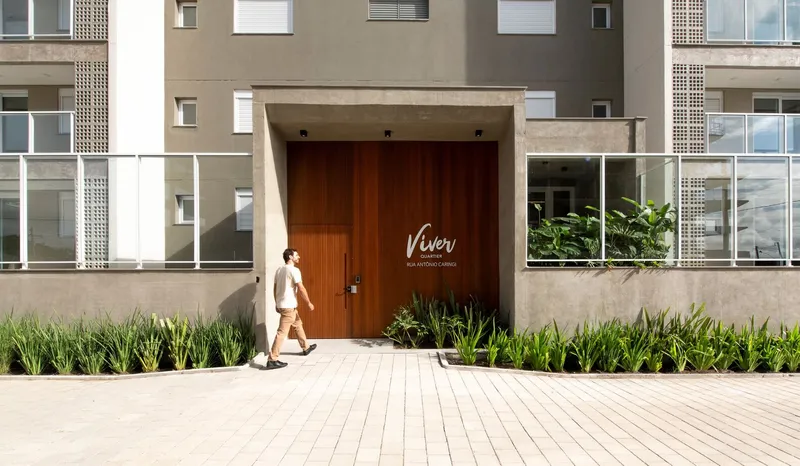
The Viver Quartier Residential Complex by parte arquitetura stands as a remarkable example of contemporary urban housing in Pelotas, Brazil. Strategically located in a neighborhood masterplanned by the renowned architect Jaime Lerner, the project occupies an urban void and transforms it into a vibrant, multifunctional residential hub. Designed to integrate seamlessly with the surrounding urban fabric, Viver Quartier emphasizes public engagement, environmental comfort, and modern architectural expression.


Urban Integration and Site Planning
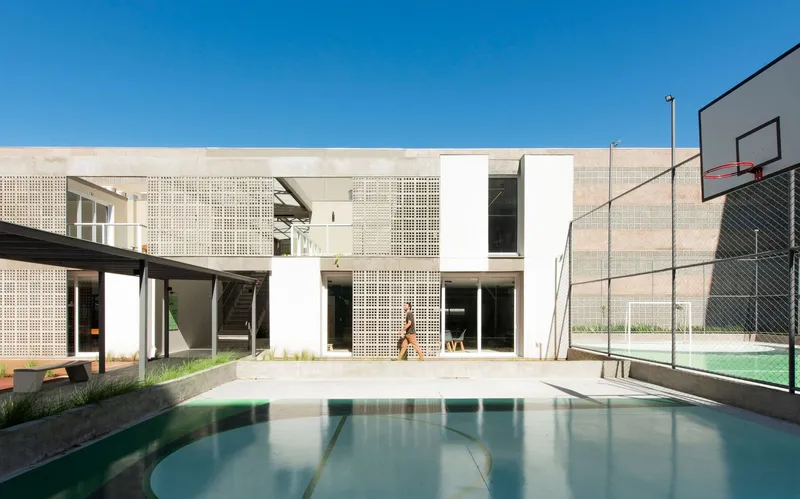
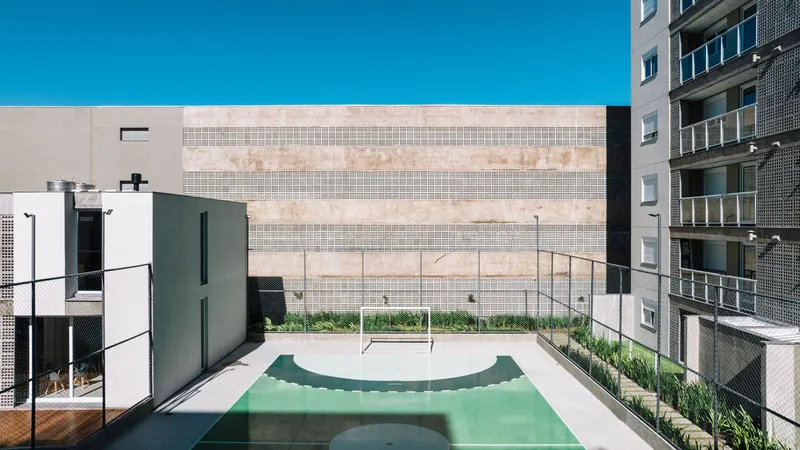
Situated on a 7,000 m² plot bordered by three streets, the complex takes full advantage of the neighborhood’s exemption from front and side setbacks. The apartment blocks are positioned along the periphery, close to the building line, creating a central communal space. This central courtyard is carefully organized along two axes, which divide the area into four distinct zones: landscaped areas for passive leisure near the entrance, and active zones featuring sports courts, a children’s playground, and swimming pools.

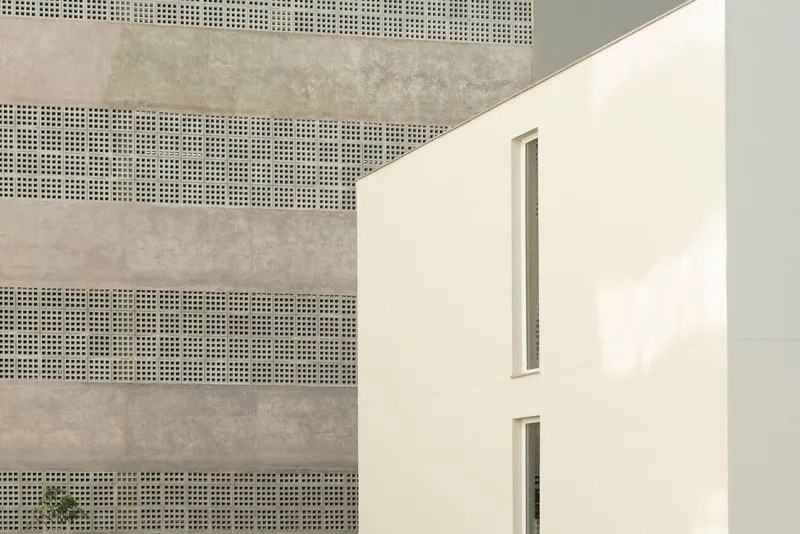
The peripheral layout ensures optimal natural lighting and cross-ventilation for all units, while allowing independent access to each block. This design strategy fosters community interaction while maintaining privacy, encouraging residents to engage with shared public spaces. By orienting the blocks along the streets, the design also promotes visual connectivity, enabling residents to interact visually with the urban environment.
Apartment Design and Environmental Comfort
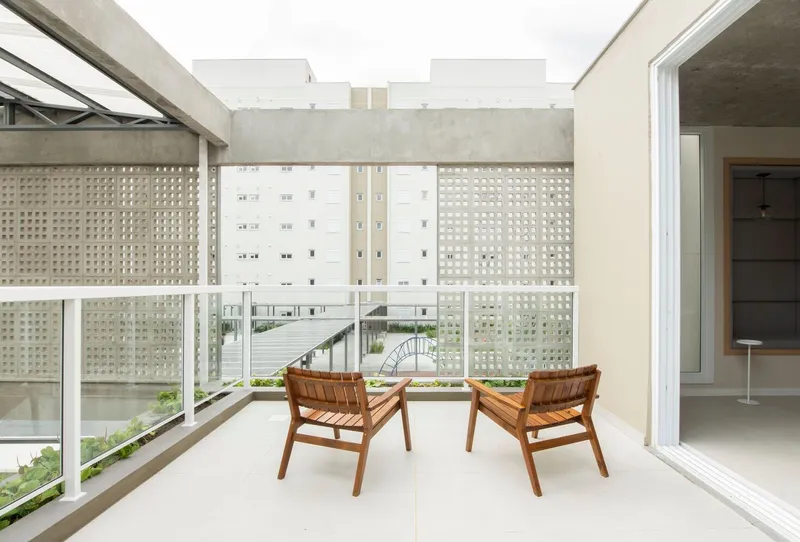
At the residential scale, the apartments are carefully organized to balance social and intimate spaces. Shared living areas are integrated for functional efficiency, while private areas are separated to enhance residential privacy. Apartments are designed to maximize sunlight exposure and natural ventilation, contributing to environmental comfort and reducing reliance on artificial climate control.


Construction and Architectural Expression
The complex employs structural masonry, a common local technique chosen for its resource availability, ease of execution, thermal insulation, and acoustic performance. The modular, self-supporting system allows for clean, compact prismatic volumes, while volumetric subtraction creates dynamic spaces such as balconies and terrace areas.
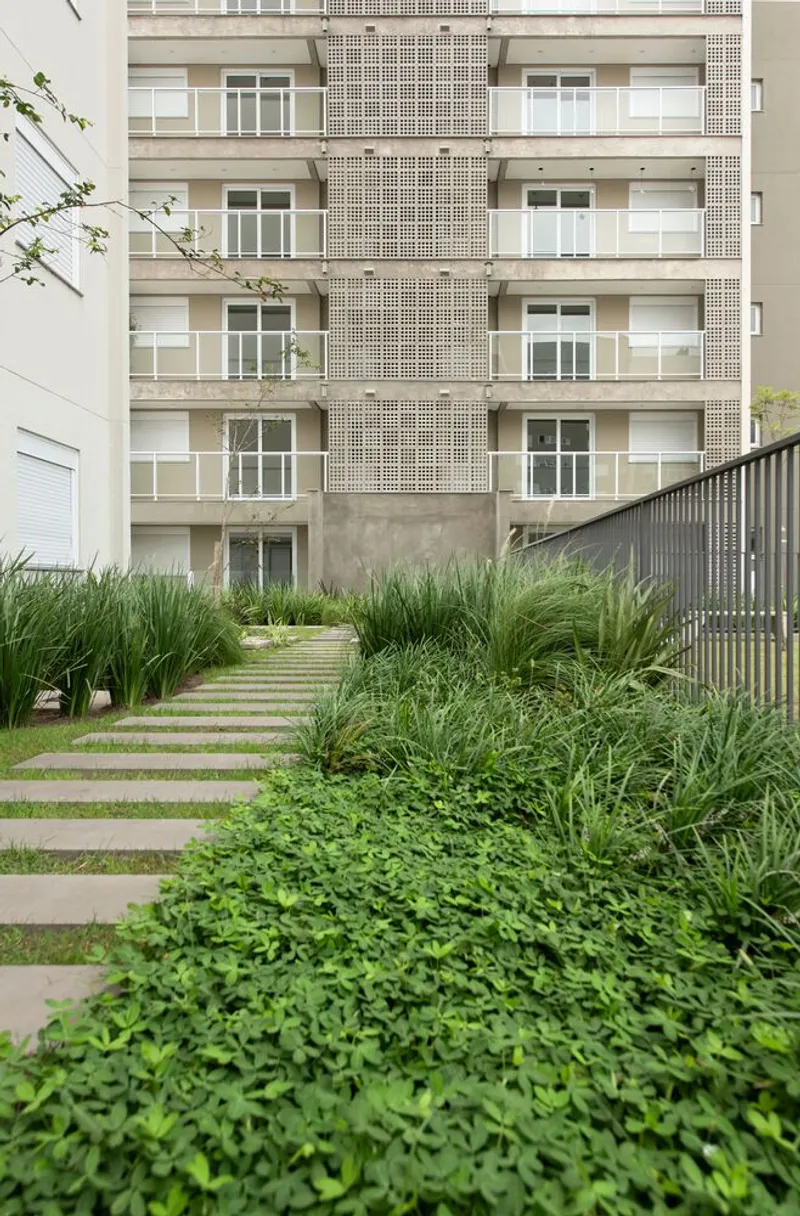
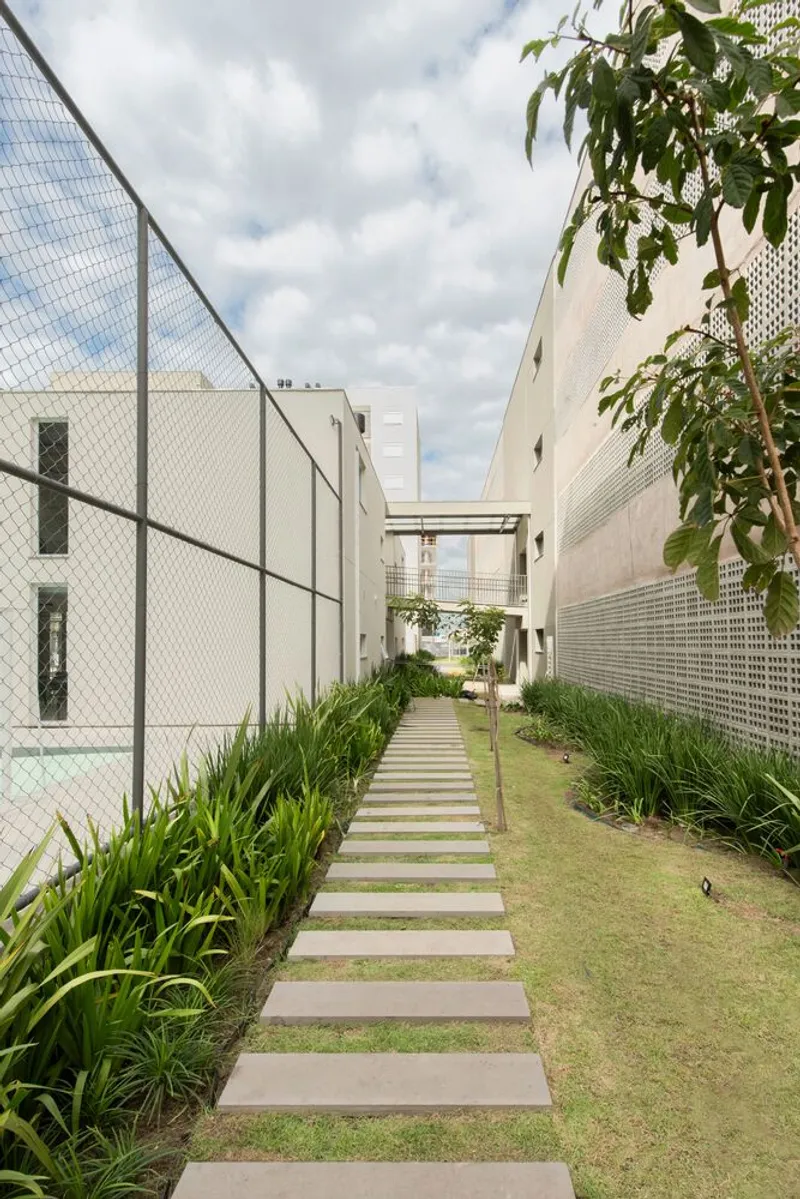
Distinctive cobogó screens break the compactness of the façades, introducing visual permeability, light and shadow play, and a sense of identity to the project. These elements create a rhythmic interplay between transparency and solidity, giving the complex a unique architectural character.

Enhancing Community and Public Spaces
Beyond residential comfort, Viver Quartier prioritizes public space activation. Landscaped courtyards, playgrounds, and leisure areas are thoughtfully positioned to encourage social interaction and neighborhood vitality. The project integrates seamlessly with the adjacent linear park and conservation area, reinforcing a sustainable urban environment while promoting outdoor recreation.
In essence, the Viver Quartier Residential Complex is more than just housing: it is a holistic urban living environment, combining modern architecture, environmental sustainability, and community-centric design to redefine residential life in Pelotas.
All photographs are works of Lucas Daneris


Popular Articles
Popular articles from the community


Opera on the Sea: Driftwood Logic Shapes a Timber Opera House on Estonia's Coast
Trevor Orgill's opera house translates the entangled drift of floating timber into a civic building where wood, water, and music converge.
Tsunami Convergenics: Turning Catastrophic Ocean Forces into Underwater Housing Infrastructure
A speculative underwater settlement off the coast of Onagawa, Japan, treats tsunamis and typhoons as energy sources rather than threats.
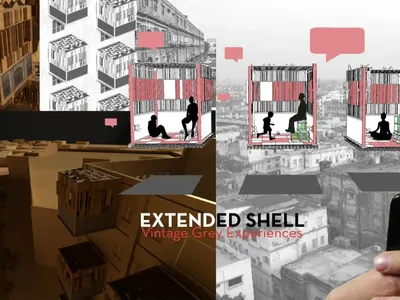
Extended Shell: Retrofitting Kolkata's Balconies as Living Urban Thresholds
A modular retrofit system recovers the social and environmental intelligence of Kolkata's historic verandas for contemporary Park Street residents.
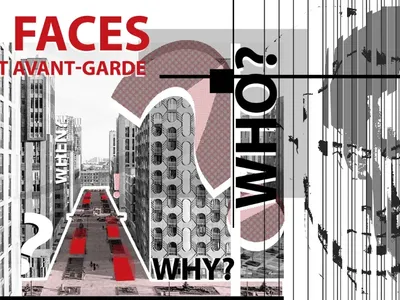
Faces of the Soviet Avant-Garde: Turning Moscow's Street Names into an Open-Air Museum
A network of sculptural installations across a Moscow residential district transforms forgotten architect names into spatial encounters with cultural memor

Similar Reads
You might also enjoy these articles


Hodi-Mandai Geram
Project Function: Preservation and revitalization of the Intangible heritage and socio-spatial identity of the Hodi by Housing, Cultural Memory Center, Sacred Grove, landscape, local tourism economy


Olio Towers: A Mid-Rise for Performers That Fuses Housing, Rehearsal, and Stage
Located blocks from Houston's Theater District, this modular tower stacks living units around a central performance atrium.

Oasis: Modular Green Housing Carved into Dhaka's Urban Fabric
A shortlisted Plugin Housing entry reclaims unauthorized settlements in Dhaka with stepped concrete volumes, green roofs, and ventilation-driven design.

Black Hole: A Floating Megastructure for the Post-Physical Era
Emiliano Mazzarotto envisions a spherical, self-scaling arena where e-sports, digital hotels, and holographic stadiums replace traditional public space.

Explore Arquitetura E Urbanismo Competitions
Discover active competitions in this discipline

Challenge to reimagine the Iron Throne

Photograph architecture without architects

Illustrate the lost glory of Angkor Wat - Render Challenge

Design challenge to reuse E-waste
Comments (0)
Please login or sign up to add comments
No comments yet. Be the first to comment!