

Voids Villa: A Sculptural Home of Light, Courtyards, and Spatial Discovery by AsNow Design & Construct
A sculptural villa of interlocking voids, courtyards, and terraces that blend light, nature, and movement into a dynamic indoor–outdoor living experience.


Located in Kuhsar on the outskirts of Tehran, Voids Villa by AsNow Design & Construct redefines contemporary residential architecture through a bold interplay of solid and void. Designed by lead architects Solmaz Tatari and Ehsan Tavassoli, the 540 m² villa explores how courtyards, terraces, and multi-level voids can transform a home into a living, breathing experience of light, movement, and discovery.
A New Architectural Language for Tehran’s Outskirts
The rapid development of villas outside Tehran is not merely a retreat from urban density—it reflects a growing cultural shift toward leisure, community, and experiential living. Voids Villa responds to this demand by creating a home that is both sculptural and sensorial. Rather than presenting static rooms, the architecture invites residents to wander, explore, climb, and engage with a constantly shifting spatial narrative.
At its core, the project uses voids as active architectural elements. These carved-out spaces—courtyards, terraces, atriums, and vertical shafts—blend indoor and outdoor life while shaping light, circulation, and atmosphere. The villa becomes a stage where perspectives change with each step, and unexpected spatial moments trigger curiosity.

A Dynamic Balance Between Extroversion and Introversion
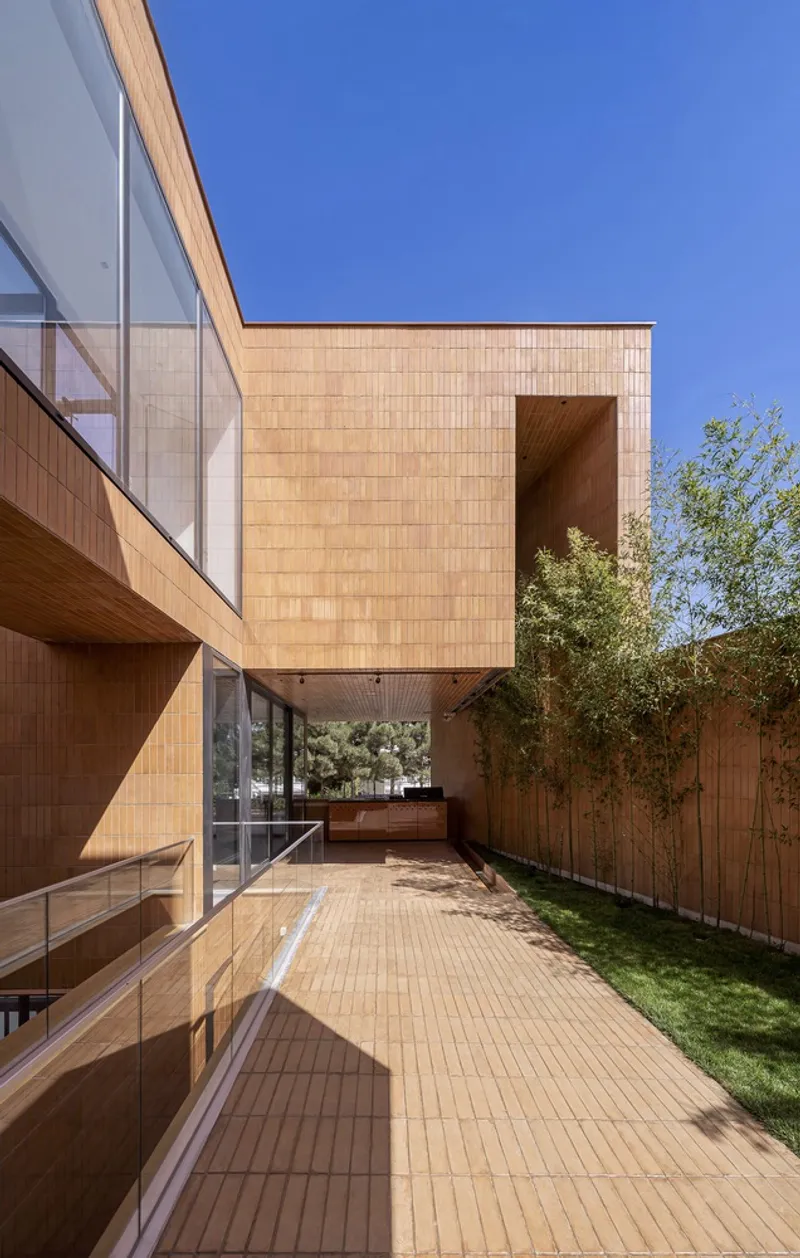
The site condition played a key role in shaping the architectural typology. With open views to the north and west, and potential future neighbors to the east and south, the design adopts a combined extroverted–introverted approach:
- North courtyard: expansive, open, and transparent, revealing a welcoming facade upon entry.
- South courtyard: compact and intimate, filled with light shafts that carve small but dramatic interior spaces.
This duality creates a multi-layered experience—light-filled public zones on one side, and sheltered private corners on the other.
The Central Courtyard: A Living Heart Connecting All Levels
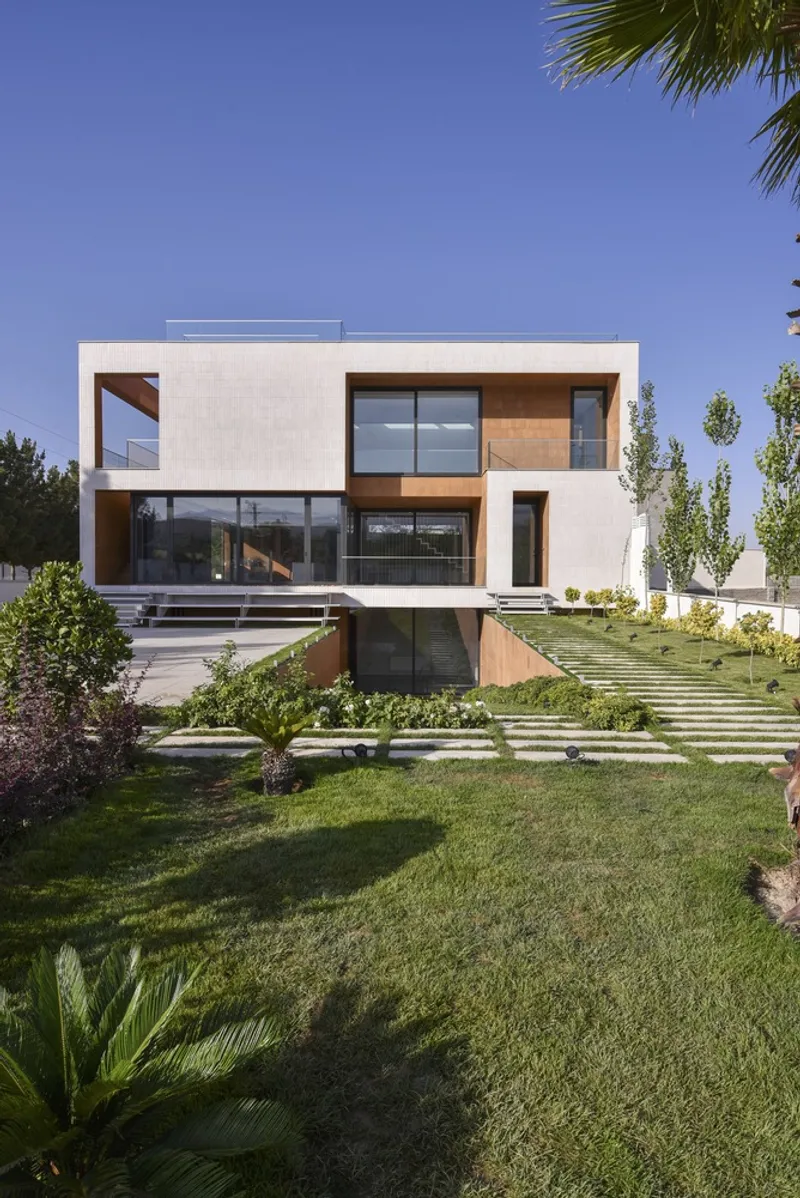
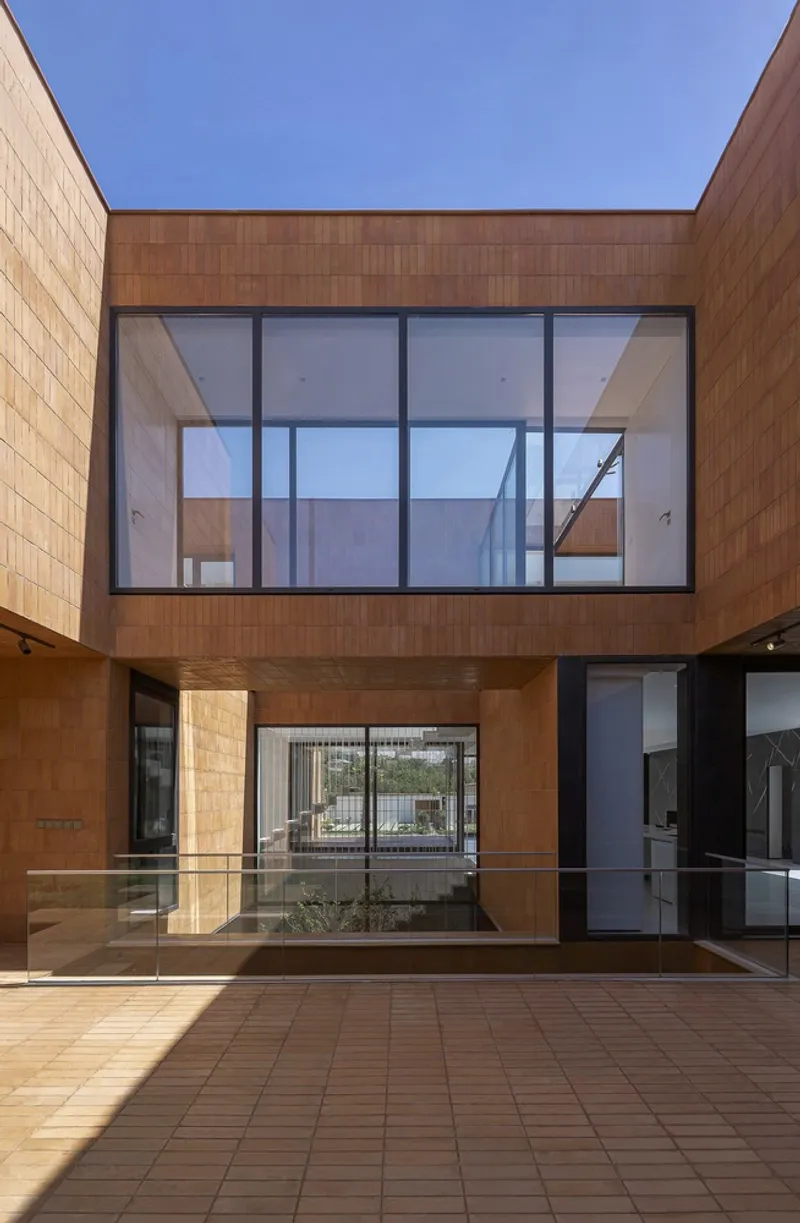
At the center of the home lies a semi-central courtyard, functioning as a vertical trunk that links all three floors. This courtyard is surrounded by covered and open voids, creating continuity between the basement, ground floor, and first floor.
A significant moment in this space is the presence of a carefully preserved old tree, replanted as a living timekeeper. As it grows, it gradually reshapes the interior atmosphere, reminding residents of the passage of time and the evolving relationship between architecture and nature.
Light penetrates deep into the basement through this courtyard, transforming typically dark underground spaces into bright, breathable environments.

Suspended Volumes and Fluid Circulation
Voids Villa seeks to elevate the building from its surroundings—both literally and visually. Its placement on the site aims to suspend the cubic volume, creating a subtle separation from the ground plane and enhancing its sculptural form.
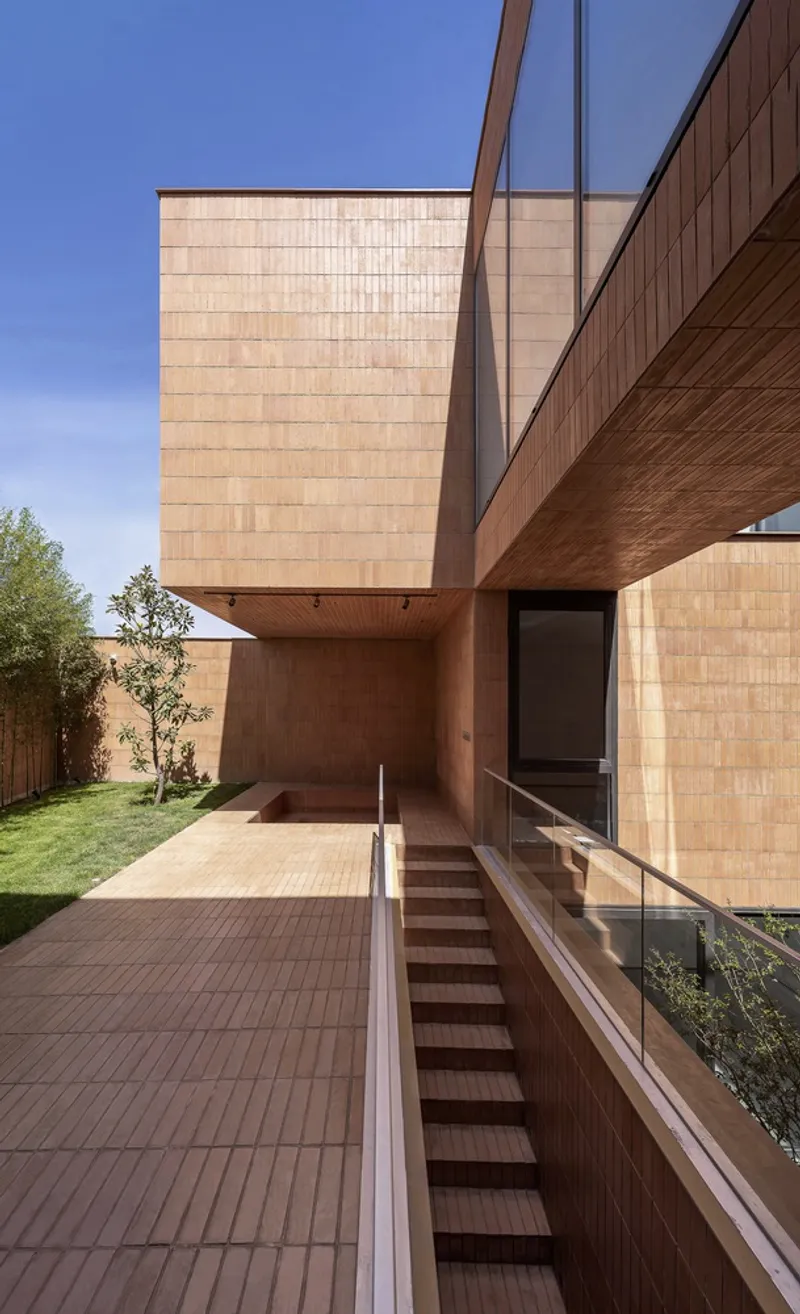
A long latticed stair and seating area establish a minimal yet striking connection between the building and the northern courtyard. This element encourages movement, offering a serene place to observe the playground and landscape while experiencing a shift in elevation, scale, and framing of views.
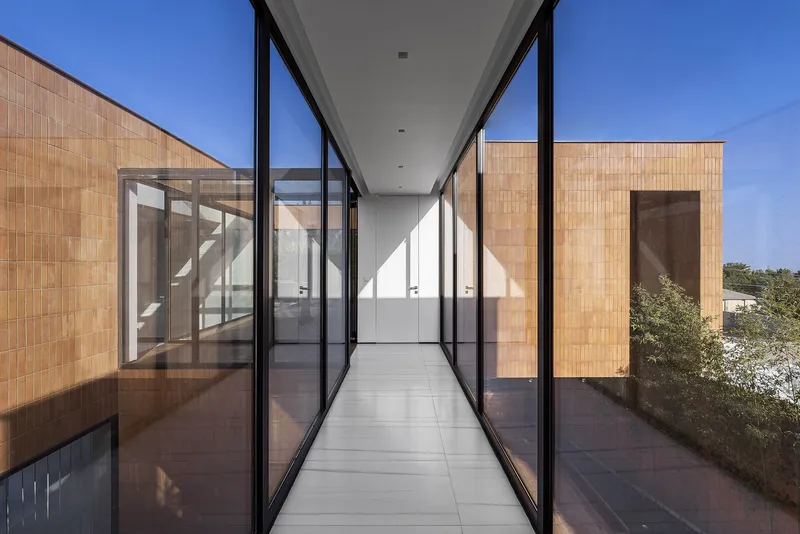
Circulation throughout the residence is intentionally diverse. Vertical and horizontal pathways weave through and around the voids, encouraging exploration:
- Stairs that climb exterior spaces
- Passages that skirt courtyards
- Terraces at multiple levels
- Bridges overlooking double-height volumes
This results in a home that supports leisurely wandering—an architecture meant to be experienced, not just inhabited.


Spatial Organization: Leisure, Living, Privacy
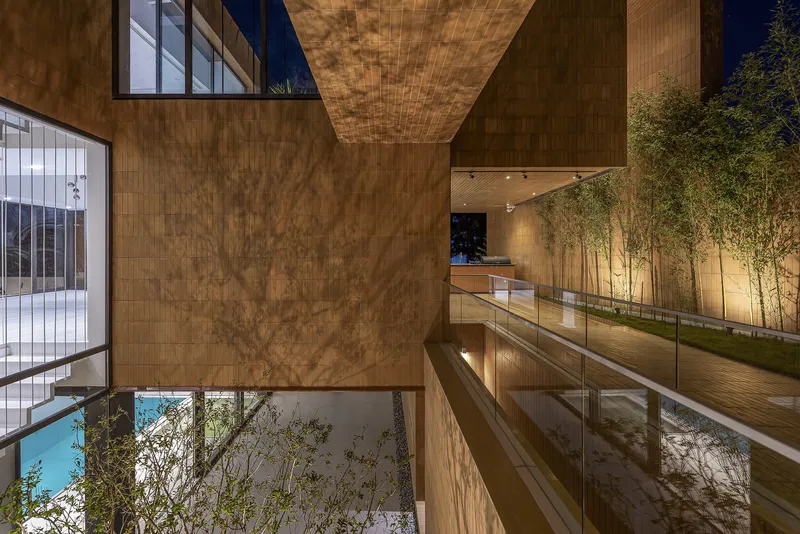
While the program follows a traditional layout, the voids subvert the typical experience:
- Basement – Designed for leisure and recreation
- Ground floor – Main living and social areas
- First floor – Private bedrooms and nighttime spaces
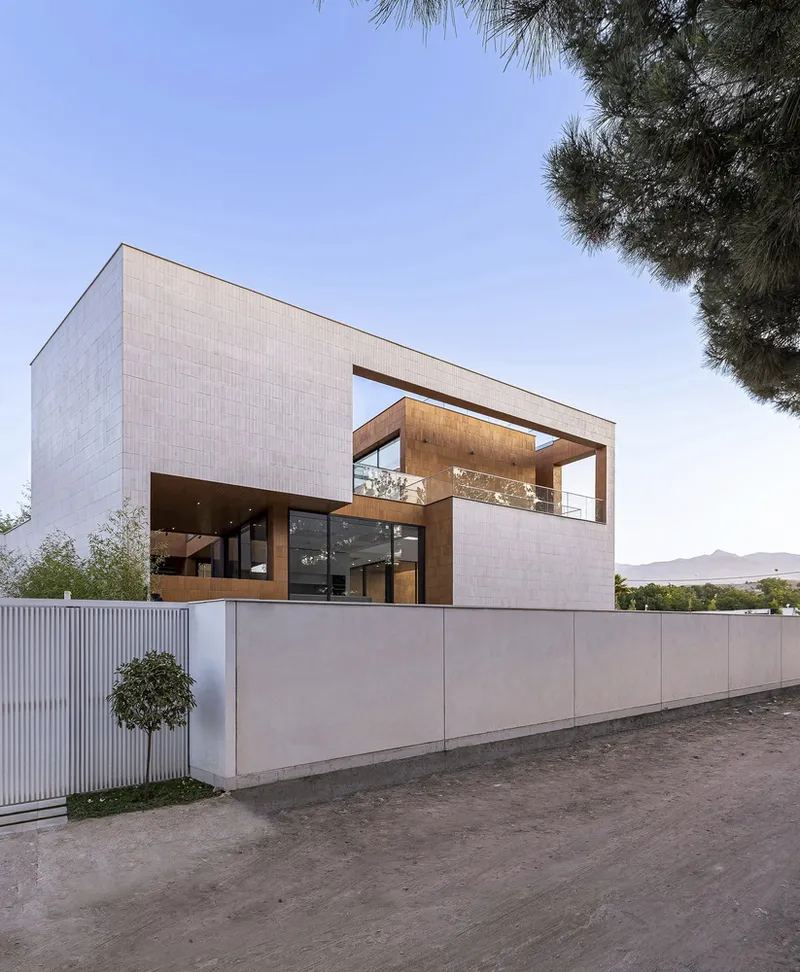
Unlike conventional homes, these floors remain visually and atmospherically connected through interlocking voids. Rooms become "islands," each shaped by the brick-lined emptiness around them. The brick acts as a warm, grounding material, contrasting with the lightness of the white solid masses.
This duality—light solids vs. heavy voids—defines the home’s identity.

Courtyards and Terraces: Reconnecting Residents with Nature
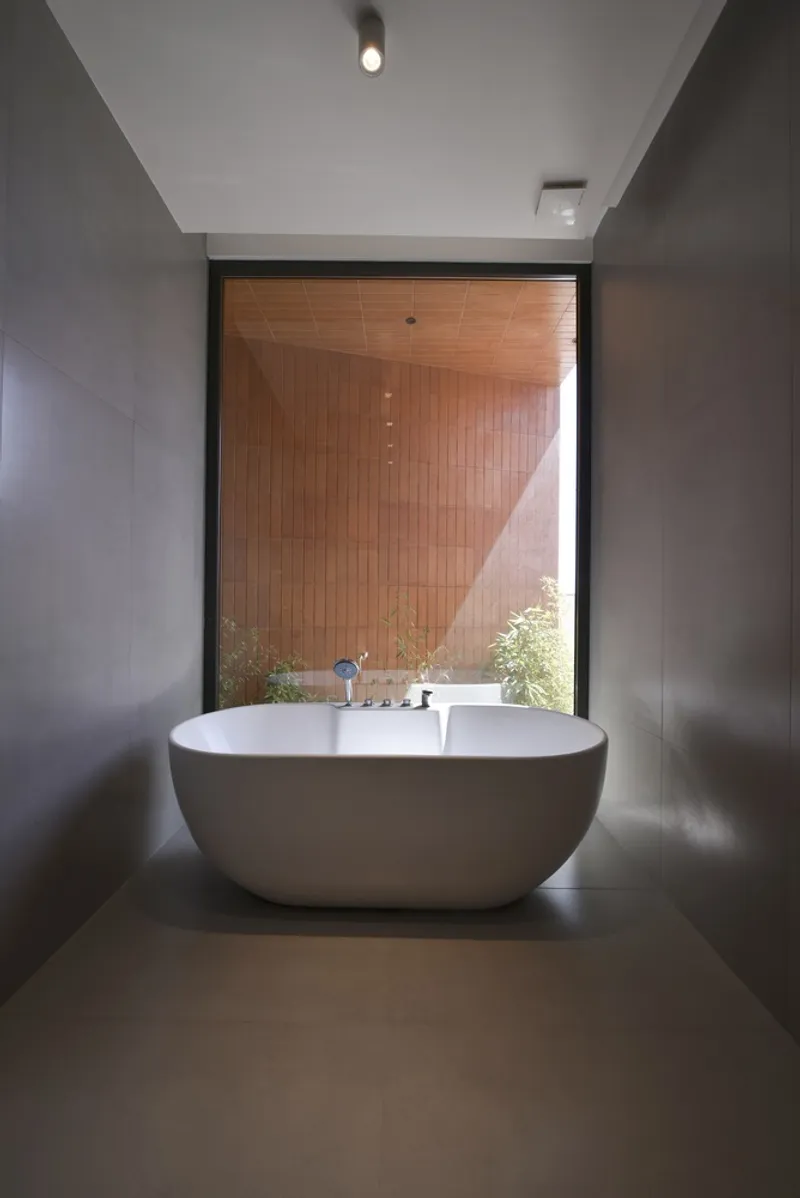
Throughout the villa, a network of courtyards, terraces, and semi-open spaces supports the natural human desire for openness, fresh air, and connection to nature. In Tehran’s periphery—where the environment is quieter, cleaner, and more inviting—these spaces play an essential role.


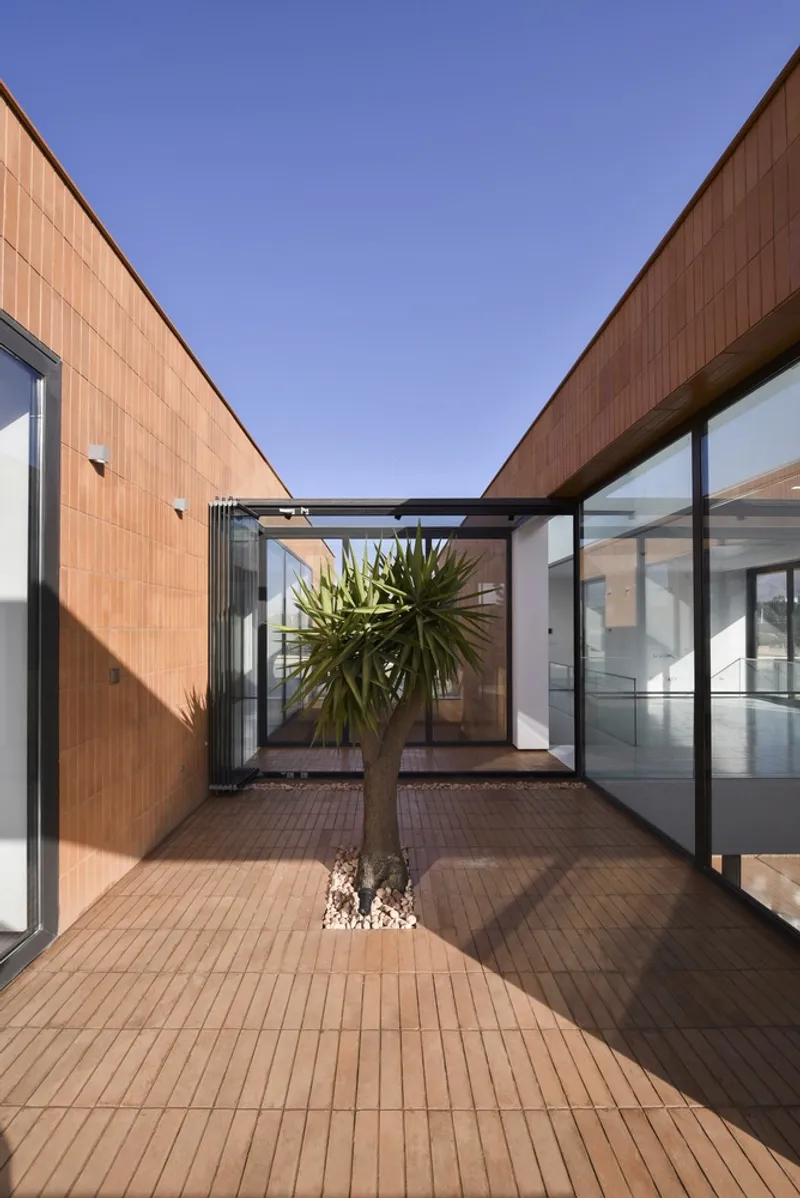
Whether used for relaxation, gatherings, quiet reflection, or movement between levels, each terrace contributes to a lifestyle rooted in wellness, outdoor living, and sensory richness. Select an Image




Popular Articles
Popular articles from the community


Riyadh For All: Intergenerational Urban Design for Active Aging in Rabat
Riyadh For All reimagines urban design in Rabat with intergenerational co-living, adaptive courtyards, and Moroccan cultural exchange today.
AL-JANNAH: Sustainable Architecture and Permaculture for Afghan Widows
AL-JANNAH uses sustainable architecture and permaculture to create resilient oasis of housing, learning, work and renewal for Afghan widows.

The Musturak Paradise: Senior Living Architecture for a Connected Future in Temara, Morocco
The Musturak Paradise reimagines senior living architecture in Temara via private homes, social spaces, culture, community, and shared care.

The Ocean Hive: Sustainable Architecture for a Self-Sufficient Civilization at Sea
The Ocean Hive imagines sustainable architecture at sea, where modular habitats, algae, wave power and ocean waste sustain a growing colony.

Similar Reads
You might also enjoy these articles


Hodi-Mandai Geram
Project Function: Preservation and revitalization of the Intangible heritage and socio-spatial identity of the Hodi by Housing, Cultural Memory Center, Sacred Grove, landscape, local tourism economy


Olio Towers: A Mid-Rise for Performers That Fuses Housing, Rehearsal, and Stage
Located blocks from Houston's Theater District, this modular tower stacks living units around a central performance atrium.

Oasis: Modular Green Housing Carved into Dhaka's Urban Fabric
A shortlisted Plugin Housing entry reclaims unauthorized settlements in Dhaka with stepped concrete volumes, green roofs, and ventilation-driven design.

Black Hole: A Floating Megastructure for the Post-Physical Era
Emiliano Mazzarotto envisions a spherical, self-scaling arena where e-sports, digital hotels, and holographic stadiums replace traditional public space.


Explore Architecture Competitions
Discover active competitions in this discipline



Challenge to reimagine the Iron Throne


Photograph architecture without architects


Illustrate the lost glory of Angkor Wat - Render Challenge


Design challenge to reuse E-waste
Comments (0)
Please login or sign up to add comments
No comments yet. Be the first to comment!