
WA House by Curiosity: A Contemporary Coastal Retreat Rooted in Tradition
WA House blends Yakisugi-clad minimalism with coastal resilience, offering a serene, sculptural retreat amidst Wakayama’s dramatic seaside landscape.


A Modern Interpretation of the Fisherman’s House
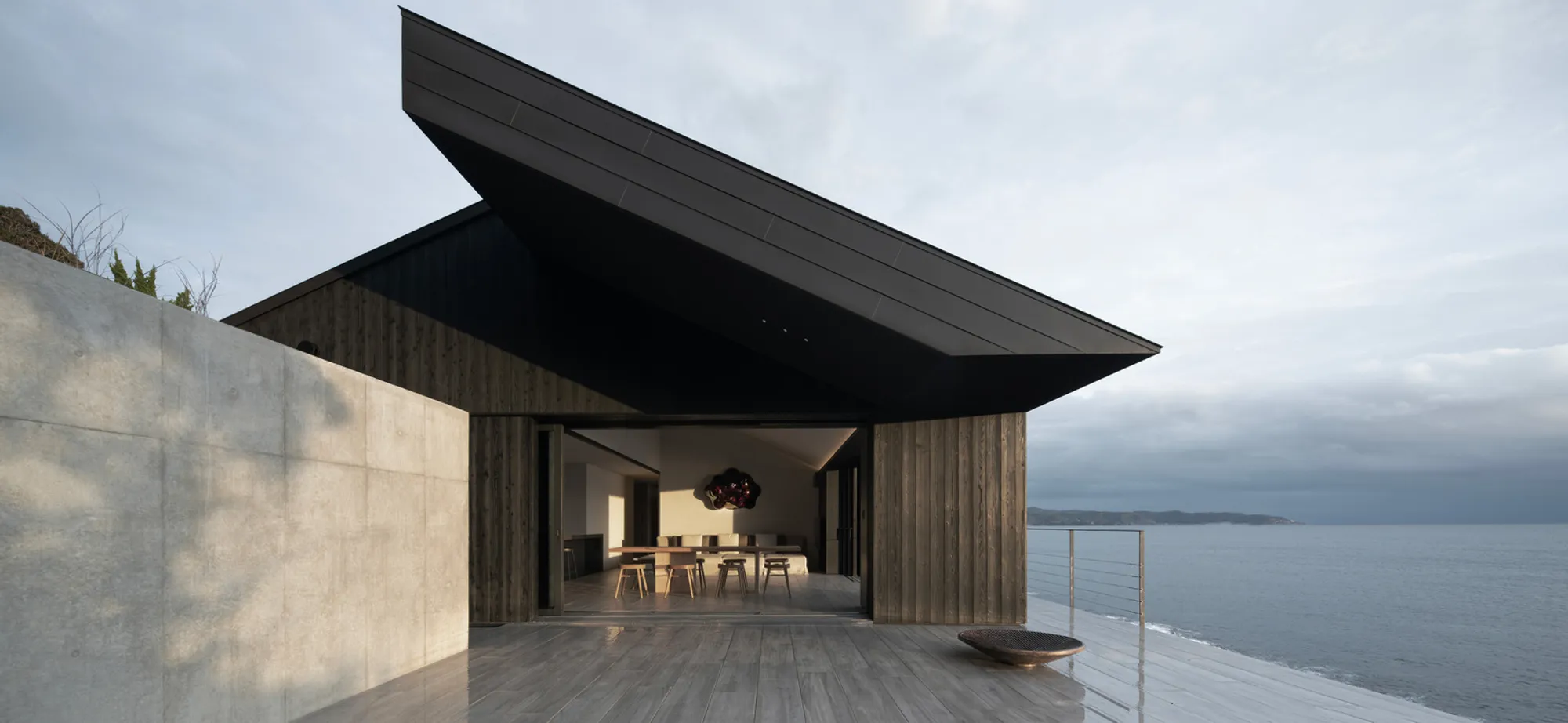
Located along the rugged coastline of Nanki-Shirahama, a national park in Wakayama Prefecture, Japan, WA House by Curiosity in collaboration withAtelier Haretokereimagines the vernacular architecture of a fisherman’s house through a minimalist, sculptural lens. Designed by Gwenael Nicolas, the project merges bold aesthetics with natural resilience, offering a timeless sanctuary in one of Kansai’s premier resort regions.
Site Context: Harmonizing with Nature's Drama
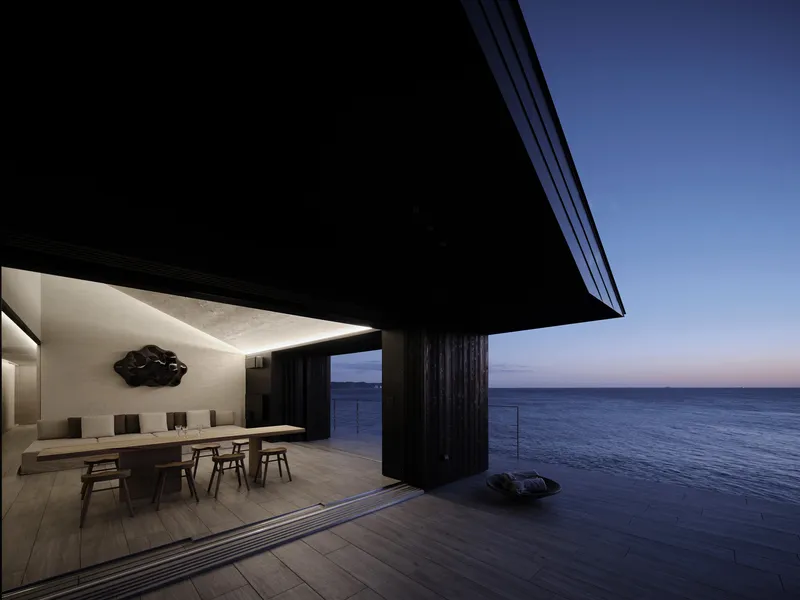
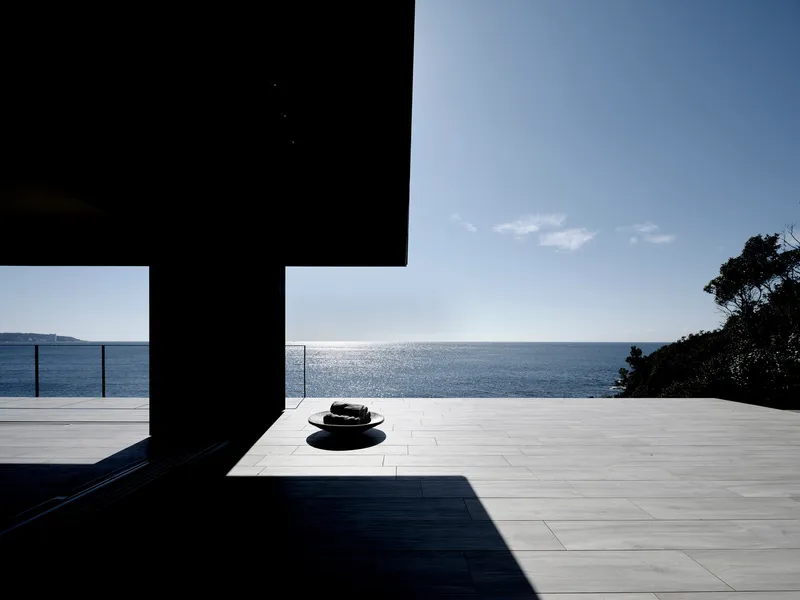
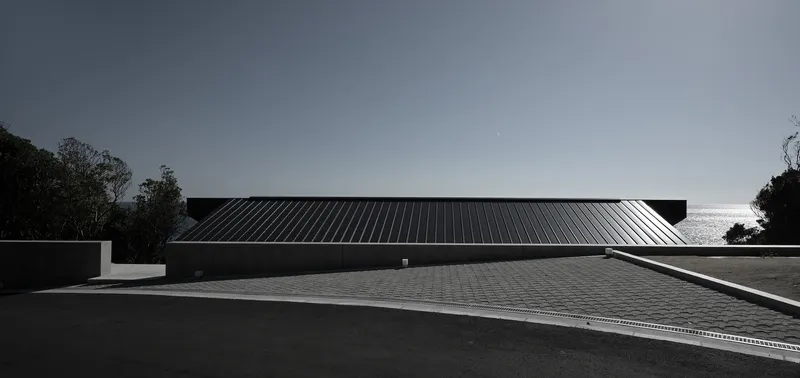
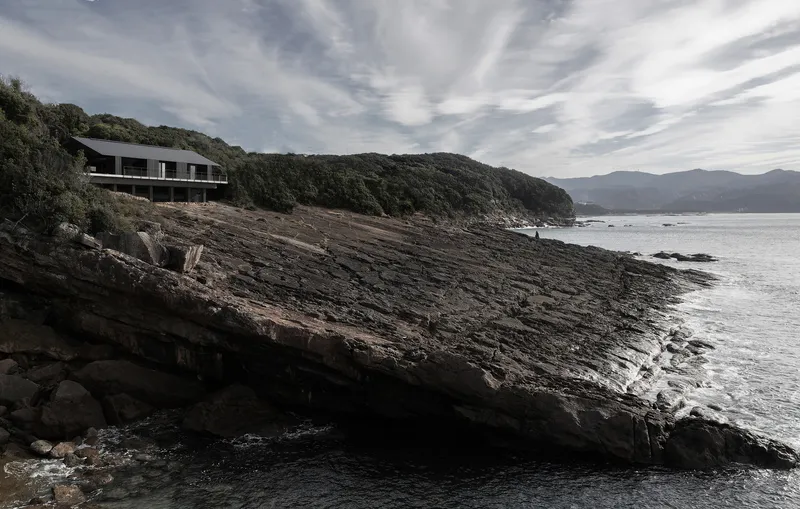
Set against a dramatic landscape of rocky cliffs and oceanic views evocative of the Atlantic coastline, the house is deliberately unobtrusive. Its linear, single-story profile aligns with the ocean’s horizon, ensuring that the built form does not overpower its natural surroundings. This gesture reflects an architectural humility, honoring the site’s inherent power and beauty.
Architecture: Wing-Like Roof and Elevated Form
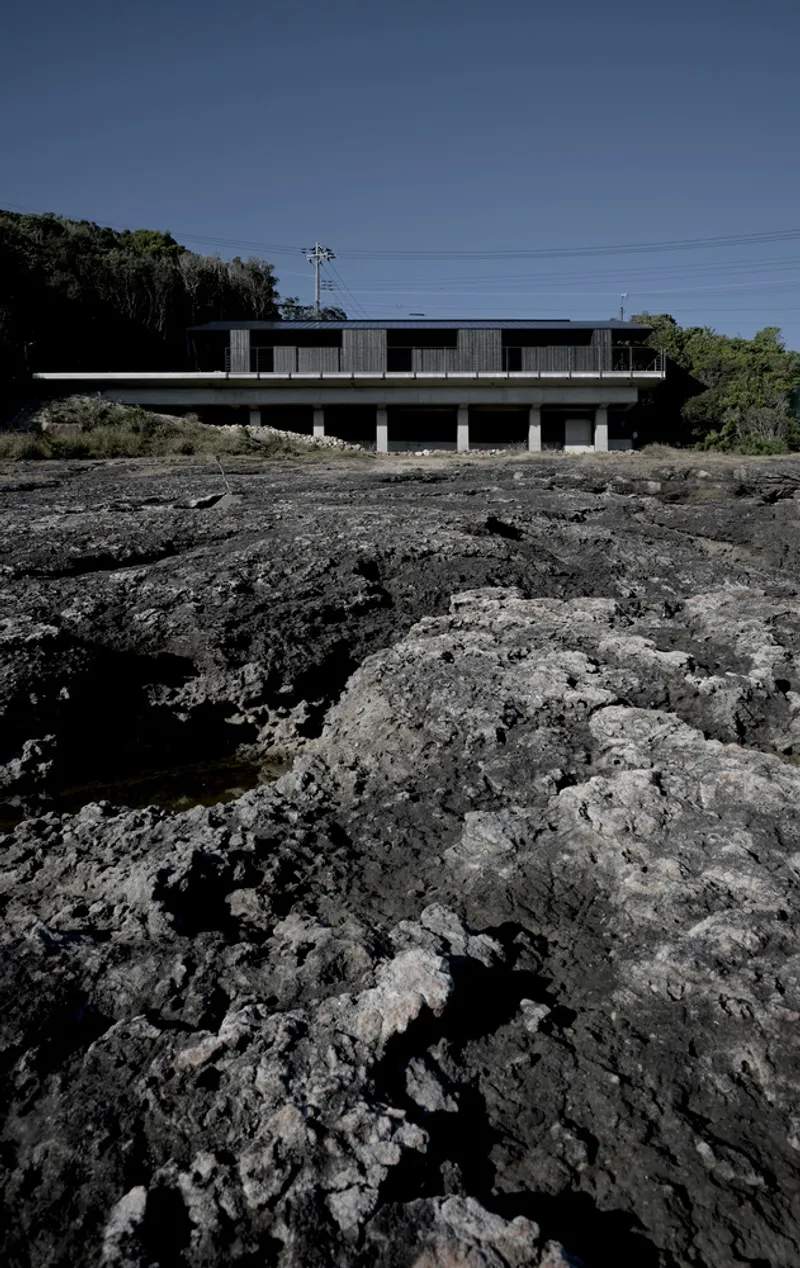
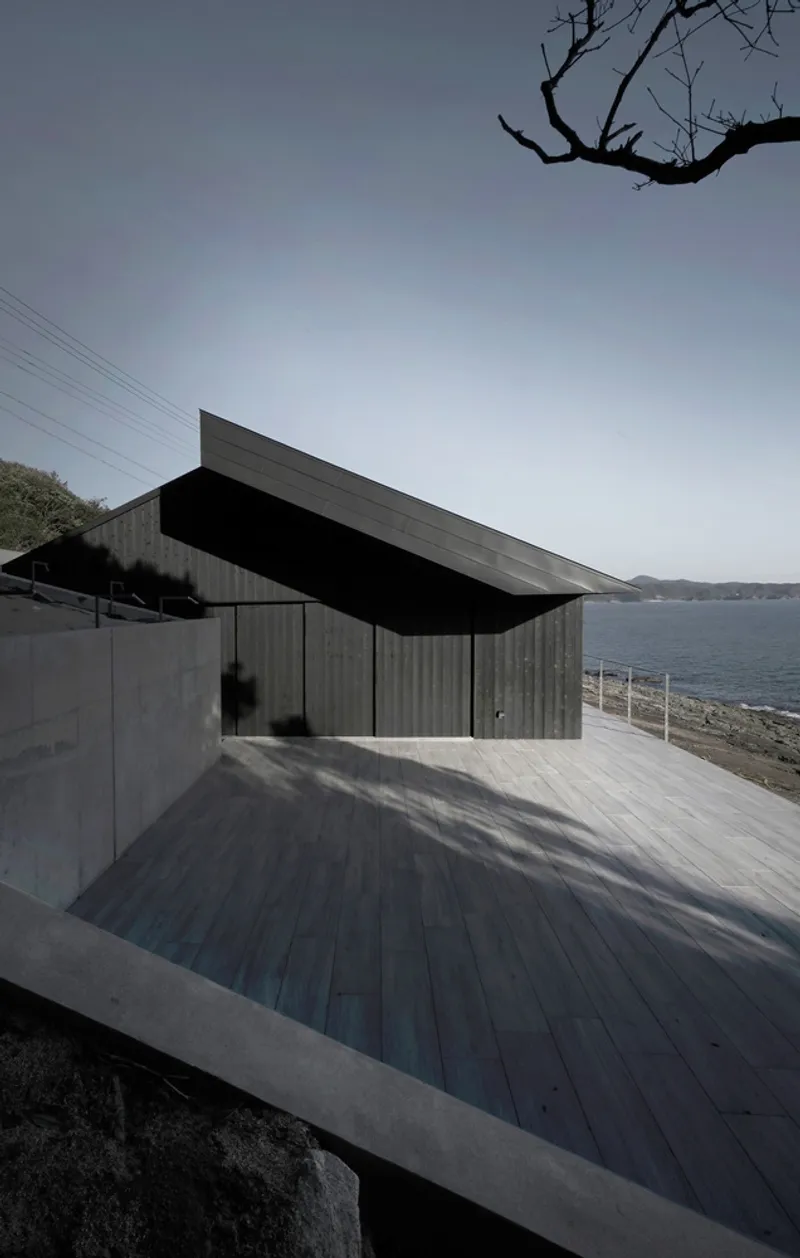
The residence is characterized by a distinctive, wing-shaped roof designed to endure the extreme winds sweeping in from the sea. Its geometry not only contributes to the building’s identity but also provides shade and shelter to the expansive terraces. The house sits lightly on a concrete base, lifting the timber structure above the tide line, allowing ocean waves to pass beneath it during storms.
Materiality: Burnt Cedar and Tactile Warmth
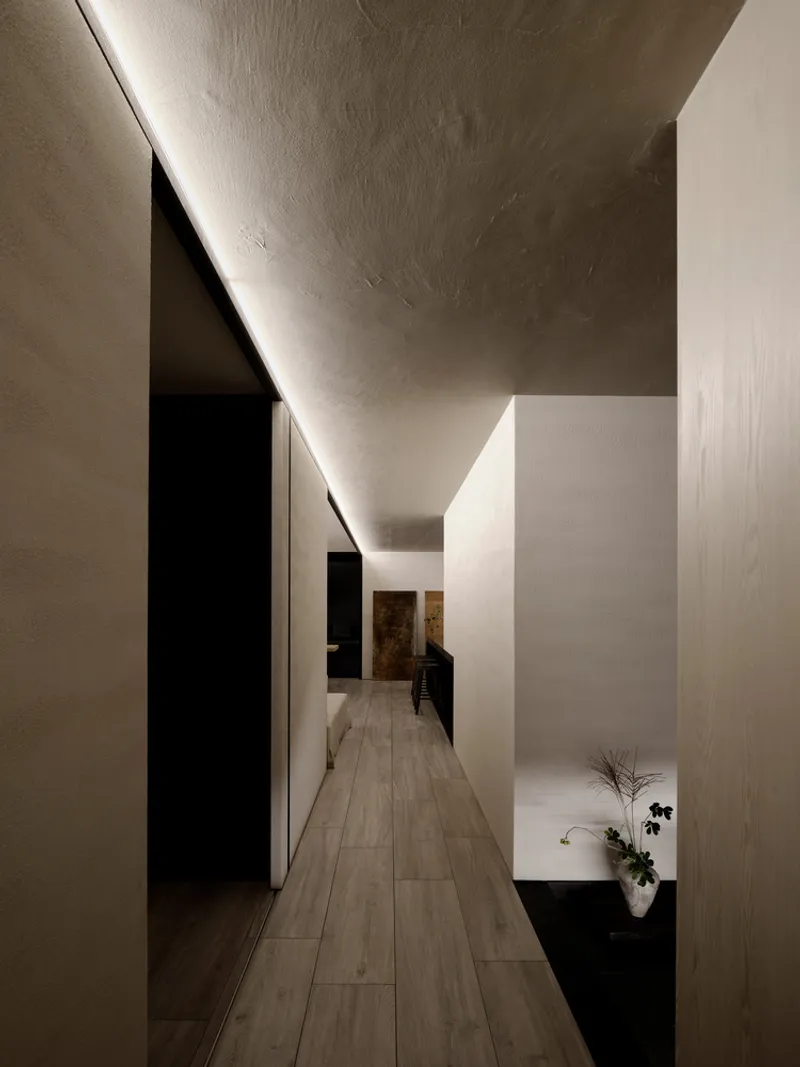
Clad entirely in Yakisugi (charred cedar wood), the structure speaks to Japanese building traditions while offering durability in harsh coastal conditions. The dark facade blends with the reef’s volcanic stone, helping the house visually disappear into its context. This single-material strategy emphasizes a sculptural purity, highlighting form and shadow play.
Interior Experience: Seamless Flow and Ocean Embrace
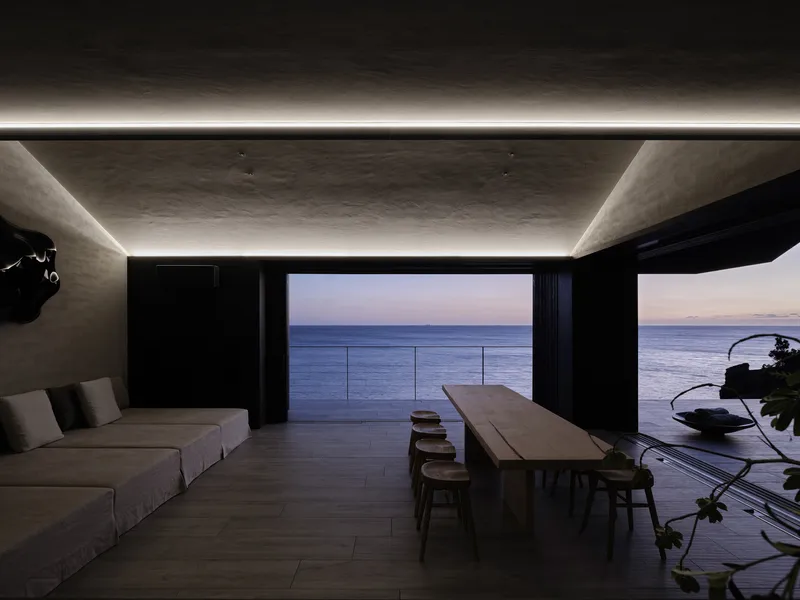
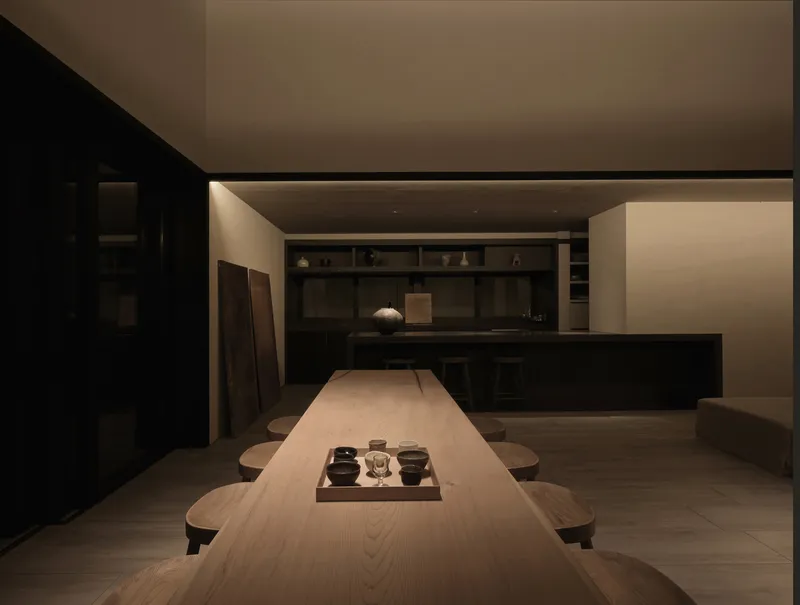
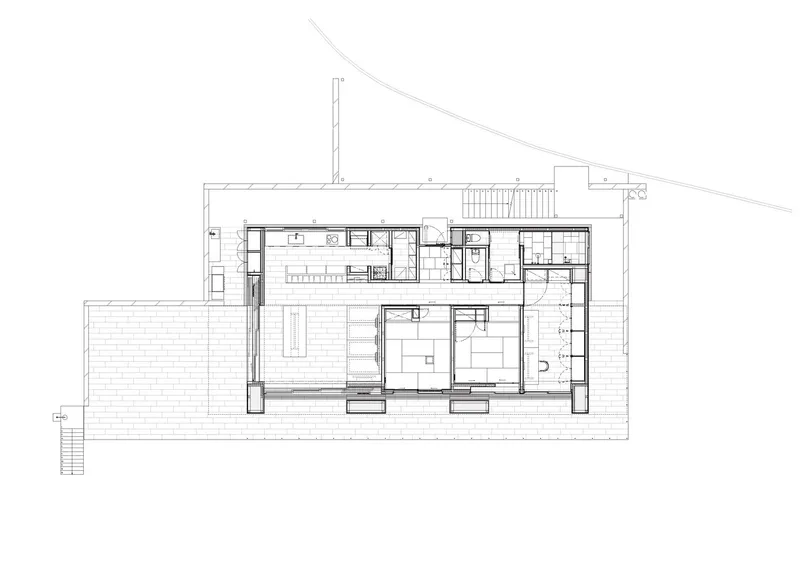
Inside, the design emphasizes fluid spatial continuity. A vast terrace merges seamlessly with the living area, united by a continuous flooring material that reinforces the integration of indoor and outdoor life. The open-plan kitchen, a central monolithic element, invites social interaction while framing sweeping sea views.
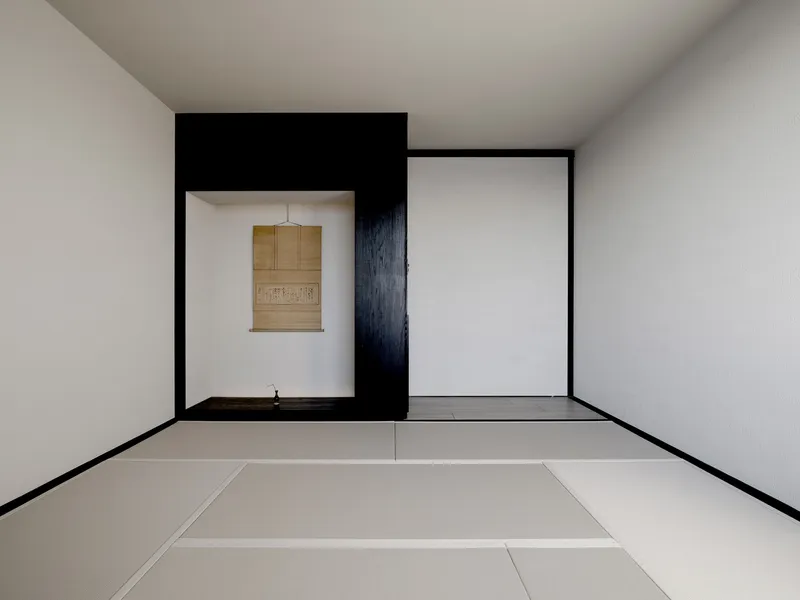
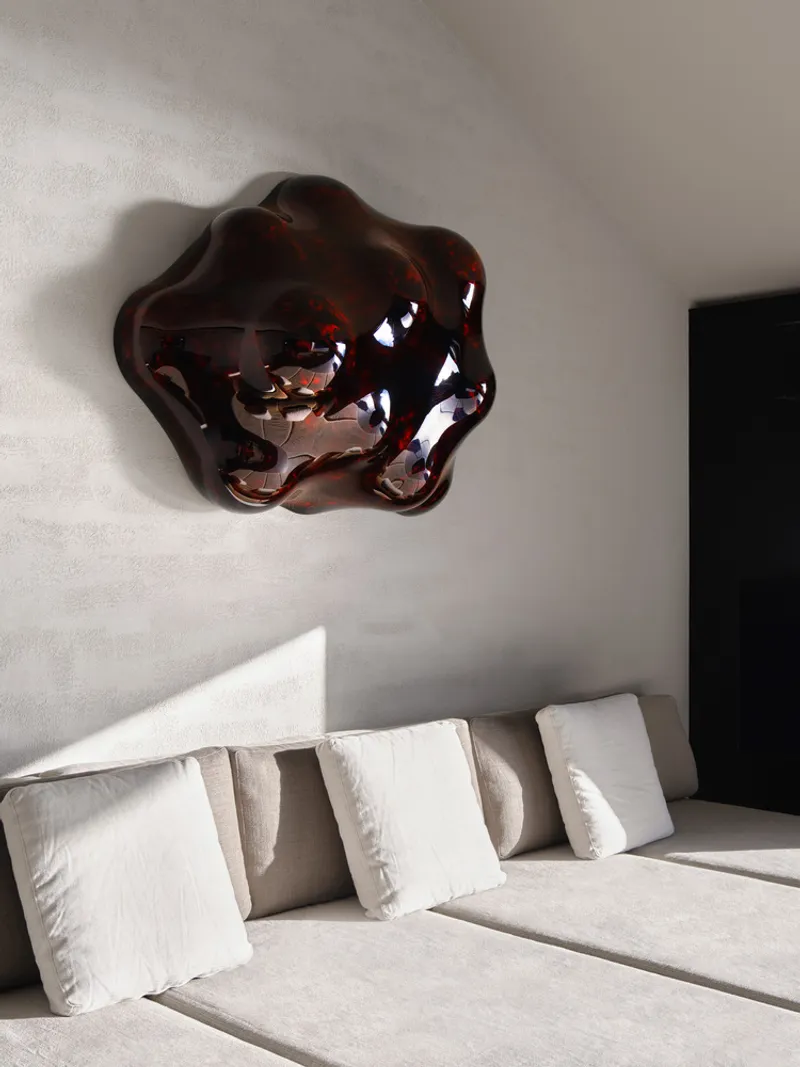
Artworks—such as Genta Ishizuka’s lacquer installation—and natural textures throughout the space evoke a primitive, emotional connection to nature, offsetting the polished minimalism with raw tactility. The interiors include two Japanese-style rooms, a spacious living area, and an atelier, each opening toward the ocean with sliding walls that disappear to dissolve boundaries.
Craft and Detail: Minimalism in Function and Form
Every element—from the hidden fixtures and switches to the warm, grey-hued finishes—is meticulously designed to reduce visual noise and foreground the sensory experience. The material palette draws inspiration from the site: the soil’s hues, the soft texture of tatami, and the coarse surfaces of volcanic stone and ceramics.
The Bathing Ritual: Intimacy and Stone Immersion
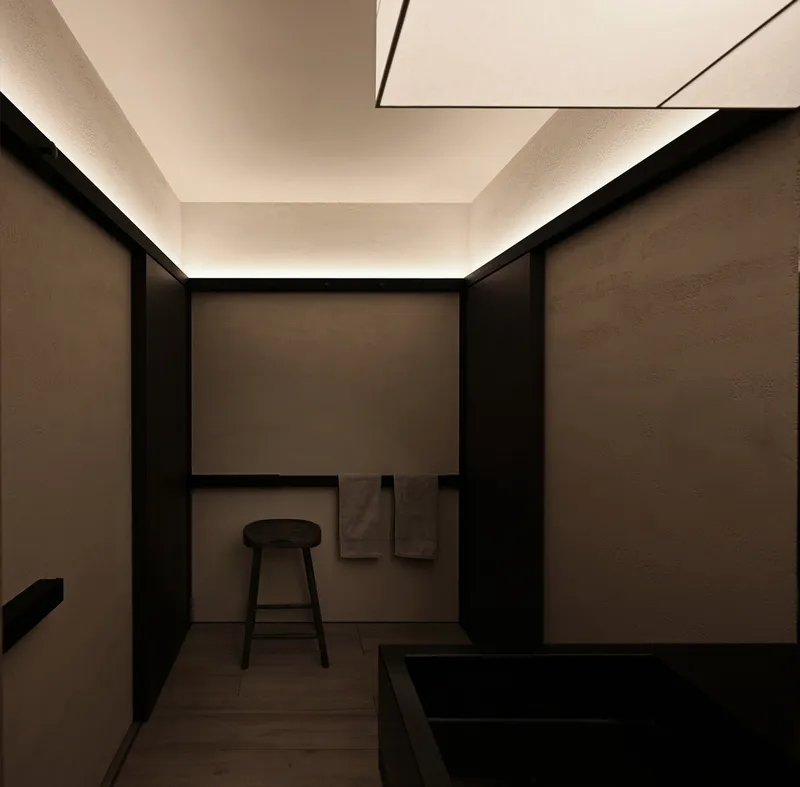
The bathroom functions as a private retreat within the home. A large pendant shade fills the room with warm, diffuse light, while the bathtub, carved into the floor, creates a visceral connection to the stone foundation. This elemental approach deepens the home’s connection to the primitive essence of dwelling.
Closing Reflection: Vernacular Meets Contemporary Abstraction
WA House blurs the line between the past and the present, merging vernacular Japanese architecture with a modern sculptural sensibility. The use of Yakisugi shutters to close the home recalls historic techniques, while the minimalist form expresses a new architectural language. It’s a house that listens to the wind, follows the horizon, and invites the ocean into daily life—a true dialogue between place, memory, and design.
All Photographs are works of Yasutaka Kojima



Popular Articles
Popular articles from the community


Co-Life: Senior Housing Design That Reconnects Older Adults With the City
Co-Life reimagines senior housing design through healing gardens, shared streets, workshops, and a sustainable community across generations.
AL-JANNAH: Sustainable Architecture and Permaculture for Afghan Widows
AL-JANNAH uses sustainable architecture and permaculture to create resilient oasis of housing, learning, work and renewal for Afghan widows.

The Earth Pod: 3D Printed Homes for Resilient Refugee Communities
The Earth Pod reimagines refugee housing through 3D printed homes made from clay, combining resilience, self-sufficiency, and rapid shelter.

EW PARK: Sustainable Architecture Reimagines the Future of Urban Parking
EW PARK reimagines city parking as a modular wooden tower combining automation, solar energy, electric mobility, and adaptable urban design.

Similar Reads
You might also enjoy these articles


Hodi-Mandai Geram
Project Function: Preservation and revitalization of the Intangible heritage and socio-spatial identity of the Hodi by Housing, Cultural Memory Center, Sacred Grove, landscape, local tourism economy


Olio Towers: A Mid-Rise for Performers That Fuses Housing, Rehearsal, and Stage
Located blocks from Houston's Theater District, this modular tower stacks living units around a central performance atrium.

Oasis: Modular Green Housing Carved into Dhaka's Urban Fabric
A shortlisted Plugin Housing entry reclaims unauthorized settlements in Dhaka with stepped concrete volumes, green roofs, and ventilation-driven design.

Black Hole: A Floating Megastructure for the Post-Physical Era
Emiliano Mazzarotto envisions a spherical, self-scaling arena where e-sports, digital hotels, and holographic stadiums replace traditional public space.

Explore Architecture Competitions
Discover active competitions in this discipline



Challenge to reimagine the Iron Throne


Photograph architecture without architects


Illustrate the lost glory of Angkor Wat - Render Challenge


Design challenge to reuse E-waste
Comments (0)
Please login or sign up to add comments
No comments yet. Be the first to comment!