
WA House by Curiosity & Atelier Haretoke – A Modern Fisherman’s Retreat in Shirahama, Japan
WA House by Curiosity blends Yakisugi wood, coastal views, and minimalist design, creating a modern fisherman’s retreat harmonized with nature.


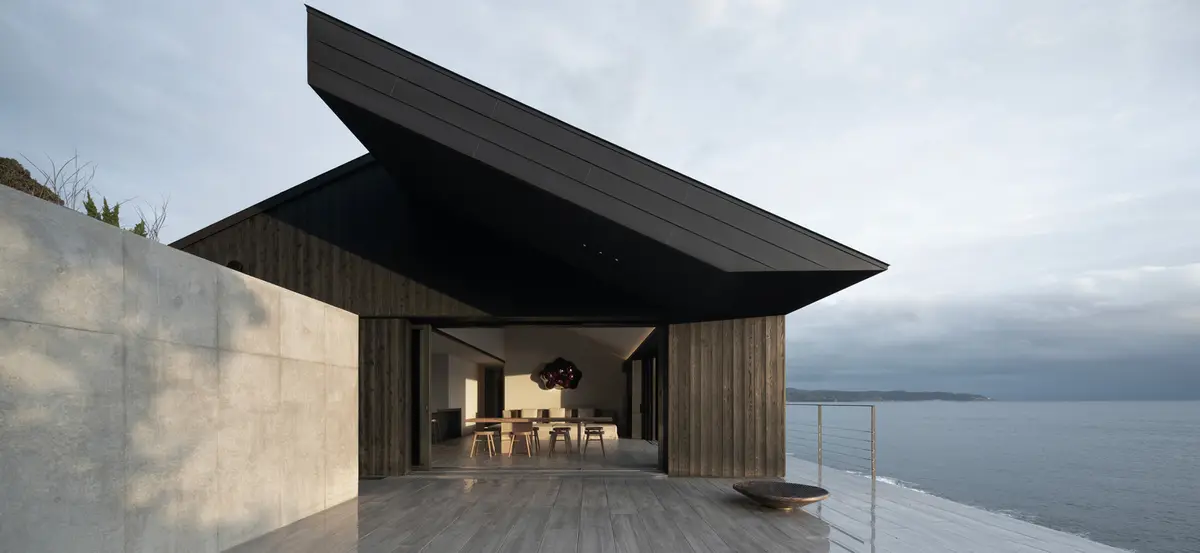
The WA House, designed by Curiosity in collaboration with Atelier Haretoke, is a striking example of contemporary residential architecture deeply rooted in its natural context. Completed in 2022 and located on the rugged coastline of Nanki-Shirahama, Wakayama Prefecture, this 162 m² residence reinterprets the traditional fisherman’s house with a sculptural, minimalist approach.
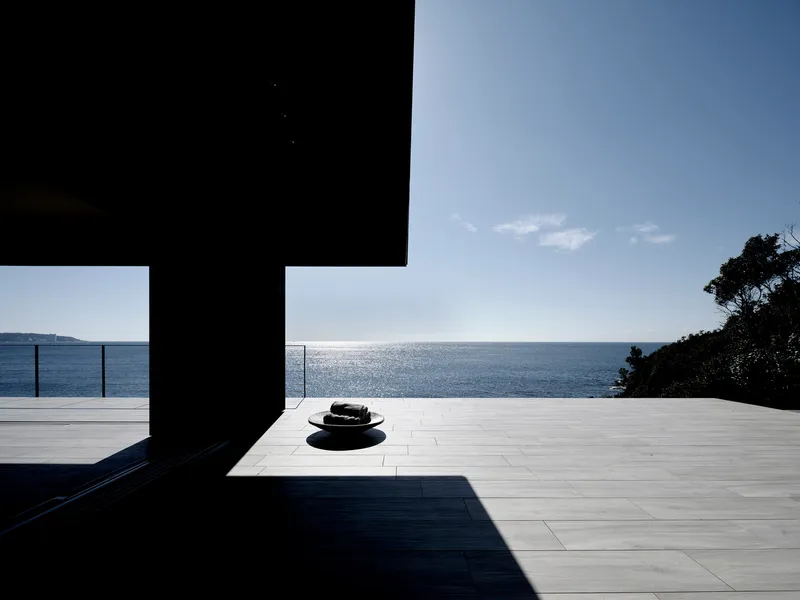
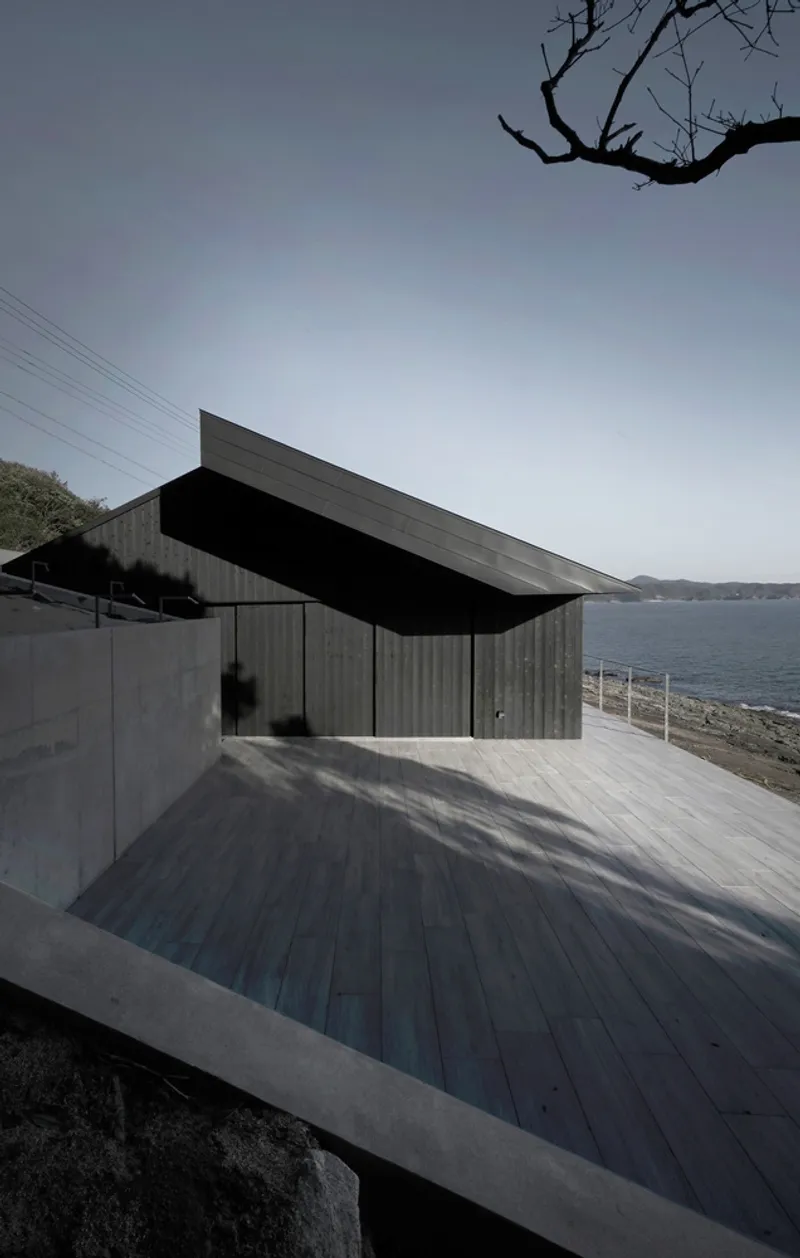
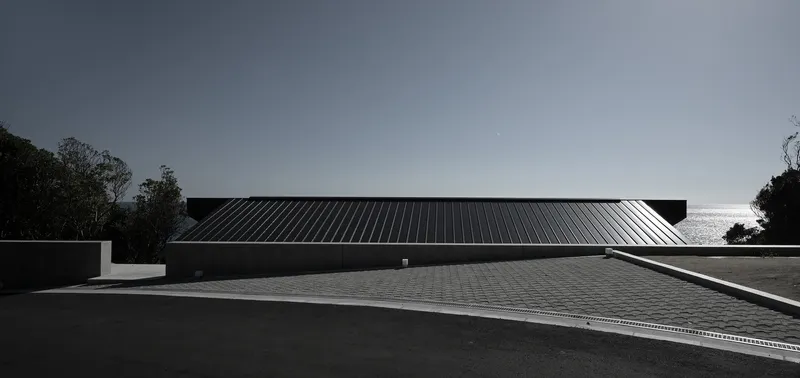
Set against the dramatic backdrop of the Pacific coastline and national park landscape, the WA House is a study in restraint and harmony. Its low linear profile aligns with the ocean horizon, ensuring the structure blends seamlessly with its environment rather than dominating it. The distinctive wing-shaped roof is not only a defining aesthetic feature but also engineered to withstand the region’s extreme coastal winds.
Integration with Nature
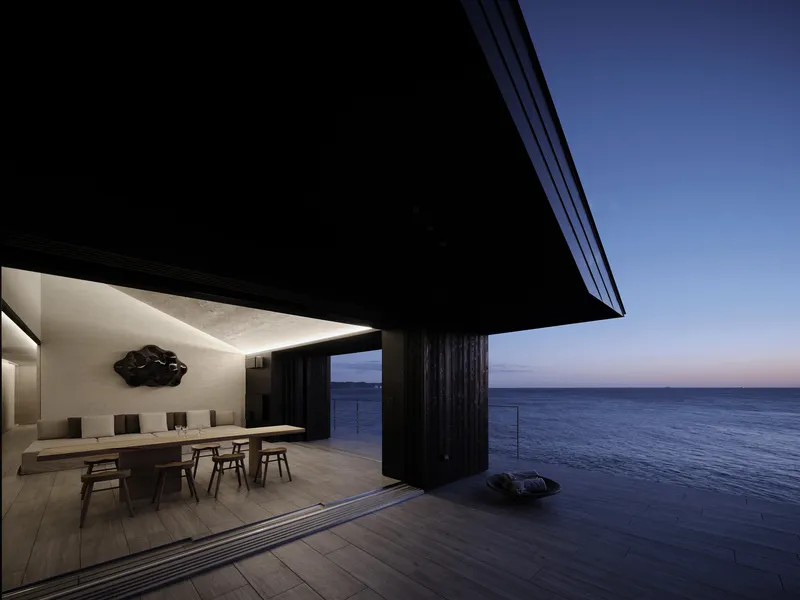
The house rests lightly on a concrete foundation elevated above the rocky shoreline, allowing waves to pass beneath during storms. Its dark Yakisugi (charred cedar wood) façade merges with the volcanic rock and surrounding landscape, embodying both resilience and beauty. This use of Yakisugi, a traditional Japanese technique of charring wood, ensures durability while creating a timeless, tactile finish ideal for such a coastal setting.
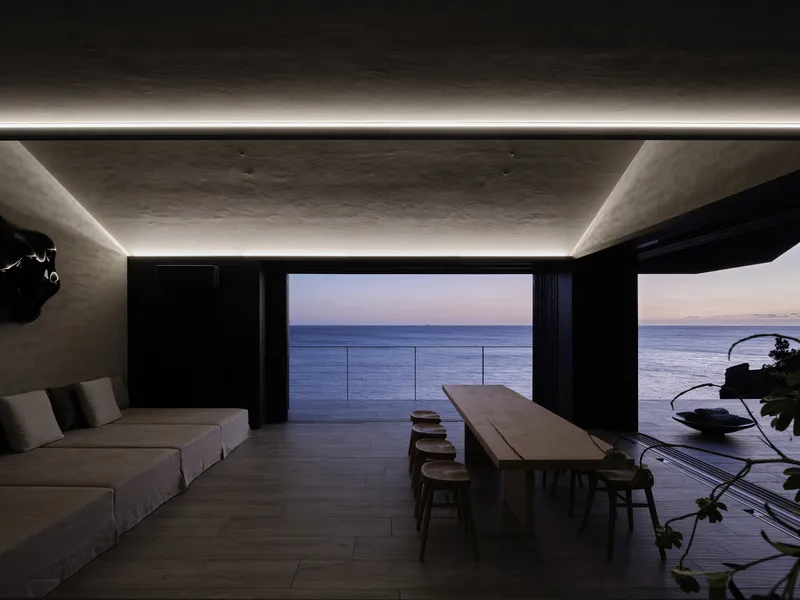
Expansive terraces extend toward the sea, creating the sensation of floating above the water. These outdoor platforms flow directly into the living room, unified by continuous flooring that enhances the dialogue between interior and exterior space. With a 180-degree panoramic ocean view, the home dissolves the boundary between shelter and seascape.
Interior Spaces – Minimalism with Depth
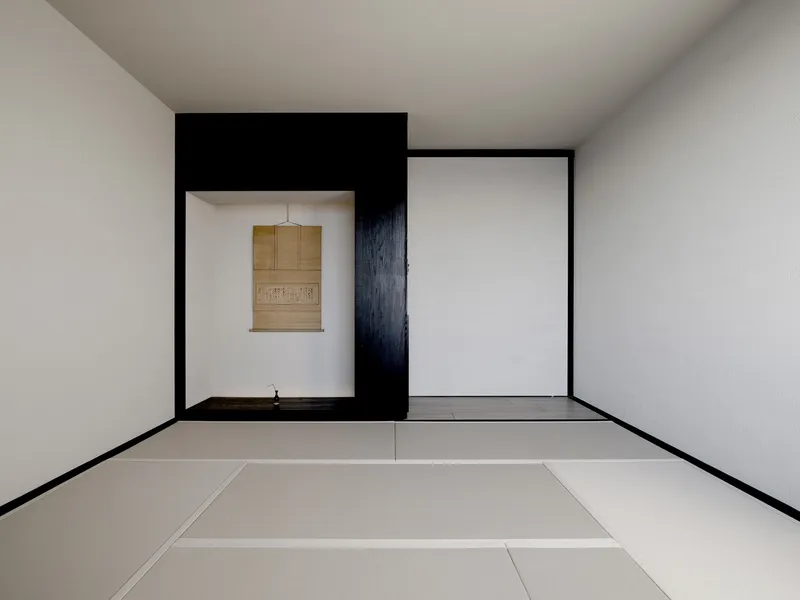
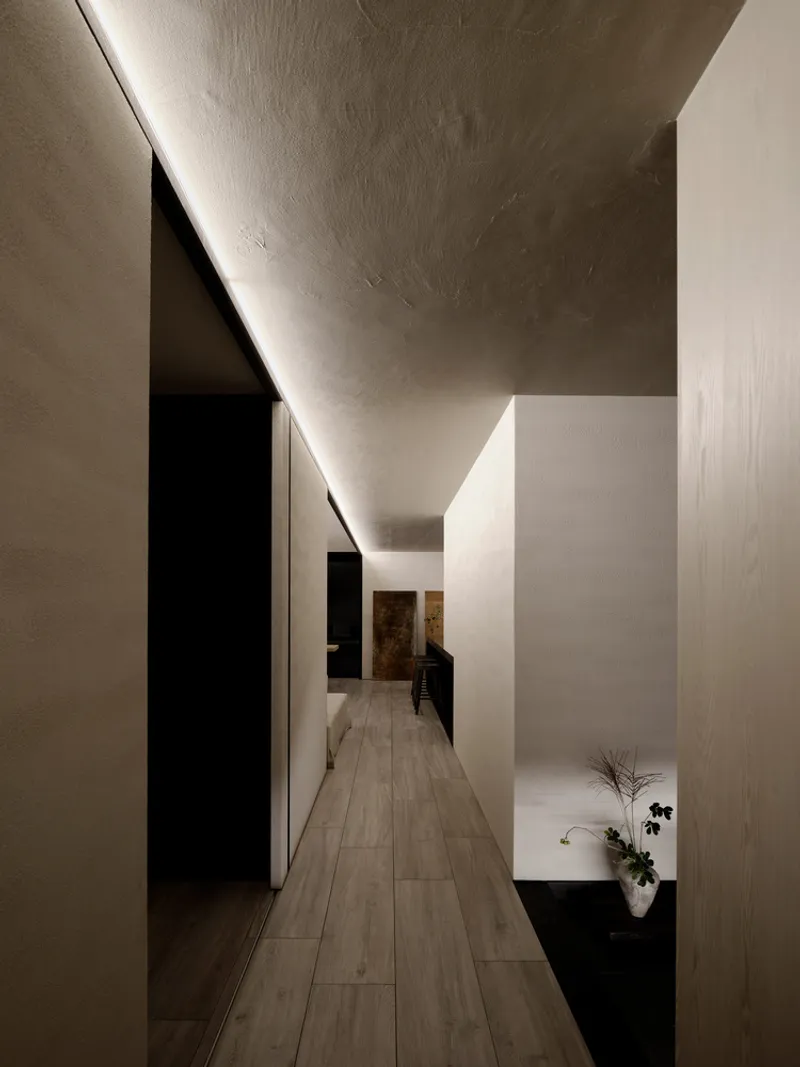
Inside, the design embraces simplicity and flexibility. The home contains two Japanese-style tatami rooms, an atelier, and a large open-plan living area, each oriented toward the sea. Sliding doors disappear into walls, allowing spaces to merge seamlessly and encouraging multifunctional use—from hosting guests and tea ceremonies to moments of solitude.
The interior palette reflects the surrounding environment—warm greys, textured walls, ceramic tiles, and tatami mats—all evoking the tones of stone, soil, and ocean. Hidden details, such as integrated lighting and concealed switches, reinforce the timeless and primitive character of the house.
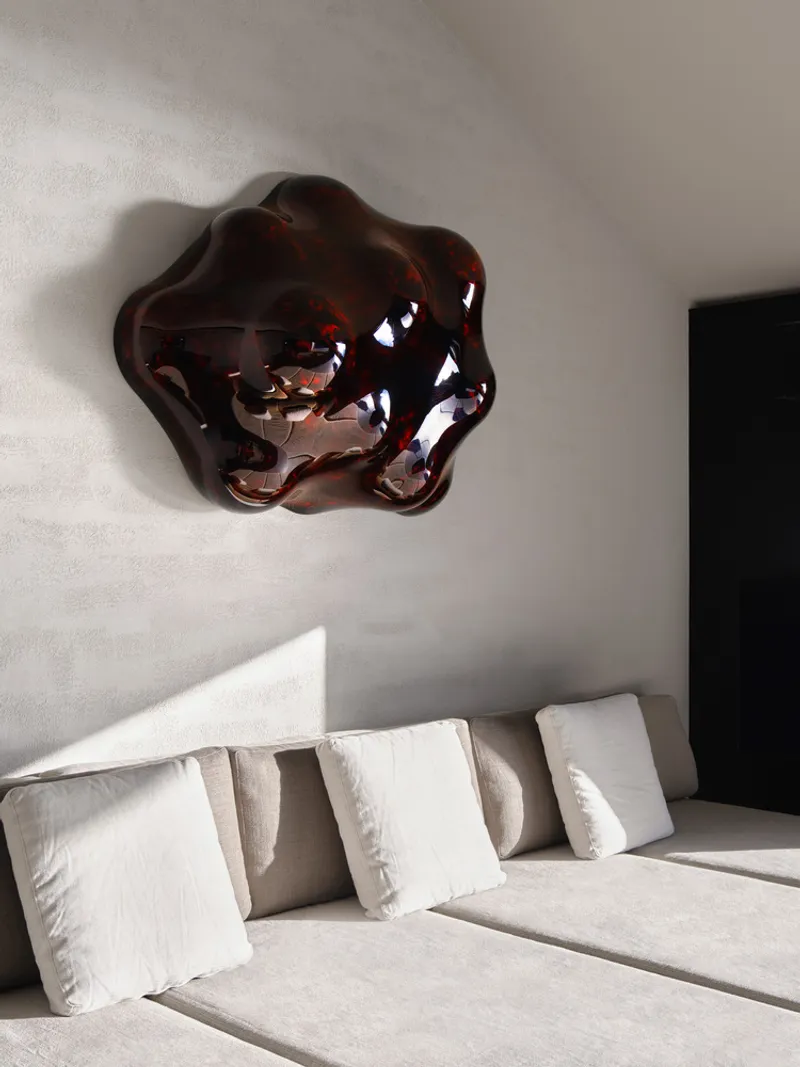
Art and design objects punctuate the living spaces, including lacquer works by Genta Ishizuka and naturally oxidized panels that echo the raw elements of the sea. The kitchen, conceived as a bold stone-like monolith, opens toward the ocean view, turning cooking into an immersive experience.
The Bathroom as Sanctuary
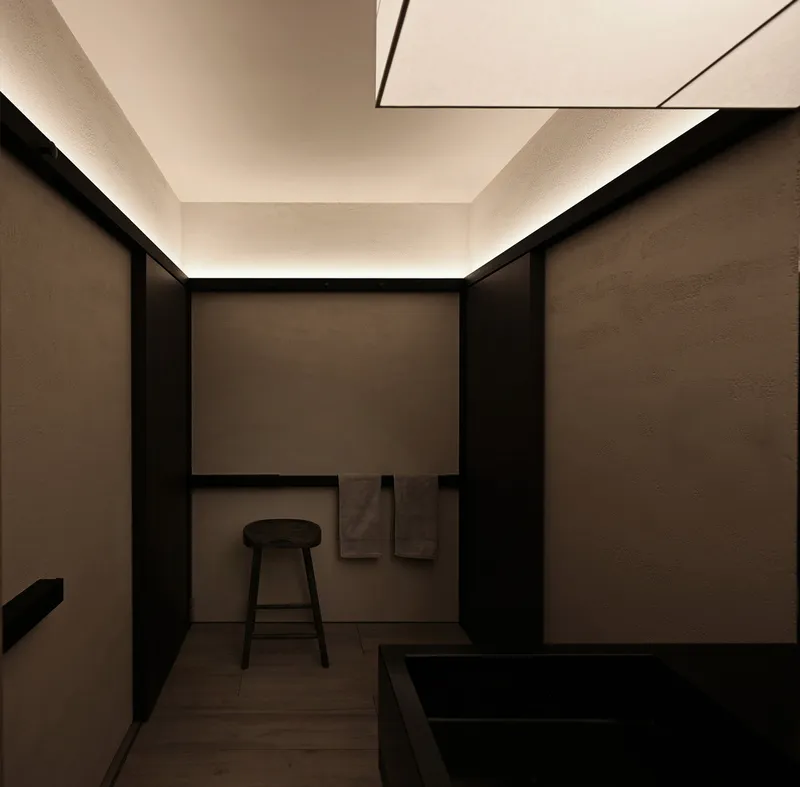
The bathroom offers a more intimate encounter with nature. A sunken bathtub carved into the stone floor creates a raw, grounding experience, while soft overhead lighting transforms the space into a private retreat. Like the rest of the home, the bathroom reflects the dialogue between primitive forms and modern refinement.
A Dialogue Between Past and Present
When closed, the house can be completely sealed with Yakusugi shutters, recalling the protective strategies of traditional Japanese homes. WA House is more than a retreat—it is a reinterpretation of vernacular coastal architecture through a contemporary lens. By embracing local traditions, natural materials, and abstract modern geometries, the home achieves a delicate balance between shelter and openness, permanence and impermanence.
In essence, the WA House is both a modern fisherman’s house and a sculptural expression of living with nature—a place where architecture becomes an emotional extension of the land and sea.
All Photographs are works of Yasutaka Kojima


Popular Articles
Popular articles from the community


Juan García Correa, John González and Claudia Rueda Sink a Circular Amphitheater into a Manizales Engineering Building
On the La Nubia campus in Manizales, Colombia, the S1 Building folds labs and offices into a hillside of ramped lawns that double as a campus route.

longwave studio Reorganizes a 112 m² Tainan Apartment Around the Daily Routines of a Family and Two Cats
In Tainan, Taiwan, birch plywood, rust-red furniture and a freestanding plaster wall link arrival, storage, work and family life in one apartment.

GROUP A Strips a 1969 Rotterdam Harbor Headquarters to Its Frame and Wraps It in Timber Louvers
In Rotterdam's M4H harbor district, Ferro Offices reuses a 1969 frame, adds one timber storey and reaches BREEAM-NL Outstanding.

Jaramillo Van Sluys Arquitectura and Urbanismo Turn a Demolished Registry Lot in Quito into an Orchard Plaza
In Quito's Centro Histórico, a 2,800 m² plaza exposes the San Agustín convent wall and redraws its lost Augustinian orchard in volcanic stone.

Similar Reads
You might also enjoy these articles


Hodi-Mandai Geram
Project Function: Preservation and revitalization of the Intangible heritage and socio-spatial identity of the Hodi by Housing, Cultural Memory Center, Sacred Grove, landscape, local tourism economy


Olio Towers: A Mid-Rise for Performers That Fuses Housing, Rehearsal, and Stage
Located blocks from Houston's Theater District, this modular tower stacks living units around a central performance atrium.

Oasis: Modular Green Housing Carved into Dhaka's Urban Fabric
A shortlisted Plugin Housing entry reclaims unauthorized settlements in Dhaka with stepped concrete volumes, green roofs, and ventilation-driven design.

Black Hole: A Floating Megastructure for the Post-Physical Era
Emiliano Mazzarotto envisions a spherical, self-scaling arena where e-sports, digital hotels, and holographic stadiums replace traditional public space.

Explore Architecture Competitions
Discover active competitions in this discipline

Challenge to reimagine the Iron Throne

Photograph architecture without architects

Illustrate the lost glory of Angkor Wat - Render Challenge

Design challenge to reuse E-waste
Comments (0)
Please login or sign up to add comments
No comments yet. Be the first to comment!