
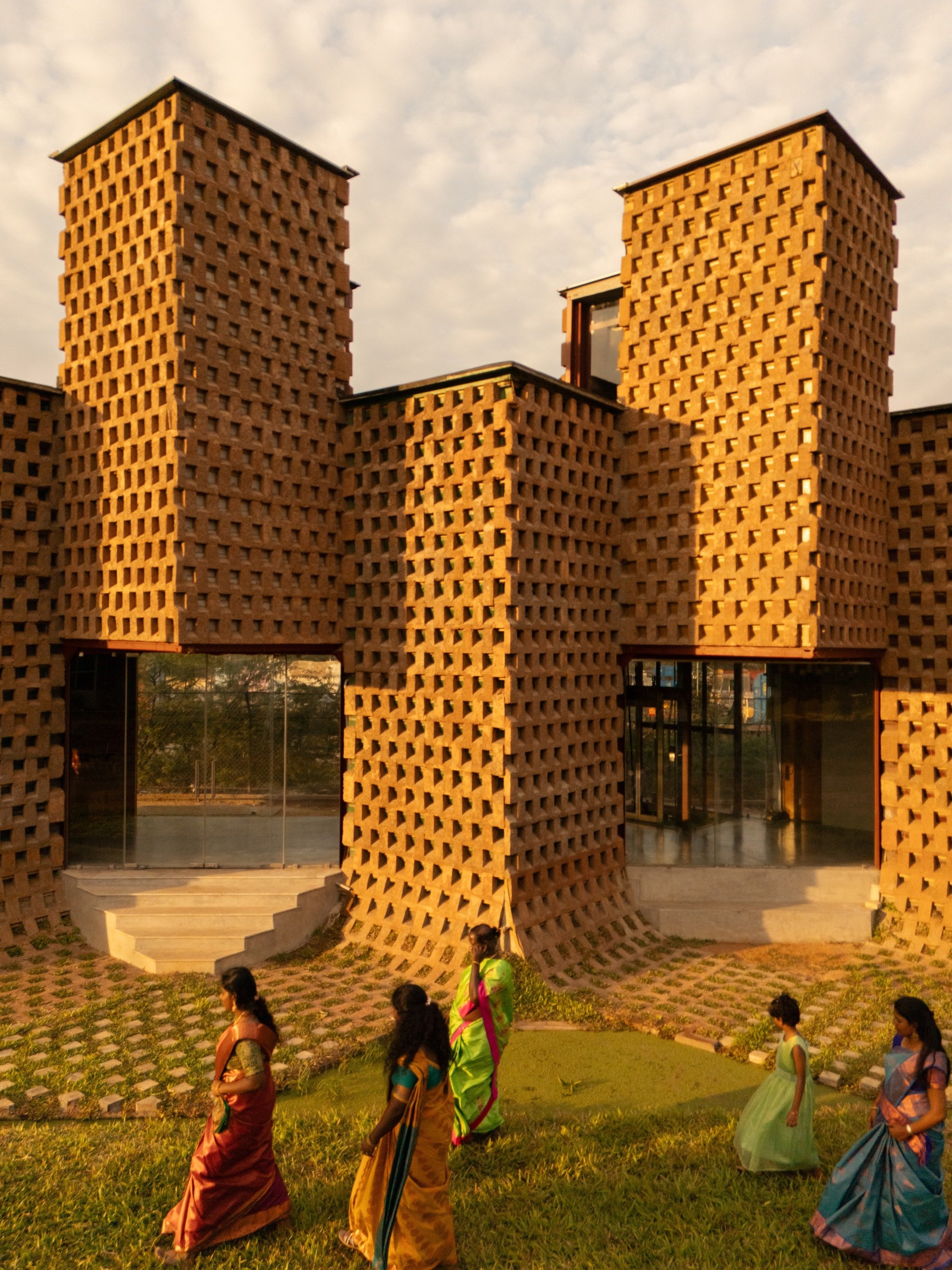
Wallmakers Wraps Twelve Shipping Containers in Mud to Build a Restaurant in Tamil Nadu
In the port city of Tuticorin, discarded steel boxes become intimate dining rooms clad in perforated compacted earth.

Tuticorin has been a hub of maritime trade for roughly two millennia, and that history has left a very tangible byproduct: mountains of discarded shipping containers rusting in the port city's periphery. Wallmakers, the Kerala-based practice led by Vinu Daniel, saw that surplus not as scrap but as a structural system waiting to be activated. Petti Restaurant, whose name means "box" in Tamil, takes twelve of those containers, slices each one in half lengthwise, stands them upright, and welds them into a diagrid steel frame that reads nothing like the flat-stacked modular architecture we have come to expect from container projects.
What makes Petti genuinely interesting is the collision of two materials that rarely meet: industrial steel and compacted earth. The mud is not decorative. Applied in a perforated grid pattern over the container surfaces, it creates a breathing thermal envelope that reduces cooling loads by 38 percent in a region that is hot year-round. The result is a 438-square-metre, 200-seat restaurant spread across two floors on a very narrow site, where every dining niche is carved from the angular geometry of a halved container and every surface tells a story about what happens when you treat waste as opportunity.
The Perforated Earth Envelope
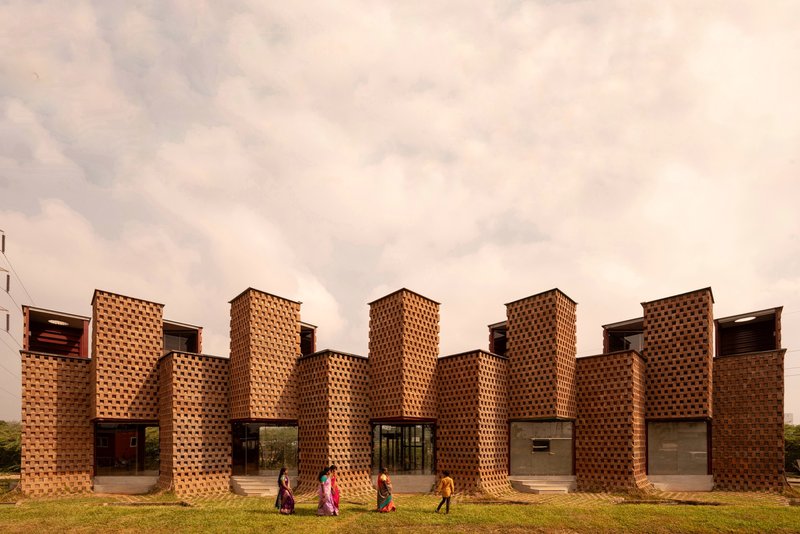
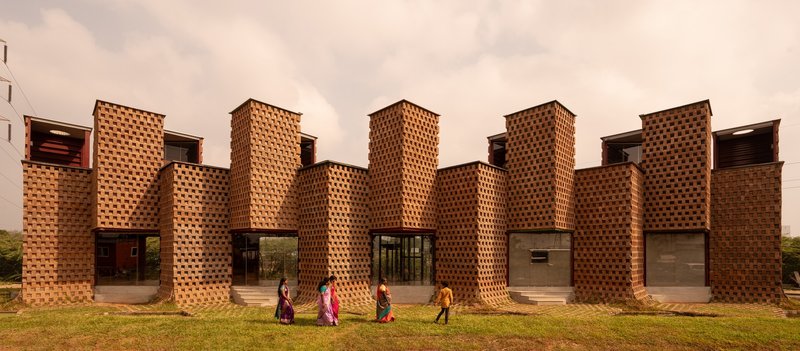
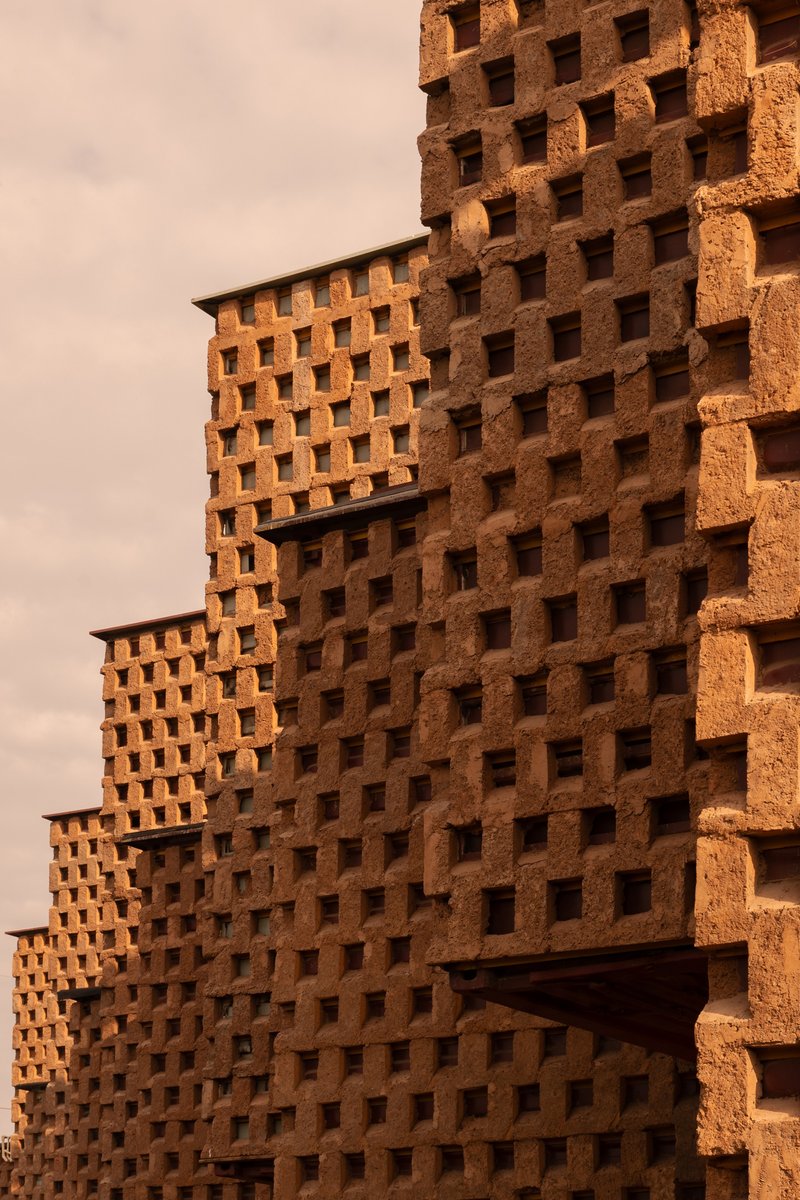
From a distance, Petti looks like a cluster of crenellated terracotta towers, not a restaurant made of shipping containers. The compacted earth coating wraps each volume in a repeating recessed pattern, with deliberate voids that reveal flashes of the original steel surface beneath. Those gaps are not just visual: they channel airflow across the metal skin, shading it from direct solar gain while letting convective currents pull heat away from the interior.
The texture has a handmade, almost geological quality. Up close, the brickwork reads as interlocking volumes with deep reveals, lending the facade a weight and mass that completely contradicts the thinness of the steel skeleton underneath. It is a smart inversion: the lightest structural system in the project wears the heaviest coat.
Vertical Containers and the Diagrid Frame
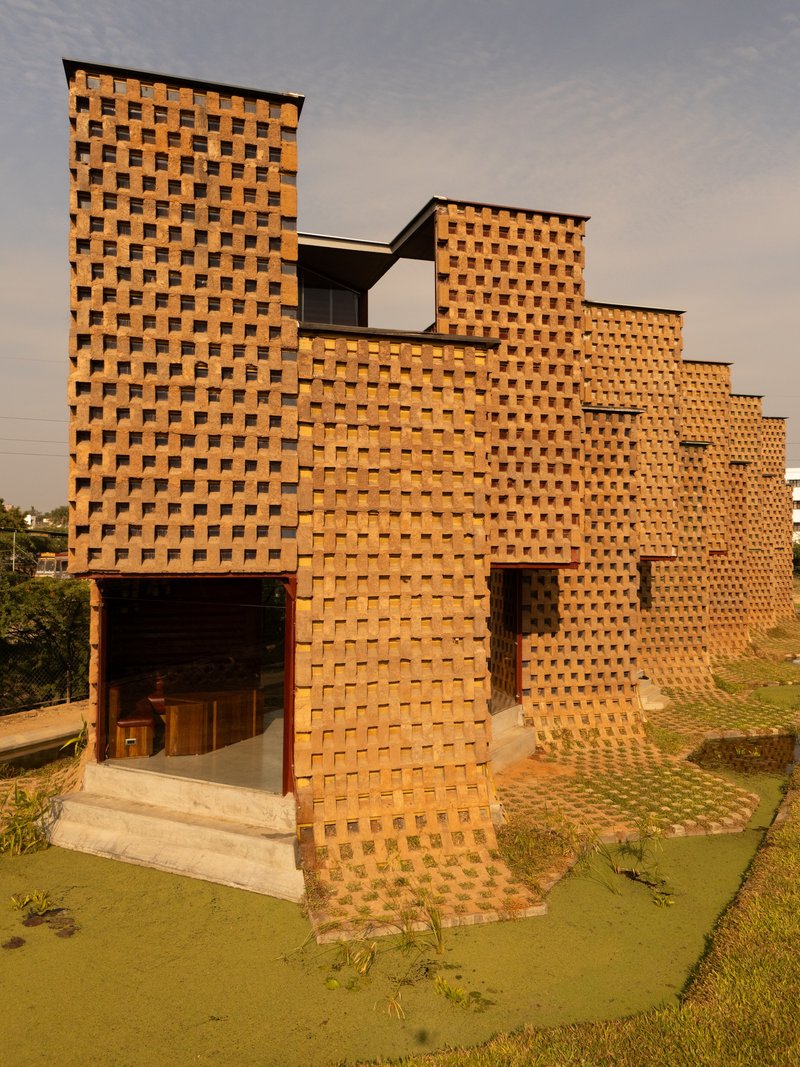
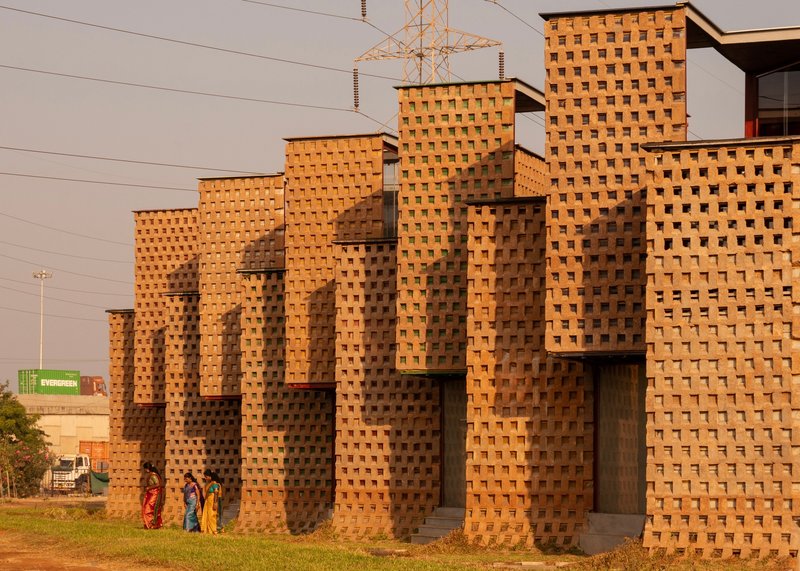
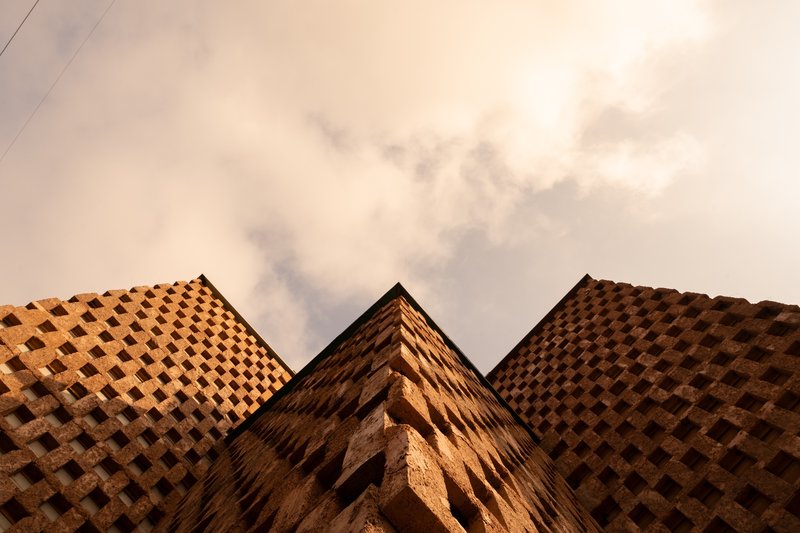
Most container architecture lays its boxes flat, which means you inherit the standard 2.4-metre ceiling height. Wallmakers refused that constraint. By standing each half-container vertically, the team gained more generous room heights and freed the plan from the monotony of rectangular modules. Twelve units were craned into position within a single week, then welded to a steel frame in a zigzagging arrangement that produces the building's distinctive stepped silhouette.
Reinforced concrete slabs were inserted at floor levels to tie the containers together and create a continuous structural diaphragm. The staggered placement introduces pockets of shade between volumes and opens up channels for cross ventilation, a move that makes the diagrid not just a formal gesture but a climate strategy tuned to Tuticorin's relentless heat.
Thresholds and Arrival
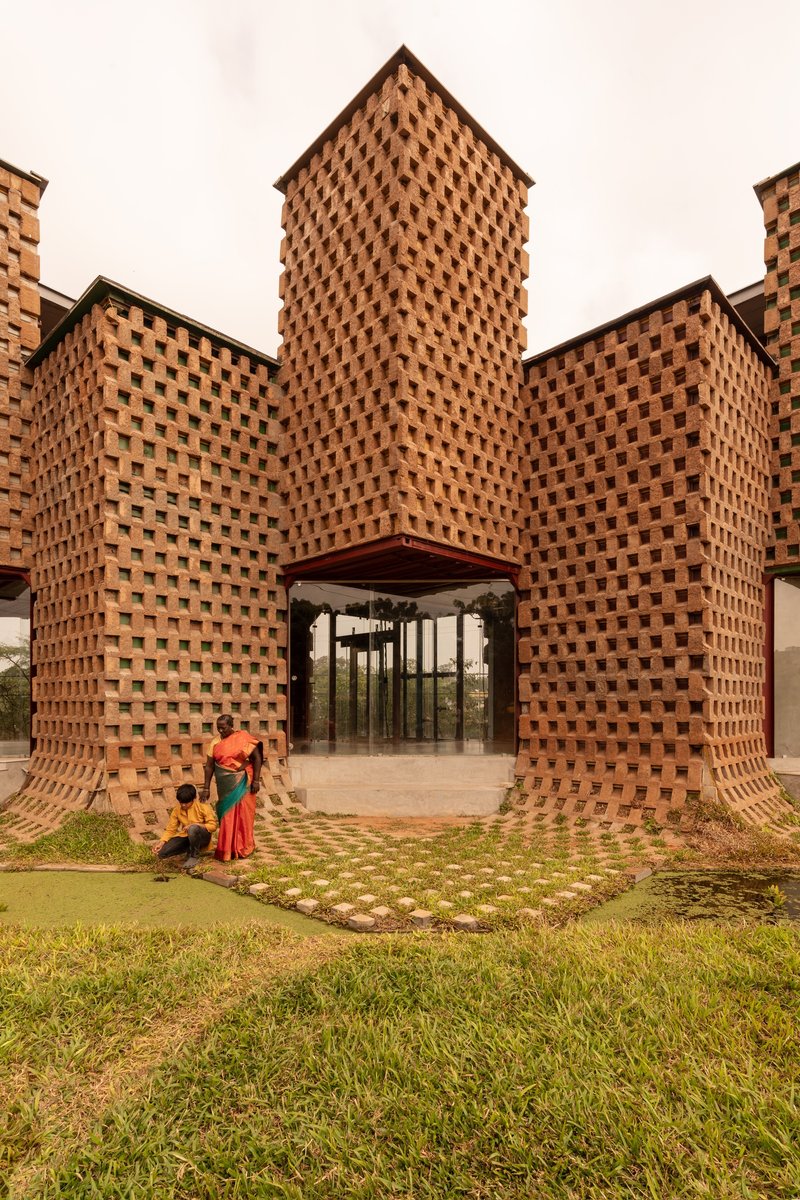
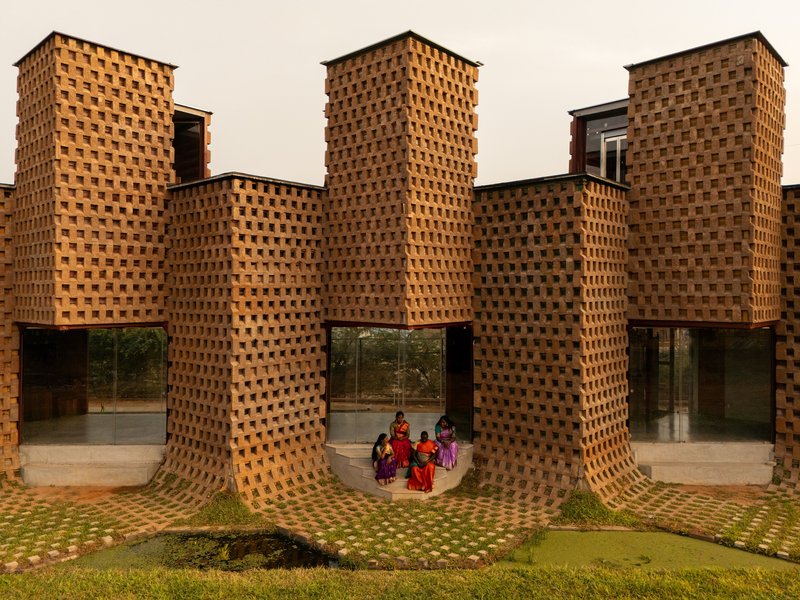
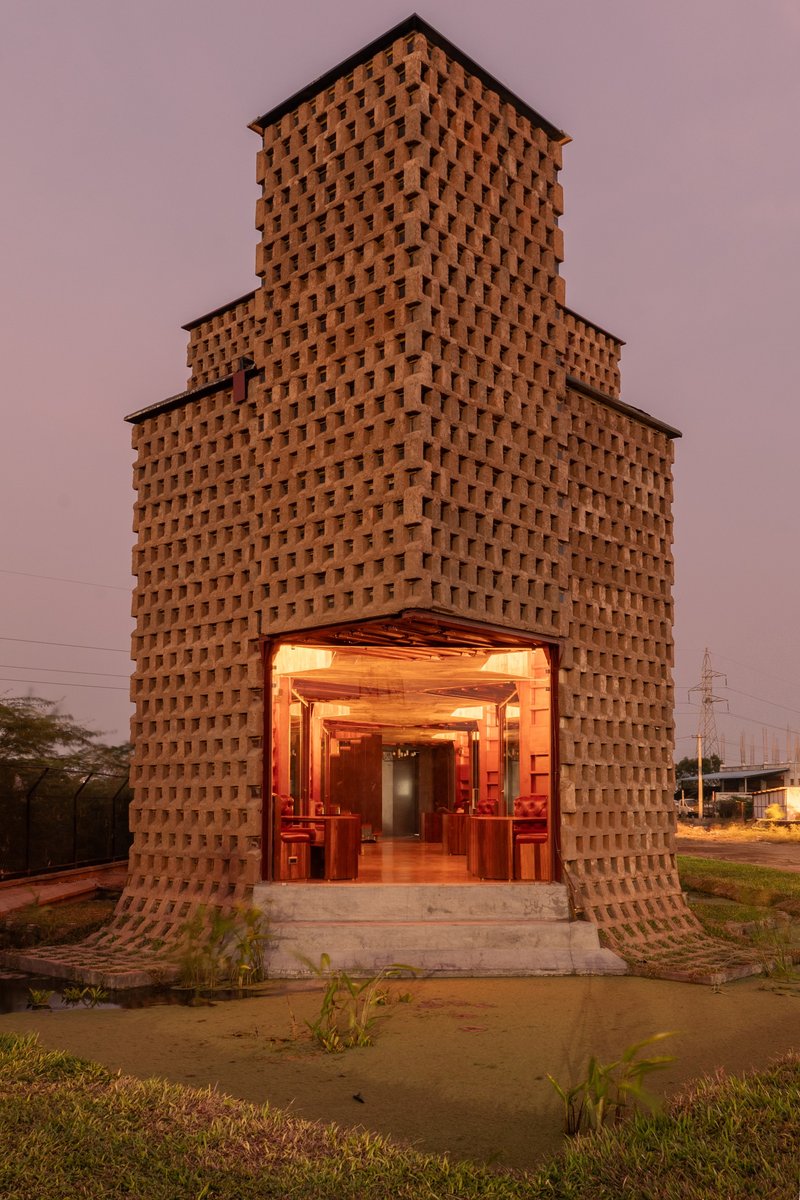
The entrance sequence is carefully staged. Tapered brick towers frame arched openings at ground level, creating a sense of compression before the dining spaces open up inside. At dusk, these archways glow from within, turning the facade into a lantern that signals activity without shouting. The grass-paver courtyard and shallow reflecting pool at the base of one tower soften the industrial lineage of the building and ground it in its landscape.
There is a deliberate ambiguity to the exterior. Visitors arriving for the first time would be forgiven for thinking they are approaching a temple complex or a fortification. That misreading is part of the point: Wallmakers wants you to forget you are walking into a stack of salvaged steel boxes.
Covered Passages and Transition Spaces
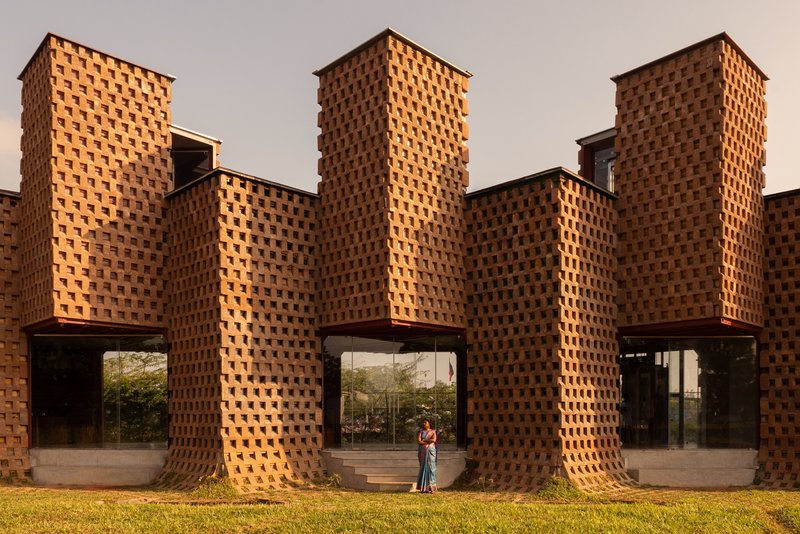
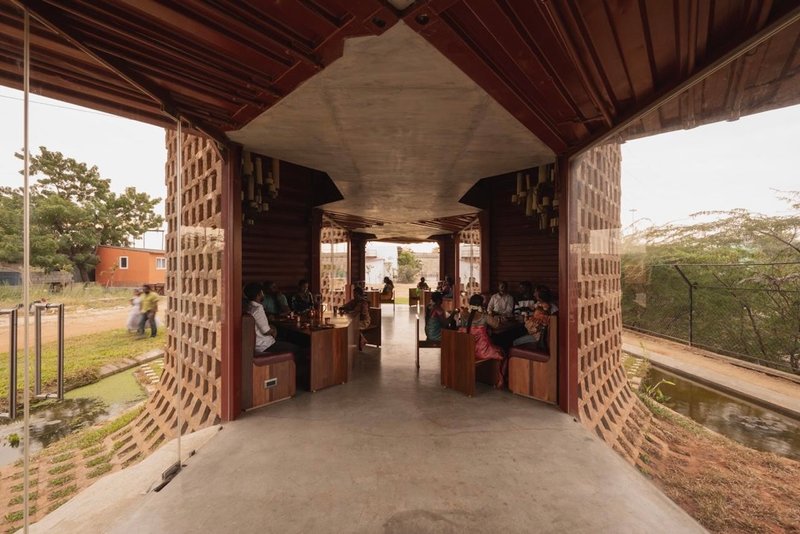
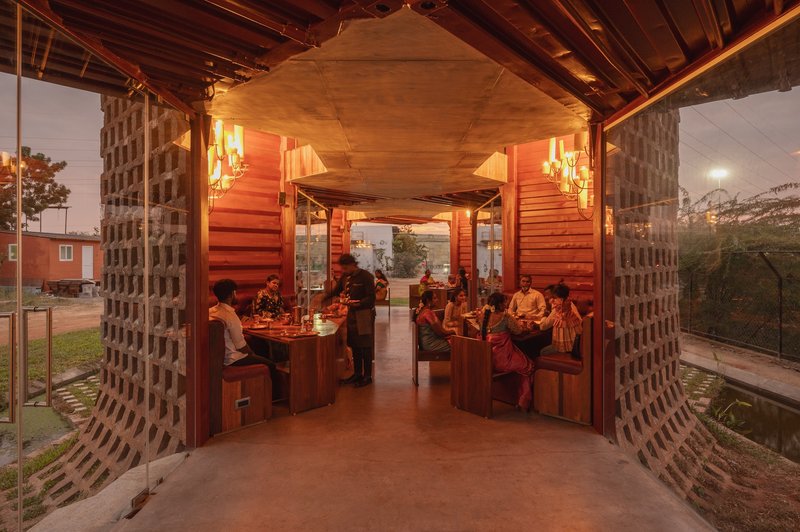
Between the exterior and the fully enclosed dining rooms, a series of covered passages and semi-outdoor zones provide climate buffers and atmospheric shifts. Perforated brick screen walls filter light into rhythmic patterns, while timber ceiling panels add warmth overhead. These in-between spaces host some of the restaurant's most casual seating, where guests can dine under natural ventilation without full air conditioning.
South-facing volumes are treated as solid masses, limiting direct solar exposure, while upper portions are left open to draw air upward through the building via stack ventilation. The environmental logic is legible: you can feel the temperature drop as you move from the courtyard into the shade of the arched passageways.
Intimate Interiors in Deep Red and Timber
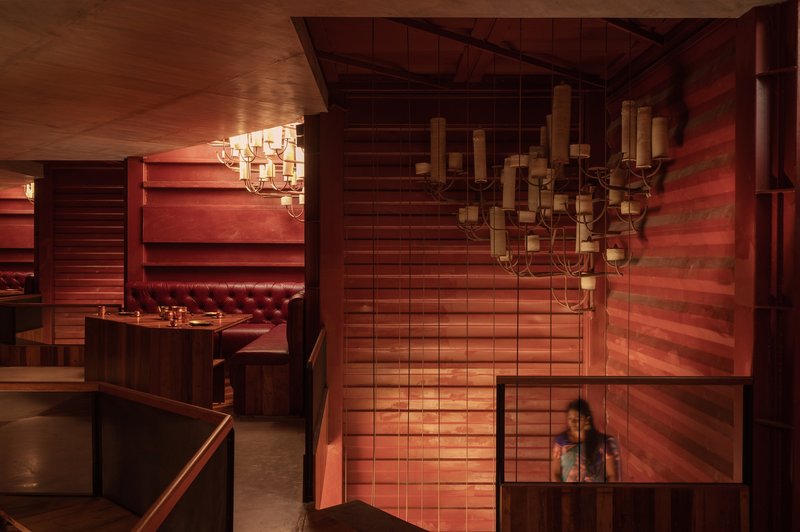
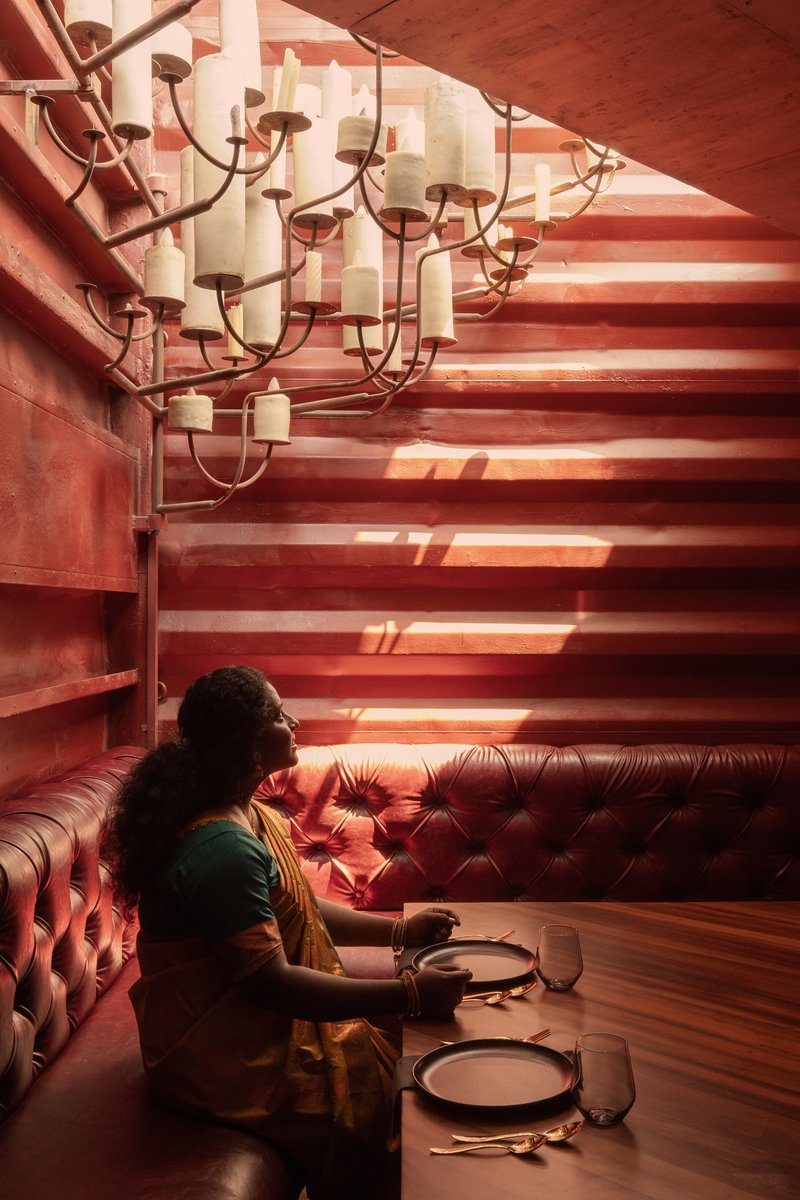
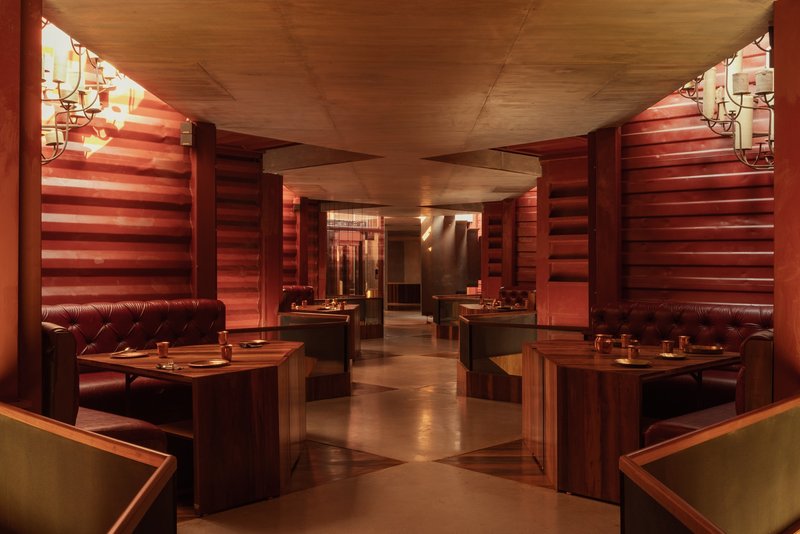
Inside, the container origins become legible again. The interior surfaces of the metal volumes are painted a deep shade of red, and horizontal timber slat cladding lines the walls to create a layered warmth. Each seating area occupies a corner or edge condition dictated by the angular geometry of the halved containers, meaning no two booths are identical. Tufted leather banquettes are tucked into triangular nooks, and custom chandeliers made from old wax and pipes hang overhead, casting a flickering candlelit glow.
The flooring uses discarded deck wood treated with oxide, continuing the salvage logic from structure through to finish. The narrow plan means the restaurant unfolds as a linear sequence of private niches rather than one open dining hall, giving each group of guests a sense of enclosure without isolating them from the energy of the room.
Circulation and Light
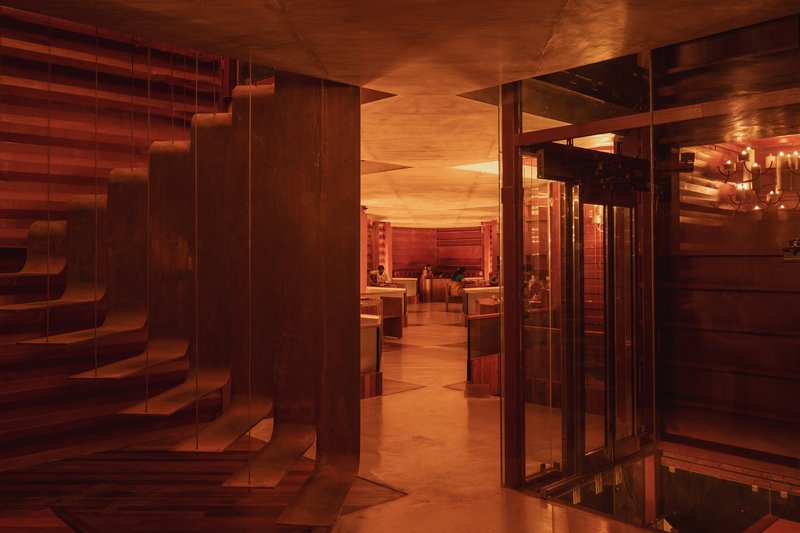
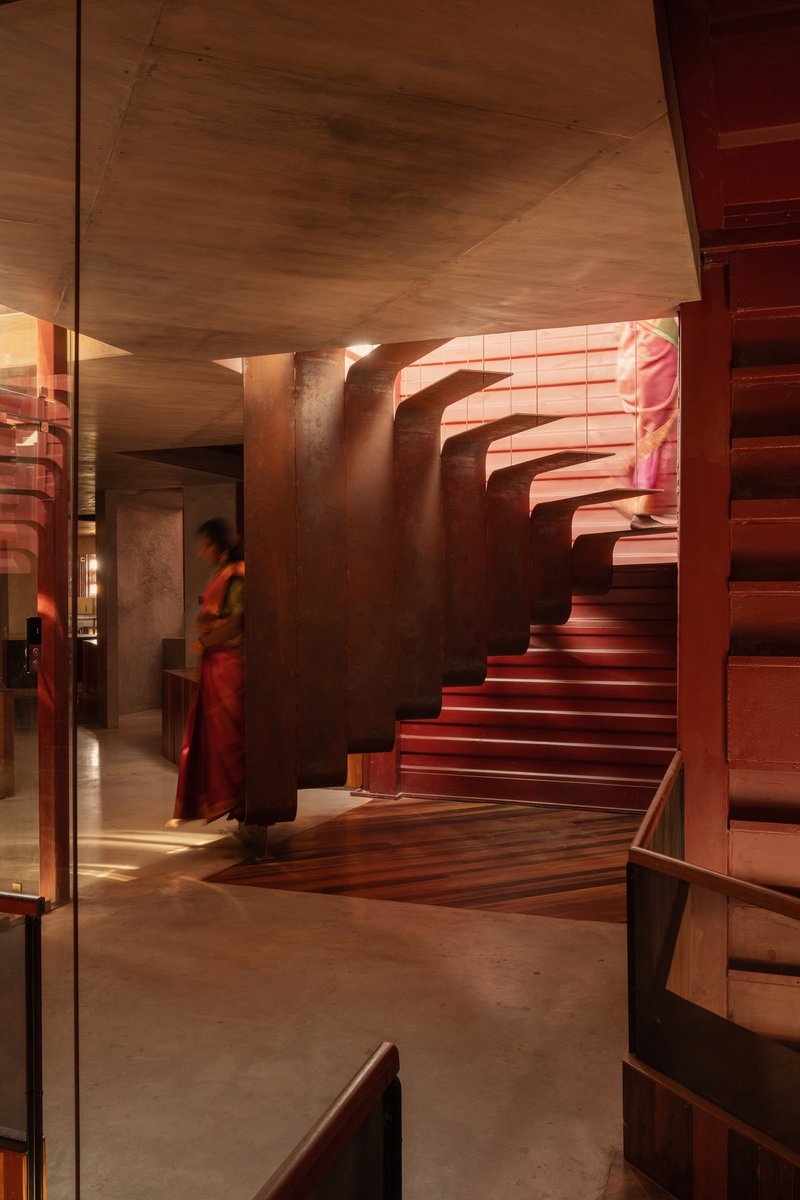
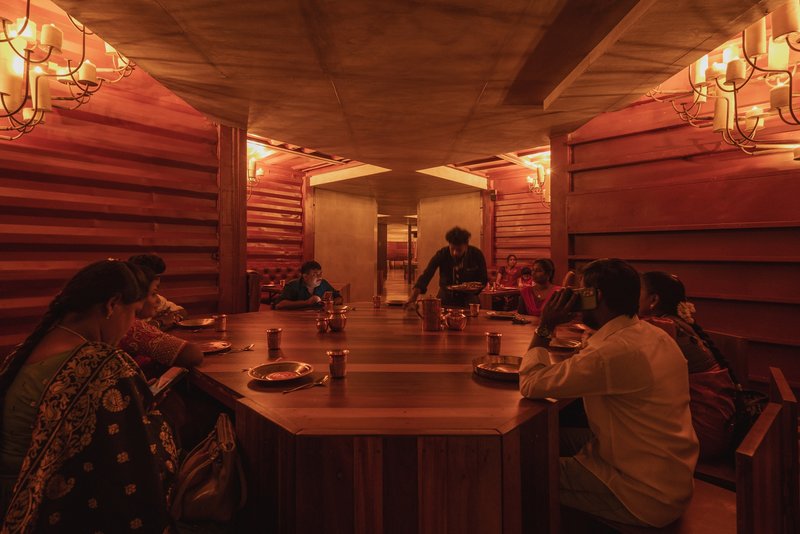
A sculptural timber staircase with horizontal slat walls connects the two floors, curving through the building like a spine. The stair is top-lit by skylights that puncture the roof structure, pulling daylight deep into the plan. During the day these apertures create shifting pools of light across the timber surfaces; in the evening, warm artificial light takes over and the staircase becomes the most theatrical moment in the building.
The coffered ceiling in the communal dining area on the upper floor gives a sense of formality and height that you would not expect from a building made of salvaged steel. It is a reminder that Wallmakers' ambition here is not modest: they are not building a pop-up or a novelty container cafe. They are building a proper restaurant that happens to be made from waste.
Water, Landscape, and the Narrow Site
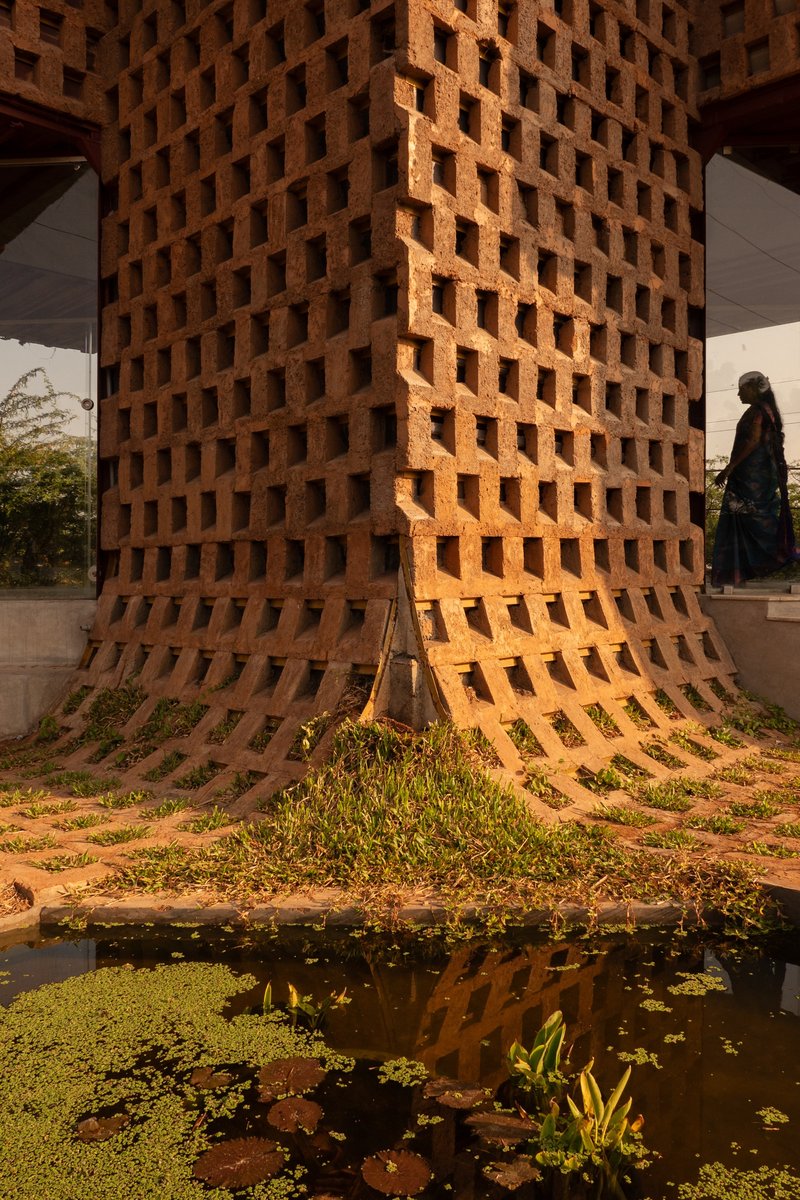
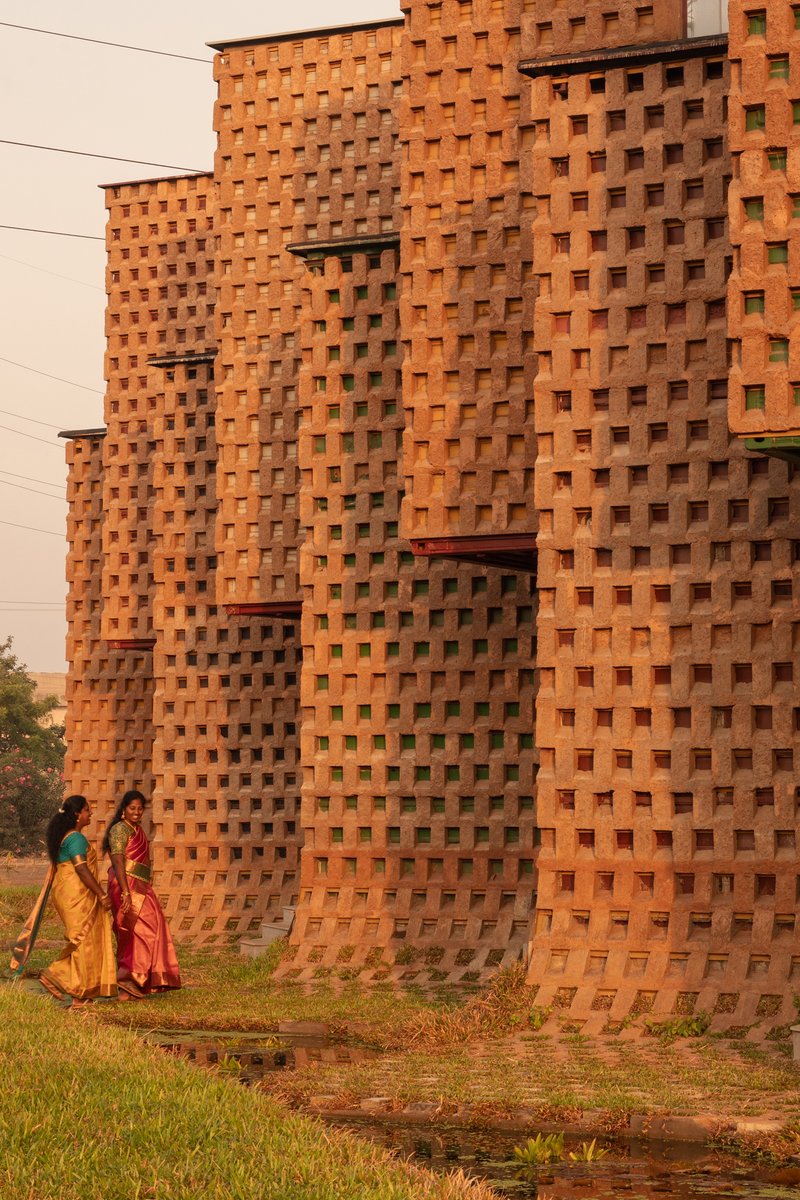
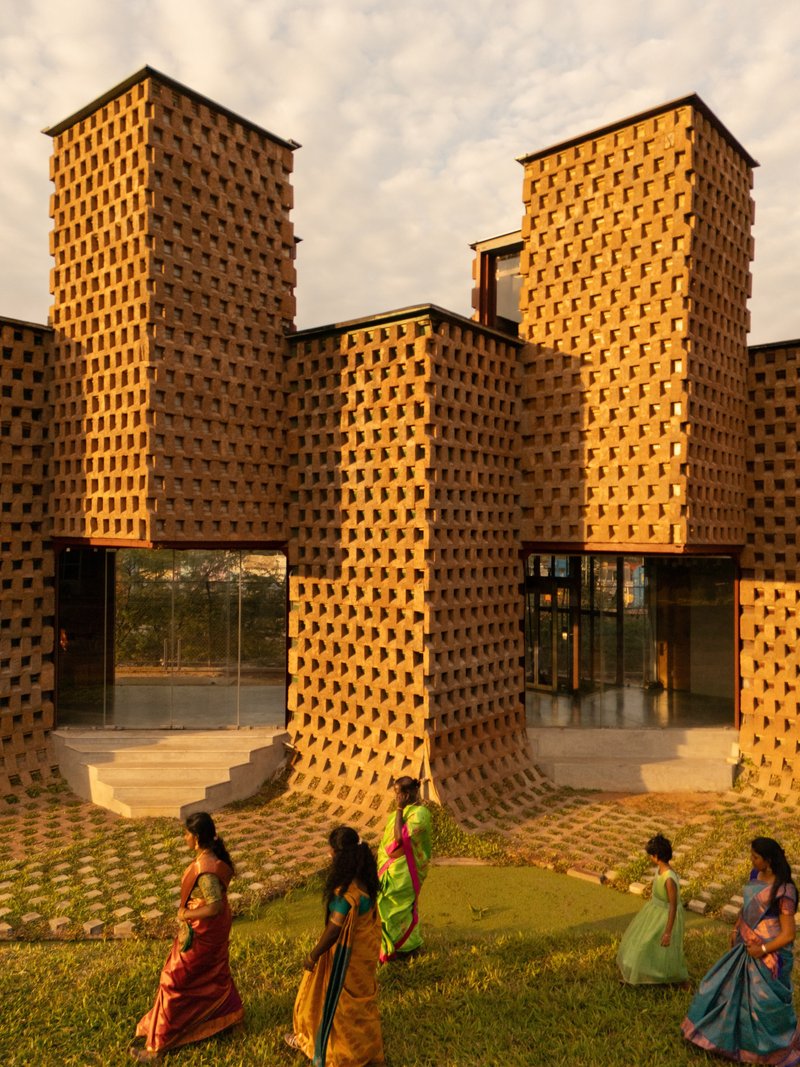
The site is long and narrow, and the building occupies it like a procession of objects rather than a single mass. A shallow reflecting pool at the base of one tower mirrors the perforated brickwork and introduces water plants that soften the boundary between architecture and ground. The grass lawn surrounding the building provides breathing room and gives visitors a vantage point from which to take in the stepped profile against the sky.
Transmission towers are visible in the background of several views, a reminder that this is not a pristine rural setting but an industrial port city. Wallmakers does not try to hide that context. Instead, the building absorbs it, turning the language of infrastructure into the language of hospitality.
Washroom Details
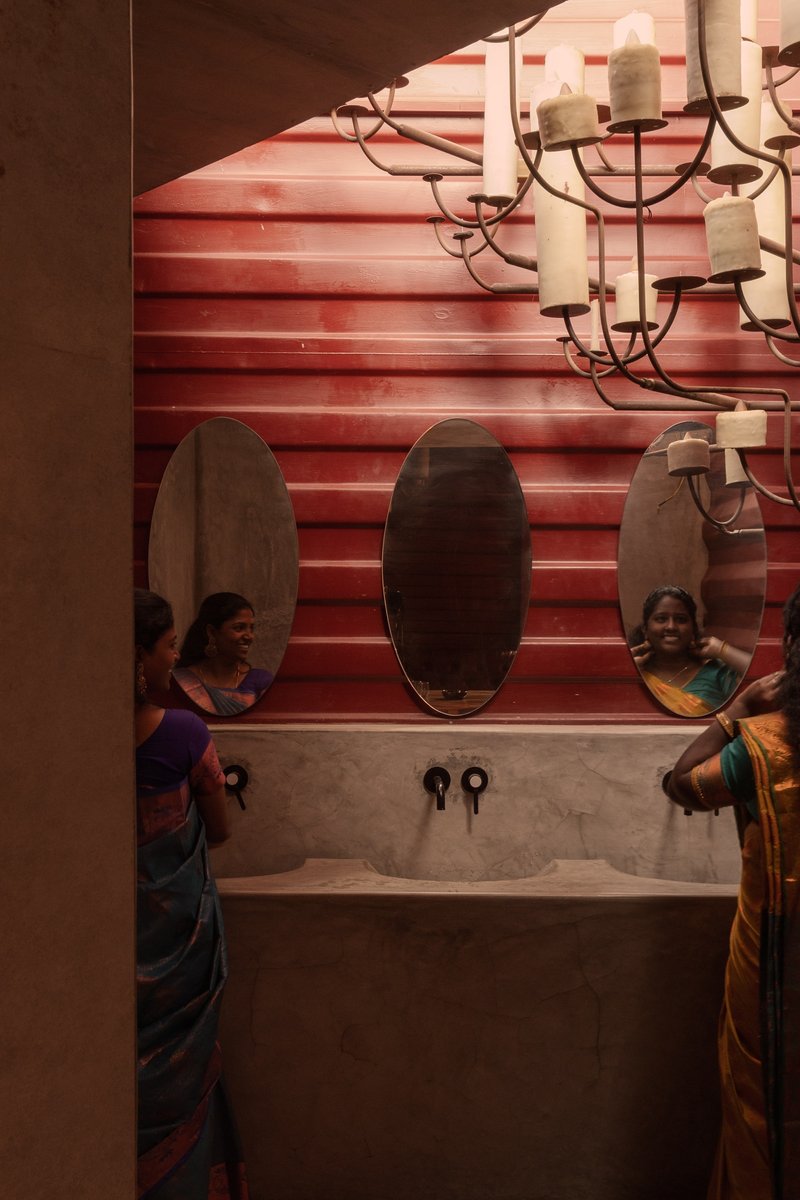
Even the washrooms carry the project's material palette forward. Oval mirrors sit against the same horizontal timber slat walls, and candle chandeliers maintain the atmospheric consistency. It is a small detail, but it signals the level of care Wallmakers brought to every corner. In a building assembled from industrial salvage, that consistency is what separates a concept from a completed work of architecture.
Plans and Drawings
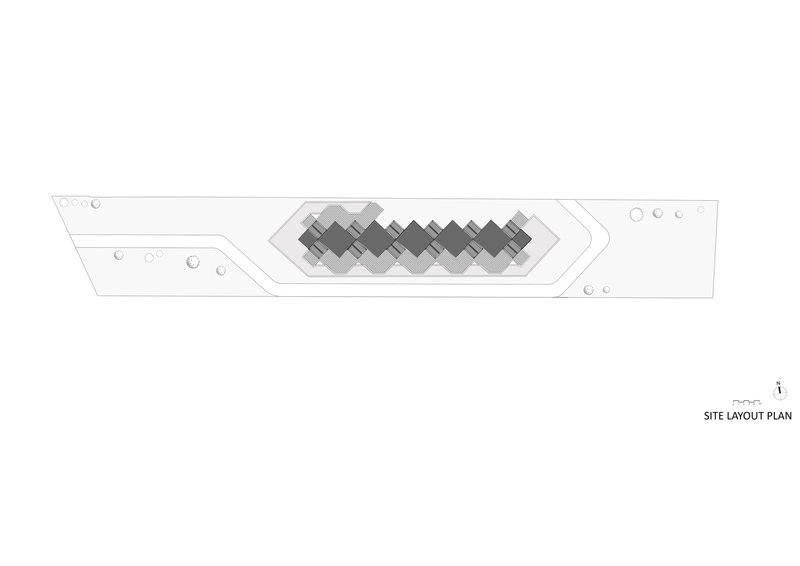
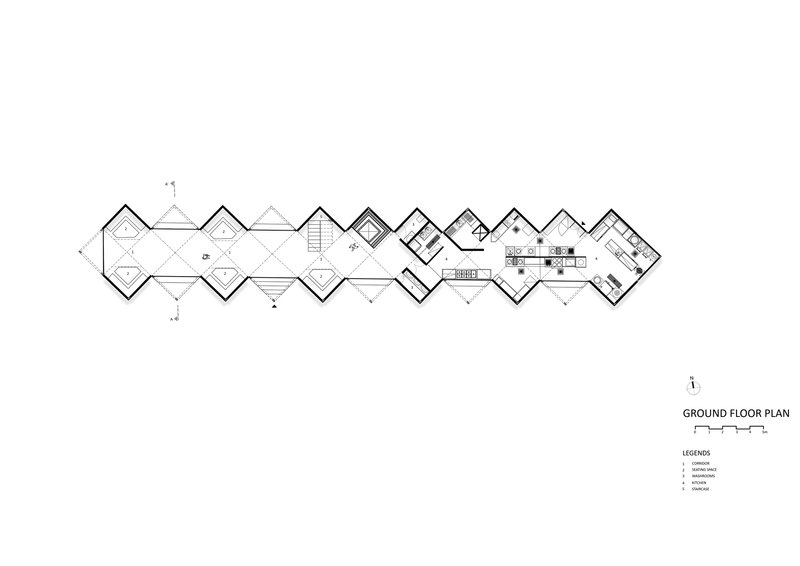
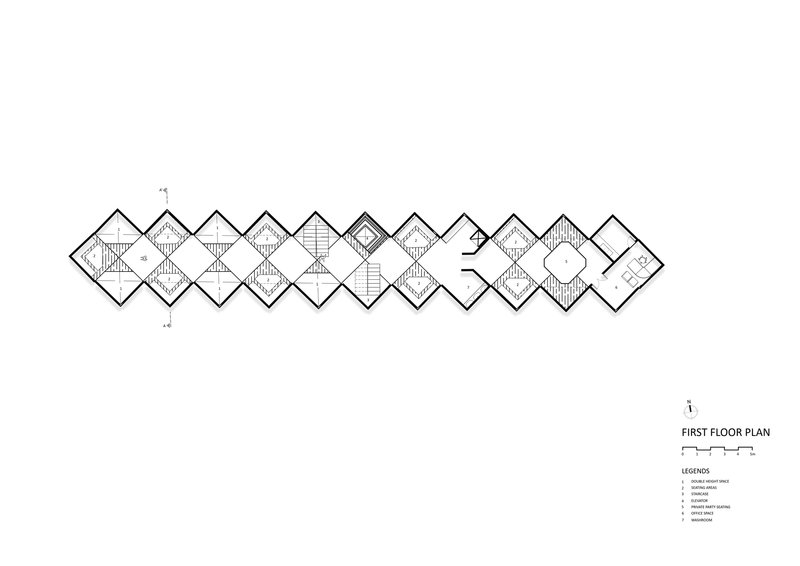
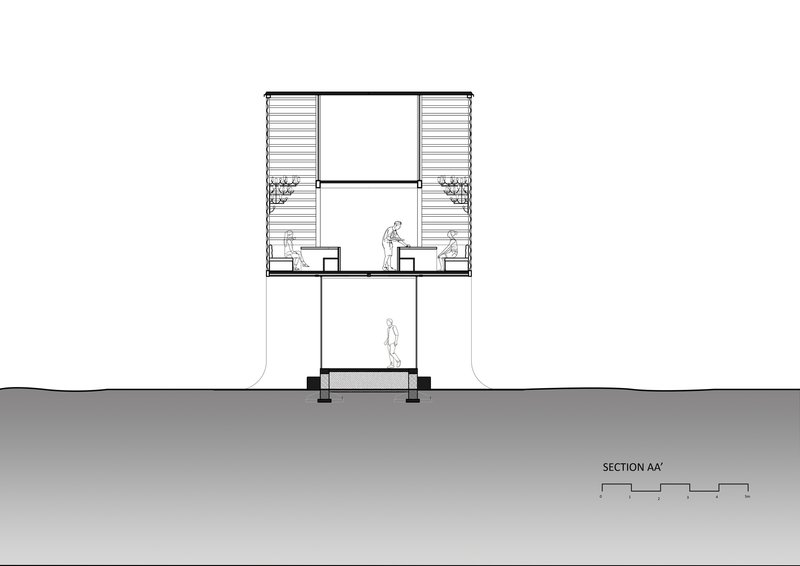
The site layout plan reveals how the clustered geometric volumes sit within the narrow linear boundary, each rotated diamond shape interlocking with its neighbor to create the zigzagging diagrid. The ground floor plan shows nine diamond-shaped modules organized around a central service core, while the first floor plan traces a linear sequence of rotated squares accommodating different seating configurations. The section drawing exposes the double-height courtyard space, the louvered upper walls that drive stack ventilation, and the relationship between the earth-clad exterior and the timber-lined interior.
Why This Project Matters
Shipping container architecture has suffered from a credibility problem for years. Too often it is presented as a quick, cheap, eco-friendly solution that in practice delivers none of those things convincingly. Petti Restaurant sidesteps the usual pitfalls by refusing to treat the container as a finished room. Instead, the container is raw material: cut, rotated, wrapped in earth, and integrated into a passive climate strategy that actually performs. The 38 percent reduction in cooling loads is not a vague green promise; it is a measurable outcome of combining a perforated mud envelope with a staggered steel diagrid in a hot port city.
More broadly, Petti demonstrates that reuse architecture does not have to look like reuse architecture. The building is rich, atmospheric, and spatially complex in ways that have nothing to do with novelty and everything to do with serious design intelligence. Wallmakers, under Vinu Daniel's direction, have been working with alternative materials for years, but this project crystallizes their thesis in its most complete form: that the distinction between waste and resource is a design problem, not a material one.
Petti Restaurant by Wallmakers (Lead Architects: Vinu Daniel, Oshin Mariam Varughese). Located in Tuticorin, Tamil Nadu, India. 4,720 sq ft (438 sq m). Completed 2026. Photography by Studio IKSHA.
About the Studio
Share Your Own Work on uni.xyz
If projects like this are the kind of work you want to make, uni.xyz is a place to publish your own, find collaborators, and enter design competitions.




Popular Articles
Popular articles from the community

Inside a Timeless Mumbai Residence by Aether Studio
Aether Studio's 2,250 sq ft apartment in Malad, Mumbai uses marble, brass, boucle, and disciplined restraint to build a quiet retreat from the city.

IKC de Geluksvogel: Sustainable School Architecture Designed for Free Movement and Digital Learning
IKC de Geluksvogel turns sustainable school architecture into a flexible Maastricht campus for digital learning, nature, and free movement.
Eco Chapel: A Green Architecture Pavilion Designed in Symbiosis with the Forest
Eco Chapel uses green architecture to weave prayer, learning and reuse into a forest pavilion shaped by modular hexagonal canopies for life.
Stanton Architects Sculpts a Curving Family Home into Sydney's Inner West Fabric
Five Dock House uses cantilevers, curved concrete, and layered courtyards to carve out privacy on a tight suburban lot in Sydney.


Similar Reads
You might also enjoy these articles
Freebird Residence by Alexis Dornier: A Tropical Modernist Sanctuary in Bali
Floating living pavilion above pool anchors H-shaped tropical villa, blending Japanese minimalism, sustainable strategies, lush landscape, and sculptural interiors.
127af Flips a Tiny Bagnolet Rowhouse Upside Down with a Handcrafted Roof Extension
A 55-square-meter terraced house on the edge of Paris gains a luminous upper living floor through lightweight timber and steel.
1.61 Design Workshop Wraps a 600-Square-Meter Café in Vietnam in Sculptural Burgundy Drama
Reden Café & Bistro pairs a helical staircase, mosaic floors, and deep red interiors to rethink Vietnamese hospitality space.

The Unbound Brain: A School Shaped by Cognitive Architecture
Cylindrical learning pods radiate like neurons from a central cortex, turning the floor plan into a spatial model of human thought.




Comments (0)
Please login or sign up to add comments
No comments yet. Be the first to comment!