
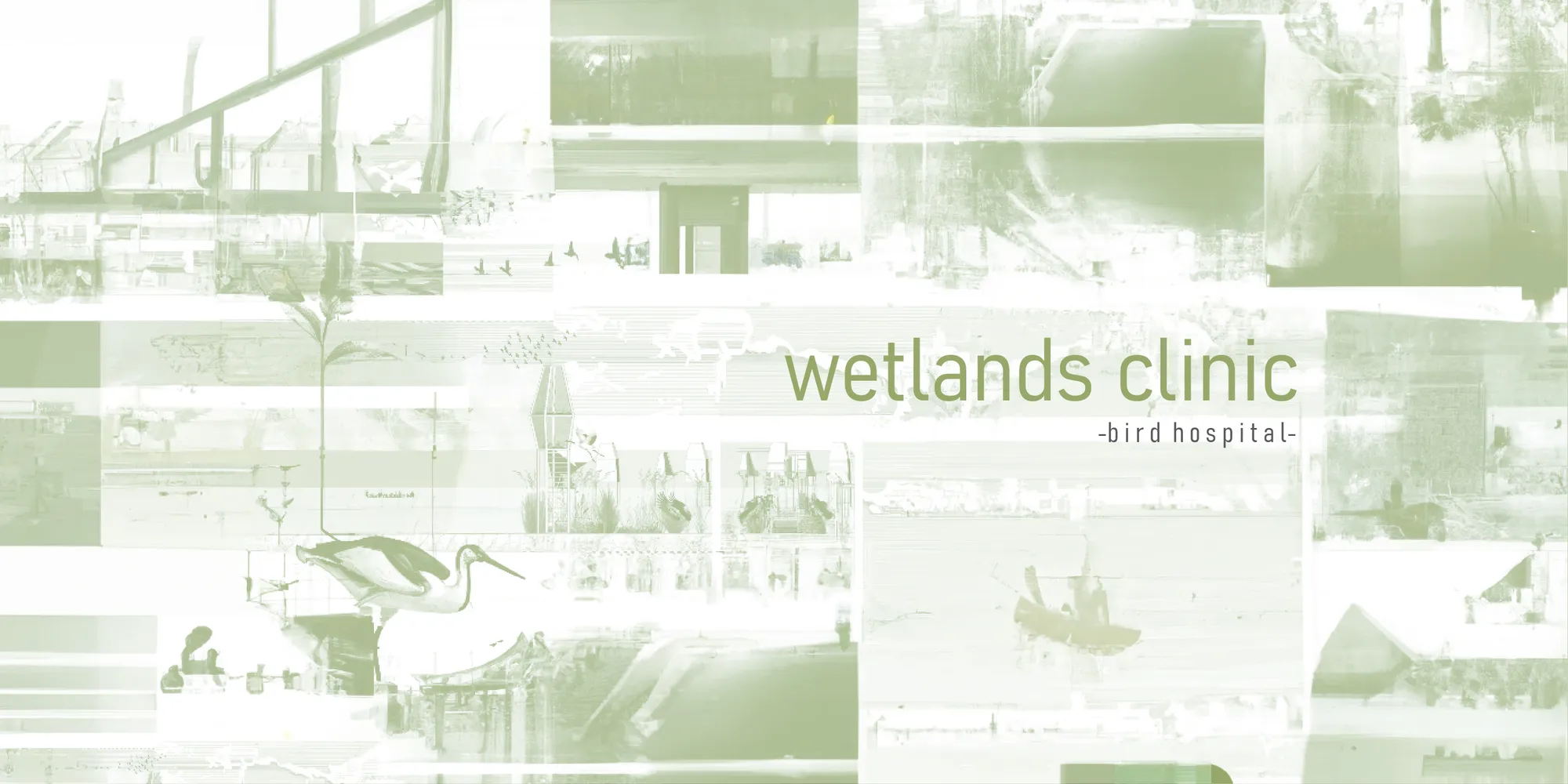
wetlands clinic
-bird hospital-
Analyzing the given location and researching the course of the river that passes through the given area, the swamps that are created along the riverbed are visible. Due to the works and excavations in this area, this area has changed.
The journey to find the theme of the project began by mapping the places of change and highlighting the course of the river itself. The diagrams at the beginning describe the initial steps of the project.
Wetlands are visible on the diagram on the right as green spots that can conceptually represent hubs, meeting places, the center of events as well as potentially an "object" only as a place connected by a certain path, while the shaping architecture is based on a different model. The research of the location did not end only with the analysis of the river, but also of the entire environment, animals and plants that inhabit this area. Many animals in this area require certain measures of safety and assistance. All this analysis directed the project towards helping the wetland as well as the living world that completes it. The idea came in line with such research considering the workshops that were conducted in order to save, constantly restore and preserve this area.
Taking into account the conducted analysis, its concluded that the project needs to be adapted to the given location and to simply create a project dedicated to the very concept of the swamp.
-Wetlands Clinic-
From this idea, various activities and possibilities have developed that can contribute to the location.
What does a clinic need?
First of all, the visitors need to be guided by the history of the swamp so that they can come familiar with the history of this area and the animals that inhabit it. Then, through interesting workshops, the visitors should be encouraged to think about how they can all help in the preservation and development of wetlands, help the animal and plant life. The main content of the project is presented in the largest building in the lower part of location No. 1
It consists of doctor's rooms and operating rooms located at the beginning. In this part, specialized people help animals that are in trouble- injured or in need of any kind of help. In the central part there is a garden of marsh plants. In this room there are various plant species that grow in the swamp. However, this garden does not only have this role, but also the role of keeping injured animals in need of rehabilitation. But also that people can have direct contact with the plant world, observing their growth and development. In the back part of this building, there is a laboratory dedicated only to water testing in different places of the site, both water and soil. Hermetically sealed but with large openings so that people could observe the examination itself.
In the lower part of the location, i.e. location no. 2, there are habitats for birds, adapted to a specific species.
The large wooden bridge has the role of directly connecting location no. 2 and location no. 1, its path also leads through certain habitats in order for people to look at and see the daily life of the birds that live in the swamp.
The goals of this project are to increase awareness, to involve as many residents as possible, as well as the general public, in the workshops and in the maintenance of this space, increasing tourism, but also helping the flora and fauna.

Popular Articles
Popular articles from the community


The Ocean Hive: Sustainable Architecture for a Self-Sufficient Civilization at Sea
The Ocean Hive imagines sustainable architecture at sea, where modular habitats, algae, wave power and ocean waste sustain a growing colony.

Co-Life: Senior Housing Design That Reconnects Older Adults With the City
Co-Life reimagines senior housing design through healing gardens, shared streets, workshops, and a sustainable community across generations.

Hill & Cross Opera: Sculptural Opera House Architecture Shaped by Tallinn’s Landscape and Identity
Hill & Cross Opera reimagines opera house architecture in Tallinn through its sculptural hill, civic plaza, glass wave and a luminous cross.
AL-JANNAH: Sustainable Architecture and Permaculture for Afghan Widows
AL-JANNAH uses sustainable architecture and permaculture to create resilient oasis of housing, learning, work and renewal for Afghan widows.
Similar Reads
You might also enjoy these articles

Day and Night Park: A Time-Based Urban Newsstand in Beijing
A temporary urban newsstand in Beijing blending travel, light, and reading through poetic colors, compact form, and community-focused design.

Modernist Patio Renovation in El Masnou, Barcelona by Oliver Segura Arquitectura + Cebrià Arquitectura
Modernist patio renovation blending tradition and innovation with a movable pool, leveled floors, and Catalan materials in El Masnou.
Alto Residencial Coop: Cooperative Housing Development in Santiago de Compostela by Carbajo Barrios Arquitectos
A linear cooperative housing complex blending white volumes and perforated metal façades, enhancing community living, natural light, privacy, and urban integration.
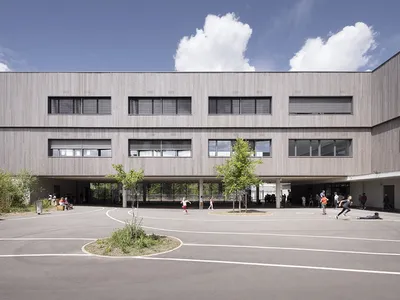
Vil Genis School by BPA ARCHITECTURE – Massy, France
Vil Genis School in Massy, France, features sustainable design, south-facing classrooms, community integration, accessible spaces, and modern educational architecture.
Explore Educational Building Competitions
Discover active competitions in this discipline



Challenge to design public laboratory


Challenge to reimagine the Iron Throne


Photograph architecture without architects


Illustrate the lost glory of Angkor Wat - Render Challenge
Comments (0)
Please login or sign up to add comments
No comments yet. Be the first to comment!