

Wiki World and Advanced Architecture Lab Fold a Cabin into a Metasequoia Forest Without Touching the Ground
A prefabricated timber cabin in Wuhan wraps dark metal volumes around preserved trees, courtyards, and dappled forest light.


Most cabins sit on the land. Playtime Cabin works around it. Designed by Wiki World and Advanced Architecture Lab as part of the Merryda Wiki World Secret Camp, the 80 m² structure occupies a metasequoia forest near Wuhan that serves as seasonal habitat for migratory birds. Every tree on the site was kept in place. No ground was hardened. Instead, the architects arranged angular, dark metal-clad volumes around a central courtyard, threading the building's footprint between existing trunks so that the forest reads as both context and co-inhabitant.
The concept reportedly grew out of children's shared imagination, part of Wiki World's ongoing "Wiki Building School" initiative that frames architecture as a collaborative, ecological act. What makes the project worth studying is not the sentiment but the execution: a prefabricated timber and metal assembly that maintains a genuinely light touch on a sensitive site while producing a spatially rich domestic interior. The cabin is compact, but its courtyards, split levels, and carefully placed openings generate an experience far larger than 80 square meters.
Dark Volumes in a Vertical Forest
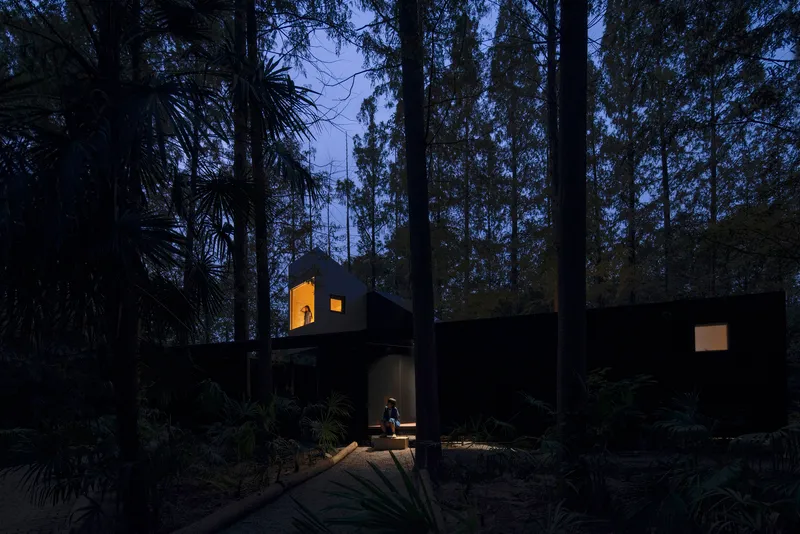
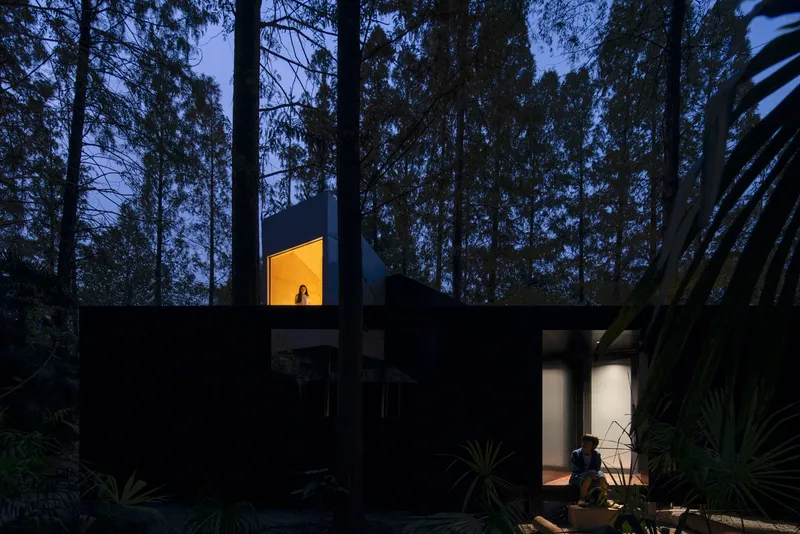
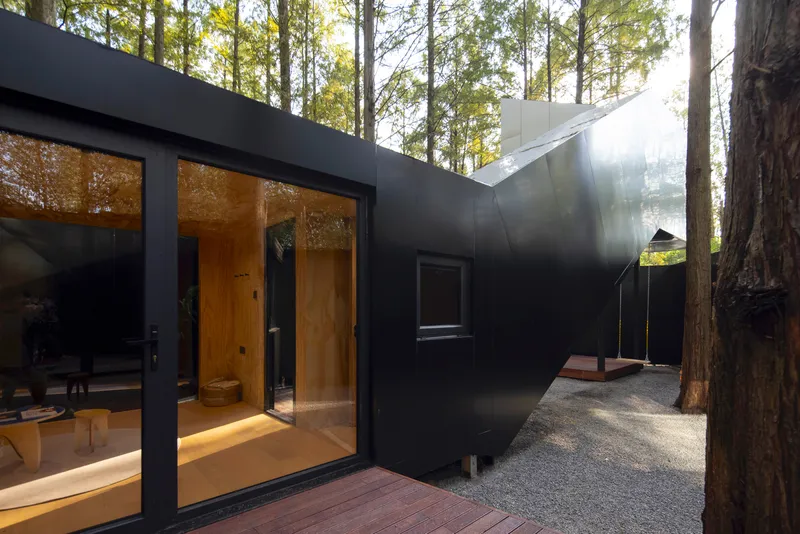
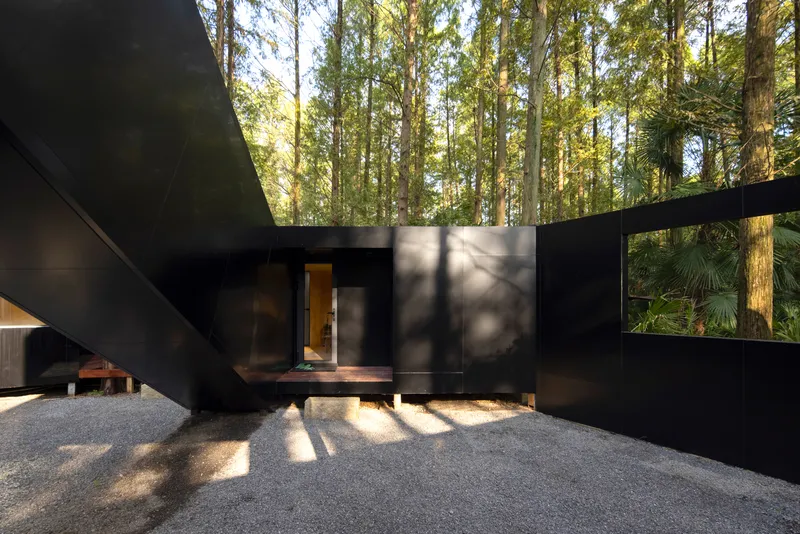
The exterior language is deliberately recessive. Corrugated black metal cladding absorbs into shadow under the canopy, making the cabin difficult to read as a single object and easy to miss from a distance. That is precisely the point. In a forest populated by over a dozen treehouses, the Secret Camp ethos demands that structures remain subordinate to the landscape rather than announcing themselves. The dark facades register as voids between tree trunks rather than walls, a trick that works especially well at dusk when illuminated openings glow against the metal skin.
Timber doors, decks, and threshold details provide warmth at the entry scale, softening the industrial severity of the cladding as visitors approach. The material contrast is legible but restrained: dark metal for weather protection and visual retreat, light timber for human contact points.
Courtyards as Organizing Logic
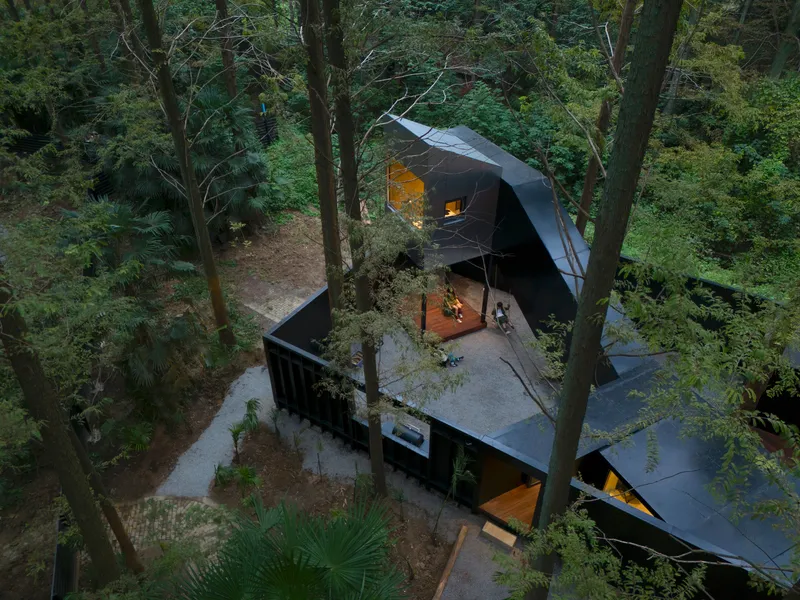
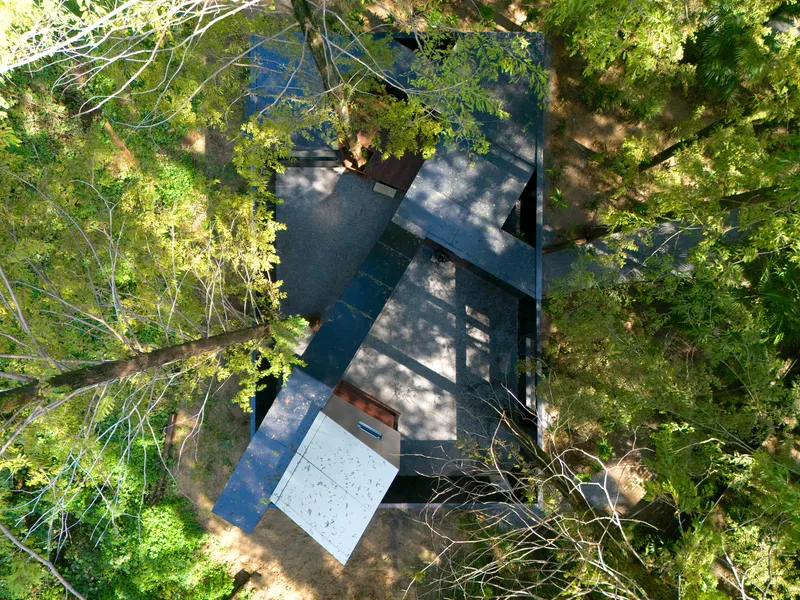
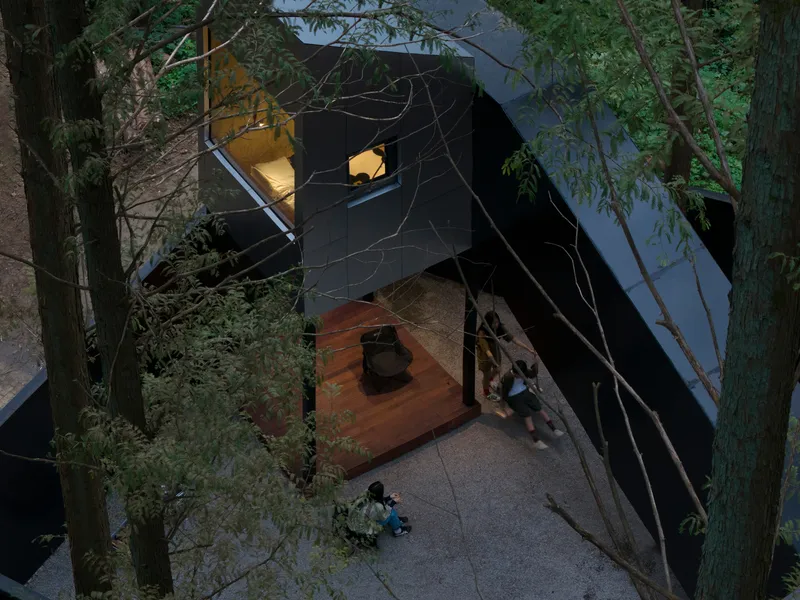
Seen from above, the plan's logic becomes clear. Angular roof volumes cluster around gravel courtyards, creating a pinwheel arrangement that captures trees within the cabin's perimeter rather than excluding them. The courtyards are not leftover spaces. They are the project's primary organizational device, separating living zones, introducing daylight from multiple directions, and giving every room a ground-level relationship to the forest floor.
A timber deck platform in the central courtyard functions as an outdoor living room. Two figures seated on the terrace at dusk give a sense of the cabin's social scale: intimate but not cramped, open but enclosed enough to feel protected. The gravel surfaces allow rainwater to percolate directly into the soil, another detail that supports the architects' claim of zero ground hardening.
Trees as Structure's Neighbors
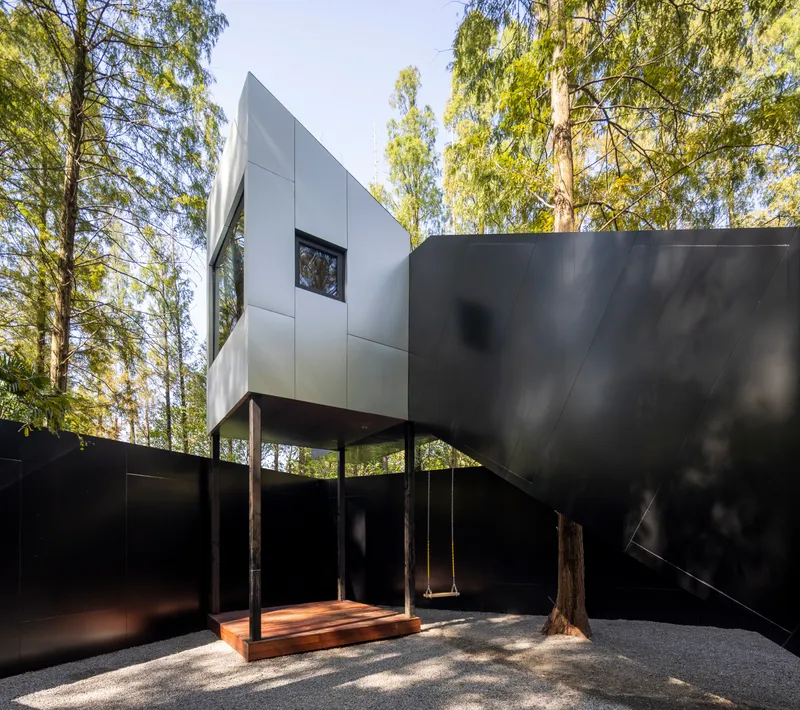
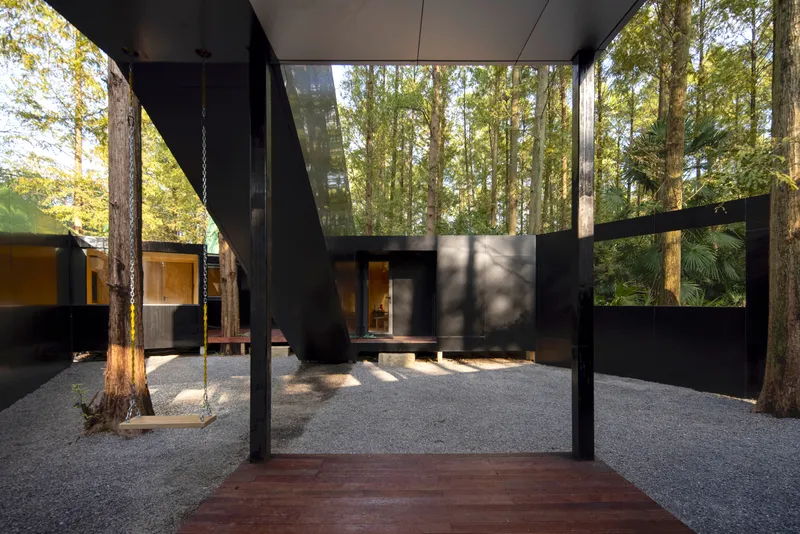
The most convincing moments in the project occur where architecture and tree trunks occupy the same frame at close range. A timber swing suspended between two trunks beneath a cantilevered white upper volume turns a structural concession into a playful amenity. Eucalyptus trunks rise through the courtyard, their bark textures pressed against the clean geometry of the gate and deck. These are not decorative gestures. They are evidence that the site plan genuinely adapted to existing root systems and canopy positions.
The entry sequence, a figure approaching through dappled morning sunlight toward a black metal volume with a timber door, demonstrates how the forest's atmospheric qualities become part of the architectural experience. Shadow patterns shift across the corrugated surfaces throughout the day, meaning the building's appearance is never quite the same twice.
Plywood Interiors and Filtered Light
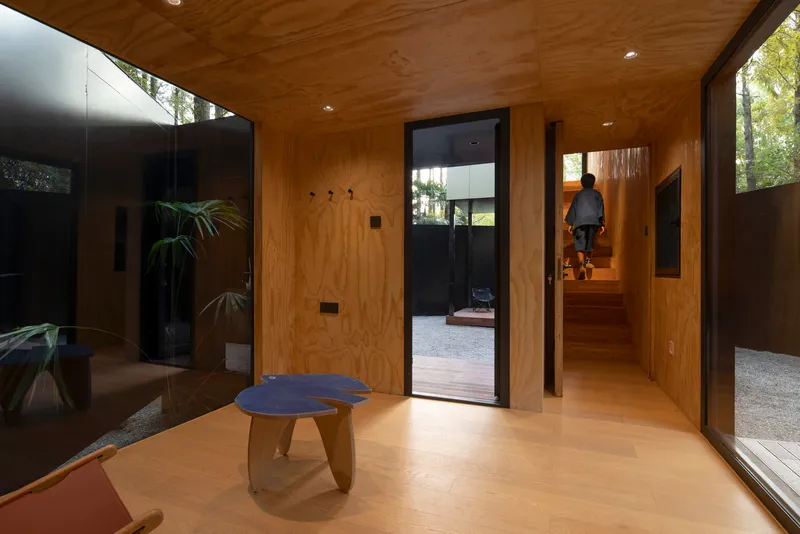
Inside, the palette flips. Where the exterior is dark and metallic, the interior is warm plywood throughout: walls, ceilings, corridors, and stair enclosures. The consistency of the material creates a shell-like quality, as though the cabin's rooms were carved from a single block of wood. A central plywood-clad room with glazed doors opening to courtyards on both sides serves as the spatial hinge, connecting the private and social zones while allowing cross-ventilation and borrowed daylight.
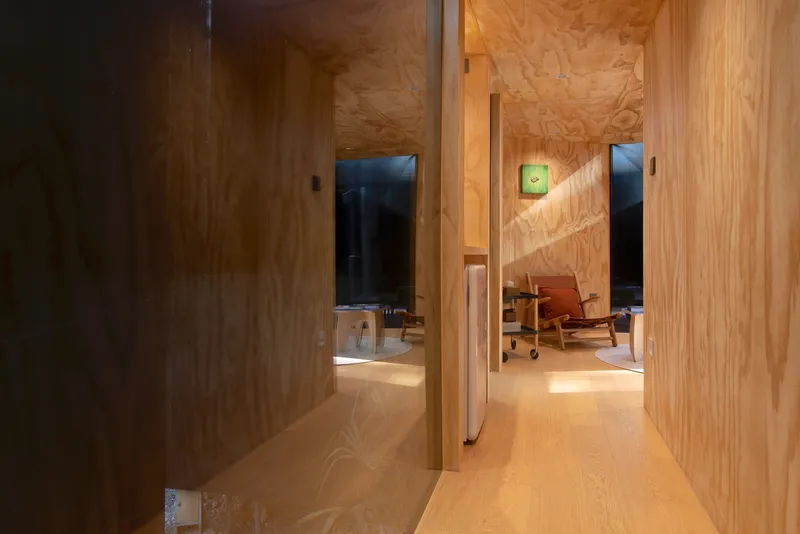
Corridors are tight but animated. Angled sunlight casts sharp shadows across plywood walls, and pivoting doors between rooms introduce a sense of discovery that a standard hallway plan would not deliver. The green clock on one wall is a minor detail, but it hints at a project that does not take itself too seriously, consistent with an origin story rooted in children's imagination.
Bedrooms Framed by Forest
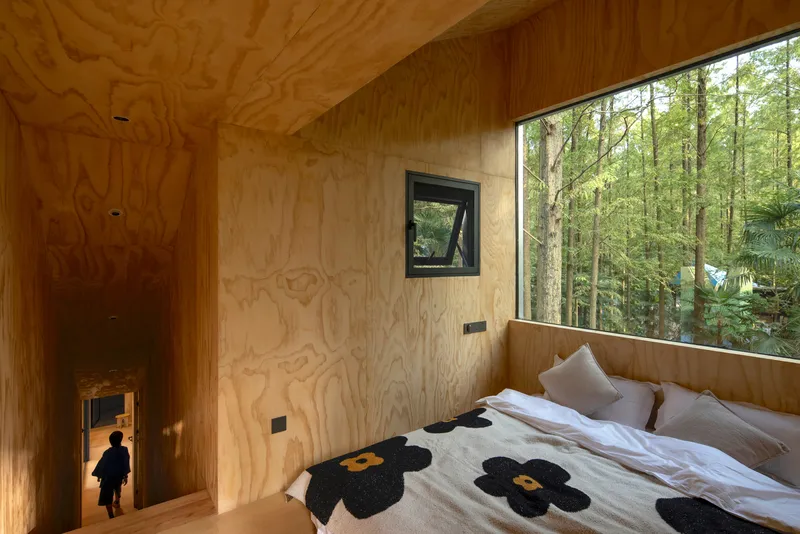
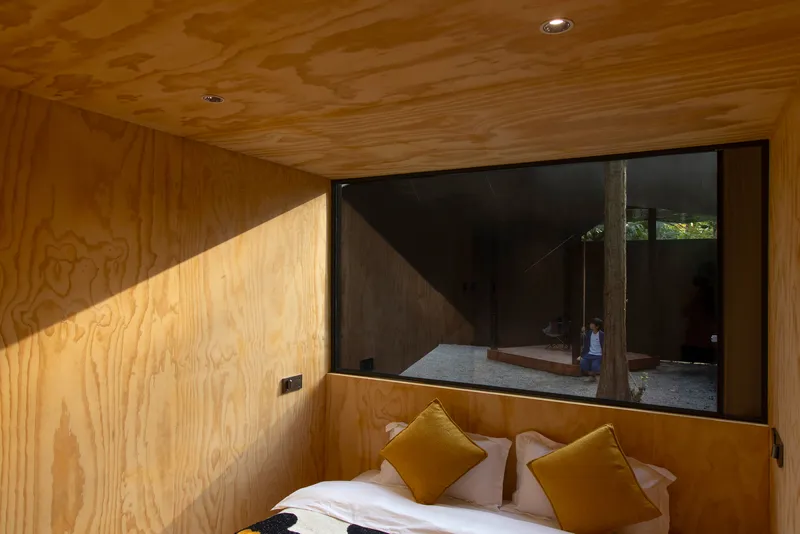
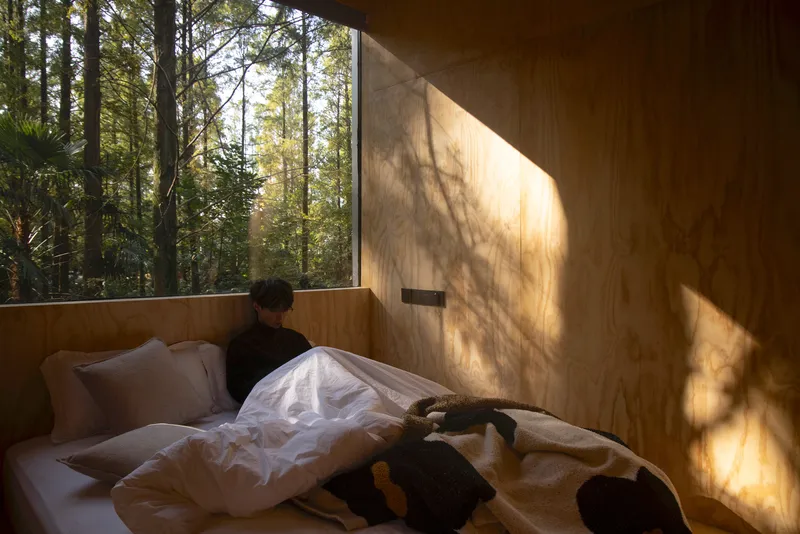
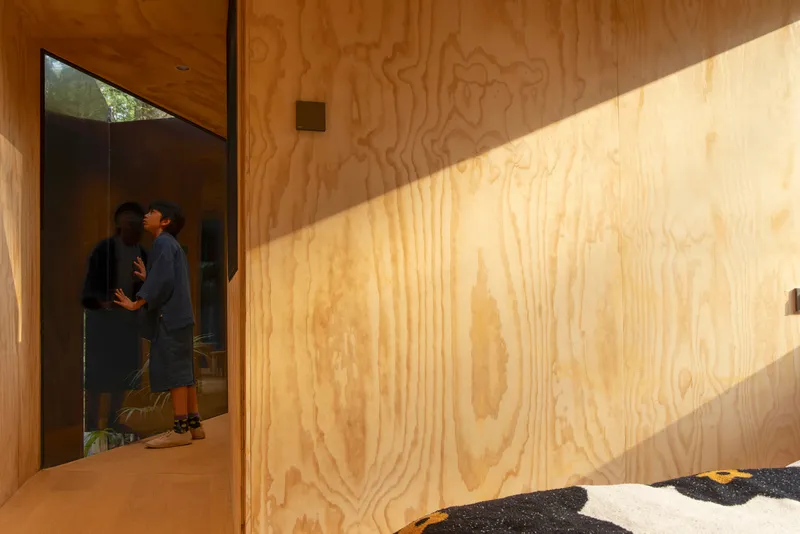
The bedrooms demonstrate a precise understanding of window placement. Each opening frames a specific condition: a ribbon window runs horizontally to capture a band of forest canopy, a large vertical pane looks onto the gravel courtyard, and a forest-facing window catches sunrise shadows that paint dappled patterns across the plywood wall beside the bed. None of these windows are floor-to-ceiling glass walls competing for drama. They are measured cuts that privilege specific views and specific times of day.
The staircase connecting levels doubles as a spatial event. A figure descending the stairs in one of the bedrooms reveals the split-level section, where sleeping areas sit slightly above or below the main living floor to differentiate zones without adding walls.
The Cantilevered Upper Volume
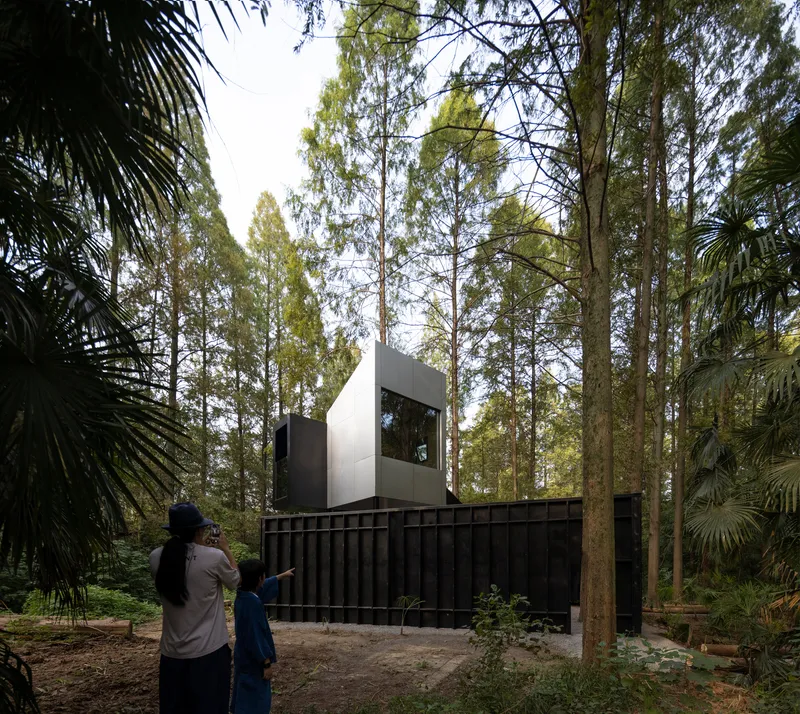
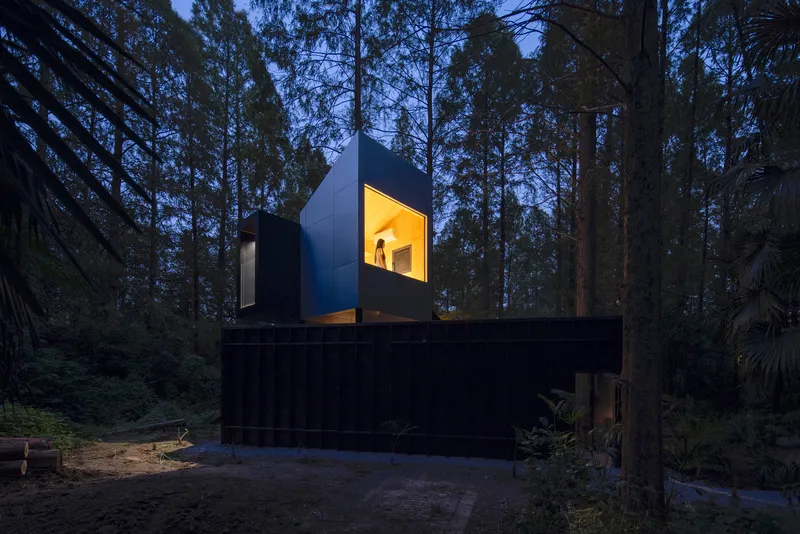
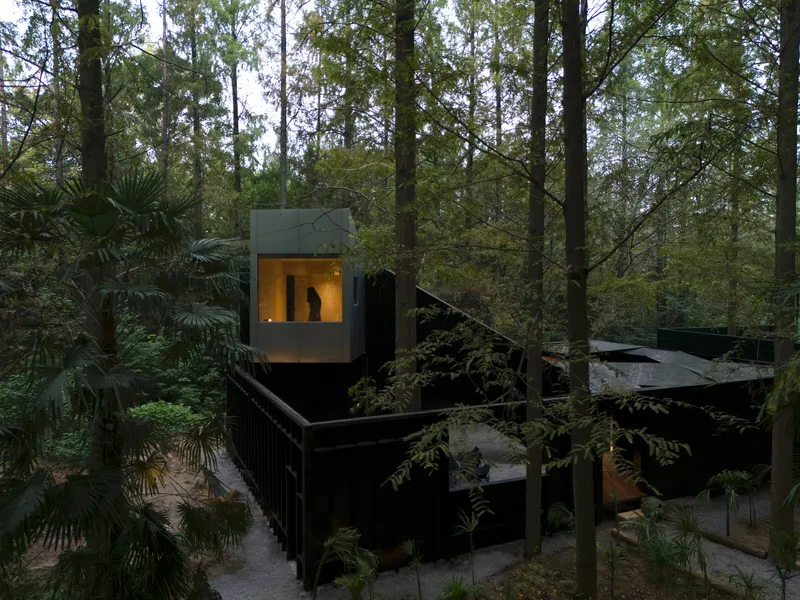
A white paneled upper storey cantilevers above the dark perimeter fence, creating the cabin's most striking compositional move. The material and color shift from black base to white crown is sharp, almost diagrammatic, as though the architects wanted to make the structural logic immediately legible. At night, the upper volume becomes a lantern, its illuminated window projecting a domestic silhouette into the canopy. The image of a lone figure backlit in the white box above the dark forest floor captures the cabin's essential proposition: a lightweight inhabitation hovering within, not imposed upon, the landscape.
Thresholds and In-Between Spaces
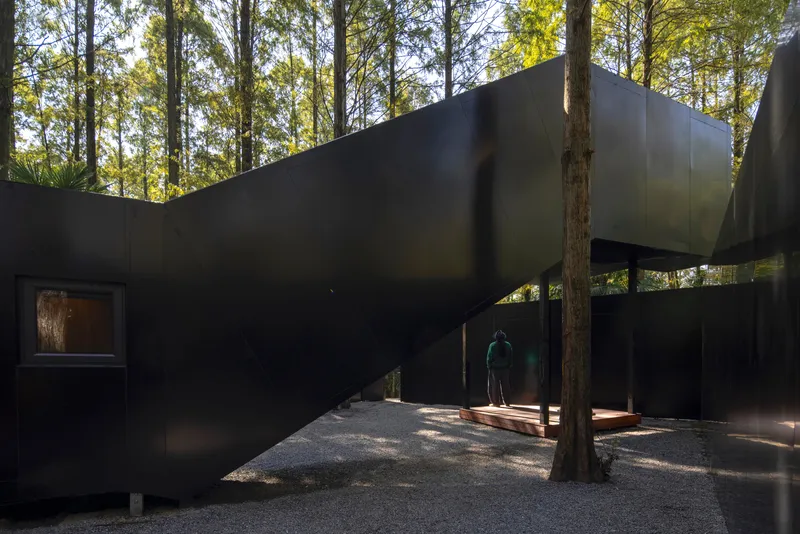
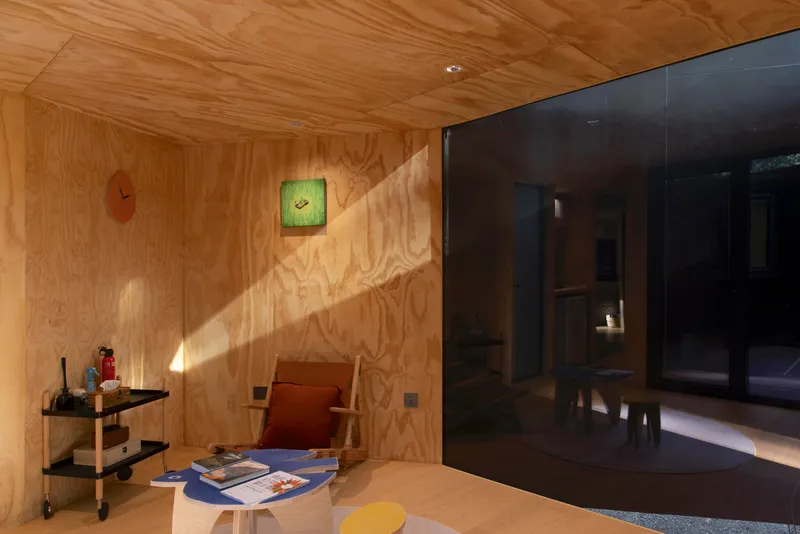
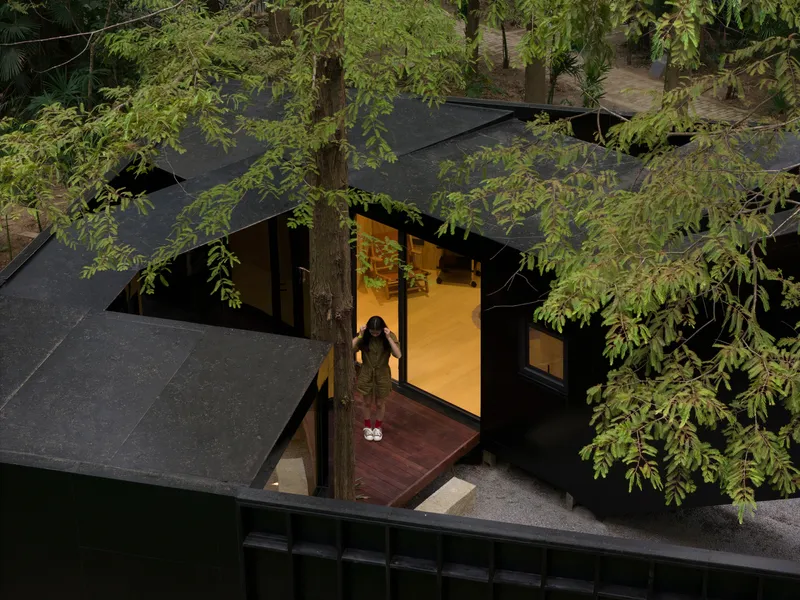
The covered walkway with its undulating black metal walls is one of the project's strongest spatial sequences. It is neither fully inside nor fully outside, a transitional zone where filtered afternoon light creates a third kind of space between cabin and forest. These threshold conditions appear throughout: glazed doors opening onto timber decks, overhead views of figures standing at the boundary between interior warmth and exterior ground, plywood rooms dissolving into courtyard views through full-height glass.
For an 80 m² cabin, the sheer number of these in-between conditions is remarkable. The architects have effectively multiplied the habitable area by blurring the line between enclosed room and sheltered outdoor space. The courtyards, decks, and covered passages are not appendages. They are rooms without roofs, and the building would not function without them.
Plans and Drawings
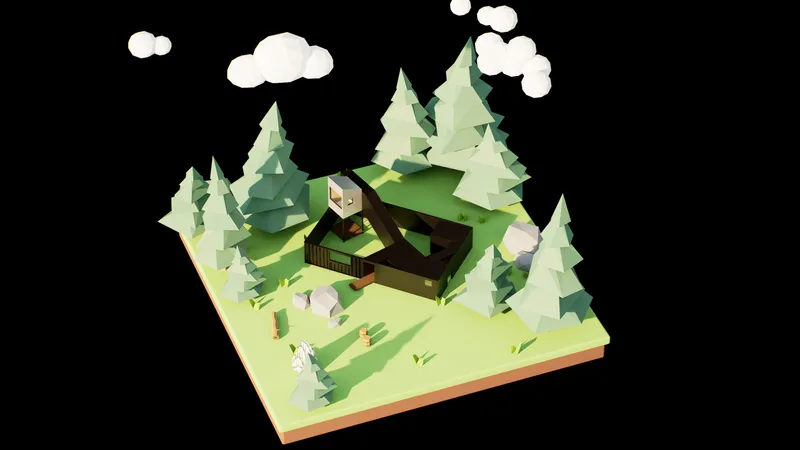
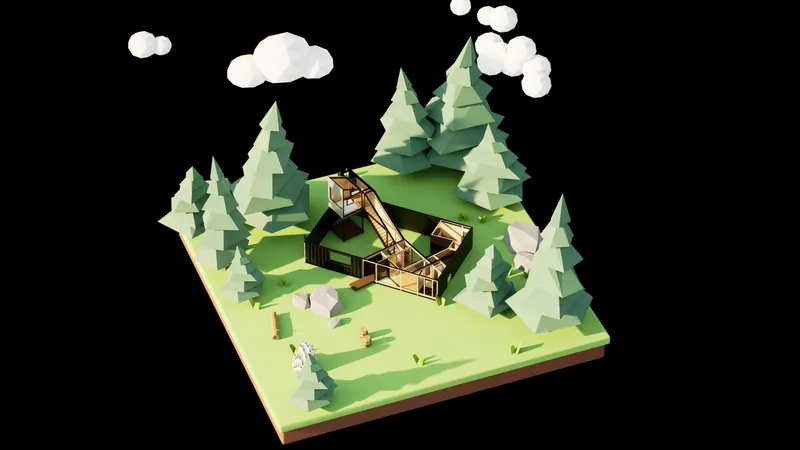
The isometric renderings clarify what the photographs sometimes obscure: the cabin is a cluster of discrete volumes connected by bridging stairs and covered passages, not a single continuous building. The exploded axonometric reveals the interior spatial sequence, from ground-level living areas through the bridging staircase to the elevated sleeping volume. A green roof sits atop the assembly, further reducing the building's visual presence from above.
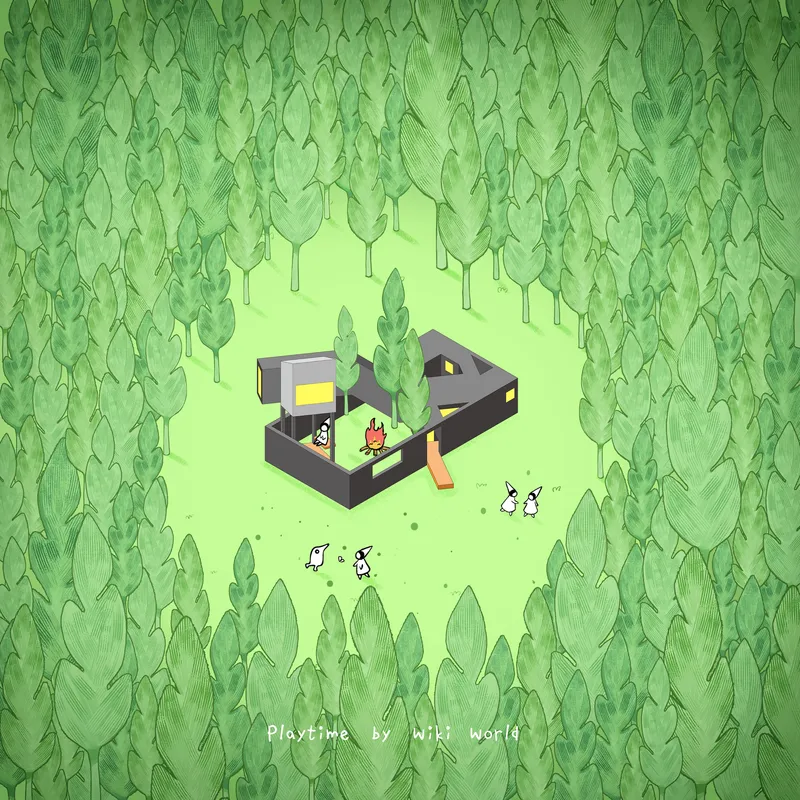
The aerial illustration of the broader Secret Camp, with clustered dark volumes gathered around a campfire and scattered wildlife figures, positions Playtime Cabin within a larger landscape strategy. Each cabin operates as an independent organism within the forest ecosystem, and the collective effect is closer to a village than a resort. The low-poly rendering style matches the project's ethos: playful, collaborative, and willing to treat architecture as a game with serious ecological stakes.
Why This Project Matters
Playtime Cabin joins a growing body of work that treats prefabrication not as a cost-saving shortcut but as an ecological tactic. By assembling components on-site without excavation or ground hardening, Wiki World and Advanced Architecture Lab demonstrate that lightweight construction can produce spatially complex results. The cabin's courtyard plan, split-level section, and calibrated window strategy deliver an experience that punches well above its 80 m² footprint, proving that small buildings can be architecturally ambitious without being environmentally reckless.
The project also makes a quiet argument about authorship. Born from children's imagination and realized through a collaborative "building school" framework, it challenges the conventional narrative of the architect as sole creative authority. Whether that collaborative origin genuinely shaped the final design or functions primarily as a pedagogical wrapper is open to debate. What is not debatable is the result: a cabin that disappears into its forest, shelters its inhabitants without displacing its non-human neighbors, and treats the ground as something borrowed rather than owned.
Playtime Cabin, designed by Wiki World and Advanced Architecture Lab, Wuhan, China. 80 m², completed 2026. Photography by Arch-Exist.
About the Studio
Wiki World and Advanced Architecture Lab
Share Your Own Work on uni.xyz
If projects like this are the kind of work you want to make, uni.xyz is a place to publish your own, find collaborators, and enter design competitions.


Popular Articles
Popular articles from the community


David Ortega Stacks a Two-Story Mexico City Penthouse Around a Steel Stair and a Pergola-Shaded Roof Terrace
In Colonia Roma, a 300 m² penthouse uses oak joinery, a planted steel stair and a slatted roof pergola to make a new-build apartment feel like a house.

Cube Design Draws an Ecological Corridor Between Two Shenzhen Hills with the Nankai Building
Beside Shenzhen's container docks, the Nankai Building pairs stacked balconies with a climbing green screen to connect two hillsides across its height.

Jaramillo Van Sluys Arquitectura and Urbanismo Turn a Demolished Registry Lot in Quito into an Orchard Plaza
In Quito's Centro Histórico, a 2,800 m² plaza exposes the San Agustín convent wall and redraws its lost Augustinian orchard in volcanic stone.

longwave studio Reorganizes a 112 m² Tainan Apartment Around the Daily Routines of a Family and Two Cats
In Tainan, Taiwan, birch plywood, rust-red furniture and a freestanding plaster wall link arrival, storage, work and family life in one apartment.

Similar Reads
You might also enjoy these articles


LAVA Architecten Gives Vocational Education a Sawtooth-Roofed Face on a Mechelen School Campus
In Mechelen, Belgium, a 2,053 m² STEM school on a 6×6 m grid turns workshops and classrooms into rooms that can be rearranged as teaching changes.

KEMA Studio Turns a Derelict Marvila Attic into a 60 m² Lighthouse Apartment Above Lisbon
In Lisbon's Marvila district, a rebuilt roof, four skylights and two plywood volumes turn an unlivable attic into a bright home facing the Tagus.

Pixel Gardens: One Repeated Module Stacked Into a Terraced Social Housing Tower for Famagusta
Salem Bader's shortlisted housing tower builds a vertical neighbourhood from one repeated module, offsetting units to carve terraces, light and air.

Bao Huynh Watercolor Atelier: A Serene Art Retreat in Hội An
Bao Huynh Watercolor Atelier in Hội An blends multifunctional art spaces, sustainable design, local materials, and family-friendly living in a serene environment.

Explore Wood Construction Competitions
Discover active competitions in this discipline

Challenge to design public laboratory

Challenge to design mud housing for contemporary communities
Comments (0)
Please login or sign up to add comments
No comments yet. Be the first to comment!