
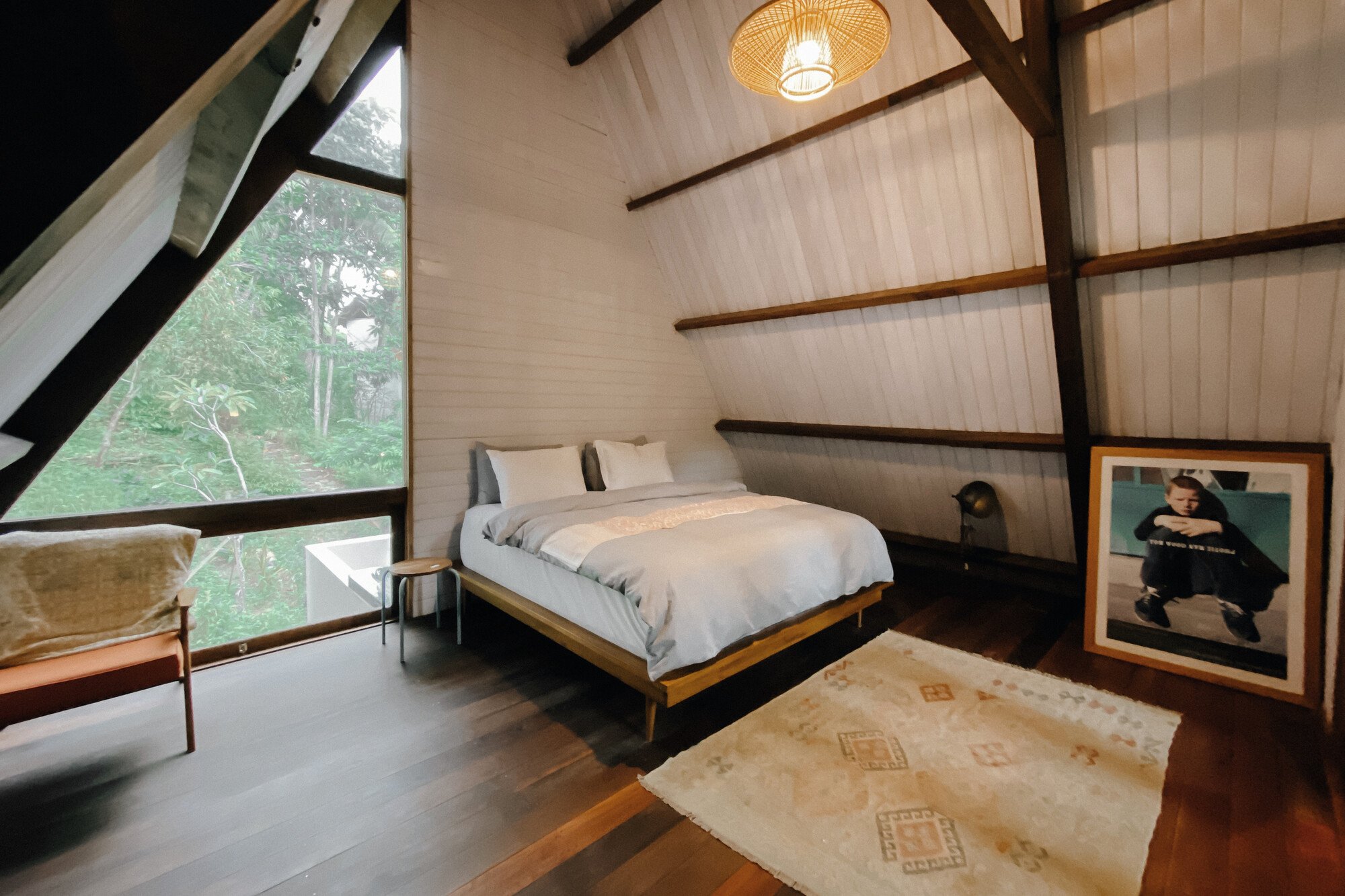
Wiyoga Nurdiansyah Builds an Earthquake-Resilient A-Frame in Lombok's Jungle
RL House is a prefabricated timber dwelling on stilts, designed after the 2018 earthquake to withstand Lombok's seismic and monsoon forces.

In 2018, a series of earthquakes devastated Lombok, Indonesia, leveling concrete homes and displacing tens of thousands of people. What survived, almost stubbornly, were wooden structures. Wiyoga Nurdiansyah took this observation and turned it into the founding logic of RL House, a 120 m² timber A-frame raised on stilts in the jungle of Sandubaya. The project is not nostalgic. It is a direct, material response to the fact that reinforced concrete failed where wood flexed, absorbed, and held.
What makes RL House genuinely interesting is the collision of pragmatism and ambition in its making. The entire structural frame was prefabricated in Tomohon city, transported to the site, and assembled in place on sloping terrain. The A-frame is not a stylistic choice borrowed from Scandinavian cabin culture; it references traditional North Sumatran wooden dwellings and does real climatic work in a region defined by volcanic activity, monsoons, and seismic risk. Every design decision, from the slatted floors to the stilts to the steep roof pitch, is calibrated to a specific threat.
A Frame Born from Disaster
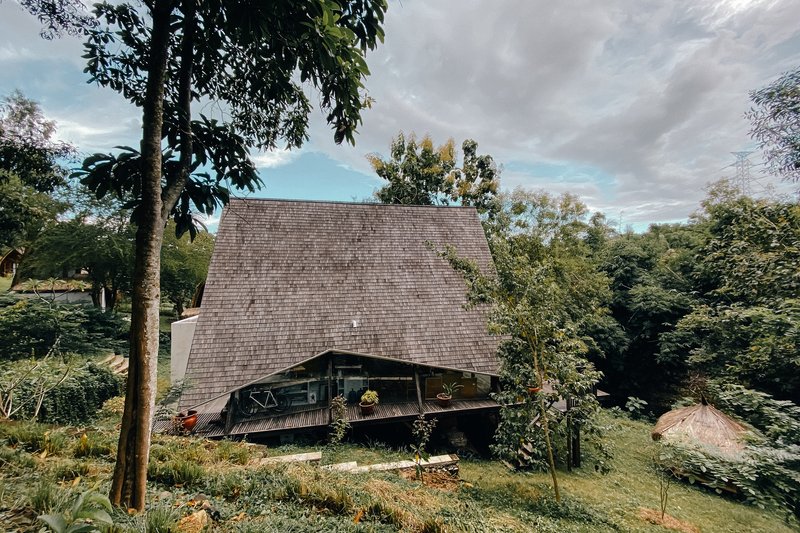
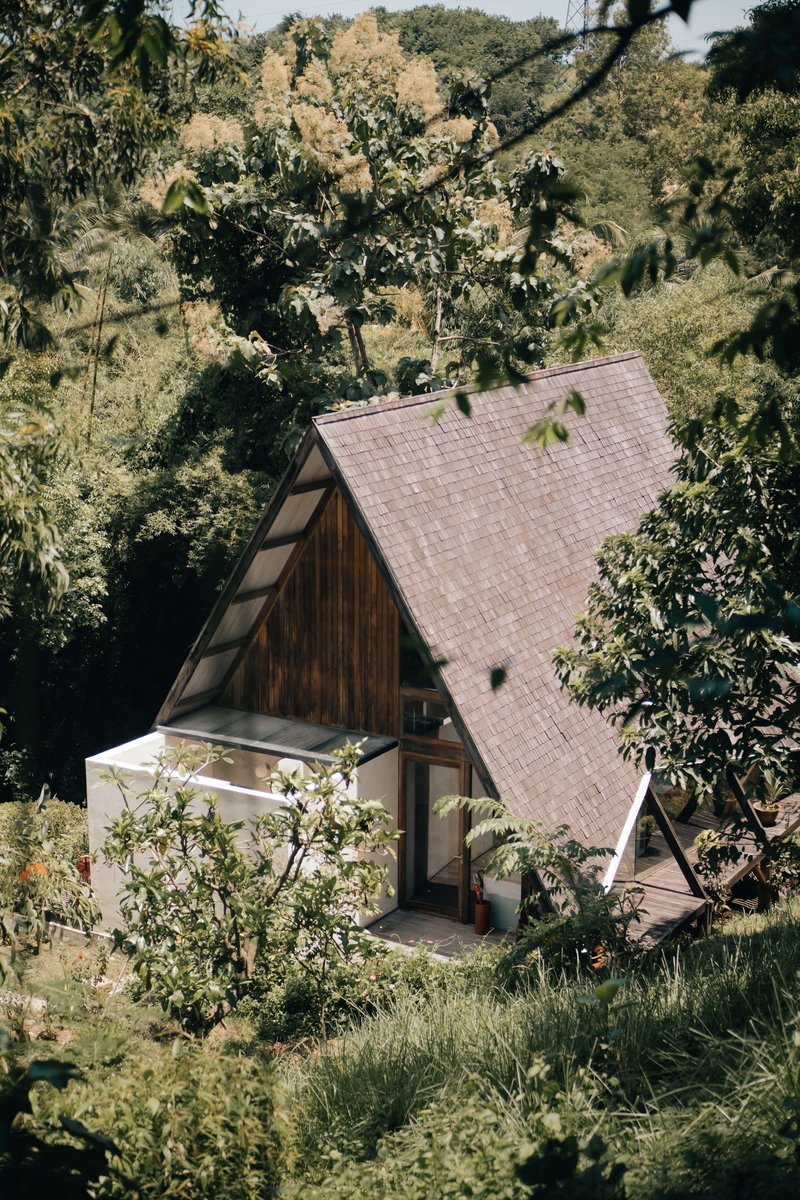
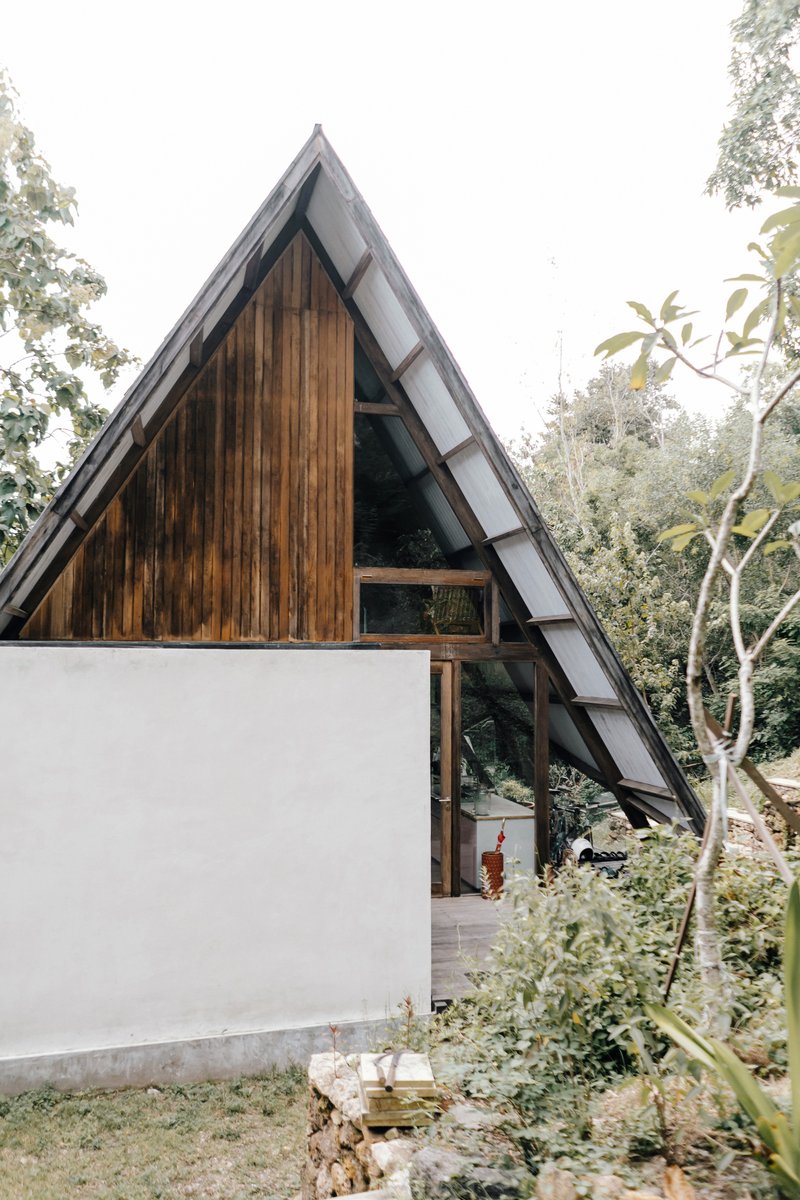
The A-frame geometry is immediately legible from every angle: a steep triangular profile wrapped in dark tile roofing and vertical timber cladding, its gable end rising sharply from a white masonry base wall. Seen from the surrounding jungle, the house reads as a single, decisive geometric form punched into the canopy. The steep pitch is not arbitrary. It sheds monsoon rainfall efficiently, reduces wind uplift, and creates an interior volume that channels hot air upward and out.
The choice to raise the structure on stilts addresses two conditions at once. On sloping terrain, the stilts level the building without excavation. More critically, they allow air to circulate beneath the dwelling, cooling the floor plane and keeping the timber structure dry. For a house built in response to seismic destruction, this lightness of touch on the ground is both structural strategy and ethical statement: build gently on unstable land.
Timber Structure as Seismic Logic
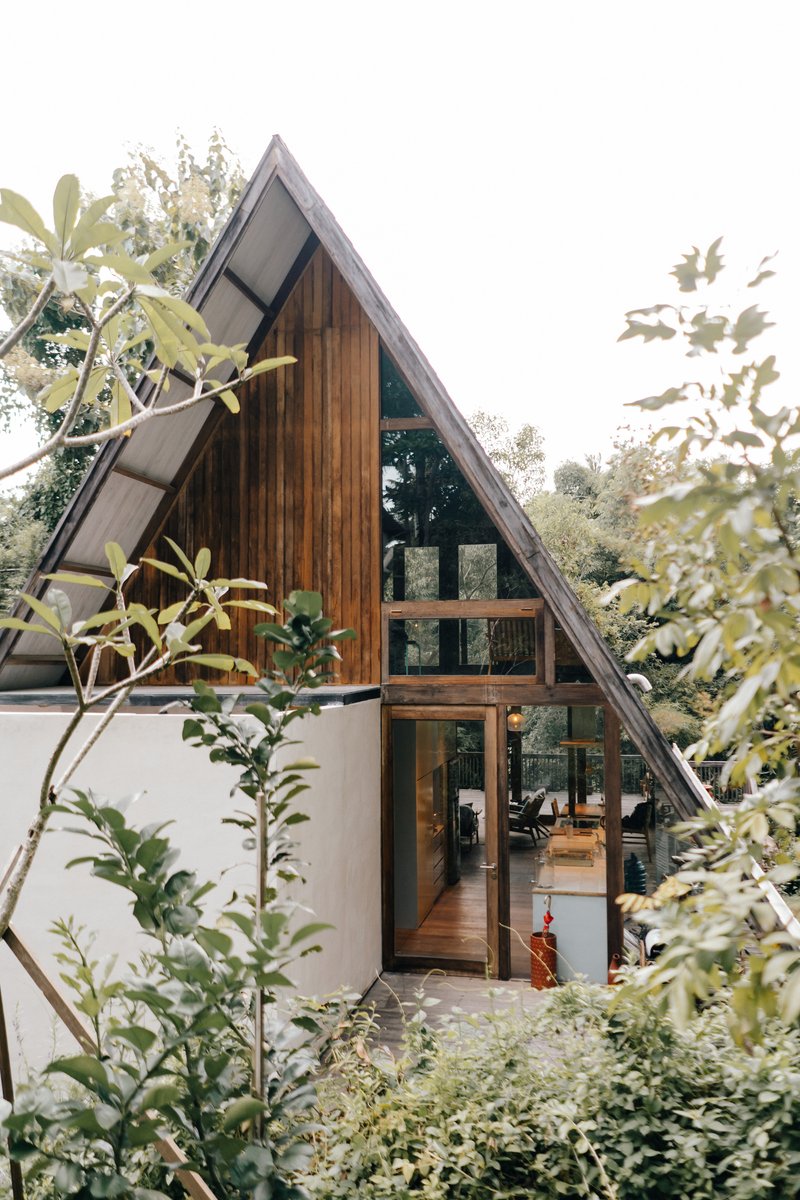
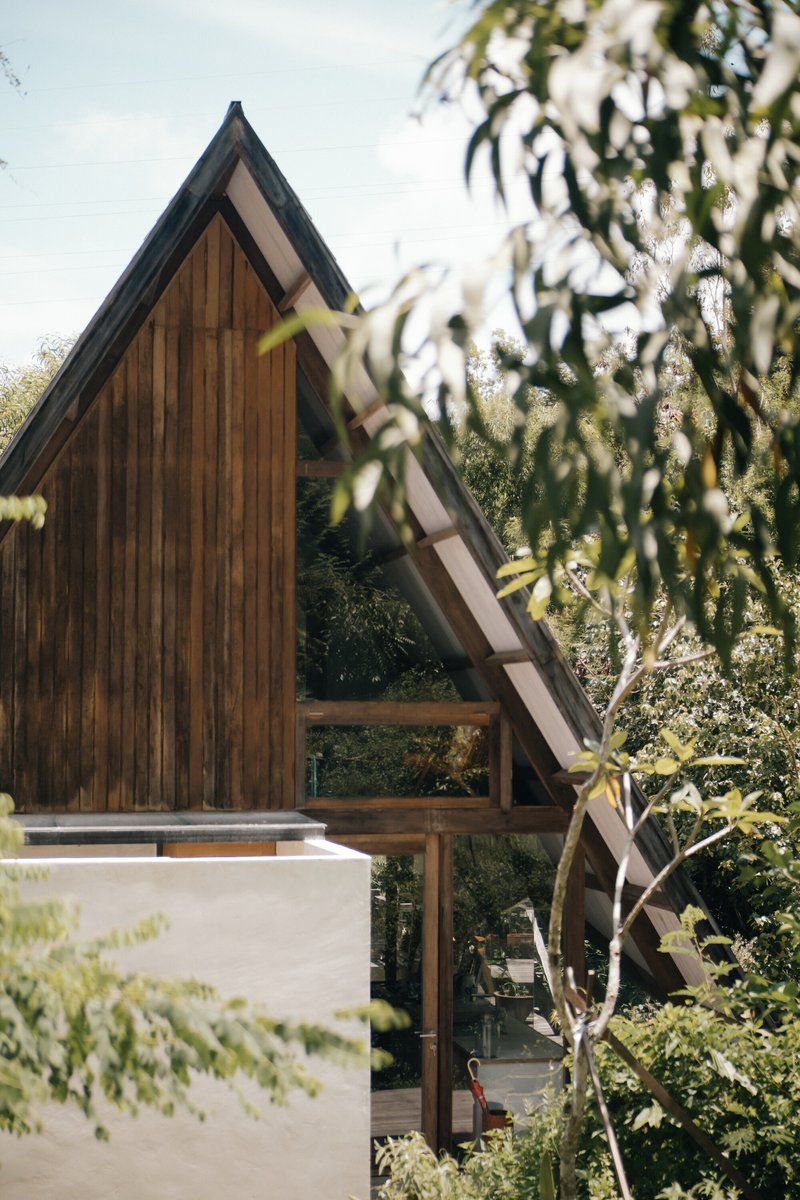
The facade is composed of vertical timber cladding panels that meet full-height glazing at the gable ends, creating a building that is simultaneously enclosed and transparent. The white rendered base wall at ground level serves as a visual anchor, grounding the lighter timber frame above. This material hierarchy, stone-like solidity below, flexible timber above, mirrors the structural strategy: mass where the building meets the earth, flexibility where it absorbs lateral force.
Prefabricating the frame in Tomohon and shipping it to Lombok was a logistical decision, but it also speaks to a broader idea about post-disaster construction. Speed matters. Precision matters. The ability to control quality off-site and then assemble rapidly in a challenging jungle location is a model that deserves more attention in regions where rebuilding must happen quickly and reliably.
Living Under the Roof
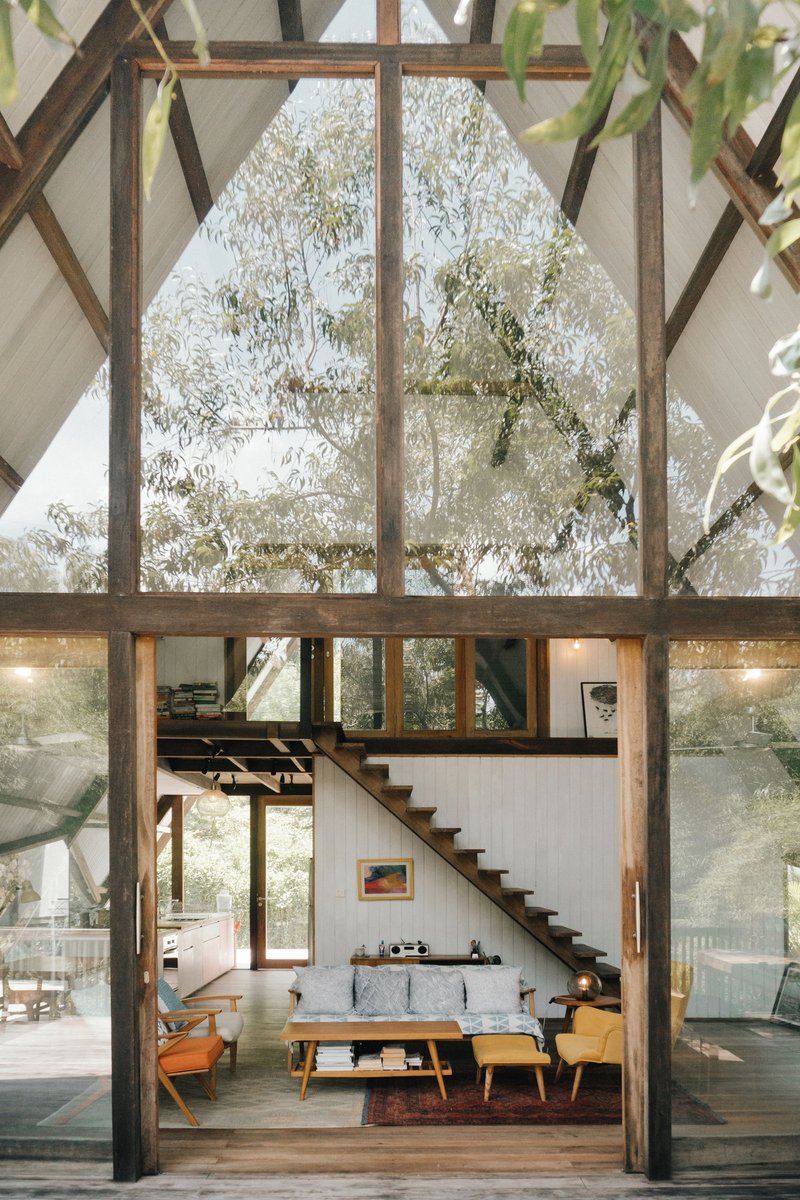
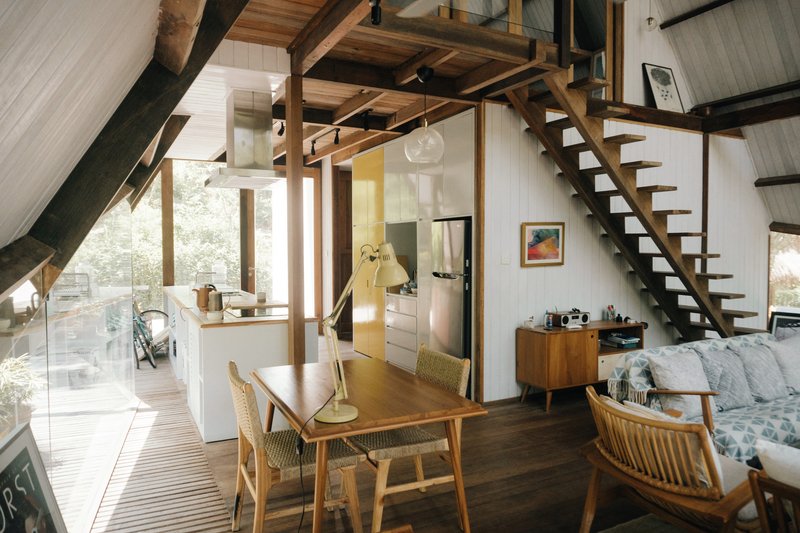
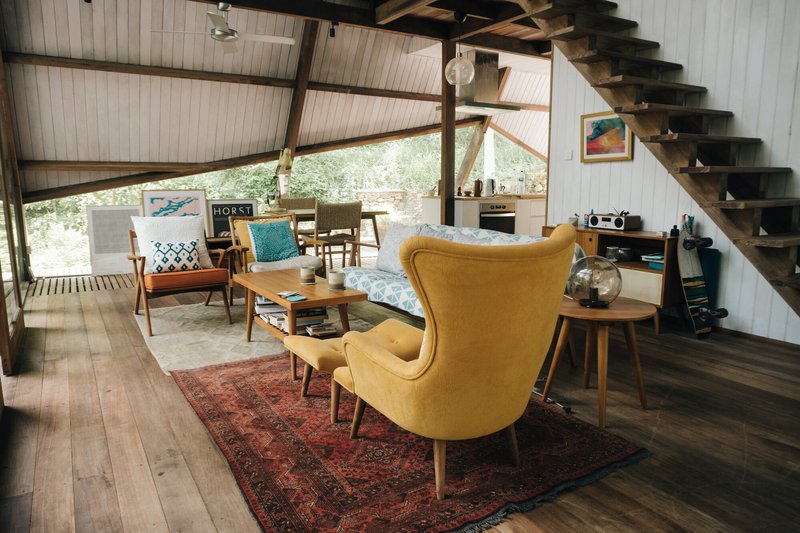
Inside, the A-frame's geometry dominates. The double-height living area exposes the full timber frame: diagonal bracing, ridge beams, and purlins are all left visible, turning structure into ornament without any pretense. A frosted gable window at the apex fills the space with diffused light, while an open timber staircase threads between floors. The effect is simultaneously lofty and intimate, the steep walls pressing inward even as the ridge line soars overhead.
The ground floor is organized as a continuous social zone: kitchen, living room, and dining area flow into one another beneath pendant lights and exposed beams. The patterned rug and timber flooring soften the raw structural character. There is a warmth here that comes from the material itself. Untreated timber ages, darkens, and carries the humidity of the jungle in its grain. The house does not resist its environment; it absorbs it.
Kitchen and Domestic Core
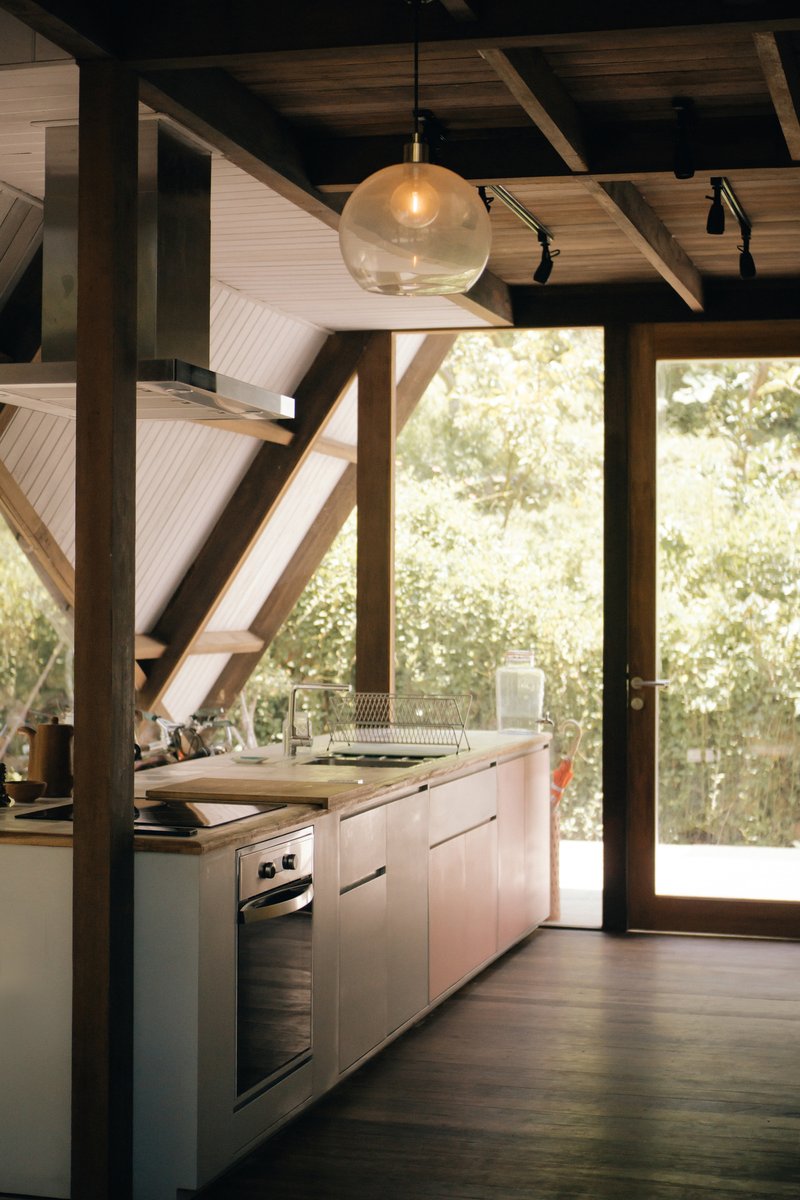
The kitchen island, finished in white cabinetry, introduces a clean counterpoint to the overwhelming presence of timber. A glass pendant fixture hangs from the exposed beams, and the view through to the garden keeps the cooking space connected to the exterior. It is a deliberately modest arrangement, functional and uncluttered, suited to the scale of a 120 m² house that does not try to be larger than it is.
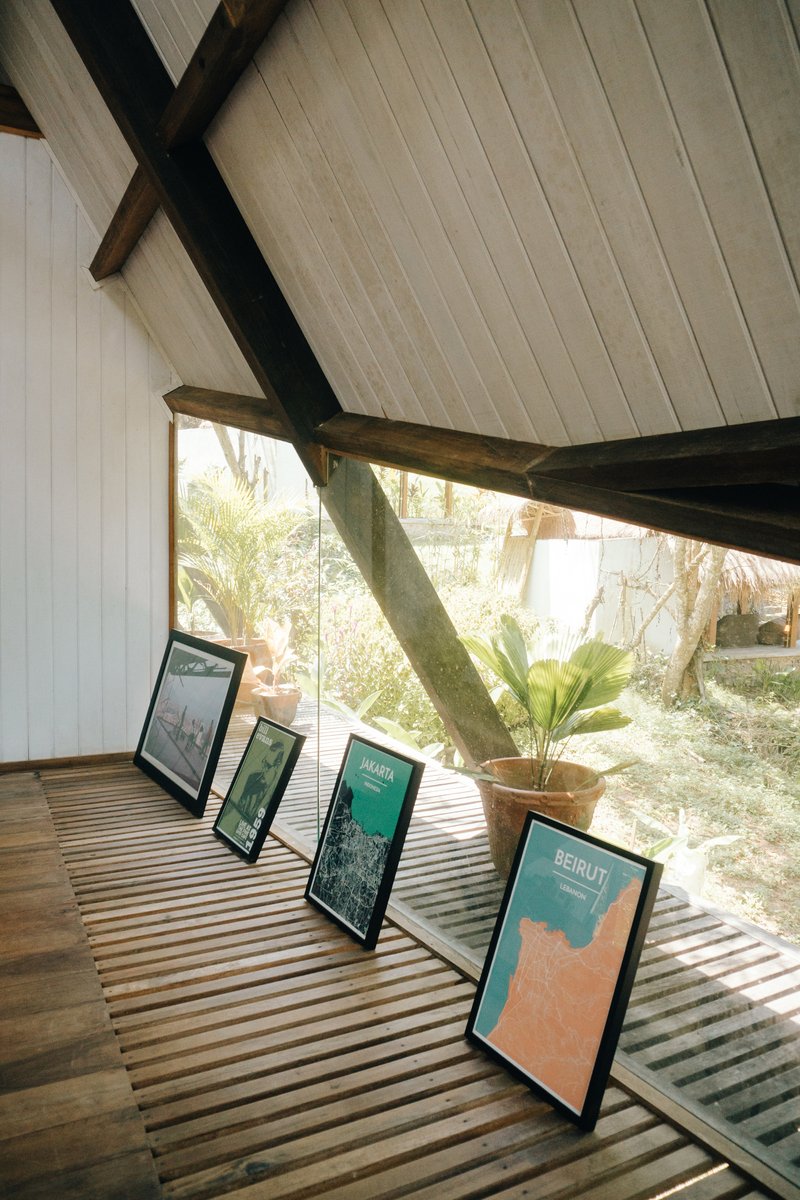
The slatted timber floors are visible throughout, and a detail worth pausing on: the gaps between slats allow hot air to rise through the floor plane, pulling cooler air from beneath the stilted structure upward through the rooms. Framed posters lean casually against angled beams on these floors, a reminder that this is a home, not a showcase. The passive cooling strategy is embedded in the everyday texture of the building.
The Sheltered Threshold
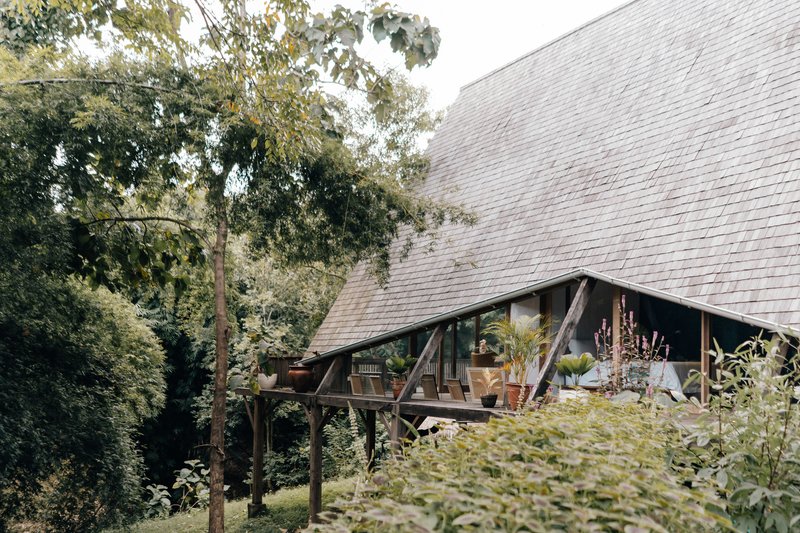
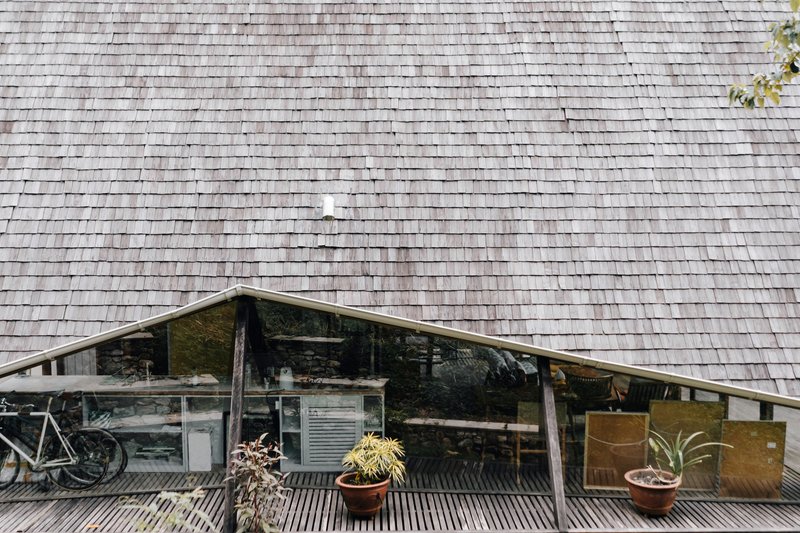
The covered terrace and recessed deck are perhaps the most lived-in spaces of RL House. Exposed timber posts support the overhanging roof, creating a sheltered zone that mediates between interior and jungle. Potted plants line the edges, and horizontal slat flooring extends the material language of the interior outward. One side of the roof is pitched slightly differently to maximize this outdoor connection, a subtle asymmetry in an otherwise rigorous form.
These thresholds matter in tropical architecture. The terrace is where daily life migrates during dry weather: cooking, socializing, simply sitting. The weathered wooden shingles visible on parts of the roof canopy overhead suggest that the building is already aging gracefully, its surfaces accumulating the patina of Lombok's climate rather than fighting it.
Sleeping in the Canopy
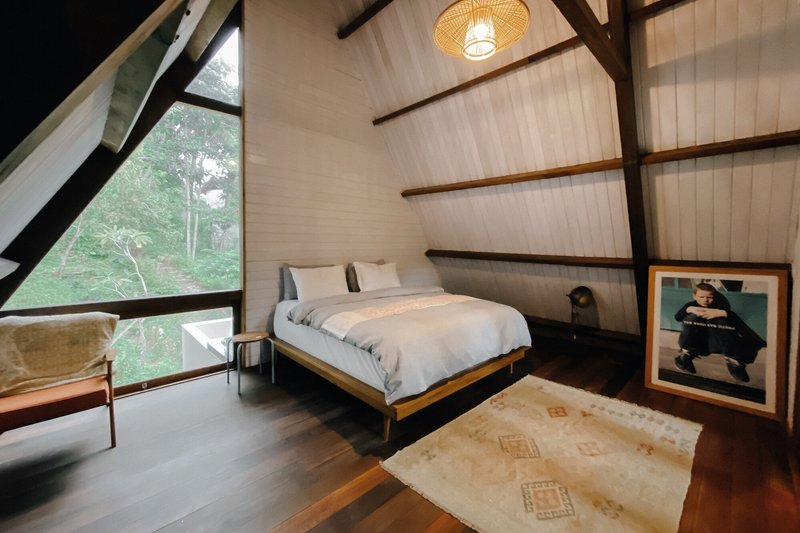
Upstairs, accessed by the open timber stair, the bedrooms are tucked into the narrowing geometry of the A-frame. Dark timber rafters converge overhead, framing a triangular window that opens directly onto the dense green canopy. The experience is immersive: you sleep inside a wooden hull surrounded by forest. It is the kind of spatial compression that makes A-frames compelling when they are placed in landscape rather than in a suburban development.
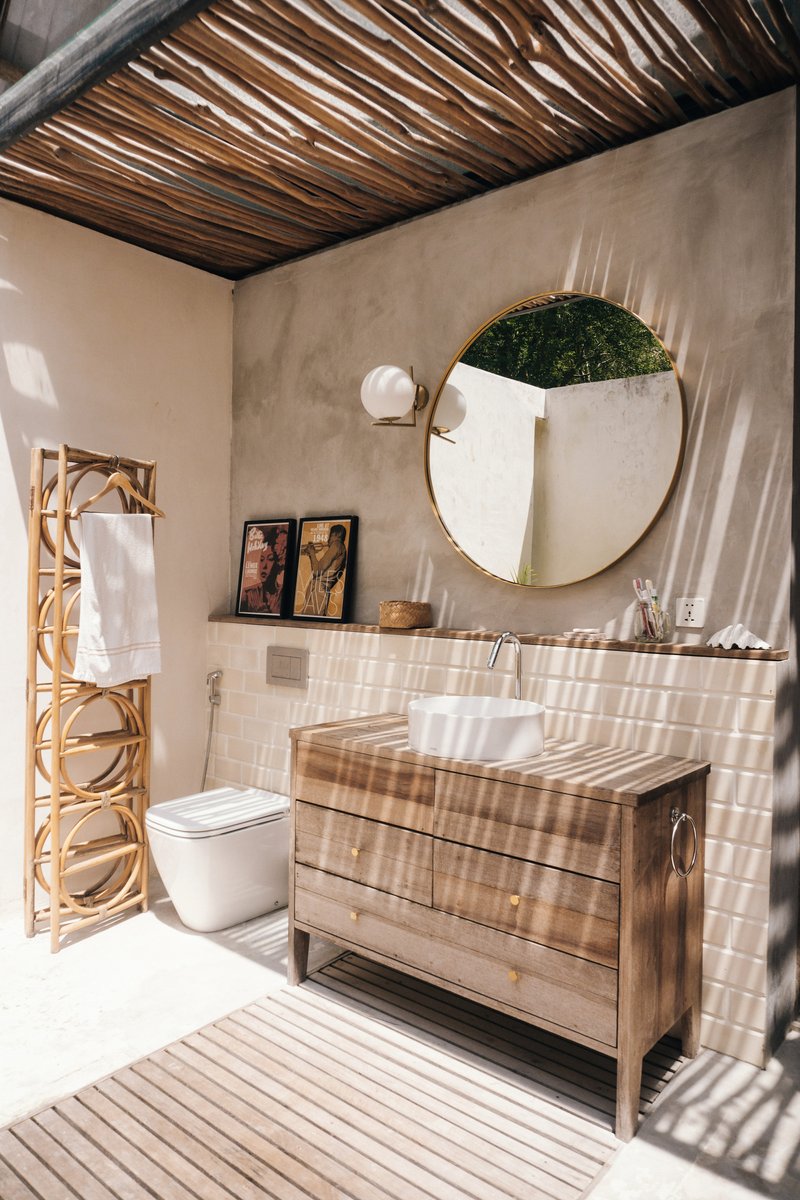
The bathroom, with its striped timber slat ceiling, casts rhythmic shadow patterns across plaster walls and tiled floor. Light filters through the gaps between slats, creating a quality of illumination that shifts with the sun's angle throughout the day. It is a small space, treated with the same material intelligence as the rest of the house. Nothing is incidental.
Plans and Drawings
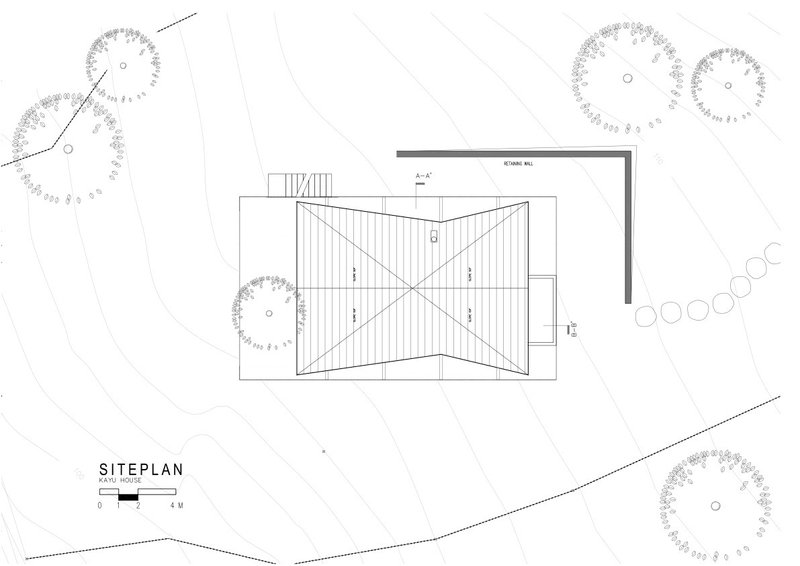
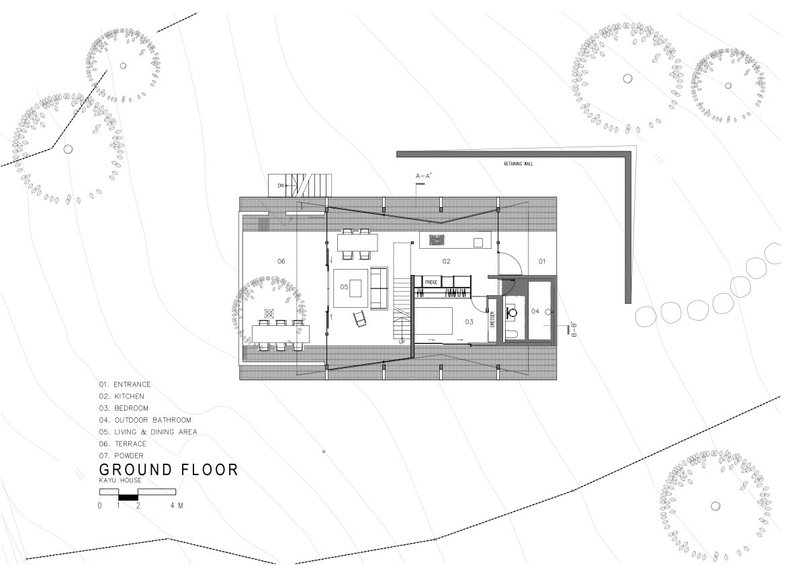
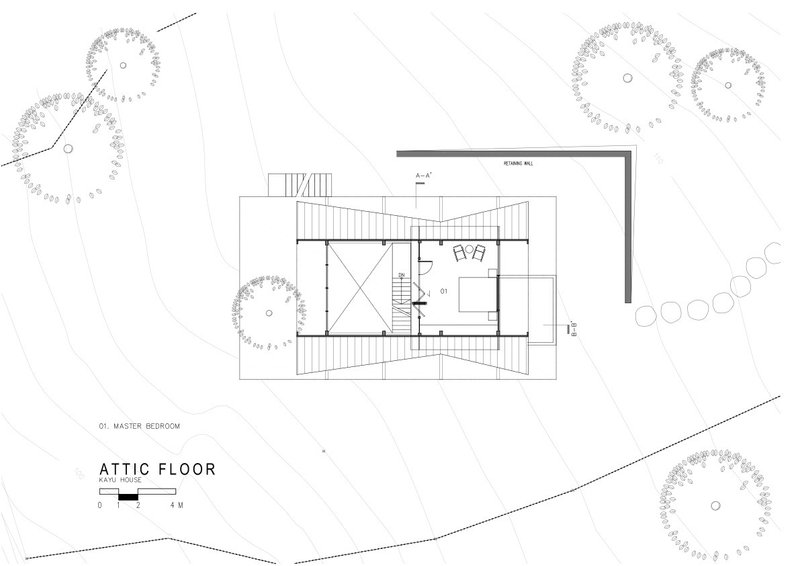
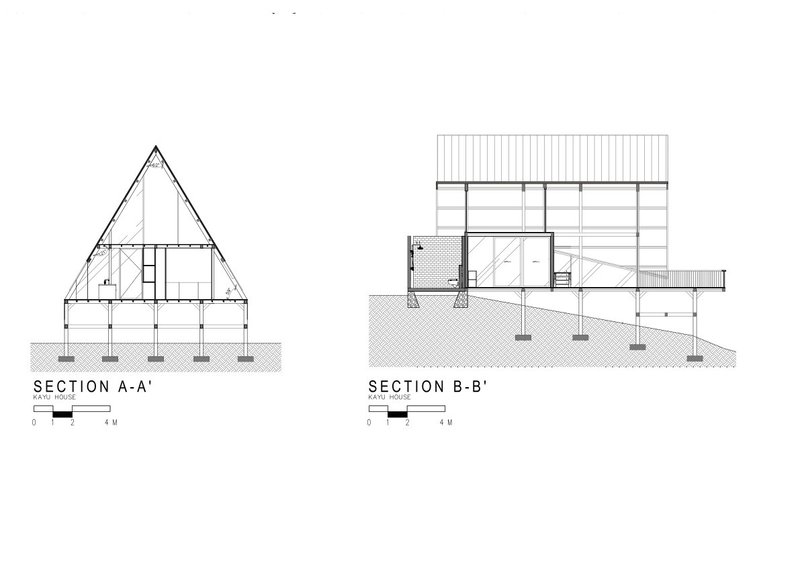
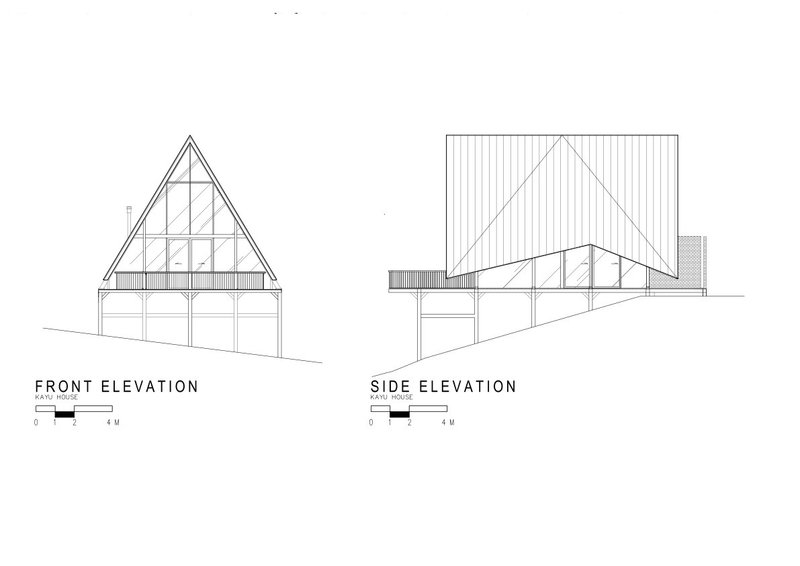
The site plan reveals the house's relationship to topographic contours and surrounding tree cover, confirming that the building was placed with minimal site disturbance. The ground floor plan shows the open living, kitchen, and covered deck wrapping around the A-frame volume, while the attic plan illustrates how the upper bedroom is carved from the steep roof geometry. The section drawings are the most revealing: the triangular profile stacks two levels on sloping terrain, with the stilted base clearly legible beneath.
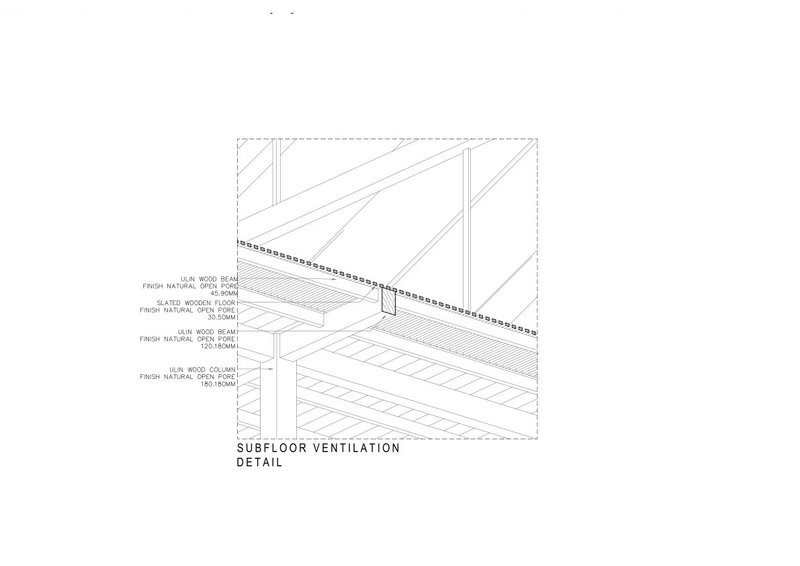
The axonometric detail of the subfloor ventilation system is a rare piece of documentation. It illustrates the timber beams and floor joists that create the air gap beneath the slatted floors, making the passive cooling strategy legible as an engineered system rather than a vague intention. Combined with water recycling and composting systems, the house operates as a self-conscious exercise in sustainable, passive design, one that does not rely on imported technology but on the intelligence of the assembly itself.
Why This Project Matters
RL House is a small building with a sharp argument. It proposes that post-disaster reconstruction in seismically active, tropical regions should look to timber, prefabrication, and passive climate strategies rather than defaulting to reinforced concrete. The 2018 Lombok earthquake provided the evidence; Wiyoga Nurdiansyah provided the synthesis. The A-frame is not a novelty here. It is a structural diagram made habitable, every angle and gap tuned to earthquake resistance, monsoon drainage, and natural ventilation.
In a global context where architects frequently invoke resilience and sustainability as abstract principles, RL House is specific. It names the threat. It identifies the material that survived. It builds accordingly. The result is a 120 m² house in the jungle that feels inevitable rather than designed, which is, of course, the hardest thing to design.
RL House by Wiyoga Nurdiansyah, Sandubaya, Lombok, Indonesia. 120 m², completed 2019. Photography by Muhammad.
About the Studio
Share Your Own Work on uni.xyz
If projects like this are the kind of work you want to make, uni.xyz is a place to publish your own, find collaborators, and enter design competitions.




Popular Articles
Popular articles from the community

Flow: Spatializing Well-being Through Intersecting Layers
Transforming the inner depth of wellness into a spatial reality.

WUWU Atelier and ADINJU Rebuild an Ancestral Home in Guangdong with Quiet Brick Precision
In rural Heyuan, a 440-square-meter renovation trades spectacle for craft, turning local brick into an architecture of restrained belonging.
Prokop Hartl Turns a 1930s Prague Corner Apartment into a Lesson in Structural Honesty
A 115 m² renovation on the Vltava River celebrates exposed concrete, restored parquet, and a mirrored column as its centerpiece.
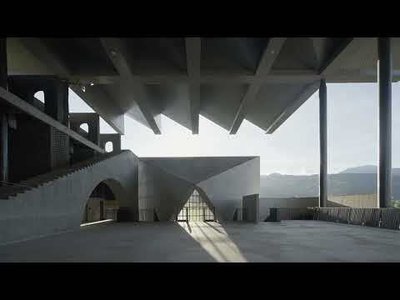
Tanghua Architects and Associates Build a Documentary Film Museum from Folded Concrete in Xichang
A museum dedicated to documentary cinema uses raw concrete planes and circular apertures to frame China's Anning River Valley.


Similar Reads
You might also enjoy these articles

20 Most Popular Office Building Projects of 2025
From biophilic workspaces in India to net-positive energy offices in New Delhi, 20 office building projects that defined architecture in 2025.
20 Most Popular Furniture Design Projects of 2025
Modular street systems, parametric benches, and insect hotels: the furniture design projects that captivated architects on uni.xyz in 2025.

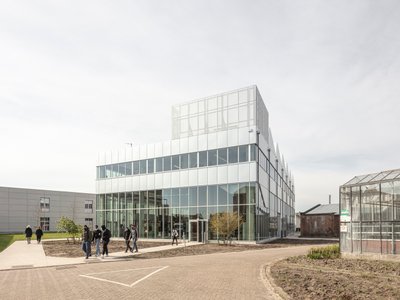
STEM School Mechelen by LAVA Architecten: A Future-Ready Educational Architecture in Belgium
Flexible, sustainable STEM school in Mechelen featuring modular classrooms, acoustic innovation, and energy-efficient design supporting future-focused collaborative learning environments.
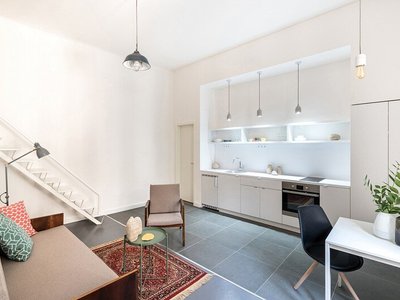
Marvila Apartment Renovation in Lisbon: A Bright Minimalist Attic Transformation by KEMA Studio
Bright attic transformed into minimalist Lisbon apartment with skylights, sustainable materials, open plan layout, and industrial-inspired interior design elements.


Explore Architecture Competitions
Discover active competitions in this discipline




The International Standard for Design Portfolios


The Global Benchmark for Architecture Dissertation Awards


The Global Benchmark for Graduation Excellence


Challenge to design mud housing for contemporary communities
Comments (0)
Please login or sign up to add comments
No comments yet. Be the first to comment!