
Wood and Rammed Earth Nursery by Atelier Régis Roudil Architectes: Sustainable Childcare Design in Paris
Paris nursery blends rammed earth and wood, creating eco-conscious, heritage-sensitive childcare space with secure, nature-integrated, tranquil design.


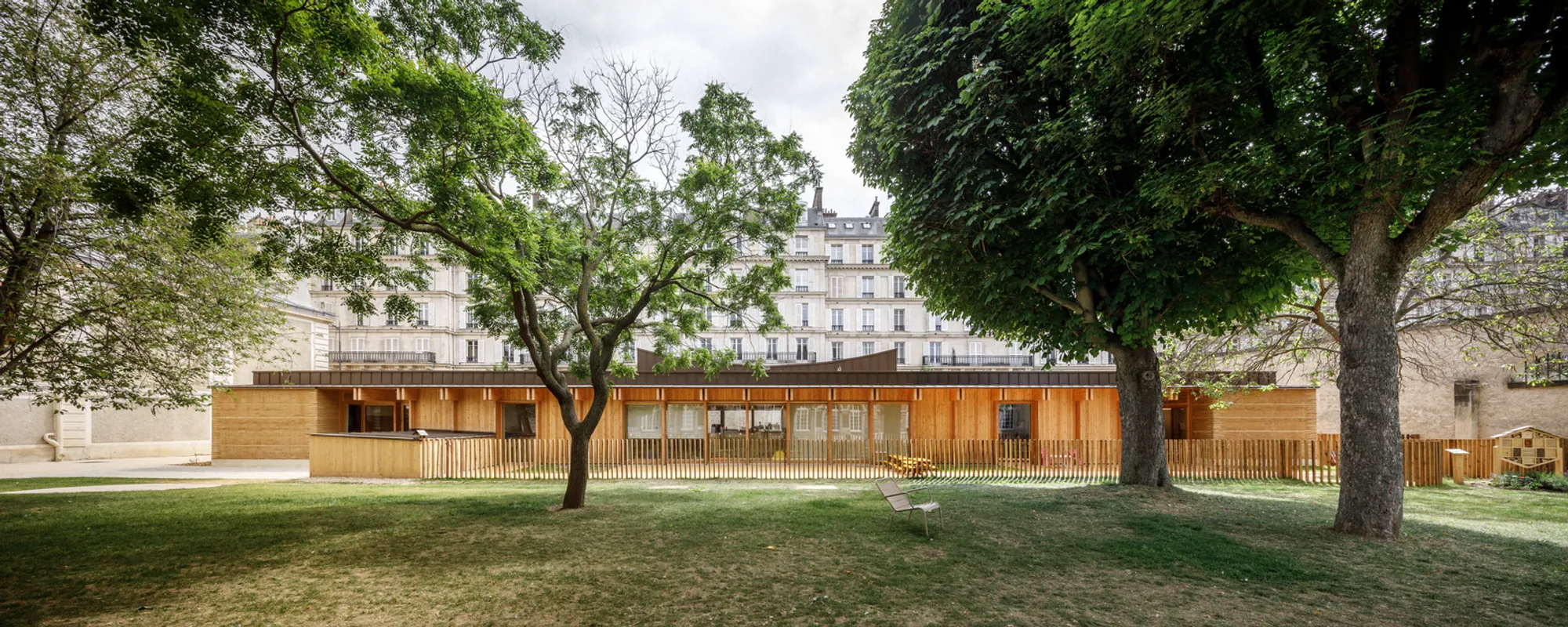
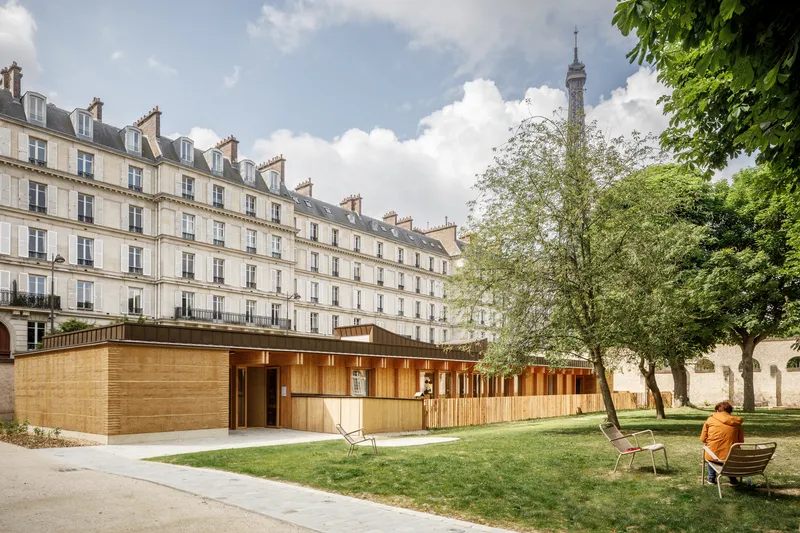
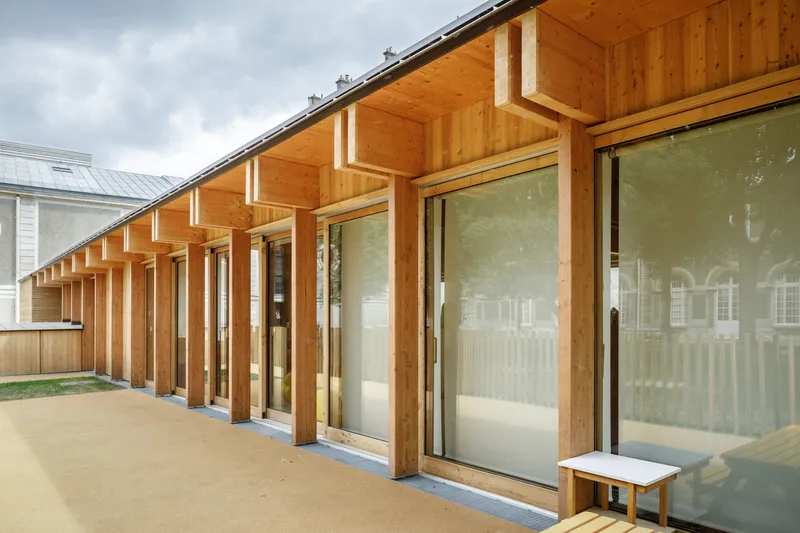
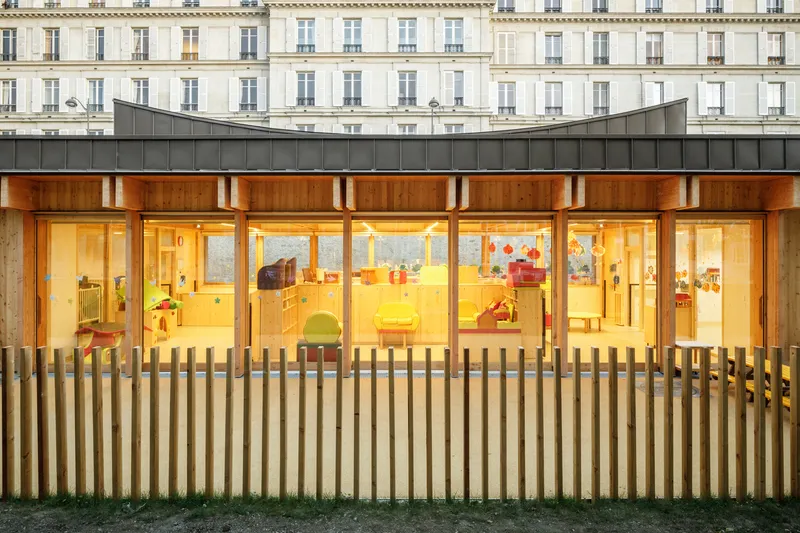
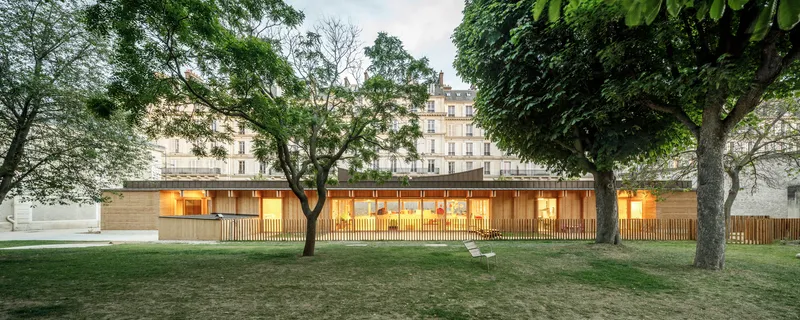
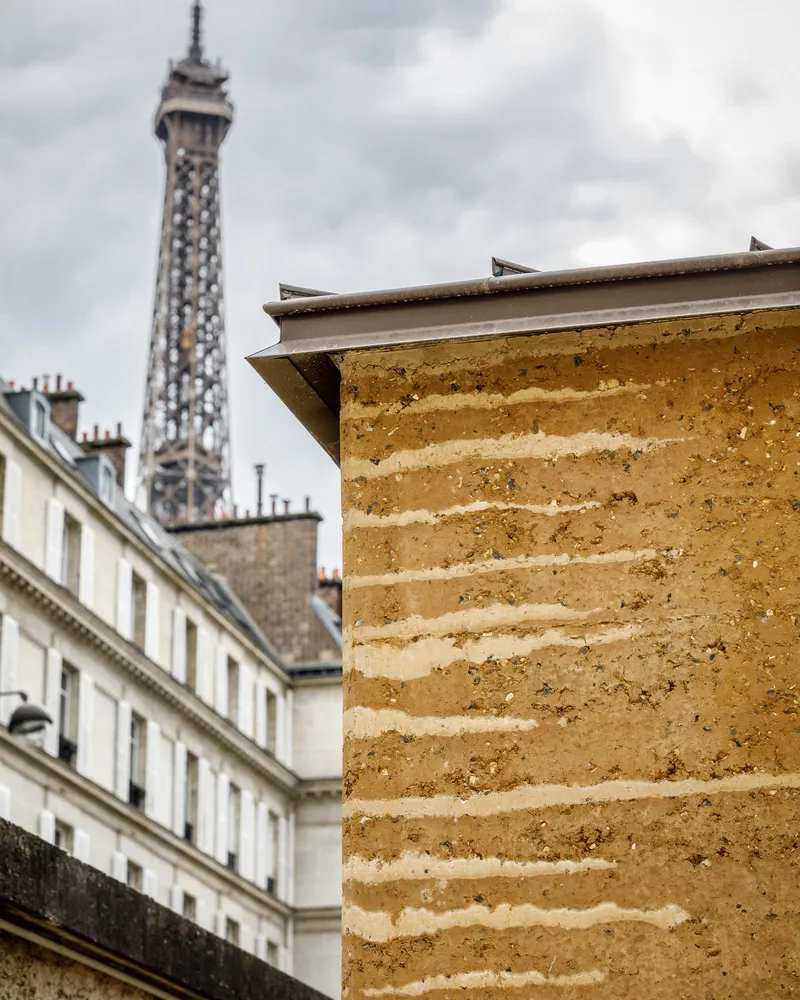
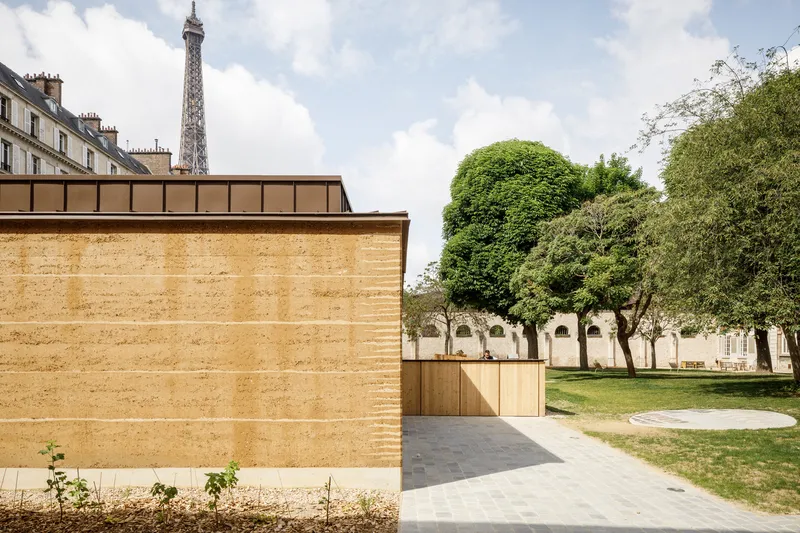
Located in the serene heart of the Palais de l’Alma, Paris, the Wood and Rammed Earth Nursery by Atelier Régis Roudil Architectes (2022) redefines early childhood spaces through sustainable architecture and bio-sourced materials. Spanning 308 m², this nursery replaces an outdated facility on rue de l’Élysée, offering children a tranquil environment removed from the urban hustle. Its south-facing garden, formerly Napoleon’s stables, creates a natural green oasis, resonating with peace and quiet in the midst of Paris’s historic landmarks, including the Eiffel Tower and the Musée du Quai Branly.
Contextual Integration with Parisian Heritage
Situated within a monumental urban fabric, the project delicately balances heritage preservation with modern childcare needs. By extending the south garden and aligning with Gilles Clément’s landscaping at the Musée du Quai Branly, the nursery forms a coherent green urban network, blending seamlessly with surrounding stone architecture while fostering biodiversity and natural light.
Architectural Layout and Spatial Design
The nursery’s design emphasizes introverted, secure spaces for children. Its volume stretches from the perimeter walls to outdoor activity areas, including a merry-go-round, while maintaining privacy from public view. North-facing gardens provide visual and spatial engagement with the historic palace, allowing children to connect with nature safely. Courtyards and rationally composed volumes reflect symmetrical architectural principles while offering a bucolic, green lung within the built environment.
Sustainable Materials and Environmental Strategy
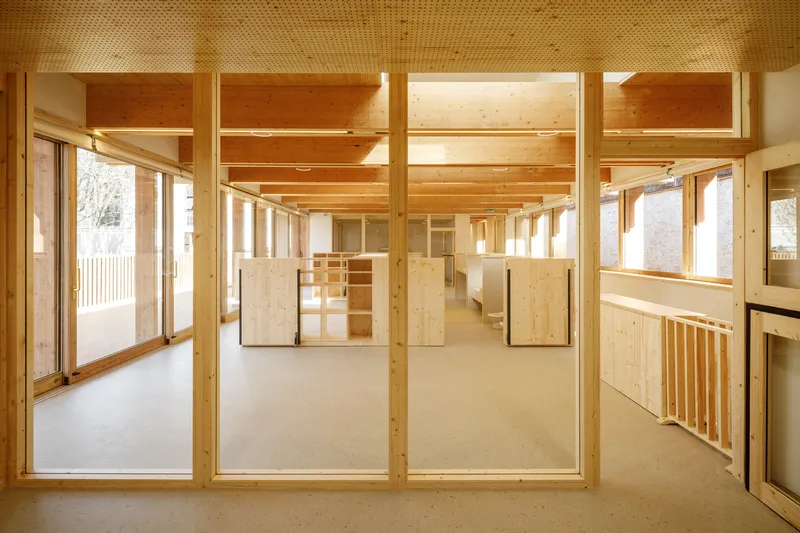
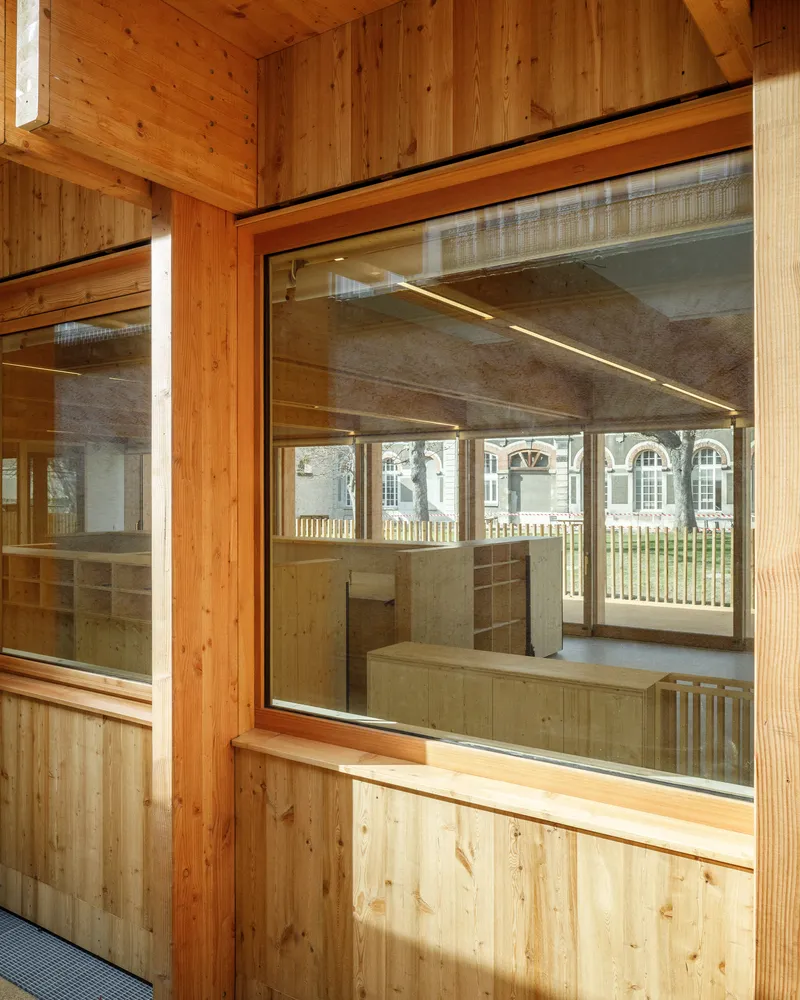
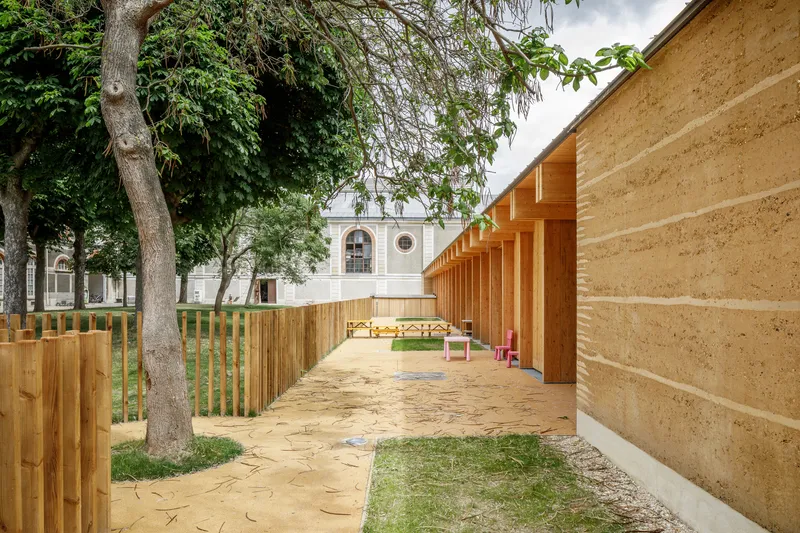
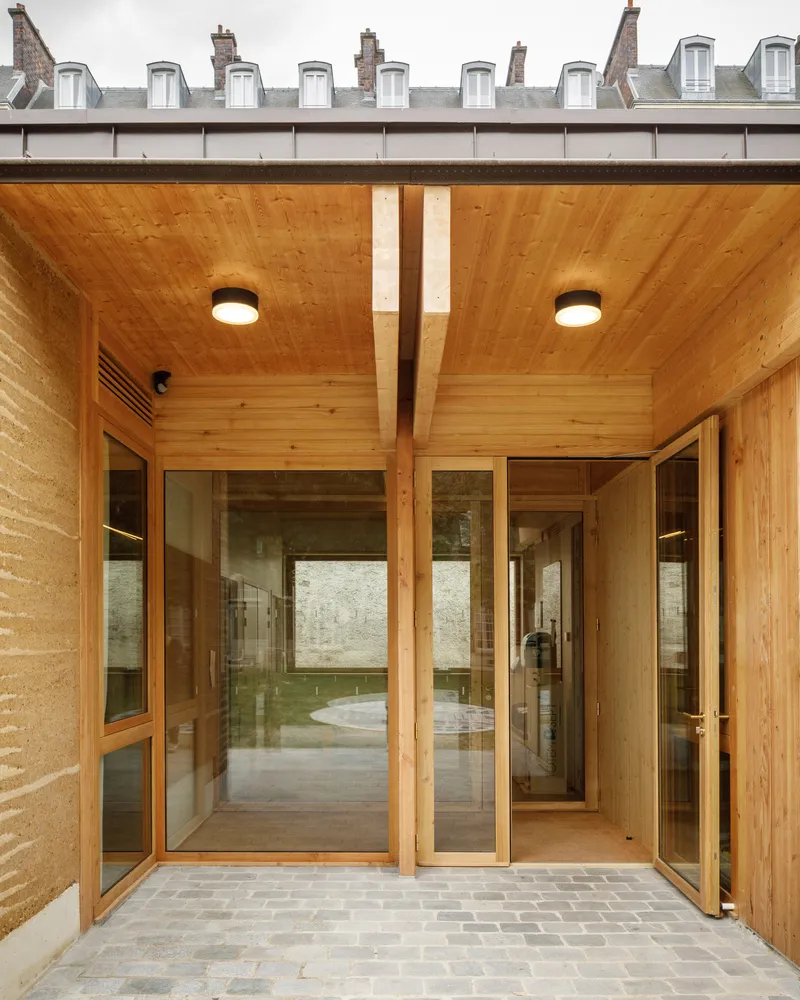
Anchored in a philosophy of eco-conscious design, the nursery employs raw earth and wood as primary construction materials. The use of rammed earth transforms excavation soil into a high-quality, sustainable building material, fostering a low-impact construction method that reduces energy consumption and embodies resilience. Wood, a renewable resource with minimal carbon footprint, enhances thermal performance while contributing to the project’s greenhouse gas reduction goals. These choices reflect a deep connection to the garden’s natural materials, creating an architecture that is both environmentally responsible and contextually sensitive.
Acoustic and Structural Considerations
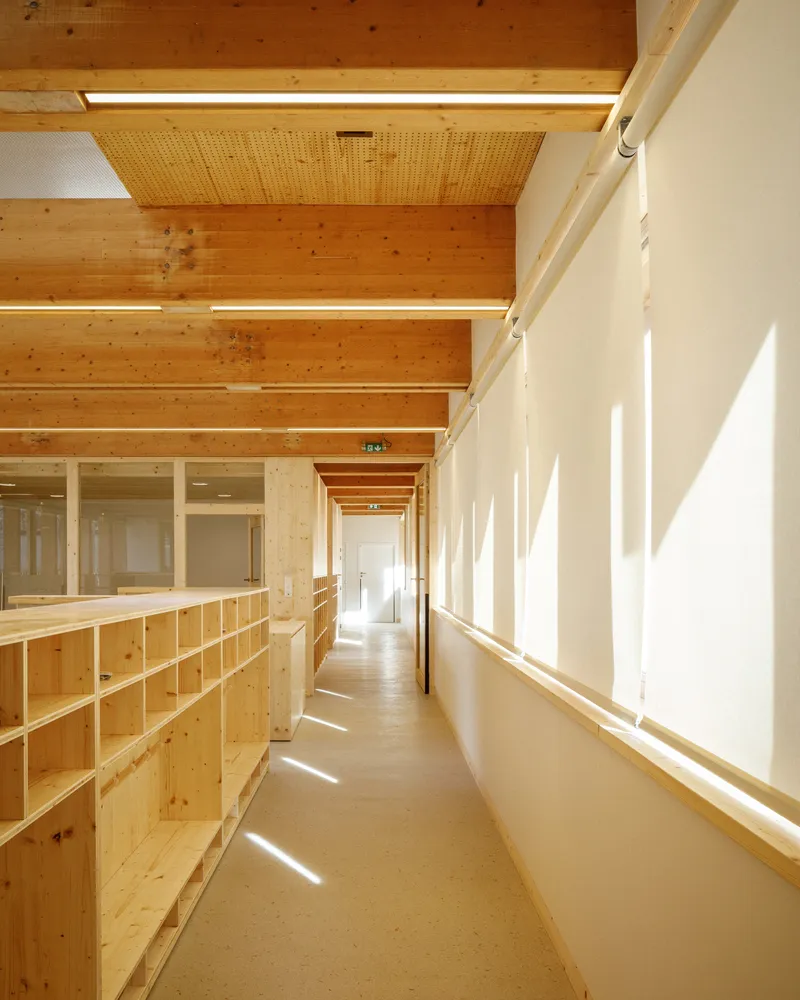
Collaborating with Vessière (structural engineering), EODD (environmental engineering), and Viasonora (acoustics), the project ensures safety, comfort, and sound insulation. The integration of bio-sourced materials alongside modern building techniques guarantees a nurturing, healthy environment for children and staff alike.
The Wood and Rammed Earth Nursery exemplifies sustainable urban architecture that respects historical context while fostering child-centered, nature-integrated spaces. By merging heritage-sensitive design with ecological innovation, Atelier Régis Roudil Architectes has created a model for future childcare facilities in urban heritage sites.
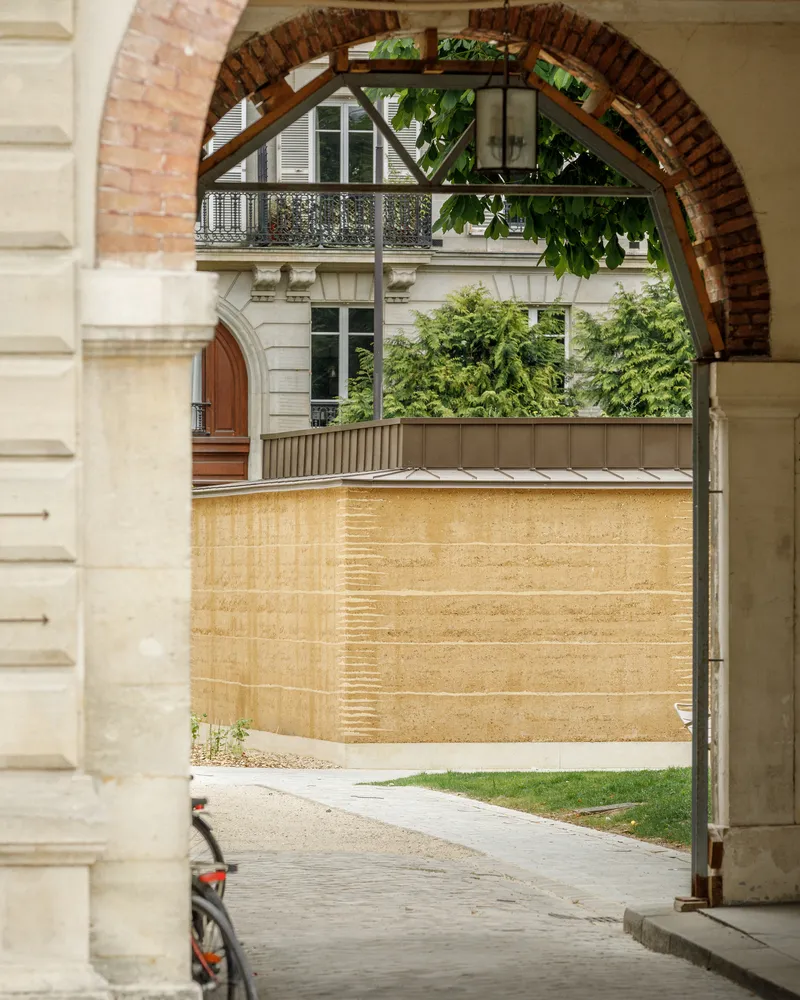
All photographs are works of
11h45 - Florent Michel




Popular Articles
Popular articles from the community


The Ocean Hive: Sustainable Architecture for a Self-Sufficient Civilization at Sea
The Ocean Hive imagines sustainable architecture at sea, where modular habitats, algae, wave power and ocean waste sustain a growing colony.

The Earth Pod: 3D Printed Homes for Resilient Refugee Communities
The Earth Pod reimagines refugee housing through 3D printed homes made from clay, combining resilience, self-sufficiency, and rapid shelter.

Lunar Spiral: Space Architecture Shaped by the Mathematics of the Universe
Lunar Spiral reimagines space architecture through Fibonacci geometry, lunar regolith, levitating habitats, and self-sustaining Moon living.

The Musturak Paradise: Senior Living Architecture for a Connected Future in Temara, Morocco
The Musturak Paradise reimagines senior living architecture in Temara via private homes, social spaces, culture, community, and shared care.


Similar Reads
You might also enjoy these articles

FAMM Arquitectura Organizes Ten Villas Around Courtyards and Jungle in Nosara, Costa Rica
El Molino pairs two elongated volumes with deep overhangs and timber louvers to build a compact coastal community five minutes from the beach.
Oscar Niemeyer's Ibirapuera Park Pavilions Define São Paulo's Cultural Identity in Concrete and Curve
A constellation of modernist volumes set within São Paulo's most important urban park, conceived for the city's 400th anniversary in 1954.
How Henri Picq's 1889 Paris Pavilion Traveled 11,000 Kilometers to Become Santiago's Artequín Museum
A prefabricated iron and glass pavilion built for the Paris Universal Exposition found a second life as a children's art museum in Chile.
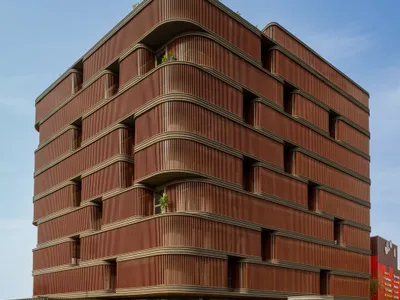
Sanjay Puri Architects Wraps a Jaipur Office Tower in Capsule-Shaped Green Buffers
A nine-level climate-responsive workplace near Jaipur Airport uses stacked planter terraces and aluminium screens to fight 40°C heat.

Explore Architecture Competitions
Discover active competitions in this discipline



Challenge to reimagine the Iron Throne


Photograph architecture without architects


Illustrate the lost glory of Angkor Wat - Render Challenge


Design challenge to reuse E-waste
Comments (0)
Please login or sign up to add comments
No comments yet. Be the first to comment!