
Wooden Wall: A Sustainable Wildlife Architecture Project Protecting Koalas in Queensland
A sustainable wildlife architecture project in Queensland that restores koala habitats while connecting people with nature and conservation.


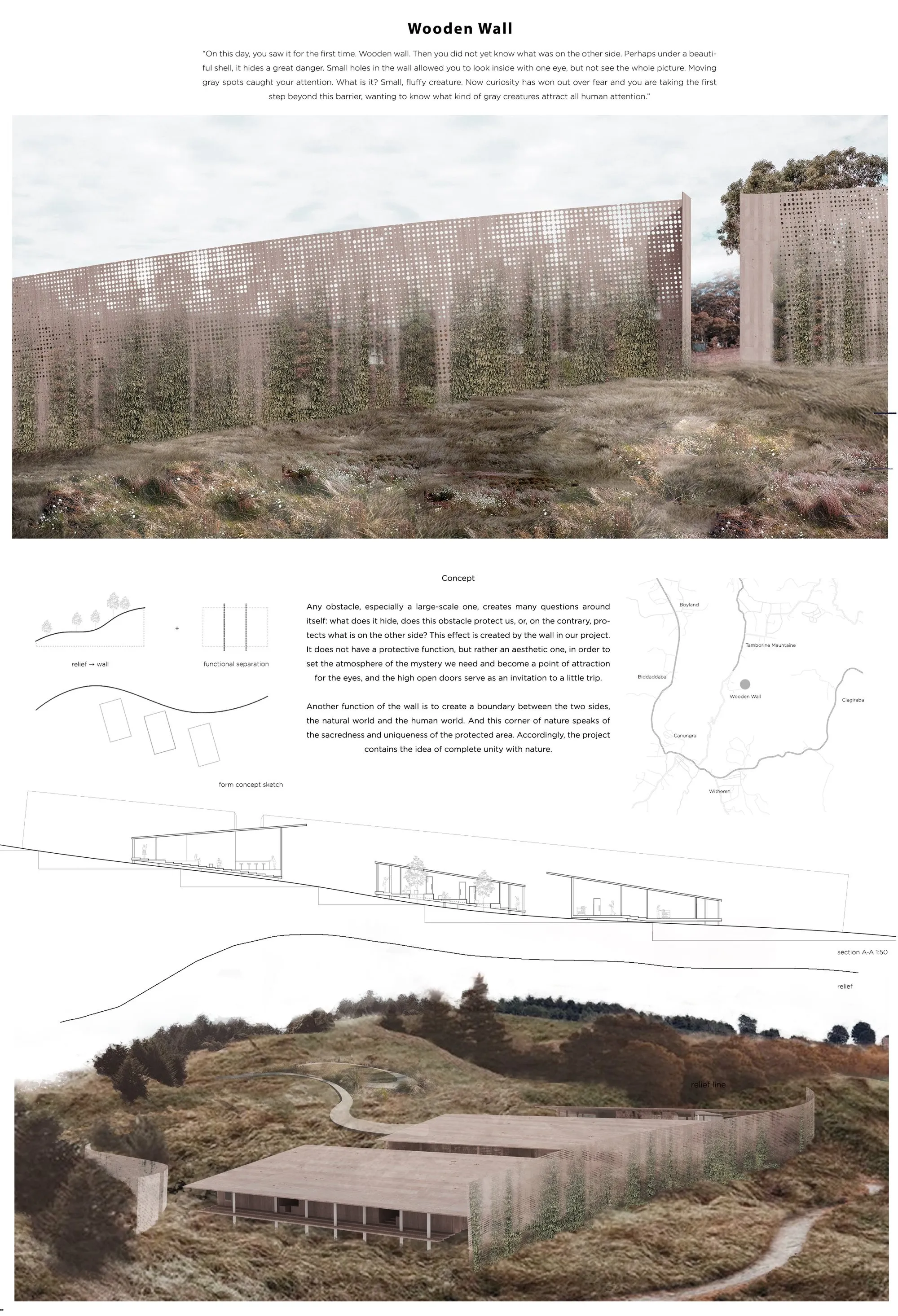
As Australia continues to recover from the devastating impact of bushfires, architects and designers are exploring innovative ways to support ecological restoration and wildlife protection. Wooden Wall, a thoughtful proposal by Maria Yurchenko and Maria Bochkareva, stands as an inspiring example of sustainable wildlife architecture, offering a safe sanctuary for koalas affected by fire while educating visitors about conservation and animal welfare.
Recognized as a Runner-up entry of Haven 2020, the project is located in Queensland, Australia, where koala populations have faced significant challenges due to habitat destruction and recurring wildfires. More than a rehabilitation facility, Wooden Wall is envisioned as a living landscape where architecture, ecology, and education coexist harmoniously.


A Sanctuary Inspired by Nature
The central idea behind Wooden Wall is rooted in the relationship between humans and nature. The project introduces a symbolic wooden barrier that acts as a threshold between two worlds: the human realm and the protected habitat of wildlife.
Rather than dominating the landscape, the architecture gently follows the contours of the site. The building volumes appear to float above the terrain, preserving the natural topography while minimizing ecological disturbance. This light-touch approach allows the surrounding ecosystem to remain the primary focus.
The architectural language is deliberately restrained. Clean geometric forms contrast with the organic curves of the landscape, creating a dialogue between human intervention and natural processes.
Preserving the Existing Ecosystem
One of the strongest aspects of the project is its commitment to environmental stewardship. Instead of reshaping the land to accommodate construction, the design adapts itself to the existing terrain.
The proposal preserves:
- Existing vegetation and green spaces
- Natural landforms and relief patterns
- Wildlife movement corridors
- Ecological interaction zones
This approach reflects the principles of sustainable wildlife architecture, where buildings become part of the ecosystem rather than obstacles within it.
The surrounding parkland is designed using principles inspired by English landscape gardens, creating an immersive natural environment that encourages exploration while maintaining habitat integrity.
Architecture That Educates
Wooden Wall goes beyond providing shelter. It serves as an educational platform that raises awareness about wildlife conservation and the challenges faced by koalas in post-fire environments.
Visitors begin their journey at a dedicated visitor center, where exhibitions introduce the history of koalas, the impact of wildfires, and ongoing conservation efforts. The architecture carefully guides movement through a sequence of spaces that gradually deepen visitors' understanding of the natural environment.
The project incorporates:
- Educational exhibitions
- Interactive wildlife learning spaces
- Conservation awareness programs
- Community gathering areas
- Nature-focused walking routes
By combining education and experience, the project transforms visitors into active participants in conservation efforts.
A Functional Layout for Wildlife Rehabilitation
The master plan is organized into three primary zones that work together to support both animal welfare and visitor engagement.
Visitor Center
The visitor center functions as the public gateway to the complex. Exhibition spaces, galleries, educational programs, and gathering areas introduce guests to the world of koalas while fostering awareness about environmental protection.
Staff Area
Located centrally, the staff facilities ensure efficient operation of the entire complex. Administrative offices, staff rooms, kitchens, storage facilities, and support spaces are strategically positioned to provide seamless access to all areas of the site.
Rehabilitation Center
The rehabilitation facility serves as the heart of the project. Designed to provide a calm and controlled environment, the center accommodates treatment, recovery, and long-term care for injured koalas.
Medical and operational spaces include:
- Laboratory facilities
- Recovery rooms
- Treatment spaces
- X-ray facilities
- Emergency care areas
- Staff support spaces
The placement of the rehabilitation center away from heavily visited zones minimizes stress on recovering animals and promotes successful rehabilitation.

Creating Safe Habitats for Koalas
A key design strategy is the division of the landscape into distinct ecological zones.
Some areas allow controlled interaction between visitors and rehabilitated koalas, helping people build meaningful connections with wildlife. Other zones remain completely protected and inaccessible to the public, enabling animals to experience conditions closer to their natural habitat.
This balanced approach supports both conservation and education while prioritizing the wellbeing of the animals.
The design acknowledges that rehabilitation is not simply medical treatment. It also involves preparing animals for eventual reintroduction into the wild. Protected wilderness areas within the site allow gradual adaptation and natural behavioral development.
Materiality and Environmental Responsibility
Wood serves as the project's primary construction material, reinforcing the connection between architecture and landscape.
The extensive use of timber offers several advantages:
- Reduced environmental impact
- Warm and welcoming spatial quality
- Strong visual integration with the forest environment
- Renewable and sustainable sourcing potential
The natural texture and appearance of wood create a seamless transition between built and natural environments, allowing the architecture to feel embedded within the landscape rather than imposed upon it.
Flexibility for Future Growth
The modular organization of Wooden Wall enables future expansion without disrupting existing operations.
Additional educational facilities, research spaces, conservation programs, and rehabilitation units can be integrated over time as needs evolve. This adaptability ensures the project remains relevant and effective in responding to future environmental challenges.
Such flexibility is a critical component of sustainable wildlife architecture, where long-term ecological and community needs must be anticipated from the outset.
A Model for Future Conservation Architecture
Wooden Wall demonstrates how architecture can become a powerful tool for ecological recovery. By combining rehabilitation facilities, educational spaces, and protected habitats within a unified landscape, the project creates meaningful connections between people and wildlife.
The proposal shows that conservation architecture is not merely about constructing buildings. It is about creating environments that nurture life, inspire awareness, and support long-term environmental resilience.
Through its sensitive integration with nature, commitment to sustainability, and focus on wildlife welfare, Wooden Wall presents a compelling vision for the future of conservation-focused design in Australia and beyond.



Popular Articles
Popular articles from the community


Co-life: Sustainable Architecture for Age-Friendly Community Living
Co-life reimagines sustainable architecture for seniors through courtyards, rammed earth, shared gardens, and spaces designed for belonging.

Hill & Cross Opera: Sculptural Opera House Architecture Shaped by Tallinn’s Landscape and Identity
Hill & Cross Opera reimagines opera house architecture in Tallinn through its sculptural hill, civic plaza, glass wave and a luminous cross.

Play: Fragments of Their World
Familiar architecture becomes modular playground design, creating safe spaces where displaced children can learn, connect, imagine and play.

The Musturak Paradise: Senior Living Architecture for a Connected Future in Temara, Morocco
The Musturak Paradise reimagines senior living architecture in Temara via private homes, social spaces, culture, community, and shared care.


Similar Reads
You might also enjoy these articles

Eco Chapel: A Green Architecture Pavilion Designed in Symbiosis with the Forest
Eco Chapel uses green architecture to weave prayer, learning and reuse into a forest pavilion shaped by modular hexagonal canopies for life.
Kaffeebühnen: Coffee Shop Architecture Designed as a Civic Stage Between Vienna’s City and Park
Kaffeebühnen turns coffee shop architecture into a civic stage, linking Vienna’s park edge, urban life, warm timber yards, and coffee craft.
Healing Façade: Sustainable Architecture for Reforestation, Community, and Sacred Ecology in Ethiopia
Healing Façade reimagines sustainable architecture as a living wall that restores soil, catches water and renews Ethiopia's forest churches.


Urban Forest: A Vertical Ecosystem for 5,000 Workers in Singapore's Changi Business Park
Radially stacked pods and layered green decks turn a 7-acre plot into 47 acres of ecological workspace projected for 2040.


Comments (0)
Please login or sign up to add comments
No comments yet. Be the first to comment!