
YH2 Architecture Splits a Lakeside House into Two Volumes That Descend a Mountain Slope
On the southern shore of Lake Memphremagog in Quebec, a cedar-clad residence turns its roofline into a counter-pitch dialogue with the mountains.

Building on a steep incline that drops toward the narrow shoreline of Lake Memphremagog is not a neutral act. The site, frequently cast in the shadow of surrounding mountains, presents a specific set of constraints: limited flat ground, dense forest canopy, and a view toward the lake that must be earned rather than assumed. YH2 Architecture, led by Marie-Claude Hamelin and Loukas Yiacouvakis, responded to this terrain in Potton, Quebec, with a house that fragments itself into two interrelated volumes, stepping down the grade rather than fighting it.
What makes the Counter-Slope House genuinely interesting is a roof strategy that refuses to simply follow the land. The primary pitch descends in one direction while a counter-pitch rises against it, generating a formal tension that echoes the angular geometries of the mountain landscape. The result is a building that reads as smaller than its 4,530 square feet, grounded and embedded rather than imposed. The roof of the main volume doubles as a terrace-belvedere, functioning simultaneously as an arrival threshold for visitors and an elevated observation point over the lake. It is a house where the circulation starts on top of the architecture and descends into it.
A Building That Belongs to Its Slope
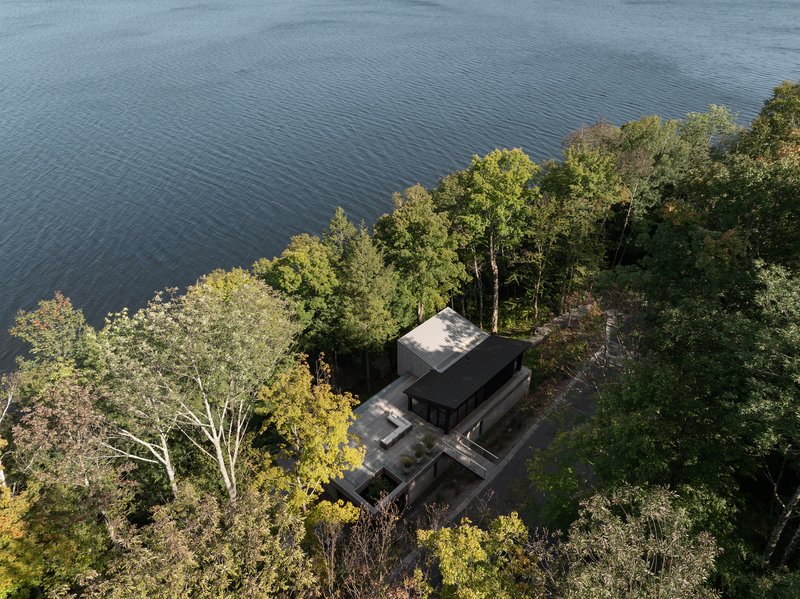
Seen from above, the house almost disappears into its wooded lot. The aerial view reveals how the two volumes nestle among the tree canopy, their naturally weathered cedar cladding harmonizing with the mineral and vegetal tones of the shoreline. The fragmented plan avoids creating a single imposing mass, instead distributing the program along a natural plateau that the site offers partway down the slope.
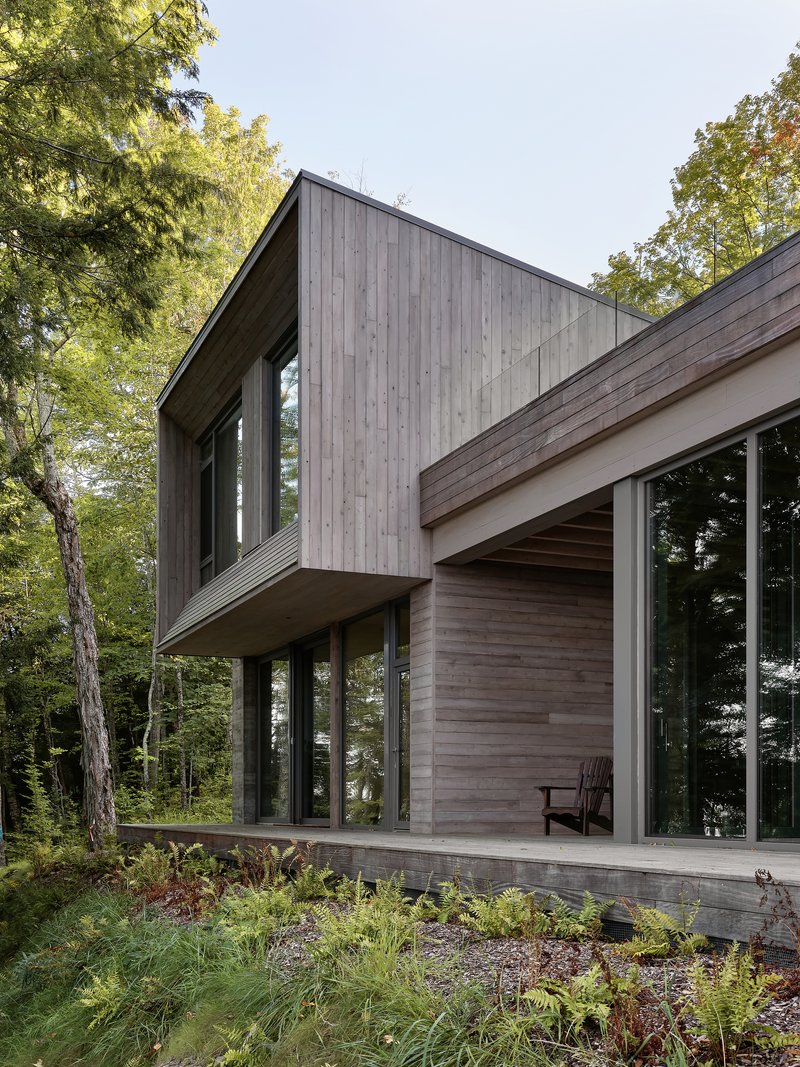
The cantilevered volume that projects above the planted slope is a key move. By lifting the building off the ground in places rather than excavating into it, YH2 minimizes site disturbance and allows ferns, grasses, and native plantings to flow beneath and around the structure. The terraced planted beds that cascade from the glazed pavilion through the forest reinforce this idea: the landscape is not a backdrop but a co-inhabitant.
Arrival from Above
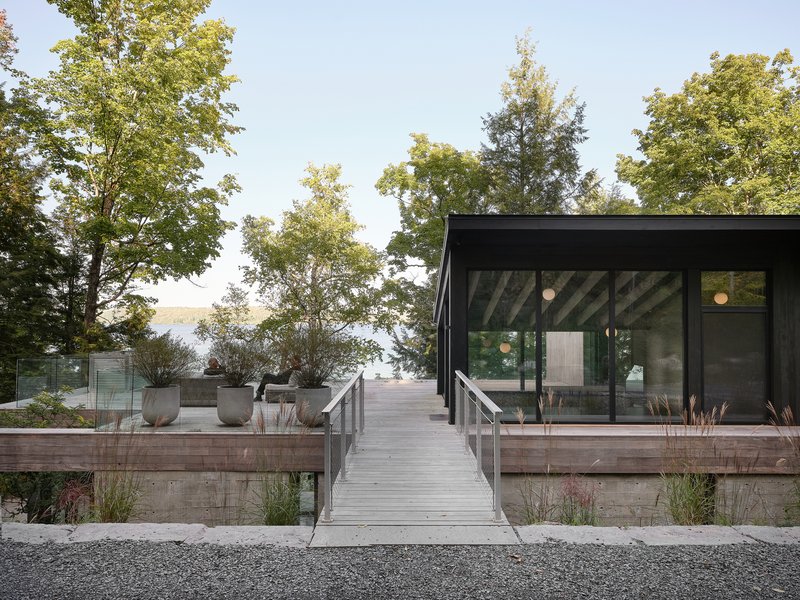
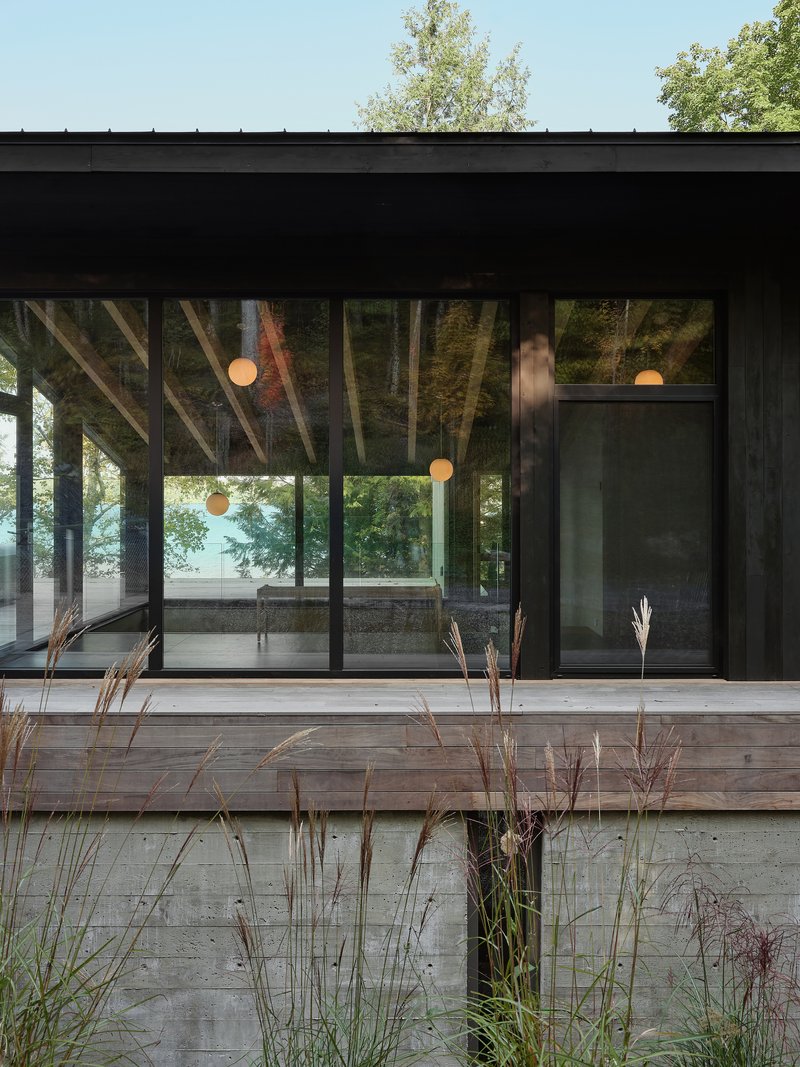
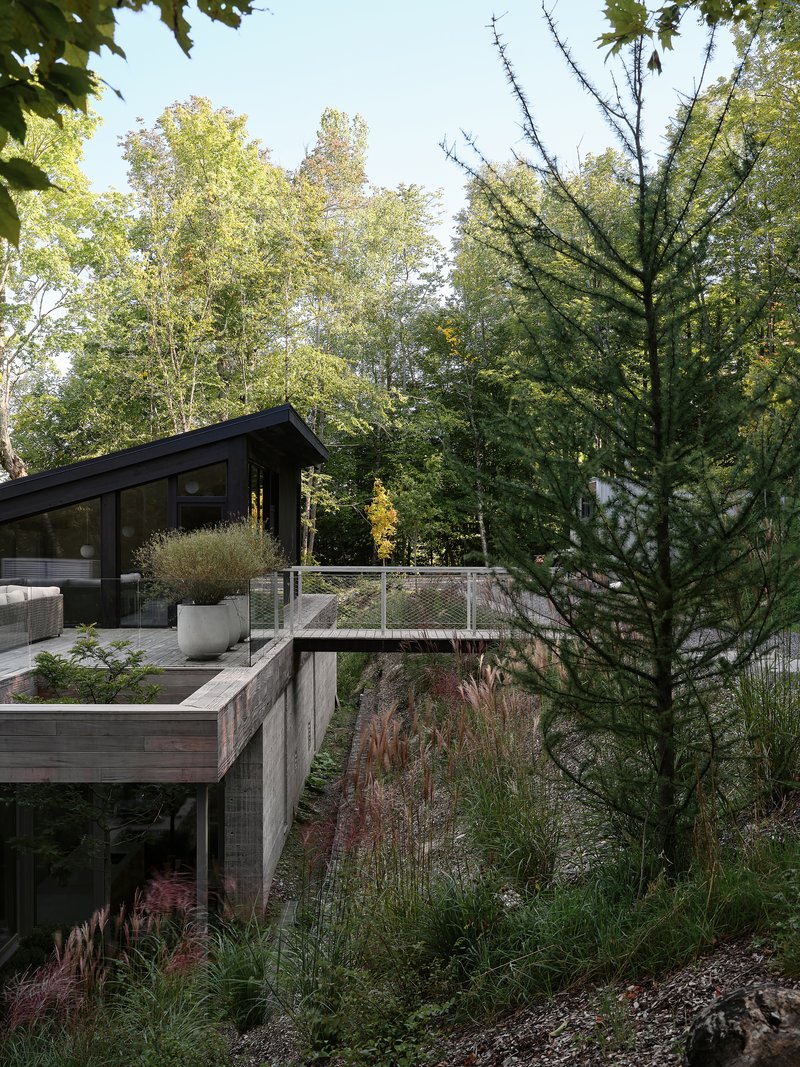
The approach sequence is unconventional. A timber boardwalk leads to a black glass pavilion at the roof level, flanked by planted beds and deciduous trees. You arrive on top of the house. The roof terrace functions as a threshold, an in-between space where you orient yourself to the lake, the mountains, and the forest before descending into the domestic interior. At dusk, the glazed facade glows with pendant lights, the ornamental grasses in the foreground softening the boundary between architecture and ground.
The black architectural elements that frame this arrival, the steel mullions, the dark window profiles, serve as visual punctuation against the warm cedar. They do not recede; they curate. Every black frame is a deliberate aperture, directing the eye toward a specific depth of landscape.
Living Spaces That Open Toward the Lake
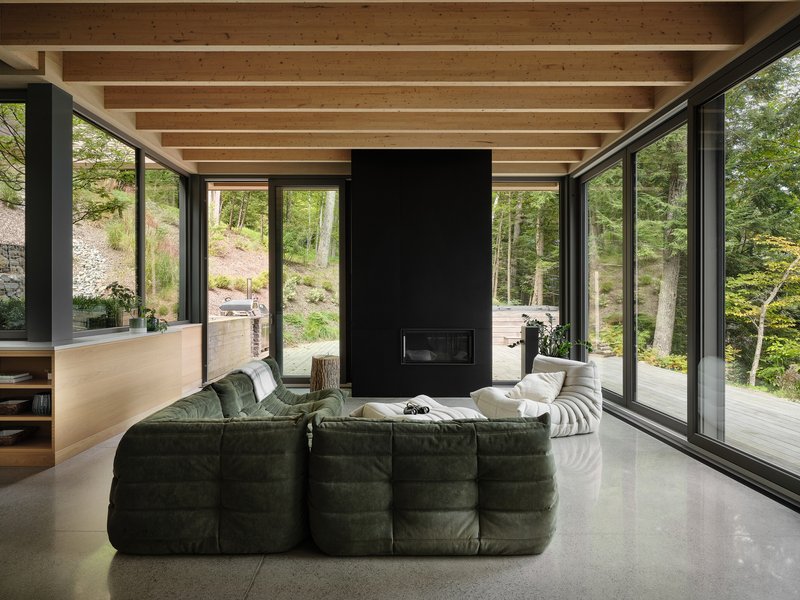
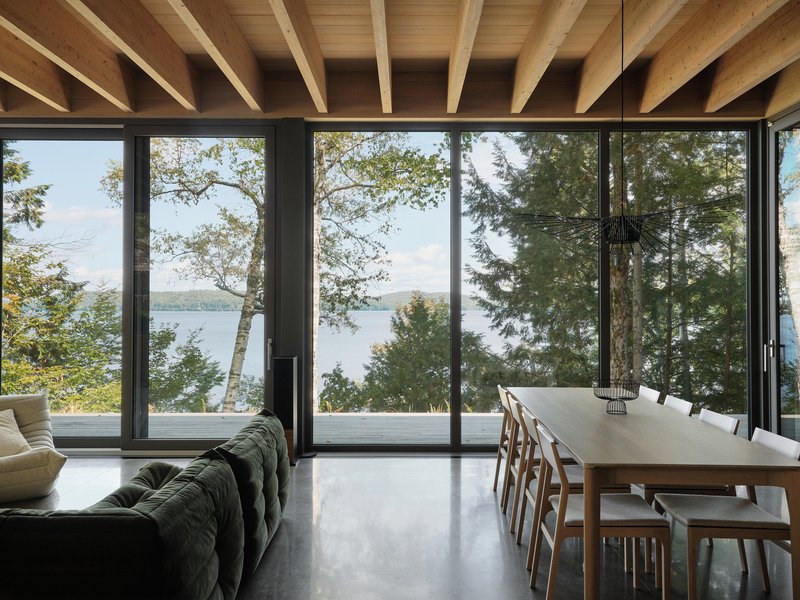
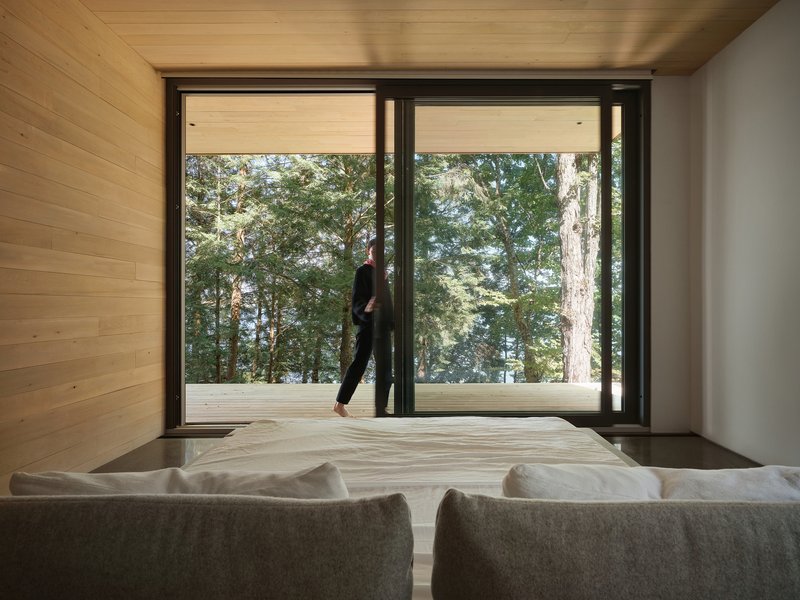
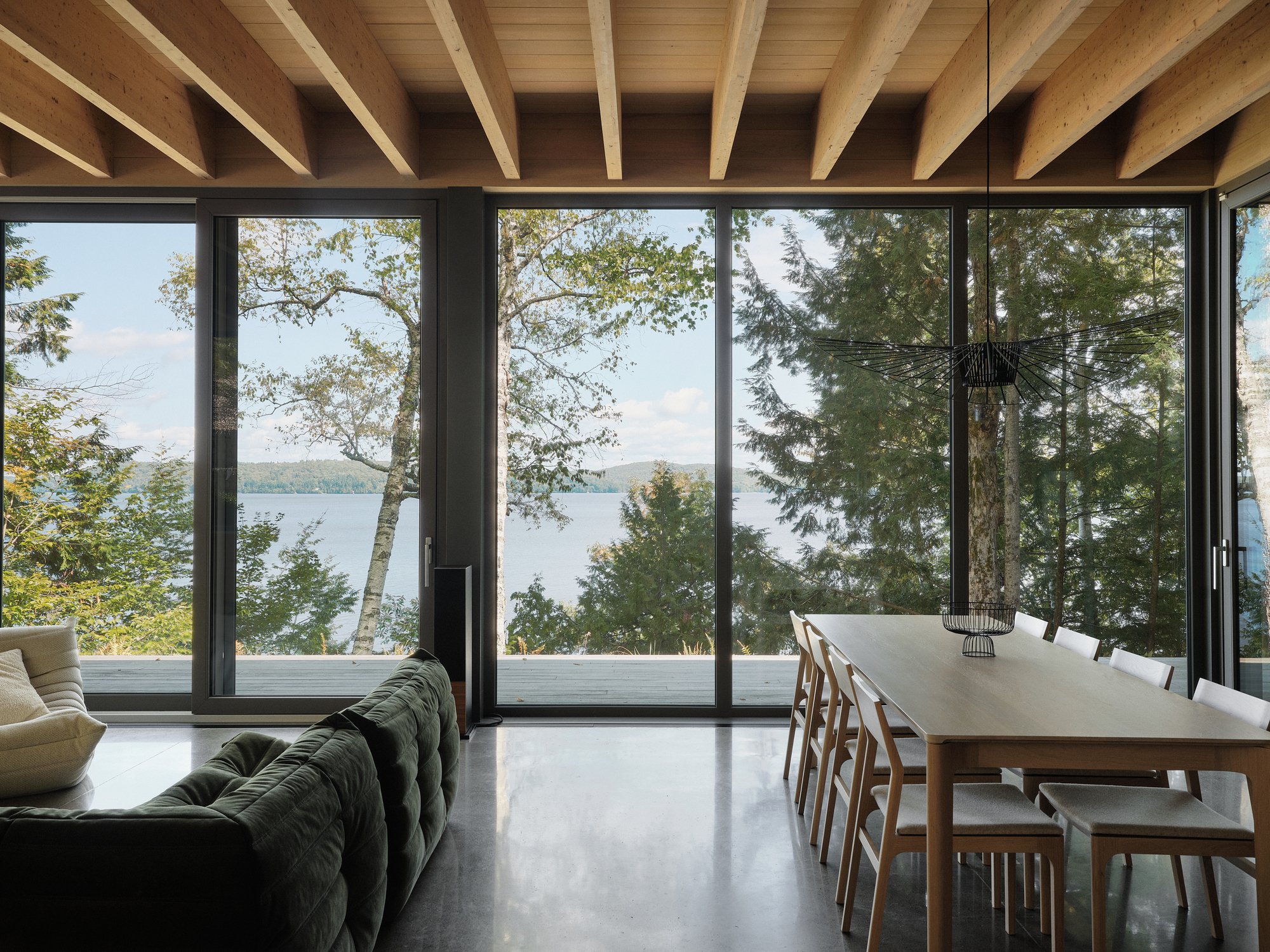
The main living spaces are oriented toward Lake Memphremagog through expansive glazed walls. The living room is anchored by a central black fireplace that acts as a vertical counterpoint to the horizontal datum of the lake beyond. Exposed timber ceiling joists run the length of the room, their rhythm reinforcing the sense of directionality toward the view. The glazing is not decorative transparency; it is the wall, and it dissolves the boundary between the interior and the forested slope outside.
Where a sliding glass door opens to the deck, the polished concrete floor of the interior meets the timber planks outside at the same level, extending the living space outward. A person walking among the trees on the deck reads as someone still within the domestic envelope. The house does not end at the glass; it ends at the tree canopy.
Material Warmth Against Black Frames
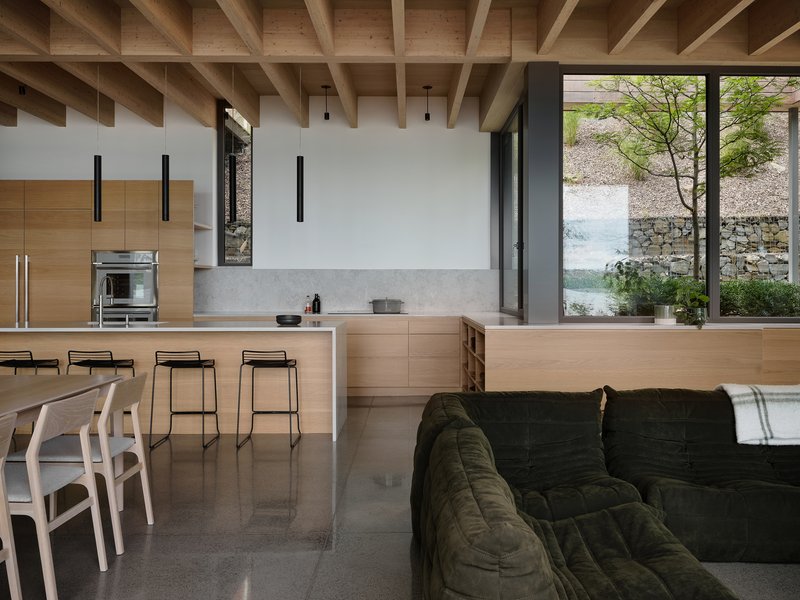
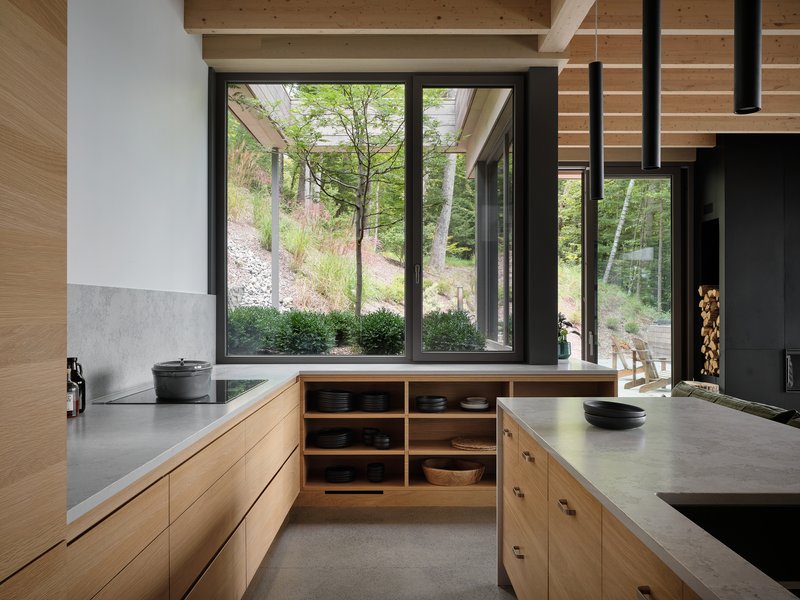
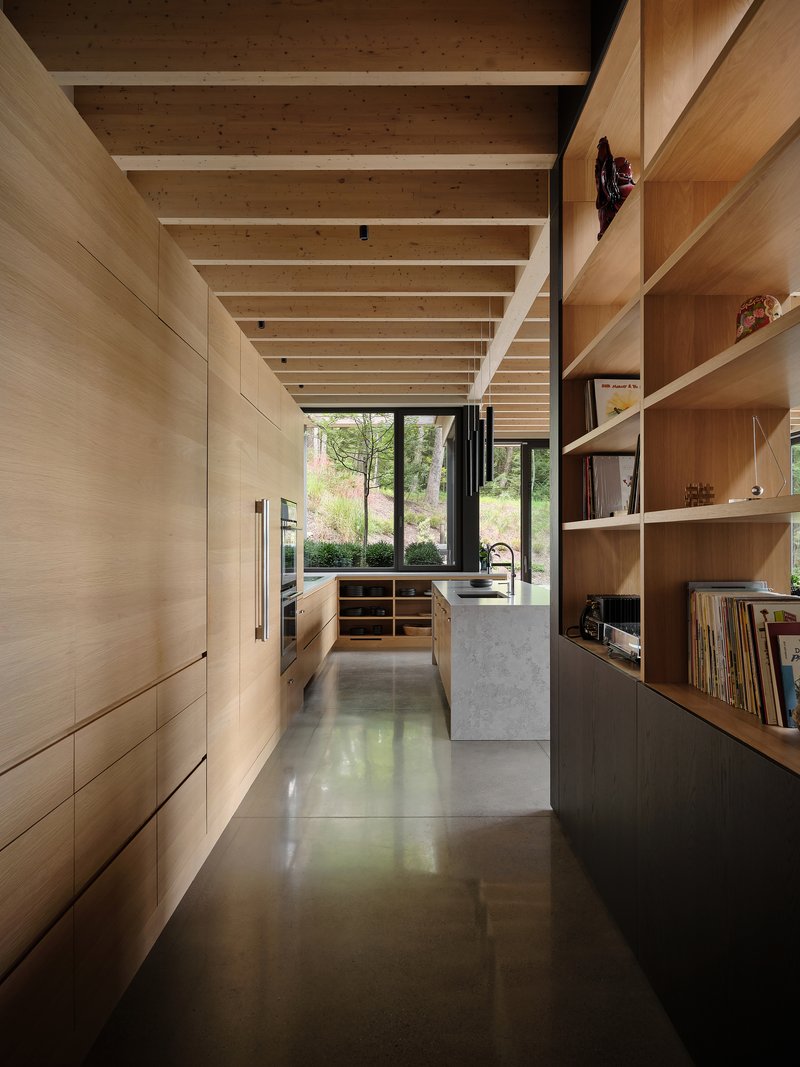
Inside, the palette is restrained: white oak surfaces, polished concrete floors, and those recurring black elements. The kitchen pairs light wood cabinetry with concrete countertops, framing a view of deciduous trees through dark-profiled windows. The galley hallway with its open timber shelving and rhythmic exposed beams feels simultaneously utilitarian and composed, a corridor that rewards attention rather than merely connecting rooms.
The open-plan kitchen and living space demonstrates the advantages of the exposed timber ceiling joists. They add depth and visual warmth overhead while maintaining the honest expression of the structural system. There is nothing applied or decorative here. The materials do their own work.
Vertical Circulation as Spatial Event
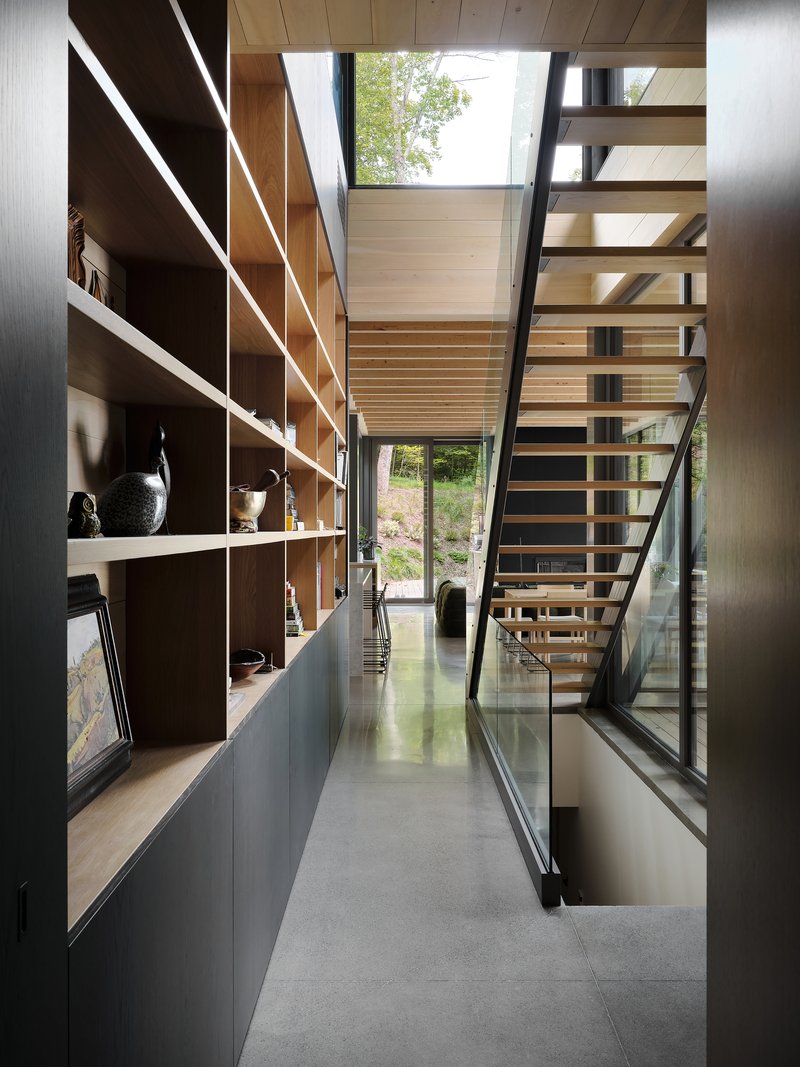
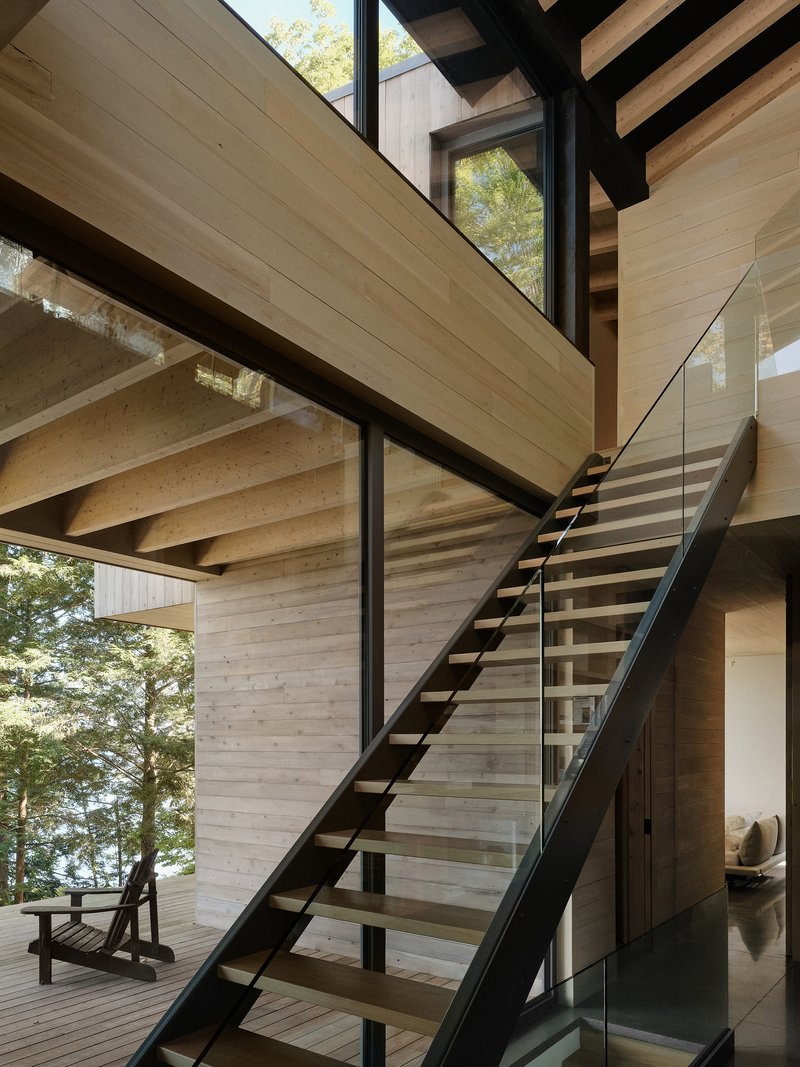
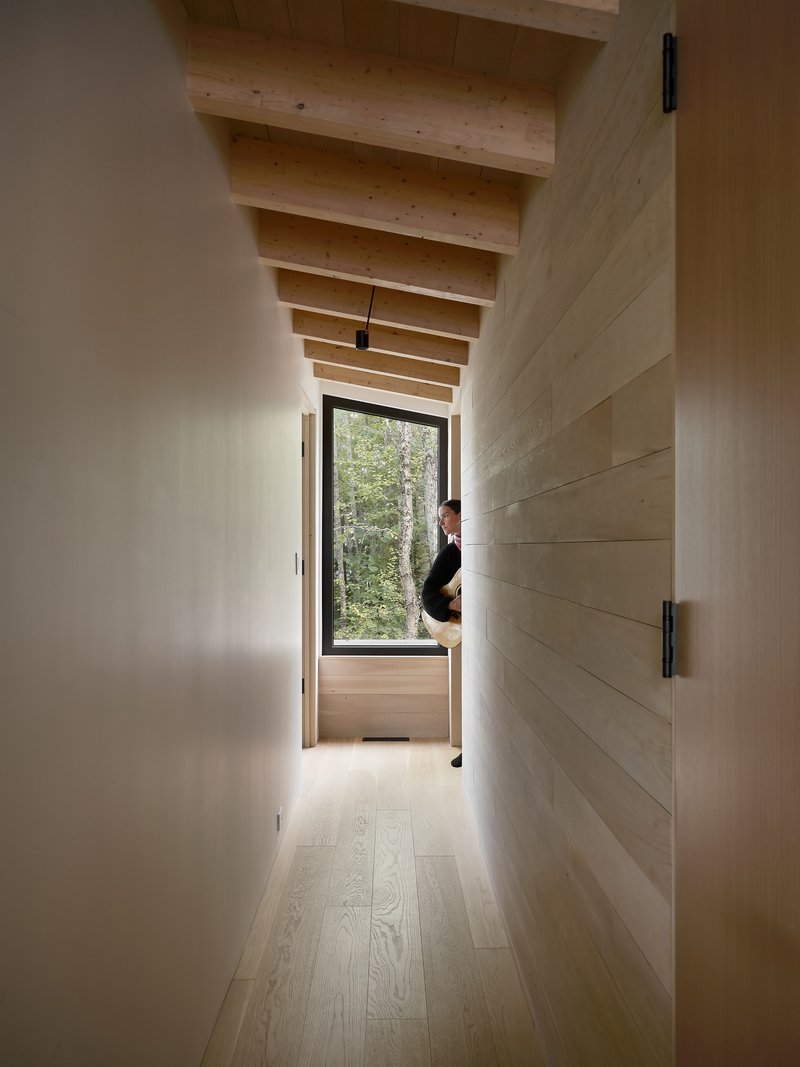
Given that the house moves through multiple levels on a steep site, the stairs carry significant weight as architectural moments. The open stair with steel stringers and glass railing ascends through a double-height timber-clad volume, pulling natural light down from above while framing the tree canopy through adjacent glazing. A narrow corridor alongside leads to built-in shelving illuminated by overhead light, blurring the line between passage and habitable room.
At the end of a corridor, a window seat where someone sits looking out transforms a terminal point into a destination. These moments of pause, where movement through the house yields to stillness and observation, are evidence of a design team thinking carefully about inhabitation rather than just spatial arrangement.
Decks and Thresholds
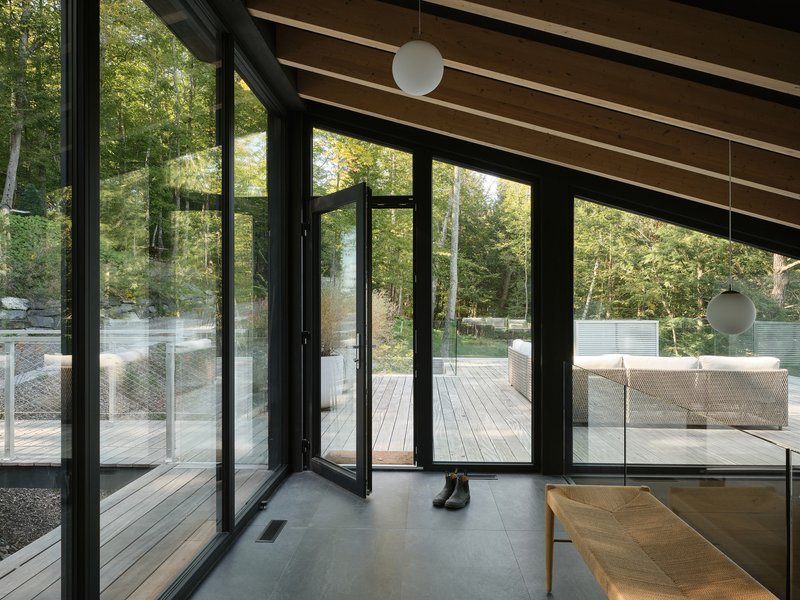
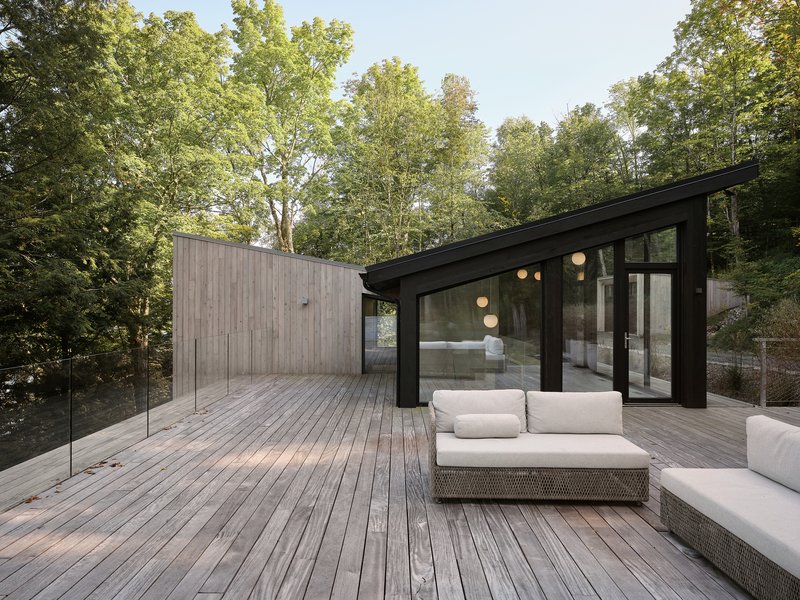
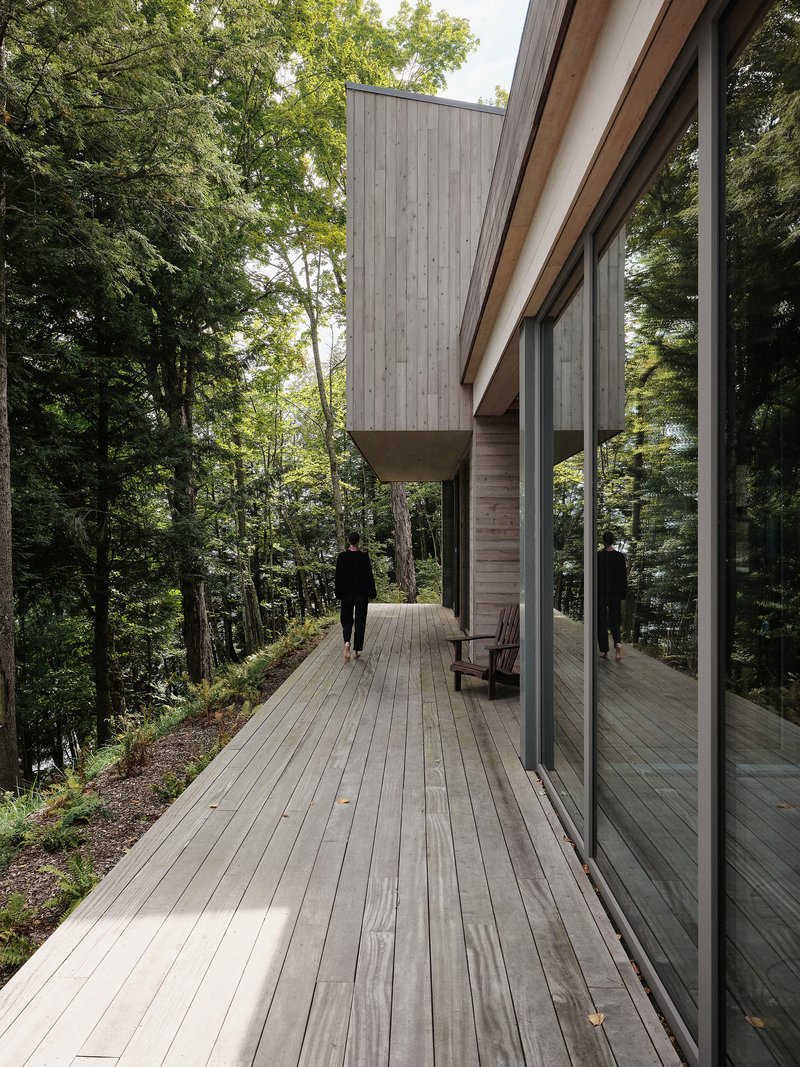
The exterior decks are not afterthoughts bolted onto the facade; they are extensions of the interior floor planes. Black-framed folding glass doors open fully to dissolve the enclosure, and the weathered timber deck with its glass balustrade pushes the living space out into the forest canopy. The glass railing is a precise choice: it maintains the view while providing the required safety barrier, refusing to interrupt the visual continuity between deck and trees.
Walking along the deck that runs the length of the glazed facade, you are simultaneously inside the architecture and inside the forest. The house operates as a series of these threshold conditions, spaces that are neither fully interior nor fully exterior, where the controlled environment of the home meets the wild, shadow-heavy landscape of the mountainside.
Intimate Rooms with Big Views
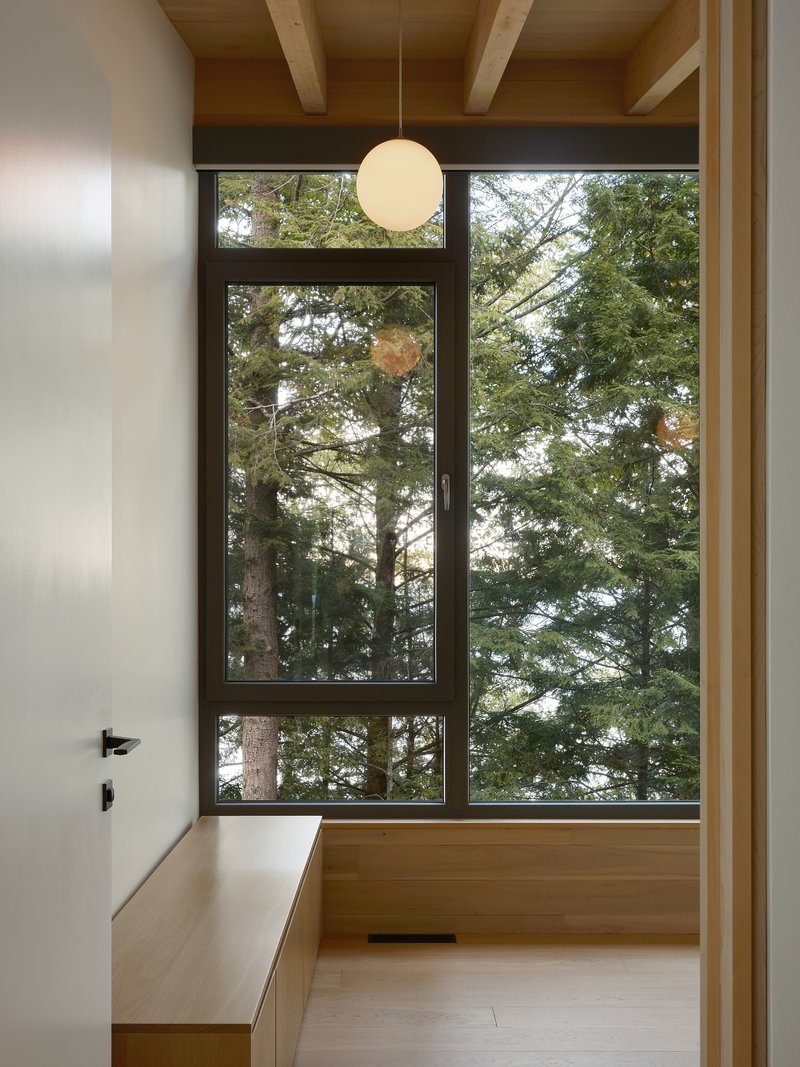
Even the private rooms participate in the house's relationship to its site. The bathroom features a full-height window that frames the forest with the precision of a landscape painting, while timber ceiling beams and a pendant light maintain the material consistency found throughout. These are not rooms that retreat from the landscape; they engage it at a more intimate scale, offering a quieter version of the panoramic openness found in the living areas.
Plans and Drawings
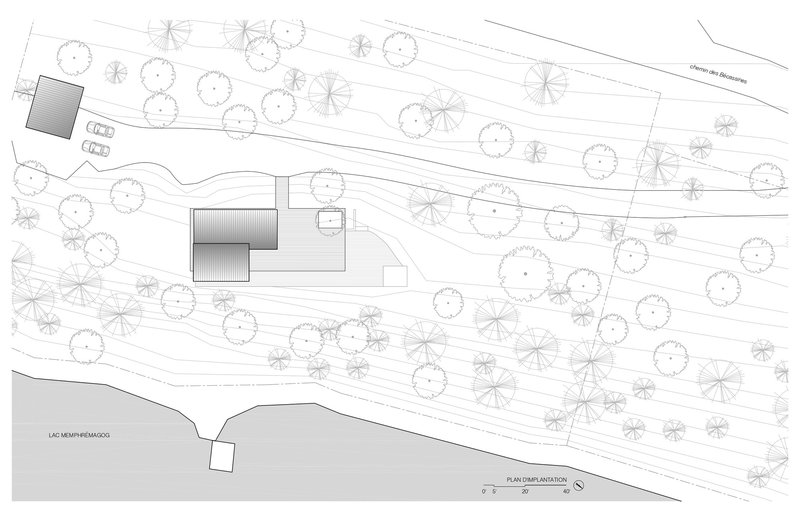
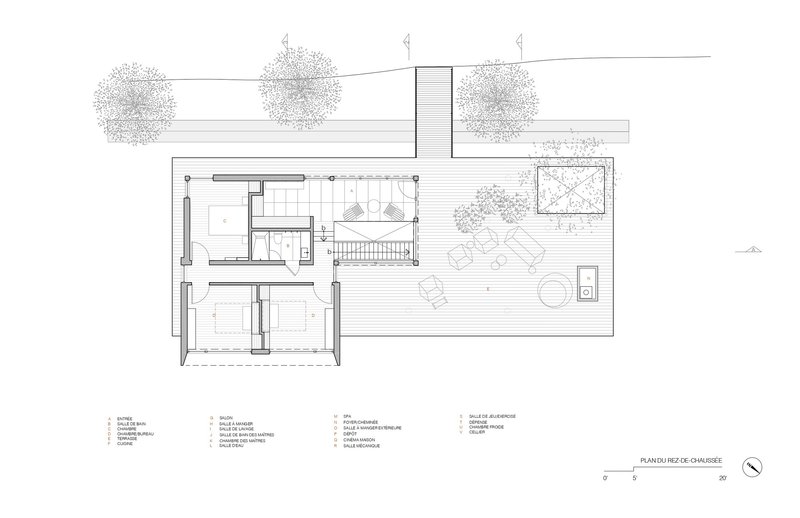
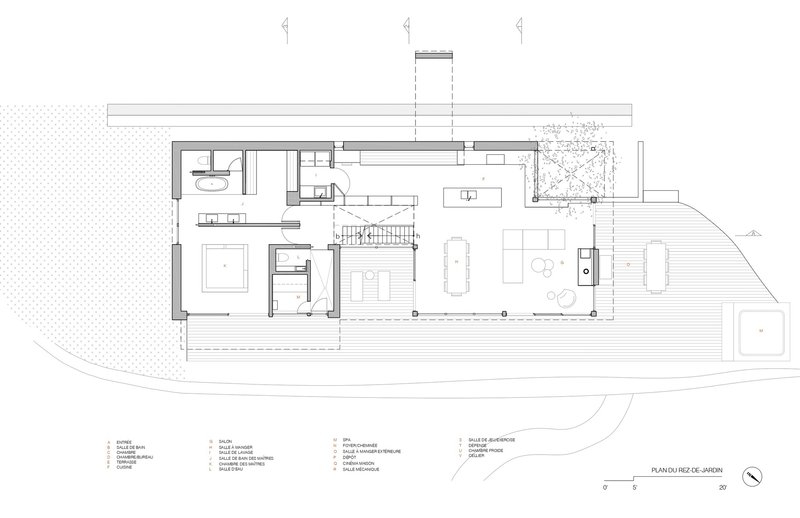
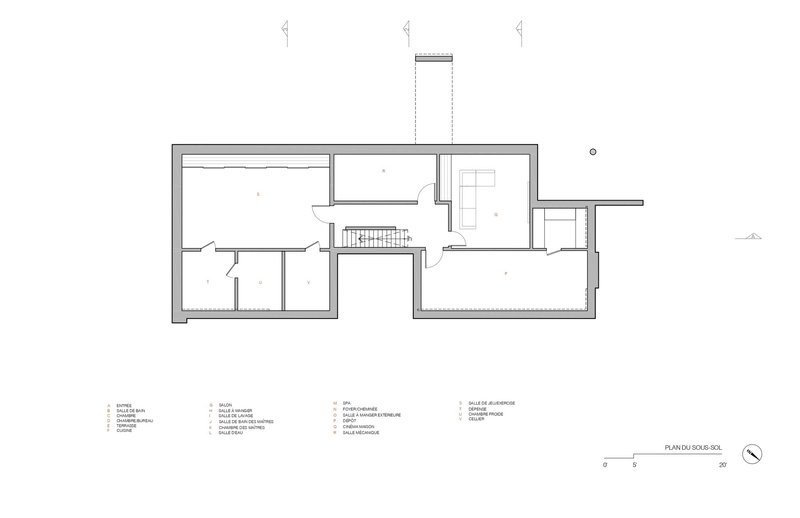
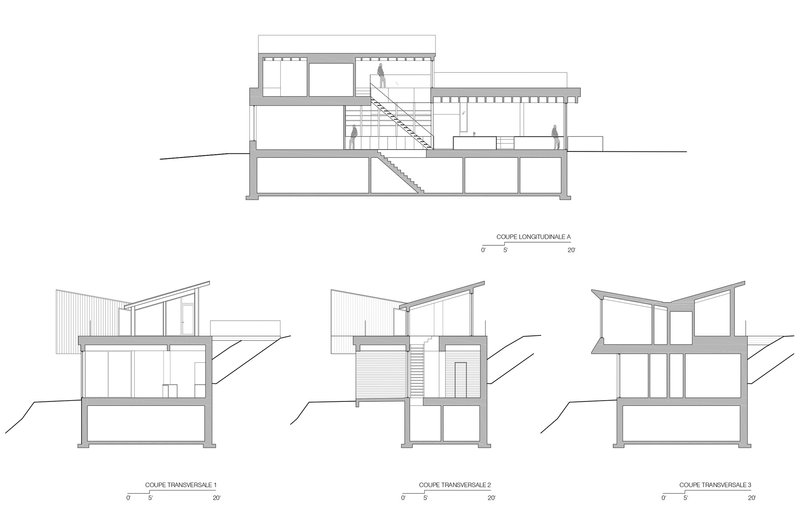
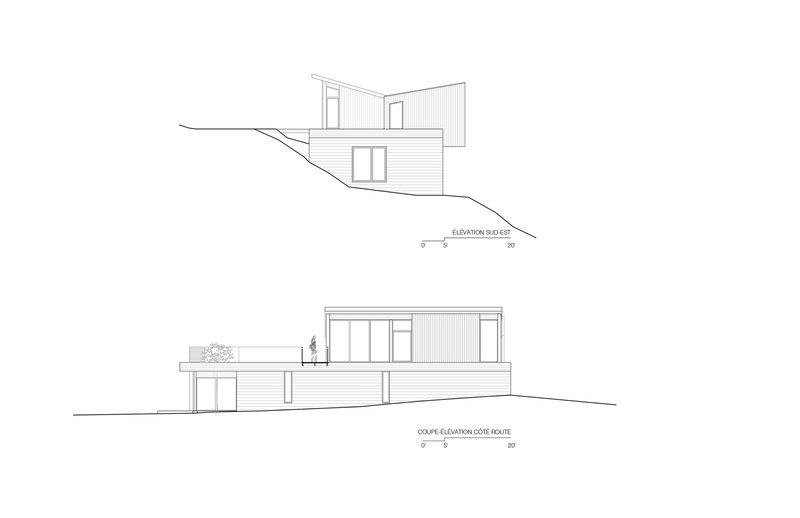
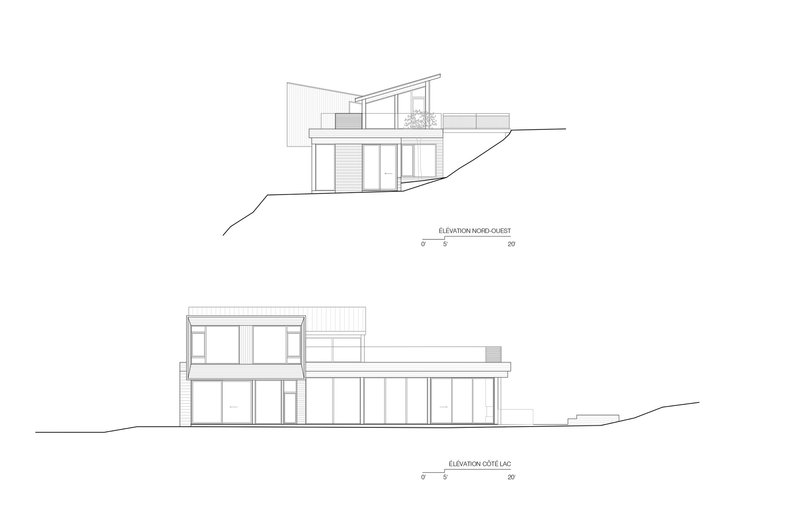
The site plan reveals just how tightly the building threads between existing trees, its two volumes angled to follow the natural contours of the slope. The floor plans across three levels show a clear organizational logic: communal living and cooking spaces occupy the main level with direct deck access, while bedrooms cluster on the upper floor around a central stairwell. The section drawings are the most revealing, illustrating the split-level arrangement that allows the house to step down the terrain without large retaining walls or excessive excavation.
The elevation drawings confirm the counter-pitch roof strategy. From the roadside, the house presents a relatively modest, horizontal profile with cedar cladding. From the south, the two-story glazed pavilion reveals itself, its horizontal planes stepping down the grade. The dual reading, restrained from the street and open from the lake, is a deliberate calibration of privacy and prospect.
Why This Project Matters
The Counter-Slope House resists two common tendencies in lakeside residential architecture. The first is the impulse to flatten and terrace a steep site into submission, engineering a platform for a conventional house. The second is the overly deferential approach, where the building tries so hard to disappear that it becomes spatially anemic. YH2 finds a productive middle ground by allowing the house to assert itself through a distinctive roofline while simultaneously embedding its volumes into the terrain with minimal disruption.
The counter-pitch roof is the move that ties everything together. It reduces perceived scale from the approach, creates the arrival terrace that redefines how you enter a house, and generates the angular silhouette that resonates with the surrounding mountains. It is a single formal decision with cascading consequences for program, experience, and landscape integration. At a moment when residential projects in spectacular settings often default to glass boxes or rustic pastiche, this house demonstrates that topographic specificity can drive architectural invention.
Counter-Slope House by YH2 Architecture (Marie-Claude Hamelin, Loukas Yiacouvakis, Karl Choquette, Lisa Busmey). Potton, Quebec, Canada. 4,530 sq ft. Completed 2024. Photography by Maxime Brouillet.
About the Studio
Share Your Own Work on uni.xyz
If projects like this are the kind of work you want to make, uni.xyz is a place to publish your own, find collaborators, and enter design competitions.




Popular Articles
Popular articles from the community

Stanton Architects Sculpts a Curving Family Home into Sydney's Inner West Fabric
Five Dock House uses cantilevers, curved concrete, and layered courtyards to carve out privacy on a tight suburban lot in Sydney.
Inside a Timeless Mumbai Residence by Aether Studio
Aether Studio's 2,250 sq ft apartment in Malad, Mumbai uses marble, brass, boucle, and disciplined restraint to build a quiet retreat from the city.
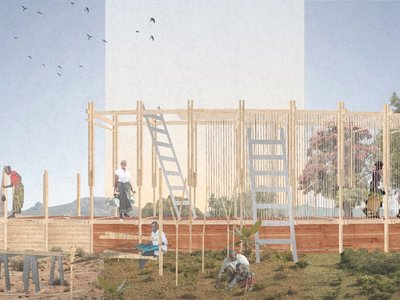
Healing Façade: Sustainable Architecture for Reforestation, Community, and Sacred Ecology in Ethiopia
Healing Façade reimagines sustainable architecture as a living wall that restores soil, catches water and renews Ethiopia's forest churches.
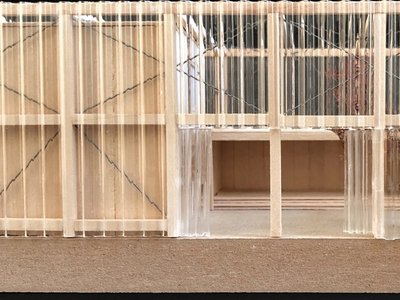
Kaffeebühnen: Coffee Shop Architecture Designed as a Civic Stage Between Vienna’s City and Park
Kaffeebühnen turns coffee shop architecture into a civic stage, linking Vienna’s park edge, urban life, warm timber yards, and coffee craft.


Similar Reads
You might also enjoy these articles

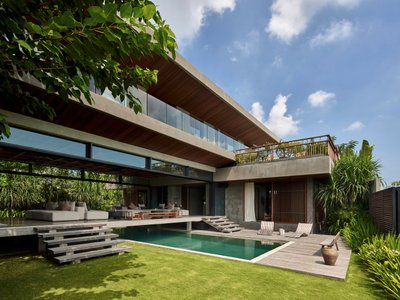
Freebird Residence by Alexis Dornier: A Tropical Modernist Sanctuary in Bali
Floating living pavilion above pool anchors H-shaped tropical villa, blending Japanese minimalism, sustainable strategies, lush landscape, and sculptural interiors.
127af Flips a Tiny Bagnolet Rowhouse Upside Down with a Handcrafted Roof Extension
A 55-square-meter terraced house on the edge of Paris gains a luminous upper living floor through lightweight timber and steel.
1.61 Design Workshop Wraps a 600-Square-Meter Café in Vietnam in Sculptural Burgundy Drama
Reden Café & Bistro pairs a helical staircase, mosaic floors, and deep red interiors to rethink Vietnamese hospitality space.

The Unbound Brain: A School Shaped by Cognitive Architecture
Cylindrical learning pods radiate like neurons from a central cortex, turning the floor plan into a spatial model of human thought.

Explore Landscape Design Competitions
Discover active competitions in this discipline




The Global Benchmark for Architecture Dissertation Awards


Challenge to design mud housing for contemporary communities
Comments (0)
Please login or sign up to add comments
No comments yet. Be the first to comment!